Diamond cut is one of the biggest factors in how a diamond looks, but buyers often misunderstand what that really means. It is not just about the shape of the stone. In practical terms, cut affects how well a diamond handles light, which directly influences sparkle, brightness, and overall beauty.
That is why many shoppers ask, can diamond cut reduce bow tie effect? The short answer is yes, sometimes. A better cut can reduce how noticeable a bow tie looks in certain diamond shapes, especially elongated fancy shapes like oval, pear, and marquise diamonds. However, cut does not always eliminate it completely, and in some shapes the bow tie is a normal optical feature rather than a defect.
For buyers, the important question is not whether the bow tie exists in theory. It is whether it is visible to the eye in everyday viewing conditions, and whether the diamond still looks balanced and attractive. Understanding how cut influences that visual result can help you choose a diamond with better light performance and avoid paying for size at the expense of appearance.
Quick Answer
Yes, diamond cut can reduce the bow tie effect, but it usually cannot remove it entirely in shapes that are prone to it. A well-proportioned diamond, with good symmetry and strong light return, will often show a lighter, less distracting bow tie than a poorly cut stone of the same shape.
This matters most in oval, pear, and marquise diamonds. In those shapes, the bow tie appears as a dark area across the center of the stone when light is not reflected evenly. Better cut can make that dark area smaller, softer, or less noticeable, but the exact result depends on the diamond’s proportions, facet arrangement, and how it is viewed in real life.
If you are shopping for a lab grown diamond or a natural diamond, the practical takeaway is simple. Do not rely on shape alone. Evaluate cut quality, symmetry, polish, and actual appearance under normal lighting before deciding that a diamond is a good value.
What Is the Bow Tie Effect?
The bow tie effect is a dark, bow-shaped shadow that can appear across the center of certain diamond shapes. It usually runs horizontally from one side of the diamond to the other, creating the appearance of a black or gray band. It is most common in elongated shapes such as oval, pear, and marquise diamonds.
This effect happens because the facets in those shapes do not always return light evenly to the viewer. When some areas reflect light strongly and others do not, the darker region becomes visible. In many cases, the bow tie is not a literal hole or flaw. It is an optical result of how the diamond is cut and how it handles light.
Not every bow tie is equally noticeable. Some are faint and only appear in certain lighting conditions or angles. Others are obvious and remain visible in most everyday viewing situations, which can reduce the diamond’s visual appeal.
Bow Tie vs. Inclusions
Many first-time buyers confuse the bow tie effect with clarity inclusions or dirt. These are different things. Inclusions are internal features within the diamond. A bow tie is a light-performance issue caused by the way the diamond reflects light.
If a diamond looks dark in the center, it is not always because of clarity. A well-cut diamond with minor inclusions can still look lively, while a poorly cut diamond with high clarity can still show a strong bow tie. That is why cut quality often matters more to the eye than buyers expect.
What Diamond Cut Actually Means
In everyday buying language, diamond cut refers to how well a diamond has been fashioned to interact with light. It includes proportions, facet arrangement, symmetry, and polish. These elements work together to influence sparkle, brightness, and fire, which is the colored light you sometimes see in a diamond.
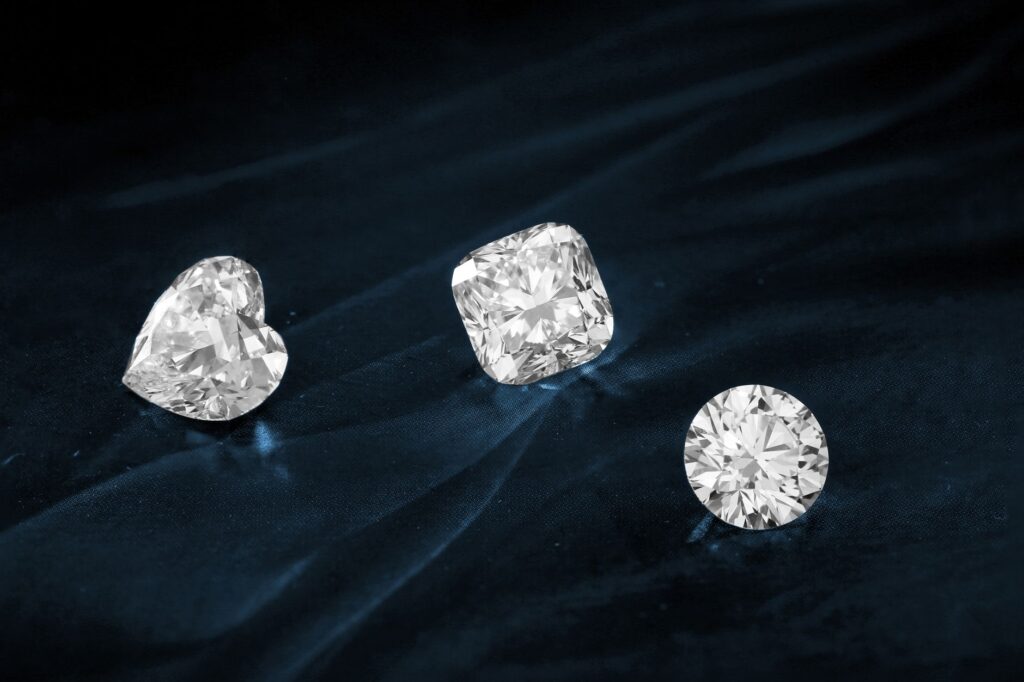
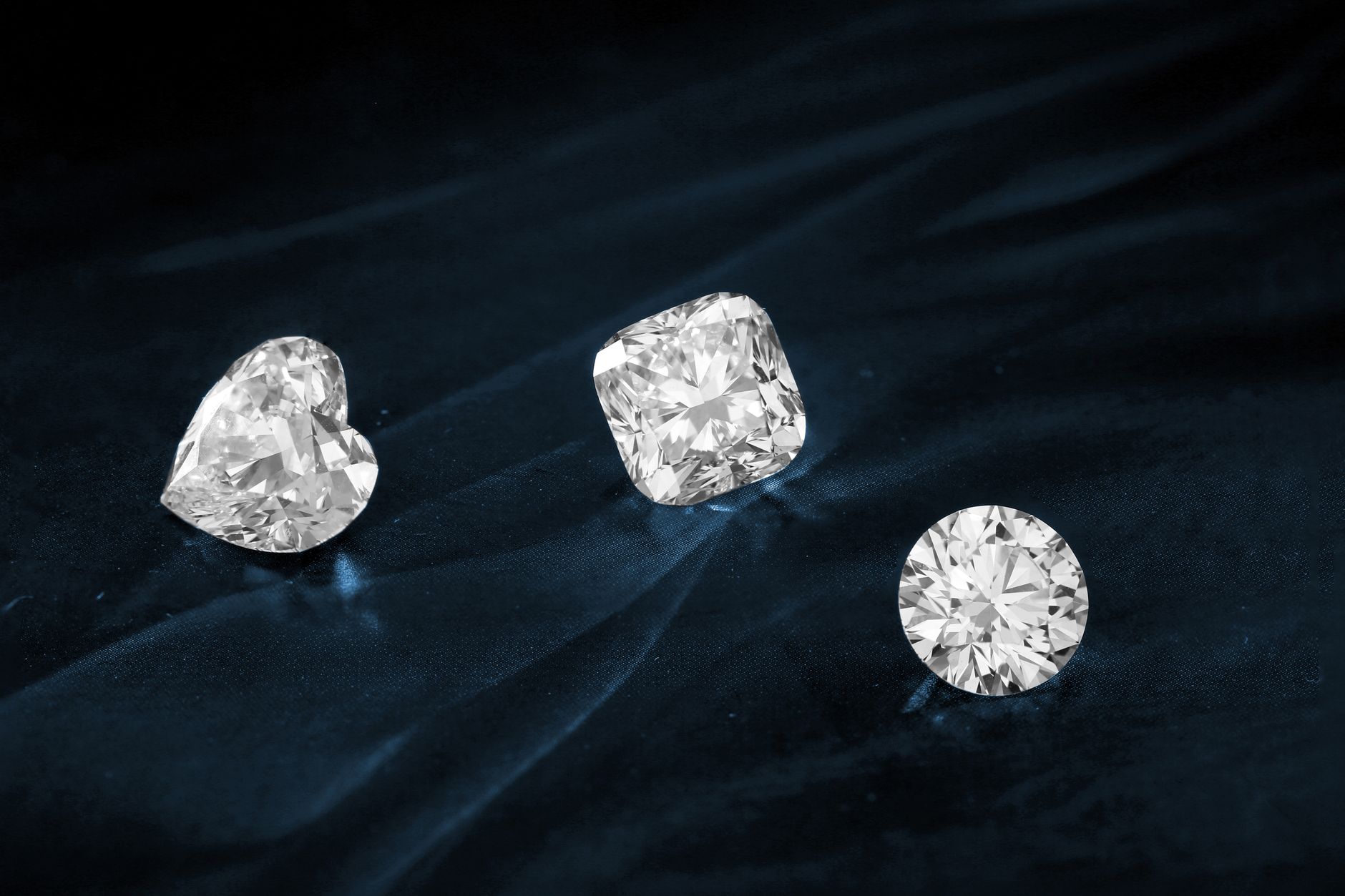
Cut is different from shape. Shape is the outline of the diamond, such as round, oval, pear, or emerald. Cut quality is about how well that shape has been executed. Two oval diamonds can look very different if one is carefully proportioned and the other is not.
For round brilliant diamonds, cut quality is usually easier to evaluate because grading systems are more standardized. For fancy shapes, grading is less uniform, so buyers often need to rely more on visual inspection, proportion data, and trustworthy certification details.
Why Cut Has Such a Strong Visual Impact
Light enters a diamond through the top, bounces around inside, and exits back to the eye. If the angles are well balanced, more light returns to the viewer, creating a brighter, more lively appearance. If the proportions are off, more light leaks out of the sides or bottom, making parts of the diamond look dull or dark.
That is the main reason cut can influence the bow tie effect. A diamond with better light return often shows fewer dark zones and more even brightness across the face of the stone. In a practical sense, the diamond simply looks more alive.
Can Diamond Cut Reduce Bow Tie Effect?
Yes. Better cut can reduce the bow tie effect by improving how evenly the diamond returns light to the eye. In shapes where a bow tie is common, thoughtful proportions and facet alignment can make the dark center less obvious and help the stone appear more balanced.
That said, cut is not a magic solution. In oval and other elongated shapes, some degree of bow tie can still be present even in well-made diamonds. The goal is usually reduction, not elimination. Buyers should think in terms of visibility and attractiveness rather than expecting a perfectly uniform appearance in every stone.
Another important point is that the same diamond may look different in different lighting. A bow tie might be less noticeable under bright showroom lights and more visible in softer indoor lighting. A good cut can help across a wider range of conditions, but no diamond behaves identically in every environment.
How Cut Helps Reduce the Bow Tie
Several cut-related factors influence whether the bow tie stands out:
- Proportions, which affect how light travels through the stone.
- Symmetry, which helps keep light return balanced from side to side.
- Facet alignment, which can improve evenness and reduce dark patches.
- Depth and table size, which influence how the diamond handles brightness and contrast.
- Shape outline, which affects where the eye naturally notices contrast.
When these elements are well balanced, the central dark area may appear smaller or lighter. In some diamonds, the bow tie becomes a subtle contrast pattern rather than a distracting black band. That difference can matter a lot in everyday wear.
Which Diamond Shapes Are Most Affected?
The bow tie effect is most common in fancy shapes that are longer than they are wide. These shapes tend to create more complex light behavior than round brilliants. Buyers often notice the effect first in oval diamonds, but it can also appear in pear, marquise, and some cushion shapes.
| Diamond Shape | Bow Tie Risk | Buyer Notes |
|---|---|---|
| Oval | High | Most commonly discussed. Cut quality strongly affects center darkness. |
| Pear | Moderate to high | Can show darkness across the center, especially in wider stones with poor proportion balance. |
| Marquise | Moderate to high | Elongated shape makes contrast patterns more noticeable. |
| Cushion | Low to moderate | Bow tie is less central to the buying conversation, but can still appear in some cuts. |
| Round Brilliant | Low | Can show contrast, but the classic bow tie effect is usually not a major issue. |
For buyers comparing shapes, this matters because two diamonds with the same carat weight can look very different on the hand. A well-cut oval with a soft, subtle bow tie may appear more attractive than a larger oval with a strong dark band across the center.
What Buyers Actually See in Real Life
Technical grading can be useful, but most shoppers care about a simpler question: what will the diamond look like in everyday use? The answer is that cut quality affects how lively the diamond appears under normal room lighting, outdoor light, and movement.
A diamond with a reduced bow tie usually looks more even and less interrupted across the center. Instead of a dark strip, the center may show some contrast, but it blends better with the rest of the stone. This often creates a more pleasing face-up appearance.
Buyers are most likely to notice the bow tie when the diamond is viewed from directly above. It may also stand out in photos, since cameras can exaggerate contrast. In motion, a well-cut stone can still look bright and sparkling because light is returned more evenly.
Visible Differences vs. Subtle Differences
Some cut differences are easy to see without special tools. Others are subtle and may matter more to enthusiasts than to casual viewers. The bow tie effect sits somewhere in the middle. A strong bow tie is obvious. A mild one may be acceptable if the rest of the diamond is attractive.
For most buyers, the key is whether the dark center distracts from the overall look. If you notice it immediately when looking at the diamond face-up, it is likely significant. If you only spot it under certain lighting or from a specific angle, it may be less concerning.
Why Cut Quality Matters Beyond the Bow Tie
The bow tie effect is only one part of the larger cut conversation. Cut also affects brilliance, fire, scintillation, and brightness. These terms are related but not identical, and understanding them helps explain why two diamonds of the same size can look very different.
Brilliance
Brilliance refers to white light returned to the eye. A well-cut diamond often appears brighter and more lively because more light is being reflected back rather than lost through the sides or bottom.
Fire
Fire is the dispersion of light into flashes of color. Better cut can enhance the balance of fire and brilliance, although the exact appearance also depends on lighting conditions and diamond shape.
Scintillation
Scintillation is the sparkle pattern you see when the diamond moves. A diamond with good cut can create sharp, lively flashes. Poor cut can make the stone look static or uneven.
Light Return
Light return means how much light actually comes back to the viewer. This is one of the most important practical outcomes of cut quality. Better light return generally means a more attractive diamond.
How Cut Grade Affects Bow Tie Visibility
Cut grade is easiest to interpret in round brilliant diamonds, where grading systems are more standardized. For fancy shapes, cut grading is less consistent across labs, so bow tie evaluation often relies more heavily on the diamond’s actual appearance and proportion balance.
For round diamonds, a higher cut grade usually means better light performance overall, though it does not directly address the bow tie effect because round diamonds are not typically judged by that feature. For ovals and other fancy shapes, there may not be an official cut grade that fully tells you how visible the bow tie will be.
This is why buyers should be careful not to assume that a diamond with a polished certificate automatically looks great. A grading report can provide useful data, but it may not tell the full visual story. In fancy shapes, a visual inspection is often just as important as the certificate.
Symmetry and Polish
Symmetry refers to how precisely the facets are arranged and aligned. Good symmetry helps the diamond reflect light more evenly. Poor symmetry can make the bow tie more noticeable or cause uneven brightness.
Polish refers to the smoothness of the diamond’s facet surfaces. Good polish does not usually eliminate a bow tie, but it supports cleaner light return and overall visual sharpness. Both factors matter, though neither can fully compensate for poor overall proportions.
What Role Do Proportions Play?
Proportions are one of the biggest factors behind bow tie visibility. These include measurements such as table percentage, depth percentage, and the relationship between the diamond’s length, width, and facet arrangement. Buyers do not need to memorize every number, but it helps to know what they influence.
A diamond that is too shallow may leak light and appear washed out. A diamond that is too deep may look smaller for its carat weight or show darker areas. The best-looking stones usually strike a balance between brightness, face-up spread, and contrast.
In oval diamonds, proportion balance can also influence how much the center contrasts with the ends. A very narrow or very deep oval may show different light patterns than one with more balanced dimensions. That is one reason why two diamonds with the same carat weight can look quite different side by side.
Why Numbers Alone Are Not Enough
Proportion data can help narrow the search, but it does not guarantee a beautiful diamond. Two ovals with similar measurements may perform differently because of facet placement, minor variations in symmetry, or how the stone was polished.
That is why the best approach combines certificate data with visual assessment. If possible, view the diamond in person or request high-quality videos. Look for even brightness, balanced contrast, and a bow tie that does not dominate the face of the stone.
Does Lab Grown Diamond Cut Matter the Same Way?
Yes. Lab grown diamonds behave optically the same as natural diamonds because they are still real diamonds. The cutting principles are identical. A poorly cut lab grown diamond can show a bow tie just as a poorly cut natural diamond can.
One advantage of lab grown diamonds is that buyers often get more size or better grading for the same budget. That can make it easier to prioritize cut quality while still staying within budget. Still, price alone should not be the deciding factor. A larger lab grown diamond with poor light performance may be less appealing than a slightly smaller one with much better cut.
This is especially relevant in fancy shapes, where buyers sometimes focus on carat weight and overlook face-up beauty. If you are comparing lab grown diamonds, cut should be one of the first things you evaluate, not the last.
When Paying More for Better Cut Makes Sense
Paying more for better cut makes sense when the visual improvement is meaningful and easy to see. If a diamond has a noticeably reduced bow tie, stronger brightness, and more even sparkle, the premium may be justified because the difference affects daily enjoyment.
This is often true for engagement rings, where the stone will be worn frequently and viewed up close. A diamond that looks balanced in a range of lighting conditions is usually a better long-term choice than one that only looks impressive in ideal display lighting.
However, there are diminishing returns. At a certain point, spending much more for tiny improvement may not be worthwhile for every buyer. The value question depends on budget, shape preference, and how sensitive you are to visual detail.
When a Premium Is Usually Worth It
- The bow tie is obvious and distracting in a lower-priced stone.
- You care most about visual beauty rather than maximum carat weight.
- The diamond is an oval, pear, or marquise and will be seen often in everyday wear.
- You want stronger light return and a more even face-up look.
When the Premium May Not Be Necessary
- The bow tie is already mild and not easy to notice.
- Other priorities, such as size or setting style, matter more to you.
- You are shopping with a strict budget and the visual difference is small.
- The diamond will be set in a way that partially changes how it is viewed.
Practical Buyer Scenarios
Scenario 1: A Well-Cut 1.5-Carat Oval vs. a Poorly Cut 2-Carat Oval
This is a common trade-off. The 2-carat diamond sounds more impressive on paper, but if its cut is weak, the center may appear dark and the stone may not look as lively. The 1.5-carat diamond may face up beautifully and look more balanced overall.
In everyday viewing, many buyers would prefer the smaller but better-performing stone because it looks brighter and more attractive. Size matters, but visual quality often matters more once the diamond is on the finger.
Scenario 2: Excellent Cut vs. Very Good Cut in Everyday Lighting
In round diamonds, the difference between Excellent and Very Good cut can be subtle or noticeable depending on the specific stone. In fancy shapes, the comparison is less standardized, but the principle is the same. A better-cut diamond usually handles light more gracefully and may show a softer or less pronounced bow tie.
In ideal showroom lighting, the difference can be easy to miss. In normal home lighting, the superior stone often shows more consistent brightness and sparkle. That is why buyers should not rely on one lighting environment alone.
Scenario 3: Higher Clarity with Poor Cut vs. Lower Clarity with Excellent Cut
This scenario helps show how cut can outweigh other quality factors in visible impact. A higher-clarity diamond with poor cut may look less attractive if it is dark or dull. A lower-clarity diamond with excellent cut may look more beautiful because the better light return draws attention away from minor inclusions.
For most buyers, especially at normal viewing distance, cut has a stronger effect on overall appearance than slight differences in clarity once the diamond is eye-clean. That does not mean clarity never matters. It means visual performance should come first.
Advantages of Better Cut for Reducing Bow Tie
Better cut offers several practical advantages beyond simply reducing the bow tie effect.
- More even appearance, with less distracting darkness in the center.
- Better brightness, especially face-up in normal lighting.
- Stronger sparkle pattern, which helps the diamond look lively.
- Improved value perception, because the stone often looks more refined.
- Better long-term satisfaction, since the diamond performs well in more situations.
For many buyers, these benefits are immediately visible and worth prioritizing. A diamond with balanced light performance often feels more satisfying over time than one that merely has a larger carat weight.
Limitations and Trade-Offs
There are also limits to what cut can do. It cannot completely remove the bow tie effect in every diamond shape, and it cannot turn a poor design into a perfect one. The inherent geometry of elongated fancy shapes means some contrast patterns are likely to remain.
Another trade-off is budget. The best-performing diamonds may cost more, and in some cases the premium is noticeable. Buyers need to decide whether they prefer maximum visual quality, maximum size, or a balance of both.
It is also worth remembering that cut evaluation is not purely numerical. A diamond can have favorable measurements and still look less appealing than expected. Visual judgment remains important, particularly in lab grown diamonds and fancy shapes where shoppers often have many options at similar price points.
How to Shop Smarter for Diamonds Prone to Bow Tie
If you are shopping for an oval, pear, or marquise diamond, take a visual-first approach. Start by looking at the stone face-up, because that is how it will usually be seen on the hand. Ask whether the center looks balanced or whether the dark area pulls your eye too strongly.
Then review the certificate and available images or video. A grading report can confirm basic details such as carat, color, clarity, and measurements, but it will not always tell you how noticeable the bow tie will be. High-resolution videos can be especially helpful for online purchases.
What to Look For
- Even brightness across the face of the diamond.
- A bow tie that is faint rather than harsh or black.
- Good symmetry from left to right.
- Strong sparkle when the diamond is moved.
- No obvious areas that look dead or overly dark.
What to Avoid
- Buying based only on carat weight.
- Assuming a higher color or clarity grade guarantees better appearance.
- Choosing the cheapest stone without reviewing light performance.
- Relying only on the certificate without seeing the diamond.
How Certification Helps, and Its Limits
Diamond certification is important because it gives you an independent report of the stone’s basic characteristics. For buyers, this helps with transparency and comparison. In the context of bow tie evaluation, though, certification is only part of the picture.
For round diamonds, a grading report may include cut grade, which is helpful. For fancy shapes, the report often lists measurements and finish grades like symmetry and polish, but it usually does not rate bow tie visibility directly. That means certification can support your decision, but it should not replace visual judgment.
If you are comparing lab grown diamonds, make sure the grading report comes from a respected lab and that the diamond is represented accurately. A reliable certificate is useful for confirming quality, but it does not guarantee beauty on its own.
Common Buyer Mistakes
Buyers often make the same avoidable mistakes when shopping for diamonds with potential bow tie issues.
- Prioritizing carat over cut, even when the larger stone looks less attractive.
- Assuming all diamonds of the same shape look similar, when cut quality can change appearance dramatically.
- Confusing clarity with light performance, which leads to bad comparisons.
- Relying on grading terms only, without seeing how the diamond actually looks.
- Ignoring everyday lighting, even though that is where the diamond will mostly be worn.
These mistakes are easy to make because diamond shopping often happens online or under showroom lighting. Taking a little more time to evaluate light behavior can prevent disappointment later.
Frequently Asked Questions
Can diamond cut completely eliminate the bow tie effect?
Not always. Cut can reduce the bow tie effect significantly in many cases, but in shapes like oval, pear, and marquise, some degree of contrast is often part of the stone’s optical behavior. The goal is usually to make it less distracting, not to remove it entirely.
Is a bow tie always bad?
No. A mild bow tie can be acceptable if the diamond still looks bright, balanced, and attractive overall. The concern is mainly with strong or harsh bow ties that pull attention away from the rest of the stone.
Which shape is most likely to show a bow tie?
Oval diamonds are the shape most buyers ask about, but pear and marquise diamonds can show the effect as well. The visibility depends on the individual stone’s proportions and cut quality.
Does a higher color grade reduce the bow tie effect?
No. Color grade and bow tie visibility are different issues. A higher color grade may make the diamond appear whiter, but it will not fix poor light return or a dark center caused by cut.
Can lab grown diamonds have a bow tie?
Yes. Lab grown diamonds can show the same bow tie effect as natural diamonds because the issue comes from the cut and light behavior, not from how the diamond was created.
Is the bow tie easier to see in photos than in person?
Often, yes. Photos can exaggerate darkness and contrast depending on lighting, camera angle, and editing. In person, the effect may look different, so photos should be treated as helpful but not perfect evidence.
Should I avoid all oval diamonds because of the bow tie effect?
No. Many oval diamonds are beautiful and show only a mild bow tie, if any. The key is to evaluate each stone individually rather than avoiding the shape altogether.
Does symmetry or polish matter more than cut for bow tie visibility?
Neither works alone. Symmetry and polish support good performance, but the overall cut design and proportions usually have a bigger influence on whether the bow tie is noticeable.
Conclusion
Diamond cut can reduce the bow tie effect, but the degree of improvement depends on the shape, proportions, and overall light performance of the stone. In oval, pear, and marquise diamonds, better cut often means a less distracting center, stronger brightness, and a more attractive face-up appearance.
For buyers, the main lesson is to look beyond carat weight and basic grading terms. The best diamond is not always the largest or the highest on paper. It is the one that looks balanced, lively, and pleasing in real life.
If you are comparing diamonds, pay close attention to how the stone handles light in normal viewing conditions. That practical approach will help you choose a diamond that looks better day to day, whether you are shopping for a natural diamond or a lab grown diamond.