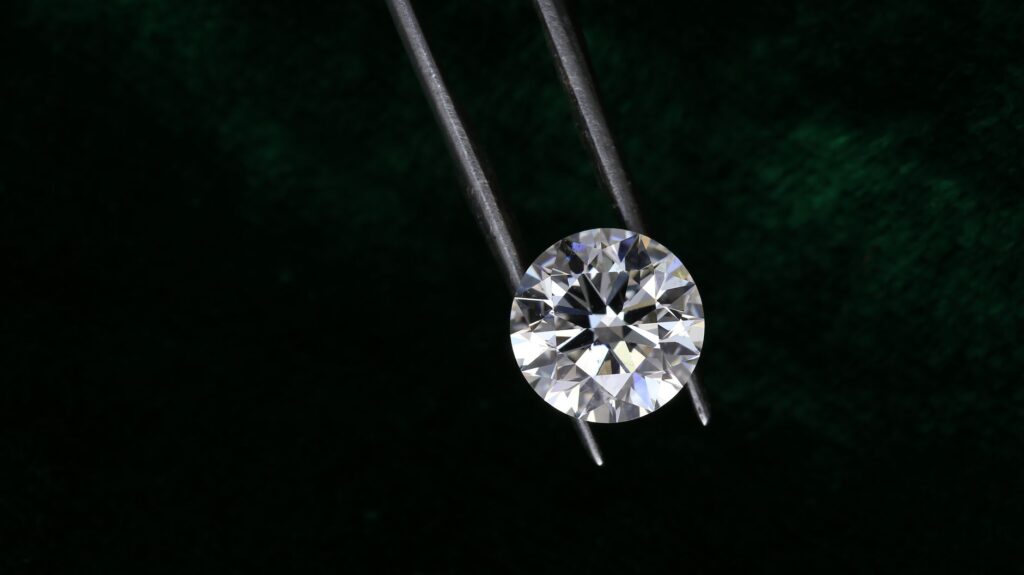
Diamond clarity is one of the most misunderstood parts of buying a diamond, especially when shoppers are comparing lab grown diamonds and natural diamonds side by side. On paper, clarity grades can look highly technical. In real-world buying, the more important question is usually much simpler: can you actually see anything, and does it matter to how the diamond looks on a finger?
If you are asking What Is VVS1 Diamond Clarity, the short answer is that it is a very high clarity grade meaning the diamond has tiny inclusions that are extremely difficult to see even under magnification. For most buyers, a VVS1 diamond will look clean and bright, but it usually costs more than grades that already appear identical to the eye in everyday conditions. That is why understanding visibility, value, and eye-clean appearance matters more than memorizing the label.
This guide explains what VVS1 means, how it compares with nearby clarity grades, what inclusions are typical, and when paying for VVS1 makes sense. It also covers how clarity behaves in lab grown diamonds, where buyers often have more flexibility because excellent-looking diamonds can be found at a lower price than many natural stones.
Quick Answer
VVS1 diamond clarity means “Very Very Slightly Included 1.” It is a high clarity grade, and the inclusions are so small that they are very difficult to see under 10x magnification. In practical terms, most VVS1 diamonds look clean to the naked eye and are considered eye-clean.
For many shoppers, VVS1 offers more clarity than they actually need. If the diamond is eye-clean, the visible difference between VVS1 and a lower grade such as VS1 or VS2 is often minimal or impossible to notice without magnification. The main reason to choose VVS1 is personal preference, certificate optics, or a desire for a very high grade, not usually a visible appearance difference.
In lab grown diamonds especially, VVS1 can be beautiful, but it is not always the best value. Many buyers can choose a slightly lower clarity grade and put the savings toward a better cut, a larger carat size, or a more favorable color grade, depending on their priorities.
What VVS1 Diamond Clarity Means
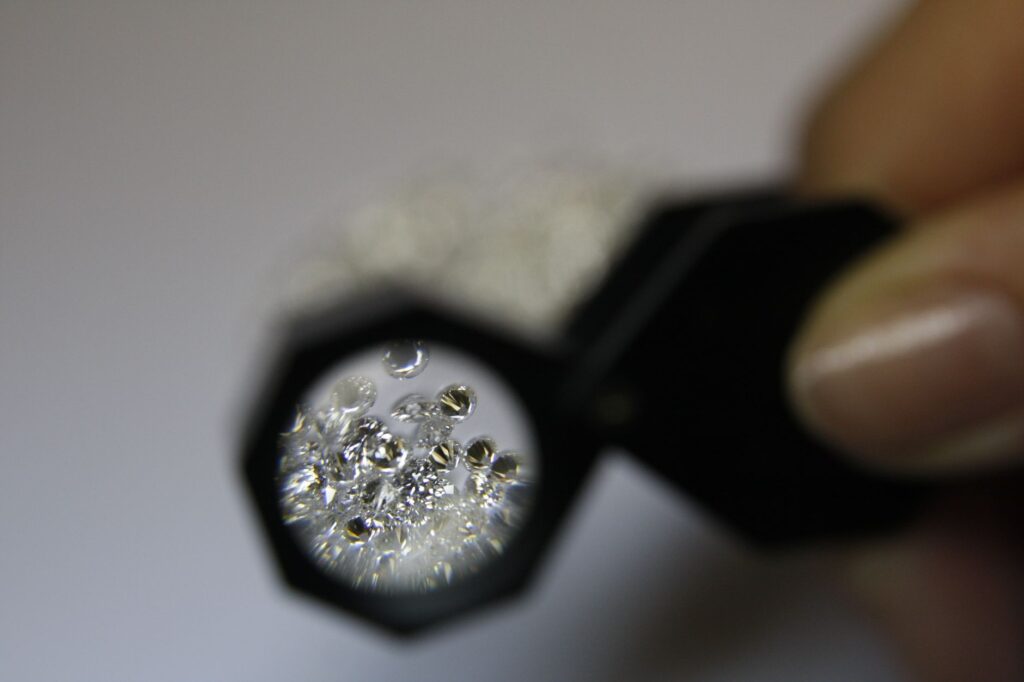
Diamond clarity describes how free a diamond is from internal features called inclusions and external features called blemishes. These natural or growth-related characteristics are used to grade the stone, but they are not always obvious in normal viewing. Clarity is evaluated under magnification, not by how the stone looks from across a room.
VVS1 sits near the top of the clarity scale. The common clarity scale, from highest to lower, includes FL, IF, VVS1, VVS2, VS1, VS2, SI1, SI2, and so on. VVS1 means the diamond has very small inclusions that are extremely difficult for a trained grader to locate even under 10x magnification.
That phrase, “very very slightly included,” sounds dramatic, but the practical meaning is more modest. It does not mean the diamond is visibly flawed. It means the internal features exist, but they are tiny and hard to detect with standard gemological tools.
How VVS1 Fits on the Clarity Scale
To understand VVS1, it helps to compare it with the grades around it.
| Clarity Grade | General Meaning | What Most Buyers See | Typical Value Perspective |
|---|---|---|---|
| FL | Flawless, no inclusions or blemishes visible under magnification | Nothing visible | Rare and usually expensive |
| IF | Internally flawless, only tiny surface blemishes may exist | Nothing visible to the eye | High-end, often carries a premium |
| VVS1 | Very very slightly included, extremely difficult to see under magnification | Usually eye-clean | Premium grade, sometimes more than needed visually |
| VVS2 | Slightly more noticeable than VVS1 under magnification, still very high clarity | Usually eye-clean | Often better value than VVS1 |
| VS1 | Very slightly included, inclusions are noticeable under magnification | Usually eye-clean | Strong balance of quality and value |
| VS2 | Very slightly included, often more visible under magnification | Often eye-clean, depending on stone | Frequently a value sweet spot |
In other words, VVS1 is a high-end clarity grade, but the difference between it and slightly lower grades is often more important on paper than in everyday life.
Why VVS1 Matters to Buyers
Clarity matters because it affects how clean a diamond looks, how the stone is graded, and how much you pay for it. But clarity is only one part of the overall buying decision. Cut has a larger effect on sparkle, and color can influence appearance more than many buyers expect, especially in certain shapes and larger sizes.
For a buyer, VVS1 matters most when one or more of these are true:
- You want a very high clarity grade for peace of mind.
- You are comparing diamonds with similar prices and want the cleanest certificate grade.
- You prefer the idea of owning a stone with extremely minor inclusions, even if they are not visible.
- You are shopping for a larger center stone where clarity visibility becomes more relevant.
For other buyers, VVS1 may not be the most efficient use of budget. If the diamond already looks clean to the eye, a lower grade can sometimes deliver the same visual result for less money.
How VVS1 Affects Appearance
From a visual standpoint, most VVS1 diamonds look very clean. In everyday viewing conditions, such as normal indoor light, office lighting, or a quick glance in the mirror, the average person will not see the inclusions. Even many experienced shoppers would need magnification to find them.
This is especially true when the diamond has a strong cut grade. A well-cut diamond can distract the eye from tiny internal characteristics because brightness, contrast, and sparkle are more dominant visual cues. In practice, many buyers are reacting to the diamond’s overall liveliness, not its microscopic features.
Eye-Clean Appearance Explained
The term eye clean means a diamond has no visible inclusions to the naked eye at a normal viewing distance. That distance is usually around 6 to 10 inches, sometimes a little farther, depending on the viewer. It is one of the most useful practical concepts in diamond shopping.
Most VVS1 diamonds are eye-clean, but eye-clean is not the same thing as VVS1. Some VS or even SI diamonds are also eye-clean, while a poorly chosen VVS stone may still have a feature that bothers a very detail-focused buyer under close inspection.
This is why the clarity grade alone does not tell the whole story. Inclusion type, size, position, and contrast all matter.
What Buyers Actually Notice
In real-world conditions, buyers usually notice these things before they notice clarity differences:
- How much the diamond sparkles.
- Whether the stone looks bright or dull.
- Whether the shape is appealing.
- Whether the color looks warm, white, or slightly tinted.
- Whether a dark inclusion is visible near the center.
A VVS1 clarity grade can help reduce the chance of visible flaws, but it will not automatically make a diamond look more brilliant than a well-cut diamond with a slightly lower clarity grade.
Common Inclusion Types Found in VVS1 Diamonds
Clarity grades are based on inclusions and blemishes, but the type of inclusion matters just as much as the grade itself. Some features are tiny and harmless. Others may be more noticeable, or in rare cases, worth paying attention to for durability reasons.
Crystal
A crystal is a small mineral crystal trapped inside the diamond during formation or growth. In VVS1, crystals are usually tiny and difficult to find. They are often not visible without magnification and typically do not affect durability unless they are unusually positioned or associated with another structural issue.
For most buyers, a tiny crystal in a VVS1 stone is not a concern.
Needle
A needle is a thin, elongated inclusion. Needles can sometimes appear as fine lines under magnification. In VVS1, they are usually very small. Most do not affect durability, and many are impossible to spot without magnification.
Pinpoint
A pinpoint is a tiny dot-like inclusion. Pinpoints are among the smallest clarity features and are usually only meaningful under magnification. A VVS1 diamond may contain one or a few pinpoints that are extremely difficult to find.
Cloud
A cloud is a group of microscopic inclusions that can sometimes create a hazy look if dense enough. This is worth paying attention to because clouds are one of the few inclusion types that can, in rare cases, affect transparency. In VVS1, clouds are usually not dense enough to cause visible haziness, but a clarity plot and expert evaluation still matter.
Feather
A feather is a small internal fracture that can resemble a crack or thin break under magnification. Most feathers in VVS1 diamonds are minor and stable, but their position matters. A feather near a girdle or edge can be more relevant than one deep inside the stone because it may be more vulnerable to impact.
Twinning Wisp
A twinning wisp is a growth-related feature often seen in lab grown diamonds and some natural diamonds. It can appear as a hazy or wispy internal pattern under magnification. In higher clarity grades such as VVS1, twinning wisps are usually subtle and do not create obvious visibility concerns.
Other Features
Sometimes you will also see terms such as knot, cavity, chip, or cavity-related blemish on a report. These are not typical “normal” features that buyers should ignore automatically. They should be reviewed carefully, especially if they are near the surface or affect durability.
Does VVS1 Improve Durability?
Not necessarily. Clarity is mainly about appearance, not strength. A VVS1 diamond can still have a feather or other inclusion that deserves a closer look, while a lower-clarity diamond can be perfectly durable if its inclusions are not in risky positions.
Durability concerns usually depend more on inclusion location than clarity grade. For example, a small feather near the edge of a stone may deserve attention, while a similar feature deep in the center may be harmless. This is one reason why buyers should not judge a diamond only by the clarity label.
For everyday wear, cut quality, setting style, and ring design often play a larger role in long-term durability than whether the diamond is VVS1 or VS2.
VVS1 in Lab Grown Diamonds
In lab grown diamonds, VVS1 is common enough that it should not be treated as rare in the same emotional sense as it might be in some natural diamond categories. Modern growth and cutting processes can produce diamonds with excellent clarity, and many lab grown stones are graded at VS or VVS levels.
That does not mean you need to pay for the highest grade available. In lab grown diamonds, clarity often becomes a value question rather than a rarity question. If a VS1 or VS2 diamond is eye-clean and offers a better price, many buyers prefer to allocate budget elsewhere.
Lab grown diamonds also deserve careful review for transparency and growth features. Some stones can show graining, clouds, or growth-related patterns that affect appearance differently from traditional natural-diamond inclusions. This makes the actual certificate and stone imagery especially useful when evaluating clarity.
How VVS1 Compares with Other Clarity Grades
To understand whether VVS1 is worth it, compare it with the nearby grades that many shoppers consider first.
| Grade | What It Means | Visible to the Eye? | Typical Buyer Takeaway |
|---|---|---|---|
| VVS1 | Extremely difficult to see even under magnification | Usually no | High clarity, often more than needed visually |
| VVS2 | Still very difficult to see under magnification, slightly more inclusions than VVS1 | Usually no | Often similar appearance for less money |
| VS1 | Minor inclusions, generally visible only under magnification | Usually no | Excellent balance of visibility and value |
| VS2 | Inclusions can be a little easier to spot under magnification | Often no, but depends on the stone | Common value grade if the stone is eye-clean |
| SI1 | Noticeable under magnification, sometimes eye-visible if inclusion placement is unfavorable | Sometimes | Can be a strong value if chosen carefully |
For many buyers, the practical gap between VVS1 and VS1 is much smaller than the price difference. Between VVS1 and VS2, the appearance difference is often negligible in ordinary viewing. This is why experienced shoppers frequently focus on eye-clean performance rather than chasing the highest clarity grade possible.
When Paying More for VVS1 Makes Sense
There are times when VVS1 is a reasonable choice. If you want confidence in a very high grade, or if the diamond is large enough that you want added reassurance, VVS1 can be a comfortable middle ground between rare top-tier grades and more value-focused options.
Paying more for VVS1 may also make sense when the price difference is small. In some stones, the jump from VS to VVS is modest enough that buyers do not need to compromise much to get the higher grade. In those cases, the choice can come down to preference rather than value math.
That said, the best justification for VVS1 is usually peace of mind, not visible improvement.
When VVS1 Is Probably Not Worth the Premium
VVS1 may not be the best use of budget if the price jump is significant and the diamond is already eye-clean. If you cannot see the difference in normal wear, you are paying for a certificate grade, not an improved look. That may be fine for some buyers, but it is important to be honest about what you are getting.
This is especially true when the same budget could buy:
- A better cut grade.
- A larger carat size.
- A better color grade in a shape that shows color easily.
- A more desirable ring setting.
For many shoppers, those trade-offs affect daily satisfaction more than the clarity upgrade does.
Practical Examples Buyers Often Encounter
VS2 Versus VVS1 in Normal Viewing Conditions
A VS2 diamond and a VVS1 diamond may look nearly identical when viewed face up at normal distance, especially if both are well cut and eye-clean. The main difference is usually under magnification or on the certificate, not in the way the stone performs in everyday wear.
If the VS2 is eye-clean and the VVS1 costs meaningfully more, the VS2 is often the stronger value choice. If the VVS1 is only slightly more expensive, the higher grade may be worth it for buyers who prefer extra confidence.
Eye-Clean SI1 Versus Non-Eye-Clean SI1
Not all SI1 diamonds are the same. One SI1 might be completely eye-clean because the inclusion is small, white, and tucked near the edge. Another SI1 might have a dark inclusion near the center that is visible without magnification.
This is why grade alone is not enough. A carefully chosen SI1 can be a better purchase than a poorly positioned VVS stone if the goal is appearance and value. The lesson is simple: always evaluate the stone, not just the label.
VVS Clarity Versus VS Clarity for Everyday Wear
For engagement rings and daily jewelry, the real-world difference between VVS and VS clarity is often subtle. Many VS diamonds are eye-clean and look excellent in natural light, indoors, and on the hand. The higher grade mainly reduces the chance that an inclusion will be detectable under close inspection.
For buyers who care most about visible beauty, a well-cut VS diamond often provides a better balance of performance and price than a VVS diamond.
Advantages of VVS1 Diamond Clarity
VVS1 has several clear advantages, even if the visual difference is not always dramatic.
- Excellent cleanliness under magnification. The stone has very minor inclusions that are difficult to locate.
- Usually eye-clean. Most VVS1 diamonds appear clean in normal viewing conditions.
- Strong certificate appeal. Some buyers value a high clarity grade for peace of mind.
- Broad compatibility. It can be a safe choice when shopping sight-unseen and relying heavily on certification.
- Good for detail-focused buyers. If you like knowing your diamond is very high clarity, VVS1 is reassuring.
Disadvantages of VVS1 Diamond Clarity
VVS1 also has some limitations that shoppers should understand before paying extra for it.
- Often overpriced relative to visible benefit. The jump from VS or even some SI stones may not change the look much.
- Can reduce budget flexibility. Money spent on clarity may take away from cut, carat, or color.
- Not a guarantee of better appearance. A lower clarity diamond can still look just as clean.
- Inclusion type still matters. Even high clarity grades should be reviewed for durability and transparency issues.
In other words, VVS1 is a very good grade, but it is not automatically the smartest buying choice for every budget.
Buying Considerations for VVS1 Diamonds
Budget Allocation
When budget matters, clarity should usually be balanced against cut first. A beautifully cut diamond will often look more impressive than a higher-clarity diamond with weaker light performance. After cut, buyers often compare color and carat size before deciding how much clarity premium they want to pay.
If choosing VVS1 pushes you into a smaller stone or a weaker cut, that trade-off is worth reconsidering.
Inclusion Placement
Where an inclusion sits can matter more than the grade itself. An inclusion near the center of the table can be more noticeable than one near the edge. A dark crystal near the middle can draw the eye more than a tiny feather off to the side.
This is why diamond images, videos, and grading plots are useful. They help you judge whether the stone is likely to look clean in real life.
Lab Grown Diamond Considerations
In lab grown diamonds, VVS1 can be an attractive grade, but it is not always the most efficient one to buy. Because lab grown pricing is already lower than many natural diamonds, some buyers feel comfortable selecting VVS1. Even so, the same value principle applies: if a lower grade is eye-clean, it may offer better overall value.
It is also smart to review the certificate from a recognized lab and inspect any notes about growth features or clarity characteristics. The best purchase is not the highest grade on paper, but the stone that looks best for the money.
Shape Matters
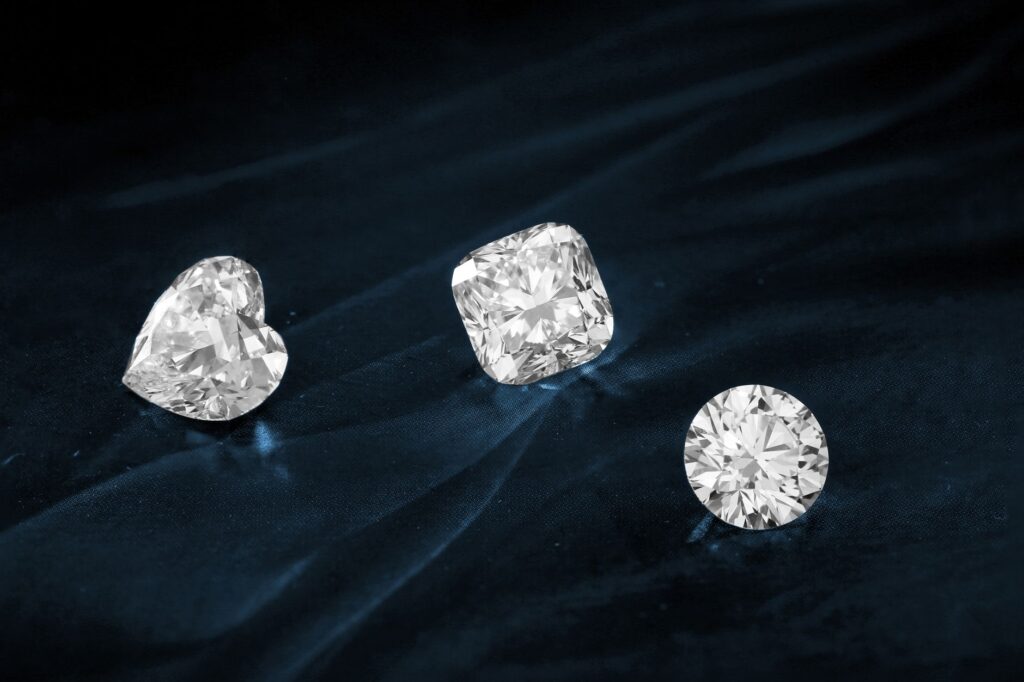
Diamond shape affects how much clarity you need. Round brilliant diamonds often hide inclusions better because their facet pattern is busy and sparkly. Step-cut shapes, such as emerald cut and Asscher cut, tend to show clarity more easily because they have larger open facets and a more transparent look.
That means a VVS1 may be more useful in a step-cut diamond than in a brilliant-cut stone, depending on the exact inclusion pattern. Shape and clarity should always be evaluated together.
Certification and Report Details
Always read the grading report, not just the shorthand clarity grade. A certificate can tell you whether a diamond was graded by a respected lab and may show inclusion maps or comments that explain the stone’s characteristics. This is especially helpful when comparing multiple lab grown diamonds online.
If you are unsure how to read the report, learning the basics of diamond certifications can save you from overpaying for a grade that sounds impressive but changes little visually.
Common Buyer Mistakes
Shoppers make a few recurring mistakes when evaluating VVS1 and other clarity grades.
- Overpaying for invisible improvements. Many buyers pay more for VVS clarity when the visible difference is negligible.
- Ignoring the inclusion type. Not every inclusion is equally important. A tiny crystal is different from a feather near the edge.
- Assuming every SI diamond looks included. Some SI stones are eye-clean and excellent value.
- Buying by grade alone. A VVS1 label does not guarantee the diamond will look better than a well-chosen VS stone.
- Forgetting about cut quality. Poor cut can make a diamond look less impressive even if its clarity is very high.
These mistakes are avoidable if you focus on what the diamond looks like, not just what the label says.
What Experienced Buyers and Jewelers Often Look For
Experienced buyers often focus on practical details rather than chasing the highest possible clarity grade. They tend to ask whether the diamond is eye-clean, whether the inclusion is centered or off to the side, and whether any feature could affect transparency or durability. That approach usually leads to better value.
Jewelers commonly know that a well-selected VS or SI diamond can look excellent once mounted in a ring. They also know that settings can hide or minimize certain features, especially when the inclusion is near a prong or outside the central viewing area. This does not mean buyers should ignore clarity, only that the ring design can influence what is visible.
Frequently Asked Questions
Is VVS1 better than VS1?
Technically, yes. VVS1 is a higher clarity grade than VS1, meaning its inclusions are more difficult to detect under magnification. But in normal viewing, both grades are often eye-clean, so the visual difference may be very small.
Can you see inclusions in a VVS1 diamond?
Usually not with the naked eye. VVS1 inclusions are extremely difficult to see even under magnification. Most buyers will not notice them in daily wear.
Is VVS1 worth it for a lab grown diamond?
Sometimes, but not always. Lab grown diamonds already offer strong value, so many buyers prefer to save money by choosing a slightly lower clarity grade if the stone still looks eye-clean. VVS1 makes sense when the price difference is small or when you want a very high clarity grade for peace of mind.
Does VVS1 mean flawless?
No. Flawless diamonds are graded FL and have no inclusions or blemishes visible under magnification. VVS1 is very high clarity, but it is not the same as flawless.
Which matters more, VVS1 clarity or cut?
For most buyers, cut matters more. Cut strongly affects brightness, sparkle, and overall life in the stone. A well-cut VS or even SI diamond can often look more impressive than a poorly cut VVS1 diamond.
Will VVS1 affect resale value?
Clarity can influence resale perceptions, but diamond resale value is generally limited and depends on many factors beyond clarity. Higher grades may help, but they do not guarantee strong resale outcomes. Buyers should not treat VVS1 as an investment feature.
Is VVS1 necessary for an engagement ring?
No. Many engagement rings look beautiful with VS or eye-clean SI clarity. VVS1 is an option, not a requirement. The best choice depends on budget, shape, and how important clarity is to you personally.
What is the safest clarity grade to buy?
There is no single safest grade for every buyer. If you want a low-risk option for eye-clean appearance, VS1 or VS2 often provides a strong balance. If you want more reassurance and are comfortable paying more, VVS1 is a very high clarity choice.
Conclusion
VVS1 diamond clarity means the diamond has extremely small inclusions that are very difficult to see under magnification. In everyday viewing, most VVS1 diamonds look clean and attractive, which is why the grade is widely respected. But respect for the grade should not be confused with automatic value.
For many buyers, the most important question is not whether a diamond is VVS1, but whether it is eye-clean and well cut. A carefully chosen VS or SI diamond can look just as clean in real life, often at a better price. That is especially relevant in lab grown diamonds, where strong value options are widely available.
If you are comparing diamonds, focus on what you can actually see, how the inclusion is positioned, and whether the extra clarity premium changes the appearance enough to justify the cost. That approach usually leads to a more satisfying purchase than chasing the highest clarity grade by default.