E and F color diamonds sit in a part of the grading scale where the differences become increasingly subtle. For most buyers, that is exactly where the real question starts: not what does the letter mean, but can you actually see the difference once the diamond is set in a ring and worn in everyday life?
The short answer is that the difference between E and F color is usually very difficult to see, especially without direct side-by-side comparison and controlled lighting. Both grades are considered colorless on the GIA scale, and both can appear bright and white in a finished ring. In practical terms, the choice often comes down more to budget, setting style, and personal preference than to a dramatic visual difference.
Understanding E and F Color on the Diamond Scale
Diamond color grading measures the presence or absence of body color in a diamond, usually on a scale from D to Z. D, E, and F are the top three grades and are classified as colorless. That means they show little to no noticeable tint under standard grading conditions.
E and F are separated by only one grade, which is why the difference is so minor. An E diamond has slightly less detectable color than an F diamond, but in normal jewelry use that distinction is often extremely subtle. For most shoppers, both grades deliver the same overall impression: a bright, white-looking stone.
To understand why this matters, it helps to remember that color is only one part of a diamond’s appearance. Cut quality, size, shape, and setting all influence how white a diamond looks. In many cases, those factors affect what a buyer notices more than the difference between E and F color.
Quick Answer: Can You See the Difference Between E and F Color?
Usually, no, not in a meaningful everyday sense. Most people cannot tell the difference between E and F color once the diamonds are set in jewelry, especially if the stones are well cut and viewed from a normal distance.
If the two diamonds are loose, placed side by side, and examined by someone trained to observe color, an E may appear a touch more colorless than an F. But that is a controlled comparison, not how most people actually wear or see diamonds.
For a buyer, the more useful question is whether the small price difference between E and F creates a noticeable improvement. In many cases, the answer is no, or at least not enough to matter outside of a highly trained comparison.
What E and F Color Actually Look Like
E Color Appearance
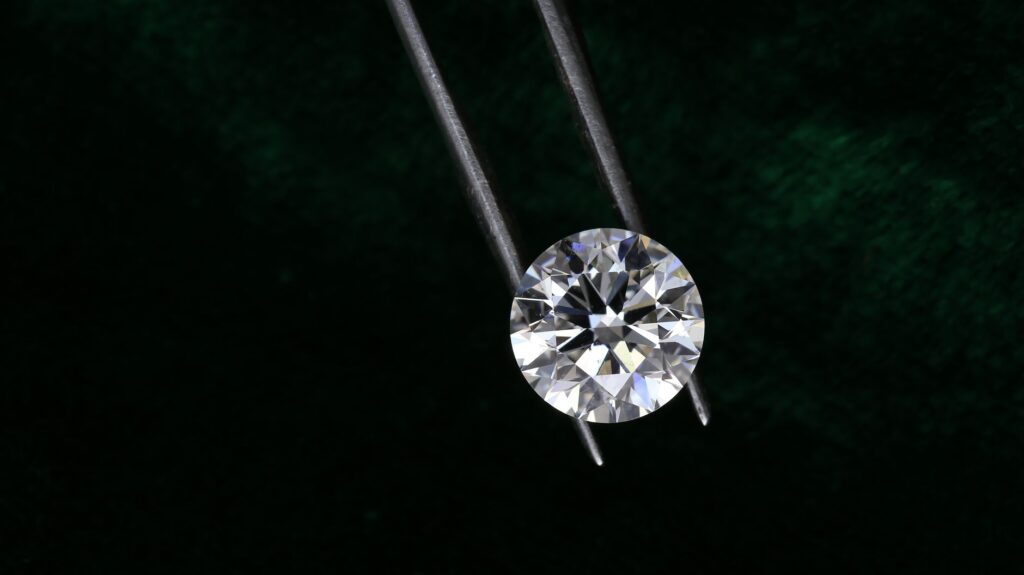
An E color diamond is very close to the top of the grading scale. It is colorless and typically appears crisp, bright, and icy white. Under normal viewing, it should not show an obvious yellow or brown tint.
Because E is so high on the scale, it is often chosen by buyers who want a premium color grade without paying for the top D grade. In practice, it looks extremely white, especially when the diamond is cut well and set in a bright metal like platinum or white gold.
F Color Appearance
F color is also classified as colorless, and it is still considered an excellent grade. It may have a trace more body color than E when viewed in a grading environment, but that difference is usually so small that most consumers will never notice it in everyday wear.
In a real ring, F color still looks white and clean. Unless it is compared directly with an E diamond under controlled conditions, it will rarely appear “less white” in any way that matters to a typical buyer.
What Buyers Usually See in Real Life
What most people notice is not the letter grade itself, but the overall brightness of the diamond. A well-cut E or F diamond can both look brilliant and colorless. If the cut is weak, however, the stone may look less lively regardless of whether it is E or F.
That is why color grades should never be judged in isolation. A diamond with excellent cut often appears whiter than a poorly cut diamond with a higher color grade.
Can Most People See the Difference Between E and F Color?
In normal buying and wearing conditions, most people cannot reliably see the difference. Even many jewelry shoppers who compare diamonds in person may not be able to identify which is E and which is F without help.
The difference becomes easier to detect only under certain conditions. These include a loose stone, side-by-side comparison, bright neutral lighting, and someone with a trained eye. Even then, the difference is often more about subtle nuance than obvious contrast.
For a finished engagement ring, the visibility is usually even lower. The setting, the metal color, and the surrounding design all affect how much attention is drawn to the diamond’s color.
Side-by-Side Visibility
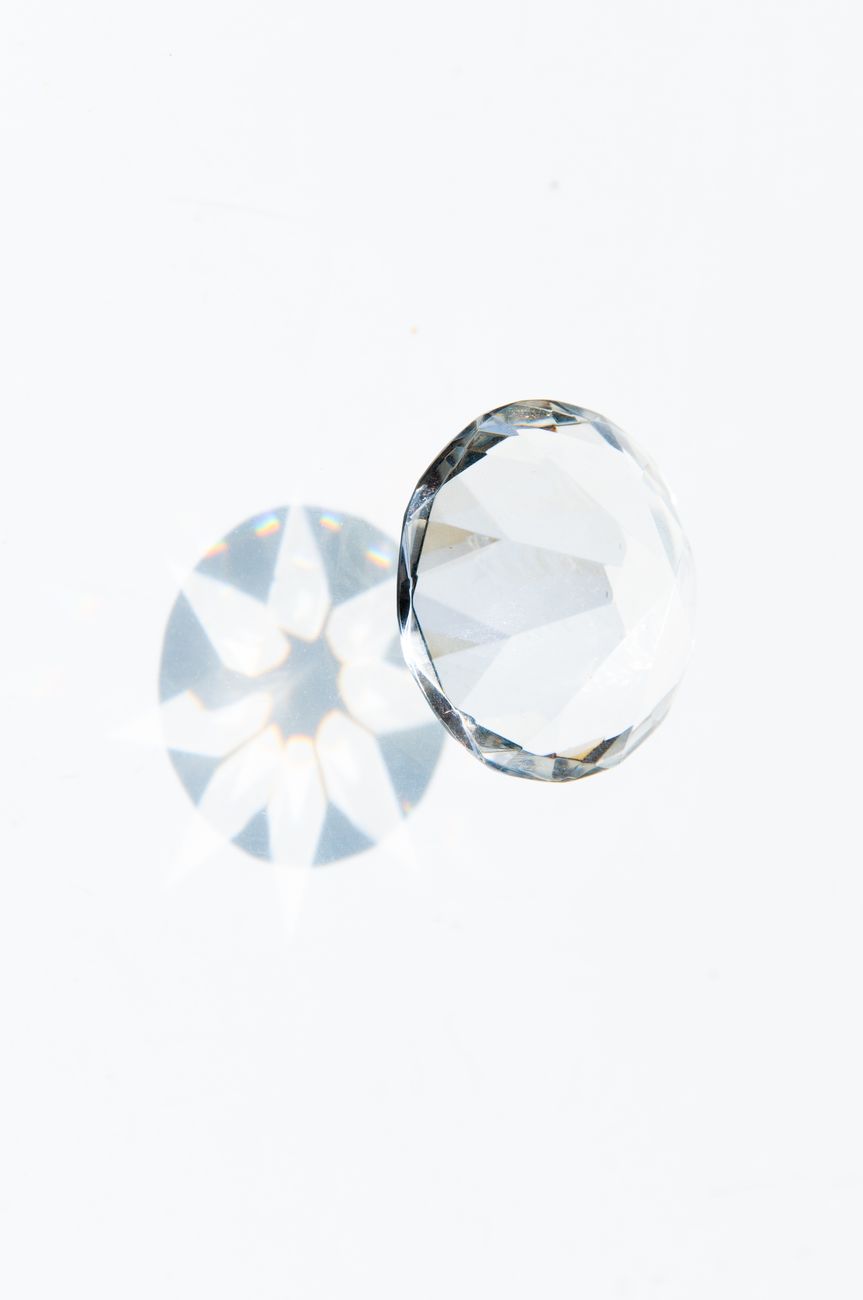
If you place an E and an F diamond next to each other on a white background and look carefully, the E may seem fractionally whiter. But that slight distinction often disappears once the stones are worn separately.
Side-by-side comparisons can be useful for learning, but they can also exaggerate differences that are not meaningful in daily life. Buyers sometimes pay a significant premium for a grade difference they would never notice outside the showroom.
Everyday Visibility
On a finger, under normal lighting, with regular movement, E and F both generally read as colorless. Most people will not pause and think that one is clearly whiter than the other.
This is especially true for smaller to mid-size diamonds. As diamond size increases, color may become a little easier to detect, but even then the difference between E and F remains subtle compared with larger jumps lower on the scale, such as H to J.
Professional vs Consumer Perception
Gemologists and experienced sales professionals may be more sensitive to the difference between grades. That does not mean the difference is obvious to average buyers. It means trained observers know how to look for small color nuances in a controlled environment.
For most consumers, the important point is this: if you need a comparison chart or a grading report to tell the difference, then the difference is probably not significant in normal wear.
How E and F Color Look in Different Metal Settings
Metal choice plays a big role in how a diamond’s color appears. Some metals make subtle color more visible, while others help maintain a bright white look.
Platinum
Platinum is a great match for E and F diamonds because its cool white tone supports a colorless appearance. Both grades usually look very clean in platinum settings.
If you are comparing E and F in platinum, the practical difference is still minimal. The setting enhances the brightness of both grades, making the small color gap even harder to notice.
White Gold
White gold also pairs well with E and F color diamonds. Its whitened appearance helps create a bright overall look, though the rhodium plating used on many white gold settings can wear over time and slightly change the tone of the metal itself.
Even with that change, E and F usually remain comfortably in the colorless range for the eye. A buyer choosing between these grades in white gold should think more about budget and cut quality than about visible color difference.
Yellow Gold
Yellow gold naturally adds warmth to the overall appearance of the ring. In this setting, both E and F diamonds still look white, but the contrast is less important because the metal itself has a warm tone.
For many buyers, yellow gold is actually forgiving. It reduces the need to pay a premium for the absolute highest color grade, because the surrounding metal makes minor tint differences even less noticeable.
Rose Gold
Rose gold has a soft pinkish tone that also tends to make E and F look very clean. Like yellow gold, it is not the setting where tiny color differences usually matter most.
If the ring design is rose gold, many buyers can feel comfortable choosing either E or F without expecting a visible difference in the finished piece.
How E and F Color Look in Different Lighting
Lighting can change how diamond color appears, sometimes dramatically. A diamond that seems perfectly white in one setting may show slightly more body color in another.
Daylight
Natural daylight is one of the best lighting types for seeing true diamond appearance. Under neutral daylight, E and F both tend to look bright and colorless. If there is a difference, it is usually very subtle.
Strong direct sunlight can also create more sparkle and contrast, which often draws attention away from slight color differences. In real outdoor wear, that means the eye is generally focused on brilliance rather than tiny grade distinctions.
Indoor Lighting
Most people view their jewelry under indoor light more than anything else. In typical home or office lighting, E and F still look white, although the exact appearance can vary depending on whether the bulbs are warm, cool, or mixed.
Cooler indoor lighting may make both grades appear a bit crisper. Warmer indoor lighting can add a slight golden cast to the scene, which may make tiny color differences even less relevant.
Jewelry Store Lighting
Jewelry stores often use bright spot lighting designed to enhance sparkle and make diamonds stand out. This type of lighting can make color differences difficult to judge accurately because the lighting itself is flattering and highly controlled.
It is easy to believe a diamond looks more colorless in a showroom than it will in everyday use. That is why buyers should be cautious about making decisions based only on store lighting.
Warm Lighting
Warm bulbs, like those used in many homes, can give diamonds a softer appearance. In that environment, E and F still usually remain visually white, but the warm surroundings may reduce the chance of noticing any subtle difference between them.
In warm lighting, the more important question is whether the diamond maintains a clean overall appearance. E and F usually do.
Why the Difference Is So Small
The gap between E and F is small because these grades are both at the top of the color scale. Color grading is based on subtle shifts in body color, and those shifts become increasingly hard to detect as diamonds move toward the colorless end.
It also matters that diamonds are often seen mounted in rings, not loose and isolated. A setting can hide minor differences, while the cut can create brightness that distracts the eye from tiny tonal changes.
For lab grown diamonds, this point is especially relevant because many are produced in high color grades. That means buyers often face a choice not between “white” and “not white,” but between two highly similar premium grades.
Price Premium vs Visual Benefit
One of the most important parts of the E versus F decision is value. A higher color grade usually costs more, but the visible improvement may be very hard to detect.
That creates a classic diminishing returns scenario. The closer you get to the top of the scale, the more you pay for increasingly small visible gains.
What You Pay For
When you move from F to E, you are paying for a modest improvement in graded color, not a dramatic visual transformation. The diamond will not suddenly look dramatically bigger, brighter, or more brilliant simply because of that one-step upgrade.
For some buyers, the psychological comfort of having a higher grade is worth the extra cost. For others, the premium feels unnecessary once they understand how subtle the difference is.
Is the Upgrade Worth It?
That depends on the rest of the diamond and the buyer’s priorities. If the diamond is large, set in white metal, and viewed very closely, the higher grade may be more appealing to someone who wants the top end of the color range.
But if budget matters, F color often represents stronger value because it still sits in the colorless category and generally looks just as white in real use. In many cases, the money saved can be better spent on cut quality, carat size, or a more durable setting.
How E and F Color Compare in Lab Grown Diamonds
Lab grown diamonds often appear in higher color grades more frequently than some natural diamonds because of how they are produced. Modern growth methods can yield stones with very little body color, which is one reason colorless lab grown diamonds are widely available.
That can make the E versus F question more common in the lab grown market than some buyers expect. Since both grades are already high, the visible difference remains small, but the pricing structure may still reflect the higher grade.
Does Color Behave Differently in Lab Grown Diamonds?
The basic way color appears is the same in lab grown and natural diamonds. A diamond that contains less visible color still looks whiter. What differs is availability and pricing, not the physics of how color is seen.
Because lab grown diamonds are often more affordable overall, some buyers use the savings to choose a higher color grade. That can make sense in a white-metal setting, but it is still worth asking whether the upgrade is visible enough to matter.
Should You Prioritize Color in Lab Grown Diamonds?
Not always. In many lab grown rings, cut quality has a bigger impact on beauty than moving from F to E. A well-cut F diamond can look excellent and may offer better value than a less balanced E diamond with weaker proportions or a higher price.
The best approach is to think in terms of the whole diamond, not just the color letter. Color is important, but it is not the only factor that determines how white and attractive the stone appears.
How E and F Compare in Different Diamond Shapes
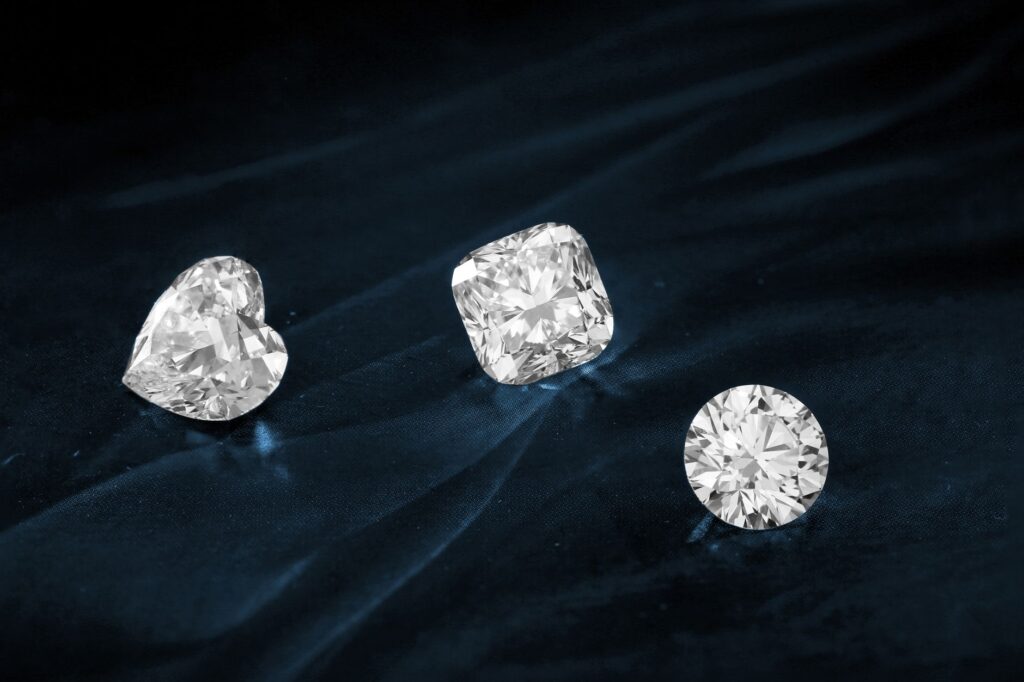
Diamond shape affects how color is perceived. Some shapes hide color better, while others make subtle body color easier to notice.
Round Brilliant
Round brilliant diamonds are known for strong sparkle and efficient light return. That brilliance often helps mask tiny color differences, so E and F both tend to look very white in round stones.
For round diamonds, the visual gap between E and F is usually extremely difficult to detect once the stone is mounted.
Oval, Cushion, and Emerald Cuts
Fancy shapes can behave differently. Oval and cushion cuts can still be very bright, but some buyers feel color is a bit easier to spot in them than in rounds, especially in larger sizes.
Emerald cuts are a special case because their large open facets can make color more visible. In an emerald cut, the difference between E and F may still be subtle, but some shoppers are more sensitive to it than they would be in a round brilliant.
Princess and Other Square Shapes
Princess cuts often show good brightness and can do a good job of minimizing color appearance. E and F both typically look colorless in these shapes, especially when well cut.
In other words, shape can matter as much as grade when it comes to what the eye actually notices.
Comparison Table: E vs F Color
| Factor | E Color | F Color |
|---|---|---|
| GIA color category | Colorless | Colorless |
| Visible difference in normal wear | Usually not noticeable | Usually not noticeable |
| Side-by-side loose stone comparison | Slightly whiter on paper | Slightly more color than E, but still very white |
| Appearance in white metals | Excellent | Excellent |
| Appearance in yellow or rose gold | Looks white and clean | Looks white and clean |
| Value | Higher cost, smaller visible gain | Usually stronger value |
| Best for | Buyers who want a premium grade | Buyers seeking excellent colorless appearance and better value |
Who Should Consider Paying for E Color?
There are a few situations where E color may make sense. The first is if you simply want a higher grade for peace of mind and do not mind the extra cost. Some buyers value having a slightly better letter on the grading report even when the visible difference is tiny.
E can also be appealing in larger stones, especially if the diamond is viewed very closely or set in a style that draws attention to the center stone. Buyers who are extremely sensitive to any trace of warmth may also prefer E over F.
That said, these are preference-based reasons, not universal necessities. An E diamond is not inherently “better” in a way that every buyer will see or need.
Who Can Save Money with F Color?
F color is a very practical choice for buyers who want a colorless diamond but do not want to pay a premium for the smallest possible grading difference. It is especially sensible if the ring is in yellow gold or rose gold, where slight color distinctions are less important.
F is also a strong option for buyers who want to maximize value in lab grown diamonds. Since lab grown diamonds often offer excellent color and clarity at lower prices, it can be smart to avoid paying for a grade difference that most people will never notice.
If your goal is a diamond that looks white and elegant in everyday wear, F is usually more than sufficient.
Common Buyer Mistakes When Comparing E and F
Paying for a Difference That Is Hard to See
One of the most common mistakes is assuming that a better letter automatically means a visibly better diamond. With E and F, that is often not true. The premium may be real, but the visible gain is extremely small.
Ignoring Cut Quality
Cut has a major effect on sparkle and brightness. A well-cut F diamond can easily look more impressive than a poorly cut E diamond because brilliance influences how white the diamond appears.
Buyers sometimes get so focused on color that they overlook the factor most likely to shape the stone’s overall beauty.
Forgetting the Setting
The metal color can change how a diamond is perceived. Choosing E over F in a yellow gold ring often provides little practical benefit, while the same comparison in a white metal setting may still show only a very small difference.
Matching the grade to the setting is often more useful than chasing the top color letter.
Judging Only by the Grading Report
A grading report is essential, but it is not a substitute for understanding visual impact. Two diamonds with adjacent grades can look nearly identical once mounted.
The report tells you the grade. It does not guarantee that the eye will notice the difference.
What an Experienced Buyer Often Prioritizes
Experienced buyers tend to think about trade-offs. If E and F look nearly the same, the smarter question becomes where extra budget creates a meaningful improvement.
In many cases, the answer is cut quality. After that, buyers may consider carat size, overall proportions, ring design, or even a better clarity grade if it improves the stone’s appearance. Color is important, but beyond a certain point, the return on extra spending becomes smaller.
That is why F color is often a sweet spot for value-conscious shoppers. It stays comfortably within the colorless range while avoiding some of the premium attached to top-end grades.
Frequently Asked Questions
Is E color better than F color?
On paper, yes. E is a higher grade than F because it shows slightly less body color. In practice, though, the difference is usually very small and often not visible in normal wear.
Can a normal person tell the difference between E and F?
Usually not. Most people cannot reliably distinguish between E and F once the diamond is set in a ring and viewed under everyday lighting.
Does E color look whiter than F?
In a strict side-by-side comparison, E may look a touch whiter. But the difference is generally so subtle that most buyers will not notice it unless they are specifically comparing the two.
Is F color considered high quality?
Yes. F is still a colorless grade and is considered excellent quality. It is high on the diamond color scale and typically looks very white to the eye.
Which is better for white gold or platinum, E or F?
Both work very well. White metals support a clean, colorless look, and the practical difference between E and F in those settings is usually minimal.
Which is better for yellow gold or rose gold?
F is often a very sensible choice because the warm metal tone makes tiny color differences even less noticeable. E can still look beautiful, but the upgrade is usually less important in those settings.
Should I choose E color in a lab grown diamond?
Only if the price difference feels worthwhile to you. Lab grown diamonds often make it easier to afford high color grades, but F is still excellent and may offer better value if you prefer to allocate budget elsewhere.
Does diamond shape affect whether I can see the difference?
Yes. Some shapes, like emerald cuts, can show color more easily than round brilliants. In many round diamonds, the difference between E and F is especially hard to notice.
Practical Buying Guidance
If you are deciding between E and F, start with how you plan to wear the diamond. For a ring that will be viewed in real life, not under a gem lab microscope, both grades are highly attractive and colorless.
If you want to optimize value, F often makes strong sense. It usually looks just as white as E in the finished ring, especially when cut quality is strong and the setting supports a bright appearance.
If you want the slightly higher grade for personal comfort or you simply prefer the top end of the colorless range, E is also a reasonable choice. The key is to understand that you are paying for a refinement that is usually subtle, not dramatic.
Conclusion
Can you see the difference between E and F color? In most real-world situations, the answer is no, or at least not clearly enough to matter. Both grades are colorless, both can look very white, and both are strong choices for engagement rings and other fine jewelry.
The difference becomes most visible in loose stones, side-by-side comparisons, and controlled lighting, where a trained eye may notice that E is fractionally whiter. Outside of those conditions, the practical visual gap is usually tiny.
For most buyers, the better question is whether the price premium for E creates a meaningful benefit. In many cases, F color offers excellent appearance and stronger value, while E appeals to buyers who want the higher grade for personal preference or peace of mind. The smartest choice is the one that fits your budget, setting, and overall priorities without overpaying for a difference you are unlikely to see.