Diamond clarity is one of the easiest quality factors to misunderstand because it sits at the intersection of grading science and everyday appearance. A diamond can have a lower clarity grade on paper and still look perfectly clean in a ring, while a higher-graded stone may offer little visible advantage in normal wear.
That is why the real question behind What Is Diamond Clarity is usually not about terminology. It is about whether tiny internal features actually matter once the diamond is set, worn, and viewed in ordinary lighting.
For most buyers, clarity matters most when it affects what the eye can see. That is especially true with lab grown diamonds, where shoppers often want the most attractive stone for the budget rather than the highest possible grading label.
Quick Answer
Diamond clarity describes how free a diamond is from internal features called inclusions and external features called blemishes. These marks can be natural, growth-related, or created during cutting and polishing. Most are only visible under magnification and do not affect the everyday beauty of the diamond.
In practical buying terms, many diamonds in the VS2 and SI1 range are eye-clean, meaning inclusions are not visible to the naked eye in normal viewing conditions. That is why these grades often offer strong value.
Higher clarity grades can be worthwhile if you want extra peace of mind, if the diamond shape shows inclusions more easily, or if a specific stone has visible marks that bother you. But paying more for clarity only makes sense when the difference changes what you actually see.
Understanding Diamond Clarity
What diamond clarity means
Clarity is a grading measure that describes the presence, size, number, type, and placement of features inside and on the surface of a diamond. Internal features are called inclusions. External features are called blemishes.
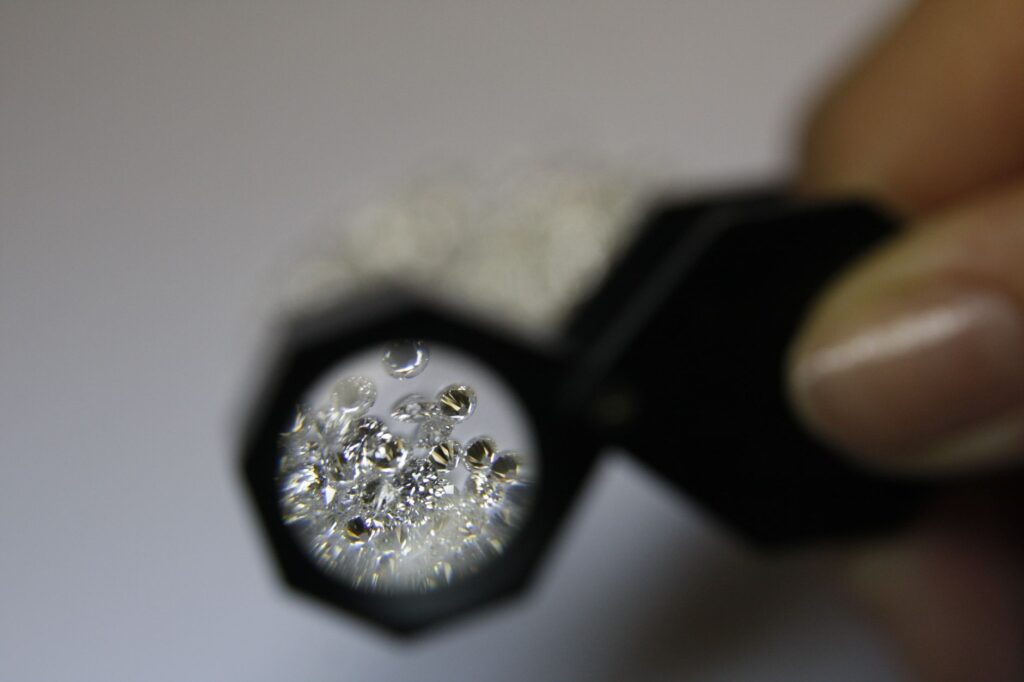
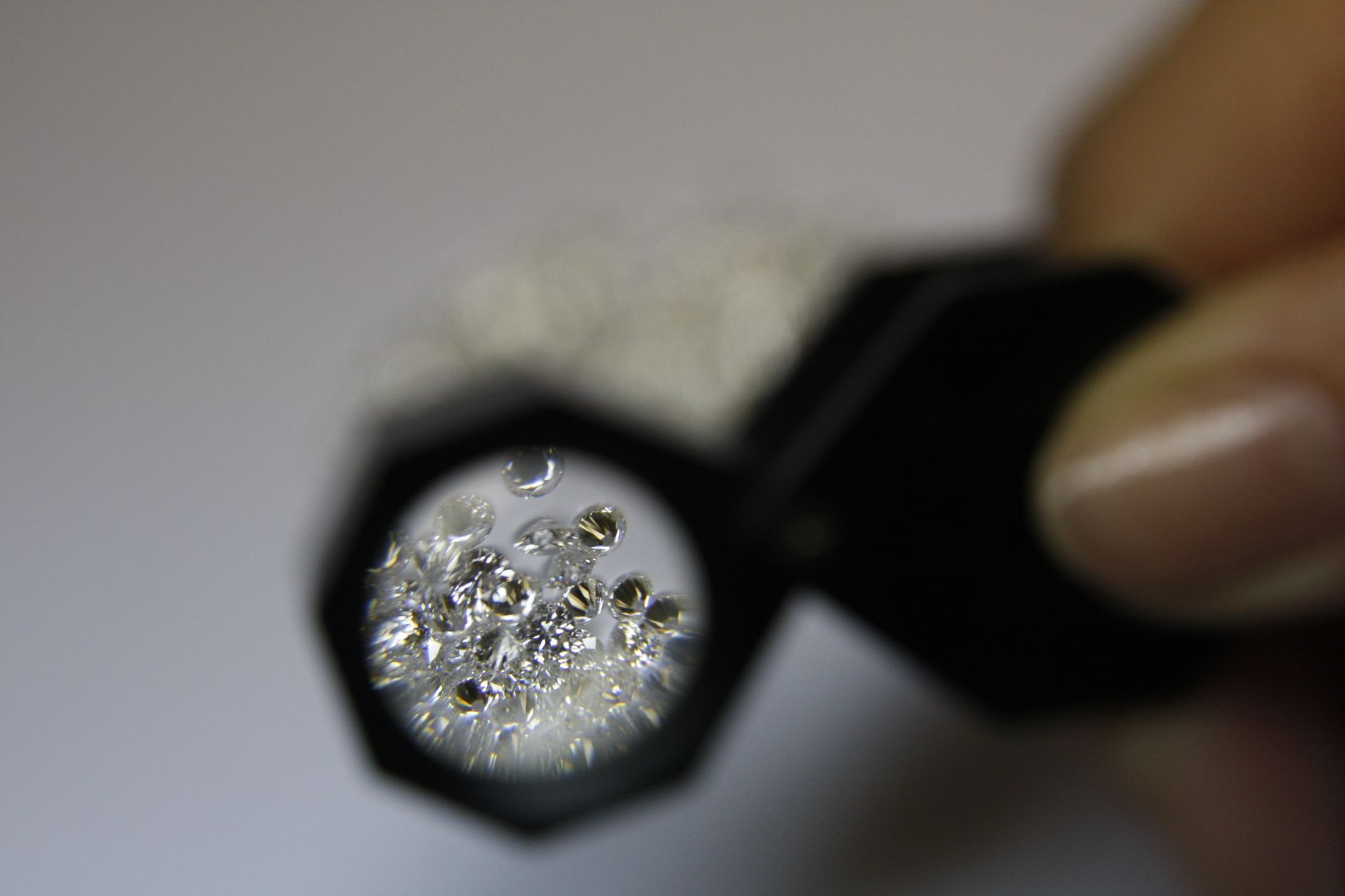
Most clarity grading is done under 10x magnification by a trained grader. That means the official grade reflects what can be seen with magnification, not necessarily what a buyer will notice with the naked eye.
This difference matters. A diamond can have a modest clarity grade and still look beautiful in person if its inclusions are tiny, light in color, or hidden where they are difficult to see.
Inclusions versus blemishes
Inclusions are features inside the diamond. Common examples include crystals, feathers, clouds, pinpoints, needles, and twinning wisps. These features may form during the diamond’s growth or as a result of internal structural changes.
Blemishes are surface characteristics. Examples include scratches, pits, chips, polish lines, and nicks. They matter because they can affect the finished appearance of the stone, and in some cases, durability.
Most shoppers focus more on inclusions because they are usually the features that determine whether a diamond looks clean to the eye. Blemishes still matter, but they are often less important than the location and visibility of internal marks.
How clarity grades are organized
The GIA clarity scale runs from Flawless to Included. The main categories are:
- FL and IF, the highest clarity grades
- VVS1 and VVS2, very very slightly included
- VS1 and VS2, very slightly included
- SI1 and SI2, slightly included
- I1, I2, and I3, included
These labels can sound more dramatic than the real-world differences actually are. A diamond with a VS2 grade may look nearly identical to a VVS diamond if both stones are eye-clean and well cut.
Why Diamond Clarity Matters
Appearance
Clarity affects whether a diamond looks clean, transparent, and distraction-free. If inclusions are large, dark, or placed in the center of the stone, they may catch the eye and interrupt the overall look.
At the same time, many clarity characteristics are too small to notice without magnification. In those cases, clarity matters more on the report than in daily wear.
Visibility
The practical question is not just, “What grade is it?” but “Can I actually see anything?” A diamond with a lower clarity grade can still be eye-clean if the inclusions are tiny or positioned where they are difficult to notice.
Visibility depends on the type of inclusion, the size of the diamond, the shape, and where the inclusion sits within the stone. It also depends on how the stone is cut, because cut can influence how much a diamond hides or reveals what is inside it.
Value
Clarity influences price, especially in the higher grades. But the premium does not always translate into a visible improvement.
That is why many experienced buyers try to find the lowest clarity grade that still looks clean to the eye. This often produces better value than paying more for a higher grade that looks the same once the diamond is mounted.
Long-term satisfaction
Some buyers simply feel better choosing a higher clarity grade, even if the visual difference is small. Others prefer to put more of the budget toward size, cut, or color.
Neither approach is wrong. The best choice is the one that fits your visual expectations, comfort level, and budget priorities.
How Diamond Clarity Affects Appearance
What buyers actually see
Most people do not look at a diamond under a loupe during normal wear. They see it on a hand, in motion, in indoor light, and sometimes outdoors. That means clarity should be judged by whether a feature is visible at normal viewing distance, not by whether it exists under magnification.
Many inclusions that are obvious on a grading report are invisible to the naked eye. On the other hand, a dark inclusion near the center of the stone may stand out even in an otherwise high-grade diamond.
Eye-clean appearance
Eye-clean means the diamond does not show visible inclusions to the unaided eye under normal viewing conditions. This is one of the most useful buyer-focused terms in diamond shopping.
An eye-clean diamond may be VS1, VS2, SI1, and sometimes even SI2, depending on the shape and inclusion type. A diamond that is not eye-clean can still be attractive, but the marks may be noticeable to you or to other people.
Transparency and sparkle
Clarity does not directly control sparkle in the same way that cut does. Sparkle is mainly driven by proportions, facet precision, and light return. Still, heavy clouding or dense internal features can make a diamond look less crisp.
In a well-cut diamond, cut quality usually has a bigger effect on brilliance than moderate clarity differences. That is why a poorly cut high-clarity diamond can look less appealing than a well-cut lower-clarity stone.
Why shape matters
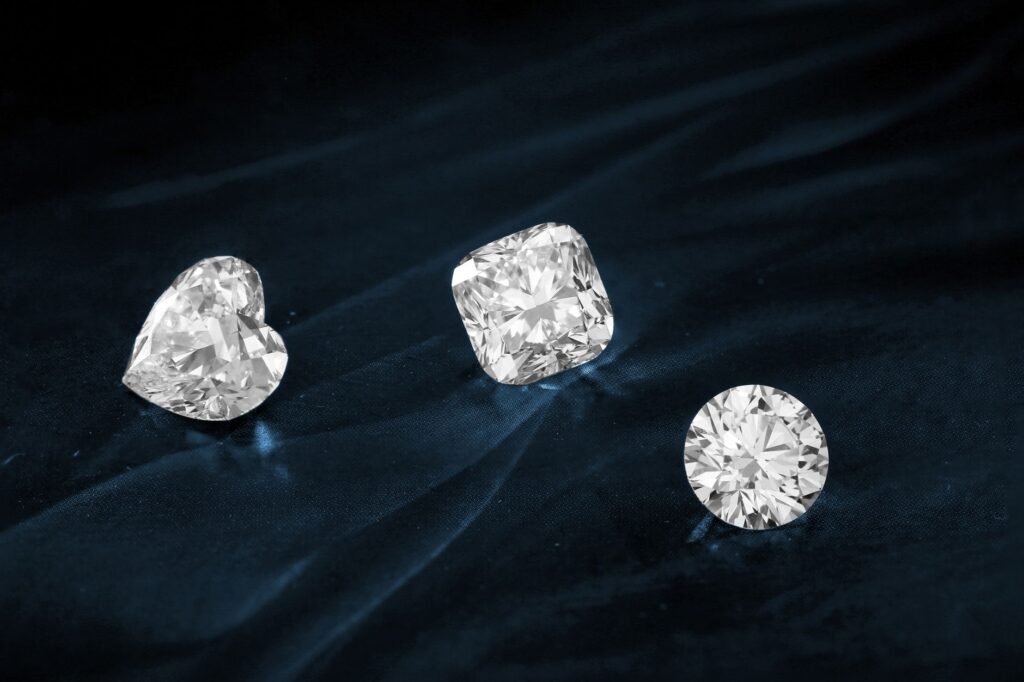
Diamond shape influences how easy it is to see inclusions. Round brilliant diamonds often hide inclusions well because their facet pattern creates more visual movement. Step cuts such as emerald cuts tend to reveal more of the interior because they have larger, open facets.
That means a buyer choosing an emerald cut often needs to pay closer attention to clarity than someone choosing a round brilliant. The same grade can look different from one shape to another. For related background, it helps to understand how diamond shapes and diamond cut affect visibility and appearance.
Common Clarity Grades and What They Mean in Real Life
Flawless and Internally Flawless
FL means no inclusions or blemishes are visible under 10x magnification. IF means no internal inclusions are visible under 10x magnification, though very minor surface blemishes may still be present.
To most buyers, FL and IF are nearly impossible to tell apart in normal viewing. The difference is mainly on paper and in price, not in day-to-day appearance.
These grades are rare and command a premium. For shoppers focused on visual value, that premium is often hard to justify unless a top report grade is personally important.
VVS1 and VVS2
VVS means very very slightly included. The inclusions are extremely difficult to see even under magnification, including for trained graders.
In real-world wear, VVS diamonds are usually eye-clean. Most buyers will not notice a visible difference between VVS and VS stones if both are selected carefully.
The premium for VVS clarity is often more about peace of mind or the appeal of a top-end grading report than about visible improvement.
VS1 and VS2
VS means very slightly included. These diamonds usually contain minor inclusions that can be seen under magnification but are often not visible to the naked eye.
VS1 is generally the safer choice if you want a high likelihood of eye-clean appearance. VS2 can also be excellent value, especially in round brilliant stones and smaller to mid-size carat weights.
For many buyers, VS clarity offers one of the best balances between appearance, comfort, and price.
SI1 and SI2
SI means slightly included. In this range, inclusions are more likely to be noticeable under magnification, and sometimes visible to the eye depending on type, color, and placement.
SI1 diamonds can be excellent value if they are eye-clean. SI2 diamonds are more variable. Some look good in certain shapes or sizes, while others show visible inclusions or a hazy appearance that affects the overall look.
This is the range where individual screening matters most. Two SI1 diamonds can look very different from one another.
I1, I2, and I3
I means included. These diamonds have inclusions that are typically easier to see and may affect appearance more noticeably.
Some I1 diamonds can still look acceptable from a distance, but they are usually not the first choice for buyers who want a bright, clean-looking ring. I2 and I3 diamonds often have visible inclusions that are difficult to ignore.
For most engagement ring shoppers, these grades require caution because the trade-offs in appearance are usually substantial.
How Different Inclusion Types Affect Clarity
Crystal
A crystal is a small mineral crystal trapped inside the diamond during growth. It may appear white, transparent, gray, or dark depending on the material and how light interacts with it.
Small crystals are often harmless visually, but darker crystals can be more noticeable. Their importance depends mostly on size, color, and location rather than the name of the inclusion alone.
Feather
A feather is an internal fracture that can look like a tiny crack or wispy line. Many feathers are stable and have little practical impact on durability.
They deserve more attention if they reach the surface, are large, or sit near a vulnerable point such as a corner or edge. In those situations, they can increase the chance of damage.
Cloud
A cloud is a group of many tiny pinpoints that may create a hazy area. Small clouds usually do not matter much, but larger or denser clouds can reduce transparency.
This inclusion deserves special attention because a diamond can have a respectable clarity grade and still look slightly dull if the cloud affects the face-up appearance.
Needle
A needle is a long, thin inclusion that looks like a fine line. Needles are often difficult to see without magnification unless they are large or grouped together.
They usually do not create significant durability issues. Most buyers only need to be concerned if several needles cluster in a way that affects the look of the stone.
Pinpoint
A pinpoint is a very tiny crystal point, often visible only under magnification. A single pinpoint is usually not a concern.
Many diamonds contain pinpoints without any visible effect. They are common and often part of what determines the assigned clarity grade.
Twinning wisp
A twinning wisp is a line or ribbon-like feature formed during crystal growth. It can contain tiny inclusions and appears in some diamonds more often than others.
Sometimes a twinning wisp is harmless to appearance. In other cases, it can create a cloudy or textured look if it is prominent or combined with other features.
Knot
A knot is a crystal inclusion that reaches the surface of the diamond. Because it intersects the surface, it may be more noticeable than a fully internal inclusion.
Knot concerns depend on size and placement. They can also complicate cutting and polishing, which is why they are worth reviewing carefully when they appear on a report.
Cavity
A cavity is a small opening or indentation in the diamond’s surface caused by the removal of a surface-reaching inclusion during cutting or polishing.
Cavities are not common in many buying situations, but they deserve attention because they can be more visible than internal marks and may affect durability if they are large or poorly positioned.
Chip
A chip is a small break on the surface of the diamond. This is usually considered a blemish rather than a standard inclusion.
Chips matter because they can affect both appearance and durability. They are especially important if they are near a facet edge, corner, or point on a shape such as a princess cut.
Why Clarity Often Matters Less Than Buyers Expect
Clarity sounds important because it is part of a diamond’s official quality description. But in real life, the eye is often much more sensitive to cut quality, size, and overall brightness than to tiny inclusions that cannot be seen without magnification.
This is one reason many jewelers recommend buying the lowest clarity grade that still looks eye-clean. That approach allows more of the budget to go toward features people notice more quickly, such as a better cut or a larger center stone.
This does not make clarity unimportant. It simply means the grade should be judged by visible effect rather than by label alone.
How Clarity Affects Value
When paying more makes sense
Higher clarity can be worth the extra cost when:
- the diamond is large enough that inclusions are easier to spot
- the shape reveals the interior more readily, such as emerald, Asscher, or oval cuts
- you personally want a cleaner report for peace of mind
- the lower-grade stone has visible marks that affect the look
- the inclusion type or position raises durability concerns
In these cases, moving up in clarity may improve the actual appearance or reduce concern about the stone.
When the premium is hard to justify
Paying a large premium for FL, IF, or VVS clarity often makes less sense if the diamond already looks eye-clean at VS1, VS2, or SI1. The visible difference may be minimal or nonexistent once the diamond is viewed normally.
In that situation, the extra money may be better spent on cut quality, a more flattering shape, or a larger center stone. Those changes are usually easier to see than a subtle clarity upgrade.
Common value sweet spots
For many buyers, the most practical value often falls in the VS2 to SI1 range, provided the diamond is eye-clean and well cut. In lab grown diamonds especially, this range can be an efficient place to shop because the overall price structure often makes visual value a bigger priority than report prestige.
The best value is not the lowest clarity grade possible. It is the lowest grade that still meets your visual standards.
| Clarity range | Typical visibility | Value outlook | Best for |
|---|---|---|---|
| FL to IF | No inclusions visible under magnification | Premium pricing, limited visual payoff | Buyers who want top report prestige |
| VVS1 to VVS2 | Usually eye-clean | High price, often small visible benefit | Buyers seeking very high clarity with extra comfort margin |
| VS1 to VS2 | Often eye-clean | Frequently strong balance of beauty and price | Most practical buyers |
| SI1 to SI2 | Variable, sometimes eye-clean | Can be excellent value if screened carefully | Value-focused shoppers who review each stone carefully |
| I1 and below | Inclusions often visible | Lower price, more appearance trade-offs | Highly budget-focused buyers with lower visual expectations |
Practical Examples Buyers Often Compare
VS2 versus SI1 in normal viewing conditions
This is one of the most common comparisons. A VS2 diamond often has minor inclusions that are unlikely to be visible, while an SI1 may or may not be eye-clean depending on the individual stone.
In many cases, a carefully chosen SI1 can look just as clean as a VS2 once it is mounted and viewed at normal distance. If both stones are eye-clean, the price difference may not be worth it for buyers who value practical appearance over report prestige.
Eye-clean SI1 versus non-eye-clean SI1
Not all SI1 diamonds are equal. One SI1 may have tiny inclusions near the edge, while another may have a dark inclusion right under the table, the flat center facet.
The first diamond might look excellent to the eye. The second might be visibly distracting. That is why reading the grade alone is not enough.
VVS clarity versus VS clarity for everyday wear
In everyday wear, most people cannot tell VVS and VS apart without magnification. Both can appear very clean if selected well.
For many shoppers, upgrading from VS to VVS adds little visible benefit. The main difference is usually in price, not in day-to-day appearance.
Lab grown diamonds and clarity value
In lab grown diamonds, clarity can be especially easy to overemphasize because the overall value proposition is already strong. Some buyers respond by chasing the highest possible grade, even when a lower grade would look the same in real life.
The same rule still applies: if a lab grown diamond is eye-clean in VS2 or SI1, paying more for a higher clarity grade may not materially improve what you see.
How Clarity Compares Across Shapes
Round brilliant
Round brilliant diamonds are usually the most forgiving shape for clarity. Their facet pattern creates movement and sparkle that can help disguise minor inclusions.
Because of that, many round brilliant diamonds in VS2 or SI1 look very clean to the eye, especially in smaller to medium sizes.
Oval, pear, and marquise
Elongated shapes can sometimes hide inclusions well, but they also have areas where marks may become visible near the center or along the length of the stone. The result depends heavily on inclusion placement.
These shapes are often worth reviewing individually rather than relying on grade alone.
Princess cut
Princess cuts can show inclusions near the center because of their broad face-up geometry and sharp corners. A small inclusion near a corner may be less noticeable than one under the table.
Durability also matters here, since corners are naturally more vulnerable to chipping.
Emerald and Asscher cuts
Step cuts have large, open facets that behave almost like windows. They tend to reveal clarity characteristics more easily than brilliant cuts.
For these shapes, many buyers prefer to be more careful with clarity and may choose a higher grade than they would for a round brilliant.
Advantages of Higher Clarity
- Fewer or less visible inclusions under magnification
- Lower chance of spotting flaws in everyday wear
- Greater peace of mind for buyers who prefer cleaner grading
- Better fit for shapes that reveal inclusions more readily
- Possible benefit in some resale situations, though resale value is never guaranteed
These are real advantages, but they are not equally important for every buyer. Higher clarity is most meaningful when lower grades would actually show visible marks or cause concern.
Disadvantages of Higher Clarity
- Higher price with diminishing visual returns
- Less budget available for cut, size, or setting quality
- Many differences are invisible without magnification
- Buyers may focus too much on the report instead of the face-up look
- Top clarity grades can create the impression that the diamond is automatically better in appearance
In many cases, buyers pay more for a distinction that is real on paper but hard to see in practice. That is why clarity should always be considered alongside the other 3Cs, especially cut.
Buying Considerations That Matter Most
Budget
If budget matters, clarity is often one of the easiest places to save without giving up visible beauty. Many shoppers can move from VVS to VS, or from VS to SI1, and use the savings to improve the cut grade or increase size.
That is often a more visible improvement than paying for a higher clarity label.
Eye-clean priority
Decide whether eye-clean is your real goal. If it is, focus on what you can see rather than the grade on the report.
Ask for magnified images or video and, when possible, a dealer’s eye-clean assessment. A diamond that is eye-clean in one shape or size may not be eye-clean in another.
Inclusion placement
Location matters as much as size. A small inclusion near the edge can be easier to hide than a slightly larger inclusion under the center of the stone.
When reviewing a plot or video, pay attention to where the inclusion sits. Center placement often deserves more caution than edge placement.
Shape
Some shapes are more forgiving than others. Round brilliants usually conceal minor inclusions more effectively. Step cuts, especially emerald cuts, show the interior more clearly because of their open structure.
This means clarity needs can vary quite a bit by shape. The right grade for a round brilliant may not be the right grade for an emerald cut or oval.
Carat size
As diamonds get larger, inclusions become easier to detect. A grade that looks clean in a smaller stone may be more noticeable in a larger one.
That is why clarity should be considered together with diamond carat, not separately.
Lab grown diamond considerations
Lab grown diamonds are often available in higher clarity grades more frequently than natural diamonds, but that does not mean higher grades are always the best choice. A lab grown diamond with VS2 or SI1 clarity can still be beautiful and offer strong value.
Some shoppers want a cleaner report in a lab grown stone because they associate it with a more refined appearance. That is understandable, but it is still wise to judge by visible outcome rather than grade alone.
Certification
A grading report helps you compare diamonds, but it is not a substitute for seeing the stone. Reports from respected labs such as GIA or IGI are helpful starting points because they provide a consistent framework for clarity evaluation.
For many buyers, it is also useful to understand how diamond certifications work before comparing stones.
Common Buyer Mistakes
Overpaying for invisible clarity improvements
One of the most common mistakes is paying much more for a higher clarity grade that does not change the diamond’s visible appearance. This often happens when buyers assume the report grade and the visual look are the same thing.
In reality, a lower grade that is eye-clean may be the better purchase.
Ignoring inclusion type and location
Not all inclusions create the same effect. A small white crystal near the edge may be less concerning than a dark crystal or cloud in the middle of the stone.
If you only read the grade and ignore placement, you can miss the details that matter most.
Assuming all SI diamonds are the same
SI1 and SI2 diamonds can vary widely. Some are nearly invisible to the naked eye, while others have obvious marks or a slight haziness.
Always look beyond the grade label and review the actual stone whenever possible.
Choosing clarity before cut
Cut often has a greater effect on how a diamond looks than clarity does. A bright, well-cut diamond with moderate clarity can appear more attractive than a higher-clarity diamond with weaker light performance.
For that reason, clarity should usually be balanced against cut rather than prioritized alone.
Ignoring the setting
The setting can hide or expose inclusions. Prong placement, halos, and bezels all influence what can be seen after the diamond is mounted.
A jeweler can sometimes position prongs to cover a small inclusion near the edge, which may let you choose a better-value stone.
How to Evaluate Clarity Like an Experienced Buyer
Step 1: Start with the grade, but do not stop there
The clarity grade is a useful filter, not the whole story. Use it to narrow your options, then examine the actual diamond through images or video if available.
Ask whether the inclusion sits in the center, whether it is dark or light, and whether it affects the face-up view.
Step 2: Check whether the diamond is eye-clean
Eye-clean is often the most practical benchmark. If you cannot see an inclusion at normal viewing distance, the diamond may still be a strong candidate even at a lower grade.
Remember that eye-clean does not mean inclusion-free. It simply means the stone looks clean enough for normal wear.
Step 3: Consider size and shape together
As diamonds get larger, inclusions become easier to detect. As shapes become more open, some inclusions become more noticeable as well.
This is why a clarity grade that works well in a 1-carat round brilliant may not feel as comfortable in a larger emerald cut.
Step 4: Review the inclusion plot and images
The inclusion plot shows the approximate type and location of clarity characteristics. Use it as a guide, then compare it with magnified video or photography when possible.
Visual inspection is especially useful for SI stones and for shapes that show more of the interior.
Step 5: Balance clarity with the rest of the diamond
If a diamond already looks eye-clean, additional clarity may not improve the visual result. At that point, it makes sense to consider whether the money would have more impact if it were spent on cut, color, or size instead.
This is usually the most practical way to buy a diamond with confidence.
Frequently Asked Questions
What is diamond clarity in simple terms?
Diamond clarity is a measure of how many internal and external marks a diamond has. These marks are called inclusions and blemishes. The fewer and less visible they are, the higher the clarity grade.
What clarity is eye-clean?
There is no single clarity grade that is always eye-clean. Many VS2 diamonds are eye-clean, and many SI1 diamonds are eye-clean too. It depends on the specific stone, including inclusion type, placement, size, and shape.
Is VVS worth the extra money?
Sometimes, but not always. VVS diamonds are very clean under magnification, yet the visible difference compared with VS stones is often small or nonexistent. Many buyers find better value in VS clarity if the diamond is eye-clean.
Is SI1 good enough for an engagement ring?
Often yes, if the diamond is eye-clean and the inclusions do not create durability concerns. SI1 can be an excellent value range, but each stone should be reviewed individually.
Do lab grown diamonds need higher clarity?
Not necessarily. Lab grown diamonds can look beautiful at many clarity levels. Higher clarity is only worth paying for if it improves what you can actually see or if you personally prefer a cleaner report.
Can inclusions affect durability?
Some can, but many do not. Small internal marks often have little practical impact. Features like feathers near the surface, chips, cavities, or surface-reaching knots can be more relevant to durability and should be reviewed carefully.
Should I choose clarity before cut?
Usually no. Cut often has a bigger influence on sparkle and overall beauty. Once a diamond meets your clarity comfort level, it is often smarter to optimize cut and value before chasing a higher clarity grade.
Why do two diamonds with the same clarity grade look different?
Because the grade is a range, not a guarantee of identical appearance. The type of inclusion, where it sits, and how the diamond is cut all affect what you see. Two SI1 diamonds can look very different in person.
Conclusion
Diamond clarity matters, but it should be judged by real-world visibility rather than by the grade alone. The most useful question is whether the diamond looks clean to the eye in normal viewing conditions.
For many buyers, VS2 and SI1 offer the best balance of appearance and value, especially when the stone is eye-clean. Higher grades such as VVS, IF, and FL can be appealing, but they often come with premiums that do not always produce a visible improvement.
If you are shopping for a diamond, focus on the combination of clarity, cut, shape, and size rather than clarity in isolation. That approach usually leads to a more satisfying purchase and a better use of your budget.