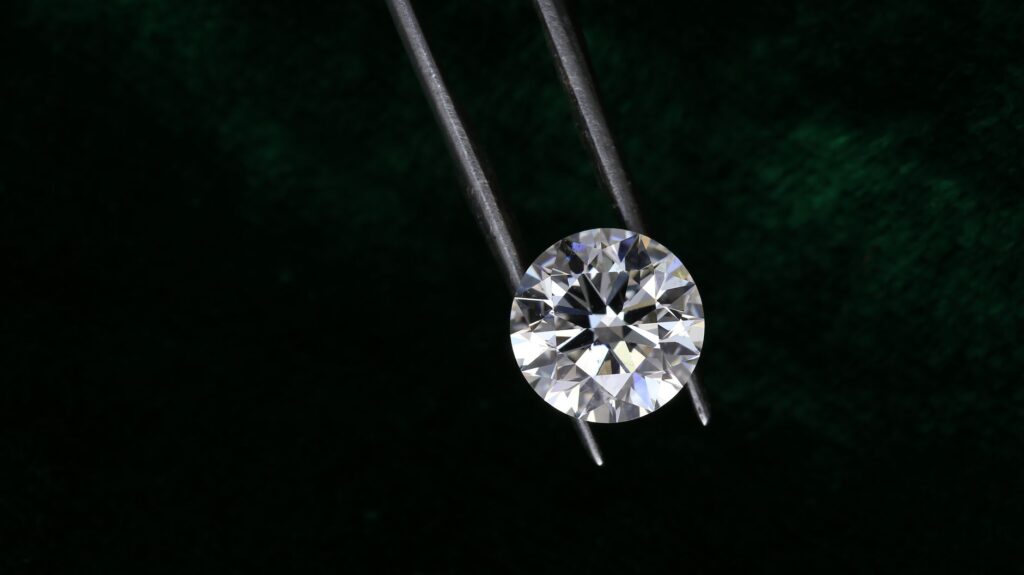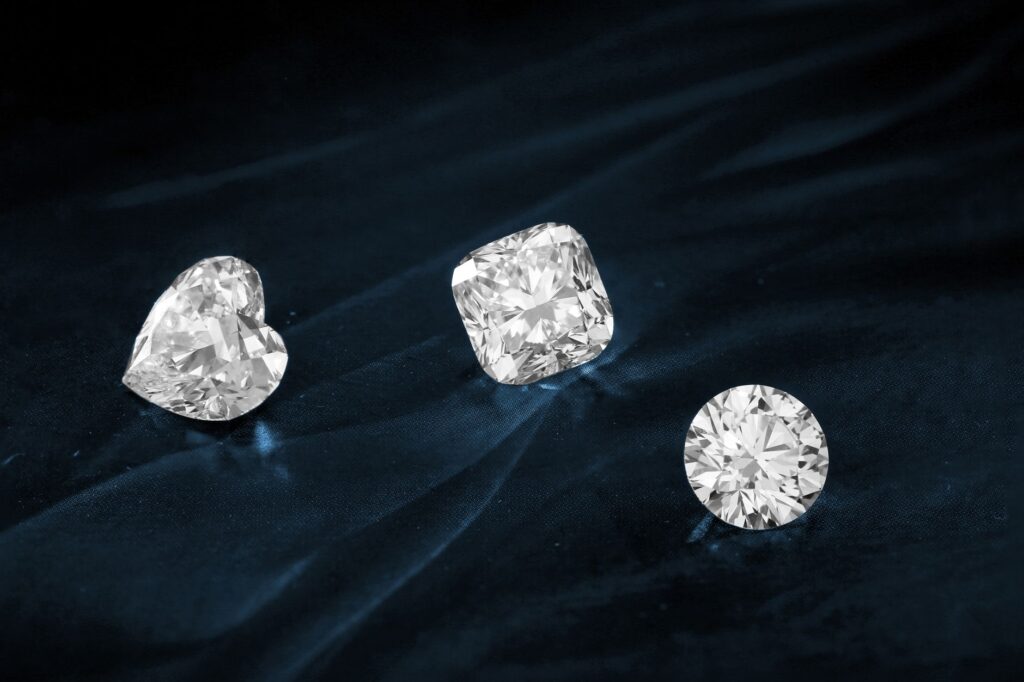
A 1.00 carat diamond and a 1.00 carat diamond can look noticeably different once they are set in a ring. That surprises buyers because the carat number sounds exact and objective. In practice, what your eye notices first is not the weight on a grading report. It is the diamond’s face-up size, shape, proportions, and how much space it covers on the finger.
This is why the question does diamond shape affect carat appearance matters so much. Two diamonds with the same weight may not look equally large. A round brilliant, oval, pear, emerald, and marquise can all weigh the same, yet some will appear broader, longer, or more finger-covering than others.
Understanding this difference helps you avoid a common buying mistake. Instead of paying only for a carat number, you can focus on what the diamond will actually look like in real life. That is especially useful when comparing diamond shapes, deciding between natural and lab grown diamonds, or trying to stretch a budget without sacrificing visible presence.
Quick Answer
Yes, diamond shape affects carat appearance. Carat measures weight, not visible size. Different shapes distribute that weight differently, so some shapes look larger face-up than others at the same carat weight.
In general:
- Elongated shapes such as oval, marquise, and pear often look larger than round diamonds of the same carat weight.
- Round diamonds usually face up slightly smaller than many elongated shapes because more weight can be concentrated in depth rather than spread across length and width.
- Square and rectangular shapes such as princess, cushion, radiant, and emerald can vary quite a bit depending on their proportions.
The practical takeaway is simple. Do not judge size by carat alone. Always look at the diamond’s millimeter measurements, overall proportions, and how the shape appears on the hand.
Understanding the Carat Concept
What diamond carat actually means
Carat is a unit of weight. One carat equals 0.2 grams. It does not tell you exactly how large a diamond will look from the top.
That distinction matters because buyers often treat carat like a size label. It sounds similar to saying a television is 55 inches or a table is 6 feet long. But diamonds are three-dimensional objects, so weight can be distributed in different ways.
What face-up size means
Face-up size refers to how large the diamond looks when viewed from above, which is how it is normally seen in a ring. This is the visual size most people care about.
Face-up size depends largely on:
- Length and width measurements in millimeters
- Shape outline
- How deep or shallow the stone is cut
- The setting style around the diamond
A diamond that carries more of its weight in depth may look smaller from the top. A diamond that spreads more of its weight across its surface may look larger.
Why millimeter measurements matter more than most buyers realize
When comparing two diamonds of the same carat weight, the measurements often tell you more about visible size than the carat number. For example, two 1.00 carat diamonds can have different diameters or different length-to-width proportions.
For round diamonds, buyers usually compare diameter. For elongated shapes, buyers look at both length and width. A longer shape may seem larger because it covers more finger area, even if the width is modest.
Carat weight and visual expectations are not perfectly linked
There is a general relationship between higher carat weight and larger appearance. However, it is not a one-to-one relationship. A heavier diamond usually looks larger, but shape and proportions can make that increase seem stronger or weaker.
This is one reason experienced buyers pay attention to more than a grading report headline. The visible footprint on the hand matters just as much as the weight.
What Buyers Usually Expect
The common assumption that equal carat means equal size
A very common expectation is that two diamonds with the same carat weight should look the same size. On paper, that sounds reasonable. In reality, shape changes the outline and dimensions, so equal weight does not guarantee equal visual presence.
For example, a 1.50 carat oval may look larger than a 1.50 carat round because the oval’s elongated shape can spread the weight across more visible surface area.
The belief that round is the “standard size” for every shape
Some buyers compare all shapes against round diamonds because rounds are the most familiar. That can be helpful as a baseline, but it can also create confusion. A 2.00 carat emerald cut does not have the same visual effect as a 2.00 carat round, and neither one will resemble a 2.00 carat marquise.
Each shape uses carat weight differently. That is why shape-by-shape comparison is more useful than assuming one shape defines how all carat weights should appear.
Confusing spread with sparkle
Another assumption is that a diamond that looks larger is automatically the better choice. Larger face-up size can be appealing, but it is only one part of appearance. A shallow diamond may spread more but can lose brightness or look less lively if proportions are poor.
This is where diamond cut quality matters. Size perception should be balanced with sparkle, light return, and overall beauty.
Expecting noticeable differences from small carat jumps
Buyers often expect that moving from 0.90 carat to 1.00 carat, or from 1.90 to 2.00 carat, will create a major visual difference. Sometimes it does not. In many cases, the change in millimeter size is small, while the price increase can be significant.
This becomes even more important around so-called magic sizes, such as 1.00, 1.50, 2.00, and 3.00 carats. These benchmark weights often carry pricing premiums because they are highly sought after.
What It Actually Looks Like
Shape changes how the eye reads size
The eye does not measure carat. It reads outline, length, width, and finger coverage. That is why shape has such a strong impact on size appearance.
Elongated shapes often appear larger because they draw the eye across a longer silhouette. The diamond can seem more substantial even when the actual weight is identical to a round or square shape.
Finger coverage is a major part of perceived size
What people usually describe as a diamond “looking big” often means it covers a lot of space on the finger. A marquise, oval, or pear can create this effect efficiently because the shape stretches lengthwise. A round diamond may have excellent brilliance but usually covers less length from knuckle direction to knuckle direction at the same weight.
That does not mean elongated shapes are always better. Some buyers prefer the balanced outline and classic appearance of a round, cushion, or princess cut. The key point is that visual size is partly about coverage, not just weight.
Different shapes create different kinds of size impression
Not all “larger-looking” shapes create the same impression. Some look bigger because they appear longer. Others look broader or more geometric. A radiant cut may feel bold and modern. An emerald cut may look elegant and expansive because of its open table and long lines. An oval may look soft and wide-spreading.
This means apparent size is not just about raw dimensions. It is also about the visual character of the shape.
Approximate face-up appearance by shape
The table below gives a general guide to how common shapes tend to appear at the same carat weight. Actual size varies by cut proportions, but these patterns are consistent enough to help buyers compare options.
| Shape | Typical Apparent Size at Equal Carat | Visual Notes |
|---|---|---|
| Round | Moderate to slightly smaller | Classic shape, often faces up smaller than elongated shapes, strong sparkle when well cut |
| Oval | Larger | Elongated outline creates strong finger coverage |
| Marquise | Very large | Long shape often looks especially spread out |
| Pear | Larger | Length gives a bigger look, especially north-south settings |
| Emerald | Moderate to larger | Long open shape can look large, but width matters a lot |
| Radiant | Moderate | Can vary substantially by proportions and length-to-width ratio |
| Princess | Moderate to slightly smaller | Square outline can hide some size compared with elongated shapes |
| Cushion | Often slightly smaller | Rounded corners and deeper cuts can reduce visible spread |
| Asscher | Smaller | Deep pavilion and clipped corners often make it face up smaller |
Factors That Change Apparent Size
Shape
Shape is one of the biggest reasons equal carat diamonds do not look equal in size. A marquise or oval stretches weight across more visible length. A cushion or asscher may carry more weight in the body of the stone and appear more compact.
If visible size is a top priority, shape choice can influence appearance as much as a meaningful carat increase.
Cut proportions
Proportions are the relationships between a diamond’s dimensions, such as depth percentage, table percentage, and overall length-to-width ratio. These affect both appearance and light performance.
A diamond that is cut too deep may hide weight where you cannot see it. The stone can weigh more without looking larger. A diamond cut too shallow may look broad for its weight, but it may lose brightness, contrast, or durability in some cases.
This is why face-up size should not be judged in isolation. A larger-looking diamond is not automatically a better-cut diamond.
Depth
Depth refers to how tall the diamond is from top to bottom. When too much weight is carried in depth, the face-up area can shrink. Buyers sometimes encounter this with fancy shapes, where two stones have the same carat but different visible spread.
A deep stone may still be beautiful, but if size appearance matters, it is important to compare millimeter measurements carefully.
Length-to-width ratio
For elongated shapes, the length-to-width ratio has a strong effect on how large the diamond appears. A longer oval or marquise can look bigger because the eye follows the length. A shorter, wider version of the same shape may feel more compact.
This is partly a style preference. Some buyers want a slender, elongated look. Others prefer a fuller, wider outline. Neither is inherently better, but the visual effect is different.
Setting design
The ring setting can noticeably change perceived size. A thin band usually makes the center diamond look larger because there is less surrounding metal competing for attention. A halo setting can also increase apparent size because the frame of smaller diamonds expands the overall top view.
Other setting choices that influence size perception include:
- Prong style and coverage
- Bezel versus open prongs
- Side stones that add width
- North-south or east-west orientation for elongated shapes
A bezel can make the ring feel more substantial overall, but it may slightly change how the center stone is visually read. East-west settings can make an elongated diamond look wider and more contemporary, though sometimes less long.
Finger size
The same diamond can look very different on different finger sizes. On a size 4 finger, a 1.00 carat round may appear prominent. On a size 8 finger, that same diamond can look more modest because it covers less relative surface area.
This is one reason online size expectations can be misleading. A diamond shown in a studio image may not resemble the final look on your hand unless finger size is considered.
Color and clarity style effects
Shape also interacts with color and clarity appearance. Step cuts such as emerald and asscher cuts have larger open facets, which can make inclusions and body color more noticeable than in brilliant cuts. That does not directly change size, but it can affect how clean and crisp the diamond looks face-up.
In practical terms, a shape that looks large but shows more warmth or inclusions may not create the exact visual result a buyer expected. Size should be considered together with color, clarity, and cut style.
Real-World Size Examples
1 carat round on a size 4 finger versus size 7 finger
On a size 4 finger, a well-cut 1.00 carat round often looks substantial and balanced. The finger is narrower, so the diamond occupies a greater share of the visible surface.
On a size 7 finger, that same 1.00 carat round still looks attractive, but it may appear more moderate. The diamond has not changed, but the surrounding visual context has.
This is why finger coverage should always be part of a buying decision. A carat weight that feels perfect on one hand may seem smaller or larger on another.
2 carat oval versus 2 carat round
A 2.00 carat oval will often appear larger than a 2.00 carat round, especially when viewed on the hand. The oval’s longer shape creates more coverage and often a more dramatic visual footprint.
The round may still have stronger edge-to-edge sparkle if it is well cut, and some buyers prefer its classic symmetry. But in terms of apparent size alone, the oval frequently wins.
0.90 carat versus 1.00 carat
This is one of the most important real-world comparisons because price often jumps at 1.00 carat. Visually, the difference between a well-cut 0.90 carat and a well-cut 1.00 carat can be subtle. In some cases, the millimeter difference is so small that most casual observers would not notice it.
If the 0.90 carat has excellent spread and the 1.00 carat is cut deep, the smaller stone may even appear very similar in size. That makes sub-magic sizes attractive for value-conscious buyers.
1.50 carat cushion versus 1.50 carat marquise
A 1.50 carat marquise usually looks much larger than a 1.50 carat cushion because the marquise stretches lengthwise and creates broad finger coverage. The cushion often appears softer and more compact.
However, the cushion may appeal to buyers who want a plush outline and a balanced shape rather than a lengthened silhouette. This is a classic example of shape changing not just size perception, but the overall style of the ring.
Emerald cut versus radiant cut at the same weight
A 2.00 carat emerald cut and a 2.00 carat radiant cut may have similar length and width ranges, but they often project size differently. The emerald cut’s large step facets and open table can create a broad, glassy look that feels expansive. The radiant cut’s brilliant faceting may give a more sparkly appearance, but sometimes a slightly tighter visual footprint.
Buyers choosing between them should think beyond carat. The better question is whether they want open elegance, crushed-ice style sparkle, or a balance of both.
Diamond Shape Comparison by Apparent Size
The following ranking is general, not absolute. Individual stones can vary based on cut proportions, but this is a useful guide when asking whether diamond shape affects carat appearance.
| Often Looks Larger for Its Weight | Middle Range | Often Looks Smaller for Its Weight |
|---|---|---|
| Marquise | Emerald | Princess |
| Oval | Radiant | Cushion |
| Pear | Round | Asscher |
This does not mean the shapes in the right-hand column are poor choices. It simply means they often carry their weight in a way that makes them look more compact face-up.
Price vs Visual Benefit
Carat price jumps are often steeper than size jumps
Diamond pricing does not rise in a smooth straight line. Prices often increase sharply at benchmark weights such as 1.00, 1.50, 2.00, and beyond. The visual increase, however, is usually gradual.
That means paying more for a magic size may deliver a smaller visual benefit than expected. A 0.95 carat can look very close to a 1.00 carat. A 1.80 carat can look close to a 2.00 carat, especially in elongated shapes.
Shape can improve visual value efficiency
If your priority is visible size for the budget, shape choice may offer better value than simply increasing carat. Choosing an oval, pear, or marquise can create a larger appearance without paying for a significantly higher weight.
This approach does involve trade-offs. Elongated shapes may show bow-tie effects, meaning a darker area across the center in some stones. Shape preference is also deeply personal. But from a size-per-dollar perspective, shape can matter as much as carat.
Lab grown diamonds and size decisions
Lab grown diamonds have changed the size conversation because they often make higher carat weights more accessible within the same budget. That gives buyers more flexibility. Instead of choosing between 1.00 and 1.20 carats, they may be able to consider 1.50 or 2.00 carats without entering the same price range as comparable natural diamonds.
Even so, the same shape principles apply. A 2.00 carat lab grown round will usually not look as large as a 2.00 carat lab grown oval or marquise. Lab grown changes affordability, but it does not change how shape affects face-up size.
Resale and value considerations
Natural and lab grown diamonds also differ in market behavior and resale expectations. That topic is separate from visible size, but it matters if you are comparing value overall. Lab grown diamonds can provide strong size value at the time of purchase, though resale conditions are generally less favorable than many first-time buyers expect.
For buyers focused mainly on appearance and budget efficiency, lab grown can make larger shapes more attainable. For buyers focused on long-term market considerations, the decision may involve additional trade-offs beyond visual size.
Who Should Size Up
Buyers with larger finger sizes
A larger finger size can make a given carat weight look more modest. If strong finger coverage is important, sizing up may be reasonable. This does not mean every buyer with a larger finger needs a bigger diamond, but it often changes what feels visually balanced.
Buyers who prefer compact shapes
If you love cushion, asscher, or princess cuts, you may need a slightly higher carat weight to get the same visual spread that an oval or marquise offers more easily. This can be worth it if the shape itself is your priority.
Buyers who want a strong center-stone presence
Some ring designs are intentionally centered on one prominent diamond with minimal side detail. In those settings, a larger carat weight may be more important because there is no halo or side stone support adding visual scale.
Buyers choosing step cuts with broad visual openness
Emerald and asscher cuts can be elegant and striking, but they often reward buyers who choose enough size to let the shape’s architecture stand out. A modest step cut can still be beautiful, but some buyers prefer to size up slightly to emphasize the hall-of-mirrors look.
Who Can Save Money Without Sacrificing Much Visual Impact
Buyers open to elongated shapes
Choosing an oval, pear, or marquise is one of the simplest ways to get a larger-looking diamond at the same carat weight. This can allow you to stay at a lower carat while maintaining strong visual presence.
Buyers willing to stay below magic sizes
Dropping slightly below benchmark weights can offer excellent value. A 0.90, 0.95, 1.40, 1.80, or 1.90 carat diamond may look extremely close to the next milestone size while costing less.
Buyers prioritizing measurements over labels
A well-proportioned diamond with good spread can outperform a heavier but deep-cut diamond visually. Looking carefully at millimeter dimensions can help you avoid paying for hidden weight.
Buyers using smart setting design
A thin band, delicate prongs, halo design, or well-planned side stones can increase visual impact without requiring a major jump in center stone carat weight. This does not replace true size, but it can change the overall impression significantly.
Buyers considering lab grown diamonds for larger appearance
If the budget is fixed and size matters more than origin, lab grown diamonds can open up larger weight options. A buyer who could only reach a modest natural diamond size may be able to choose a visibly larger lab grown diamond with similar face-up appeal.
Common Buyer Mistakes
Chasing the carat number instead of the look
This is the most common mistake. A buyer focuses on reaching 1.00 or 2.00 carats without checking whether the visible increase justifies the extra cost. The result can be overpaying for a milestone size that does not look much larger.
Ignoring millimeter measurements
Two diamonds with the same carat weight can have different measurements. If you do not compare length and width, you may miss an important difference in visible size.
Assuming all shapes perform the same visually
Shape has a real effect on carat appearance. Comparing a round directly to a marquise or oval without accounting for shape is likely to produce misleading expectations.
Buying a deep stone that hides weight
A diamond can carry extra weight in depth, which may make it face up smaller than expected. This is one reason cut proportions matter even when size is your main concern.
Overvaluing studio photos
Photographs can be deceptive because hand size, angle, lens choice, and setting style all affect perception. A diamond that looks large in one photo may not appear the same way in person or on a different finger size.
Ignoring shape-specific trade-offs
Elongated shapes can look larger, but they may also show bow-tie effects or emphasize certain color and clarity issues differently. Step cuts may look broad and elegant, but inclusions can be easier to see. Each shape has trade-offs beyond size.
Assuming larger-looking always means better value
A shape that appears bigger is not always the best overall choice. You still need to consider cut quality, brilliance style, durability in corners or points, and whether you genuinely like the shape.
How to Compare Diamonds More Accurately
Start with shape, then compare measurements
First decide whether you prefer round, oval, cushion, emerald, pear, marquise, radiant, princess, or another shape. Once the shape category is clear, compare millimeter dimensions within that category.
This avoids unrealistic cross-shape assumptions and helps you evaluate visible spread more meaningfully.
Look at face-up size together with cut quality
Do not sacrifice too much cut quality just to gain spread. A diamond that looks slightly larger but noticeably less lively may not be the better choice in daily wear.
Consider finger size and setting before finalizing carat
A diamond does not exist in isolation. The same stone can read differently depending on hand size and ring design. Think about the final look, not only the loose stone.
Compare sub-magic weights carefully
Before paying more for the next full-carat milestone, compare a slightly lower weight stone of the same shape and quality. In many cases, the visible difference is modest while the savings are meaningful.
Frequently Asked Questions
Does oval look bigger than round at the same carat?
Usually, yes. Ovals often appear larger than rounds of the same carat because their elongated shape creates more finger coverage and a larger visual footprint.
Which diamond shape looks the largest per carat?
Marquise is often considered one of the largest-looking shapes per carat, followed closely by oval and pear. Actual appearance still depends on proportions and setting style.
Does round diamond look smaller than other shapes?
Compared with many elongated shapes, yes. Round diamonds often face up a bit smaller at the same carat weight. However, they remain popular because of their classic look and strong brilliance when well cut.
Can a 0.90 carat diamond look like a 1 carat diamond?
Yes, in many cases it can look very similar, especially if it has good spread and the 1.00 carat comparison stone is cut slightly deep. The visible difference is often smaller than buyers expect.
Does cushion cut look smaller than oval?
Usually, yes. Cushion cuts often appear more compact, while ovals distribute weight across a longer outline. At the same carat weight, an oval typically looks larger face-up.
Do lab grown diamonds look bigger than natural diamonds?
Not at the same shape and carat weight. A 1.50 carat lab grown diamond and a 1.50 carat natural diamond of similar proportions will look about the same size. The difference is that lab grown diamonds often allow buyers to afford larger carat weights within the same budget.
Is the biggest-looking shape always the best choice?
No. A larger-looking shape may suit some buyers, but the best choice also depends on sparkle style, durability, shape preference, color visibility, clarity visibility, and setting design.
Should I choose shape based on size alone?
No. Shape should reflect both your style preference and your size goals. It is better to choose a shape you genuinely like and then optimize for spread, proportions, and value within that category.
Conclusion
Yes, diamond shape does affect carat appearance, sometimes more than first-time buyers expect. Carat measures weight, but what you actually notice is the diamond’s face-up size, outline, proportions, and finger coverage.
Elongated shapes such as oval, pear, and marquise often look larger than round, cushion, princess, or asscher diamonds at the same weight. Cut proportions, depth, setting design, and finger size can increase or reduce that effect. That is why comparing millimeter measurements is so important.
The most useful approach is to stop thinking of carat as a complete size description. Instead, evaluate the full picture. Look at shape, measurements, spread, cut quality, and how the diamond will appear once set on the hand. Buyers who do this usually make better decisions, whether they choose a natural diamond, a lab grown diamond, a milestone carat weight, or a slightly smaller stone that offers stronger visual value.
In practical terms, the best diamond is not automatically the heaviest one. It is the one that gives you the appearance, balance, and value you actually want.