When shoppers compare Excellent Cut vs Very Good Cut Diamonds, the real question is not just which grade sounds better on paper. It is whether the difference will actually be visible in everyday life, and whether the extra cost for an Excellent Cut is worth it for your budget and preferences.
Cut is one of the most important factors in how a diamond looks. It influences sparkle, brightness, fire, and the overall liveliness of the stone. In many cases, a well-cut Very Good diamond can still look impressive, but an Excellent Cut diamond usually has a better chance of maximizing light return and visual impact.
For buyers comparing lab grown diamonds or natural diamonds, this distinction matters because cut often affects appearance more than small differences in color or clarity. If you are trying to decide where to spend your money, understanding cut quality can help you avoid paying for size or clarity that does not actually improve the diamond’s beauty.
Quick Answer: Excellent Cut vs Very Good Cut Diamonds
Excellent Cut diamonds are generally designed to return more light to the eye, which can make them look brighter, more sparkly, and more balanced in appearance. Very Good Cut diamonds can still look beautiful and may offer better value, but they are a step down in precision and may show slightly less brilliance or less consistent sparkle depending on the stone.
For most buyers, the difference is often subtle rather than dramatic, especially once the diamond is set in jewelry. In face-up view, a strong Very Good Cut can look nearly as attractive as an Excellent Cut to many people, but the best Excellent Cut stones usually have more consistent optical performance.
If your goal is maximum beauty and you want the safest choice, Excellent Cut is usually the better target. If you are trying to stretch your budget and the rest of the diamond is strong, a carefully selected Very Good Cut can still be a smart purchase.
What Diamond Cut Actually Means
Many buyers hear the word cut and think it only refers to a diamond shape, like round, oval, or princess. In reality, cut quality is about how well the diamond has been proportioned and polished so it handles light effectively.
Cut quality influences how light enters a diamond, moves through it, and returns to your eyes. A diamond with good cut proportions can look brighter and more lively, even if it is smaller than a poorly cut stone with more carat weight.
Cut is not the same as shape
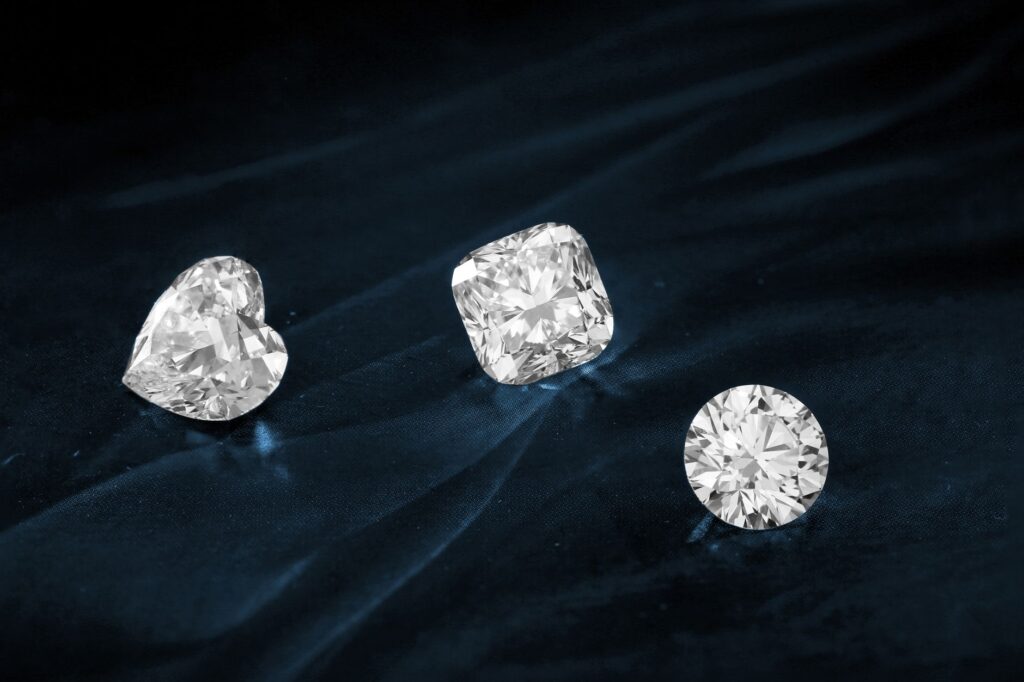
Shape describes the outline of the diamond, such as round, oval, cushion, emerald, or pear. Cut quality describes how well that shape is executed. Two round diamonds can both be round, but one can have superior cut performance while the other leaks light or looks flat.
This is why shoppers researching diamond cut should not focus only on carat weight or shape. The quality of the cutting job affects what you actually see in real-world lighting.
Cut includes several components
When experts talk about cut, they are often referring to a combination of factors:
- Proportions, such as table size and depth
- Symmetry, or how precisely the facets align
- Polish, or how smooth the facet surfaces are
- Light performance, meaning how well the stone reflects and returns light
For buyers, the most important outcome is simple. Better cut usually means a diamond looks more alive, more balanced, and more attractive in everyday wear.
Excellent Cut vs Very Good Cut: The Core Difference
On most grading reports, especially for round brilliant diamonds, Excellent Cut is the highest mainstream cut grade used by major labs such as GIA and AGS. Very Good Cut is one tier below it. That sounds like a small gap, but in diamond terms it can mean a meaningful difference in optical precision.
Excellent Cut diamonds are more likely to be engineered for optimal brightness, fire, and scintillation. Very Good Cut diamonds still perform well, but they may have slightly less ideal proportions or less perfect facet alignment. The result can be a small reduction in sparkle efficiency or visual balance.
Importantly, this is not a simple case of “good” versus “bad.” Many Very Good diamonds are attractive and well-made. The real difference is often in how consistently they handle light under different viewing conditions.
Why Cut Matters More Than Many Buyers Realize
Cut is one of the strongest drivers of how a diamond looks from a normal viewing distance. Most people do not inspect diamonds under magnification in daily life. They see the stone in natural light, indoor light, office lighting, and sometimes low light. Cut quality affects all of those situations.
A diamond can have strong color and clarity grades, but if the cut is weak, it may still look dull or less lively. On the other hand, a well-cut diamond can sometimes appear more brilliant than a larger stone with more carat weight but poorer proportions.
This is why jewelers often emphasize cut before other quality factors. It is the feature most closely tied to the immediate visual impression of the diamond.
Why buyers care in practical terms
Most shoppers want a diamond that looks bright, sparkly, and appealing without requiring constant explanation. They want to know whether the stone looks beautiful in person, not just whether it checked a box on a certificate.
Cut affects that everyday experience. If you are comparing two diamonds with similar color, clarity, and size, the one with better cut usually has the edge in overall appearance.
How Excellent Cut and Very Good Cut Affect Appearance
The most visible differences between Excellent and Very Good cut diamonds usually show up in the way the stone handles light. That includes overall brightness, sparkle pattern, and the crispness of reflections inside the diamond.
Brilliance
Brilliance is the white light a diamond reflects back to the eye. An Excellent Cut diamond often looks brighter because more light is being returned efficiently. A Very Good Cut diamond can also be bright, but may not have quite the same intensity or uniformity.
In practical terms, many buyers notice brilliance first. When a diamond looks bright from multiple angles and in different lighting conditions, it tends to feel more lively.
Fire
Fire refers to the colored flashes of light that appear as a diamond moves. Excellent Cut diamonds are often better at creating a balanced mix of white sparkle and colored flashes. Very Good Cut stones may still show fire, but the effect may be slightly less consistent.
Fire is easiest to notice when the diamond is moving under direct light. It is one of the reasons some diamonds look more “alive” than others even if they are the same size.
Scintillation
Scintillation is the pattern of sparkle and contrast as the diamond moves. It includes the bright flashes you see when the stone and light source shift position. Excellent Cut diamonds often produce more pleasing and balanced scintillation because the facet arrangement is optimized.
Very Good Cut diamonds can still have attractive sparkle, but the flashes may be less crisp or less evenly distributed. Some stones may show a little more dark area or a slightly less precise pattern, depending on the exact make.
Brightness and light return
Light return means how much light enters the diamond and makes its way back to your eye. This is one of the most important parts of diamond beauty. Strong light return gives the stone a brighter, more dynamic appearance.
Excellent Cut diamonds generally have stronger and more efficient light return. Very Good Cut diamonds can still perform well, but small proportion differences may reduce efficiency enough for a trained eye to notice.
Face-up appearance
Face-up appearance is what the diamond looks like from above, which is the angle people usually see. An Excellent Cut diamond often appears larger-looking for its size because it makes the most of the available surface area and light return. A Very Good Cut diamond may still look great, but it is more likely to reveal slight trade-offs in contrast or brightness.
These differences are often subtle, but they matter most when diamonds are compared side by side under similar lighting.
What Buyers Actually Notice in Real Life
In a jewelry store, differences between Excellent and Very Good cut diamonds may become more visible because stones are often viewed under strong spot lighting. Under those conditions, a strong Excellent Cut can stand out with sharper flashes and stronger brightness. However, many Very Good Cut diamonds still look beautiful in the same environment.
In everyday life, the difference may be less obvious. Natural daylight, indoor lighting, and movement all affect how the diamond appears. Most buyers will notice the overall liveliness of the stone more than they will notice the exact cut grade.
That is why it helps to judge diamonds by performance, not just by the label on the certificate. A carefully chosen Very Good Cut diamond can outperform a lower-quality diamond with a higher carat weight, while a top Excellent Cut can make a smaller stone feel more impressive.
How the Cut Grade Is Determined
Cut grade is not based on one measurement alone. Grading labs evaluate a combination of proportions and finish characteristics, then assign a cut category based on the expected visual performance.
Proportions
Proportions include the table, depth, crown angle, and pavilion angle. These are measurements that influence how light travels through the diamond. Small changes can affect whether light is reflected back efficiently or escapes through the bottom and sides.
Buyers do not need to memorize these numbers, but understanding them helps explain why two diamonds of the same shape and carat weight can look different.
Symmetry
Symmetry refers to how accurately the facets line up. Better symmetry generally supports more predictable light behavior and a cleaner overall appearance. Poor symmetry can create uneven sparkle or a less refined look.
Excellent Cut diamonds often, though not always, also have very strong symmetry. Very Good Cut diamonds may have slight symmetry differences that do not always jump out to the naked eye, but they can affect optical performance.
Polish
Polish describes how smooth the facet surfaces are after cutting and finishing. A high polish helps light travel cleanly across the diamond’s facets. If polish is lower, the diamond can look slightly less crisp, especially under magnification or intense lighting.
For most shoppers, polish is a supporting factor rather than the main event. Still, it is part of the overall quality picture.
Comparison Table: Excellent Cut vs Very Good Cut Diamonds
| Category | Excellent Cut | Very Good Cut |
|---|---|---|
| Brightness | Usually stronger and more consistent | Often bright, but may be slightly less efficient |
| Fire | Typically well balanced and lively | Can still show good fire, but may be a bit less intense |
| Scintillation | Often crisp and balanced | Can be attractive, though sometimes less precise |
| Light return | Generally optimized for high performance | Good, but may have small efficiency trade-offs |
| Visual difference | Best chance of top-tier appearance | Difference may be subtle unless compared side by side |
| Value | Usually higher price | Can offer better budget efficiency |
| Buyer fit | Best for buyers prioritizing performance | Good for buyers seeking a balance of beauty and value |
How the Difference Shows Up by Diamond Shape
Cut grade is most standardized and most meaningful for round brilliant diamonds. For fancy shapes such as oval, emerald, pear, marquise, or cushion, cut grading is less standardized, so buyers need to rely more on visual inspection and vendor images.
Round brilliant diamonds
For round diamonds, the difference between Excellent and Very Good cut is often the easiest to discuss because grading systems are more established. Excellent Cut rounds generally offer the most reliable light performance. Very Good rounds can still be beautiful, but the range of quality is broader.
This means one Very Good round may be very close to Excellent in appearance, while another may show more noticeable compromises. It pays to compare individual stones, not just grades.
Fancy shapes
For fancy shapes, the cut grade on a report may not tell the whole story. A Very Good oval might look more appealing than an Excellent round with weaker proportions if you value shape or face-up size. In these cases, optical symmetry, bow-tie visibility, and overall balance matter more than a single label.
If you are shopping for a fancy shape, learning about diamond shapes and light performance becomes especially useful.
Excellent Cut vs Very Good Cut in Lab Grown Diamonds
Lab grown diamonds deserve the same attention to cut as natural diamonds. The fact that a diamond is lab grown does not automatically mean it has better proportions or more sparkle. The cut still determines how the stone performs visually.
Because lab grown diamonds often offer larger sizes at lower prices, some buyers focus heavily on carat weight and color. That can be a mistake. A poorly cut 2-carat lab grown diamond may look less attractive than a well-cut 1.5-carat stone.
In the lab grown market, cut quality can also influence how well you use your budget. Choosing a strong Excellent Cut may make a lab grown diamond appear more premium, while a Very Good Cut may allow you to allocate more of your budget toward size or setting. The right choice depends on your priorities.
When Paying More for Excellent Cut Makes Sense
Paying extra for Excellent Cut often makes sense when appearance is your top priority. If you want the best chance of getting a bright, lively, and balanced diamond, Excellent Cut is usually the safer option.
This is especially true if the diamond will be viewed frequently, photographed often, or used in an engagement ring where sparkle is part of the emotional appeal. Since cut strongly affects the first impression of the stone, many buyers find the premium worthwhile.
Excellent Cut can also be a smart choice when the diamond is otherwise simple and you want the stone itself to do the visual work. In that case, superior light performance can make the diamond feel more refined.
When Very Good Cut May Be the Smarter Value
Very Good Cut can make sense if it offers a noticeable price advantage and the diamond still looks strong in person. This is especially true when the diamond has other qualities you value, such as a larger size or a specific shape, and the visual difference from Excellent is small.
Some buyers are comfortable accepting a slight reduction in optical performance if it helps them stay within budget. That can be a rational trade-off, particularly if the stone still has good proportions, a strong certificate, and clean visual performance.
Very Good Cut may also be appealing when the diamond is being worn in settings where the stone is not always seen under ideal lighting. If the difference is hard to notice in daily use, the extra money for Excellent may not deliver enough practical benefit for everyone.
Advantages of Excellent Cut Diamonds
- Usually stronger brightness and light return
- More consistent sparkle and visual balance
- Better chance of looking impressive in a range of lighting conditions
- Safer choice for buyers who want top appearance
- Often easier to trust when comparing stones online
Disadvantages of Excellent Cut Diamonds
- Usually costs more than Very Good Cut
- May require trade-offs in size, color, or clarity if the budget is fixed
- Not every Excellent Cut diamond looks meaningfully better than the best Very Good stones
- Higher grade does not guarantee personal preference, especially for fancy shapes
Advantages of Very Good Cut Diamonds
- Can offer strong beauty at a lower price
- May allow a buyer to choose a larger diamond or better setting
- Some Very Good stones are very close to Excellent in appearance
- Useful for buyers who want value and are willing to accept small trade-offs
Disadvantages of Very Good Cut Diamonds
- More variation in visual performance from one stone to another
- May show slightly less brightness or sparkle precision
- Differences can be subtle in reports but noticeable in person
- Not the best choice if you want the highest confidence in optical quality
Practical Examples Buyers Can Relate To
Example 1: A well-cut 1.5-carat diamond versus a poorly cut 2-carat diamond
This is one of the most common buying lessons in diamonds. A well-cut 1.5-carat stone can often look more beautiful and more noticeable than a 2-carat diamond with weak cut proportions. The larger stone may have more spread, but if it leaks light or appears dull, the added size does not always translate into better appearance.
For many buyers, this is the clearest proof that cut can matter more than carat weight.
Example 2: Excellent Cut versus Very Good Cut in everyday lighting
Imagine two round diamonds that are close in size, color, and clarity. Under bright store lights, the Excellent Cut may look a bit sharper and more lively. In softer home lighting, the difference might become smaller, though the Excellent Cut still has a better chance of maintaining brightness.
In other words, the advantage exists, but it is often a matter of refinement rather than a dramatic transformation.
Example 3: Higher clarity with poor cut versus lower clarity with excellent cut
Some buyers spend extra on clarity because they want a “cleaner” diamond. But if the cut is poor, that extra clarity may not create a better-looking stone. A well-cut diamond with a slightly lower clarity grade can often appear more beautiful because light performance is stronger and inclusions may still be invisible without magnification.
This is why experienced jewelers often recommend prioritizing cut first, then balancing color and clarity around it.
How Much Difference Is Actually Visible?
For many buyers, the difference between Excellent and Very Good Cut is noticeable only when stones are compared side by side. If you are looking at a single diamond in a ring, the grade alone may not tell you how much sparkle it has in real-world use.
That said, the best Excellent Cut diamonds are usually more reliable. They give you a higher probability of strong visual performance without needing to inspect every stone as carefully for minor compromises.
The practical answer is this: the difference is often subtle, but subtle does not mean irrelevant. In a diamond purchase, subtle improvements in sparkle and brightness can matter because they affect how the stone feels every time you look at it.
What Experienced Shoppers and Jewelers Often Notice
People who compare many diamonds in person often notice that the best cuts have a kind of liveliness that is hard to describe on a certificate. The stone looks brighter without looking washed out, and the sparkle appears more organized rather than random.
They also notice that some diamonds with decent grades still look a bit sleepy or uneven. This is one reason cut grading is important, but not the only thing that matters. A report can help narrow the search, yet actual viewing remains valuable.
Experienced shoppers also pay attention to how the diamond looks in motion. A diamond that flashes cleanly when it moves is often more appealing than one with static brightness but weaker contrast.
Common Buyer Mistakes
Prioritizing carat over cut
Many first-time buyers assume a bigger diamond is automatically the better choice. In reality, a smaller well-cut diamond often looks more attractive than a larger poorly cut one. Size matters, but cut influences how that size presents itself.
Overpaying for clarity that does not improve appearance
Some shoppers choose higher clarity grades while overlooking cut. That can lead to a diamond that is technically cleaner but visually less impressive. If sparkle and brightness are the goal, cut deserves the first look.
Assuming all diamonds sparkle the same
This is one of the most common misconceptions. Diamonds can vary significantly in light performance. Two stones with similar carat weight may look very different because one has better proportions and optical symmetry.
Reading the grade without examining the stone
Grade letters are useful, but they are not the entire story. Especially with Very Good diamonds, quality can vary within the grade. When possible, review images, videos, or trusted vendor notes about light performance.
Ignoring how the diamond will be worn
Buying decisions should reflect how the diamond will actually be used. An engagement ring worn daily deserves different attention than a pendant or occasional-wear piece. The importance of the cut is consistent, but how much you want to pay for top performance depends on use and budget.
How to Evaluate Excellent Cut vs Very Good Cut When Shopping
If you are comparing diamonds online or in person, start with the cut grade, then look deeper at the stone itself. A certificate gives you a useful starting point, but it should not be your only tool.
Look at actual images or videos
Videos can reveal brightness, contrast, and sparkle pattern in ways a grading report cannot. If a seller provides high-quality images or an ASET or Ideal Scope image, that can help you judge light leakage and optical balance more confidently.
These tools are especially useful when comparing Very Good stones, because they help you identify which ones perform closer to Excellent.
Review the full set of quality factors
Cut should be considered alongside color, clarity, and carat. In a balanced purchase, the goal is not to maximize one factor in isolation. The goal is to choose the best-looking diamond for the budget.
For many buyers, that means slightly reducing color or clarity to afford a better cut. This is often a better trade than moving up in clarity while settling for weaker light performance.
Pay attention to the diamond shape
For round diamonds, Excellent versus Very Good is a meaningful comparison. For fancy shapes, the question should broaden to overall visual performance. Shape, bow-tie effect, and outline balance may matter more than a simple cut label.
Certification and Why It Matters
Independent certification helps you compare diamonds more objectively. A grading report from a respected lab documents the stone’s basic characteristics and often includes the cut grade for round diamonds.
Still, shoppers should remember that grading standards are not identical across all labs. A diamond graded Excellent by one lab may not be evaluated the same way by another. Understanding the source of the report helps you compare diamonds more reliably.
For buyers exploring lab grown diamonds, certification is especially useful because it gives structure to an otherwise crowded market. It helps confirm the stone’s properties and gives context for the cut grade you are seeing.
How Cut Affects Value
Cut affects value because it directly influences how attractive the diamond looks. A well-cut diamond often holds more visual appeal per carat than a stone with poorer proportions, even if the latter is slightly larger or has a higher clarity grade.
That does not mean Excellent Cut is always the best financial choice. If the price jump is large and the visible difference is small, Very Good may provide better overall value. The best choice depends on how much you care about fine differences in appearance and how tightly you need to manage your budget.
The highest value is not always the cheapest stone. It is the diamond that gives you the best combination of beauty, confidence, and price for your priorities.
When Diminishing Returns Begin
As cut quality improves, the gains in appearance can become more subtle. The jump from poor cut to Very Good is often obvious. The jump from Very Good to Excellent may be much smaller, especially once the diamond is set and viewed at normal distance.
This is where personal preference matters. Some buyers are sensitive to sparkle quality and want the strongest possible performance, even if the difference is subtle. Others are happy with a stone that looks excellent to the eye and prefer to save money.
In practical terms, the value of Excellent Cut depends on whether you will appreciate that refinement enough to justify the premium.
Buying Considerations for Lab Grown Diamond Shoppers
Lab grown diamond buyers often have more flexibility with budget because prices are typically lower than natural diamonds of similar size. That flexibility can be useful, but it can also lead buyers to overemphasize size and ignore cut.
If you are shopping for a lab grown diamond, it is worth applying the same standards you would use for a natural stone. Excellent Cut often produces the most dependable beauty, while Very Good Cut may allow a larger or more affordable stone if the individual diamond still performs well.
Also consider the long-term satisfaction factor. Many buyers are happiest when their ring looks consistently lively in daily wear, not just impressive by certificate specs.
Buying Considerations for Natural Diamond Shoppers
For natural diamonds, cut can have a strong impact on overall worth because natural stones often carry higher prices at comparable sizes. Choosing a weaker cut to save money can reduce the visual return on that investment.
This is why many natural diamond shoppers place even more emphasis on cut quality. A strong cut can help a diamond look cleaner, brighter, and more premium without necessarily moving to a much higher clarity or color grade.
Frequently Asked Questions
Is Excellent Cut always better than Very Good Cut?
Excellent Cut is usually better from a technical performance standpoint, but not every Excellent diamond will look dramatically superior to every Very Good diamond. Some Very Good stones are very close in appearance. The best answer depends on the individual diamond and your budget.
Can most people tell the difference between Excellent and Very Good Cut?
Not always, especially if they are not comparing the stones side by side. Many people notice the overall sparkle more than the grade itself. The difference is more likely to be seen in direct comparison or under strong lighting.
Should I choose Excellent Cut if I am buying an engagement ring?
If the ring is intended for daily wear and you want the best chance of strong sparkle, Excellent Cut is usually a wise target. That said, a carefully selected Very Good Cut can still work well if it allows you to stay within budget or choose a preferred size.
Does cut matter more than color or clarity?
For appearance, cut often has the biggest effect on how a diamond looks at first glance. Color and clarity still matter, but they are usually less obvious to the eye than cut, especially in well-cut stones. Many buyers get better visual results by prioritizing cut first.
Is a Very Good Cut diamond a bad choice?
No. Very Good Cut diamonds can be beautiful and offer strong value. The main caution is that the quality range within the grade is broader, so it helps to inspect the individual stone carefully rather than relying on the label alone.
Does cut matter more in round diamonds than other shapes?
Yes. Cut grading is most standardized and most meaningful in round brilliant diamonds. For fancy shapes, visual performance matters just as much or more, but the grading system may not fully capture it.
Should I pay more for Excellent Cut in a lab grown diamond?
Often yes, if sparkle and appearance matter most to you. Lab grown diamonds can offer larger sizes, so it is still important not to let carat weight overshadow cut. A smaller Excellent Cut may look better than a larger stone with weaker performance.
What is the safest strategy if I want a beautiful diamond?
Start with a strong cut grade, then balance color, clarity, and carat around it. For most buyers, that strategy gives the best chance of getting a diamond that looks impressive in real life rather than just on paper.
Conclusion
When comparing Excellent Cut vs Very Good Cut Diamonds, the biggest takeaway is that cut quality strongly shapes how a diamond looks in daily life. Excellent Cut usually offers the most reliable brightness, sparkle, and visual balance, while Very Good Cut can still deliver strong beauty and better value in the right stone.
The difference is often subtle, but it is not meaningless. If you care most about performance and want the safest choice, Excellent Cut is usually the stronger option. If you want to stretch your budget and are comfortable with a small trade-off, a well-chosen Very Good Cut can still be an attractive and practical purchase.
The smartest approach is to look beyond the grade alone. Compare the individual diamond’s proportions, images, certification, and overall appearance so you can choose the stone that best matches your priorities.