Diamond carat sounds like a size measurement, but it is actually a weight measurement. That distinction causes a lot of confusion because two diamonds with the same carat weight can look noticeably different once they are set in a ring, and a diamond with a lower carat weight can sometimes look almost as large as one with a higher number on the grading report. Understanding how diamond carat is calculated helps you judge what you are really paying for and how large a diamond is likely to appear in everyday wear.
For buyers, carat matters for more than simple curiosity. It affects price, visible size, proportions, and how a diamond compares across shapes like round, oval, cushion, and emerald cut. It also plays a major role in lab grown diamond shopping, where a buyer may be able to move up in carat weight more easily without increasing the budget as sharply as with a natural diamond.
Quick Answer
Diamond carat is calculated by weight, not by visible size. One carat equals 0.2 grams, or 200 milligrams. Gem labs weigh loose diamonds using highly precise scales, then express the result in carats and points. There are 100 points in 1 carat, so a 0.75 carat diamond is also called a 75-point diamond.
In practical terms:
- 1.00 carat = 200 milligrams
- 0.50 carat = 100 milligrams
- 0.25 carat = 50 milligrams
What buyers actually see, however, is not the weight itself. They see the diamond’s face-up size, which is the visible width and spread from the top. That is why a diamond’s measurements in millimeters matter almost as much as, and often more than, the carat number alone.
Understanding the Carat Concept
What Diamond Carat Actually Means
A diamond’s carat is a unit of weight used for gemstones. It does not describe diameter, surface area, finger coverage, or visual spread. The grading report lists the carat weight because it is one of the standard quality factors, along with cut, color, and clarity.
The term can be misleading because people often use “carat” as shorthand for “how big it looks.” In reality, a 1 carat diamond is simply a diamond that weighs 0.2 grams. How large it appears depends on shape, cut quality, proportions, and even the setting.
How Carat Is Measured
Diamond carat is measured on a precise electronic scale calibrated for gemstones. Reputable laboratories and manufacturers use scales accurate enough to detect very small differences in weight. Because diamonds are valuable, even a few hundredths of a carat can meaningfully affect price.
Carat weight is usually reported to the hundredth of a carat on grading reports. For example:
- 0.70 ct
- 0.93 ct
- 1.01 ct
- 2.35 ct
Some internal trade measurements may go to the thousandth of a carat, but consumers typically see weight rounded or reported to two decimal places on certificates.
What Are Diamond Points?
Jewelers often describe smaller diamonds in points. One point equals one-hundredth of a carat.
| Carat Weight | Points | Weight in Milligrams |
|---|---|---|
| 0.10 ct | 10 points | 20 mg |
| 0.25 ct | 25 points | 50 mg |
| 0.50 ct | 50 points | 100 mg |
| 0.75 ct | 75 points | 150 mg |
| 1.00 ct | 100 points | 200 mg |
This terminology is common in jewelry stores, especially for accent diamonds and smaller center stones.
Why Carat and Karat Are Not the Same
Carat and karat are often confused, but they refer to different things. Carat measures gemstone weight. Karat measures gold purity, such as 14K or 18K gold. They sound similar but are unrelated in diamond grading.
What Buyers Usually Expect
Assuming Carat Means Visible Size
The most common expectation is that a higher carat number automatically means a visibly larger diamond. That is only partly true. A higher carat diamond often is larger, but not always by as much as buyers expect, and not always in the way they expect.
For example, a deep-cut diamond may carry more of its weight below the girdle, which is the outer edge of the diamond. That hidden weight can make the stone weigh more without increasing the face-up width very much.
Assuming Every 1 Carat Diamond Looks the Same
Two diamonds that both weigh 1.00 carat may not look equally large. One may have a generous spread and look broad from the top. Another may have a smaller diameter because more of the weight is concentrated in depth.
This is especially noticeable when comparing fancy shapes, such as oval, pear, marquise, and cushion, where dimensions can vary more widely than buyers realize.
Focusing Too Much on Round Numbers
Buyers often target milestone weights like 0.50, 1.00, 1.50, 2.00, or 3.00 carats. These are sometimes called magic sizes because they are psychologically important and often command higher prices.
What matters visually, though, is whether the diamond actually looks larger. In many cases, a 0.90 or 0.95 carat diamond can look very similar to a 1.00 carat diamond once mounted, especially if the proportions are well balanced.
Ignoring Millimeter Measurements
A grading report gives dimensions in millimeters for a reason. These numbers tell you the diamond’s length, width, and depth. The width and length often reveal more about apparent size than the carat number itself.
From a buyer’s perspective, millimeter measurements are what translate weight into visible presence.
What It Actually Looks Like
Face-Up Size Is What Your Eye Sees
The part of the diamond you see from above is called its face-up size. This is the top view of the stone once it is set in a ring. A diamond can have a certain weight, but if much of that weight is hidden in the depth, it may not look especially large face-up.
For round diamonds, face-up size is often discussed in terms of diameter. For fancy shapes, buyers usually look at length and width together.
Weight Increases Faster Than Visible Size
One reason carat can be confusing is that visual size does not increase in a simple one-to-one way with weight. As diamonds get heavier, extra weight is added in three dimensions, not just across the top surface. That means doubling the carat weight does not make the diamond look twice as wide.
For example, a well-cut round diamond around 1.00 carat often measures roughly 6.4 to 6.5 mm in diameter. A well-cut 2.00 carat round often measures around 8.1 to 8.2 mm. The 2 carat stone is clearly larger, but not twice as wide.
Approximate Round Diamond Face-Up Sizes
| Carat Weight | Approximate Diameter | General Visual Impression |
|---|---|---|
| 0.25 ct | 4.0 mm | Small, delicate center stone |
| 0.50 ct | 5.1 mm | Noticeable, classic understated look |
| 0.75 ct | 5.8 mm | Balanced size for many ring styles |
| 1.00 ct | 6.4 to 6.5 mm | Strong center presence without looking oversized |
| 1.50 ct | 7.3 to 7.4 mm | Substantial and more visually prominent |
| 2.00 ct | 8.1 to 8.2 mm | Bold center stone with strong finger coverage |
| 3.00 ct | 9.2 to 9.3 mm | Large, highly noticeable appearance |
These are approximate averages for well-cut round diamonds. Real stones can vary.
Finger Coverage Changes the Perception of Size
A 1 carat diamond does not look the same on every hand. On a smaller finger, it can appear more prominent because it covers a larger share of the finger’s width. On a larger finger, the same diamond may look more modest.
This is one of the most overlooked parts of diamond shopping. Buyers sometimes compare ring photos online without accounting for finger size at all.
Factors That Change Apparent Size
Shape
Shape has a major impact on visible size. Some shapes tend to carry weight more efficiently across the top, while others may appear smaller for the same carat weight.
In general:
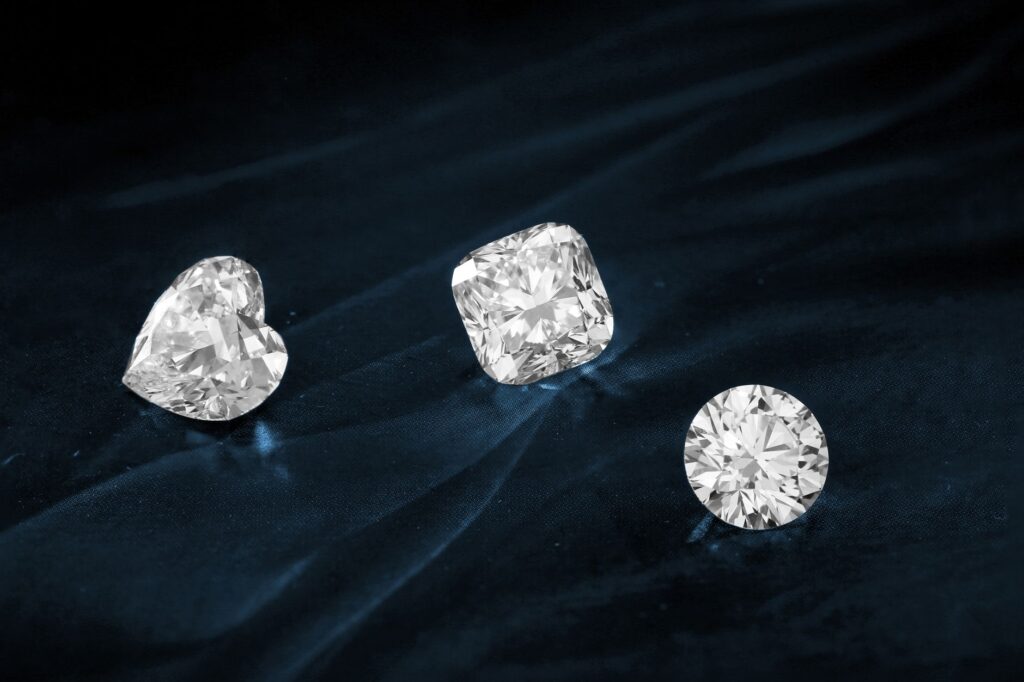
- Oval, marquise, and pear often look larger face-up than round diamonds of the same weight because they have elongated outlines.
- Round brilliant usually offers a balanced mix of brightness, fire, and predictable spread.
- Cushion and princess can sometimes look smaller than buyers expect due to their deeper profiles or clipped corners.
- Emerald and radiant may appear larger or smaller depending on cut proportions and length-to-width ratio.
Cut Quality
Cut quality affects both beauty and perceived size. A diamond that is cut too deep may hold extra weight where you cannot see it. A diamond cut too shallow may look larger but can lose sparkle, brightness, or durability balance.
The goal is not simply to find the widest diamond for the weight. It is to find a stone with attractive proportions that still faces up well.
Depth Percentage
Depth percentage compares the diamond’s depth to its width. A high depth percentage can signal that too much weight is hidden in the body of the diamond. This may reduce face-up spread.
Depth alone does not determine quality, but it is one clue. Buyers should assess depth together with table size, crown angle, pavilion angle, and the stone’s actual millimeter dimensions.
Table Size and Overall Proportions
The table is the large flat facet on top of the diamond. Table size, crown height, pavilion depth, and girdle thickness all influence how weight is distributed. A stone can technically have the same carat weight as another while looking broader or narrower depending on these proportion choices.
This is why grading reports and videos are so important. The weight number by itself is incomplete.
Setting Design
The ring setting changes how large a diamond appears. A thin band can make the center stone look bigger. A halo setting, where small diamonds surround the center, can significantly increase the overall visual footprint. Prong style, bezel settings, and side stones also affect the eye’s perception.
Someone focused on appearance may not need to increase carat weight if a different setting style can produce a larger look.
Color and Clarity Choices
Color and clarity do not directly change millimeter size, but they can affect how the diamond is perceived. For example, a very included diamond may have visible marks that distract from its overall presence. A shape that shows color strongly may appear slightly warmer, which can influence visual impression.
In budget terms, choosing slightly lower color or clarity grades can sometimes allow for more carat weight without an obvious visual compromise, particularly in lab grown diamonds where larger sizes may be more accessible.
How Diamond Carat Is Calculated in Practice
Loose Diamonds Are Weighed Directly
For loose diamonds, carat calculation is straightforward. The stone is placed on a calibrated scale, and its weight is measured directly. This is the standard and most accurate method.
On a grading report, the weight may appear as 1.02 ct, 0.88 ct, or 2.17 ct. That number represents the stone’s actual measured weight.
Mounted Diamonds Are Harder to Calculate Precisely
Once a diamond is set in jewelry, direct weighing of the stone alone is not possible without removing it. In these cases, appraisers may estimate weight based on measurements, shape, and known proportion formulas. This is not as exact as weighing a loose diamond.
That is why appraisals for mounted diamonds sometimes use terms like estimated weight.
Why Carat Calculation Is Separate From Size Estimation
A diamond can be measured in two different ways:
- Weight measurement, which determines carat
- Millimeter measurement, which helps estimate visible size
These are related, but not interchangeable. Carat tells you mass. Measurements tell you spread. Buyers need both pieces of information to understand what they are getting.
Real-World Size Examples
0.90 Carat vs 1.00 Carat Round Diamond
This is one of the most important real-world comparisons because it shows how carat pricing and visual appearance can diverge. A well-cut 0.90 carat round may measure around 6.2 to 6.3 mm. A well-cut 1.00 carat round may measure around 6.4 to 6.5 mm.
That difference is visible side by side, but in normal wear it is often subtle. Price, however, may jump more noticeably at the 1 carat mark because it is a milestone weight.
| Comparison | 0.90 ct Round | 1.00 ct Round |
|---|---|---|
| Approximate Diameter | 6.2 to 6.3 mm | 6.4 to 6.5 mm |
| Visual Difference | Slightly smaller | Slightly larger |
| Price Efficiency | Often better | Often less efficient |
| Buyer Appeal | Value-focused | Milestone-focused |
1 Carat on a Size 4 Finger vs Size 7 Finger
On a size 4 finger, a 1 carat round can look quite prominent because the finger is narrower. It may create a strong center-stone look without needing a halo or side stones.
On a size 7 finger, the same diamond usually appears more moderate. It still looks substantial, but it covers a smaller percentage of the finger’s width. Buyers with larger fingers sometimes prefer elongated shapes or larger carat weights for more finger coverage.
2 Carat Oval vs 2 Carat Round
A 2 carat oval often looks larger than a 2 carat round because its elongated shape stretches visually across the finger. It can create more finger coverage and a longer outline. A 2 carat round typically offers a more balanced and traditional appearance, often with stronger classic brilliant faceting.
This does not make one better than the other. It depends on whether the buyer values a larger-looking outline or prefers the face-up pattern and symmetry of a round brilliant.
1.50 Carat Cushion vs 1.50 Carat Oval
This comparison often surprises buyers. A 1.50 carat cushion can look smaller than a 1.50 carat oval because the cushion shape may carry more visual weight inward, especially if it is deep or has rounded corners. The oval usually appears longer and larger from a distance.
Anyone comparing fancy shapes should pay close attention to actual measurements, not just matching carat weights.
Price vs Visual Benefit
Price Does Not Rise in a Straight Line
Diamond prices generally increase faster than visible size. That is especially true at milestone weights such as 0.50, 1.00, 1.50, 2.00, and beyond. A small increase in diameter may come with a much larger increase in cost.
This is important because the visual reward of going up in carat may not feel proportional to the additional spend.
Diminishing Returns Are Real
As carat weight increases, each additional tenth of a carat usually adds less obvious visual change than buyers imagine. For instance, jumping from 0.90 to 1.00 carat can cost significantly more while producing only a modest difference in spread. Jumping from 1.90 to 2.00 carats can work the same way.
That does not mean larger stones are not worth it. It means the upgrade should be judged on both appearance and budget efficiency.
Where Value Often Improves
Buyers often find stronger visual value slightly below magic sizes. Examples include:
- 0.45 instead of 0.50 ct
- 0.90 to 0.95 instead of 1.00 ct
- 1.40 to 1.49 instead of 1.50 ct
- 1.80 to 1.90 instead of 2.00 ct
If the cut is good and the spread is strong, these stones may look very close in size to the next milestone while costing less.
Lab Grown Diamonds and Carat Decisions
Lab grown diamonds change this conversation because carat upgrades are often more attainable within the same budget. A buyer who might be limited to a smaller natural diamond may be able to choose a significantly larger lab grown stone while still maintaining strong cut quality and respectable color and clarity.
That does not mean carat should be chased without restraint. The same visual principles still apply. A poorly proportioned lab grown diamond can also face up smaller than expected. Buyers should still prioritize measurements, cut quality, and shape performance.
Lab grown diamonds can be especially helpful for buyers whose main goal is a larger face-up appearance, but they should also understand the trade-offs, including different resale expectations compared with natural diamonds.
Who Should Size Up
Buyers Who Truly Want More Finger Coverage
Some buyers know that size is a top priority. In that case, increasing carat weight can make sense, especially if the finger size is larger or the preferred setting is simple and does not add extra visual width.
Buyers Choosing Shapes That Wear Smaller
If someone strongly prefers shapes that can appear compact, such as certain cushions or deep princess cuts, a higher carat weight may be necessary to achieve the desired face-up presence.
Buyers With Flexible Budgets and Clear Size Goals
If budget is not the main constraint and the buyer wants a specific visual impact, sizing up may be reasonable. The key is making sure the increase is visible enough to justify the added cost.
Lab Grown Buyers Prioritizing Maximum Visual Size
In the lab grown market, buyers may find that moving from 1.00 to 1.50 carats or from 1.50 to 2.00 carats is financially realistic. For someone focused on size and open to lab grown, sizing up may offer strong visual benefit.
Who Can Save Money
Buyers Comfortable Just Below Magic Sizes
A buyer who values smart budgeting more than the milestone number can often save meaningfully by choosing a diamond just under a benchmark weight. This is one of the most practical ways to improve value without making the diamond look noticeably smaller.
Buyers Open to Elongated Shapes
Oval, pear, and marquise shapes often create a larger-looking appearance at the same carat weight. If visual spread matters more than having a round stone, these shapes can be efficient choices.
Buyers Using Halo or Multi-Stone Settings
A halo or a three-stone ring can increase overall visual presence without requiring a much larger center diamond. This can be a more cost-effective path to a substantial look.
Buyers Prioritizing Cut Over Weight
A slightly smaller but well-cut diamond often looks brighter and more lively than a heavier stone with poor proportions. Buyers who care about overall beauty may do better with a diamond that balances carat with strong cut quality.
Common Buyer Mistakes
Chasing the Highest Carat Number
A carat number can become a distraction. Buying the heaviest diamond in budget sometimes leads to compromises in cut, color, clarity, or face-up spread. The result may be less attractive than a slightly smaller but better-balanced stone.
Ignoring Measurements
Carat weight alone does not tell you how large the diamond looks. A buyer who skips the millimeter dimensions is missing a key part of the decision.
Comparing Different Shapes by Carat Alone
A 1 carat oval and a 1 carat round do not look identical in size. Neither do a 1.5 carat cushion and a 1.5 carat emerald cut. Shape changes perceived size so much that direct carat-only comparisons are often misleading.
Overpaying for Milestone Weights
There is nothing wrong with wanting a 1.00 or 2.00 carat diamond. The mistake is assuming those thresholds automatically offer the best value. Often they do not.
Forgetting the Role of Finger Size
Size expectations can be unrealistic when buyers rely on social media photos or showroom comparisons without accounting for finger size. The same diamond can appear dramatically different from one hand to another.
Choosing Spread at the Expense of Beauty
Some buyers pursue the largest millimeter size possible for the weight. A diamond that is too shallow may look broad, but it can lose brightness and life. Visible size matters, but so does sparkle and overall performance.
Practical Tips for Evaluating Carat Like an Experienced Buyer
Check Carat and Millimeters Together
Always read both the weight and the dimensions. Ask not just “How many carats is it?” but also “How wide does it face up?”
Compare Stones Side by Side When Possible
Comparing two diamonds with close carat weights can quickly show whether the price jump is justified. Even small differences in spread can become clear when viewed directly.
Use Shape Expectations Wisely
If your goal is maximum visible size, consider shapes known for larger face-up appearance. If your goal is a classic balanced look, round may still be the best fit despite looking slightly smaller per carat than some elongated shapes.
Think About the Ring as a Whole
The setting, band width, finger size, and center shape all influence perceived size. A diamond is not viewed in isolation once it is worn.
Balance Carat With Cut, Color, and Clarity
Carat is only one part of value. A slightly smaller diamond with better cut quality often gives a more satisfying overall appearance than a heavier stone that lacks brightness or has obvious inclusions.
Frequently Asked Questions
Is diamond carat calculated by size or weight?
Diamond carat is calculated by weight. One carat equals 0.2 grams. Visible size is a separate issue and depends on measurements, shape, and cut proportions.
How many grams is 1 carat diamond?
One carat equals 0.2 grams, which is also 200 milligrams.
Do two diamonds with the same carat weight always look the same size?
No. Two diamonds with the same carat weight can look different in size because of shape, cut quality, depth, and overall proportions. A deeper stone may face up smaller than a wider, well-balanced stone of the same weight.
Why does a 0.90 carat diamond sometimes look almost like a 1 carat diamond?
The face-up difference can be quite small, especially in a well-cut stone. The diameter difference may only be a fraction of a millimeter, which is difficult to notice once the diamond is mounted and worn normally.
Does a higher carat diamond always mean better value?
No. Higher carat often means higher price, but not always better value. Sometimes the increase in visible size is modest compared with the extra cost, especially at milestone weights.
Can a lab grown diamond have the same carat weight as a natural diamond?
Yes. Carat is a weight measurement, so a 1 carat lab grown diamond weighs the same as a 1 carat natural diamond. Appearance depends on shape, cut, and proportions, not origin alone.
How is carat estimated for a mounted diamond?
If the diamond is mounted, carat may be estimated using millimeter measurements, shape, and proportion formulas. This is less precise than weighing a loose diamond directly.
What matters more, carat or cut?
Neither should be viewed in isolation, but cut often has the stronger effect on beauty. Carat affects size and price. Cut affects sparkle, light performance, and sometimes face-up spread. A good balance between the two is usually the smartest choice.
Conclusion
Understanding how diamond carat is calculated starts with one simple fact. Carat measures weight, not visible size. A 1 carat diamond weighs 0.2 grams, but how large it actually looks depends on far more than that single number.
Shape, cut quality, depth, millimeter measurements, finger size, and setting design all influence face-up appearance. That is why two diamonds with the same carat weight can look noticeably different, and why a slightly lighter diamond can sometimes offer better visual value than a milestone-weight stone.
For practical buying decisions, the best approach is to evaluate carat together with measurements and proportions. Focus on what you will actually see when the diamond is worn, not just what appears on the grading report. Whether you are comparing natural and lab grown diamonds, deciding between shapes, or trying to stay within budget, that perspective leads to better choices and more realistic size expectations.