A diamond can look larger or smaller than its carat weight suggests, which is why two stones with the same number on paper may create very different impressions in real life. A well-cut 1.00 carat diamond can look more substantial than a poorly proportioned stone that weighs more, and that difference matters when you are choosing an engagement ring or comparing diamond options.
That is the main reason buyers get confused by diamond size. Carat is a measure of weight, not a direct measure of visible dimensions, so understanding how a diamond appears on the hand is just as important as knowing how much it weighs.
Quick Answer
What Is Diamond Carat? Diamond carat is the unit used to measure a diamond’s weight. One carat equals 200 milligrams, or 0.2 grams. It does not tell you the diamond’s exact face-up size, but it does usually influence how large the stone looks.
In practical terms, a higher carat diamond often appears larger, but the relationship is not perfectly linear. Shape, cut quality, depth, and ring setting all affect how much visible size you actually get for the money.
Understanding the Carat Concept
Carat is one of the four Cs of diamond quality, along with cut, color, and clarity. Of those four, carat is the one most closely tied to size in the buyer’s mind, even though it is technically a weight measurement.
If you would like to learn more about the official weight standard, our guide on how diamond carat is measured explains how carat is defined and why it should not be confused with visible size.
Think of carat as the diamond’s mass. A heavier diamond usually contains more material, and that often means a larger outline when viewed from above. Still, two diamonds can have the same carat weight and different measurements if one is deeper, shallower, wider, or cut in a different shape.
What one carat actually means
One carat equals 200 milligrams. A half-carat diamond weighs 100 milligrams. A two-carat diamond weighs 400 milligrams. These are small numbers, but because diamonds are dense and cut with precision, small weight changes can create noticeable price and visual differences.
This is why buyers pay close attention to carat thresholds such as 0.50, 0.75, 1.00, 1.50, and 2.00 carats. Those sizes often carry pricing jumps that are bigger than the visual difference alone would suggest.
Why carat is not the same as size
Carat tells you how much a diamond weighs. Size tells you how large it looks from above and how much of the finger it covers. These are related, but not identical.
A diamond can be heavy because it is deep rather than wide. In that case, some of the weight is hidden below the surface, and the stone may not look as large as expected. This is one of the most important ideas to understand when shopping for diamond carat weight.
What Buyers Usually Expect
Most shoppers assume carat size and visible size are the same thing. That is understandable, because retailers often use carat as the shorthand for diamond size. In reality, the number on the grading report is only part of the story.
Another common assumption is that a small jump in carat will create a dramatic visual difference. Sometimes it does, especially when a buyer crosses a familiar benchmark such as from 0.90 to 1.00 carat. Other times the difference is subtle, especially if the stones are on the same finger and in the same shape.
Buyers also tend to compare carat numbers without checking the diamond’s measurements. That can lead to disappointment. Two 1.00 carat diamonds can have noticeably different face-up dimensions if one is cut shallow and the other is cut deep.
The magic size effect
There is a psychological effect around popular weights like 1 carat and 2 carats. These are often called “magic sizes” in the trade because they attract buyer attention and often carry premium pricing. The visual difference between 0.90 and 1.00 carat, for example, may be smaller than the price jump.
That does not mean those sizes are bad choices. It simply means buyers should understand when they are paying for a number rather than a clearly visible increase in size.
What It Actually Looks Like
When you look at a diamond in a ring, you are mostly seeing the top surface. That is called the face-up view. This is the view that matters most for appearance, because it is how the stone presents on the hand.
Face-up size depends on both carat weight and how efficiently the diamond is cut. A well-cut diamond can appear more spread out because more of its weight is distributed where the eye can see it. A deep stone may look smaller even if it weighs the same.
Visual appearance versus measured weight
Buyers often ask, “How big will it look?” The best answer is usually not the carat alone. The more useful reference is the diamond’s millimeter measurements, especially the top diameter for round stones.
For example, two round diamonds can both weigh 1.00 carat, but one might measure around 6.4 mm across while another measures closer to 6.2 mm. That difference may sound small, but on the finger it can be visible, especially in a side-by-side comparison.
Finger coverage matters
Diamonds look different depending on the size and shape of the hand. A 1 carat diamond on a size 4 finger will cover more of the finger than the same diamond on a size 7 finger. The stone itself has not changed, but the visual impression has.
This is why carat conversations should always be tied to ring size and wearer preferences. A diamond’s appearance is not absolute. It is partly a matter of proportion relative to the hand.
Factors That Change Apparent Size
Several factors influence how large a diamond appears, even when the carat weight is identical. Understanding these factors helps buyers compare diamonds more accurately and avoid overpaying for weight that does not translate into visible size.
Shape
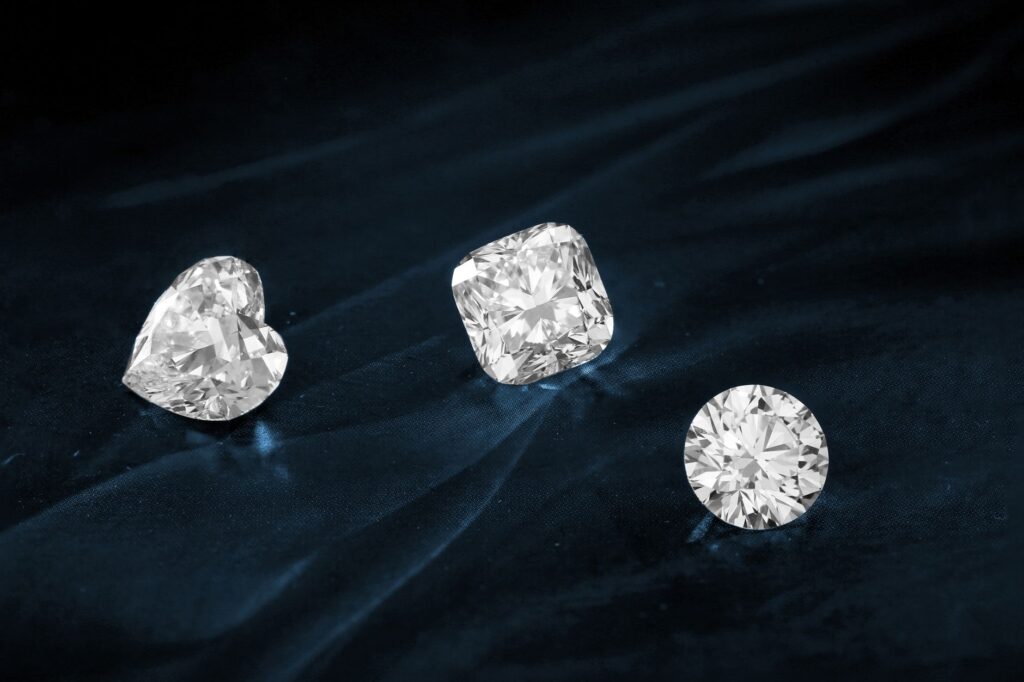
Diamond shape has a major effect on apparent size. Round diamonds often have the deepest proportions, which can reduce face-up spread compared with some elongated shapes. Oval, pear, marquise, and emerald cuts frequently look larger per carat because they cover more surface area from above.
That does not make one shape better than another. It simply means shape affects how far the carat weight goes visually. A 1 carat oval may appear longer and more prominent than a 1 carat round diamond.
Cut
Cut refers to how well the diamond’s proportions, symmetry, and polish work together. It affects sparkle, brightness, and how efficiently the stone handles weight. A well-cut diamond often looks more attractive and may appear larger than a poorly cut stone of the same carat.
Cut quality is especially important in round brilliant diamonds. If a diamond is too deep, too shallow, or poorly balanced, you can lose either brilliance or visible spread. For buyers, this means cut can influence both beauty and apparent size.
Depth
Depth is the vertical measurement of the diamond from the table to the culet, which is the bottom point. A deeper diamond carries more weight below the surface, so it may face up smaller. A shallower diamond may spread out more across the finger, but if it is too shallow, it can lose sparkle and durability benefits.
This is why ideal proportions matter. The goal is not simply to maximize width, but to create a diamond that balances size, brightness, and structural integrity.
Table size and proportions
The table is the flat top surface of the diamond. Table size, together with crown and pavilion proportions, influences how the diamond returns light and how large it appears. A diamond with good proportions often looks more lively and visually balanced than one with extreme measurements.
Buyers do not need to memorize proportion charts, but they should know that laboratory reports with measurements are more useful than carat weight alone when comparing size.
Setting design
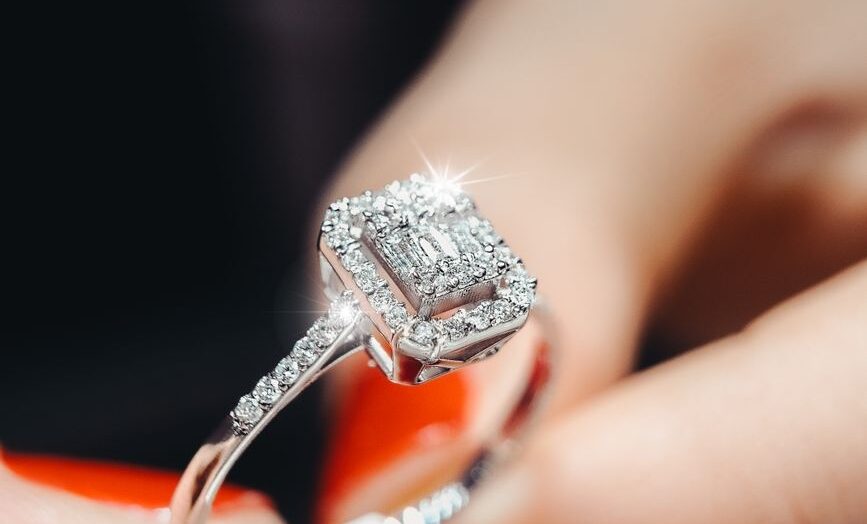
The ring setting can make a diamond look larger or smaller. A thin band, low-profile setting, or halo design may increase visual presence. A thicker band can make the center stone look smaller by comparison.
Prong style also matters. Minimal prongs expose more of the diamond and can enhance the face-up view. Heavy prongs can slightly reduce the visible outline.
Real-World Size Examples
Practical examples are the easiest way to understand what diamond carat means in daily wear. The same weight can look different depending on shape, finger size, and setting, but these scenarios provide a useful baseline.
| Scenario | What It Often Looks Like | Buyer Takeaway |
|---|---|---|
| 1 carat on a size 4 finger | Substantial and highly visible | Often creates strong finger coverage |
| 1 carat on a size 7 finger | Moderate to substantial | Still looks noticeable, but less dominant |
| 2 carat oval vs 2 carat round | Oval often looks longer and larger face-up | Shape can stretch visible size without changing weight |
| 0.90 carat vs 1 carat | Very similar in appearance in many cases | Price difference may be larger than the visual difference |
1 carat on a size 4 finger
On a smaller finger, a 1 carat diamond can look quite prominent. The stone often covers a meaningful portion of the ring finger and stands out even in a simple solitaire setting.
For buyers with smaller hands, the visual impact of 1 carat may feel closer to what larger hands see at a somewhat higher weight. This is one reason hand size matters in size expectations.
1 carat on a size 7 finger
On a larger finger, the same 1 carat diamond usually looks less dominant, though still clearly visible. It can appear elegant and proportional rather than oversized. Some buyers prefer this balanced look.
The key point is that the diamond did not change, but its relative appearance did. That is why carat should not be discussed in isolation from ring size.
2 carat oval versus 2 carat round
A 2 carat oval often looks larger face-up than a 2 carat round because of its elongated shape. The extra length creates more visible coverage along the finger, which can make the stone feel more substantial.
A round diamond may offer stronger symmetry and classic appeal, while an oval may maximize apparent size for the same weight. Buyers should decide which visual effect matters more to them.
0.90 carat versus 1 carat
This comparison is one of the most common in diamond shopping. In many cases, the visible difference is subtle, especially once the diamonds are set in rings. Yet the price difference can be noticeable because 1.00 carat sits at a popular threshold.
For value-focused buyers, 0.90 carat can be a smart choice if the measurements are strong and the cut quality is good. If a buyer wants the prestige of a full carat, the premium may still be worth it to them, but it should be a deliberate decision.
Price vs Visual Benefit
Diamond pricing does not rise in a straight line with carat weight. As size increases, the cost per carat usually increases too. That means a 2 carat diamond is not simply twice the price of a 1 carat diamond. In many cases, it is significantly more expensive on a per-carat basis.
This creates the idea of diminishing returns. Each additional fraction of a carat may cost more than the visible size increase justifies. Buyers often pay the most when they move into popular thresholds where demand is higher.
When the upgrade is visually meaningful
Some size increases are easy to notice. Moving from 0.50 carat to 1.00 carat is usually a clearly visible jump. Moving from 1.00 carat to 1.50 carats is also substantial in many settings.
At these levels, buyers often see a real change in finger coverage and overall presence. If visible size is the top priority, those upgrades may be easier to justify than very small jumps near a threshold.
When the upgrade is mostly numeric
Smaller changes near benchmark sizes can be more about the number than the look. The difference between 0.90 and 1.00 carat, or 1.90 and 2.00 carats, may be less dramatic than the price suggests. That does not mean the upgrade has no value, but the value is often psychological as much as visual.
Experienced buyers often compare actual millimeter measurements before deciding whether the extra weight is worth the premium. That is a more practical method than focusing only on the carat number.
Who Should Size Up
Some buyers genuinely benefit from choosing a larger carat weight. The goal is not to avoid size altogether, but to understand when the added weight translates into a better fit for the wearer’s preferences and lifestyle.
Buyers who want strong finger coverage
If the main goal is a diamond that looks clearly noticeable on the hand, sizing up can make sense. This is especially true for buyers who want the ring to have presence from a normal viewing distance.
For engagement rings, many buyers prefer a center stone that feels proportionate but still substantial. In that case, higher carat weight can deliver the look they want, provided the cut and proportions remain strong.
Buyers choosing elongated shapes
People who want an oval, pear, or marquise shape often care about visible length as much as weight. These shapes can appear larger per carat, so a slightly larger weight may create a more dramatic look than the same investment in a round stone.
For these shoppers, the question is not just how much the diamond weighs. It is how much of the finger it visually covers and whether the shape aligns with their style preference.
Buyers shopping for lab grown diamonds
Lab grown diamonds often allow buyers to choose larger sizes for a given budget. That can make carat weight feel more accessible, especially for shoppers focused on visible size rather than rarity. Still, the same principles apply: cut, proportions, and shape determine whether the diamond looks balanced.
Because lab grown diamonds usually cost less than comparable natural diamonds, some buyers choose to spend their budget on size while still keeping quality strong. Others prefer to prioritize cut and color and avoid going larger than necessary. Both approaches can be reasonable.
Who Can Save Money
Choosing a smaller carat weight can be a practical way to get a beautiful diamond without paying extra for a premium threshold. In many cases, a slightly smaller stone looks very close to the benchmark size once it is mounted in a ring.
Buyers who care more about sparkle than size
Some shoppers are more sensitive to brilliance and visual quality than to absolute weight. For them, a well-cut smaller diamond can be the smarter purchase. A bright, lively stone often looks better than a larger diamond with weaker proportions.
This is especially true for buyers who prefer a refined or understated appearance. A smaller diamond does not have to feel modest if the setting and cut are chosen carefully.
Buyers working within a fixed budget
If the budget is fixed, dropping slightly below a popular size can free up money for better cut, better color, or better clarity. Those trade-offs can have a bigger impact on beauty than a small increase in carat alone.
For example, a buyer may prefer a 0.90 carat diamond with excellent cut over a 1.00 carat stone with weaker proportions. That choice can result in a more attractive diamond overall, not just a better value on paper.
Buyers who want a balanced everyday ring
Some ring wearers want a diamond that feels comfortable, practical, and elegant rather than large. A slightly smaller carat weight may be easier to wear daily, especially if the wearer has an active lifestyle or prefers a lower-profile setting.
This is one of the reasons there is no universal “best” size. The right carat weight depends on the wearer’s hand, habits, and visual preferences.
Common Buyer Mistakes
Diamond carat is easy to focus on because the number seems simple. The problem is that oversimplifying size often leads to poor buying decisions. A more careful comparison usually produces better results and fewer surprises.
Chasing carat numbers instead of appearance
Some buyers fixate on reaching a full carat, or another popular benchmark, even when a slightly smaller diamond would look nearly the same. This can cause them to sacrifice cut quality or pay a premium that does not deliver meaningful visual benefit.
A more practical question is whether the diamond looks the way you want it to look on the hand. That answer matters more than hitting a number exactly.
Ignoring measurements
Millimeter measurements tell you how wide the diamond is, which is crucial for face-up appearance. A 1.00 carat diamond that measures wider may look larger than another 1.00 carat diamond with more depth.
Buyers should always compare the actual measurements along with the carat weight. This is particularly important when comparing online listings or certification reports.
Ignoring shape effects
Shape has a big effect on visible size. A round diamond and an oval diamond of the same carat are not guaranteed to look the same on the hand. Elongated shapes often create more perceived size because they stretch across the finger differently.
When people ignore shape, they often end up surprised by the actual appearance of the ring. That is avoidable with a little comparison shopping.
Ignoring finger size
A diamond does not exist in a vacuum. It sits on a finger, and finger size changes the visual result. A stone that looks large on one wearer may appear moderate on another.
This is one of the simplest but most overlooked parts of diamond size buying. If possible, compare the diamond against the intended wearer’s ring size and hand shape.
Overpaying for magic sizes
Popular weight thresholds often carry a price premium. Sometimes that premium is justified by the buyer’s preference, but sometimes it is mostly a market effect. Buyers who do not understand this can spend more without getting a visibly larger diamond.
A careful comparison between 0.90 and 1.00 carat, or 1.90 and 2.00 carats, can reveal whether the upgrade is worth it. The answer depends on budget, size goals, and how much the extra label matters.
Diamond Carat and Lab Grown Diamonds
Carat works the same way for lab grown diamonds as it does for natural diamonds. A 1 carat lab grown diamond still weighs 200 milligrams, and the same face-up principles apply. The difference is in how the diamond was created and how the market prices it.
Because lab grown diamonds usually cost less, buyers often have more flexibility when choosing size. That can make it easier to reach a larger carat weight without compromising cut quality or going too far down in color or clarity.
If you’re comparing different sizes and budgets, our guide to the best lab grown diamonds explains how to balance carat weight, cut quality, and overall value when choosing a stone.
Why size feels more accessible in lab grown diamonds
For many shoppers, lab grown diamonds open the door to larger visual impact at a lower price point. That does not mean larger is automatically better. It simply means the budget may stretch farther in terms of visible size.
Some buyers use that advantage to prioritize carat. Others use the savings to choose a better setting or a higher-quality cut. The best choice depends on how the ring will be worn and what matters most to the wearer.
Resale value and size decisions
It is worth noting that larger lab grown diamonds do not automatically translate into stronger resale value. Resale markets for lab grown diamonds differ from retail pricing, and carat weight alone does not guarantee a return.
That is true for natural diamonds as well, though the market dynamics are different. Buyers should choose size based on personal use and long-term enjoyment rather than assuming the extra carat weight will hold value in a predictable way.
How to Compare Diamonds More Effectively
If you are trying to understand what a diamond will actually look like, the most useful comparison is not just carat versus carat. It is a combination of weight, measurements, shape, and cut quality.
Use these comparison points
- Carat weight: tells you how much the diamond weighs.
- Millimeter measurements: show the actual face-up dimensions.
- Shape: affects how the stone spreads visually.
- Cut quality: influences sparkle and how efficiently weight is used.
- Finger size: changes how large the diamond appears on the hand.
- Setting style: can enhance or reduce the sense of size.
What to prioritize first
For most buyers, the best order of priorities is cut, then shape, then carat. Cut affects beauty and apparent size at the same time. Shape affects the visual spread. Carat matters, but it should not override everything else.
This approach usually produces a diamond that looks impressive without wasting money on weight that is not visible in everyday wear.
Frequently Asked Questions
Does a higher carat always mean a bigger-looking diamond?
Usually yes, but not always in the way buyers expect. A higher carat diamond often looks larger, but depth, shape, and cut can change how much of that weight is visible from above.
Is carat the same as size?
No. Carat is weight. Size is the diamond’s visible dimensions, especially its face-up width and how much finger coverage it creates.
Why do two 1 carat diamonds look different?
They may have different shapes, proportions, or depth. One diamond can carry more weight below the surface while another spreads more across the top, which changes the appearance even if the carat weight is identical.
Is 0.90 carat a smart alternative to 1 carat?
It can be. The visible difference is often small, while the price difference can be meaningful. If the measurements and cut are strong, 0.90 carat can offer excellent value.
How much larger does 2 carat look than 1 carat?
It is noticeably larger, but not twice as large in visual terms. The face-up area grows more slowly than the weight, which is why the price increase can feel steep compared with the size increase.
Do lab grown diamonds follow the same carat rules?
Yes. Carat still measures weight, and appearance still depends on shape, cut, and proportions. The difference is that lab grown diamonds often make larger sizes more accessible within the same budget.
What matters more, carat or cut?
For appearance, cut usually matters more. A well-cut diamond often looks brighter and can appear larger than a poorly cut diamond of the same weight.
Should I buy the biggest diamond I can afford?
Not necessarily. The best choice is the diamond that balances size, beauty, and budget. In many cases, a slightly smaller stone with better proportions offers a more satisfying result.
Conclusion
Understanding What Is Diamond Carat is really about understanding the difference between weight and appearance. Carat tells you how much a diamond weighs, but face-up size, finger coverage, and overall presence depend on shape, cut, depth, and ring design.
For most buyers, the smartest approach is to compare carat weight with actual measurements and view the diamond in the context of the intended ring. That is the best way to judge how large it will actually look in real life.
In practical terms, the best value often comes from choosing a diamond that uses its weight efficiently rather than simply chasing a bigger number. If you keep that in mind, you can make a size decision that feels balanced, visually satisfying, and appropriate for the wearer.