A 0.5 carat diamond often looks smaller in online photos than it does in real life, but it can also look smaller than buyers expect if they have been comparing only carat numbers. That gap between expectation and reality is why this question matters. Half a carat can be a practical, elegant, and visually balanced choice, but whether it feels “big enough” depends on finger size, diamond shape, cut quality, setting design, and your personal priorities.
For some buyers, a 0.5 carat diamond is exactly the right size. For others, especially those hoping for a bold center stone look, it may feel modest. The most useful way to judge it is not by carat weight alone, but by how large it looks face-up, how it fits the hand, and what trade-offs it allows in budget and quality.
Quick Answer
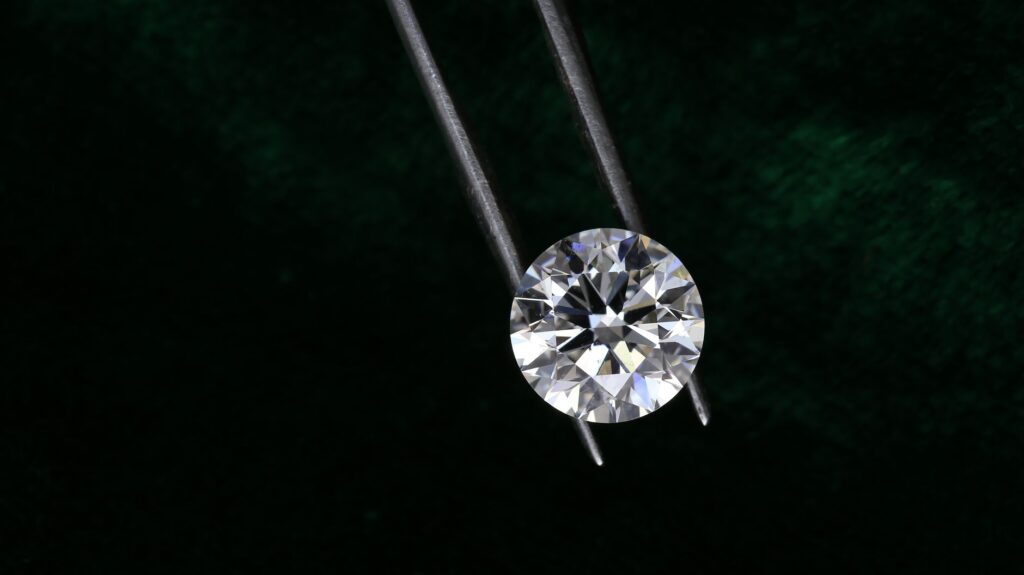
Yes, a 0.5 carat diamond is big enough for many buyers, especially if you prefer a classic, understated look or want to prioritize cut quality, setting design, or overall value. In a round shape, a well-cut 0.5 carat diamond usually measures about 5.0 to 5.2 mm across, which is noticeable on the hand but not large.
Whether it feels big enough depends on what you want it to do visually.
- If you want a delicate, refined look, 0.5 carat can be an excellent size.
- If you want strong finger coverage or a more prominent center stone, it may feel too small.
- If budget matters, 0.5 carat can offer very good value, especially in lab grown diamonds.
The short answer is that a half carat diamond is not too small by default. It is a realistic and attractive size, but it is important to align it with your expectations.
Understanding the Carat Concept
What diamond carat actually means
Carat is a measure of weight, not visible size. One carat equals 200 milligrams, so a 0.5 carat diamond weighs 100 milligrams. That number tells you how heavy the diamond is, but it does not tell you exactly how large it will look from the top.
This is one of the most common sources of confusion. Two diamonds can both weigh 0.5 carat and still look slightly different in size if their proportions are different.
What face-up size means
Face-up size is the visible size of the diamond when you look down at it in a ring. This is what your eye notices most. For a round diamond, face-up size is usually discussed in millimeters, which is far more useful than carat weight alone when you want to know how big it will actually look.
A typical round 0.5 carat diamond has a diameter of roughly 5.0 to 5.2 mm. That measurement gives a clearer picture of visual size than the carat number itself.
Why millimeter measurements matter
If you are trying to answer “Is a 0.5 carat diamond big enough,” millimeter spread is critical. A 0.5 carat diamond with a deep cut may carry more of its weight below the surface, making it look a bit smaller face-up. A well-proportioned stone usually looks more balanced.
That is why experienced buyers compare both carat weight and actual dimensions. The scale tells you what it weighs. The measurements tell you what you will see.
What “magic sizes” are
In diamond pricing, certain milestone weights such as 0.50 carat, 1.00 carat, and 2.00 carat can carry stronger demand. These are often called magic sizes. Buyers like round numbers, so prices can jump at these thresholds.
That matters because a 0.49 carat diamond may look almost identical to a 0.50 carat diamond, yet sometimes cost less. The visual difference is often negligible, but the price difference may not be.
What Buyers Usually Expect
Expecting the carat number to tell the whole story
Carat weight sounds straightforward, so buyers often assume 0.5 carat should look exactly half as large as 1 carat. In practice, visible size does not scale in such a simple way. Since diamonds are three-dimensional, the relationship between weight and visible width is not linear.
A 1 carat round diamond typically measures around 6.4 to 6.5 mm. A 0.5 carat round is usually around 5.1 mm. That means a half carat is not half the diameter of a 1 carat stone. It is smaller, but not by as dramatic a margin as the weight comparison suggests.
Assuming online images reflect real-life size
Product photos are often enlarged, closely cropped, or shown on very slender fingers. That can make a 0.5 carat diamond appear larger than expected. On the other hand, some buyers become so used to oversized social media imagery that a realistic half carat diamond feels smaller than what they imagined.
Context matters. A close-up macro photo is not how the ring will appear in normal daily wear.
Overestimating how much difference others notice
Most people do not judge diamond size with gemological precision. They notice the overall ring design, sparkle, and whether the ring looks balanced on the hand. A well-cut 0.5 carat diamond in a flattering setting can look beautiful and intentional, not “too small.”
The difference between “elegant” and “underwhelming” often depends less on the raw carat number and more on proportion and presentation.
Ignoring hand and finger proportions
A 0.5 carat diamond can look significantly different on a size 4 finger versus a size 8 finger. On a smaller finger, it may appear more substantial. On a larger finger, it may look more delicate.
This is one reason buyers should avoid relying on carat weight alone. The same stone can create very different visual impressions depending on who is wearing it.
What It Actually Looks Like
Typical appearance of a 0.5 carat round diamond
In a classic round brilliant shape, a 0.5 carat diamond generally looks modest but clearly visible. It is large enough to stand out as a center stone, especially in a solitaire or halo setting, but it does not have the broad spread or strong presence of larger carat weights.
On the hand, it usually reads as refined, traditional, and practical rather than bold or oversized.
How much finger coverage it gives
Finger coverage refers to how much of the finger width the diamond visually occupies from side to side. A half carat round gives moderate coverage on smaller fingers and lighter coverage on larger fingers.
It is enough to be noticeable, but it will not dominate the hand in most settings. Buyers looking for a delicate engagement ring often find this size appealing. Buyers wanting strong visual impact may prefer a larger stone or an elongated shape.
How it compares with common expectations
In real life, a 0.5 carat diamond usually looks:
- Larger than people expect if they are used to inflated online imagery
- Smaller than people expect if they focus only on milestone carat numbers
- Appropriately sized for a subtle or classic ring design
- Less impressive if the goal is a bold center stone look
That is why the answer to “Is a 0.5 carat diamond big enough” depends so heavily on the style outcome you want.
Round size reference table
| Carat Weight | Approximate Round Diameter | General Visual Impression |
|---|---|---|
| 0.30 ct | 4.2 to 4.4 mm | Very delicate, petite center stone |
| 0.40 ct | 4.7 to 4.8 mm | Small but noticeable |
| 0.50 ct | 5.0 to 5.2 mm | Classic, modest, balanced |
| 0.70 ct | 5.6 to 5.8 mm | Noticeably larger presence |
| 1.00 ct | 6.4 to 6.5 mm | Strong center stone presence |
Factors That Change Apparent Size
Shape
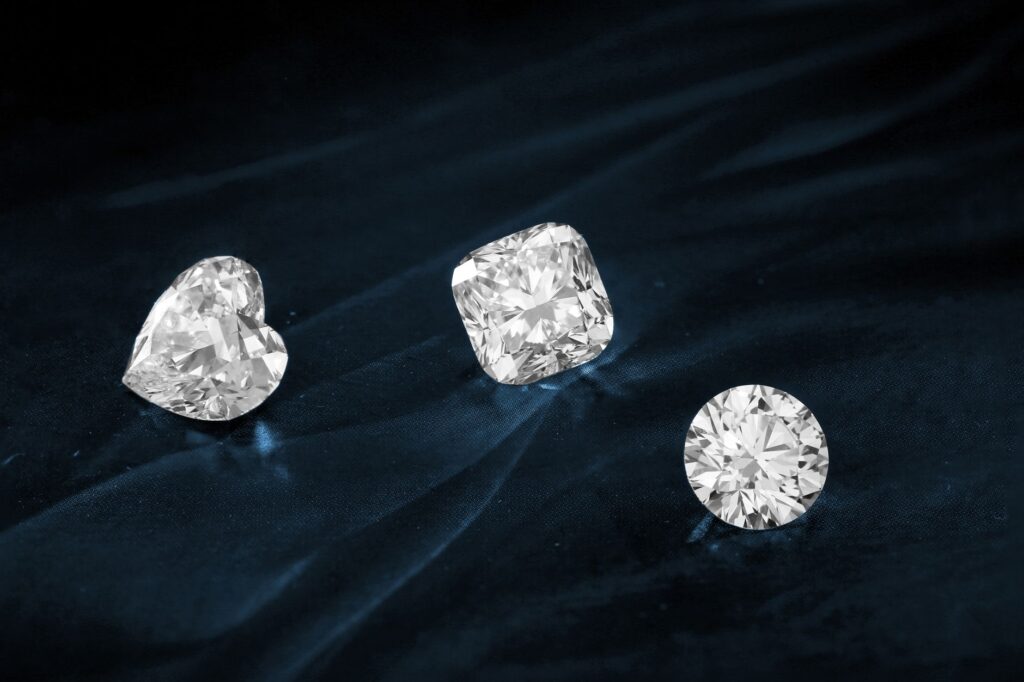
Shape has a major effect on how large a diamond looks. A 0.5 carat round usually appears smaller face-up than some elongated shapes of the same weight. Oval, marquise, and pear shapes often create the impression of more size because they stretch lengthwise across the finger.
If you want maximum visual presence at 0.5 carat, shape selection matters.
| Shape | Typical Visual Effect at 0.5 Carat | Size Impression |
|---|---|---|
| Round | Balanced brilliance, compact outline | Moderate |
| Oval | Elongated look, more finger coverage | Larger |
| Pear | Tapered shape, lengthens the finger | Larger |
| Marquise | Long outline, broad visual spread | Largest-looking |
| Princess | Square shape, more concentrated size | Slightly smaller-looking |
| Cushion | Soft square outline, often deeper build | Can look smaller |
Cut quality
Cut quality affects sparkle most, but it also influences how large a diamond appears. A well-cut stone can look brighter, sharper, and more lively, which often makes it feel more noticeable on the hand. A poorly cut diamond may look dull or dark, even if it has the same carat weight.
For round diamonds, strong cut quality is usually one of the smartest priorities. A lively half carat often makes a better visual impression than a larger diamond with weak performance.
Depth and proportions
A diamond that is cut too deep may hide weight below the girdle, which is the outer edge of the diamond. That can reduce face-up spread. In plain terms, you are paying for weight that you do not fully see from the top.
This is one reason two 0.5 carat diamonds can have different diameters. Even a small difference in millimeters can affect visual impression, especially at lower carat weights.
Setting design
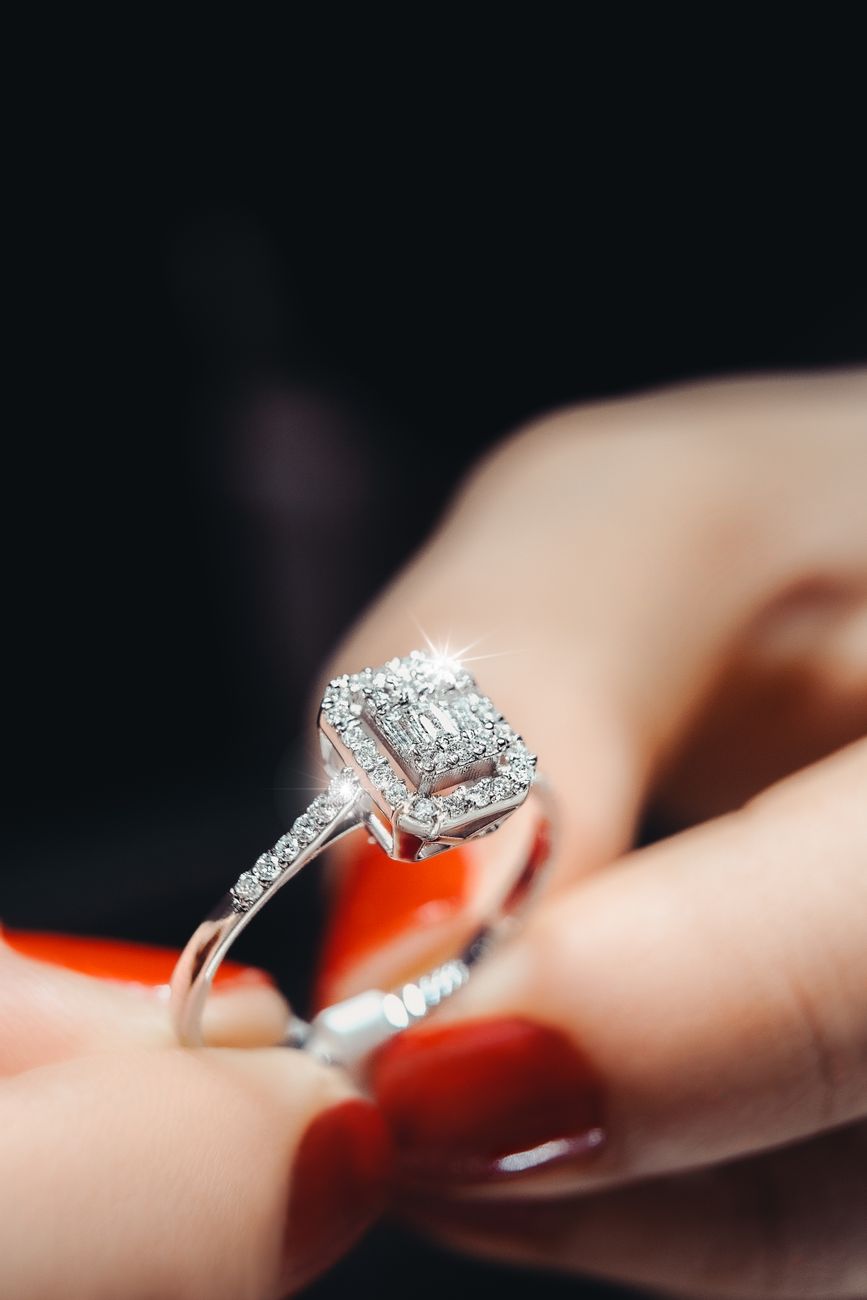
The setting can either make a 0.5 carat diamond look larger or make its modest size more obvious. Halo settings, delicate bands, and certain prong styles can increase apparent size. Thick bands, heavy bezels, or bulky side details can make the center stone seem smaller by comparison.
Good setting choices can significantly improve the look of a half carat center stone without changing the diamond itself.
Band width
A thin band tends to make the center diamond look larger because there is less metal competing for visual attention. A very wide band can create the opposite effect.
This is an easy detail to overlook, but it affects perception more than many buyers realize.
Color and clarity appearance
Color and clarity do not directly change physical size, but they can influence overall visual appeal. A diamond that appears bright and clean tends to look better-defined. At 0.5 carat, extremely high clarity grades are often unnecessary because inclusions are usually harder to see with the naked eye.
That can allow you to allocate more of your budget toward cut or setting design instead of paying for invisible quality differences.
Real-World Size Examples
0.5 carat on a size 4 finger
On a smaller finger, a 0.5 carat round diamond can look quite balanced and even slightly larger than expected. The stone may provide enough coverage to feel like a true center stone rather than a minimal accent.
For buyers with slender fingers who prefer a classic engagement ring, this size can work very well.
0.5 carat on a size 6 finger
On a medium finger size, a 0.5 carat diamond usually looks neat, proportional, and understated. It is visible and elegant, but not commanding. This is often the point where personal taste becomes especially important.
If you want subtle sophistication, it may be perfect. If you want immediate visual impact from a distance, you may want to consider sizing up or choosing an elongated shape.
0.5 carat on a size 8 finger
On a larger finger, a half carat round generally looks smaller and offers less finger coverage. It can still be attractive, but it is more likely to read as delicate. Some buyers love that effect. Others find it too understated for an engagement ring center stone.
In this situation, shape and setting become especially important if you want to increase perceived size without a major budget jump.
0.5 carat round vs 0.5 carat oval
A 0.5 carat oval often appears larger than a 0.5 carat round because it has greater length and can cover more of the finger visually. The actual surface area difference is not always dramatic, but the elongated outline creates a stronger size impression.
This makes oval a common choice for buyers who want a larger look while staying at a modest carat weight.
0.49 carat vs 0.50 carat
These two sizes are usually visually indistinguishable. The actual millimeter difference may be tiny or nonexistent depending on cut proportions. In many cases, buying slightly below the half-carat mark can be a sensible value decision.
The key is to compare measurements and cut quality, not just the number on the grading report.
0.5 carat vs 0.75 carat
This upgrade is noticeable in real life. A 0.75 carat round usually measures around 5.8 to 5.9 mm, so it has visibly more spread and presence than a 0.5 carat round. It is not an enormous leap, but it is enough for many buyers to perceive a meaningful difference on the hand.
If a 0.5 carat feels slightly too small, 0.70 to 0.75 carat is often where the look starts to change more clearly.
0.5 carat vs 1 carat
A 1 carat round has much stronger visual impact than a 0.5 carat round. The difference is obvious. The 1 carat stone looks wider, covers more finger space, and usually reads as more substantial from across the room.
That said, the price increase can be far more dramatic than the visual increase, especially in natural diamonds. This is where value analysis becomes important.
Price vs Visual Benefit
Why price jumps faster than size
Diamond prices do not rise in a smooth, simple line. As carat weight increases, price per carat often rises too. That means moving from 0.5 carat to 1 carat does not merely double the price. Depending on the stone and market conditions, it can increase much more than that.
This is especially true in natural diamonds, where larger sizes are rarer.
What you gain visually at 0.5 carat
A 0.5 carat diamond can offer a strong balance between cost and appearance for buyers who do not need a large center stone. You still get the unmistakable look of a real diamond ring, strong sparkle if the cut is good, and a size that works well in many classic settings.
The visual benefit is often strongest when the stone is well-cut and paired with a design that flatters it.
Where diminishing returns begin
As you size up, each additional increase in visible diameter tends to cost more. Some upgrades are worth it if they meaningfully change the appearance you want. Others mainly satisfy a preference for a milestone weight.
For example, paying a premium to move from 0.49 to 0.50 carat may offer little visual benefit. Paying more to move from 0.50 to 0.70 carat may produce a more noticeable real-world change.
Natural vs lab grown value at this size
Lab grown diamonds often change the size decision completely. At the 0.5 carat level, lab grown diamonds can cost substantially less than comparable natural diamonds. That lower price can let buyers choose a higher quality stone, a more elaborate setting, or a larger size while staying within the same budget.
From a visual standpoint, a lab grown diamond and a natural diamond of the same quality can look the same. The main differences are origin, price structure, and resale expectations. Buyers who want the largest look for the money often find lab grown diamonds especially helpful.
| Option | Visual Appearance | Typical Budget Efficiency | Common Buyer Motivation |
|---|---|---|---|
| 0.5 ct Natural | Classic modest size | Moderate | Preference for natural origin |
| 0.5 ct Lab Grown | Same visible look if comparable quality | High | Maximizing value or quality |
| Larger Lab Grown Instead of 0.5 ct Natural | More finger coverage | Often very high | Prioritizing visible size |
Who Should Size Up
Buyers who want a stronger center stone presence
If you picture a ring where the diamond is the immediate focal point, a 0.5 carat may feel smaller than ideal. It is noticeable, but it does not usually create a bold visual effect in a simple solitaire.
In that case, increasing to 0.7, 0.75, or 1 carat may better match your goals, depending on budget.
Buyers with larger finger sizes
On larger fingers, a half carat diamond can appear more delicate. If finger coverage matters to you, sizing up can make a meaningful difference in overall balance.
This does not mean 0.5 carat cannot work on a larger hand. It simply means expectations should be adjusted accordingly.
Buyers who prefer minimal setting enhancement
If you want a plain solitaire with no halo and a medium or wide band, the center stone has to do more visual work on its own. In those settings, a 0.5 carat diamond may look smaller than it would in a halo or slim-band design.
Choosing a larger center stone may make more sense if you want a simple setting but still want noticeable presence.
Buyers strongly focused on trend-driven size expectations
In some markets and social circles, larger center stones have become more common, especially with lab grown diamonds making bigger sizes more accessible. If your personal expectation has shifted because of what you regularly see, a 0.5 carat diamond may not satisfy you emotionally even if it is objectively attractive.
That is not a technical issue. It is an expectation issue, and it is better to be honest about it before buying.
Who Can Save Money With 0.5 Carat
Buyers who prefer a classic and understated look
A half carat diamond suits people who value proportion, restraint, and everyday wearability. It does not overwhelm the hand, and it often looks elegant in timeless settings.
For this style preference, paying significantly more for a larger carat weight may not improve satisfaction.
Buyers prioritizing cut quality
If your budget is limited, choosing a smaller diamond with better cut quality often creates a more beautiful result than stretching for a larger but weaker-cut stone. Sparkle, brightness, and visual crispness matter every time the ring is seen.
A lively 0.5 carat diamond can outperform a bigger but duller stone in overall appeal.
Buyers who want better color or clarity without overspending
At half a carat, it may be easier to stay within a comfortable budget while selecting a pleasing balance of color, clarity, and cut. Since smaller diamonds generally reveal inclusions less easily than larger ones, you may also be able to make practical quality choices without paying for grades that add little visible benefit.
Buyers using setting design strategically
If you are open to shapes like oval or pear, a slim band, or a halo setting, a 0.5 carat diamond can look larger than the number suggests. This approach often gives good visual value without requiring a major jump in center stone budget.
Buyers considering lab grown diamonds
If the question is whether 0.5 carat is big enough, lab grown diamonds provide flexibility. You may find that 0.5 carat is enough and simply enjoy the savings. Or you may decide that the lower cost allows you to move up in size comfortably. Either way, lab grown pricing can make the decision less restrictive.
Common Buyer Mistakes
Chasing the carat number instead of the look
Focusing too much on “0.50” as a milestone can lead to overpaying for a number rather than buying the best-looking stone. Visual performance, spread, and setting design matter just as much, and often more.
Ignoring millimeter measurements
Two diamonds with the same carat weight can have different face-up dimensions. Buyers who skip the measurements may end up with a deep stone that looks smaller than expected.
Comparing only round diamonds to elongated shapes
Shape changes perception dramatically. A buyer who feels that a 0.5 carat round is too small may be perfectly happy with a 0.5 carat oval or marquise.
Forgetting finger size
A half carat can look substantial on one hand and delicate on another. Ignoring this context leads to unrealistic expectations.
Paying too much for unnecessary clarity
At 0.5 carat, many inclusions are difficult to see without magnification. Spending heavily on very high clarity grades may not improve visible beauty. That money may be better used for cut quality or a setting that enhances apparent size.
Choosing a thick band without considering proportion
A broad band can make the center stone look smaller. This is not always a problem if you love the style, but it should be a conscious choice rather than a surprise after purchase.
Assuming bigger is automatically better
A larger diamond is not always the best decision if it requires visible compromises in cut, color, or overall balance. A diamond should suit the hand, the style, and the budget, not just hit a larger carat number.
How to Decide Whether a 0.5 Carat Diamond Is Big Enough for You
Start with your visual goal
Ask yourself what you want the ring to look like in daily wear. Do you want delicate and classic, or bold and prominent? A 0.5 carat diamond fits the first description more naturally than the second.
Think about setting style at the same time
Do not evaluate the diamond in isolation. A half carat stone in a halo, oval shape, or thin solitaire can feel very different from a half carat stone in a heavy bezel or wide-band setting.
Use measurements, not just weight
Check the millimeter dimensions and compare them realistically. For round diamonds, the 5.0 to 5.2 mm range is the best practical expectation for a standard half carat stone.
Be realistic about your budget priorities
If increasing size means sacrificing cut quality or stretching finances uncomfortably, a 0.5 carat diamond may be the wiser choice. If visual size is your top priority and budget allows, then exploring larger options may be appropriate.
Consider lab grown if size matters most
For buyers who want more presence but are budget-conscious, lab grown diamonds can make a larger size possible without the same price jump seen in natural diamonds. The visual result can be nearly identical if quality is comparable.
Frequently Asked Questions
Is a 0.5 carat diamond too small for an engagement ring?
No. A 0.5 carat diamond is a perfectly valid engagement ring size. It creates a classic, modest, and wearable look. Whether it feels too small depends on your style expectations, finger size, and setting choice.
How big does a 0.5 carat round diamond look in millimeters?
A well-cut round 0.5 carat diamond usually measures about 5.0 to 5.2 mm in diameter. Exact size varies slightly depending on proportions.
Will a 0.5 carat diamond look bigger on a small finger?
Yes. On smaller finger sizes, a 0.5 carat diamond usually appears more substantial because it takes up a greater percentage of the finger width.
What shape makes a 0.5 carat diamond look larger?
Elongated shapes such as oval, pear, and marquise often look larger than round diamonds of the same weight. They create more length and often more visual finger coverage.
Is it better to buy a 0.49 carat diamond instead of a 0.50 carat diamond?
Often, yes. If the measurements and cut quality are strong, a 0.49 carat diamond may look nearly identical to a 0.50 carat diamond while costing less. The best choice depends on the specific stones being compared.
Does a halo make a 0.5 carat diamond look bigger?
Yes. A halo setting surrounds the center stone with smaller diamonds, increasing the overall visual footprint of the ring. This can make a 0.5 carat center appear more prominent.
Is a 0.5 carat lab grown diamond a good option?
Yes, if it suits your goals. A 0.5 carat lab grown diamond can offer the same visible appearance as a natural diamond of similar quality, often at a lower price. That can improve budget flexibility, though resale expectations differ from natural diamonds.
Should I prioritize size or cut at 0.5 carat?
For most buyers, cut should come first. A well-cut 0.5 carat diamond usually looks brighter and more attractive than a slightly larger diamond with poor light performance. Once cut quality is strong, then you can compare size, shape, and setting choices.
Conclusion
So, is a 0.5 carat diamond big enough? For many buyers, yes. It is large enough to serve as a beautiful center stone, especially when paired with a good cut, balanced proportions, and a setting that suits it. It offers a classic, understated look rather than a bold statement.
The most important point is that “big enough” is not just about carat weight. It is about face-up size, finger coverage, shape, cut, setting design, and expectations. A 0.5 carat round diamond will usually look modest but elegant. An elongated 0.5 carat shape may look larger. A halo or slim band can also improve visual presence.
From a value perspective, half a carat can be a smart choice. It can allow better cut quality, balanced overall design, or lower total cost. And for buyers considering lab grown diamonds, it may create even more flexibility around size and budget.
The best decision is the one that matches how you want the ring to look in real life, not just the number on a grading report. When you judge a 0.5 carat diamond by actual measurements and visual outcome rather than carat weight alone, it becomes much easier to tell whether it is truly big enough for you.