When shoppers compare VS2 vs SI1 Diamonds, the real question is usually not what the grading letters mean. It is whether the difference will actually matter in the finished ring, under everyday viewing conditions, and at the price you are being asked to pay.
That is especially true for lab grown diamonds, where clarity grades often look similar on paper but can behave very differently in person depending on the location, type, and size of the inclusions. Two diamonds with the same grade can look noticeably different once they are set, viewed from the top, or examined up close.
If you are trying to balance appearance, budget, and long-term satisfaction, clarity is one of the easiest categories to overpay for. It is also one of the easiest categories to misread if you focus only on the label rather than the actual stone.
Quick Answer
In most real-world buying situations, a well-cut VS2 diamond and an eye-clean SI1 diamond can look very similar once mounted in a ring. The main difference is that VS2 usually gives you a greater margin of safety, while SI1 can offer better value if the inclusions are small, well-placed, and not visible without magnification.
If the SI1 is truly eye-clean, many buyers would not notice a difference in everyday wear. If the SI1 has inclusions that are easy to spot with the naked eye, VS2 is often the safer choice.
For many shoppers, especially in lab grown diamonds, clarity grades above VS2 often bring diminishing visual returns. The smarter decision is usually to compare the actual inclusion pattern, the diamond’s cut quality, and the report notes rather than assuming one grade is always better.
Understanding Diamond Clarity
Diamond clarity describes how many internal features or surface blemishes a diamond has, and how easy those features are to see. These features are called inclusions when they are inside the stone and blemishes when they are on the surface.
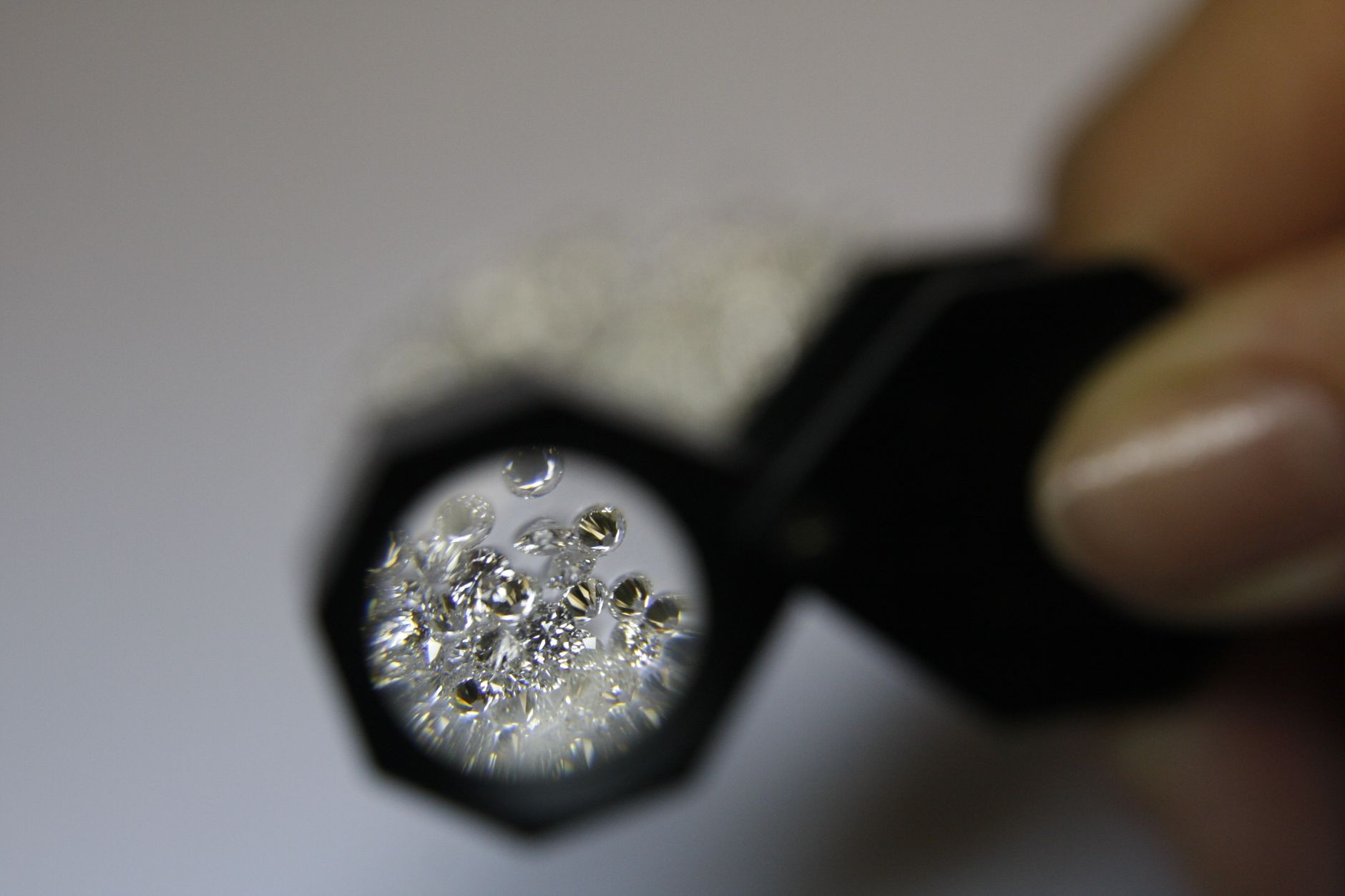
Clarity grades are assigned after a diamond is examined under magnification. That means the grade does not simply tell you whether a diamond looks clean to the eye. It tells you how the stone appears under a standard grading environment, which is much more strict than how most buyers view jewelry in normal life.
This is why a lower clarity grade does not automatically mean a diamond looks flawed. Many diamonds in the SI range still look clean to ordinary shoppers, especially when the inclusions are tiny, off to the side, or hidden by the setting.
What Eye-Clean Really Means
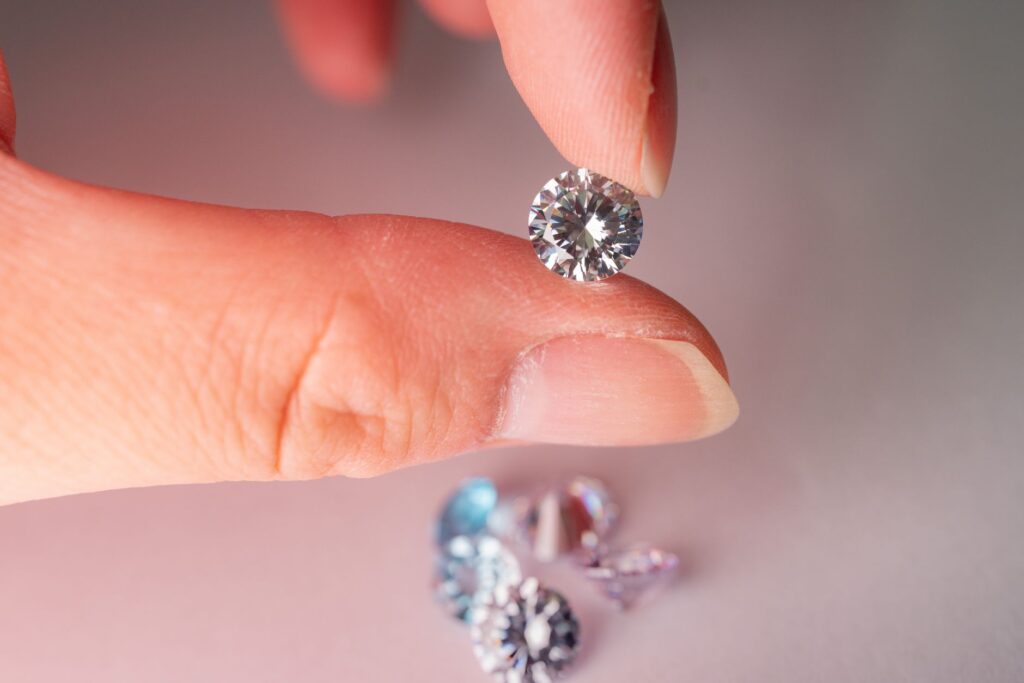
Eye-clean means that a diamond does not show visible inclusions to the naked eye at a normal viewing distance. For most buyers, that distance is roughly 6 to 12 inches in regular lighting, not under a loupe or microscope.
Eye-clean is not an official grading term. It is a practical shopping term, and it can vary a little depending on who is looking. A jeweler, a diamond enthusiast, and a first-time buyer may not define it exactly the same way.
That is why a diamond can be graded SI1 and still be considered eye-clean, while another SI1 may show a dark crystal or cloud that is easy to spot once the stone is face-up.
What a Clarity Grade Does and Does Not Tell You
A clarity grade tells you the general level of internal characteristics, but it does not tell you everything buyers need to know. It does not say where the inclusion is located, whether it is visible from the top, or whether it could affect durability.
For example, two SI1 diamonds may have different inclusion types. One may have several tiny pinpoints near the edge that are hard to notice, while another may have a dark crystal near the center of the table. Both could receive the same grade, but their visual impact would not be the same.
VS2 vs SI1 Diamonds: Side-by-Side Comparison
The best way to understand the difference is to compare how these grades usually behave in everyday buying situations.
| Category | VS2 | SI1 |
|---|---|---|
| Meaning | Very Slightly Included 2, minor inclusions under magnification | Slightly Included 1, inclusions that may or may not be visible without magnification |
| Visibility to the eye | Usually eye-clean | Can be eye-clean, but not always |
| Inclusion risk | Lower risk of visible flaws | Higher chance of seeing an inclusion if placement is not ideal |
| Appearance in a ring | Typically very clean-looking | Can look just as clean if carefully selected |
| Value | More expensive than SI1 in many cases | Often stronger value if eye-clean |
| Buyer suitability | Good for buyers who want extra confidence | Good for value-focused buyers who inspect carefully |
In practice, the gap between VS2 and SI1 is often smaller than shoppers expect, especially in well-cut lab grown diamonds. The difference is less about the grade label and more about whether the inclusions are visible, distracting, or potentially problematic.
What VS2 Means in Practical Terms
VS2 stands for Very Slightly Included 2. Diamonds in this category usually have minor inclusions that are difficult to see without magnification.
Most VS2 diamonds are considered safe choices for shoppers who want a clean look with relatively low risk. In many cases, a VS2 diamond is eye-clean from the top and also looks clean when worn in a ring.
That said, VS2 is not a guarantee of perfection. A VS2 can still contain an inclusion that is more noticeable than expected if it happens to sit near the center, contrast strongly with the body color, or be positioned where light makes it easier to see.
What Buyers Usually See in VS2
Most buyers looking at a VS2 diamond in normal lighting will not notice obvious flaws. If they do notice anything, it is more likely to be a tiny speck, a faint crystal, or a small pattern that appears under close inspection.
In a ring, those minor features are often invisible once the diamond is moving and the eye is not staring at it from inches away. This is one reason VS2 is often seen as a comfortable middle ground.
When VS2 Is a Smart Choice
VS2 tends to make sense when you want strong visual confidence without moving into the higher prices of VVS grades. It is also useful if you are shopping online and want a bit of extra safety because you cannot inspect the stone in person before buying.
Many experienced buyers consider VS2 a sweet spot for people who value appearance and want to reduce the chance of seeing something distracting after the ring is delivered.
What SI1 Means in Practical Terms
SI1 stands for Slightly Included 1. These diamonds have inclusions that are more noticeable under magnification and may sometimes be visible to the naked eye.
SI1 is where buyers often find strong value, but it is also where selection matters most. One SI1 may look beautifully clean, while another may show inclusions right away when viewed face-up.
Because of that range, SI1 is less about the grade itself and more about the actual stone. A carefully chosen SI1 can be an excellent purchase. A poorly chosen SI1 can look noticeably included, even if the report seems acceptable on paper.
What Buyers Usually See in SI1
Some SI1 diamonds appear eye-clean in the setting and look nearly identical to higher clarity stones. Others show a dark crystal, cloudiness, or a group of inclusions that can be picked out without much effort.
This is why shoppers should never assume every SI1 will perform the same way. The same grade can include both excellent value stones and diamonds that require more caution.
When SI1 Is a Smart Choice
SI1 can be a strong choice when the inclusions are small, light in color, and not located in the most visible part of the stone. It is especially appealing for buyers who want to prioritize carat size, cut quality, or overall budget rather than paying for clarity they will not see.
For many lab grown diamond shoppers, a clean SI1 offers enough visual quality that spending more for VS2 or VVS may not improve the look in any meaningful way.
Why VS2 vs SI1 Matters to Buyers
Clarity affects three things that matter to most shoppers: appearance, price, and confidence. Buyers want a diamond that looks clean, fits the budget, and does not create regrets after the purchase.
VS2 vs SI1 is important because it often sits near the point where visual differences become less predictable. One grade is not always visibly better than the other, but the price difference can still be noticeable.
That is why experienced shoppers often compare specific stones rather than relying only on the clarity grade. A well-chosen SI1 can beat a poorly chosen VS2 in real-world appearance.
Appearance
For many buyers, appearance is the biggest factor. If the stone looks clean to the eye, the clarity grade becomes less important in daily wear.
Since most people do not examine rings with magnification, the practical question is whether the inclusion can be seen from a normal distance. If not, the grade may matter more on paper than in the hand.
Value
Value is where the VS2 versus SI1 comparison becomes especially interesting. An eye-clean SI1 often provides excellent value because it can look similar to a higher grade while costing less.
VS2 may still be worth the premium if it gives you peace of mind or if you want a wider margin for visibility. But once you move beyond eye-clean quality, the price increases may deliver much less visible benefit.
Confidence
Some shoppers simply feel better with VS2 because it feels safer. That is a valid preference, especially for buyers who do not want to inspect multiple reports and photos in detail.
Others are comfortable choosing SI1 if they can review magnified images, videos, and notes from a trusted jeweler or grader. Both approaches can be reasonable depending on the buyer’s comfort level.
How Clarity Affects Appearance in Real Life
Clarity matters most when inclusions are visible enough to pull attention away from the overall look of the diamond. If the stone still appears bright, transparent, and clean in everyday viewing, the clarity grade may have little practical effect.
Most buyers are not looking at a diamond under a grading microscope. They are looking at it on a hand, in store lighting, in daylight, or in indoor lighting during normal wear.
Those conditions make a big difference. A small inclusion that is obvious under magnification may disappear completely in real-life use.
Visibility Depends on Several Factors
Whether you can see an inclusion depends on more than the clarity grade. The type of inclusion, its size, its position, the diamond’s color, and the cut all play a role.
A bright, well-cut diamond can disguise some inclusions better because light return helps the stone appear lively. On the other hand, a poorly cut diamond may make a small inclusion easier to notice because the overall look is less busy and less reflective.
Face-Up View vs Side View
Most shoppers care most about the face-up view, which is how the diamond looks from the top when worn. That is usually the most flattering angle and the angle people see most often.
Side views can reveal more, especially with larger stones or certain inclusion types. A diamond may be eye-clean from the top but show a feather or crystal from the side when closely inspected.
Lighting Makes a Difference
Bright retail lighting can make nearly any diamond look impressive, but it can also highlight inclusions in surprising ways. Daylight, office lighting, and home lighting often provide a more useful real-world test.
If a diamond only looks clean under one type of lighting, it is worth asking whether that appearance will hold up in everyday wear. The best test is usually a mix of lighting conditions rather than one dramatic display case.
Common Inclusions and What They Mean
Not all inclusions have the same visual impact. Some are tiny and harmless-looking, while others are more noticeable or can raise questions about durability.
Understanding inclusion types helps buyers compare VS2 and SI1 diamonds more intelligently. Two diamonds with the same grade can differ greatly if one contains a subtle crystal and the other has a centered dark crystal or a large feather near the edge.
Crystal
A crystal is a small mineral crystal trapped inside the diamond. It may appear white, transparent, gray, or dark depending on the material and lighting.
Crystals are often visible only with magnification, but a dark crystal near the center of an SI1 can sometimes be seen without it. They usually do not affect durability unless they are associated with other structural issues.
Feather
A feather is a small internal break that looks like a tiny crack or fissure. Many feathers are stable and harmless, especially when they are small and not near the edge.
Buyers should pay attention to feathers that reach the surface, especially near prongs or points. In certain positions, they can be more concerning for durability than other inclusion types.
Cloud
A cloud is a group of tiny inclusions that can appear hazy under magnification. A small cloud may not be visible at all, but a dense cloud can sometimes make a diamond look less crisp or slightly milky.
Clouds matter more when they affect transparency. That is less common in higher clarity grades, but it is one reason why buyers should look at actual photos or videos instead of assuming all SI1 or VS2 diamonds perform the same.
Needle
A needle is a long, thin inclusion that looks like a tiny line under magnification. Needles are often subtle and may be difficult to notice in a finished ring.
They are usually more of a grading detail than a practical concern unless there are many of them or they combine with other features that reduce clarity.
Pinpoint
A pinpoint is an extremely small dot-like inclusion. A few pinpoints are usually not a concern for buyers and may only matter under magnification.
Many VS2 and SI1 diamonds contain pinpoints that have little or no effect on visible appearance.
Twinning Wisp
A twinning wisp is a line or pattern of small internal features that formed as the diamond grew. It is common in some lab grown diamonds and can be seen in various clarity grades.
These features may be harmless if faint, but they can sometimes create a subtle pattern that is more noticeable in the center of the stone. Review of magnified images is helpful here.
Cavity and Chip
A cavity is a small opening in the diamond, and a chip is a surface break. These are more concerning than tiny internal inclusions because they involve the surface of the stone.
They are not typical of most well-selected VS2 or SI1 diamonds, but if present near an edge or facet junction, they deserve careful review because they can affect both appearance and durability.
How Clarity Affects Value
Clarity affects price, but not always in a way that matches visible improvement. The jump from SI1 to VS2 can be meaningful in cost, while the visible difference may be small or nonexistent in an eye-clean stone.
This is where buyers need to separate perceived quality from practical quality. A diamond that looks the same in daily wear does not necessarily justify a large premium simply because it carries a higher clarity grade.
When Paying More Makes Sense
Paying more for VS2 can make sense if you want a lower-risk purchase, especially if you are buying online or are not comfortable judging inclusion images yourself. It can also make sense if you want to reduce the chances of noticing a flaw later.
For some buyers, that peace of mind is worth the premium. The extra cost may be modest compared with the comfort of knowing the diamond is very likely eye-clean.
When SI1 Offers Better Value
SI1 often offers better value when the diamond is eye-clean and the inclusions are well hidden. In that situation, the buyer is paying less for a similar visual result.
This is one reason many knowledgeable shoppers are comfortable considering SI1. They focus on whether the inclusion is visible, not just whether it exists.
Why Higher Than VS2 Often Gives Diminishing Returns
Moving from VS2 to VVS or higher may create a meaningful jump in price, but the improvement is often hard to see without magnification. For most ordinary buyers, that extra clarity is more about rarity than everyday appearance.
If your goal is a beautiful ring, the money may be better spent on cut quality, color balance, a more appealing shape, or simply a larger stone. Clarity upgrades can be useful, but they are not always the smartest use of budget.
VS2 vs SI1 in Lab Grown Diamonds
Clarity comparisons matter a little differently in lab grown diamonds because the visual behavior can vary based on the growth method and the internal features it creates. Some lab grown diamonds show patterns such as twinning wisps, clouds, or strain-related features that are not always intuitive to first-time buyers.
That does not mean lab grown diamonds are worse in clarity. It means shoppers should pay attention to the actual stone, not just the grade label. Many lab grown diamonds in VS2 and SI1 grades are excellent value choices.
Why the Same Grade Can Look Different
Lab grown diamonds are often very clean overall, but when inclusions do appear, they can present differently than buyers expect. A tiny crystal or wisp may be harmless, while a more concentrated area of cloudiness can affect how crisp the diamond looks.
Because of this, photos, videos, and certification reports matter more than ever. A buyer comparing VS2 vs SI1 in lab grown stones should look carefully at where the inclusions sit and whether the diamond remains bright and transparent.
Certification Still Matters
For lab grown diamonds, a reputable grading report is essential. The report helps confirm the clarity grade, inclusion notes, and other details that influence whether the diamond is likely to look clean to the eye.
When comparing stones, review not only the grade but also the plot diagram and comments. Those details help explain why one SI1 may be excellent and another may need caution.
Practical Buyer Scenarios
The easiest way to understand clarity is to see how it plays out in real buying decisions. The same grade can be a good or poor choice depending on the buyer’s priorities.
Scenario 1: VS2 vs Eye-Clean SI1 in Everyday Wear
If you place a VS2 next to an eye-clean SI1, many people will not see a difference once both are set in similar rings. The visual difference is often smaller than buyers expect.
In this case, the SI1 may be the better value if it is truly clean-looking from the top. The VS2 may still be worth it for peace of mind, but not necessarily for a visible upgrade.
Scenario 2: Eye-Clean SI1 vs Non-Eye-Clean SI1
Not all SI1 diamonds deserve the same treatment. An eye-clean SI1 can be a smart buy, while a non-eye-clean SI1 may be a compromise too far if you can clearly see the inclusion.
This is the most important distinction shoppers should learn. The grade alone does not tell you whether the stone will look good to you in daily wear.
Scenario 3: VVS vs VS for Daily Jewelry
VVS diamonds have very tiny inclusions that are extremely difficult to see. They can be appealing if you want a very high clarity grade, but the visible improvement over VS2 is often minimal for most buyers.
If your focus is ordinary wear, many shoppers would be satisfied with a well-chosen VS2 or eye-clean SI1 rather than paying a premium for VVS clarity.
Scenario 4: Larger Diamonds and Clarity
As carat size increases, inclusions may become easier to notice simply because the diamond is larger and easier to inspect. This means a grade that looks fine in a smaller stone may be less forgiving in a bigger one.
That is why buyers considering larger lab grown diamonds often benefit from being a little more selective with clarity. VS2 may feel safer than SI1 in some larger stones, especially if the inclusion is centrally located.
Advantages of VS2 Diamonds
VS2 diamonds offer a strong balance of quality and confidence. For many buyers, they reduce the need to worry about visible inclusions while avoiding the higher cost of top-tier clarity grades.
- Usually eye-clean
- Lower risk of visible imperfections
- Often easy to buy with confidence online
- Provides a comfortable middle ground for many shoppers
VS2 can be a practical choice if you want a clean look without spending heavily on clarity you probably will not see. It is especially useful for buyers who prefer fewer variables when making a purchase.
Advantages of SI1 Diamonds
SI1 diamonds can provide excellent value when chosen carefully. They often let buyers redirect budget toward cut quality, size, or setting details while still maintaining an attractive appearance.
- Can be eye-clean at a lower price than VS2
- May allow a larger diamond within the same budget
- Good value when inclusions are small or well placed
- Offers flexibility for budget-conscious buyers
SI1 is often the grade where informed selection matters most. For buyers willing to review actual images and reports, it can be one of the smartest clarity categories to consider.
Disadvantages and Trade-Offs
No clarity grade is perfect for every buyer. The main trade-off with VS2 is cost, while the main trade-off with SI1 is inconsistency.
Potential Downsides of VS2
VS2 can cost more than an SI1 that looks just as clean. If the inclusions in the SI1 are not visible, the premium for VS2 may not improve the appearance of the ring.
In other words, the downside is not quality. It is possible overpaying for a cleaner label than your eyes can actually detect.
Potential Downsides of SI1
SI1 is more variable. Some stones are excellent, while others may show inclusions that distract from the overall look.
Another concern is that not all SI1 inclusions are equally harmless. A feather near the edge, a dark crystal near the center, or a cloud that reduces transparency deserves more attention than a minor off-center pinpoint grouping.
Buying Considerations That Matter More Than the Grade Alone
When comparing VS2 vs SI1 Diamonds, the best results usually come from looking beyond the grade label. The following factors often matter just as much or more.
Inclusion Location
Where the inclusion sits can matter more than how many there are. A small inclusion at the edge may be easy to hide with a setting, while a similar inclusion in the center may be far more noticeable.
Buyers should pay special attention to the table area, which is the flat top center of the diamond. Inclusions there are more likely to be seen face-up.
Inclusion Type
A tiny light crystal is not the same as a dark crystal, and a harmless pinpoint cluster is not the same as a surface-reaching feather. Some inclusion types are much more visible or more concerning for durability.
When possible, ask for magnified images or a video before making a decision. This is one of the most useful tools for judging whether a clarity grade is truly acceptable.
Cut Quality
Cut can influence how noticeable inclusions appear. A well-cut diamond tends to return more light and may help disguise minor clarity features.
If cut quality is weak, even a higher clarity stone can look less impressive than expected. For many buyers, cut deserves at least as much attention as clarity.
Shape
Some diamond shapes are more forgiving than others. Round brilliant diamonds often hide inclusions well because of their sparkle pattern, while step-cut shapes such as emerald cuts can reveal more because they are visually open and mirror-like.
This is important when comparing VS2 vs SI1. An SI1 might be perfectly acceptable in a round diamond, but the same clarity could be more visible in an emerald cut.
Setting Style
The setting can hide or expose certain inclusions. Prongs may cover edge-related features, while a bezel setting can protect vulnerable areas and make the diamond appear cleaner from the sides.
Before choosing a lower clarity stone, think about how it will actually be worn and mounted. The right setting can improve both appearance and peace of mind.
Common Buyer Mistakes
Many clarity mistakes happen because shoppers rely on assumptions instead of actual observation. These errors can be avoided with a little more attention to the stone itself.
Overpaying for Invisible Improvements
One of the most common mistakes is paying a large premium for a grade that does not create a visible difference. If the SI1 is eye-clean, the upgrade to VS2 may not change how the diamond looks on the hand.
That does not mean VS2 is a bad choice. It just means the added cost should be justified by an actual benefit, not just a label.
Ignoring Inclusion Placement
Shoppers often focus on the number of inclusions and ignore where they are located. That can lead to buying a stone that seems acceptable on paper but looks distracting in person.
Always inspect the center, the edges, and any inclusion notes on the report if they are provided.
Assuming All SI Diamonds Look the Same
SI1 is not a uniform category. Some diamonds are excellent values, and others are visibly included.
Treat every SI1 as an individual stone rather than assuming the grade alone tells the whole story.
Choosing Based Only on the Letter Grade
A report letter is useful, but it is not enough by itself. Two diamonds with the same grade can differ in brightness, transparency, and how the inclusions are perceived in normal wear.
The most reliable decisions come from combining the report with actual images, video, and a practical eye-clean check.
How to Evaluate a Diamond for Eye-Clean Appearance
If you are comparing VS2 vs SI1, the goal is to find out whether the diamond looks clean enough for your standards. That means using a simple, practical review process.
Step 1: Look at the Face-Up Image
Start with the top view. Ask whether you can see any dark spots, haziness, or obvious lines without zooming in too much.
If the stone looks clean at normal viewing size, that is a good sign.
Step 2: Check Magnified Photos or Video
Magnified images help you locate inclusions and judge whether they are centered or hidden near the edges. They are especially useful for SI1 diamonds, where the difference between a great stone and a mediocre one may be small but important.
Video can be even more helpful than still photos because it shows how the stone behaves as it moves.
Step 3: Read the Report Notes
Report comments can provide clues about inclusion types such as clouds, feathers, or twinning wisps. These notes do not replace visual inspection, but they can help you understand the risk profile of the stone.
If the report mentions features that could affect transparency or durability, it is worth investigating further.
Step 4: Ask for an Eye-Clean Check
If you are buying from a jeweler or online seller, ask whether the stone is eye-clean at a normal viewing distance. A reliable seller should be able to describe the viewing conditions used for that judgment.
That said, remember that eye-clean is still somewhat subjective. What matters is whether the stone meets your own expectations once you see it in person.
Frequently Asked Questions
Is VS2 always better than SI1?
No. VS2 is usually a safer grade, but an eye-clean SI1 can look just as good and often provides better value. The better choice depends on the specific diamond, not just the grade label.
Can an SI1 diamond look flawless to the naked eye?
Yes. Many SI1 diamonds are eye-clean in normal viewing conditions. That is why SI1 is often considered a value-focused clarity grade when carefully selected.
Will I notice the difference between VS2 and SI1 in a ring?
Sometimes, but often not. If the SI1 is eye-clean and well cut, the two grades may look very similar once set. If the SI1 has a visible inclusion, the difference can be noticeable.
Are inclusions a durability problem?
Not usually, but they can be in certain cases. Small internal inclusions are often harmless, while surface-reaching feathers, chips, or cavities deserve more caution, especially near edges or points.
Is VS2 a safe choice for an engagement ring?
Yes, VS2 is generally a safe and practical choice. It usually offers a clean appearance with low visibility risk, which makes it popular among engagement ring shoppers.
Should I avoid SI1 in lab grown diamonds?
No. SI1 can be an excellent choice in lab grown diamonds if the stone is eye-clean and the inclusions are not distracting. The key is to inspect the actual diamond rather than avoid the grade automatically.
Which matters more, clarity or cut?
For most buyers, cut matters more to the overall look. A well-cut diamond usually appears brighter and more attractive, and it can help minimize the visual impact of minor inclusions.
Is it worth paying for VVS instead of VS2?
Usually not for everyday appearance. VVS stones are very clean under magnification, but many buyers will not see a meaningful difference compared with a good VS2 in normal wear.
Conclusion
When comparing VS2 vs SI1 Diamonds, the most important question is not which grade sounds better. It is which individual stone looks best in the real world, under normal viewing conditions, for the budget you have.
VS2 usually offers more confidence and a lower risk of visible inclusions. SI1 can offer better value when the inclusions are small, well placed, and not visible to the naked eye. In many cases, an eye-clean SI1 is the smarter buy than paying more for clarity you cannot see.
For lab grown diamonds especially, it pays to look closely at the report, inclusion type, and actual images. If you focus on whether the diamond is eye-clean, how it performs in the chosen shape, and whether the setting will influence visibility, you will make a much more informed decision.
In the end, the best clarity grade is the one that gives you the appearance you want without paying for more than you need.