When buyers ask which diamond shape hides color best, the answer is usually more nuanced than a simple one-word ranking. A diamond’s shape affects how much of its body color is visible, how much light it returns to the eye, and how forgiving it may be of a lower color grade. In practice, some shapes naturally mask color better because they reflect more sparkle and show less of the stone’s body from the top view.
This matters for both natural and lab grown diamonds. Because lab grown diamonds are often purchased at larger sizes or with tighter budgets, many shoppers also compare color grades more closely. Understanding which diamond shapes hide color best can help you spend more strategically without overpaying for color you may not notice in everyday wear.
Quick Answer
The diamond shapes that typically hide color best are round brilliant, radiant, and cushion cuts. These shapes use more brilliant-style faceting, which creates stronger sparkle and helps disguise warm tones.
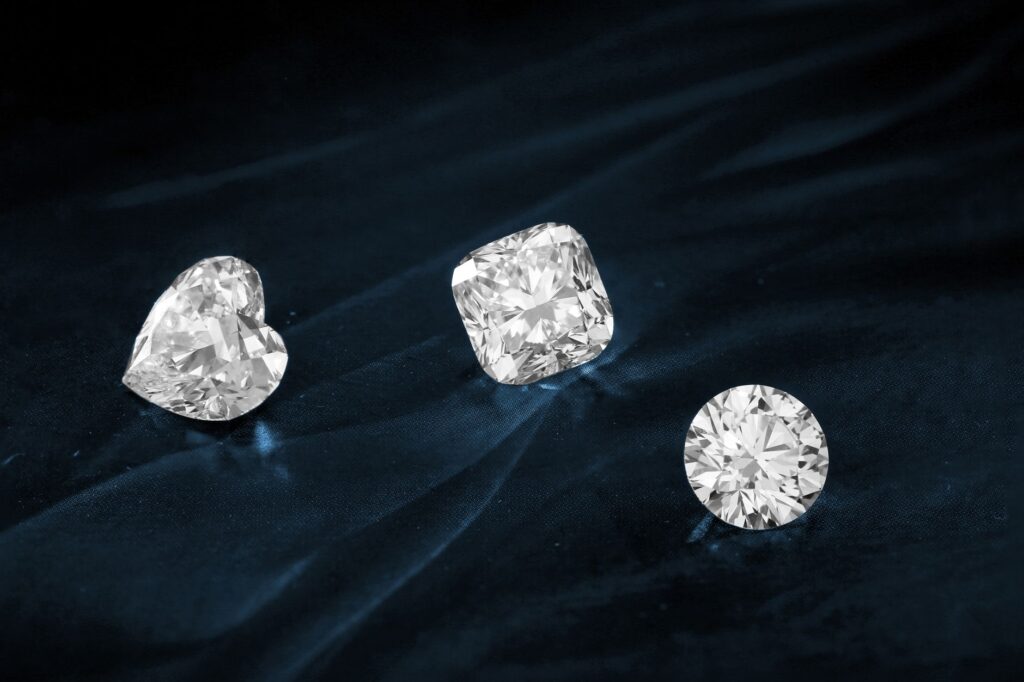
Round brilliant is usually the most forgiving overall. Radiant and cushion shapes can also be very effective at masking color, especially when cut well. Shapes with larger, open facets such as emerald, asscher, and some pear, oval, or marquise diamonds tend to show color more easily.
That said, the best shape for hiding color also depends on the diamond’s size, cut quality, setting, and metal color. A well-cut diamond in a warm metal setting can look better than a poorly cut diamond in a cooler grade on paper.
Why Diamond Shape Affects Color Visibility
Color in a diamond refers to the amount of yellow or brown tint present in the stone. On the grading scale, D is colorless and the grades become progressively warmer as you move down the alphabet. Many buyers look at color differently depending on the shape they choose, because the cut style changes how obvious that tint appears face-up.
Shiny, well-faceted shapes hide color more effectively because they create more contrast, brightness, and movement. That visual activity draws the eye away from body color. Step-cut shapes, which have fewer and broader facets, tend to reveal more of the diamond’s actual body tone because they act more like windows than sparkle machines.
The angle of the diamond matters too. Some shapes have pointed ends or larger open areas that can make color more visible near the tips or edges. Face-up size, depth, and how tightly the stone is cut all influence how much color reaches the eye.
How Diamond Shapes Handle Color
Not all shapes perform the same way. The way a diamond is faceted, how broad its surface is, and how light travels through it all affect whether body color stands out or blends into the stone’s sparkle.
| Shape | Color Visibility | Why It Performs This Way |
|---|---|---|
| Round brilliant | Best to very good | Strong sparkle and balanced facet pattern mask body color well |
| Radiant | Excellent | Brilliant faceting and rectangular outline help disguise warmth |
| Cushion | Excellent to very good | Soft shape with lively brilliance often hides color effectively |
| Oval | Very good to moderate | Brilliant faceting helps, but larger surface area can reveal color in some stones |
| Pear | Very good to moderate | Color can show more at the pointed end and in the body if cut is shallow |
| Marquise | Very good to moderate | Brilliant style helps, but pointed ends and length can expose body color |
| Princess | Very good | Square brilliant faceting masks color well, though corners can show variation |
| Emerald | Lowest | Step-cut facets and open flashes make body color easier to see |
| Asscher | Low | Similar to emerald, with broad step facets that reveal tint more readily |
Best Shapes for Hiding Color
Round Brilliant
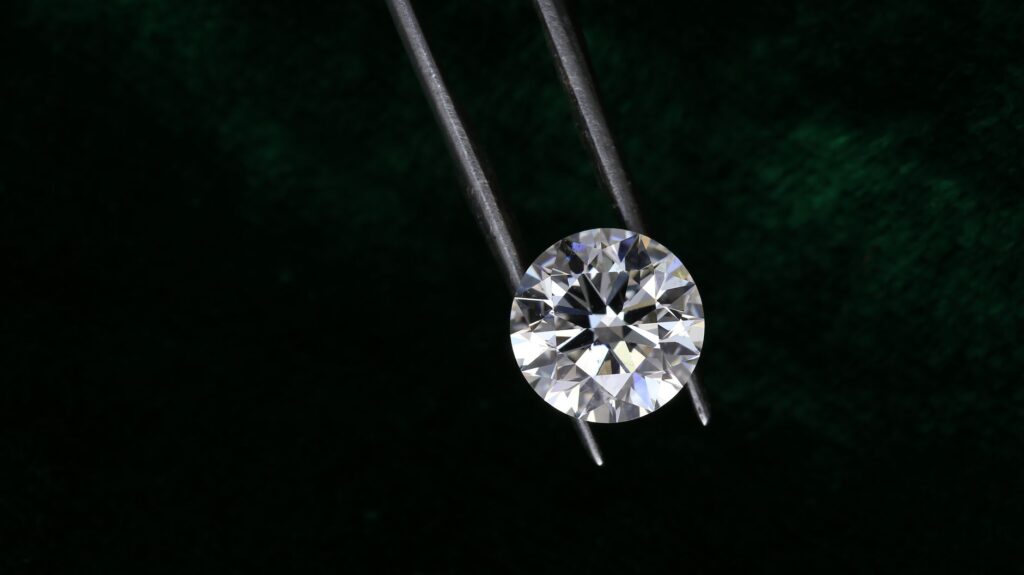
Round brilliant diamonds are usually the easiest shape for buyers who want color to be less noticeable. Their facet pattern is designed to maximize brightness and sparkle, which helps distract the eye from subtle body color. For that reason, many shoppers can comfortably choose a slightly lower color grade in a round diamond than they might in a step-cut shape.
This is especially useful in larger stones or in lab grown diamonds, where buyers often prioritize carat size and budget. A well-cut round diamond in the near-colorless range can appear very white in everyday wear, particularly once set in a ring.
Radiant Cut
Radiant diamonds are another strong option for hiding color. They combine the rectangular or square outline of a step-style shape with brilliant-style faceting, which gives them a lively look and strong light return.
Because of that sparkle, radiant cuts often mask body color better than emerald cuts, even at similar color grades. They are a practical choice for buyers who like a more elongated outline but do not want color to stand out.
Cushion Cut
Cushion cuts also do a good job hiding color, especially when the stone has a lively brilliant facet pattern. Their softer, rounded corners and chunky sparkle can make the diamond look bright even if the color grade is not at the top of the scale.
Some cushion cuts, especially antique-style versions, may show a bit more warmth than a round brilliant. Still, they are generally among the more forgiving shapes and are often a smart choice for buyers who want a softer appearance with good color masking.
Princess Cut
Princess cuts can hide color quite well because they use a brilliant-style arrangement of facets. Their angular shape also tends to create a modern appearance that can look bright and lively in many settings.
That said, color can sometimes be more noticeable near the corners or in stones with less efficient light return. Princess cuts are still a strong option for buyers looking for a shape that balances sparkle, value, and color concealment.
Shapes That Show Color More Easily
Emerald Cut
Emerald cuts are beautiful, but they are usually the least forgiving shape when it comes to color. Their long, step-cut facets create broad flashes of light instead of intense sparkle. Those open, mirror-like facets make it easier to see body color and clarity characteristics.
For this reason, buyers who choose emerald cuts often need to pay closer attention to color grade. In many cases, shoppers prefer higher color grades in emerald cuts than they would in a round or radiant diamond.
Asscher Cut
Asscher cuts also reveal color more readily. Like emerald cuts, they are step-cut diamonds, which means they emphasize clean lines and flashes rather than dense sparkle. The visual result is elegant and architectural, but not especially forgiving of lower color grades.
If you love the look of an asscher cut, it is often worth considering a higher color grade or a warmer metal setting to create a more harmonious appearance.
Oval, Pear, and Marquise
These elongated brilliant shapes usually hide color reasonably well, but performance can vary from stone to stone. Their faceting helps soften color, yet their larger surface areas and pointed ends may reveal warmth more easily than a round brilliant.
With these shapes, cut quality matters a lot. A well-proportioned oval, pear, or marquise can mask color far better than a poorly cut one of the same grade. Bow tie effect, which is the dark shadow sometimes seen across the center of elongated shapes, can also influence how color is perceived.
Why Brilliant Cuts Hide Color Better Than Step Cuts
To understand which diamond shape hides color best, it helps to know the difference between brilliant cuts and step cuts. Brilliant cuts, such as round, oval, radiant, cushion, and princess, use many facets arranged to produce sparkle and brightness. This strong light return creates visual “noise” that makes body color less obvious.
Step cuts, such as emerald and asscher, have broader, more linear facets that create a hall-of-mirrors effect. They are elegant and refined, but because they return light in larger flashes, there is less sparkle to distract the eye from tint. That is why color is easier to notice in these shapes.
In simple terms, a diamond with more sparkle usually hides color better than a diamond with more open, glassy facets.
Comparison of Popular Diamond Shapes for Color Visibility
| Shape | How Well It Hides Color | Best For | Watch For |
|---|---|---|---|
| Round brilliant | Excellent | Buyers who want maximum flexibility on color grade | Paying too much for color that is hard to see |
| Radiant | Excellent | Those who want a larger look with strong sparkle | Cut quality and light leakage |
| Cushion | Very good | Soft, romantic style with good color masking | Some antique cushions show more warmth |
| Princess | Very good | Modern square look with good brightness | Corner durability |
| Oval | Good | Longer appearance with good sparkle | Bow tie and color concentration near ends |
| Pear | Good | Elegant, elongated look | Pointed tip color and symmetry issues |
| Marquise | Good | Maximum finger-lengthening effect | Pointed ends and color visibility at the tips |
| Emerald | Poor | Fans of understated, architectural style | Color and clarity are both easier to see |
| Asscher | Poor | Vintage-inspired, geometric look | Requires more attention to color grade |
How Cut Quality Changes Color Appearance
Shape matters, but cut quality matters just as much. A diamond with excellent light performance can make a lower color grade appear cleaner than a poorly cut diamond with a higher grade. That is because brightness and sparkle influence what the eye notices first.
If a diamond leaks light or has a weak pattern of brilliance, its body color may stand out more. This is one reason why it is helpful to look at the overall cut, not just the color grade on the certificate. If you are learning about grading basics, it can also help to review diamond cut grades alongside color.
For round diamonds, the cut grade has an especially large effect on appearance. In fancy shapes, proportion quality, facet alignment, and optical symmetry all influence whether color seems hidden or obvious.
Does Diamond Size Affect How Much Color You See?
Yes. Larger diamonds tend to show color more easily because there is more material for light to pass through. As carat weight increases, even shapes that usually hide color well may begin to show some warmth, especially in the near-colorless range.
This is one reason color grade becomes more important at larger sizes. A 0.75 carat round diamond might look bright in a lower color grade, while a 2.00 carat round could show more tint at the same grade. The effect is often even more noticeable in step cuts like emerald and asscher.
Lab grown diamonds are often purchased in larger sizes because the pricing structure can make that possible. In those cases, shoppers may want to balance color grade with cut and clarity rather than assuming the highest color grade is always the best value.
Color Visibility by Metal Choice
The setting metal can change how color is perceived. White metals, such as platinum or white gold, tend to make a diamond’s body color more noticeable if the stone has warmth. Yellow gold and rose gold can make a lower color grade look more coordinated and less stark by comparison.
This is not a strict rule, but it is a useful buying consideration. For example, a near-colorless oval diamond in yellow gold may look perfectly balanced, while the same diamond in platinum could show a little more tint. Buyers who want to prioritize value often use the setting color to help manage appearance.
That said, the diamond itself still matters most. A well-cut shape that hides color effectively is a bigger factor than metal choice alone.
Appearance Beyond Color: Sparkle, Fire, and Face-Up Look
When buyers ask which diamond shape hides color best, they are often also interested in overall appearance. Color does not exist in isolation. Sparkle, fire, and the way a diamond sits on the finger all influence whether warmth is noticeable.
Sparkle
Sparkle is the rapid flash of light you see when a diamond moves. Shapes with more sparkle, such as rounds and radiants, tend to hide color because the eye is drawn to brightness rather than tone. More sparkle usually means better masking of subtle tint.
Fire
Fire is the colored light a diamond disperses, often seen as flashes of rainbow color. Shapes with good fire can help make a diamond appear more lively, but fire alone does not necessarily hide body color. It works best when combined with strong brilliance.
Scintillation
Scintillation refers to the pattern of bright and dark flashes that appear as a diamond moves. Good scintillation adds life to the stone and can help disguise slight warmth. This is one reason brilliant shapes generally perform better than step cuts for color masking.
Face-up Size
Face-up size is how large a diamond looks from above. Some shapes, such as oval, marquise, and pear, can look larger for their carat weight. But a larger face-up spread can also mean more area where color might be seen, particularly if the stone is shallow or unevenly cut.
Advantages of Choosing a Shape That Hides Color Well
Choosing a shape that masks color effectively can offer several practical benefits, especially for buyers working within a budget.
- More flexibility on color grade, which can free up budget for cut, size, or setting quality.
- A brighter appearance, since sparkle often makes the diamond look cleaner and more lively.
- Better value in larger stones, where color becomes more visible and a forgiving shape helps maintain appearance.
- More setting options, because many color-masking shapes pair well with both modern and classic ring styles.
For many buyers, this flexibility is especially useful when comparing natural and lab grown diamonds. If you are deciding between a smaller high-color diamond and a larger lower-color stone, a forgiving shape may allow the larger option to look very white in real life.
Disadvantages and Trade-Offs
There is no perfect shape for every buyer. Shapes that hide color best can come with trade-offs worth understanding before you commit.
- Round brilliants are often the most expensive per carat because of demand and rough diamond yield.
- Radiants and cushions can vary widely in appearance, so cut quality is especially important.
- Step cuts may require higher color grades, which can increase cost if you want a crisp white look.
- Elongated shapes may hide color well in some settings but show it more near the ends or under the table.
In other words, a shape that hides color well is not always the best choice if your priorities are low price, classic style, or maximum finger coverage. The right choice depends on your overall goals.
Who Should Choose a Shape That Hides Color Best?
These shapes are especially helpful for buyers who want a diamond that looks bright and white without having to pay for the highest color grade.
Good Fit For Budget-Conscious Buyers
If you want the most visible impact for your money, a shape like round, radiant, or cushion may let you choose a slightly lower color grade without a noticeable trade-off in everyday wear. That can make room for a better cut or larger size.
Good Fit For Lab Grown Diamond Shoppers
Lab grown diamond buyers often compare a wider range of carat sizes because pricing is more accessible. In that context, a shape that hides color well can be especially useful, since larger stones are more likely to show tint. You may find that a near-colorless grade in a brilliant shape looks more than white enough once set.
Good Fit For Buyers Who Want Maximum Sparkle
If you like a lively, energetic look, brilliant shapes usually offer the best combination of sparkle and color masking. They are often the easiest shapes to wear if you do not want to think too hard about slight warmth.
Less Ideal For Buyers Who Want Architectural Style
If your priority is a sleek, elegant, or vintage look, you may still prefer emerald or asscher cuts even though they show color more easily. In that case, color masking may be less important than the overall aesthetic.
Important Buying Considerations
When comparing shapes, color should be considered alongside several other factors. A good buying decision comes from looking at the whole diamond, not just one grade on paper.
1. Choose Cut Quality First
Cut quality affects brightness, sparkle, and how much color you notice. A well-cut diamond in a lower color grade can look better than a poorly cut diamond with a higher color grade. This is why many buyers start with cut before narrowing color and clarity.
2. Consider the Shape’s Visual Behavior
If you want to hide color, choose a shape that uses brilliant-style faceting. If you prefer a step-cut look, plan on higher color grades and greater scrutiny of the stone’s appearance.
3. Think About Size
As diamonds get larger, color becomes more visible. This matters for engagement rings, earrings, and any piece where the stone is large enough for tint to be noticed easily.
4. Match the Metal to the Look You Want
White metals emphasize a cleaner, cooler appearance. Yellow and rose gold can soften the look of lower color grades. The setting should support the diamond, not work against it.
5. Review Certification Details
Always check the grading report from a recognized lab. Certifications help confirm color, clarity, cut, and measurements. If you are comparing stones, understanding diamond certifications can prevent confusion and make side-by-side shopping easier.
6. Evaluate the Stone in Real Lighting
Photos and videos can be helpful, but they do not always reflect daylight, indoor lighting, or how the diamond will look on your hand. If possible, view the stone in a range of lighting conditions before deciding.
Common Mistakes Buyers Make
Buyers often make avoidable mistakes when choosing a diamond shape based on color visibility. Knowing these in advance can save both money and disappointment.
- Choosing color grade before shape instead of balancing the two together.
- Assuming all shapes hide color equally, when step cuts and brilliant cuts perform very differently.
- Overpaying for a color grade that is hard to see in a highly reflective shape like a round or radiant.
- Ignoring cut quality, which can make even a high-color diamond look less appealing.
- Forgetting about size, especially when buying larger lab grown diamonds where tint can be more visible.
- Not considering the setting, even though metal color can influence how white the diamond appears.
Shape-by-Shape Buying Guidance
If You Want the Best All-Around Color Masking
Choose a round brilliant. It is the most forgiving shape overall, and it gives you the best chance of keeping color subtle without needing to buy the highest grade.
If You Want a Larger Look With Strong Color Control
Consider a radiant cut. It often gives a bigger-looking presence with plenty of sparkle, which helps disguise warmth effectively.
If You Want a Soft, Elegant Shape
Cushion cuts are a strong middle ground. They are romantic in appearance and usually forgiving of slightly lower color grades.
If You Want a Modern Square Shape
Princess cuts combine edge definition with decent color masking. They are a practical choice for buyers who want a geometric look without going all the way into step-cut territory.
If You Want a Sleek, Architectural Diamond
Emerald and asscher cuts can be beautiful, but they are less forgiving of color. If you choose one, plan to prioritize color grade more carefully than you would with a brilliant cut.
Frequently Asked Questions
What diamond shape hides color best overall?
Round brilliant diamonds generally hide color best overall because they produce strong sparkle and brightness. Radiant and cushion cuts are also excellent choices for masking body color.
Do lab grown diamonds show color differently than natural diamonds?
Lab grown diamonds are graded using the same color scale as natural diamonds, so the shape-based behavior is similar. The difference is that lab grown buyers often have more room in the budget to choose larger stones or higher grades, which makes shape selection even more important.
Is a lower color grade okay in a round diamond?
Often yes, especially if the cut is excellent and the stone is not extremely large. Many round diamonds still look bright and white in the near-colorless range. The setting and metal color also matter.
Why do emerald cuts show more color?
Emerald cuts have broad step facets and less scintillation than brilliant cuts. Because there is less sparkle to distract the eye, body color becomes easier to see.
Should I choose a higher color grade or a better cut?
In most cases, a better cut is the smarter first priority. Cut affects brightness and sparkle, which can make the diamond look better and help reduce the visibility of color.
Do oval diamonds hide color well?
Oval diamonds can hide color reasonably well, but their performance varies based on proportions and cut quality. Some ovals appear very bright, while others show more warmth or a visible bow tie effect.
Does metal color really make a difference?
Yes, especially in diamonds with some visible warmth. White metals tend to highlight color less than yellow or rose gold, though the effect is subtle compared with shape and cut quality.
Which shape is the safest choice if I am unsure about color?
Round brilliant is usually the safest all-around choice. It is widely preferred, generally forgiving of color, and easy to match with many ring styles.
Conclusion
If you are trying to decide which diamond shape hides color best, the short answer is round brilliant, followed closely by radiant and cushion cuts. These shapes use brilliant-style faceting that creates strong sparkle and helps mask body color. Princess cuts also perform well, while emerald and asscher cuts show color more easily because of their open step facets.
The most practical way to shop is to balance shape, cut quality, size, and setting together. A diamond that hides color well can give you more flexibility in budget and make a lower color grade look very attractive in everyday wear. For many buyers, especially those comparing larger lab grown diamonds, that balance can lead to a better overall value than focusing on color grade alone.
For the clearest result, compare stones in person or through reliable imagery, review the grading report, and think about how the diamond will look once set. That approach will help you choose a shape that fits both your eye and your budget.