Diamond clarity is one of the four main factors that shape a stone’s quality and price, but it is also one of the most misunderstood. Many buyers assume that a higher clarity grade automatically means a better-looking diamond, yet that is not always true in real-world viewing conditions. When people search for Why Diamond Clarity Matters, they are usually trying to answer a more practical question: how much should clarity influence the diamond they actually choose?
The short answer is that clarity matters because it affects whether a diamond has visible inclusions, how clean and transparent it looks, and how much you may pay for a stone that appears flawless to the naked eye. For many buyers, the goal is not to buy the highest clarity grade available. The goal is to find a diamond that looks clean, suits the budget, and provides good value when viewed at normal distance.
This is especially important for lab grown diamonds, where larger sizes and lower prices can make higher clarity grades easier to access. Even so, the same buying principles apply. A diamond should be judged by what you can actually see, not just by the label on the grading report.
Quick Answer
Diamond clarity matters because it helps determine whether a diamond contains internal features called inclusions or external marks called blemishes, and whether those features are visible to the eye. The more visible the inclusion, the more likely it is to affect the diamond’s appearance and sometimes its durability.
For many buyers, clarity matters less than cut, because cut has a bigger effect on sparkle and overall beauty. In everyday shopping, an eye-clean VS2 or SI1 diamond often offers stronger value than a much more expensive VVS diamond, especially if the higher-grade stone would look the same to most people.
The most practical approach is to ask whether the diamond is eye-clean, not just what clarity grade it carries. That means looking at inclusion type, location, size, and how the diamond performs in normal viewing conditions.
Understanding Diamond Clarity
What diamond clarity means
Diamond clarity is a grading category that describes how many internal and external characteristics a diamond has, how noticeable they are, and where they are located. Internal characteristics are called inclusions. External characteristics are called blemishes. Both are natural or structural features that can appear during the diamond’s formation or cutting process.
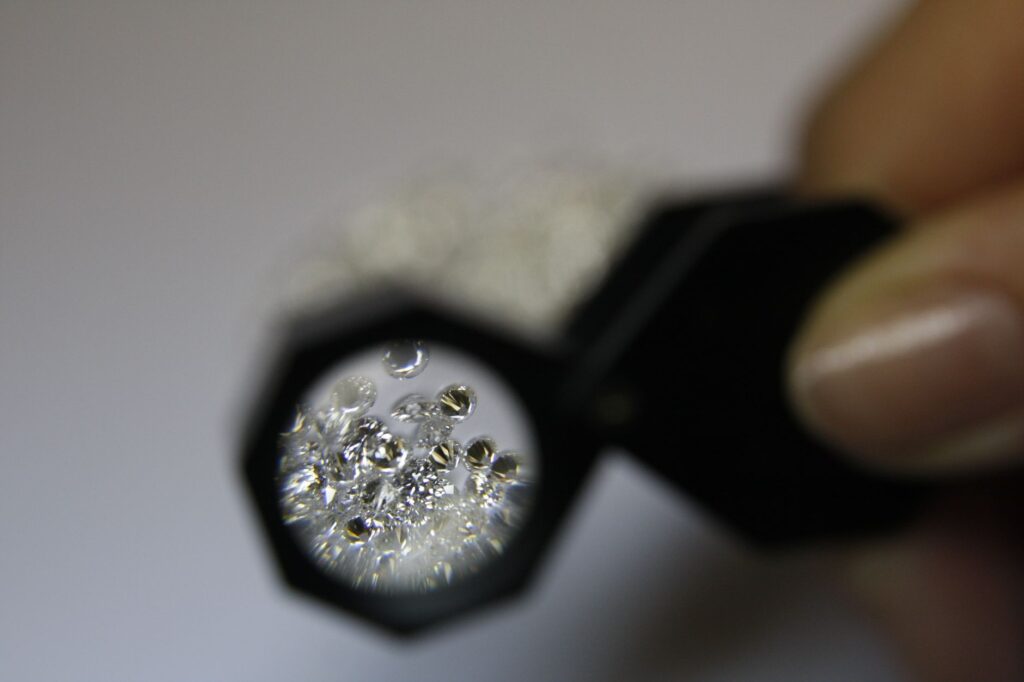
Clarity is graded under magnification, usually at 10x power. That means the grade is based on what a trained grader sees under magnification, not what an average buyer sees with the naked eye. This distinction matters because a diamond can have a modest clarity grade and still look perfectly clean when worn.
What “eye-clean” means
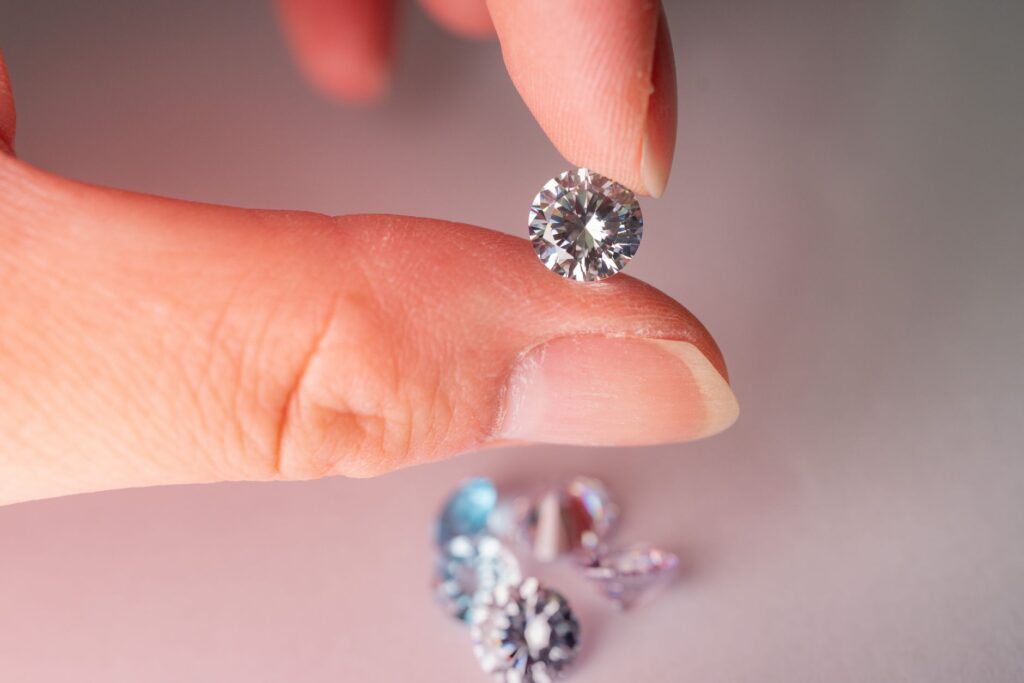
Eye-clean means that a diamond does not show obvious inclusions to the naked eye in normal viewing conditions. This usually means looking at the stone from a typical distance, such as 8 to 12 inches away, under ordinary lighting. It does not mean the diamond has no inclusions at all. It means they are not readily visible without magnification.
Eye-clean is one of the most useful ideas for buyers because it focuses on appearance rather than lab grading language. Two diamonds with the same clarity grade can look very different if one has a noticeable inclusion near the center and the other has a tiny inclusion near the edge.
How clarity grades are organized
Clarity grades generally run from flawless or near-flawless to included. In broad terms, the scale includes:
- FL and IF, the highest clarity levels
- VVS1 and VVS2, very, very slightly included
- VS1 and VS2, very slightly included
- SI1 and SI2, slightly included
- I1, I2, and I3, included
The practical meaning of these grades is not just how many inclusions exist, but whether they are easy or difficult to see. A diamond with a higher grade usually has fewer or less visible characteristics, but the location and type of inclusion can matter just as much as the grade itself.
Why Diamond Clarity Matters
Appearance is the main reason
Clarity matters most because it can affect how clean a diamond looks. Inclusions near the center of the stone, especially in transparent diamonds, are more likely to catch the eye. Inclusions near the edge are often easier to hide with prong settings or by the natural shape of the diamond.
For buyers, the key question is not whether a diamond has inclusions. Almost all diamonds do. The question is whether those inclusions distract from the stone’s appearance when it is worn.
It can affect value and price
Clarity also affects price. As clarity rises, price often rises too, sometimes sharply. The jump from a clean-looking VS or SI stone to a higher VVS or IF stone may not create a visible difference, but it can increase the cost significantly.
That is why clarity is often a value decision. Paying more can make sense if the upgrade removes a visible flaw or improves peace of mind. It may be less useful if the difference is only visible under magnification.
It can influence long-term satisfaction
Many buyers feel more confident when a diamond appears clean in everyday wear. Others prefer a higher grade on the report for personal comfort, resale considerations, or because they simply want the reassurance of minimal inclusions. There is nothing wrong with either approach, but it helps to know what you are paying for.
Long-term satisfaction often comes from balancing clarity with other factors such as cut, color, carat, and setting style. A diamond that looks bright and balanced to the eye may be more satisfying than a technically cleaner stone that gives up size or sparkle elsewhere.
How Diamond Clarity Affects Appearance
What buyers actually see
Most buyers do not inspect diamonds under a microscope. They look at the diamond in a store, online images, or when worn on the hand. In those settings, the most important questions are whether the inclusion is visible, where it sits, and whether it affects the face-up look of the diamond.
Face-up view means how the diamond looks from above when set in a ring. This is the view that matters most in daily wear. A small inclusion under the center can be more noticeable than several tiny inclusions near the edge, even if both stones have similar grades.
Transparency and brilliance
Some inclusions can make a diamond look slightly hazy or reduce transparency, especially if they are numerous or clustered in one area. A cloud, for example, is a group of tiny internal features that can create a soft, misty look if it is large enough. This is not common in higher-grade stones, but it is a consideration in lower-clarity diamonds.
Cut also plays an important role here. A well-cut diamond can mask minor clarity features better because its sparkle draws attention away from small imperfections. Poor cut, by contrast, can make an otherwise acceptable clarity grade appear less attractive.
Magnification versus everyday viewing
One of the biggest mistakes buyers make is judging clarity only by magnified images. Under 20x or 40x magnification, even excellent diamonds can look filled with features that will never be noticeable in normal wear. That does not mean magnified images are useless. It simply means they need context.
When evaluating a diamond, ask whether the inclusion is visible without magnification, whether it appears dark or white, and whether it is located in a busy area of the stone. Those details matter far more than seeing a long list of microscopic features on a report.
How Diamond Clarity Affects Value
When paying more makes sense
Paying more for clarity can make sense if you are trying to eliminate a visible inclusion, avoid a feature that could bother you personally, or choose a diamond with a cleaner overall appearance. This can be especially relevant for round brilliant cuts, where the facet pattern can help mask some inclusions, but not all.
Some buyers also prefer higher clarity for symbolic reasons. If the diamond is viewed as a special long-term piece, a cleaner report may feel more reassuring. That is a personal preference, not a universal requirement.
When the premium stops being useful
There is often a point where paying more for clarity adds little practical value. For many shoppers, that point is somewhere in the VS range or even the better end of SI1, depending on the stone. Beyond that, the diamond may become cleaner on paper without looking meaningfully different in normal use.
This is especially true for buyers who care most about beauty from a distance. If the stone already looks eye-clean, more clarity may not improve the wearing experience much. In that case, the money might be better spent on cut quality, a slightly larger carat weight, or a more suitable setting.
Which clarity grades often offer good value
There is no single best clarity grade for everyone, but many buyers find strong value in VS2 and carefully selected SI1 diamonds. These grades often provide an eye-clean look without the premium of VVS or IF stones. In lab grown diamonds, this value pattern can be especially noticeable because higher clarity is more common and more affordable than in natural diamonds.
That said, an SI1 is not automatically a good value. The inclusion must be evaluated individually. A clean-looking SI1 can be an excellent choice, while another SI1 with a central dark crystal may be less appealing than a better-positioned VS2.
Common Clarity Grades and What They Mean in Real Life
| Clarity Grade | What It Means | What Buyers Usually See | Typical Value Takeaway |
|---|---|---|---|
| FL / IF | No visible inclusions under magnification or extremely minimal characteristics | Usually looks identical to very high VS or VVS stones in normal viewing | Highest rarity, but often limited practical benefit for most buyers |
| VVS1 / VVS2 | Very tiny inclusions that are extremely hard to find | Typically eye-clean and very difficult to distinguish from VS stones without magnification | Strong prestige, but often a modest visual gain over VS |
| VS1 / VS2 | Minor inclusions that are somewhat easier to find under magnification | Often eye-clean, though inclusion placement matters | Frequently a practical sweet spot for buyers focused on appearance and value |
| SI1 | Noticeable under magnification, sometimes visible to the naked eye | Can be eye-clean or visibly included depending on the stone | Can offer excellent value if selected carefully |
| SI2 | More noticeable inclusions | Often visible without magnification, though not always in every stone | Requires more careful review, especially for center-facing inclusions |
| I1 to I3 | Obvious inclusions that are usually easy to see | Usually not eye-clean | Lower price, but appearance and durability concerns are more common |
Inclusion Types and What They Mean
Feather
A feather is a small internal fracture that can look like a white, wispy line or crack under magnification. Feathers are common and not always a problem. In many diamonds, they are tiny and stable, with no practical impact on everyday wear.
Buyers should pay more attention if a feather is near the edge or reaches the surface, because that can occasionally affect durability. A jeweler can usually explain whether it is safe in the finished setting. For most eye-clean shopping decisions, a tiny feather is less concerning than a dark crystal in the center.
Crystal
A crystal is a mineral inclusion trapped inside the diamond. It can appear white, transparent, or dark depending on the material and lighting. Dark crystals are often more visible than white ones.
Crystals are one of the most common reasons a diamond stops looking eye-clean. Their visibility depends heavily on size, location, and contrast. A small crystal near a prong may be easy to ignore, while a darker one under the table can be much more noticeable.
Cloud
A cloud is a cluster of tiny pinpoints or inclusions that may create a hazy or milky effect if concentrated enough. Small clouds may have little visual impact. Larger clouds, or clouds combined with other inclusions, can reduce brilliance or transparency.
For clarity-focused buyers, clouds deserve attention because they can affect appearance in a different way than a single obvious crystal. The issue is not always visibility of the cloud itself, but whether it makes the diamond look less lively.
Needle
A needle is a very thin, elongated inclusion that resembles a fine line. Needles are usually small and often difficult to see without magnification. In many diamonds, they have little practical effect on appearance.
Needles become more relevant when there are several of them or when they combine with other features. In those cases, they can contribute to a slightly busy internal pattern that may lower visual cleanliness.
Pinpoint
A pinpoint is a tiny dot-like inclusion. A few pinpoints are usually harmless and not visible to the naked eye. Large numbers of pinpoints, however, can form a cloud-like area or affect transparency.
Pinpoints are a good example of why clarity grades need context. A diamond may have many microscopic pinpoints and still look perfectly clean to a buyer. The number and grouping matter more than the word itself.
Twinning wisp
A twinning wisp is a chain or band of tiny inclusions created during diamond growth. This is seen more often in lab grown diamonds because of how those crystals form. It may appear as faint internal lines, wisps, or cloud-like patterns.
In many cases, twinning wisps are only visible under magnification. Sometimes they are harmless. In other cases, especially if concentrated in the center, they can be noticeable and may reduce the stone’s transparency or appeal. This is one reason lab grown buyers should review clarity images carefully rather than relying on grade alone.
Knot
A knot is an included crystal that reaches the surface and remains visible after cutting. It can sometimes look like a small bump or rough spot. Knots are less common in higher-quality diamonds, but when present they can be easier to see than many internal inclusions.
Knot features may affect appearance and, in some cases, durability if they weaken a surface point. They are worth asking about when a report or image shows an inclusion near the girdle or surface.
Cavity
A cavity is a small opening or indentation on the surface of the diamond. It can occur where an inclusion fell out during cutting or polishing. Cavities are usually more concerning than deep internal inclusions because they are directly exposed on the surface.
Depending on size and location, a cavity may catch dirt or be visible without magnification. For a buyer, it deserves closer attention than a tiny internal pinpoint because it can affect both look and maintenance.
Chip
A chip is a small break or missing piece on the surface, often along an edge or facet. Chips can happen during cutting, setting, or wear. Unlike many other inclusions, a chip is often a durability and cosmetic concern.
Any chip should be evaluated carefully, especially in a used diamond or a loose stone. If it is small and hidden by the setting, it may be less of a concern. If it is exposed, it can be a meaningful issue.
Practical Examples Buyers Commonly Face
VS2 versus SI1 in normal viewing conditions
A VS2 and an SI1 can look very similar from a buyer’s point of view if both are eye-clean. In many cases, the SI1 may cost less while looking just as good when worn. That is why shoppers often compare these two grades closely.
The difference is not the label alone. One VS2 may have a tiny side inclusion that is invisible in a setting, while one SI1 may have a dark crystal directly under the center. In real-world terms, the better value is often the stone that looks cleaner face-up, regardless of the exact grade.
Eye-clean SI1 versus non-eye-clean SI1
Not all SI1 diamonds are equal. Some are completely eye-clean and offer excellent value. Others have a visible inclusion that can be seen without magnification, which may make the stone less appealing even if the report still says SI1.
This is a perfect example of why clarity matters but should not be treated as a stand-alone answer. A well-chosen SI1 can be a smart purchase. A poorly chosen SI1 can disappoint a buyer who assumed all stones in that grade look similar.
VVS versus VS for everyday wear
For most everyday wear, the visual difference between VVS and VS is very small or nonexistent to the naked eye. Both are often eye-clean, especially in well-cut diamonds. The main difference is usually how hard the inclusions are to find under magnification, not how the stone looks on the hand.
That is why many experienced buyers see VVS as a prestige choice rather than a necessity. If the goal is a beautiful ring that looks clean in normal conditions, VS is often enough. If the goal includes owning a very high-grade stone for personal preference or peace of mind, VVS may still be appealing.
Lab grown diamond clarity versus natural diamond clarity
Lab grown diamonds often come with high clarity grades because the growth process can produce fewer of the crystal-forming imperfections common in some natural diamonds. However, lab grown stones can also show characteristic growth-related features such as graining or twinning wisps. These are not automatically a problem, but they deserve review.
In practical buying terms, lab grown shoppers may find more high-clarity options at lower prices. That can be helpful, but it does not mean every higher-grade stone is worth the premium. The same question still applies: does the diamond look eye-clean in the size and shape you want?
Advantages of Paying Attention to Clarity
- Better visual judgment, because you can focus on what is actually noticeable
- More informed spending, since you avoid paying for clarity you cannot see
- Improved confidence, especially if you are concerned about visible flaws
- Smarter comparisons, because inclusion location and type become part of the decision
- Better balance with other factors, such as cut, color, and carat
Disadvantages and Trade-Offs
- Higher clarity can cost more without providing a visible improvement
- Grades do not tell the whole story, since two stones with the same grade can look different
- Magnified images can be misleading if buyers assume all visible features matter equally in real life
- Lower grades require more judgment, which can make shopping more complicated
- Some inclusions raise durability questions, especially if they reach the surface or sit at vulnerable points
Buying Considerations for Real-World Shoppers
Start with your budget and priorities
If your budget is tight, clarity should usually be weighed alongside cut and carat. A diamond that is technically cleaner but poorly cut may look less attractive than a slightly lower-clarity diamond with excellent sparkle. Many experienced shoppers place cut first, then consider whether the diamond is eye-clean.
If your budget is more flexible, you may choose a cleaner clarity grade for peace of mind. The key is knowing whether the extra money is buying visible improvement or simply a higher line on the report.
Focus on inclusion location
Location often matters more than grade. Inclusions under the table, which is the large top facet in the center of the stone, are more likely to be noticed. Inclusions near the edge are often easier to hide in a setting.
When reviewing a report or image, ask where the inclusion sits in the diamond. A small inclusion off to the side may be less important than a comparable one in the middle. This is one of the simplest ways to judge whether clarity truly matters in a specific stone.
Consider the diamond shape
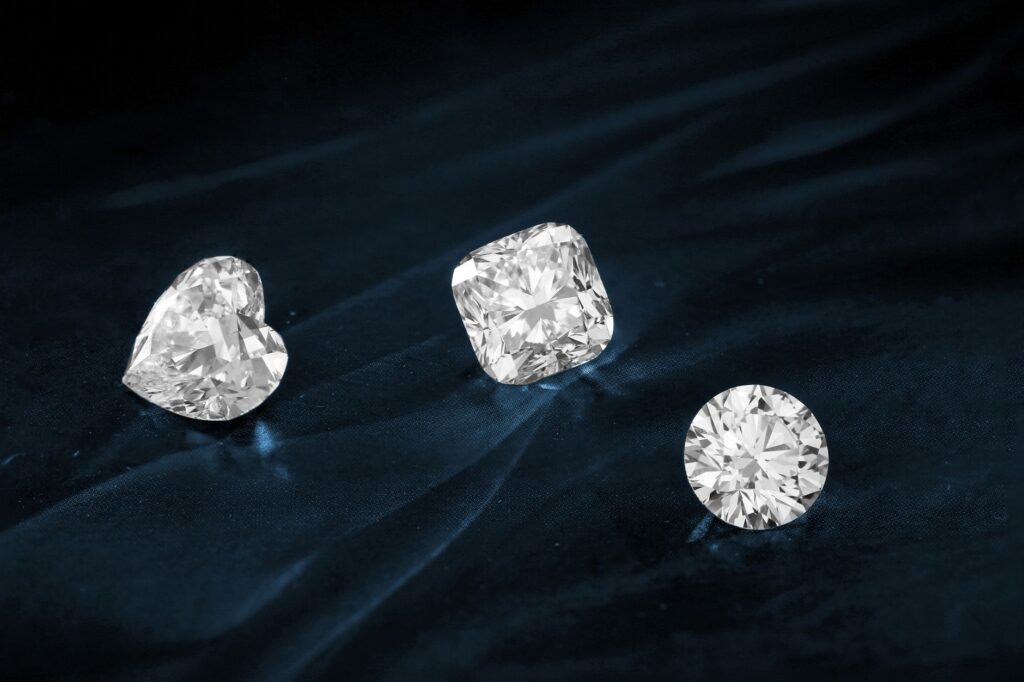
Some shapes hide inclusions better than others. Brilliant cuts, such as round brilliant, cushion, and oval, often mask small imperfections well because of their facet patterns. Step cuts, such as emerald cut and Asscher, are usually less forgiving because their larger, open facets reveal internal features more easily.
This means an eye-clean SI1 may be easier to find in a round brilliant than in an emerald cut. Shape should therefore influence how much clarity matters. Buyers choosing step cuts may need to prioritize higher clarity if they want a clean-looking stone.
Pay attention to lab grown diamond specifics
Lab grown diamonds can offer excellent clarity value, but they still need careful evaluation. Some stones have growth-related patterns that may not be obvious from the grade alone. Others may be so clean that a higher grade brings little visible benefit.
If you are shopping for a lab grown diamond, ask for images, videos, and a clear explanation of any inclusions. The report is useful, but it should not replace direct visual review. This is especially true when comparing several diamonds in similar price ranges.
Think about the setting
The setting can hide or expose inclusions. Prong settings may cover small edge inclusions, while halo or bezel styles can also reduce the visibility of features near the outside. On the other hand, a very open setting can leave more of the diamond visible from the sides.
If a diamond is almost eye-clean but has a tiny inclusion near the edge, a thoughtful setting choice may solve the problem. This can be a more efficient solution than paying for a substantially higher clarity grade.
Common Buyer Mistakes
Overpaying for invisible clarity improvements
One of the most common mistakes is paying a large premium for a clarity upgrade that does not change the way the diamond looks in normal wear. Buyers sometimes assume that higher automatically means better value. In clarity, that is not always true.
If two diamonds look equally clean to the eye, the cheaper one may be the better practical choice. That extra budget can then be used for better cut, a preferred shape, or a slightly larger size.
Ignoring inclusion type and placement
Some buyers focus only on the grade and ignore the type of inclusion. That can be a mistake. A tiny feather at the edge may be less concerning than a dark crystal in the center, even if the stones have similar reports.
Placement matters just as much. Clarity is not only about how much is present. It is about whether it affects the look or durability of the diamond you will actually wear.
Assuming all SI diamonds look the same
This is not true. One SI1 might be eye-clean and beautifully priced. Another may have obvious inclusions and be a less satisfying choice. The same applies to SI2, though the range of visible differences can be even wider.
That is why videos, magnified images, and a careful review of inclusion location matter so much. The grade is a starting point, not the final answer.
Thinking magnified flaws matter the same in real life
It is easy to become overly focused on microscopic features when shopping online. A stone may look highly flawed under magnification but perfectly attractive on the hand. Buyers should remember that jewelry is worn at normal distance, not under a microscope.
This does not mean inclusions never matter. It means the correct standard is everyday appearance. That is the standard that affects satisfaction after the purchase.
Frequently Asked Questions
Is diamond clarity more important than cut?
For most buyers, no. Cut usually has a greater effect on sparkle, brightness, and overall beauty. A well-cut diamond with modest clarity often looks better than a higher-clarity stone with poor cut.
What is the best clarity grade for value?
There is no universal best grade, but many buyers find strong value in VS2 and eye-clean SI1 diamonds. These grades can offer a clean look without the higher premiums of VVS or IF stones.
Can an SI1 diamond look flawless to the eye?
Yes. Some SI1 diamonds are eye-clean and appear flawless in normal viewing conditions. The inclusion may still be visible under magnification, but that does not necessarily affect everyday appearance.
Should I avoid all diamonds with feathers?
No. Feathers are common and often harmless. They become a concern mainly if they are large, surface-reaching, or located in a way that could affect durability.
Do lab grown diamonds have better clarity than natural diamonds?
Not always, but lab grown diamonds often offer high clarity at lower prices. They can also show different growth-related inclusions. The best choice still depends on the individual stone, not the origin alone.
Why do some diamonds with the same clarity grade look different?
Because clarity grade is only one part of the picture. Inclusion type, size, location, and how the diamond is cut all affect what you actually see. Two diamonds with the same grade can have very different visual results.
Will a higher clarity diamond hold value better?
Not necessarily in a way most buyers would expect. Higher clarity can help a diamond sell as a premium item, but resale value depends on many factors, including market conditions, size, cut, color, and whether the diamond is natural or lab grown.
How can I tell if a diamond is eye-clean online?
Look for clear photos or videos, ask for the inclusion map, and check where the imperfection is located. If the stone is shown face-up and the inclusion is hard to see without zooming in, it may be eye-clean in normal wear. When in doubt, ask the seller how the stone appears from a normal viewing distance.
Conclusion
Diamond clarity matters because it affects whether inclusions are visible, how clean the stone looks, and how much you pay for a certain level of apparent perfection. But clarity is most useful when it is judged in context. The real buying question is not whether a diamond has inclusions. It is whether those inclusions are visible in normal wear and whether the premium for a higher grade is worth it to you.
For many buyers, an eye-clean VS2 or carefully chosen SI1 delivers excellent value. In some cases, paying much more for VVS or higher clarity changes the report more than the appearance. By focusing on inclusion type, placement, and real-world visibility, you can make a more informed choice and avoid paying for details that will never be noticed once the diamond is set and worn.
When clarity is evaluated alongside cut, color, shape, and setting, it becomes much easier to choose a diamond that looks beautiful and feels like a smart purchase. That practical approach is the most useful way to think about why diamond clarity matters.