Diamond color only becomes truly important when it changes what you can see, not what the grading report says. A diamond can have a higher color grade on paper and still look almost identical to a slightly lower grade once it is set in a ring, especially in lab grown diamonds where higher color grades are more common and often less expensive than in natural diamonds.
For buyers trying to decide What Diamond Color Looks White, the practical answer is that several near-colorless and colorless grades can appear white in everyday wear. The difference between them is often subtle, and in many settings, lighting conditions, and metal choices, most people will not notice a meaningful change in appearance.
Quick Answer
If your goal is a diamond that looks white to the eye, the safest starting point is usually G color or higher for round diamonds, with many buyers finding H and even I color to look white once the diamond is set. In lab grown diamonds, where higher color grades are more accessible, buyers often compare D through H and still find the stones face up as white in normal wear.
The key point is that diamond color grade does not always match visible color. A diamond’s shape, cut quality, size, and setting all influence whether a tint is noticeable. If you want the best balance of appearance and value, the right choice is often a near-colorless grade that looks white without paying for a level of color purity that is difficult to see.
What Diamond Color Means in Simple Terms
Diamond color grading measures how much yellow or brown tint a diamond shows compared with a colorless reference. The scale used most often for white diamonds runs from D at the colorless end to Z where the tint becomes obvious.
Within that scale, the grades are grouped into three broad categories:
- Colorless: D, E, F
- Near-colorless: G, H, I, J
- Faint or noticeable color: K and below
What matters to a buyer is not just where the diamond sits on the chart, but whether the tint is actually visible in real life. A color grade is a controlled laboratory assessment. Your eyes, however, are influenced by setting style, metal color, lighting, and the diamond’s cut.
Why color grading exists
Color grading helps standardize diamond quality. Without it, buyers would have a hard time comparing diamonds fairly, since one stone may look slightly whiter than another even if both are described as “white.”
Still, grading is only part of the story. Two diamonds with the same color grade can look different if one is well cut and the other is not. A well-cut diamond often reflects more light and can appear brighter and whiter than a poorly cut stone of a higher color grade.
What Diamond Color Actually Looks White?
In everyday terms, diamonds in the D through H range often look white to most buyers once set, especially in round brilliant cuts. The exact point where a diamond looks white depends on how sensitive the viewer is to color, what metal surrounds the stone, and how large the diamond is.
Here is the practical buying reality:
- D, E, F: These are the safest grades if you want a diamond that appears fully white in almost any setting.
- G, H: These often look white to the eye in normal wear, especially in well-cut diamonds.
- I, J: These can still look white face up, but a slight warmth may appear in certain lighting or side views.
- K and below: Warmth is more likely to be visible, especially in larger stones and white metal settings.
For shoppers asking what diamond color looks white, the most useful answer is that the cutoff is not exact. The answer depends on whether you want “absolutely no visible warmth” or “looks white in normal daily wear.” Those are not always the same thing.
How the Color Grade Relates to What You See
Diamond color is easiest to judge when stones are compared side by side under controlled conditions. That is how grading laboratories work, and it is also why a buyer may notice a difference in a showroom that later becomes much harder to see at home.
Once a diamond is placed in a ring and worn at arm’s length, several things reduce the visibility of color:
- The eye is no longer comparing it directly to a color master stone.
- The setting blocks some of the view from the side.
- Ambient light changes from moment to moment.
- Cut quality can make the diamond look brighter and more colorless.
This is why a diamond graded H or I may still look white in real life, even though it is not technically colorless. For many buyers, that is the important distinction.
Face-up appearance vs side appearance
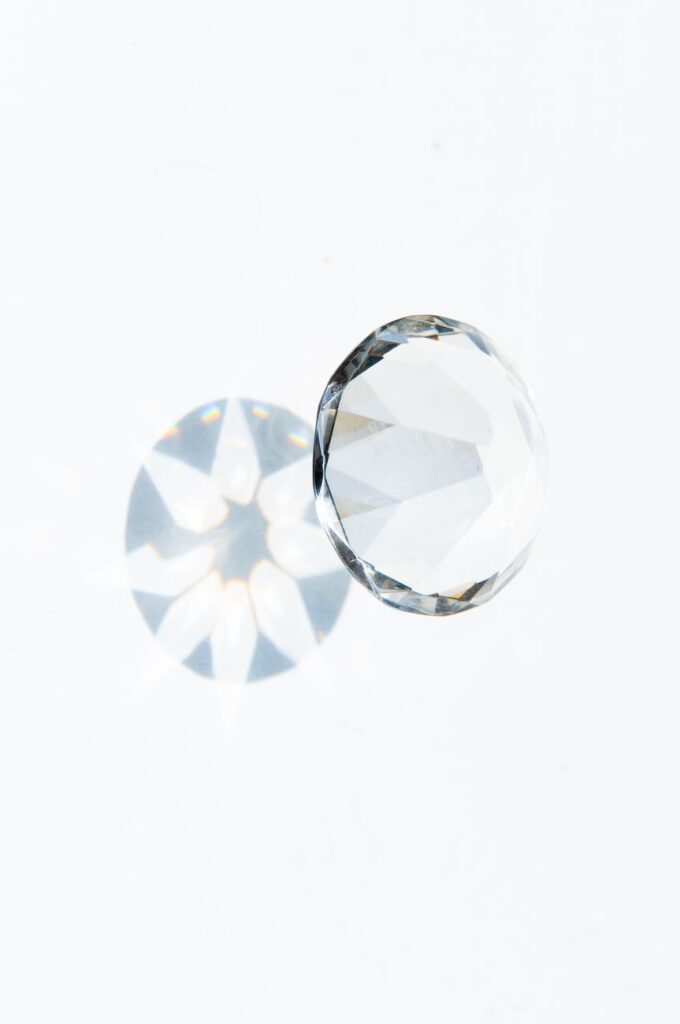
Most people look at a diamond from the top, known as the face-up view. In that view, many near-colorless diamonds look quite white, especially if they are round brilliant cuts and set in a way that minimizes side visibility.
Side views tell a different story. Lower color grades, or diamonds with more body color, may show warmth along the pavilion or from the profile. This does not always make the stone look unattractive. It simply means the diamond is not visually the same as a D color stone under close inspection.
Can Most People See the Difference?
In normal daily wear, most people do not notice small differences between adjacent color grades unless the diamonds are compared directly. A buyer may see the difference between D and J side by side in a loose stone comparison, but far fewer people can identify that difference from a distance in a ring.
That said, visibility depends on how the stone is viewed. Color differences are more likely to be noticed when:
- Diamonds are compared side by side
- The stone is viewed in strong, neutral lighting
- The diamond is large enough for body color to be easier to see
- The cut is not optimal
- The setting uses a white metal that highlights warmth
In other words, the difference is often real, but not always practical. That is why many buyers choose a color grade based on how the diamond will look in normal wear rather than on the report alone.
Professional eyes vs consumer eyes
Gemologists, jewelers, and trained graders are better at seeing subtle color differences because they compare diamonds regularly and know what to look for. Most consumers do not spend their time evaluating diamonds under ideal grading conditions, so their threshold for noticing tint is different.
This matters because a salesperson may describe a grade as a big upgrade when, for a typical buyer, the visible benefit is very small. A good buying decision should reflect your own expectations, not just expert terminology.
How Diamond Shape Affects Color Appearance
Not all diamond shapes hide or reveal color in the same way. This is one of the most overlooked parts of color buying. Shape influences how much of the diamond’s body color is visible and how bright or white it looks.
Round brilliant diamonds
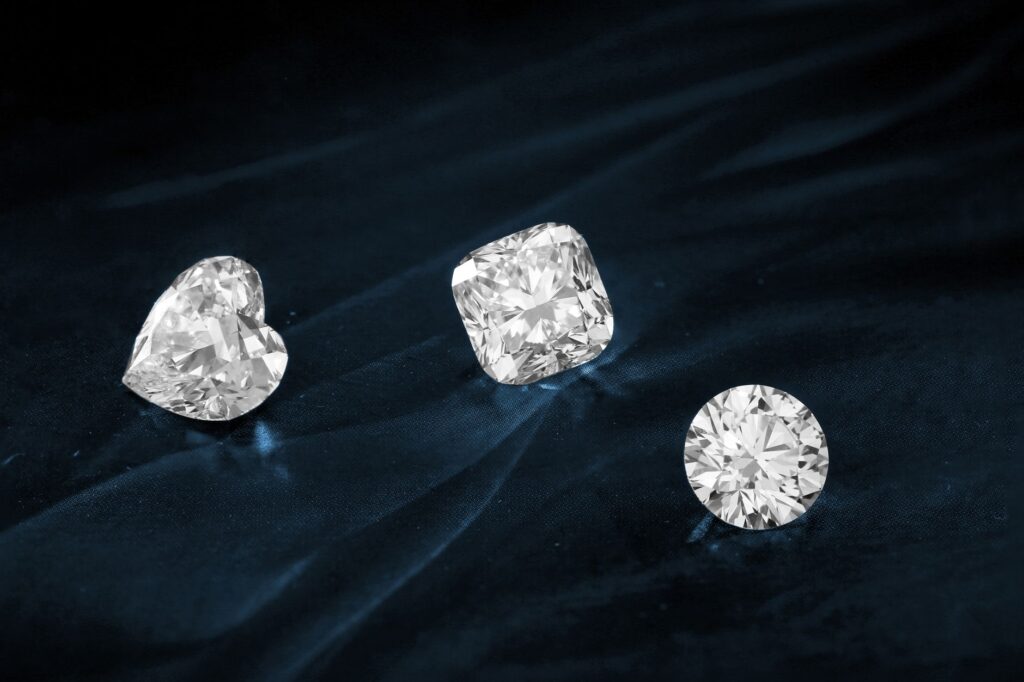
Round brilliants are usually the most forgiving shape for color. Their facet pattern returns a lot of light, which helps mask slight warmth. Because of that, many round diamonds in G, H, and sometimes I color still look very white in the face-up view.
This is one reason round diamonds are often the easiest shape for buyers who want a white-looking stone without paying the highest color premiums.
Oval, cushion, radiant, pear, and marquise shapes
Fancy shapes can show color differently. Some, like radiant cuts, can still hide color fairly well because of their faceting style. Others, such as oval and cushion shapes, may show warmth more easily depending on the cut style and length-to-width ratio.
With these shapes, buyers sometimes choose a slightly higher color grade than they would for a round diamond. The reason is not that the shape is inferior. It is simply that shape changes how white the diamond appears.
Emerald and asscher cuts
Step cuts such as emerald and asscher are less forgiving with color. Their large, open facets make it easier to see body color and internal features. If a buyer wants a step-cut diamond to look white, they often need to pay closer attention to color grade than they would with a round brilliant.
This is especially important in lab grown diamonds, where many shoppers choose emerald cuts for the clean, modern look but still want a bright white appearance.
How Metal Choice Changes Color Perception
The setting metal can make a diamond look whiter or warmer, even when the stone itself has not changed. This is one of the most practical reasons color choice should never be made in isolation.
| Metal type | Effect on diamond color | Practical buying note |
|---|---|---|
| Platinum | Shows color more honestly and can make near-colorless stones look slightly warmer by comparison | Good for buyers who want a crisp white look and do not mind seeing subtle warmth in lower grades |
| White gold | Also emphasizes whiteness, though rhodium plating can make the setting itself appear very bright | Common choice for buyers who want a white-metal look at a lower cost than platinum |
| Yellow gold | Masks slight warmth in the diamond and can make lower color grades look whiter by contrast | Useful if you want to save money on color without worrying as much about tiny tint differences |
| Rose gold | Can also soften the look of warmth in the diamond | Often works well with near-colorless grades, especially if the ring design is intentionally warm-toned |
For buyers focused on what diamond color looks white, the setting matters a great deal. A G or H color diamond in yellow gold may look completely white to most observers, while the same diamond in platinum may reveal a bit more warmth under close inspection.
How Lighting Changes the Appearance of Diamond Color
Diamonds do not look exactly the same in every light. This is true for all diamonds, including lab grown stones. Color can seem stronger or weaker depending on the environment.
Daylight
Natural daylight is one of the most useful lighting conditions for evaluating color because it is relatively balanced. In daylight, body color can be easier to detect in near-colorless diamonds than it is in a jewelry store display case.
If a diamond still looks white in daylight, that is a strong sign it will look white in everyday wear.
Jewelry store lighting
Store lighting is often designed to make diamonds sparkle as much as possible. Bright spotlights, mixed light temperatures, and reflective display cases can make color differences harder to see. This is one reason some diamonds look whiter in a store than they do at home.
Buyers should be careful not to judge color only by a brightly lit showroom display. That environment can make almost any well-cut diamond look more brilliant than it will in normal life.
Warm indoor lighting
Warm household light can make lower color grades appear a little warmer. This does not mean the diamond has changed. It simply means the light source itself has a yellow cast that influences your eye.
If your home has warm bulbs, a G, H, or I color stone may still look white, but a lower grade may show more warmth than expected.
Cool lighting and office light
Cool LED lighting can make diamonds appear crisper and whiter. Some buyers prefer this look because it reduces the visibility of tint. However, it is important to remember that not all real-life environments are as cool or bright as office lighting.
A well-balanced buying decision considers all lighting, not just the most flattering one.
Price Premium vs Visible Benefit
Color grades near the top of the scale can carry a real price premium, but the visual benefit is not always equally large. This is where many buyers make expensive choices they later cannot justify from a day-to-day appearance standpoint.
The jump from D to G, for example, may produce a measurable price difference, but the visible difference in a properly cut diamond can be very small once the stone is set. The further you move toward the colorless grades, the more you often pay for increasingly subtle improvements.
The diminishing returns problem
Diamond color upgrades often show diminishing returns. That means the first few grades may bring a noticeable visual improvement, but the premium keeps rising even when the visible difference becomes harder to see.
This is especially relevant in lab grown diamonds. Because lab grown diamonds often cost less than natural diamonds at the same apparent quality level, buyers sometimes feel more comfortable choosing very high color grades. That can be fine, but it is still worth asking whether the upgrade changes what you will actually see.
When the premium makes sense
Paying more for color can make sense if you:
- Want the whitest possible appearance under close inspection
- Are choosing a shape that shows color more easily, such as emerald or asscher
- Prefer platinum or white gold and want a very crisp match
- Are buying a larger diamond where tint is more visible
- Personally notice color differences and care about them
If none of those points apply, a lower color grade may offer better value without sacrificing the look you want.
How Lab Grown Diamonds Change the Color Conversation
Lab grown diamonds deserve special attention because the color market behaves somewhat differently than it does for natural diamonds. In lab grown diamonds, high color grades are often more available, which means buyers are less likely to have to compromise on color to stay within budget.
That can be helpful, but it can also lead buyers to overestimate how much visible improvement they get from the highest grades. A D or E lab grown diamond may be beautiful, but a G or H lab grown diamond can still look white to the eye in many ring settings.
Why higher colors are more common in lab grown diamonds
Lab grown diamonds are created under controlled conditions, so manufacturers can often produce stones with very high color grades more consistently than is possible in nature. This means the market may have more inventory in colorless ranges than many buyers expect.
Because of that, some shoppers focus too heavily on top color grades simply because they are available. Availability should not be confused with necessity.
Do lab grown diamonds look different in color?
Not in a way that changes the basic buying principles. A lab grown diamond is still a diamond, and color is still judged by the same appearance standards. The same questions matter: Does it look white? Is the warmth visible? Does the metal and shape make a difference?
What changes is often the price-to-appearance ratio. Since high-color lab grown diamonds can be more affordable than comparable natural stones, the buyer may have more flexibility. Still, the best grade is the one that fits your eye and budget, not simply the highest number.
Which Color Grades Usually Look White?
There is no universal answer, but there are useful buying patterns. The following table offers a general guide for round brilliant diamonds in typical settings.
| Color grade | Typical visible appearance | General buyer takeaway |
|---|---|---|
| D | Colorless, extremely white, no visible tint in normal viewing | Best for buyers who want the purest appearance and are willing to pay for it |
| E | Colorless to the eye in most situations | Very safe choice if you want a white look with slightly less cost than D |
| F | Usually appears white, especially when well cut | Often a strong balance of appearance and value |
| G | Typically looks white face up, slight warmth may appear in some conditions | One of the most common value-focused choices |
| H | Still often looks white, though warmth may be easier to notice up close | Good option for many buyers, especially in yellow gold or well-cut round stones |
| I | Can look white face up, but a faint tint may become visible in some settings | Worth considering when budget matters and the buyer accepts a little warmth |
| J | May still appear white from the top, but warmth is more likely to be noticed | Useful for buyers who prioritize size or other quality factors over top color |
This table is a practical guide, not a rule. Cut quality can move the appearance up or down within this range. A well-cut H color diamond may look whiter than a poorly cut F color diamond.
Who Should Upgrade Color?
Buying a higher color grade can be justified when the goal is to reduce visible warmth as much as possible. Some buyers are very sensitive to color, and for them the improvement is real, even if it seems subtle to someone else.
You may want to upgrade color if:
- You are choosing an emerald or asscher cut
- You want a larger diamond where tint is easier to notice
- You prefer a platinum or white gold setting and want a crisp white presentation
- You know from comparison shopping that even slight warmth bothers you
- You are buying a center stone intended to look especially bright and icy
In these situations, spending more on color can be sensible because the visual benefit aligns with your priorities.
Who Can Save Money on Color?
Many buyers can lower color grade without giving up the look they want. This is especially true when the diamond is well cut and set in a way that complements its body color.
You may be able to save money on color if:
- You are comfortable with a diamond that looks white rather than technically colorless
- You are choosing a round brilliant or another forgiving shape
- You prefer yellow gold or rose gold
- You are more focused on cut, carat, or clarity than top color
- You are buying a lab grown diamond and want the best overall value
For many shoppers, moving from F to G, or G to H, creates noticeable savings with little or no practical change in appearance. That trade-off often makes sense when the stone will be seen at normal viewing distance rather than under grading conditions.
Common Buyer Mistakes
Color shopping becomes more difficult when buyers rely on assumptions instead of visual context. Several mistakes come up repeatedly.
Overpaying for invisible upgrades
Some buyers insist on the highest color grades because they sound better on paper. In many cases, that extra cost produces a difference that is too small to notice once the diamond is mounted.
This does not mean top color grades are unnecessary. It means they should be chosen for a visible reason, not just a numerical one.
Ignoring the setting metal
A diamond that looks white in yellow gold may not look identical in platinum. The reverse is also true. Buyers who ignore metal color sometimes end up paying for a color grade that does not actually improve the look of the finished ring.
Judging only under showroom lights
Bright store lighting can flatter a diamond and reduce the appearance of tint. A stone that looks extremely white in the store may reveal more warmth at home. Buyers should look at diamonds under multiple lighting conditions whenever possible.
Forgetting the role of cut
Cut is one of the biggest influences on apparent brightness. A well-cut diamond can look whiter because it returns more light. Choosing a high color grade in a weak cut is usually a poor trade.
Buying by report alone
A grading report is important, but it is not enough. The report tells you the category; your eyes tell you whether the stone looks white in the setting you plan to wear.
Color, Clarity, and Cut: How to Prioritize
Color should not be chosen in a vacuum. Most buyers have limited budgets, and diamonds involve trade-offs. If you spend too much on an ultra-high color grade, you may have less room to improve cut quality or select a larger stone.
For many buyers, cut is the first priority because it has the biggest impact on brilliance and sparkle. Color comes next, but the right grade depends on the shape, setting, and personal tolerance for warmth. Clarity matters too, although visible inclusions are often easier to notice than subtle color differences.
In practical terms, a slightly lower color diamond with excellent cut can look more appealing than a higher color diamond with average cut. That is why color should be evaluated as part of the whole stone, not as an isolated number.
Practical Buying Guide by Setting Style
If you want a diamond that looks white, the setting style can help determine how much color you need to buy.
Solitaire settings
Solitaire rings expose more of the diamond from the side, so any warmth may be easier to notice. Buyers who want a very white look in a solitaire may prefer a slightly higher color grade than they would in a more detailed setting.
Halo settings
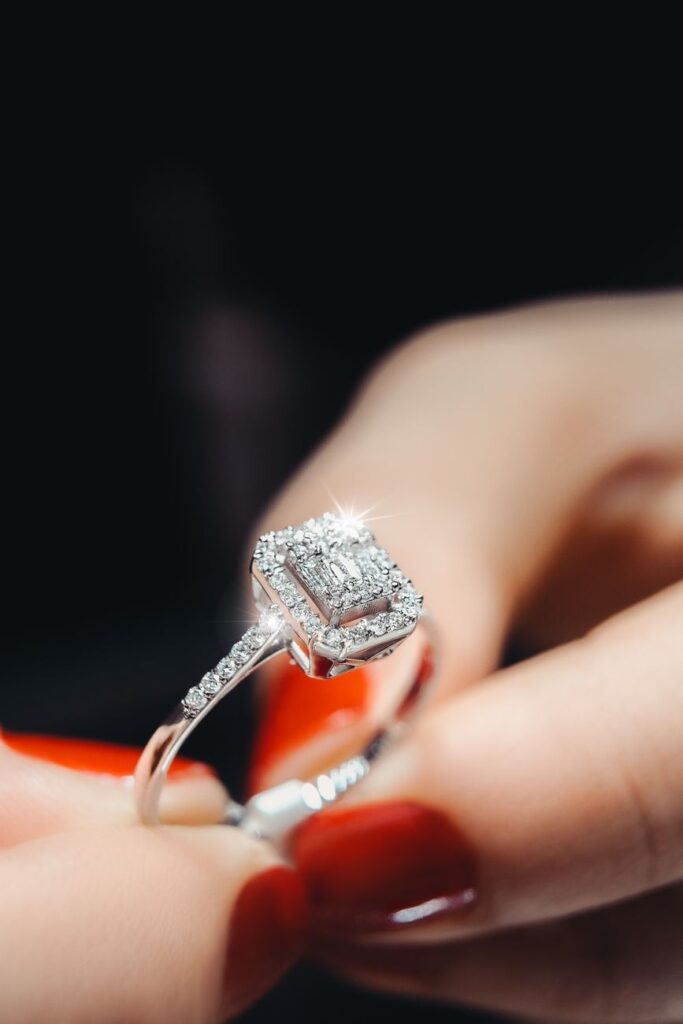
Halo settings surround the center diamond with smaller stones, which can make the center stone look brighter and whiter by comparison. This can sometimes allow a buyer to choose a slightly lower color grade without losing the desired appearance.
Three-stone settings
These settings can also influence how color is perceived, especially if the side stones are very white. Matching the center stone closely may matter more here than in simpler designs.
Vintage-inspired settings
Intricate settings can draw attention away from tiny differences in color. In these designs, buyers may have more flexibility to prioritize size or cut over the highest color grade.
When a Diamond Still Looks White at Lower Grades
It is common for buyers to be surprised by how white some near-colorless diamonds look in real life. This happens because the eye is not particularly good at detecting small color shifts once a diamond is sparkling in a ring.
For example, a well-cut H or I color round diamond may look white from the top, especially if set in yellow gold. A buyer who only sees the grading scale may assume that such a diamond looks yellow, which is often not the case.
This is why practical viewing matters. The best way to answer what diamond color looks white is to consider both the grade and the setting, not just the label.
Frequently Asked Questions
What diamond color looks white to the eye?
In many cases, diamonds in the D through H range look white to the eye once they are set, especially in round brilliant cuts. Some I color diamonds can also appear white in face-up view, depending on the setting and lighting.
Is G color white enough for an engagement ring?
For most buyers, yes. G color is widely considered white in everyday wear, and many people cannot tell it apart from higher grades once the diamond is mounted. It is often a strong value choice.
Does lab grown diamond color look different from natural diamond color?
No, color is evaluated the same way. A lab grown diamond can still show warmth or look white depending on its grade. The main difference is that lab grown diamonds often make higher color grades more affordable.
Is H color still white?
Yes, H color is often white enough for most buyers, especially in round diamonds and in yellow gold settings. Some close inspection may reveal a faint warmth, but in normal wear it usually appears white.
Can I save money by choosing I or J color?
Yes, and many buyers do. The trade-off is that warmth becomes more likely to show, especially in larger stones, step cuts, or white metal settings. If you are comfortable with a slightly warmer look, these grades can offer good value.
Why does my diamond look whiter in the store than at home?
Store lighting is often brighter and more flattering than home lighting. It can make diamonds look whiter and more brilliant. Home lighting may reveal warmth that was harder to notice in the showroom.
Should I always choose the highest color I can afford?
Not necessarily. Once a diamond already looks white to your eye, higher grades may offer little visible improvement. In many cases, the better value is to balance color with cut, size, and setting.
Does diamond shape affect what color looks white?
Yes. Round diamonds hide color better than many other shapes, while emerald and asscher cuts often show color more easily. Shape can change the grade you need to achieve a white look.
Final Takeaways for Buyers
If you want to know what diamond color looks white, the most practical answer is that colorless and near-colorless diamonds often both look white in real life. The line between “white enough” and “noticeably warm” depends on shape, cut, metal, lighting, and the size of the stone.
For many buyers, the best value is found in the colorless to near-colorless range, especially G through H for round diamonds and well-cut lab grown stones. Those grades often provide a white appearance without paying extra for a difference that is difficult to see once the diamond is worn.
If you are very color-sensitive, shopping for a step cut, or want the crispest possible look in platinum or white gold, a higher color grade can be worth it. If your priority is value and the diamond still looks white to the eye, you can often save money by choosing a slightly lower color grade and focusing on overall beauty instead of a number on the report.