When people ask What Is an Ideal Cut Diamond, they are usually trying to understand more than a grading term. They want to know whether the diamond will actually look better, sparkle more, and be worth paying for. That is the right question, because cut has one of the biggest effects on how a diamond looks in real life.
An ideal cut diamond is a diamond shaped and proportioned to return light efficiently, creating strong brilliance, fire, and scintillation. In simple terms, it is designed to look lively and bright rather than dull or sleepy. For many buyers, especially those comparing lab grown diamonds, cut quality is one of the most important factors to evaluate before carat weight or even clarity.
The term can be used in different ways depending on the grading system, the lab, or the seller. That is why it helps to understand what ideal cut means, what it does not mean, and how much of the difference you can realistically see with your own eyes. Once you understand that, you can make more confident decisions about diamond quality and value.
Quick Answer
An ideal cut diamond is a diamond with proportions and facet relationships that allow light to enter, reflect, and return to the eye in an efficient way. That usually means more sparkle, stronger brightness, and better overall visual performance than a diamond with mediocre cut quality.
For buyers, the practical takeaway is simple. If you are choosing between diamonds with similar color, clarity, and carat weight, cut often has the biggest impact on how attractive the stone looks face up. A smaller well-cut diamond can easily look better than a larger diamond with poor cut quality.
The phrase ideal cut is most commonly discussed for round brilliant diamonds, where light performance is especially important. For other shapes, buyers usually look at excellent cut, precision cut, or shape-specific proportion guidelines rather than a single universal ideal standard.
Understanding What Ideal Cut Means
Cut is not the same as shape
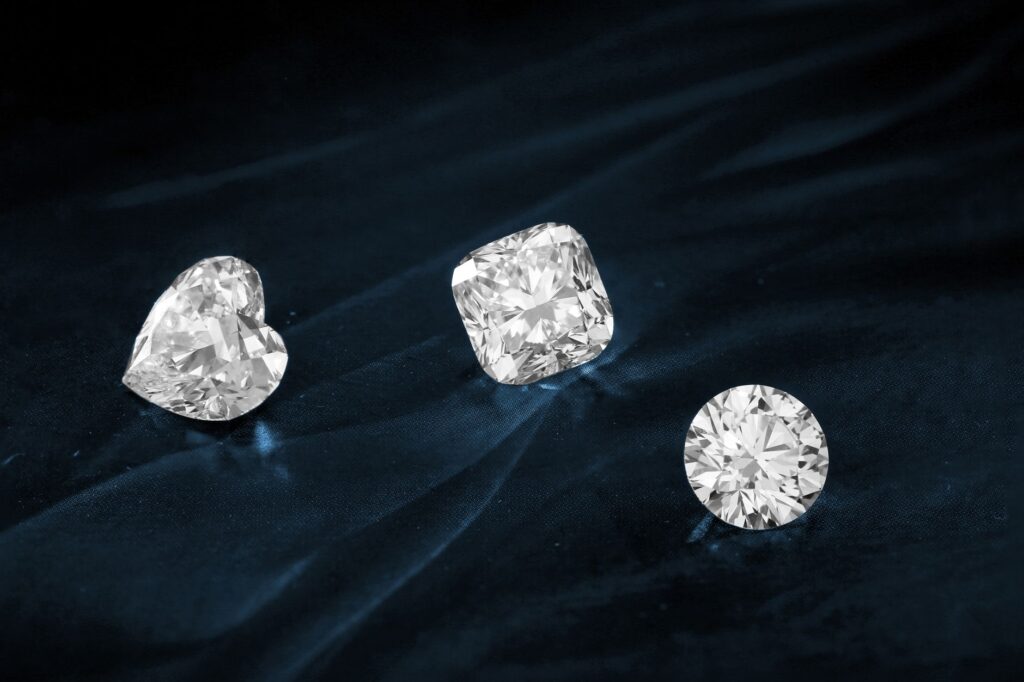
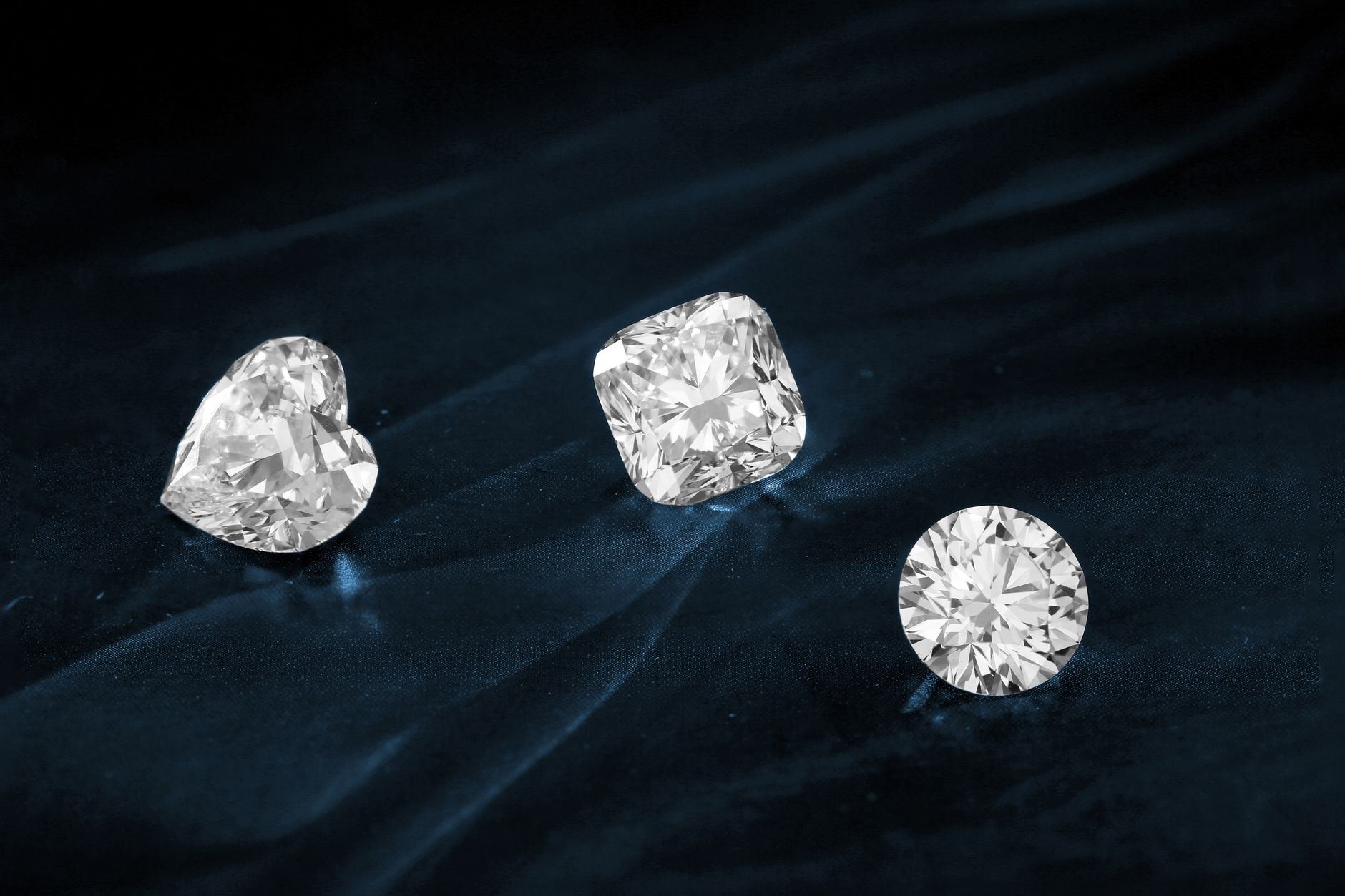
Many first-time buyers confuse cut with shape, but they are different things. Shape refers to the outline of the diamond, such as round, oval, princess, cushion, or emerald. Cut refers to how well the diamond has been fashioned from rough material into its finished form.
A round diamond can have excellent cut or poor cut. So can many fancy shapes. The shape tells you what it looks like from above, while cut tells you how well it handles light.
Ideal cut is about light performance
At a practical level, ideal cut means the diamond is engineered to maximize light return. Light enters the stone, bounces off internal facets, and returns to the viewer’s eye instead of leaking out the bottom or sides. This is what gives a diamond brightness and life.
Buyers often hear three words connected to cut quality: brilliance, fire, and scintillation. Brilliance is white light reflection. Fire is the flashes of color you see when the diamond moves. Scintillation is the pattern of sparkle and contrast created by movement and facet arrangement.
Different organizations use different standards
One reason ideal cut can be confusing is that not everyone uses the term the same way. Some sellers use it loosely to mean “very high quality.” Some grading systems use specific proportion sets. Others focus on a formal cut grade, such as Excellent, Very Good, or Good.
For round diamonds, many buyers think of ideal cut as a diamond that falls within premium proportions and performance standards, often near the top of the grading scale. Still, the exact meaning depends on the lab report and the seller’s language. That is why you should always review the actual grading details, not just the marketing phrase.
What Makes a Diamond Ideal Cut?
Proportions matter, but they are not the whole story
Diamond proportions include measurements such as table percentage, depth percentage, crown angle, pavilion angle, and girdle thickness. These numbers influence how light moves through the stone. If the proportions are too shallow or too deep, the diamond can lose brightness or show dead areas.
However, there is no single perfect formula that guarantees beauty in every case. Two diamonds with similar measurements can look slightly different because of facet precision, symmetry, and how the stone was actually finished.
Symmetry and polish also affect performance
Symmetry refers to how precisely the facets align with one another. Good symmetry helps the diamond handle light more evenly and creates a cleaner visual pattern. Polish describes the smoothness of the facet surfaces. Better polish allows light to reflect more cleanly off the facets.
These factors are often less discussed than cut grade, but they still matter. A diamond with great proportions but poor finishing can lose some of its visual sharpness. The difference may not always be dramatic, but experienced jewelers often notice it when comparing stones side by side.
Hearts and Arrows is a precision indicator, not a universal requirement
Some ideal cut round diamonds are also sold as Hearts and Arrows diamonds. This means the diamond shows a crisp pattern of hearts from the pavilion side and arrows from the crown side when viewed under special tools. The pattern suggests very precise facet alignment.
That said, Hearts and Arrows is not the same as a formal grading grade. It can be a strong sign of precision, but buyers should still evaluate the overall cut quality and the grading report. For many shoppers, the visual difference is subtle rather than obvious in everyday wear.
Why Ideal Cut Matters to Buyers
Cut has the strongest effect on appearance
Among the classic diamond quality factors, cut often has the most immediate impact on what people notice. A well-cut diamond can look brighter, more lively, and more balanced than a poorly cut stone of the same size. This is true in natural diamonds and lab grown diamonds alike.
That matters because most buyers do not view diamonds under laboratory lights. They see them in offices, homes, restaurants, sunlight, and regular indoor lighting. An ideal cut diamond is designed to look appealing in those real-world settings.
It can make a diamond look larger and cleaner
Cut does not change the actual carat weight, but it can affect face-up appearance. A well-cut diamond often spreads light more efficiently, which can make it appear slightly larger or more open than a deep, poorly proportioned stone of the same weight.
Cut can also influence how noticeable inclusions and body color are. A bright, lively diamond may draw the eye away from minor imperfections, while a dull diamond can make those same issues feel more visible.
It affects value more than many beginners realize
Many first-time buyers focus heavily on carat weight because that number is easy to understand. But a larger diamond with weak cut quality may look less beautiful than a smaller diamond with an ideal cut. In many cases, the better visual choice is the better cut, even if the diamond weighs less.
That does not mean buyers should always choose the highest possible cut grade at any price. It means cut should be treated as a priority because it directly affects the experience of wearing and viewing the stone.
How Ideal Cut Affects Appearance
Brilliance
Brilliance is the white light return you see when a diamond reflects ambient light back to the eye. In a well-cut diamond, brilliance looks strong and even across the face of the stone. In a poorly cut diamond, the center or edges may look dull or glassy.
For most buyers, brilliance is one of the easiest benefits of ideal cut to notice. Even without technical knowledge, people can usually tell when one diamond looks brighter than another.
Fire
Fire is the colored sparkle that appears when a diamond disperses light into spectral flashes. It is more noticeable when the diamond moves or when light hits it from certain angles. Ideal cut can help produce a pleasing balance of fire without making the stone look overly busy.
Some buyers love noticeable fire, while others prefer a more white-light look. The amount of fire also depends on shape, lighting conditions, and personal taste.
Scintillation
Scintillation refers to the contrast between light and dark areas, plus the flashes that appear as the diamond moves. It is part of what people describe as sparkle. A well-cut diamond has a pleasing pattern of bright flashes and contrast, rather than a flat or washed-out appearance.
Scintillation is especially important in a round brilliant diamond because the facet pattern is designed to create lively movement. In everyday wear, this is often what makes one diamond feel more dynamic than another.
Brightness and contrast
A diamond does not simply need to be bright. It also needs contrast. Too much light return in the wrong pattern can make a diamond appear blurry or overly “glassy,” while too little can make it look lifeless.
Ideal cut aims for balance. That balance is part of why some diamonds seem to “pop” under natural lighting, even when they are not especially large.
Light leakage
Light leakage happens when light passes through a diamond instead of reflecting back to the viewer. This can create dark or transparent areas that reduce sparkle. In practical terms, more leakage often means less lively beauty.
Buyers do not usually see the term light leakage on standard grading reports, but it matters a great deal to visual performance. This is one reason why two diamonds with similar grades on paper can still look noticeably different in person.
Ideal Cut and the Four Cs
Cut does not exist in isolation. It interacts with color, clarity, and carat weight, which is why experienced shoppers often think about the Four Cs together rather than one at a time.
| Factor | How Ideal Cut Interacts With It | Practical Buyer Impact |
|---|---|---|
| Carat | Strong cut can make a diamond look more balanced and lively, even if smaller | A smaller well-cut stone may outperform a larger poorly cut one visually |
| Color | Good cut can help light return mask slight body color | Buyers may be able to choose a slightly lower color grade without sacrificing beauty |
| Clarity | Brightness can make small inclusions less noticeable | Ideal cut may let buyers focus budget elsewhere |
| Cut | Directly affects sparkle, brilliance, and light performance | Often one of the highest priorities for visual satisfaction |
For many buyers, ideal cut is the quality factor that gives the best visible return on investment. That does not mean you should ignore the other Cs. It means cut often deserves a larger share of attention than beginners expect.
How Ideal Cut Is Evaluated
Cut grades on grading reports
Laboratories such as GIA and AGS have used cut grading systems to help buyers judge diamond performance. For round brilliant diamonds, a grade such as Excellent or Ideal generally suggests strong light performance, though the details vary by lab and system.
A grading report is useful, but it should not be treated as the whole story. Two diamonds with the same cut grade can still look different because of variations in proportions, facet precision, or finishing quality.
Proportion ranges
Buyers sometimes look up ideal table and depth percentages, hoping for a simple answer. While proportions matter, they should be treated as a guide rather than a guarantee. A diamond with decent numbers can still underperform if the facets are not aligned well.
In other words, the numbers help narrow the field, but actual light performance is what ultimately matters.
Optical symmetry and precision
Optical symmetry is the visual alignment of the facet pattern, especially in round diamonds. When the pattern is precise, the stone may show a crisp and balanced appearance. This does not always translate into a dramatic difference for casual observers, but it can matter to buyers who care about refined detail.
Precision becomes more important as the buyer becomes more selective. Someone comparing several diamonds side by side may notice a cleaner pattern in a precision-cut diamond even if both stones are technically attractive.
What Buyers Actually Notice in Real Life
The differences are often visible, but not always dramatic from far away
Most buyers can notice the difference between a bright, lively diamond and a dull one. What is less obvious is the difference between two high-quality stones that are both already very good. In those cases, the gap may be subtle unless the diamonds are compared side by side under controlled lighting.
This is important because some shoppers assume ideal cut will look dramatically different from any other well-cut diamond. In reality, the leap from poor to good is often much easier to see than the leap from very good to excellent.
Lighting changes everything
A diamond can look different in office lighting, sunlight, warm indoor light, and jewelry-store spotlights. Ideal cut helps the stone perform more consistently across those conditions, but no diamond looks identical in every setting.
Store lighting can make almost any diamond look impressive. That is why it is useful to understand what a stone does in normal, everyday environments instead of relying only on a display case.
Movement creates sparkle
Diamonds are not static objects in daily wear. They move when you move, and that motion creates scintillation. A well-cut diamond usually shows a more lively pattern of flashes as it turns, which is part of the reason people are drawn to them.
When a diamond looks “dead” in motion or flat in indoor light, cut quality is often part of the reason.
Ideal Cut for Lab Grown Diamonds
The same principles apply whether a diamond is natural or lab grown. Lab grown diamonds are chemically and optically real diamonds, so cut quality affects them in the same way it affects mined diamonds. A lab grown diamond with excellent proportions can still look far better than one with mediocre cutting.
Because lab grown diamonds often cost less per carat, some buyers assume cut is less important. That is a common mistake. Lower price does not make cut less meaningful. If anything, it may give buyers more flexibility to prioritize cut without sacrificing size.
That said, lab grown diamonds are sometimes available in larger sizes at lower prices, and buyers may be tempted to maximize carat weight first. The best long-term satisfaction often comes from balancing size with cut quality, rather than chasing the largest number alone.
Why cut matters just as much in lab grown stones
Lab grown diamonds can be very high in color and clarity, so cut becomes even more important as a visual differentiator. If two lab grown diamonds both look clean on paper, the better cut may be the one that stands out in person.
This is why many educated buyers comparing lab grown diamonds place cut at the top of the decision list, alongside certification and actual face-up appearance.
Advantages of an Ideal Cut Diamond
- Better sparkle in most lighting conditions
- Stronger light return, which creates a brighter appearance
- More balanced visual performance across different environments
- Can make the diamond look more attractive face up than a larger poorly cut stone
- May help mask small clarity or color imperfections
- Often provides the best visual value within a shopping budget
For many buyers, these advantages translate into a diamond that is more satisfying to wear every day. That is especially important for engagement rings and other pieces meant to be seen often, not just stored away.
Limitations and Trade-Offs
- Ideal cut can cost more than lower cut grades
- The visual difference may be subtle between top-tier stones
- Not all sellers use the term consistently
- Some shapes do not have a single clear ideal standard
- Cut quality alone does not guarantee beauty if color, clarity, or shape preferences are mismatched
One practical limitation is that buyers sometimes expect the word “ideal” to mean perfect in every way. That is not realistic. Even an ideal cut diamond may still have natural variation, and some of the most visible differences among top diamonds are small.
Another trade-off is budget allocation. Paying more for the highest cut quality may mean accepting a slightly smaller stone, lower color, or different clarity grade. Whether that is worthwhile depends on what you value most visually.
Practical Buyer Examples
A well-cut 1.5-carat diamond versus a poorly cut 2-carat diamond
This is one of the most useful comparisons for shoppers. A 2-carat diamond sounds more impressive on paper, but if the cut is poor, it may look dull, dark, or too deep. A 1.5-carat diamond with ideal cut can often appear more brilliant and better proportioned.
In everyday viewing, many people would prefer the better-cut diamond without realizing the other stone is larger by weight. This shows why carat weight should not be judged alone.
Excellent Cut versus Very Good Cut
The gap between Excellent and Very Good can range from barely noticeable to somewhat noticeable, depending on the stones. In some cases, the difference is subtle enough that a buyer may not see it without side-by-side comparison. In other cases, the Excellent Cut diamond shows cleaner brightness and more pleasing contrast.
For budget-conscious buyers, a Very Good Cut diamond can still be a strong option if the actual appearance is attractive. But if the price difference is small, many shoppers choose the better cut because it offers more confidence in the stone’s performance.
Higher clarity with poor cut versus lower clarity with ideal cut
Many beginners assume clarity should outrank cut because it sounds more technical. In practice, a diamond with slightly lower clarity but excellent cut can often look more beautiful than a higher-clarity diamond with weak cut performance. Brightness and sparkle can help minimize the visibility of minor inclusions.
This is especially relevant when choosing between eye-clean diamonds. If both stones appear clean to the naked eye, cut quality may be the deciding factor that affects how alive the diamond looks.
When Paying More for Ideal Cut Makes Sense
Paying a premium for ideal cut usually makes sense when the diamond is intended for regular wear and visual enjoyment. Engagement rings, anniversary gifts, and statement pieces are often seen frequently, so strong light performance has lasting value.
It can also make sense when you are trying to maximize the beauty of a smaller budget-friendly diamond. In that case, ideal cut helps you get the most visual impact from the size and quality you can afford.
A premium may be especially justified if the price difference between ideal cut and the next grade down is modest. If the cost increase is relatively small, the visual gain is often worth it.
When the Premium May Be Less Important
There are cases where buyers may not need to stretch for the highest cut grade. If the stone will be set in a design that emphasizes style over close inspection, or if the buyer prioritizes a very specific size target, a slightly lower cut grade may be acceptable.
Some fancy shapes also vary more in how cut quality is evaluated. In those cases, the buyer may need to focus on what actually looks good in the specific diamond rather than chasing a single label. The key is not to ignore cut, but to balance it against the rest of the purchase.
Common Buyer Mistakes
Prioritizing carat over cut
This is probably the most common mistake. Bigger is easy to understand, so many buyers start there. But a diamond that is larger on paper can look less impressive if its light performance is weak.
If you remember only one thing, it should be this: cut affects how well the diamond turns its weight into beauty.
Assuming every diamond sparkles the same
Not all diamonds are equally lively. Some are cut to perform beautifully, while others are cut to preserve weight or reduce cost. The difference can be obvious in person, especially when comparing a premium cut with a stone that has more leakage or poor proportions.
Overpaying for clarity that is hard to see
Some shoppers pursue higher clarity grades when a better cut would deliver more visible improvement. A very clean diamond is nice, but if the stone is not bright or balanced, the extra clarity may not produce a meaningful visual advantage.
This is why many experienced buyers focus on eye-clean clarity plus strong cut rather than chasing clarity grades that do little for everyday appearance.
Trusting marketing words without checking the report
Words like ideal, premium, super ideal, or top cut are not all standardized. Some are meaningful. Some are marketing language. A reliable grading report and, ideally, actual images or performance data are much more useful than a label alone.
Ignoring shape-specific behavior
Cut quality matters in every shape, but not every shape behaves the same way. A round brilliant is designed for maximum sparkle, while an emerald cut emphasizes clarity and flashes of light. Buyers should match expectations to the shape they are considering.
How to Shop for an Ideal Cut Diamond
Start with a trustworthy grading report
For a round diamond, look for a strong cut grade from a respected lab. This gives you a basic filter and removes many weak performers from consideration. For lab grown diamonds, make sure the report is from a recognized laboratory and includes enough detail to assess the stone properly.
Do not stop at the cut grade if you have access to proportion data, images, or light performance tools. Those extras can help you separate a very good diamond from an outstanding one.
Use images and light performance data when available
Photographs, videos, and light maps can reveal differences that a grading report alone cannot show. These tools can help you see brightness, contrast, and patterning more clearly. They are especially useful for buyers shopping online.
That said, images should still be interpreted carefully because lighting and camera settings can change how a diamond looks. Use them as decision aids, not absolute proof.
Compare diamonds in the same size and price range
The most meaningful comparison is between diamonds you can actually afford. A technically ideal stone that is far outside your budget is not useful. Compare stones that are close in budget and then evaluate which one offers the best balance of beauty and value.
In many cases, the strongest candidate is not the largest diamond or the one with the highest paper grade. It is the one that looks best to the eye within your price range.
What Experienced Jewelers Often Look For
Experienced jewelers and diamond professionals typically look beyond basic labels. They pay attention to whether the diamond has balanced brightness, pleasing contrast, and clean facet alignment. They also notice whether a stone has strong visual spread for its weight and whether it maintains sparkle in different lighting.
Another thing they often evaluate is consistency. A diamond that looks excellent from one angle but loses life from another may not be as strong a choice as a more balanced stone. That consistency is part of what makes an ideal cut diamond satisfying over time.
Frequently Asked Questions
Is ideal cut the same as excellent cut?
Not always, but they are closely related. In many contexts, ideal cut is used to describe a diamond that performs at the highest level, which often overlaps with Excellent on a grading report. The exact meaning depends on the lab and seller.
Can a diamond be ideal cut if it is not round?
Sometimes, but the term is used most commonly for round brilliant diamonds. For other shapes, buyers usually rely on shape-specific cutting standards, visual assessment, and performance data rather than a single universal ideal cut label.
Will an ideal cut diamond always look better than a larger diamond?
Not always, but often it will look better than a larger diamond with weak cut quality. Size matters, but a diamond’s appearance depends heavily on how well it handles light. Many buyers find that a smaller ideal cut diamond looks more beautiful than a bigger stone with poor proportions.
Is ideal cut worth paying extra for?
For many buyers, yes, especially if the diamond will be worn often and viewed regularly. The premium is usually easiest to justify when the price difference is moderate and the visual improvement is clear. If the premium is large, compare the diamond carefully against other options in your budget.
Does ideal cut matter in lab grown diamonds?
Yes. Lab grown diamonds still rely on the same optical principles as natural diamonds. Cut quality strongly affects sparkle, brightness, and visual appeal regardless of origin.
How can I tell if a diamond really has ideal cut performance?
Start with the grading report, then look for proportion details, images, and any available light performance information. If possible, compare the diamond in person or through a trusted vendor that provides clear imaging. A single marketing label is not enough.
Can an ideal cut diamond hide color or inclusions better?
It can help, but it does not eliminate them. Strong light return often makes minor imperfections less noticeable because the stone appears brighter and more lively. That said, color and clarity still matter, especially in larger diamonds or under close inspection.
Should I always choose ideal cut over everything else?
Not necessarily. Cut is one of the most important factors, but the best diamond for you depends on budget, shape preference, size goals, and overall visual balance. The most satisfying choice is usually a diamond with strong cut quality and sensible trade-offs elsewhere.
Conclusion
What Is an Ideal Cut Diamond? In practical terms, it is a diamond cut to perform well with light, giving it stronger brilliance, better sparkle, and a more attractive face-up appearance. The term is most often used for round brilliant diamonds, but the core idea applies broadly: better cutting usually means better visual performance.
For buyers, the main lesson is that cut is not just a technical detail. It is one of the clearest predictors of how beautiful a diamond will look in real life. A well-cut diamond can outshine a larger stone with weaker proportions, and it often delivers more everyday satisfaction than buyers expect when they first start shopping.
When comparing diamonds, look beyond carat weight and marketing labels. Review the grading report, consider the light performance, and think about how the stone looks in normal lighting. That approach will help you choose a diamond that is not only impressive on paper, but also genuinely pleasing to wear.