Marquise diamonds are one of the most distinctive diamond shapes used in engagement rings. Their elongated body and pointed ends create a look that can feel elegant, dramatic, and a little less common than round or oval diamonds. For buyers who want a ring that stands out without relying on an unusual setting, the marquise shape can be a strong option.
Whether marquise diamonds are a good fit depends on what matters most to you. They can offer a large-looking face-up appearance for the carat weight, and their shape can flatter the finger by creating a lengthening effect. At the same time, they can show more color at the tips, may reveal a bow tie effect if proportions are off, and need thoughtful setting choices to protect the pointed ends.
Quick Answer
Yes, marquise diamonds can be very good for engagement rings if you like an elongated, eye-catching shape and are comfortable with a style that is less traditional than round or oval. They often look larger than some other shapes of the same carat weight because their surface area spreads out across the finger.
They are especially appealing for buyers who want something different, a flattering silhouette, and strong finger coverage. However, they are not always the best choice for someone who wants the easiest shape to buy, the most forgiving cut style, or the lowest-maintenance daily wear option.
What Makes a Marquise Diamond Distinctive?
The marquise shape is instantly recognizable because it has an elongated oval-like center with pointed ends. The shape is sometimes described as boat-like or eye-like, which reflects its slim profile and symmetrical tips. In engagement rings, that shape creates a dramatic line across the finger.
Historically, marquise diamonds have been associated with elegance and a more tailored look. In modern settings, they can feel vintage-inspired, fashion-forward, or classic depending on the mounting style. Because the shape is less common than round brilliant, it also tends to feel more individual.
How the shape is cut
Marquise diamonds are usually cut in a brilliant style, which means they are designed to reflect light strongly. Unlike step cuts such as emerald or Asscher cuts, brilliant cuts use many small facets to create sparkle. That facet arrangement is one reason marquise diamonds can look lively even though their overall shape is very distinct.
The quality of the cut matters a great deal in this shape. Small changes in length, width, facet pattern, or symmetry can affect how balanced the diamond looks and whether the center appears open, dark, or uneven.
Are Marquise Diamonds Good for Engagement Rings?
For many buyers, the answer is yes, but with some important caveats. Marquise diamonds work well in engagement rings because they combine a bold outline, strong finger coverage, and the ability to look larger than many other shapes of the same weight. They also suit a wide range of settings, from minimalist solitaires to halo and three-stone designs.
The main trade-off is that marquise diamonds need more care in selection. Proportions can vary noticeably from stone to stone, and poor cutting can lead to a weak center appearance or a visible bow tie. The pointed ends also need protection, which makes setting choice more important than it is with some rounded shapes.
So, if you are asking whether marquise diamonds are good in a practical sense, the answer depends on your priorities. They are good for visual impact, style individuality, and efficient face-up size. They are less ideal if you want the most conventional shape or the least fussy shape for everyday wear.
Key Characteristics of Marquise Diamonds
Elongated appearance
The biggest visual feature of a marquise diamond is its length. That elongated shape can make the finger look longer and slimmer, which is one of the main reasons buyers choose it. The effect is especially noticeable in rings with a north-south orientation.
Compared with a round diamond of the same weight, a marquise often spreads out more across the finger. This can make it appear more substantial without necessarily increasing cost in the same way as a larger carat weight might in a round brilliant.
Pointed tips
The points at both ends are what make the shape distinctive, but they are also the most vulnerable parts of the diamond. These tips can be more exposed to chips if the ring has low protection or if the wearer is hard on their jewelry. For that reason, prongs or V-tip style protection are often important.
When the tips are well protected, marquise diamonds can be suitable for regular wear. Without thoughtful setting design, though, the shape can be more vulnerable than a round, oval, or cushion cut.
Symmetry matters
Because the shape is narrow and pointed, symmetry is easy to notice. If one side is slightly wider, if the points do not align, or if the overall outline feels uneven, the eye tends to pick that up quickly. This makes precision especially important when choosing a marquise.
Buyers often benefit from inspecting the stone in person or reviewing high-quality images and videos. For online purchases, a grading report and clear imagery become especially useful.
Appearance and Visual Performance
How marquise diamonds look on the hand
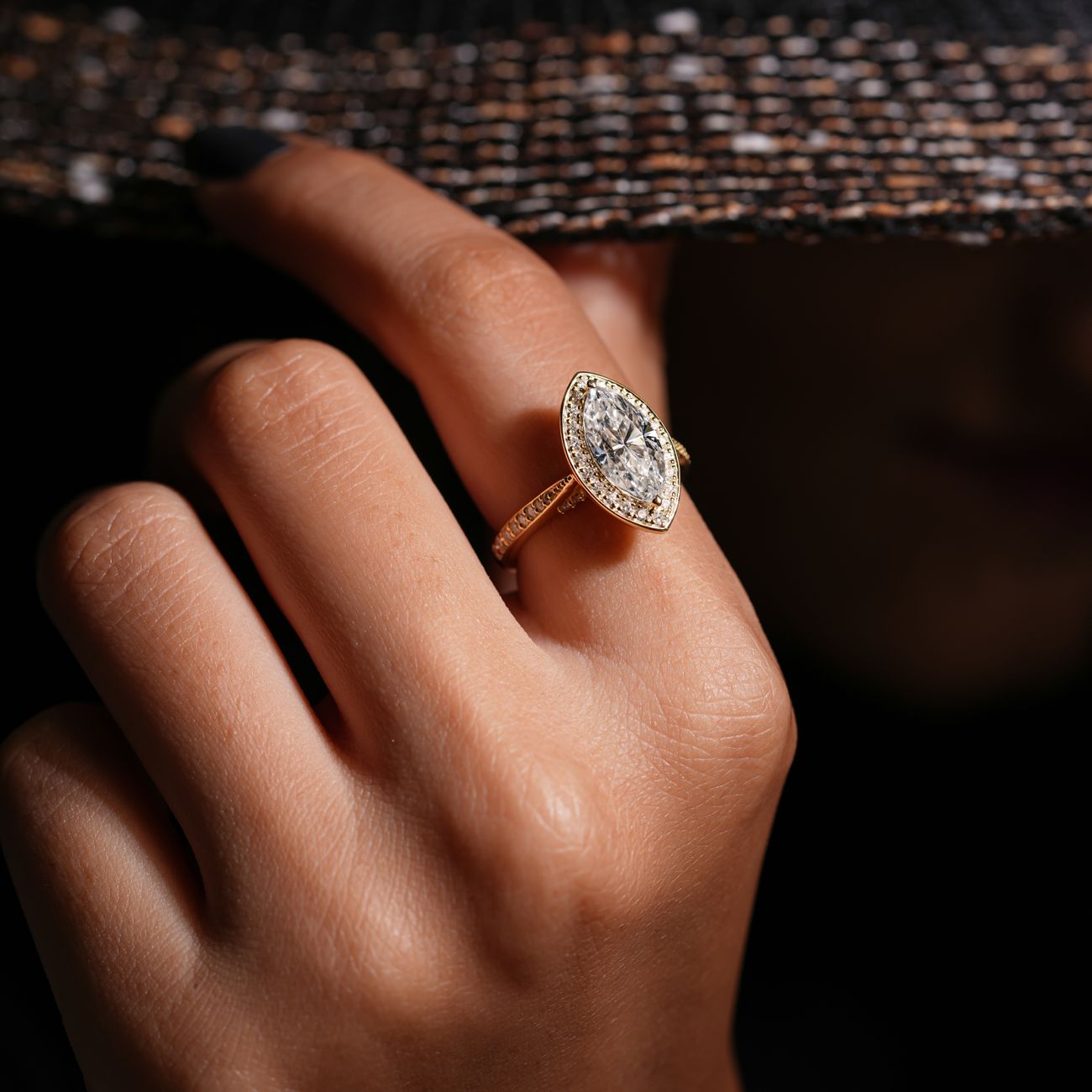
Marquise diamonds create a dramatic finger-lengthening effect. This is one of the shape’s strongest visual advantages and part of the reason it appeals to shoppers looking for a refined, elegant profile. The pointed ends naturally draw the eye along the length of the stone.
The shape can also make a ring feel more distinctive than popular oval or pear shapes, especially when used in a simple solitaire setting. In more elaborate designs, the marquise can feel vintage, romantic, or even modern depending on the surrounding details.
Sparkle and brilliance
Marquise diamonds are typically cut to maximize brilliance, which is the white light return that gives a diamond its bright, lively look. Because the shape uses a brilliant-style facet arrangement, it can offer strong sparkle in most lighting conditions.
That said, sparkle quality depends heavily on cut proportions. A well-cut marquise will look lively across most of the stone, while a poorly cut one may have dead zones, uneven brightness, or a dark center area.
Fire and scintillation
Fire refers to flashes of colored light, while scintillation describes the pattern of sparkle and contrast when the diamond moves. Marquise diamonds can show both well, especially when the facets are well aligned and the stone is not overly shallow or deep.
Because the shape is elongated, movement across the stone can create a very noticeable flash pattern. Some buyers love this dramatic look. Others prefer a more uniform appearance, which is why the visual personality of the marquise matters so much.
The bow tie effect
One issue buyers should understand is the bow tie effect. This is a dark area across the center of some fancy-shaped diamonds, including marquise diamonds. It happens when light does not reflect evenly back to the eye from certain angles.
A small amount of bow tie can be normal in elongated shapes. A strong or obvious bow tie, however, can make the stone look less bright and less balanced. This is one of the main reasons cut quality matters so much when selecting marquise diamonds for engagement rings.
Advantages of Marquise Diamonds
They look large for their weight
One of the strongest arguments in favor of marquise diamonds is face-up size. Because the shape covers more length across the finger, it can appear larger than a round diamond of the same carat weight. For budget-conscious shoppers, this can create a more substantial look without moving to a much higher carat weight.
This is especially relevant in the lab grown diamond market, where buyers often want to maximize visible size while staying within budget. A marquise can be a practical option for those who want a dramatic appearance without paying for the premium often associated with certain popular shapes in larger sizes.
They flatter many hand shapes
The elongated outline tends to flatter shorter fingers by creating a lengthening effect. It can also look elegant on wider fingers because the shape helps distribute visual attention vertically rather than concentrating it in a round silhouette.
For people who want their ring to create a refined line on the hand, marquise is one of the better choices among diamond shapes.
They feel distinctive
Marquise diamonds are less common than round, oval, and princess cuts. That can be an advantage for buyers who want a ring that feels individual without choosing an extremely unconventional style. The shape is recognizable, but not overused.
This balance between familiarity and uniqueness makes it appealing to shoppers who want something with personality but not something that feels overly trendy.
They work well in many settings
Marquise diamonds can be set in classic solitaires, halos, east-west designs, three-stone rings, and vintage-inspired mountings. They also work well with split shanks and architectural settings that highlight the shape.
Because the shape is so visually assertive, even a simple setting can look complete. That makes marquise diamonds flexible from a design perspective.
Disadvantages of Marquise Diamonds
The tips are vulnerable
The pointed ends are the most delicate parts of the stone. They can chip if they are bumped against hard surfaces, especially in settings that do not offer enough protection. This makes ring construction especially important.
For daily wear, many buyers should look for settings that secure the tips with V-prongs or protective metalwork. This does not eliminate risk, but it helps reduce it.
Cut quality is harder to judge
Compared with round brilliant diamonds, marquise cuts do not have a universally standard cut grade that tells the whole story. Two marquise diamonds with the same carat weight can look very different depending on proportions and facet arrangement.
This means buyers need to look beyond the basic grading report and pay attention to dimensions, videos, and the actual face-up appearance of the stone. If you are also comparing diamond cut grades in round diamonds, that system does not translate directly to marquise shapes.
They can show color more easily
Like many elongated shapes, marquise diamonds can reveal color near the pointed ends and along the edges. This is especially noticeable in the near-colorless to faint-color range if the stone is not chosen carefully.
Buyers who want a bright white look often consider a higher color grade for marquise diamonds than they might for some other shapes, depending on the metal setting and personal preference.
Clarity matters in the center and tips
The elongated shape means inclusions may be visible in certain areas, especially near the center if the stone is not clean enough. Depending on the inclusion type and location, even a relatively small imperfection can be noticeable in a marquise because the eye follows the full length of the shape.
This is why many buyers aim for eye-clean stones rather than relying only on the paper grade. A diamond can have a modest clarity grade and still look fine if the inclusions are not visible to the naked eye, but the opposite can also happen.
Who Marquise Diamonds Are Best For
Buyers who want finger coverage
Marquise diamonds are a strong match for buyers who care about how large the ring looks on the hand. The shape gives a lot of visual spread and can create the impression of greater size than other shapes at the same weight.
That makes it a practical option for people who want their ring to read as bold without necessarily choosing a very high carat weight.
Buyers who want a distinctive but recognizable style
Some shoppers want a shape that stands apart from the most common options but still feels established and tasteful. Marquise fits that middle ground well. It is not as common as round or oval, but it is still a classic diamond shape with a long history in fine jewelry.
If you like rings with character, marquise is worth serious consideration.
Buyers who appreciate elongation
If your goal is to make the finger appear longer or slimmer, marquise can do that effectively. This is one of the shape’s most dependable style benefits and often one of the deciding factors for buyers comparing it with round or cushion cuts.
Buyers who are comfortable with a little extra care
Marquise diamonds are best for people willing to pay attention to setting quality and routine wear habits. If you tend to wear your ring every day and want minimal maintenance concerns, this shape can still work, but the setting should be chosen carefully.
Those who are especially active with their hands may want a more protective setting style and regular checkups.
How Marquise Diamonds Compare to Other Popular Shapes
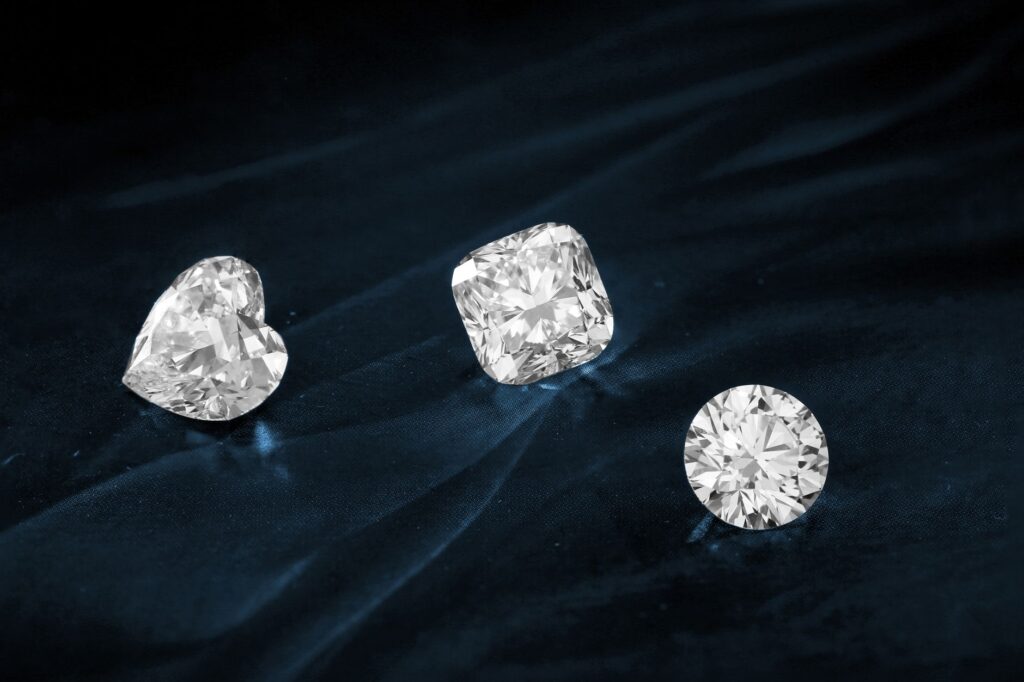
Understanding marquise diamonds is easier when you compare them with other common engagement ring shapes. The differences are not just about appearance. They affect sparkle pattern, finger coverage, setting style, and even how forgiving the diamond is in daily wear.
| Shape | Key Appearance | Sparkle Pattern | Durability Considerations | Buyer Takeaway |
|---|---|---|---|---|
| Marquise | Elongated with pointed ends | Bright brilliance with possible bow tie | Tips need protection | Best for bold, lengthening look and strong face-up size |
| Round | Classic, symmetrical circle | Most balanced brilliance and fire | Very durable shape | Best for maximum sparkle and traditional appeal |
| Oval | Elongated and soft-edged | Brilliant sparkle with possible bow tie | No pointed tips, easier wear | Best for a similar elongating effect with softer lines |
| Pear | Tear-drop shape with one point | Brilliant sparkle, some bow tie risk | One pointed end needs care | Best for a more asymmetrical, feminine silhouette |
| Emerald | Rectangular with step facets | More mirror-like flashes, less sparkle | Corner protection matters | Best for understated elegance and clarity-focused buyers |
Marquise vs round diamond
Round diamonds are the most classic and typically the most brilliant-looking shape because their cut style is engineered for sparkle efficiency. They are also easier to evaluate because the round brilliant cut has more standardized expectations.
Marquise diamonds, by contrast, trade some of that simplicity for visual drama and a larger-looking spread. If you want maximum sparkle with the least guesswork, round is usually easier. If you want a more distinctive outline and a finger-lengthening effect, marquise has an edge.
Marquise vs oval diamond
Oval diamonds and marquise diamonds are both elongated shapes, which is why buyers often compare them. Ovals have rounded ends and usually feel softer, while marquise diamonds have pointed tips and a more directional look.
In practical terms, oval diamonds may be easier to wear because they do not have sharp points. Marquise diamonds often appear more striking and less common. Both can show bow tie effects, so proportions matter in each shape.
Marquise vs pear diamond
Pear diamonds have one pointed end and one rounded end, which creates a more asymmetrical look. Marquise diamonds are symmetrical on both ends, so they often feel more structured and balanced.
Choosing between them is usually about style preference. A pear can look softer and more organic, while a marquise can look sharper and more tailored. Both can elongate the finger, but marquise typically has a more dramatic outline.
Marquise vs emerald cut
Emerald cuts are step-cut diamonds, meaning they use long, rectangular facets that create flashes of light rather than intense sparkle. They tend to show clarity more easily, and the look is often more architectural than brilliant.
Marquise diamonds are much more sparkle-forward. If you want dramatic brilliance and a shaped silhouette, marquise is the stronger choice. If you want an elegant, glassy, refined look with less sparkle but more structure, emerald cut may be more appealing.
Important Buying Considerations
Length-to-width ratio
The length-to-width ratio helps determine whether a marquise looks slim, balanced, or stubby. A lower ratio produces a wider, fuller look, while a higher ratio creates a longer and narrower shape. Neither is universally better.
Many buyers prefer a ratio that feels balanced rather than extreme. A very narrow marquise can look elegant but sometimes overly elongated, while a very wide one may lose some of the shape’s signature drama. Personal preference matters more than a single ideal number.
Face-up size versus carat weight
Carat measures weight, not visible size. Because marquise diamonds distribute weight along their length, they can look large from above without requiring the same face-up spread as some round diamonds. This is one reason the shape is appealing to buyers comparing value across diamond shapes.
That said, not every marquise uses its weight efficiently. Two diamonds with the same carat weight can have very different visual spread depending on depth and proportions. Always look at measurements, not just carat alone.
Bow tie evaluation
Check the center of the diamond under different lighting conditions. A little contrast is normal, but the diamond should not look dark across the center in a distracting way. Videos and in-person inspection are especially useful here.
If you are buying a lab grown diamond, the same visual standards apply. Lab grown diamonds can offer attractive pricing, but shape quality still depends on cut precision and not just on the origin of the stone.
Color grade
Marquise diamonds can show color along the tips and edges, especially in warmer grades. If you want a bright white appearance, you may want to consider a higher color grade depending on the metal choice. White gold and platinum usually make color more visible than yellow gold.
For many buyers, near-colorless can be a good value range, but the ideal grade depends on the specific diamond and how sensitive you are to slight warmth.
Clarity grade
Because the shape is elongated, inclusions may be visible in the center or along the pathway of the eye across the stone. In general, buyers should prioritize eye-clean appearance over chasing a specific clarity grade on paper.
That is especially true for larger marquise diamonds, where any visible inclusion may be easier to spot. Understanding diamond clarity grades is useful, but the real test is how the stone looks to your eyes.
Setting choice
Setting design matters more with marquise than with many rounded shapes. The pointed ends should be protected, and the center should be held securely. Prong settings, bezel-influenced designs, and protective halos can all work, depending on the look you want.
If the ring will be worn daily, ask how the tips are secured and whether the setting design reduces the chance of impact damage. A beautiful diamond still needs a practical setting.
Orientation
Most marquise diamonds are worn vertically, with the points running along the finger. This orientation enhances the lengthening effect and is the most traditional way to wear the shape.
Some buyers choose an east-west setting, which places the stone horizontally. This creates a more modern or unconventional look, but it changes the visual effect and may not appeal to shoppers who want maximum finger elongation.
Ideal Settings for Marquise Diamonds
Solitaire settings
A solitaire allows the shape itself to do the visual work. This is a strong option if you want the marquise outline to be the focus and prefer a cleaner, less decorated ring. It can also highlight size and symmetry well.
Because the stone is the centerpiece, the quality of the cut and the protection of the tips become especially important.
Halo settings
A halo adds a circle or outline of smaller diamonds around the center stone. This can increase the apparent size of the ring and create a more sparkling look. It also can make the center appear slightly more protected, depending on the design.
Halo settings can be useful for buyers who want more visual impact at a given budget. The trade-off is a busier look, which may not suit every taste.
Three-stone settings
Three-stone rings can complement the marquise shape nicely, especially if the side stones are tapered or proportioned to echo the center stone. This style can add balance and extra sparkle without overpowering the main diamond.
The side stones should be sized thoughtfully so they do not distract from the marquise outline.
Vintage-inspired settings
Marquise diamonds have a natural compatibility with vintage-inspired designs. Milgrain, filigree, and ornate halos often suit the shape’s elongated outline well. These details can make the ring feel more distinctive and decorative.
For buyers who want a ring with personality, this is one of the most attractive ways to present a marquise.
Common Mistakes Buyers Make
Choosing based on carat weight alone
Carat weight does not tell you how a marquise diamond will look on the hand. Some stones carry extra weight in depth rather than surface spread, which can make them appear smaller than expected. Always check millimeter measurements and face-up proportions.
This is a common buying error across fancy shapes, but it is especially relevant for marquise diamonds because spread is a major part of their appeal.
Ignoring the bow tie effect
Some buyers fall in love with the outline of the shape and overlook the center appearance. A strong bow tie can undermine the bright, elegant look most people want from a marquise diamond.
Inspect the stone in different lighting, and do not rely on just one still image.
Not protecting the tips
Because the pointed ends are vulnerable, using an open or under-secured setting is a mistake. The ring may look sleek at first, but the risk of impact damage is higher.
Prioritize setting security, especially for an everyday engagement ring.
Overlooking color and clarity visibility
Buyers sometimes assume that a fancy shape hides flaws or color better than it actually does. Marquise diamonds can be forgiving in some ways, but the elongated shape can also make certain issues easier to notice, especially near the tips and center.
Understanding how diamond color grades and clarity grades behave in elongated shapes helps prevent disappointment after purchase.
Buying without seeing videos or magnified imagery
For marquise diamonds, visual assessment is crucial. Videos can reveal bow tie issues, facet symmetry, and how the stone moves in light better than a static image can.
This is particularly important in the lab grown diamond market, where buyers often shop online and compare many stones. The extra convenience is helpful, but it should be paired with careful inspection.
Marquise Diamonds in the Lab Grown Market
Marquise diamonds are a practical shape to consider in the lab grown category because buyers often want more visible size for their budget. Lab grown stones can make it easier to reach a larger look while keeping the diamond quality and overall spend more manageable.
That does not change the shape fundamentals. A lab grown marquise still needs good proportions, a pleasing length-to-width ratio, and a well-designed setting. The shape’s strengths and weaknesses remain the same whether the stone was grown in a lab or formed underground.
For buyers comparing lab grown diamonds with natural diamonds, marquise can be a helpful shape because it often delivers strong visual spread. If you are trying to balance size, style, and budget, it is worth comparing shape options carefully rather than focusing on carat weight alone.
What to Look For When Shopping
- Balanced symmetry with even points and matching sides.
- A pleasing length-to-width ratio that matches your style.
- No distracting bow tie across the center.
- Eye-clean clarity rather than relying only on the grade.
- Color that suits your metal choice and brightness preference.
- A secure setting that protects both points.
- Clear measurements and images if buying online.
When possible, compare several marquise diamonds side by side. This shape can vary more visually than buyers expect, even when the lab report numbers look similar.
Frequently Asked Questions
Do marquise diamonds look bigger than round diamonds?
They often do, at least from the top view. Because the shape spreads lengthwise, it can create the impression of a larger diamond for the same carat weight. The actual result depends on depth, proportions, and the specific stone.
Are marquise diamonds too trendy?
Not necessarily. Marquise diamonds are less common than round or oval shapes, but they are not a passing trend. They have a long history in jewelry, which gives them more staying power than many fashion-driven shapes.
Do marquise diamonds chip easily?
The pointed tips can be vulnerable if they are not well protected. With a properly designed setting, they can be suitable for daily wear, but they are not as naturally protected as rounded shapes like oval or round diamonds.
What color grade is best for a marquise diamond?
It depends on the look you want and the metal color. Many buyers prefer near-colorless or better if they want a crisp white appearance, especially in platinum or white gold. In yellow gold, slight warmth may be less noticeable.
Are marquise diamonds good for smaller hands?
Yes, they can be very flattering on smaller hands because the elongated shape helps lengthen the appearance of the finger. The key is choosing a size and ratio that feels proportional rather than overly narrow or oversized.
Is a marquise diamond harder to find than other shapes?
It is generally less common than round, oval, or princess cuts, so selection may be smaller. That can be an advantage if you want something distinctive, but it also means you may need to spend more time comparing stones carefully.
Should I choose a lab grown marquise diamond or a natural one?
That depends on your budget, priorities, and views on resale value. Lab grown marquise diamonds can offer excellent size and quality for the money, while natural diamonds may appeal to buyers who prefer traditional rarity and long-term market positioning. The shape behaves the same either way, so your decision should focus on budget and personal preference.
Conclusion
Marquise diamonds can be a very good choice for engagement rings, especially for buyers who want an elongated shape with strong visual presence. They offer a flattering finger-lengthening effect, impressive face-up size, and a look that feels distinctive without being overly unconventional.
At the same time, they require more attention than some other shapes. Cut quality, bow tie visibility, tip protection, color, and clarity all matter in practical ways. If you understand those trade-offs and choose the stone carefully, a marquise diamond can be both beautiful and effective as an engagement ring center stone.
For buyers comparing shapes, the best approach is to look beyond carat weight and focus on how the diamond actually appears on the hand. Marquise diamonds are best suited to shoppers who value elegance, elongation, and individuality, while still wanting a shape that is recognizable and wearable for everyday life.