Emerald cut diamonds are admired for their clean lines, elegant outline, and mirror-like flashes of light. They are also one of the shapes where clarity matters more than many first-time buyers expect. Because of the open step-cut structure, inclusions and color can be easier to notice than in some other diamond shapes, which is why shoppers often ask, What Is the Best Clarity for Emerald Cut Diamonds?
The short answer is that the best clarity for an emerald cut diamond is usually VS1 or VS2 for most buyers, with VVS2 or better if you want a very high level of confidence or are buying a larger stone. Some shoppers can go with SI1 if the diamond is eye-clean and the inclusions are not visible to the naked eye, but that depends heavily on the specific stone. Because emerald cuts show the interior of the diamond so clearly, clarity selection is more important here than in many brilliant-cut shapes.
This guide explains how emerald cut diamonds behave visually, why clarity is so important, how clarity grades translate into real-world appearance, and how to choose the right balance of beauty and value. It also covers how emerald cuts compare with other shapes, what buyers often overlook, and how lab grown diamonds can fit into the decision.
Quick Answer: Best Clarity for Emerald Cut Diamonds
If you want the simplest buying guidance, here it is:
- Best overall clarity range: VS1 to VS2
- Most conservative choice: VVS2 or higher
- Possible value-focused choice: SI1 if eye-clean and well-checked in person or via detailed imaging
- Usually not ideal for most buyers: I1 and lower, because emerald cuts can reveal inclusions more easily
The reason for this range is straightforward. Emerald cuts are step-cut diamonds, which means they have long, open facets that create broad flashes of light rather than the many small sparkles you see in brilliant cuts. That open facet pattern acts almost like a window into the stone, so clarity imperfections are easier to see.
For engagement rings, many buyers find VS2 to be the practical sweet spot. It usually offers a clean look without paying the premium that often comes with VVS grades. That said, the best clarity is not only about the grade on the report. It is about whether the diamond looks clean to your eyes in the size and setting you plan to wear.
Why Clarity Matters More in Emerald Cut Diamonds
Clarity describes the natural internal characteristics, called inclusions, and external marks, called blemishes, inside or on the surface of a diamond. Every diamond has them to some degree. The question is not whether they exist, but whether you can see them and whether they affect the appearance of the stone.
In emerald cut diamonds, clarity matters more because the shape is designed to show off long, open facets. Unlike round brilliant diamonds, which use many small facets to hide imperfections and create intense sparkle, emerald cuts tend to display what is inside the stone more clearly. That means an inclusion that might disappear in a round diamond can be easier to notice in an emerald cut.
This is especially true in larger sizes. As the carat weight increases, the face-up area grows and the center of the diamond becomes more visible. In a 2-carat or 3-carat emerald cut, clarity differences can become more noticeable than they would in a smaller stone.
How Emerald Cut Diamonds Look: The Basics
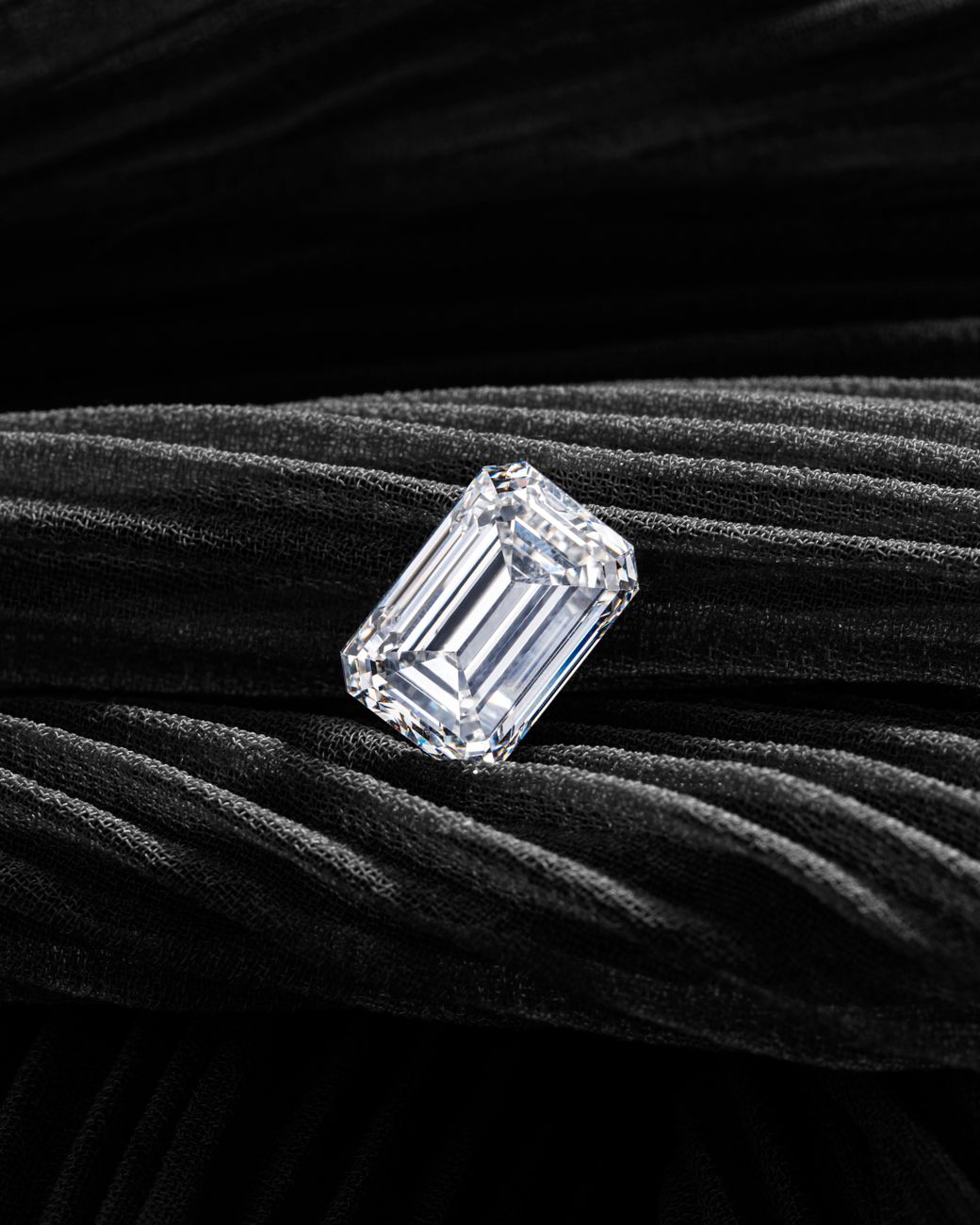
Emerald cut diamonds have a rectangular shape with cropped corners and parallel facets. The look is often described as refined, elegant, and understated. Instead of the intense sparkle of a round or oval, emerald cuts produce broader flashes of light, sometimes described as a hall-of-mirrors effect.
This style of light performance is part of the appeal. Many buyers like emerald cuts because they look sophisticated and architectural. However, that same transparency means the diamond’s body clarity is more important to overall beauty than it would be in a more sparkly cut.
The shape also tends to emphasize length, which can make the stone appear larger or more slender on the finger depending on the proportions. When the cut is well balanced, an emerald diamond can have a graceful presence. When the proportions are off, the diamond may appear too long, too wide, or less lively than expected.
Understanding Clarity Grades in Practical Terms
Clarity grades are assigned by gemological laboratories based on how many inclusions are present, where they are located, how large they are, and how visible they are under magnification. The standard grades, from highest to lower, are Flawless, Internally Flawless, VVS1, VVS2, VS1, VS2, SI1, SI2, and I1 to I3.
For most shoppers, the most relevant grades are VS and SI. These grades often offer the best balance of appearance and price. Very high clarity grades like VVS or Flawless are beautiful, but in many cases the visual difference is small once the diamond is mounted in a ring.
Here is the practical meaning of the most relevant ranges for emerald cut diamonds:
| Clarity Grade | What It Usually Means | How It Often Works in Emerald Cuts |
|---|---|---|
| VVS1 to VVS2 | Very, very slight inclusions that are extremely difficult to see under magnification | Excellent for buyers who want a highly clean-looking stone and are willing to pay more |
| VS1 to VS2 | Minor inclusions that are still difficult to see without magnification | Usually the best balance of value and beauty for many emerald cut buyers |
| SI1 | Slightly included, inclusions may be visible under magnification and sometimes to the eye | Can work if the diamond is eye-clean and inclusion placement is favorable |
| SI2 and lower | Inclusions may be easier to see | Higher risk of visible imperfections in emerald cuts, especially in larger stones |
Grades alone do not tell the full story. Two diamonds with the same clarity grade can look different because inclusion type and placement matter. A small inclusion near the edge may be less noticeable than a similar inclusion directly under the table, which is the large flat top facet.
Best Clarity Ranges for Emerald Cut Diamonds
VVS1 and VVS2
VVS clarity is an excellent choice if you want a very clean-looking emerald cut and do not mind paying a premium. In most cases, inclusions in VVS diamonds are extremely difficult to see even under magnification. This can provide peace of mind for buyers who want the safest route visually.
The trade-off is value. In emerald cuts, the leap from VS to VVS often costs more than the visual difference justifies for many buyers. If you are trying to maximize budget, this grade range may be more than you need unless you are buying a larger stone or simply prefer the reassurance of a very high clarity grade.
VS1 and VS2
For many buyers, VS1 and VS2 are the best clarity grades for emerald cut diamonds. These grades often look clean to the naked eye while avoiding the steep price premium of VVS. They are commonly recommended because they offer a strong balance between appearance and budget.
VS2, in particular, is frequently the sweet spot. A well-chosen VS2 emerald cut can look nearly identical to a higher clarity stone once mounted. The key is to examine the diamond carefully, especially for inclusions placed under the center of the stone or in a location that may be easy to spot through the open facets.
SI1
SI1 can be a smart value option if you are selective. Some SI1 emerald cuts are eye-clean, meaning you cannot see inclusions without magnification. Others show obvious inclusions at normal viewing distance, especially in larger sizes or stones with dark crystals, feathers, or central inclusions.
If you are considering SI1, the diamond should be inspected carefully with images, videos, and ideally an expert review. This is especially important for lab grown diamonds, where certain clarity characteristics can appear differently depending on the growth method and plotting of inclusions.
SI2 and below
SI2 and lower clarity grades are usually riskier in emerald cuts. Because the shape is open and transparent, visible inclusions are more likely to stand out. A buyer might still find an exception, but this requires careful evaluation of the specific stone.
For most engagement ring shoppers, these grades are not the best starting point unless budget is the main concern and the diamond has been thoroughly reviewed in person or through trusted imaging.
Appearance and Visual Performance
Emerald cuts are not designed to maximize sparkle in the same way round brilliants do. Instead, they emphasize clarity, symmetry, and refined flashes of light. This makes the diamond’s interior more visible, which is why clarity selection matters so much.
In practical terms, the best clarity is one that preserves the clean, elegant look people want from an emerald cut. If the stone has noticeable inclusions, the geometric beauty can be disrupted. If the clarity is too high for your budget, you may be paying for a feature that does not noticeably improve the diamond once it is set.
Why inclusions are easier to see in step cuts
Step cuts use long facets arranged in steps, rather than the triangular and kite-shaped facets used in brilliant cuts. These larger facets reflect broad areas of light and dark. That means the eye can often see deeper into the diamond.
Because of this, the same inclusion can be more or less obvious depending on the shape. In a round diamond, many small sparkles can visually mask minor imperfections. In an emerald cut, the open structure offers less visual camouflage.
How setting affects clarity appearance
The ring setting can influence how visible inclusions are. A bezel or halo setting may reduce the visibility of edge inclusions, while a simple prong setting leaves more of the diamond exposed. However, the setting cannot fully hide major inclusions in the center of the stone.
If you want to learn more about how the overall visual balance works, clarity should be considered together with diamond cut, diamond color, and diamond certifications. The combination matters more than any single grade by itself.
Advantages of Choosing a Higher Clarity Emerald Cut
There are several reasons buyers choose higher clarity emerald cuts, especially in engagement rings and larger center stones.
- Cleaner open appearance: High clarity preserves the refined, glassy look emerald cuts are known for.
- More confidence in larger sizes: As carat weight increases, inclusions can be more noticeable, so higher clarity can be reassuring.
- Easier visual assessment: A high clarity stone is less likely to raise concerns after purchase.
- Strong long-term satisfaction: Some buyers prefer knowing the stone is very clean even if the visual difference is subtle.
These benefits are most meaningful when the diamond is large enough for clarity to stand out or when the buyer values a pristine appearance above all else. They are less important if the goal is maximizing size or staying within a tighter budget.
Disadvantages of Going Too High on Clarity
The main drawback of very high clarity grades is price. In emerald cuts, paying for Flawless or VVS clarity does not always produce a proportionate visual payoff compared with VS grades. Many buyers cannot see the difference once the stone is set.
This is why some shoppers feel they overspent after buying a higher-clarity stone. They were told that clarity was important, which is true, but not necessarily that the optimal clarity for emerald cuts is often a practical middle ground rather than the top of the grading scale.
Another issue is opportunity cost. Money spent on an unnecessarily high clarity grade could have been used for a better cut, a better color grade, or a larger carat size. In many cases, those factors have a stronger impact on everyday beauty.
Who Emerald Cut Diamonds Suit Best
Emerald cuts are a good match for buyers who like a sophisticated, understated look. They tend to appeal to people who appreciate geometry, balance, and a more elegant than flashy appearance. The shape is also popular among buyers who want a ring that feels classic but different from the standard round brilliant.
Clarity-conscious buyers often prefer emerald cuts if they are willing to invest in a cleaner stone. The shape rewards careful selection because a well-chosen emerald cut can look very polished and refined. On the other hand, buyers who want maximum sparkle may prefer a brilliant-cut shape like round, oval, or cushion brilliant.
Emerald cuts can also suit lab grown diamond shoppers well because lab grown stones often offer more size and quality for the budget. This can make it easier to select a higher clarity emerald cut without moving into a dramatically higher price range. Still, clarity should be checked carefully in both natural and lab grown diamonds, since the open shape exposes inclusions in either type.
How Emerald Cut Clarity Compares to Other Popular Shapes
Clarity expectations change with shape because each shape handles light differently. Some shapes hide inclusions better, while others reveal them more clearly. That is why the best clarity for one shape is not always the best clarity for another.
| Shape | Clarity Visibility | Typical Best Value Range | Why |
|---|---|---|---|
| Emerald cut | High | VS1 to VS2 | Open step facets reveal inclusions more easily |
| Round brilliant | Lower | SI1 to VS2 | Many facets disguise small inclusions well |
| Oval | Moderate | VS2 to SI1 | Brilliant faceting hides more, but bow tie and larger spread can expose issues |
| Cushion cut | Moderate | VS2 to SI1 | Faceting style often masks minor inclusions |
| Princess cut | Moderate to high | VS1 to VS2 | Sharp corners and smaller facets can make inclusions noticeable |
This comparison shows why emerald cuts are often evaluated more conservatively. Buyers who switch from a round brilliant to an emerald cut may need to move up a clarity grade to keep the same eye-clean appearance.
Emerald cut vs. round brilliant
Round brilliants are the easiest shape for hiding minor inclusions because their facet pattern is designed for sparkle. Emerald cuts are less forgiving because they emphasize transparency and long mirror-like facets. As a result, a round diamond may look clean at SI1 while an emerald cut may need VS2 for similar visual confidence.
Emerald cut vs. oval
Ovals can also show inclusions, but their brilliant faceting usually gives more help in disguising them. Emerald cuts are more open and therefore more demanding. Oval shapes can also show a bow tie effect, while emerald cuts are judged more on clarity and facet symmetry.
Emerald cut vs. cushion cut
Cushion cuts vary widely in style, but many have softer, more sparkle-heavy faceting that can hide inclusions better than emerald cuts. Emerald cuts are more linear and architectural. Buyers who want a more forgiving clarity profile often choose cushion cuts, while those who want a cleaner, more geometric look often prefer emerald cuts.
Important Buying Considerations Beyond Clarity
Clarity is important, but it should never be evaluated in isolation. For emerald cut diamonds, the most successful purchase usually comes from balancing clarity with color, cut quality, size, and the setting.
Cut quality and proportions
Emerald cuts do not have an official cut grade from most major grading labs in the same way round brilliants do, so proportions and craftsmanship matter more. A well-proportioned emerald cut has pleasing symmetry, balanced step facets, and a shape that looks elegant rather than awkward.
Length-to-width ratio is especially important. A ratio around 1.30 to 1.45 is common, though personal preference matters. A more elongated ratio can make the stone appear slender and graceful, while a squarer ratio can feel more structured and classic.
Color and clarity together
Because emerald cuts are open, they can also reveal body color more readily than some other shapes. That means a buyer choosing a lower color grade may see warmth more clearly than they expect. This is especially relevant in larger stones and in platinum or white gold settings.
For many shoppers, a balanced combination such as VS2 clarity and G to H color is a practical starting point. Some buyers prefer even higher color grades if they want a crisp, icy appearance. Others accept a little warmth to save money and increase carat size.
Lab grown vs. natural emerald cuts
Lab grown diamonds can be an efficient way to buy a larger emerald cut with strong clarity and color within budget. That does not mean every lab grown emerald cut is automatically excellent. It still needs to be evaluated for cut quality, clarity placement, and transparency.
Natural diamonds often carry higher price premiums, especially at higher carat sizes and higher clarities. If your priority is size and visual quality, a lab grown emerald cut may let you move up in clarity or color for the same budget. If long-term rarity or traditional market preference matters more to you, natural diamonds may remain the preferred choice.
Certification and imaging
Always review the grading report from a respected lab and look at high-quality images or video when possible. The report tells you the clarity grade, but images show whether inclusions sit in a noticeable location. For emerald cuts, this is especially important because the stone can reveal internal details very clearly.
If you are comparing options, a lab report and clear media can be more useful than the grade alone. This is true whether you are reading about diamond clarity grades, comparing diamond pricing, or deciding between shapes.
Face-Up Appearance and Finger Look
Emerald cuts have a distinctive finger presence. Their long shape tends to elongate the look of the hand, especially when the ratio is slightly stretched. This can be flattering for many ring designs.
Clarity affects that look because visible inclusions can draw the eye into the center of the diamond. When the stone is clean, the result is a sleek and polished appearance. When inclusions are obvious, the overall elegance can be diminished.
That is one reason many buyers prioritize clarity a bit more in emerald cuts than they do in other shapes. The stone is not just a sparkle source. It is also a visual object with strong architectural lines, and those lines work best when the interior looks clean.
Common Mistakes Buyers Make
Many buyers make emerald cut clarity decisions based on the number on the grading report alone. That can be a mistake because location and type of inclusion matter just as much as the grade. A VS2 with well-placed inclusions may look better than an SI1 with a dark crystal in the center.
Another common mistake is overpaying for top clarity without considering whether the difference will be visible in real life. In emerald cuts, the jump from VS to VVS is often less important than choosing a stone with strong proportions and a clean, balanced look.
Some buyers also underestimate how much larger stones reveal imperfections. A clarity grade that looks fine in a smaller diamond may not hold up as well in a 2-carat or 3-carat emerald cut. Always think about the actual size you plan to wear.
Finally, buyers sometimes focus so heavily on clarity that they ignore color and cut. In a step cut, these factors can be equally important to the final result. A slightly higher clarity stone with poor proportions is usually not as attractive as a well-cut diamond with a more practical clarity grade.
How to Judge an Emerald Cut’s Clarity in Real Life
If you want a stone that looks clean, the best approach is to combine the clarity grade with visual inspection. Look for a few specific things:
- Inclusion location: Is it near the center, under the table, or closer to the edge?
- Inclusion color: Is it white, transparent, or dark?
- Inclusion size: Is it tiny or large enough to notice at normal viewing distance?
- Inclusion type: Is it a crystal, cloud, feather, or another feature?
- Eye-clean appearance: Does the diamond look clean without magnification?
If the diamond is eye-clean, that often matters more than chasing a specific clarity grade. This is especially true for emerald cuts, where two stones with the same grade can look meaningfully different.
What “eye-clean” really means
Eye-clean means the inclusions are not visible to the unaided eye at a normal viewing distance. That distance is usually around 6 to 10 inches, although lighting conditions matter. A diamond can be eye-clean and still have visible inclusions under magnification.
For many shoppers, eye-clean is the practical goal. The grading report helps narrow the search, but it does not replace seeing the diamond itself.
Does Lab Grown Change the Clarity Decision?
The clarity rules are essentially the same for lab grown and natural emerald cut diamonds. The shape behaves the same way in terms of light and visibility. What changes is pricing and availability.
Lab grown diamonds often provide more room in the budget to choose a higher clarity or larger carat weight. That can make it easier to buy a VS or even VVS emerald cut without spending as much as you would on a natural diamond. Still, the same caution applies. If the inclusions are visible, the lower price does not remove the visual issue.
Lab grown diamonds also tend to make side-by-side shopping easier because buyers can compare several clarity and color combinations at similar price points. That can be helpful if you are deciding whether to prioritize clarity, color, or size in an emerald cut engagement ring.
Common Clarity Myths About Emerald Cut Diamonds
Because emerald cuts are so transparent, shoppers often hear advice that is either too extreme or too vague. A few common myths are worth clearing up.
Myth 1: Emerald cuts must always be VVS or higher
This is not true. Many VS1 and VS2 emerald cuts look excellent and offer better value than VVS stones. The key is whether the diamond is eye-clean and well cut, not whether it sits at the very top of the clarity scale.
Myth 2: A higher clarity grade always looks better
Not necessarily. Once a diamond is eye-clean, moving to a much higher clarity grade may not create a visible improvement. In that case, the extra cost may be better spent on color, size, or a stronger overall stone.
Myth 3: SI1 emerald cuts are always risky
SI1 is more variable than VS grades, but it is not automatically a poor choice. Some SI1 emerald cuts are genuinely eye-clean and attractive. The difference is that they require more careful review before buying.
How Clarity Interacts With Color, Cut, and Carat Weight
Emerald cuts are best judged as a complete package. Clarity is important, but so are the other factors that shape the diamond’s appearance.
Color
Because emerald cuts are open, they can reveal body color more readily than many brilliant-cut shapes. A diamond with very low color may show a little warmth, especially in larger sizes. Buyers who want a crisp white look often choose higher color grades, while others accept a warmer tone to improve size or clarity within budget.
Cut
Cut quality affects how evenly the diamond reflects light and how elegant the shape looks. A well-proportioned emerald cut can make the whole stone appear cleaner and more refined. Poor proportions can make a diamond look dull, even if the clarity grade is high.
Carat weight
As diamonds get larger, inclusions become easier to spot because the viewing area is bigger. That is why a clarity grade that seems fine in a smaller emerald cut may not feel as comfortable in a larger one. Many buyers step up in clarity as carat weight increases, especially once they move past the 1.5 to 2 carat range.
How to Evaluate Emerald Cut Clarity Like a Professional
If you want to assess an emerald cut in a practical, buyer-friendly way, start with the report and then look at the diamond itself.
- Check the clarity grade, but do not stop there.
- Review magnified images or a video to see where inclusions sit.
- Look for dark inclusions under the table, since these are often easier to notice.
- Compare the stone in different lighting conditions if possible.
- Ask whether the diamond is eye-clean at normal viewing distance.
This approach is especially useful when comparing diamonds online. High-quality imaging can reveal more than a grade alone ever will.
Frequently Asked Questions
Is VS2 good enough for an emerald cut diamond?
Yes, VS2 is often a very good choice for emerald cut diamonds. Many VS2 stones are eye-clean and offer strong value. The key is to inspect the specific diamond because inclusion placement can affect how clean it looks.
Can I buy an SI1 emerald cut and still get a clean-looking stone?
Sometimes, yes. An SI1 emerald cut can be eye-clean if the inclusions are small, light in color, and not centered in a noticeable location. However, SI1 is more variable than VS grades, so careful evaluation is important.
Do emerald cuts need higher clarity than round diamonds?
Usually, yes. Emerald cuts are more transparent and show inclusions more easily than round brilliants. That does not mean every emerald cut must be very high clarity, but it does mean buyers should be more selective.
Is VVS clarity worth it for an emerald cut?
VVS can be worth it for buyers who want very high confidence or are purchasing a larger stone. For many people, though, VS1 or VS2 provides a better balance of price and appearance. The visual difference between VS and VVS is often small once the diamond is set.
What clarity should I choose for a 2-carat emerald cut?
For a 2-carat emerald cut, VS2 or higher is a common starting point. Because larger stones show more detail, many buyers prefer VS1 or VVS2 for extra peace of mind. The best option depends on the specific inclusion pattern.
Can a lower clarity diamond still look elegant in an emerald cut?
Yes, but only if the inclusions are not visible in normal viewing conditions. Emerald cuts can still look beautiful at lower grades, but the risk of visible imperfections is higher than in many other shapes. That is why careful inspection matters so much.
Should clarity or color matter more in emerald cut diamonds?
Both matter, but many buyers find clarity slightly more important in emerald cuts because inclusions can be easier to see. Color is also important because the open facets can reveal body color. The best balance depends on your budget and preferred look.
Conclusion
The best clarity for emerald cut diamonds is usually VS1 or VS2, with VVS2 or higher being a strong choice for buyers who want maximum visual confidence. SI1 can work when the diamond is truly eye-clean, but it requires more caution because emerald cuts reveal inclusions more readily than many other shapes.
If you are shopping for an emerald cut, do not rely on the clarity grade alone. Look at inclusion type, placement, size, and how the diamond appears in real images or video. Also consider how clarity interacts with cut quality, color, and carat weight, since those factors together determine the overall beauty of the stone.
For most buyers, the most practical approach is to choose a diamond that looks clean to the eye, fits the desired budget, and has proportions that suit the elegant character of the emerald cut. That is usually the clearest path to a diamond that feels well chosen now and remains satisfying over time.