Pear-shaped diamonds are popular because they combine the elegance of a round diamond with the distinctive outline of a teardrop shape. For many buyers, the first question is not about style but durability: are pear diamonds fragile? The short answer is that they are not inherently fragile, but they do have one point that deserves extra care, the pointed tip.
Like other fancy shape diamonds, pear diamonds can be worn safely every day when they are well-cut and properly set. The shape itself does not make them weak in a general sense. What matters most is how the diamond is cut, how the point is protected in the setting, and how the ring is worn in real life.
If you are comparing pear shapes with round, oval, marquise, or emerald cuts, it helps to think about both beauty and practicality. Pear diamonds offer a long, flattering look on the finger and often face up larger than round diamonds of the same carat weight. At the same time, buyers should understand how the pointed end affects durability, especially in engagement rings.
Quick Answer: Are Pear Diamonds Fragile?
Pear diamonds are not fragile overall, but the pointed tip is more vulnerable than the rest of the stone. The risk is not that a pear diamond will easily break during normal wear. The real concern is chipping if the tip is exposed to a hard impact or if the setting does not protect it well.
For that reason, pear diamonds are best thought of as durable with a caution point. A secure setting, especially one with a prong or V-prong protecting the tip, makes a major difference. In normal engagement ring use, a well-set pear diamond can be a practical and long-lasting choice.
What Makes a Pear Diamond Different From Other Shapes?
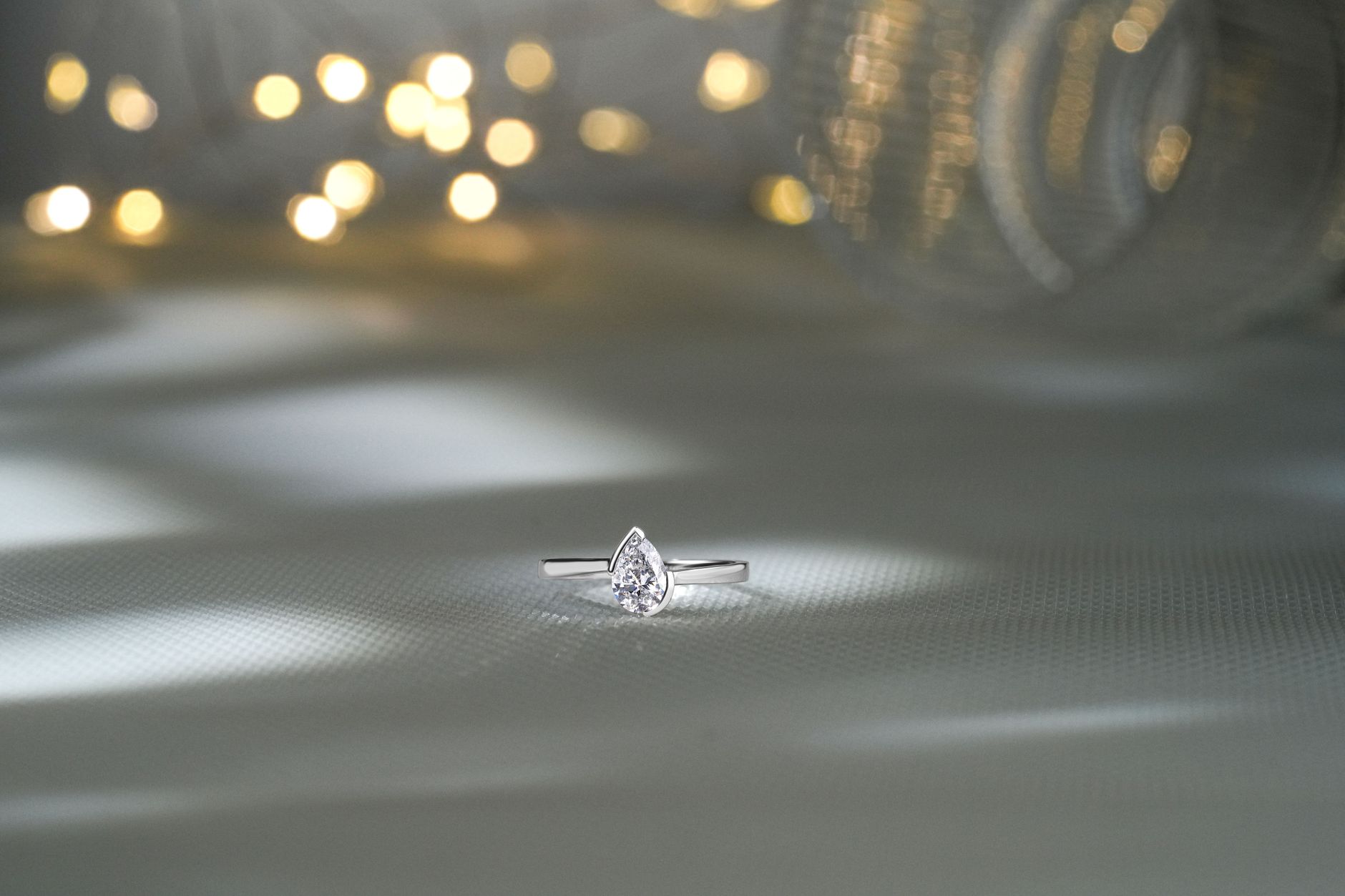
A pear diamond, sometimes called a teardrop diamond, is a hybrid shape. One end is rounded like an oval, and the other end narrows to a point. This creates a shape that looks elegant, elongated, and slightly more distinctive than a classic round.
The shape is important because it affects both appearance and durability. The rounded end is relatively secure, while the pointed end needs protection. Compared with a round diamond, which has no point, a pear shape has one area that deserves more attention during setting and daily wear.
Why the point matters
The tip of a pear diamond is thinner and more exposed than the edges of many other diamond shapes. Diamonds are very hard, but hardness is not the same as immunity to damage. A diamond can chip if hit sharply in the wrong place, and the point is one of the places most likely to be affected.
This does not mean pear diamonds are weak. It means buyers should consider how the diamond will be mounted and whether the setting gives the tip enough protection for everyday life.
How Durable Are Pear Diamonds in Real Life?
In practical terms, pear diamonds can be durable enough for regular wear, including engagement rings, wedding stackers, and right-hand rings. Their durability depends on three main things: cut quality, setting style, and wear habits. A well-made pear diamond ring can last for many years without issue.
The main vulnerability is chipping at the tip or occasionally on the sides if the diamond takes a direct blow. This is most relevant for people who use their hands a lot, work in active environments, or tend to wear rings during tasks that involve impact. If you are careful with your jewelry, the risk is much lower.
What does “fragile” mean in diamond buying?
When buyers ask whether a diamond shape is fragile, they usually mean one of three things. They want to know if it will chip easily, if it will scratch or wear down, or if it needs special care. For pear diamonds, the answer is nuanced.
Diamonds do not scratch easily because they are the hardest common gemstone. However, they can chip. Pear diamonds are not fragile in the sense of being delicate fashion jewelry, but they are slightly more exposed to edge damage than round or cushion shapes.
Key Characteristics That Affect Pear Diamond Durability
The pointed tip
The tip is the most important factor. It is narrow, exposed, and more likely to take damage from a direct hit. A prong or V-prong at the point helps shield it from impact. This is one of the simplest and most effective ways to improve durability.
The ratio of length to width
Pear diamonds come in different proportions. Some look short and full, while others appear long and slender. Extremely elongated pears can have a smaller point and more delicate outline, which may make the diamond seem more vulnerable visually, even if the actual risk difference is modest.
A balanced length-to-width ratio often creates the best combination of appearance and wearability. Many shoppers find that a medium ratio looks elegant without making the tip look overly narrow.
The symmetry of the shape
Good symmetry helps the diamond perform better visually and can also influence how evenly stress is distributed. A pear diamond should have a smooth rounded end, a centered point, and balanced curves on both sides. Poor symmetry can make the stone look less refined and may expose the point in a less secure way.
Setting design
The setting is often the biggest factor in whether a pear diamond feels secure. A solitaire with a V-prong at the tip, a halo that partially protects the outline, or a bezel-style design can all help. The setting should hold the stone firmly without covering too much of the shape.
Appearance and Visual Performance of Pear Diamonds
One reason pear diamonds remain popular is that they have a distinct look on the hand. The elongated outline can make the finger appear longer and slimmer. For buyers who want something elegant but not as common as a round diamond, the pear shape offers a strong visual identity.
Pear diamonds also tend to face up large for their carat weight. Face-up size means how large the diamond looks from above. Because the shape stretches across the finger, many buyers feel they get a generous look compared with other shapes at the same weight.
Brilliance and sparkle
Most pear diamonds are cut in a brilliant style, which means they use many facets designed to reflect white light. This gives the diamond lively sparkle. When cut well, pear diamonds can be very bright and appealing in everyday lighting.
However, the shape can sometimes produce a bow tie effect, which is a dark area across the center of the stone. A slight bow tie is common in many elongated shapes, but a heavy one can reduce visual appeal. This is not a durability issue, but it matters for appearance and value.
Fire and scintillation
Fire is the display of colored light from a diamond. Scintillation is the pattern of sparkle and flashes as the diamond moves. Pear diamonds can show both well when they are cut proportionally, but performance varies significantly from stone to stone.
Because the shape is asymmetrical, cutters have to balance light performance carefully. A pear with strong brilliance but poor symmetry may not look as attractive as a pear with slightly less brightness but better overall balance. This is one reason why viewing the diamond in person or through high-quality videos is especially useful.
Advantages of Pear Diamonds
Pear diamonds offer several practical and aesthetic advantages. They are not the right choice for everyone, but many buyers appreciate their balance of elegance and individuality.
- Flattering shape: The elongated outline can make fingers look longer.
- Good face-up size: Pears often look larger than rounds of the same carat weight.
- Distinctive appearance: They stand out without being as unconventional as some other fancy shapes.
- Strong sparkle potential: Brilliant-style faceting can create lively light return.
- Flexible orientation: Pears can be set with the point facing up or down depending on the design.
For buyers comparing diamond shapes, this combination of style and size perception is one reason pear diamonds remain popular in both natural and lab grown diamonds. A lab grown pear diamond can sometimes allow a buyer to choose a larger size or better quality within a given budget, while still keeping the same overall shape and appearance.
Disadvantages and Limitations of Pear Diamonds
Like any shape, pear diamonds have trade-offs. Understanding them helps buyers make a more confident decision and avoid surprises later.
- Point vulnerability: The tip can chip if hit directly.
- Bow tie effect: Some stones show a dark center area.
- Symmetry matters a lot: Poor cut quality is easier to notice in this shape.
- Can rotate visually: Because the shape is asymmetrical, some people are sensitive to how it sits on the finger.
- Requires thoughtful setting: A protective mount is more important than with a round diamond.
These drawbacks do not make pear diamonds a poor choice. They simply mean the shape rewards careful selection. In many cases, buyers can avoid the most common problems by paying close attention to cut, setting, and certification details, especially when reviewing diamond certifications and images.
Who Is a Pear Diamond Best For?
Pear diamonds are best for buyers who want something elegant, slightly distinctive, and flattering on the hand. They work especially well for people who like elongated shapes but do not want the very narrow silhouette of a marquise. They can also be a strong option for those who prefer a ring that looks a little larger than its carat weight suggests.
They are a good fit for buyers who value style and are willing to choose a secure setting. If you are very hard on your rings, work with your hands often, or want the least maintenance possible, a round diamond may be more forgiving. But if you like the pear shape and buy it carefully, it can be a very practical everyday option.
Best for these buyers
- Buyers who like a feminine, elongated look
- People who want a shape that stands out from round and oval diamonds
- Shoppers who want strong face-up size for the budget
- Those willing to choose a protective setting
- Buyers comparing natural and lab grown options in fancy shapes
How Pear Diamonds Compare to Other Popular Shapes
Comparing pear diamonds to other shapes helps put the question of fragility into context. Some shapes are more durable at the edges, while others have their own vulnerabilities. The right choice depends on your lifestyle, style preference, and comfort with upkeep.
| Shape | Durability | Appearance | Common Concern |
|---|---|---|---|
| Round | Very durable | Classic, balanced sparkle | Usually higher price per carat |
| Pear | Good, but tip needs protection | Elegant, elongated, distinctive | Point chips and bow tie effect |
| Oval | Good | Similar elongation with softer edges | Bow tie effect, symmetry |
| Marquise | Moderate | Very elongated, dramatic look | Both tips can be vulnerable |
| Princess | Moderate to good | Sharp, modern shape with strong brilliance | Corner chipping |
| Emerald | Good, but corners matter | Clean, elegant step-cut look | Clarity and color can be easier to see |
Pear vs round diamond
Round diamonds are generally the most forgiving shape because they do not have a pointed tip. They are also the benchmark for sparkle and durability. If your main concern is maximum resistance to everyday wear, round is often the safer shape.
Pear diamonds, on the other hand, offer a more distinctive look and often greater visual spread. They are slightly less protected at the tip, but not so much that they should be avoided. Many buyers choose pears precisely because they want a more individual style than the standard round.
Pear vs oval diamond
Oval diamonds are similar in that they are elongated and flattering, but they have no point. That makes them a little easier to wear casually without thinking about the ends of the stone. Ovals are often chosen by buyers who want a softer outline with fewer durability concerns.
Pear diamonds are a better fit for buyers who like the teardrop silhouette and are comfortable with a little extra care. If you like the length of an oval but want more personality, the pear shape is worth considering.
Pear vs marquise diamond
Marquise diamonds have points at both ends, so they usually require even more attention than pear diamonds. They can appear very long and dramatic, but both tips need protection. In terms of fragility, a pear is typically easier to manage than a marquise because only one tip is highly exposed.
Both shapes elongate the finger well. The choice often comes down to whether you prefer the softer, more balanced look of a pear or the sharper, more dramatic profile of a marquise.
Important Buying Considerations for Pear Diamonds
If you are shopping for a pear diamond, whether natural or from the lab grown diamond market, several details matter more than others. These factors affect both beauty and durability.
1. Protect the tip with the right setting
This is the most important practical buying consideration. A V-prong at the tip is often used because it helps shield the most vulnerable point. Some settings use a bezel or partial bezel for added protection, though that changes the overall look.
If the pear diamond is set with a plain prong arrangement that leaves the point exposed, it may be more likely to chip during impact. A secure setting is one of the best ways to reduce concern about fragility.
2. Check symmetry carefully
Pear diamonds are asymmetrical, so symmetry errors are easier to notice. The point should align properly with the rounded end, and the left and right curves should look balanced. Uneven symmetry can make the stone look less refined and may also affect light return.
3. Evaluate the bow tie effect
Many buyers hear the phrase bow tie but are not sure what it means. It refers to a dark shape across the center of the diamond caused by how light enters and exits the stone. A small amount is common, but a strong bow tie can make the diamond look less lively.
When comparing options, look at videos or images from the top. A pear diamond that seems bright in one photo may look much darker in another because of how it handles light. This is especially important for online diamond buying.
4. Consider length-to-width ratio
The length-to-width ratio affects how the diamond looks on the finger. A lower ratio makes the stone look fuller and slightly rounder. A higher ratio creates a longer, more slender appearance.
There is no single perfect ratio. Personal preference matters, but many buyers prefer a balanced ratio that preserves the pear outline without making the shape look too narrow. This is one of the most important style decisions when choosing diamond shapes.
5. Review color and clarity in context
Pear diamonds can hide or reveal color and inclusions differently depending on the cut and setting. Brilliant-style facets usually disguise small inclusions well, which can make clarity requirements more flexible than in step cuts. Color visibility depends on the shape, size, and metal color.
If you are comparing options in diamond clarity or diamond color, remember that a pear shape often gives buyers some flexibility. Still, the pointed tip and elongated body mean that proportions should be considered along with the grades on the report.
6. Think about daily wear habits
Your lifestyle matters more than many shoppers realize. If you type all day, cook often, go to the gym, or care for young children, your ring will encounter more contact and impact than you might expect. That does not rule out a pear diamond, but it does argue for a stronger setting and regular maintenance checks.
If you prefer a low-maintenance ring, ask yourself whether you are comfortable being mindful of the point. For some buyers, that is a small trade-off. For others, a round or oval diamond may feel easier.
Does a Lab Grown Pear Diamond Change the Fragility Question?
The fragility question is mostly about shape and setting, not whether the diamond is natural or lab grown. A lab grown pear diamond and a natural pear diamond have the same crystal structure and the same basic durability. In both cases, the pointed tip is the part that needs the most protection.
Where lab grown diamonds can matter is budget. Buyers may be able to choose a larger pear shape, a better cut, or a stronger setting within the same spending range. If that allows a more protective mount or a higher-quality stone, it can improve the practical experience of wearing the ring.
That said, durability should never be confused with value. Resale value, market pricing, and personal preference are separate topics. If you are comparing the two, it can help to read more about diamond pricing and how lab grown diamonds are positioned in the market.
Common Mistakes Buyers Make With Pear Diamonds
Many problems with pear diamonds are avoidable. Buyers often focus on carat weight or price first, then overlook shape-specific issues that affect how the diamond will look and wear over time.
- Choosing an exposed tip: A pear without a protective prong is more vulnerable.
- Ignoring the bow tie: A heavy bow tie can make the stone look dark in the center.
- Overlooking symmetry: Imbalanced curves can reduce beauty and perceived quality.
- Buying by carat only: Two pears of the same weight can look very different.
- Assuming all pears are the same: Cut quality affects appearance more than many buyers expect.
- Neglecting maintenance: Loose prongs increase the risk of tip damage over time.
These mistakes are common because pear diamonds can look beautiful in photos even when the cut is not ideal. That is why shape-specific knowledge matters. A careful buyer pays attention to more than just the diamond report.
How to Make a Pear Diamond More Durable
If you like the pear shape, there are simple steps that make it safer for daily wear. Most are related to setting choice and routine care rather than the diamond itself.
Use a V-prong or protective prong at the tip
This is the most direct way to guard the point. A V-prong wraps around the tip and helps prevent direct impacts. It is a common and sensible choice for pear engagement rings.
Have the setting checked periodically
Over time, prongs can loosen slightly or wear down. A jeweler can inspect the ring and tighten the setting before a problem develops. This is especially useful for rings worn every day.
Avoid wearing the ring during high-impact activities
Even very durable diamonds can chip if struck hard enough. Removing the ring for sports, heavy lifting, gardening, or housework reduces unnecessary risk. This advice applies to all diamond shapes, but it is especially helpful for pears.
Store the ring carefully
When you are not wearing it, store the ring separately from other jewelry. This helps prevent accidental knocks that could stress the tip or loosen prongs. A soft pouch or lined box is usually enough.
How Pear Diamonds Compare in Pricing and Value
Price is influenced by many factors, including carat, cut quality, color, clarity, and whether the diamond is natural or lab grown. Shape also matters. Pear diamonds are often priced differently from round diamonds because they are a fancy shape, and fancy shapes can offer better face-up size for the same budget.
From a buyer’s perspective, this means a pear can sometimes give you a larger visual presence without jumping to a higher price tier. That is one reason they are common among shoppers looking for a balance of style and value. The exact market relationship changes with supply, quality, and demand, so it helps to compare diamonds on a case-by-case basis.
If you want to understand the broader value picture, it is useful to read about diamond buying guides and how carat, cut, clarity, and color interact. A large pear with poor cut quality may not be a better purchase than a smaller pear that handles light beautifully.
Are Pear Diamonds More or Less Timeless Than Other Shapes?
Timelessness is partly subjective. Round diamonds are the most classic and least trend-dependent, while pear diamonds carry a bit more personality. That does not make pears trendy in a bad sense. It simply means they are more shape-specific and slightly less conventional.
Some buyers prefer this because they want a ring that feels distinctive. Others prefer the stability of a round or oval. If you want a diamond that still looks elegant years from now but is not as common as a round, a pear shape can be a good middle ground.
Frequently Asked Questions About Pear Diamond Fragility
Do pear diamonds chip easily?
They do not chip easily in normal wear, but the pointed tip is more vulnerable than the rest of the stone. A secure setting greatly reduces the risk. Most damage happens from a direct impact rather than from everyday use alone.
Is a pear diamond safe for an engagement ring?
Yes, a pear diamond can be a good engagement ring choice if it is set properly. Many people wear pear engagement rings every day without issues. A V-prong or similar protective setting is strongly recommended.
Are pear diamonds less durable than round diamonds?
In general, round diamonds are slightly more forgiving because they have no point. Pear diamonds are still durable, but they need more attention at the tip. The difference is mostly about vulnerability to impact, not overall hardness.
Does a lab grown pear diamond have the same durability as a natural one?
Yes. Lab grown and natural diamonds have the same basic physical properties. Shape and setting matter far more than origin when it comes to everyday durability.
What setting is best for a pear diamond?
A setting with a V-prong at the tip is one of the most common choices. It helps protect the pointed end from knocks. Some buyers also like halo or bezel-inspired settings for additional protection.
Should I avoid pear diamonds if I work with my hands?
Not necessarily, but you should be more careful about setting choice and daily wear habits. If your hands are often exposed to impact, a round diamond may be easier to live with. If you love the pear shape, choose a secure setting and plan for occasional maintenance.
Do pear diamonds look smaller than other shapes?
Usually no. In fact, they often face up larger than round diamonds of the same weight. Their elongated shape helps them look substantial on the finger, though the visual result depends on proportion and cut.
Conclusion
Pear diamonds are not inherently fragile, but they do have one area that needs special attention, the pointed tip. When a pear is well-cut and set with a protective prong or similar design, it can be a durable and attractive everyday ring. The shape offers strong face-up size, elegant finger coverage, and a distinctive look that many buyers appreciate.
If you are deciding whether a pear diamond is right for you, the most important questions are practical ones. Will the setting protect the point? Do you like the elongated shape enough to accept a little extra care? Are you comfortable checking the ring periodically for loosened prongs?
For buyers who want a shape that feels refined but not overly common, pear diamonds are a strong option. For those who want the lowest-maintenance shape possible, a round diamond may be easier. Either way, the best decision comes from understanding how shape, cut, and setting work together, especially when comparing natural and lab grown diamonds in the same budget range.