If you are asking which diamond shape makes fingers look longer, the short answer is that elongated shapes usually create the most lengthening effect. Oval, pear, marquise, and elongated emerald cuts tend to visually stretch the finger because they draw the eye up and down rather than side to side. That said, the best choice also depends on ring setting, finger shape, and how balanced you want the final look to be.
This is one of the most common questions engagement ring shoppers ask, and it makes sense. A diamond shape can change how large a ring appears, how elegant it looks on the hand, and even how comfortable it feels in daily wear. The right shape is not only about style, but also about proportion, sparkle, durability, and how the stone works with your hand.
Quick Answer: Which Diamond Shape Makes Fingers Look Longer?
The diamond shapes that most often make fingers look longer are:
- Oval – a soft, elongated shape that naturally lengthens the look of the hand
- Pear – tapering at one end, which creates a vertical line and a slimming effect
- Marquise – the most dramatic lengthening effect because of its pointed ends
- Emerald cut – especially when cut in an elongated rectangle, it can visually extend the finger
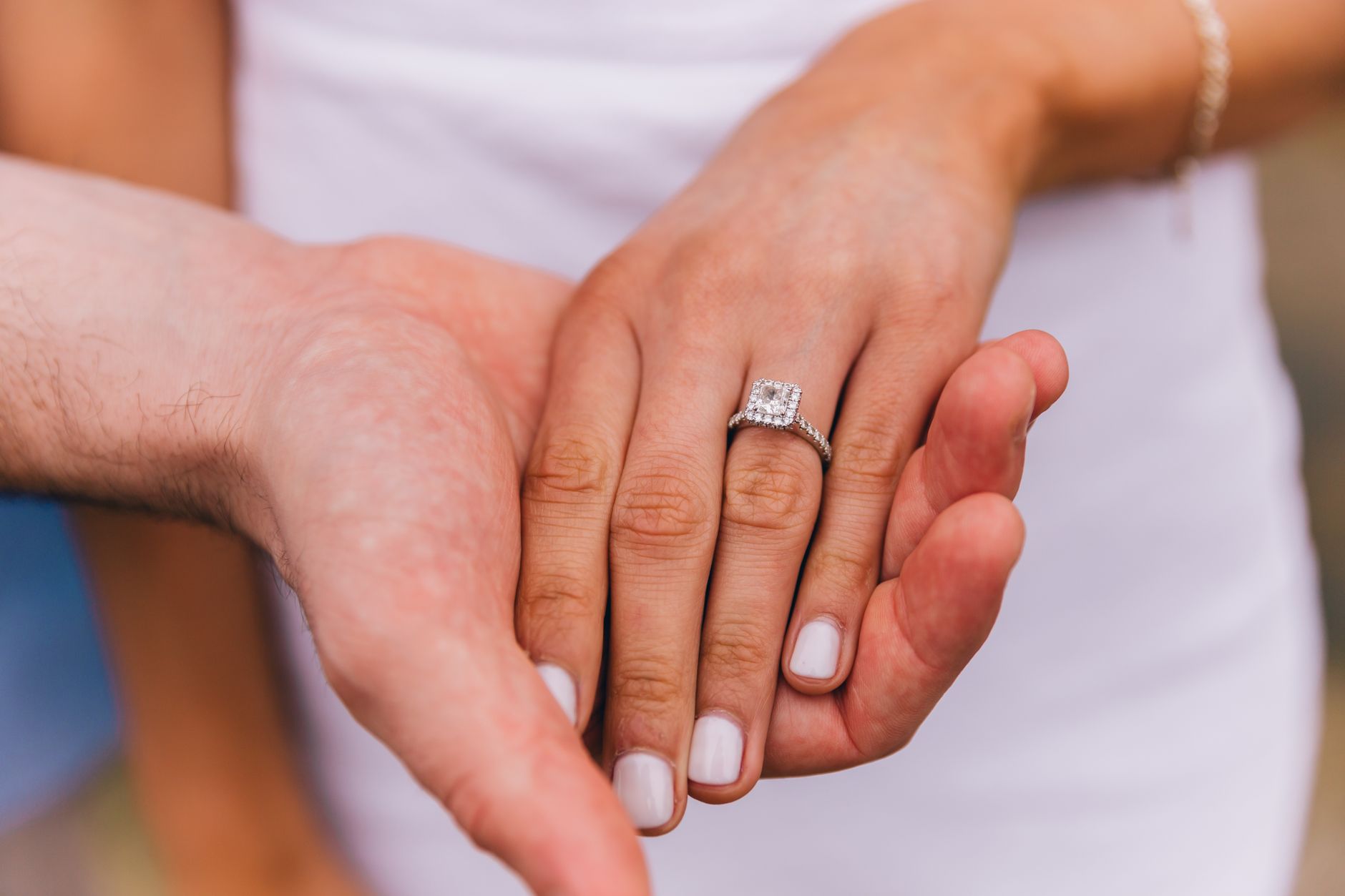
- Radiant cut – when elongated, it offers a similar effect with more sparkle than step cuts
If the goal is to make fingers look longer and slimmer, elongated shapes generally work better than round or square shapes. Round brilliants, cushions, and princess cuts can still look beautiful, but they usually create a fuller, more compact look rather than a lengthening one.
Why Diamond Shape Affects How Fingers Look
Diamond shape changes how the eye reads the ring. A stone with more length than width creates a vertical line, and vertical lines tend to make fingers appear longer. This is a visual effect, not a change in the actual shape of the hand.
Width also matters. Wider shapes spread across the finger and can make the hand look shorter or broader in comparison. Elongated shapes do the opposite by guiding the eye along the length of the finger.
The setting can reinforce or reduce that effect. A thin band, a north-south orientation, and a setting that does not overwhelm the center stone usually strengthen the illusion of length. A very wide band or bulky halo can make a ring look more horizontal.
Best Diamond Shapes for Longer-Looking Fingers
Oval Cut
Oval diamonds are one of the most popular choices for buyers who want their fingers to look longer. The shape has rounded ends and a lengthened outline, which creates a soft, elegant effect on the hand.
Oval diamonds also tend to look larger than round diamonds of the same carat weight because of their spread. That can make them appealing for buyers who want a noticeable center stone without increasing size too much.
One thing to watch is the bow tie effect, which is a dark area sometimes visible across the middle of elongated shapes. A well-cut oval minimizes this, but it is worth inspecting the stone in person or with reliable images and videos.
Pear Cut
Pear-shaped diamonds, also called teardrop shapes, combine a rounded end with a pointed tip. This tapered outline naturally draws the eye vertically and can make fingers look longer and slimmer.
Pear cuts can be worn with the point facing up or down, depending on the look the wearer wants. Point-up is the most common orientation for engagement rings because it emphasizes length. The shape also has a slightly distinctive look compared with oval or round cuts, which appeals to buyers who want something a little different.
Because the pointed end is more exposed, setting quality matters. A protective setting such as a V-prong is often used to reduce the risk of chipping at the tip.
Marquise Cut
The marquise cut offers the strongest lengthening effect for fingers. Its long, narrow silhouette and pointed ends create a dramatic vertical line on the hand.
This shape can make the center stone look larger than many other shapes of the same carat weight because it spreads well across the finger. It can also create a distinctive, vintage-inspired appearance.
However, marquise diamonds require careful evaluation. The pointed ends are vulnerable to damage if they are not protected, and some stones show a noticeable bow tie. The shape is less common than oval or round, so it can feel more fashion-forward.
Emerald Cut
Emerald cut diamonds are rectangular step cuts with cropped corners. When elongated, they can lengthen the look of the finger while offering a refined, architectural appearance.
Unlike brilliant cuts, emerald cuts are not designed for maximum sparkle. They show broad flashes of light and a hall-of-mirrors effect instead of intense scintillation. This means the shape can look elegant and clean, but it also tends to show clarity characteristics more easily than many brilliant cuts.
For buyers who want a sleek, sophisticated look rather than maximum sparkle, an elongated emerald cut can be an excellent choice.
Radiant Cut
Radiant cuts combine an elongated outline with brilliant-style faceting, so they can help fingers look longer while still offering strong sparkle. They are a practical option for buyers who want the lengthening effect of a rectangular shape but prefer more brilliance than an emerald cut.
Radiant cuts are often chosen because they balance visual impact and liveliness. They can also hide inclusions fairly well, which may be helpful when shopping for a lab grown diamond or trying to stay within a budget.
Comparison Table: Which Shapes Lengthen the Finger Most?
| Shape | Finger-Lengthening Effect | Sparkle Style | Durability Notes | Overall Look |
|---|---|---|---|---|
| Marquise | Very strong | Brilliant-style sparkle | Pointed ends need protection | Dramatic and distinctive |
| Oval | Strong | Brilliant sparkle | Generally durable, no sharp points | Soft, elegant, versatile |
| Pear | Strong | Brilliant sparkle | Pointed tip needs protection | Graceful and slightly unique |
| Emerald cut | Moderate to strong, depending on length | Broad flashes, less sparkle | Corners are protected but still need care | Elegant and understated |
| Radiant cut | Moderate to strong | High brilliance | Good durability overall | Bright and contemporary |
| Round | Low | High brilliance | Very durable | Classic and balanced |
| Princess | Low | High brilliance | Sharp corners need care | Square and modern |
What Makes an Elongated Shape Look Better on the Hand?
Not every elongated diamond will create the same effect. Proportions, setting, and even ring size can change how the stone appears.
Length-to-Width Ratio
The length-to-width ratio is the relationship between how long a diamond is and how wide it is. It is especially important for oval, pear, marquise, emerald, and radiant cuts.
For a more lengthening look, buyers usually prefer a ratio that is somewhat longer than average. A shape that is too wide may look fuller and less elongated, while one that is extremely narrow can look less balanced or too slender for some tastes.
There is no universal ideal ratio because personal preference matters. Some people like a bold, elongated outline, while others prefer a softer, slightly wider shape that feels more classic.
Stone Size and Finger Width
The same diamond can look different on different hands. A ring that appears very elongated on a narrow finger may look more balanced or compact on a wider finger.
Carat weight also matters, but not in a simple way. Two diamonds of the same carat weight can have different face-up dimensions depending on how they are cut. This is why it is helpful to look at millimeter measurements, not just carat weight, when judging how a diamond will appear on the hand.
Setting Style
The setting can make a strong difference. A solitaire with a slim band usually allows the shape to stand out more clearly. A halo or side stones can add width and reduce the lengthening effect if the design spreads horizontally.
A north-south orientation, where the stone points toward the fingertip, is the standard choice for making fingers look longer. An east-west setting, where the stone sits horizontally, usually does the opposite and can make the finger look wider.
Appearance and Visual Performance
When buyers compare diamond shapes, they often focus on sparkle, but shape affects more than sparkle alone. The way light moves through a diamond, the size of the stone face-up, and the amount of visible detail all influence the final look.
Sparkle and Brilliance
Brilliance refers to the white light returned by the diamond. Fire refers to colored flashes of light. Scintillation is the sparkle effect created by movement, as the diamond shifts under lighting.
Round diamonds are usually the benchmark for brilliance because they are designed for maximum light return. Elongated shapes may not match that level of sparkle, but many still look lively and attractive.
Oval and radiant cuts often give the most sparkle among the finger-lengthening shapes. Pear cuts can also be very bright, though their performance depends heavily on cut quality. Emerald cuts are different, with a more elegant flash than a glittery sparkle.
Face-Up Size
Face-up size means how large a diamond looks when viewed from above. Some elongated shapes appear larger than round diamonds of the same weight because they distribute weight across a longer surface area.
Marquise, oval, and pear shapes often look large for their carat weight. This can be useful for buyers comparing options in lab grown diamonds, where larger sizes are often more accessible within a budget.
However, face-up size should not be the only goal. A stone that looks large but has poor proportions or a strong bow tie may not be visually appealing overall.
Clarity and Color Visibility
Shape also affects how easily inclusions and color can be seen. Brilliant cuts like oval, pear, and radiant usually hide inclusions better because their facet pattern is busy and reflective. This can be helpful if a buyer is choosing between different clarity grades.
Step cuts such as emerald tend to show inclusions more easily because they have large, open facets. They also show color more readily than many brilliant cuts. For this reason, emerald cuts often benefit from higher clarity and color standards.
If you are comparing options, it helps to review diamond clarity grades and diamond color grades alongside shape. The same grade can look different depending on the diamond cut.
Advantages of Shapes That Lengthen Fingers
Elongated shapes have several practical and visual benefits beyond making fingers look longer.
- They create a slimming effect. The eye tends to follow the length of the stone rather than its width.
- They can look larger face-up. Many elongated diamonds spread well across the finger.
- They offer style variety. Oval, pear, marquise, emerald, and radiant cuts each create a different aesthetic.
- They work well in many settings. Solitaire, three-stone, halo, and bezel settings can all complement elongated shapes.
- They often photograph well. The vertical silhouette can look elegant in hand shots and engagement photos.
These advantages make elongated shapes popular in engagement rings and fashion jewelry alike. They are especially useful for buyers who want a ring that feels graceful and refined without being too small or too wide on the hand.
Disadvantages and Trade-Offs
There are also drawbacks to consider. No shape is perfect for every buyer, and a lengthening effect may not be the top priority for someone else.
- Some shapes show a bow tie. Ovals, pears, and marquise cuts can have darker areas in the center if proportions are not balanced.
- Sharp points can be vulnerable. Marquise and pear shapes need protective settings to reduce the risk of damage.
- Step cuts show inclusions more easily. Emerald cuts may require higher clarity, which can increase cost.
- Not all elongated shapes sparkle the same way. If maximum brilliance is the priority, a round diamond may still be preferable.
- Trends can influence demand. Some elongated shapes are especially popular now, which can affect pricing and availability.
It helps to think about these trade-offs early. A shape that looks flattering on the hand may not be the best choice if the buyer wants the highest durability, the most sparkle, or the easiest maintenance.
Who Each Shape Is Best For
Oval Cut for Buyers Who Want Versatility
Oval is a strong choice for people who want a classic but slightly modern appearance. It suits many hand shapes, offers a lengthening effect, and usually gives excellent light performance.
It is also one of the easiest elongated shapes to wear in everyday life because it has no points. For many buyers, that makes it a balanced option between beauty and practicality.
Pear Cut for Buyers Who Want Something Graceful and Distinctive
Pear is a good fit for buyers who want the hand-lengthening effect with a more individual look. It feels softer than marquise and more distinctive than oval.
This shape can appeal to someone who likes asymmetry and wants a ring that stands out without being overly dramatic.
Marquise Cut for Buyers Who Want Maximum Elongation
Marquise is best for those who want the strongest visual lengthening effect and do not mind a more noticeable style. It is often chosen by buyers who like vintage-inspired or statement-making rings.
Because of the pointed ends, it works best when set carefully and worn with regular maintenance in mind.
Emerald Cut for Buyers Who Prefer Clean, Elegant Lines
Emerald cut is ideal for buyers who want a refined, architectural look. It can elongate the finger while appearing understated and sophisticated.
This shape is usually a better fit for someone who values clarity, symmetry, and a quieter kind of beauty over intense sparkle.
Radiant Cut for Buyers Who Want Sparkle and Length
Radiant cut suits buyers who want a rectangular shape with a more brilliant appearance. It is a practical compromise for people who like the elongating effect but still want a lively stone.
It can be a smart option for shoppers considering lab grown diamonds, especially if they want a larger-looking center stone with strong visual performance.
How These Shapes Compare to Other Popular Diamond Shapes
To better understand which diamond shape makes fingers look longer, it helps to compare elongated shapes with the most common non-elongated options.
| Shape | Finger Effect | Main Strength | Main Trade-Off |
|---|---|---|---|
| Round | Balanced, not especially lengthening | Excellent sparkle and classic appeal | Less face-up length per carat |
| Princess | Compact, square appearance | Sharp brilliance and modern style | Does not elongate the finger much |
| Cushion | Soft, full shape | Romantic look and versatile style | Usually more square than lengthening |
| Oval | Strong lengthening effect | Elegant shape with good sparkle | May show bow tie if cut poorly |
| Pear | Strong lengthening effect | Graceful, distinctive shape | Pointed tip needs protection |
| Marquise | Very strong lengthening effect | Dramatic spread and vintage appeal | Can look narrow and requires careful setting |
| Emerald | Moderate to strong lengthening effect | Elegant, clean lines | Shows clarity more easily |
| Radiant | Moderate to strong lengthening effect | Good sparkle and versatility | Less distinct than some other shapes |
Important Buying Considerations
Cut Quality Matters More Than Shape Alone
Shape helps determine how a diamond looks on the hand, but cut quality determines how well it performs with light. A poorly cut oval, for example, may not look nearly as attractive as a well-cut round or radiant.
If you are comparing options, it is worth learning about diamond cut grades and how they influence brilliance, spread, and overall beauty. Good proportions can make a shape appear more balanced and flattering.
Use Measurements, Not Just Carat Weight
Two diamonds with the same carat weight can have very different dimensions. This matters because the lengthening effect depends on the actual outline, not the weight alone.
When shopping, compare millimeter dimensions and length-to-width ratio. A diamond that is slightly larger in face-up size may have a more flattering profile than one with deeper proportions.
Choose a Setting That Supports the Shape
The setting should enhance, not fight, the shape of the stone. For example, a narrow solitaire band can help an elongated center stone look even longer, while a bulky setting can shorten the visual line.
Prong placement also matters. Pear and marquise cuts often benefit from protective prongs at the points. Emerald cuts may look best in settings that highlight their clean outline without adding visual clutter.
Consider Daily Wear and Maintenance
Any diamond worn every day should fit the wearer’s lifestyle. Someone active with their hands may prefer a shape with fewer exposed points, such as oval or radiant.
If the buyer chooses a pointed shape like pear or marquise, regular inspection is important. Protective settings and routine jewelry care can help maintain the stone over time.
Balance Aesthetics with Budget
Elongated shapes can sometimes appear larger than round diamonds of the same weight, which may help buyers get more visual size for their budget. This is one reason they are popular in lab grown diamonds, where shoppers may prioritize face-up size, style, and sparkle together.
Still, budget decisions should include clarity, color, and setting quality. A better overall ring is usually the result of balanced choices rather than focusing on one feature alone.
How Lab Grown Diamonds Fit Into Shape Selection
Lab grown diamonds are especially relevant for shoppers comparing shapes because they often allow more flexibility in size and quality. If a buyer wants an elongated shape with a larger face-up appearance, a lab grown diamond may make that goal more accessible within the budget.
This does not mean lab grown diamonds are automatically the better choice for everyone. They share the same basic optical and physical properties as natural diamonds, but resale value, market perception, and long-term ownership considerations can differ. Buyers should understand those trade-offs before deciding.
For shape selection specifically, lab grown diamonds make it easier to explore oval, pear, marquise, radiant, or emerald cuts at higher carat weights. That can be useful when the goal is a finger-lengthening look without compromising too much on size.
Common Mistakes Buyers Make
Choosing a Shape Based Only on Photos
Photos can be misleading because lighting, angle, and editing affect how a diamond appears. A shape that looks perfect online may show a bow tie, look too narrow, or appear less flattering in person.
Whenever possible, review multiple images or videos and compare actual measurements.
Ignoring Width as Well as Length
Some buyers focus only on how long a diamond is and forget about overall balance. A very narrow stone may not suit every hand, and a shape that is too wide can reduce the lengthening effect.
Balance is usually more important than extreme proportions.
Not Considering Clarity in Step Cuts
Emerald cuts are beautiful, but they do not hide inclusions as well as brilliant cuts. Buyers who choose step cuts without paying attention to clarity can end up disappointed by visible inclusions.
That is why emerald cuts are often evaluated more carefully for clarity than shapes like oval or radiant.
Forgetting About the Setting
A ring setting can make a significant difference in how long or short the finger appears. A wide band or a horizontal layout can reduce the visual length of even an elongated stone.
The center diamond and the setting should work together as one design.
Overlooking Durability
Some of the most flattering shapes also need the most care. If the wearer is active, frequently travels, or prefers low-maintenance jewelry, a highly pointed shape may not be ideal.
Durability should always be part of the buying decision, especially for a ring meant for daily wear.
Frequently Asked Questions
What diamond shape makes fingers look the slimmest?
Marquise and pear shapes often create the strongest slimming effect because they are long and narrow. Oval also works very well for a softer, more balanced version of that look.
Is an oval or a pear better for making fingers look longer?
Both are effective. Oval usually looks more classic and smooth, while pear creates a more distinctive taper that can feel slightly more dramatic. The better choice depends on personal style and how much individuality the buyer wants.
Does a larger diamond always make fingers look longer?
Not always. Carat weight helps, but shape and proportion matter more. A larger round diamond may look fuller rather than longer, while a smaller elongated diamond can create more of a lengthening effect.
Are elongated shapes more expensive than round diamonds?
Not necessarily. Pricing depends on cut quality, demand, carat weight, and overall market trends. Some elongated shapes can be more affordable than round diamonds at the same size, while others, such as popular ovals, may carry strong demand and therefore higher prices.
Which shape is best if I want fingers to look longer but also want lots of sparkle?
Oval and radiant cuts are often the best balance of sparkle and lengthening effect. Pear can also be very bright if well cut. Marquise is strong for elongation, but it is a more distinctive choice.
Do lab grown diamonds change how a shape looks on the hand?
No. Lab grown and natural diamonds with the same shape, proportions, and cut quality will look similar on the hand. The difference is in origin and market factors, not visual shape performance.
Should I choose the shape that flatters my fingers most or the shape I personally like best?
Ideally, both. Shape is highly personal, and the most flattering option is not always the one that feels right to the wearer. Many buyers choose a shape that balances visual effect with personal style and everyday wearability.
Conclusion
If you are wondering which diamond shape makes fingers look longer, the best answer is usually an elongated shape such as oval, pear, marquise, emerald, or radiant. These shapes create vertical lines that naturally draw the eye along the finger, which can make the hand appear slimmer and more extended.
Among them, marquise creates the strongest lengthening effect, oval offers the most broadly appealing balance, pear adds graceful individuality, emerald gives a refined step-cut look, and radiant blends length with sparkle. The right choice depends on how much elongation you want, how much sparkle you prefer, and how practical the ring needs to be for daily wear.
For most buyers, the best approach is to compare shape, length-to-width ratio, cut quality, and setting together. That combination gives a much clearer picture than shape alone and helps you choose a diamond that looks attractive, wears well, and fits the wearer’s style.