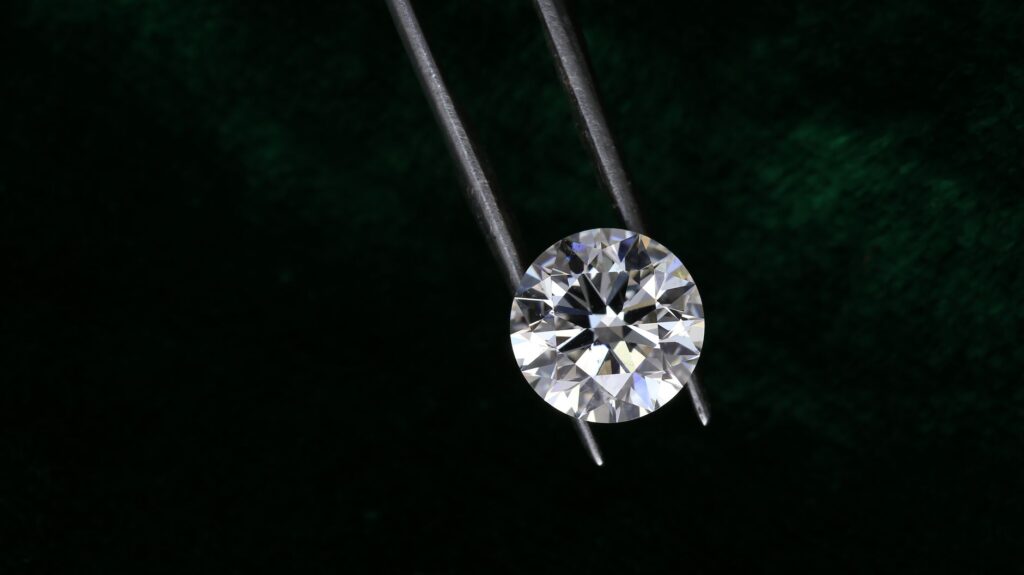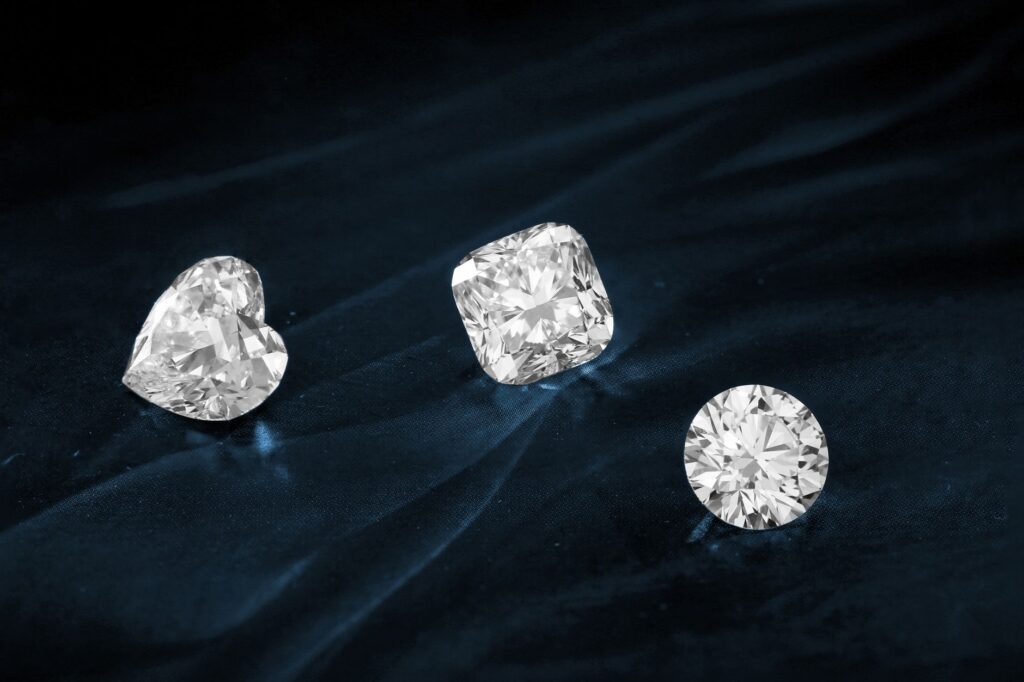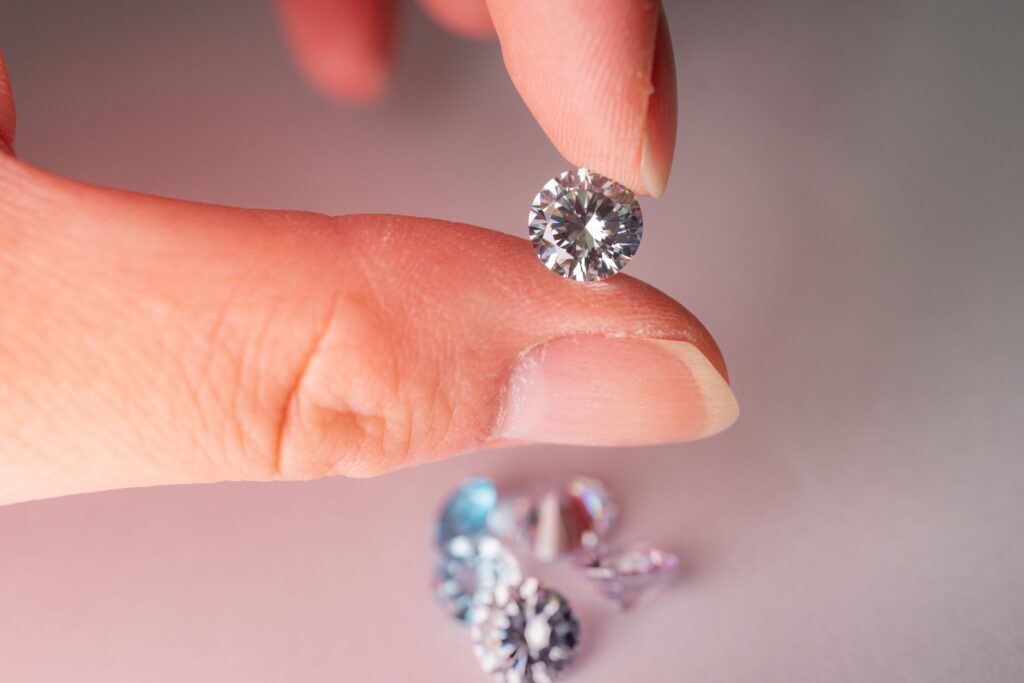
A pear diamond and a round diamond can have the same carat weight yet look noticeably different once they are set in a ring. That difference often surprises buyers, because carat sounds like a size measurement, but it is actually a weight measurement. What your eye notices first is the diamond’s face-up spread, meaning how much surface area it shows from the top.
In practical terms, pear diamonds often look bigger than round diamonds of the same carat weight. Their elongated outline creates more finger coverage, and the pointed end can make the stone appear longer and larger overall. That does not mean every pear will outsize every round visually, but in many side-by-side comparisons, the pear shape gives a larger look for the weight.
This matters because shoppers are often trying to balance appearance, budget, and long-term satisfaction. A shape that looks larger can offer better visual impact without necessarily requiring a higher carat weight. At the same time, shape is only one part of the story. Cut quality, proportions, setting style, finger size, and even the diamond’s length-to-width ratio all influence how large it actually appears.
Quick Answer
Do pear diamonds look bigger than round diamonds? Usually, yes. A pear diamond often appears larger than a round diamond of the same carat weight because its elongated shape covers more finger space and gives the illusion of greater size.
Round diamonds tend to carry more of their weight in a compact shape. Pear diamonds usually spread that weight across a longer outline. As a result, a 1.00 carat pear may look bigger than a 1.00 carat round when viewed from the top, even though both weigh the same.
That said, the visual advantage depends on:
- the pear diamond’s proportions
- how deep or shallow the stone is cut
- the setting style
- the finger size it is worn on
- whether the comparison is based on diameter, length, or overall finger coverage
Buyers focused on maximum visible size often prefer pear shapes for this reason. Buyers focused on symmetry, classic style, and a balanced round outline may still prefer round diamonds, even if they look slightly smaller for the carat.
Understanding the Carat Concept
Carat Is Weight, Not Visible Size
Carat measures how much a diamond weighs, not how large it looks. One carat equals 0.2 grams. That is useful for pricing and classification, but it does not tell you exactly how large the diamond will appear once it is viewed from the top.
Two diamonds can both weigh 1.00 carat and still look different in size. The reason is that each shape distributes weight differently. A round diamond concentrates its weight in a circular form, while a pear diamond stretches part of that weight into length.
What Face-Up Size Means
Face-up size refers to the visible dimensions of a diamond when you look at it from above. This is the view people usually see when the diamond is set in a ring. Face-up size has a major effect on whether a stone looks large, small, wide, narrow, or elongated.
For a round diamond, buyers usually focus on diameter in millimeters. For a pear diamond, both length and width matter. The extra length often makes the stone look more substantial, even if its width is not dramatically larger.
Why Shape Changes Perceived Size
Shape affects how the eye interprets dimensions. Elongated shapes such as pear, oval, and marquise often appear larger than round diamonds because they take up more visual space across the finger. This is partly actual spread and partly visual illusion.
The eye tends to read length as size. A longer shape can seem bigger even when the overall weight is identical. That is one reason pear diamonds are often chosen by buyers who want stronger presence without paying for a much heavier stone.
What Buyers Usually Expect
Assuming Equal Carat Means Equal Size
A common expectation is that a 1 carat diamond will always look like any other 1 carat diamond. In reality, shape makes that assumption unreliable. A 1 carat round and a 1 carat pear do not present the same outline or coverage.
This can lead to disappointment if a buyer shops by carat number alone. Someone may expect a round diamond to have the same finger presence as a pear of equal weight, only to find that the round looks more compact.
Focusing Too Much on the Carat Milestone
Magic sizes such as 1.00 carat, 1.50 carat, and 2.00 carat often get the most attention. Buyers may pay a premium to reach those benchmarks, expecting a dramatic visual jump. In many cases, the visible difference is modest, especially if the comparison is between a slightly under-threshold stone and a benchmark stone.
For example, a well-cut 0.90 carat pear may still look larger than a 1.00 carat round. That does not mean one is automatically better, but it shows why the carat number alone can be misleading.
Expecting “Bigger” to Mean Better
Visual size matters, but it is not the only factor that determines beauty or value. A round brilliant is often chosen for its sparkle pattern, symmetry, and classic appearance. A pear shape may look larger, but it introduces different considerations such as bow-tie effect, point protection, and personal style preferences.
An experienced buyer usually looks at the full picture. That includes appearance, cut quality, durability, setting design, and price efficiency.
What It Actually Looks Like
Pear Diamonds Usually Offer More Finger Coverage
In real-world wear, a pear diamond often covers more of the finger than a round of the same carat weight. This is especially noticeable in solitaire rings, where the shape is easy to see without distraction from side stones or halos.
The elongated body of the pear shape stretches across the finger and creates a longer visual footprint. Even if the width is similar to another shape, the added length makes the diamond feel larger and more prominent.
Round Diamonds Look More Compact
Round diamonds are typically deeper and more concentrated in shape. Their circular outline creates a balanced appearance, but it can also make them look smaller than elongated shapes of equal weight.
This does not mean they are underperforming visually. It simply means the weight is arranged differently. Round diamonds often prioritize a classic profile and strong light return rather than maximum spread.
The Visual Difference Is Usually Noticeable
Placed side by side, a pear and round diamond of the same carat often do not look equally large. The pear’s outline tends to draw the eye lengthwise. That creates a stronger impression of size, especially on the hand.
The difference is not always dramatic from every angle, and it depends on the exact measurements. Still, for buyers asking whether pear diamonds look bigger than round diamonds, the answer in a practical viewing sense is often yes.
Orientation Also Changes the Look
Pear diamonds can be worn with the point facing up toward the fingertip or down toward the hand. Most people wear the point toward the fingertip, which emphasizes length and can make the finger appear slimmer. That styling effect can further enhance the impression of size.
Round diamonds do not create the same directional elongation. Their shape reads as centered and symmetrical, which many buyers love, but it does not visually stretch the finger in the same way.
Round vs Pear Diamond Size Comparison
| Factor | Pear Diamond | Round Diamond |
|---|---|---|
| Same carat visual size | Usually looks larger | Usually looks smaller |
| Finger coverage | Often greater due to elongated shape | More compact coverage |
| Length impression | Strong, noticeable | Minimal |
| Classic symmetry | Less symmetrical than round | Highest symmetry expectation |
| Sparkle style | Brilliant, but shape-dependent | Consistently strong brilliant sparkle |
| Cut standardization | Less standardized | Most standardized shape |
| Pointed tip durability concern | Yes | No pointed tip |
| Value for visible size | Often strong | Usually lower for same spread |
Factors That Change Apparent Size
Shape and Length-to-Width Ratio
Not all pear diamonds look equally large. One important variable is the length-to-width ratio, which describes how long the pear is compared with how wide it is. A more elongated pear may appear larger and slimmer. A shorter, wider pear may look broader but less long.
There is no universal best ratio, because preference matters. However, if your goal is maximizing visual size, a nicely elongated pear often creates a stronger large-stone impression than a shorter one of identical weight.
Cut Quality and Depth
Depth percentage tells you how much of the diamond’s weight is carried vertically rather than spread across the top. If a diamond is cut too deep, more weight is hidden in the body of the stone, and the face-up size can look smaller.
This applies to both rounds and pears. A deep 1.00 carat pear may lose some of the size advantage it would otherwise have over a round. A shallow stone may look larger, but if it is too shallow, brightness and overall beauty can suffer.
Width Matters Too
Some buyers focus only on a pear diamond’s length, but width also affects presence. A very narrow pear may measure long but still look less substantial than expected because it does not carry enough width across the finger.
That is why millimeter dimensions matter more than carat alone. A well-proportioned pear should feel balanced rather than simply stretched.
Setting Design
The setting can make a diamond look larger or smaller. A halo setting adds a border of small diamonds around the center stone, which increases total visual spread. A thin band often makes the center diamond stand out more. A thick band can make the same stone look smaller by comparison.
For pear diamonds, a prong or V-tip setting is usually used to protect the point. This is important for durability, since the pointed end is more vulnerable to chipping than the edge of a round diamond.
Finger Size
The same diamond can look very different on different hands. On a size 4 finger, a 1.00 carat pear may appear prominent. On a size 8 finger, that same diamond may look more modest.
This is why finger coverage is such a useful concept. A shape that looks larger for its carat can be especially attractive to buyers with larger finger sizes who want stronger visual presence without a steep jump in price.
Bow-Tie Effect in Pear Diamonds
A bow-tie is a darker area that can appear across the center of elongated shapes such as pear diamonds. It happens when the diamond does not return light evenly in that area. Some bow-tie presence is common, but a strong dark bow-tie can affect how lively and visually open the diamond looks.
This does not necessarily make the stone look smaller, but it can reduce brightness and change how impressive the diamond appears face-up. A pear with excellent proportions and a less distracting bow-tie may look both larger and more beautiful than a poorly cut one with the same carat weight.
What Buyers Actually See on the Hand
Length Creates a “Larger Than Expected” Effect
One reason pear diamonds often look bigger than round diamonds is that people notice the outline before they think about measurements. The point and rounded end create a shape that extends farther along the finger, so the diamond can appear larger at a glance.
This is especially true in solitaire engagement rings, where the center stone is the main visual feature. On the hand, a pear often feels more expansive than its carat number suggests.
Round Diamonds Look Balanced and Familiar
Round diamonds have a well-known appearance. Their dimensions are easy for jewelers and buyers to compare, and their shape is often associated with classic engagement ring styling. That familiarity can influence perception.
A round might not look as large as a pear of equal weight, but it often looks crisp, symmetrical, and bright. Some buyers prefer that neat, centered look even if it gives up a little visible size.
Side-by-Side Comparisons Can Change Preferences
Some buyers assume they want the biggest-looking option until they view shapes next to each other. In person, a pear may look larger, but the buyer may still prefer the fuller symmetry of a round. Others immediately notice that the round looks smaller than expected and decide that an elongated shape offers better visual value.
This is a reminder that apparent size is important, but personal taste still matters. The larger-looking shape is not automatically the better choice for everyone.
Real-World Size Examples
1 Carat Pear vs 1 Carat Round
A typical well-cut 1.00 carat round diamond often measures around 6.4 to 6.5 mm in diameter. A 1.00 carat pear may commonly measure somewhere around 8.5 x 5.5 mm, though exact dimensions vary.
Even though those numbers are not directly identical because one shape is circular and the other is elongated, the pear often looks longer and more finger-covering in real life. Most buyers viewing the two on a hand would likely say the pear appears bigger.
1.5 Carat Pear vs 1.5 Carat Round
As carat weight rises, the same pattern usually continues. A 1.50 carat round may look substantial, but a 1.50 carat pear often appears more spread out across the finger. The visual size difference can be easier to notice in this range because the extra length becomes more pronounced.
That said, cut quality becomes even more important at higher weights. A deep pear may not deliver the expected size benefit, while a well-cut one can appear impressively large.
2 Carat Pear vs 2 Carat Round
At 2 carats, both shapes make a strong statement. A 2.00 carat round usually has a broad, classic face-up presence. A 2.00 carat pear often feels larger and more elongated, and it can make the finger look slimmer at the same time.
For buyers deciding between the two, style preference becomes especially important here. The size advantage of the pear is real, but so is the strong appeal of a round’s symmetry and sparkle pattern.
0.90 Carat Pear vs 1.00 Carat Round
This is a useful value comparison. In some cases, a 0.90 carat pear can look similar in overall presence to a 1.00 carat round, especially once set on the hand. The pear’s elongated outline helps it compete visually despite the lower weight.
That means a buyer may be able to spend less while still achieving a satisfying face-up appearance. This type of trade-off is especially relevant in both natural and lab grown diamonds.
How Finger Size Changes the Impression
| Diamond | On Smaller Fingers | On Larger Fingers |
|---|---|---|
| 1.00 ct pear | Often looks prominent and elongated | Can look elegant but less dramatic |
| 1.00 ct round | Looks balanced and noticeable | May feel compact |
| 1.50 ct pear | Can look quite large | Often offers strong coverage |
| 1.50 ct round | Looks substantial and classic | Still more compact than pear |
Price vs Visual Benefit
Round Diamonds Often Cost More Per Carat
Round diamonds are usually the most expensive shape on a per-carat basis. Part of that comes from demand, and part comes from how they are cut from rough. Buyers often pay a premium for the round shape’s popularity and performance.
If the goal is to maximize visible size, that premium may not produce the best visual return. A pear diamond can often look larger while costing less than a comparable round of the same carat weight and quality category.
Pear Shapes Can Offer Better Size Value
Because pears often have a larger-looking face-up appearance and are usually less expensive than rounds, they can represent strong value for buyers prioritizing size. This does not mean they are universally better value in every respect, because value also depends on personal preference and cut quality.
Still, from a pure visible-size perspective, pears often deliver more presence for the money. That is one reason they remain popular among buyers who want a larger look without moving to a higher carat bracket.
The Upgrade Is Not Always Worth It
Suppose a buyer is considering increasing a round diamond from 1.00 to 1.20 carats to get a larger appearance. The price increase may be significant, while the visible increase can be modest. In some cases, choosing a pear at the original budget may create a stronger visual impact than spending more on a slightly heavier round.
This is where measurements become more useful than the carat label. A stone’s millimeter spread tells you more about what your eye will see.
Lab Grown Diamond Considerations
Larger Sizes May Be More Accessible
Lab grown diamonds have changed how some buyers approach size. Because they often cost less than natural diamonds of similar quality, buyers may be able to choose a larger carat weight while staying within budget.
This means the shape decision can become even more strategic. A buyer comparing a lab grown pear and a lab grown round may ask whether the round premium is worth paying if the pear already provides a larger look.
Visual Trade-Offs Still Matter
Even with more budget flexibility, the same shape principles apply. A lab grown pear will usually still look larger than a lab grown round of the same weight. But the decision should not be based on size alone.
Cut, proportions, bow-tie visibility, certification, and overall appearance still matter. A larger lab grown diamond is not automatically the better choice if its visual performance is weak.
Budget Efficiency Can Improve
For buyers focused on maximizing finger coverage, a lab grown pear can be especially budget-efficient. It combines two advantages: lower overall pricing compared with natural diamonds in many cases, and a shape that often looks larger than round for the same carat weight.
This can allow a buyer to stay in a preferred budget range while achieving a size appearance that might be difficult to reach with a natural round diamond.
Who Should Size Up
Buyers With Larger Finger Sizes
If you have a larger ring size and want the diamond to feel proportionate on the hand, moving up in size may make sense. Even though a pear looks larger than a round, finger size can reduce the impact of any stone if the coverage is limited.
In these cases, buyers often benefit from comparing millimeter dimensions carefully rather than focusing only on shape or carat.
Buyers Who Want Strong Presence From Across the Room
Some people want a diamond that reads clearly as substantial even from conversational distance. If that is the goal, increasing spread can matter more than subtle improvements in color or clarity.
A larger pear, or a pear chosen instead of a round at the same budget, may better suit that priority.
Buyers Choosing Minimalist Settings
A very simple solitaire or plain band puts full attention on the center stone. Without a halo or side stones to enlarge the overall look, center diamond size becomes more important. In that context, sizing up or choosing a shape with greater spread may be worthwhile.
Who Can Save Money
Buyers Open to Elongated Shapes
If you are not committed to a round diamond, a pear can be a practical way to get a larger-looking center stone without paying round pricing. That can reduce the need to chase a higher carat weight.
For appearance-focused shoppers, this is often one of the clearest ways to save money without sacrificing visual impact.
Buyers Comfortable Below Magic Weights
Dropping slightly below a benchmark carat size can create savings with very little visible sacrifice. A 0.90 or 0.95 carat pear may still look impressively large, especially compared with a 1.00 carat round.
The same principle can apply at higher sizes as well. Paying extra just to cross a threshold is not always the smartest use of budget.
Buyers Using Smart Setting Choices
A thin band, delicate prongs, and a well-designed setting can enhance the center stone’s appearance. If your setting supports visual spread, you may not need as much carat weight to get the look you want.
This is particularly helpful for buyers who want elegant proportions rather than the largest possible stone.
Common Buyer Mistakes
Ignoring Measurements
The most common mistake is buying by carat weight without checking dimensions. Millimeter measurements tell you far more about face-up appearance than the carat number alone.
Especially when comparing pear and round diamonds, dimensions are essential. Equal weight does not mean equal visible size.
Assuming Every Pear Looks Large
Not every pear is cut to maximize spread. Some are deep, some are too narrow, and some have proportions that reduce visual impact. A poorly proportioned pear may not deliver the larger look buyers expect.
Shape can help, but shape alone does not guarantee better face-up size.
Overpaying for Round Without Considering Priorities
Round diamonds are popular for good reasons, but some buyers choose them automatically without thinking about their actual goal. If your top priority is visual size, a round may not be the most efficient path.
That does not make round a bad choice. It simply means you should be clear about whether you value classic appearance, sparkle style, or maximum spread most.
Ignoring Durability at the Point
Pear diamonds require attention to setting protection because of the pointed tip. Buyers who focus only on larger appearance may overlook this. A protective V-prong is usually important for everyday wear.
Round diamonds do not have the same tip vulnerability, which is one reason some buyers prefer their lower-maintenance outline.
Expecting a Huge Difference From Small Carat Jumps
Moving from 1.00 to 1.10 carats does not always produce a dramatic visual increase. Buyers sometimes spend more expecting a major size change that is difficult to notice once the diamond is worn.
Choosing a shape with better spread, such as pear, can sometimes produce a more visible difference than a small carat upgrade.
How to Compare Pear and Round Diamonds More Accurately
Look at Millimeter Dimensions First
For rounds, pay attention to diameter. For pears, look at both length and width. This gives a more realistic idea of what the stones will look like face-up than carat alone.
Ask Whether You Care More About Width or Length
Some buyers love a broad, fuller look. Others prefer a long, slender outline. A pear may look bigger overall, but a round may look wider in a more centered way depending on the specific stones compared.
This is why “bigger” can mean different things. It may refer to longer outline, more total finger coverage, or more width from side to side.
Evaluate Overall Beauty, Not Just Spread
A diamond that looks larger is not necessarily the better diamond if it has poor light performance, an obvious bow-tie, or awkward proportions. Try to balance size with visual quality.
The best buying decision usually comes from choosing the shape and cut that fit your priorities, not simply the one with the biggest outline.
Frequently Asked Questions
Do pear diamonds always look bigger than round diamonds?
Not always, but they usually do when the carat weight is the same and the pear is well proportioned. A very deep or poorly cut pear may lose some of that advantage.
Why does a pear diamond look bigger?
Its elongated shape creates more finger coverage and a longer outline. The eye often interprets that length as greater size, even when the carat weight is equal to a round diamond.
Is a pear diamond better value than a round diamond?
For visible size, often yes. Pear diamonds can provide a larger appearance for the same carat weight and are often less expensive than rounds. However, value also depends on cut quality, style preference, and how much you prioritize symmetry and classic sparkle.
Do round diamonds sparkle more than pear diamonds?
Round brilliant diamonds are generally the benchmark for consistent sparkle and light performance. Pear diamonds can also be very brilliant, but their sparkle pattern is less standardized and more dependent on proportions.
Can a smaller pear look like a larger round?
Yes, in some cases. A slightly smaller pear by carat weight can still look comparable in face-up presence to a heavier round because of its elongated shape and greater spread.
Are pear diamonds durable enough for everyday wear?
Yes, but the pointed tip needs protection. A secure setting, often with a V-prong at the point, is important to reduce the risk of chipping.
Should I choose pear if I want the biggest look for my budget?
If visible size is your main goal and you like the shape, a pear is often a strong option. It usually offers more visual spread than round and may also cost less per carat.
Do lab grown pear diamonds also look bigger than lab grown round diamonds?
Yes. The same shape principles apply regardless of whether the diamond is natural or lab grown. A pear-shaped lab grown diamond will usually look larger than a round lab grown diamond of the same carat weight.
Conclusion
Pear diamonds often do look bigger than round diamonds of the same carat weight. Their elongated outline, stronger finger coverage, and length-focused shape usually create a larger face-up appearance. For buyers focused on visible size, this can make pear diamonds an appealing option.
At the same time, apparent size is only part of the decision. Round diamonds remain popular because of their classic symmetry, reliable brilliance, and timeless look. Pear diamonds can offer more visual size and often better price efficiency, but they also require closer attention to proportions, bow-tie effect, and point protection.
The most useful way to compare the two is not by carat weight alone. Look at millimeter measurements, face-up spread, setting style, finger size, and overall cut quality. That approach gives a far more accurate picture of how large the diamond will actually look, and whether the trade-offs make sense for your priorities.
For a buyer who wants maximum visual impact, a pear often has the edge. For a buyer who values classic balance and predictable sparkle, a round may still be the right fit. The better choice depends less on the carat number and more on what you want to see every day on the hand.