If you are comparing lab grown diamonds, the Best Cut Grade for Lab Grown Diamonds is usually the highest cut grade available from the stone’s grading laboratory. In practical terms, that often means choosing a diamond with the strongest combination of proportions, symmetry, and polish so it returns the most light and looks the most lively in everyday viewing.
For most buyers, cut matters more than almost any other quality factor because it has the biggest impact on sparkle, brightness, and overall beauty. A well-cut lab grown diamond can look more impressive than a larger stone with weaker cut quality, even if the larger stone has a higher carat weight on paper.
The challenge is that “best” does not always mean “necessary.” Some buyers want the most visually attractive diamond possible, while others are trying to balance appearance with budget. Understanding what cut grades actually mean makes it easier to spend money where it will have the most visible effect.
Quick Answer: What Is the Best Cut Grade for Lab Grown Diamonds?
In most cases, the best cut grade for lab grown diamonds is Excellent or the top equivalent used by the grading lab. If you are looking at a round brilliant diamond, this is usually the safest choice for maximizing sparkle, brightness, and fire.
That said, the best cut grade is not always the only good choice. A very well-cut diamond with a lower grade can still look attractive, especially if the price difference is meaningful and the stone’s proportions are strong. The real goal is not just to chase a label. It is to choose a diamond that performs well in real life.
For buyers who care most about visible beauty, cut should usually be prioritized ahead of color, clarity, and sometimes even carat weight. In lab grown diamonds, this is especially important because the price structure often allows you to afford a higher cut grade without giving up too much size.
What Diamond Cut Grade Actually Means
Diamond cut grade is a measure of how well a diamond has been shaped and finished to interact with light. It is not the same as diamond shape. Shape refers to the outline, such as round, oval, princess, or emerald. Cut grade refers to how effectively the diamond is designed and polished to produce brightness and sparkle.
For round brilliant diamonds, cut grade is usually the most standardized and useful quality measure. Grading laboratories look at proportions, symmetry, polish, and how those factors affect light return. In simple terms, they are asking whether the diamond is cut in a way that helps light enter, reflect, and return to the viewer’s eye efficiently.
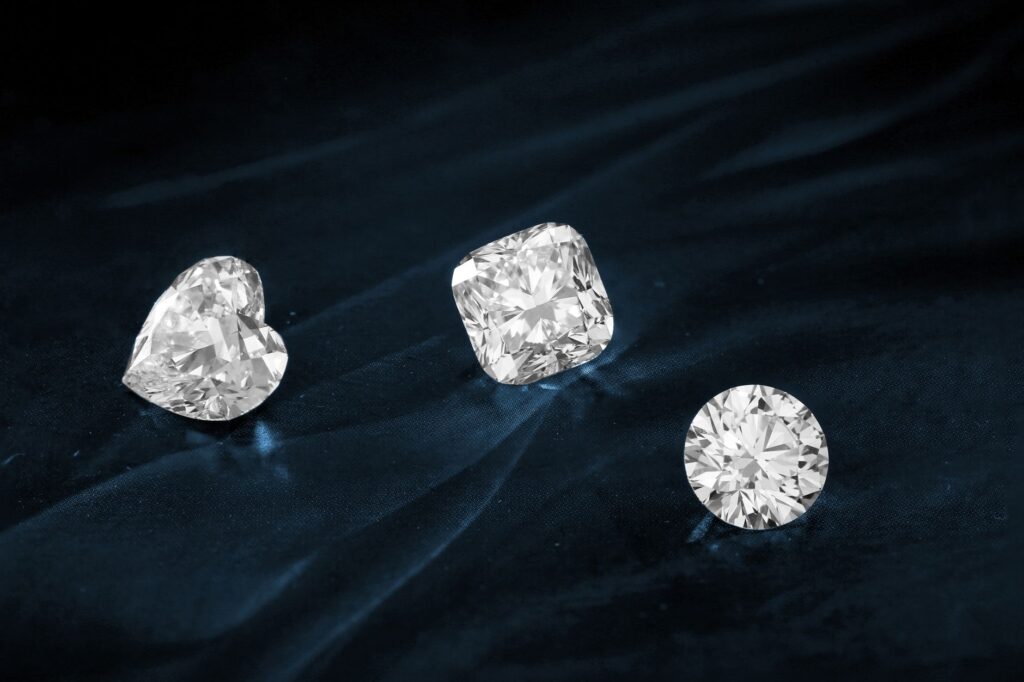
For fancy shapes such as oval, cushion, radiant, and pear, cut grading is less uniform. Two diamonds with the same shape and carat weight can look very different depending on their proportions and faceting pattern. That is why understanding cut is especially important when comparing lab grown diamonds in different shapes.
Cut Grade Is About More Than “Pretty Sparkle”
Many buyers think cut only means sparkle, but it affects much more than that. A well-cut diamond often looks brighter, more balanced, and more visually alive. It may also show better contrast, which creates the pattern of light and dark areas that gives a diamond depth and movement.
When a diamond is cut too shallow or too deep, some of the light escapes instead of reflecting back to the eye. The result can be a stone that looks dull, glassy, or smaller than expected for its carat weight. This is one reason cut often has a bigger effect on real-world beauty than many first-time buyers realize.
Why Cut Matters So Much in Lab Grown Diamonds
Lab grown diamonds have the same basic optical and physical properties as natural diamonds. That means they respond to light in the same way. A lab grown diamond still needs excellent cutting to show strong brilliance, fire, and scintillation.
Because lab grown diamonds are often priced lower than natural diamonds of similar size and appearance, many buyers have more room in their budget to focus on cut quality. This is one of the main reasons lab grown diamonds can offer strong visual value when selected carefully.
At the same time, lower pricing can make it tempting to focus only on carat weight. That is a common mistake. A larger lab grown diamond with weak cut proportions may not look as impressive as a slightly smaller stone with better light performance.
How Cut Affects What You Actually See
To most buyers, the visual effect of cut shows up in everyday language before it shows up in technical terms. You may notice that one diamond looks lively, bright, and crisp, while another looks flat or less lively even if they are similar in size and color.
Here is how the main visual traits are affected by cut quality:
Brilliance
Brilliance is the white light returned from the diamond. A well-cut diamond reflects a strong amount of light back to the viewer, so it looks bright and full of life.
If the cut is poor, brilliance can drop because light leaks through the bottom or sides. Buyers often describe these diamonds as looking “dead,” “dark,” or “washed out,” even when the stone has good color and clarity grades.
Fire
Fire refers to flashes of colored light, often seen when the diamond moves under lighting. A good cut helps create the balance needed for visible fire, especially in round brilliant diamonds.
Fire is usually easier to notice in brighter lighting or when the diamond is moving. It tends to be more subtle than brilliance, but it contributes a lot to the overall character of the stone.
Scintillation
Scintillation is the pattern of sparkle and contrast you see as the diamond moves. It includes both the flashes of light and the dark areas that change as the stone moves.
A diamond with excellent cut often has crisp, lively scintillation. A poorly cut stone may have either too much darkness or a smeared, unfocused look that makes the sparkle less appealing.
Brightness and Light Return
Brightness is the overall light the diamond appears to return to the eye. Light return is the technical idea behind that brightness. The better the cut, the more effectively the stone sends light back instead of losing it.
This is one of the biggest reasons cut should be treated as a top priority. Even buyers who do not know the technical language can usually tell when a diamond simply looks better in person.
Face-Up Appearance
Face-up appearance is how large and attractive the diamond looks when viewed from the top, which is the normal way people see a ring. Cut influences whether the stone appears spread out, balanced, and lively.
A diamond with poor proportions may face up smaller than expected for its weight. A well-cut diamond often looks more attractive and sometimes more impressive than a heavier stone that is not cut as well.
What the Main Cut Grades Mean
Different laboratories use different grading systems, but the general idea is similar. For round brilliant diamonds, the cut grade usually ranges from top tier to lower tiers based on how well the stone handles light.
| Cut Grade | What It Usually Means | What Buyers Typically Notice |
|---|---|---|
| Excellent | Strong proportions, symmetry, polish, and light performance | Maximum or near-maximum sparkle and brightness |
| Very Good | Strong overall performance with small trade-offs | Often still looks beautiful, with subtle differences from Excellent |
| Good | Acceptable appearance, but more visible compromise | Less consistent sparkle and brightness, differences may be noticeable |
| Fair | Noticeable weakness in light performance or proportions | Often looks duller, darker, or less balanced |
| Poor | Significant issues with proportions or performance | Usually not recommended for buyers focused on beauty |
For many shoppers, the difference between Excellent and Very Good can be subtle, especially in less controlled lighting. The jump from Good to Excellent, however, is often more visible. Once you move into lower grades, the visual trade-offs become easier to notice.
What Else Affects Cut Besides the Grade Name
The cut grade label is helpful, but it is not the entire story. Two diamonds can carry the same grade and still look different. That is because cut quality is shaped by several underlying factors.
Proportions
Proportions are the measurements of the diamond, including table size, depth, crown angle, and pavilion angle. These numbers help determine how light travels through the stone.
What buyers actually see is the result: more brightness, better sparkle, or more light leakage. Proportions matter a great deal, but they are best interpreted as part of the whole diamond rather than as isolated numbers.
Symmetry
Symmetry refers to how precisely the facets line up with one another. Good symmetry helps the stone reflect light evenly and creates a clean, balanced appearance.
For most buyers, the difference between very good symmetry and excellent symmetry is not always obvious at a glance, but it can contribute to the diamond’s overall crispness and beauty.
Polish
Polish is the smoothness and finish of the diamond’s surface. A well-polished diamond allows light to enter and exit more cleanly.
Minor polish differences are often less noticeable than proportion issues, but they still matter in a high-quality diamond. In top-grade stones, polish helps complete the overall visual performance.
Light Leakage
Light leakage happens when light escapes through the bottom or sides of the diamond instead of returning to the eye. This weakens brightness and can make the diamond look darker or less lively.
This is one of the clearest examples of why cut matters. A diamond may have excellent color and clarity on paper, yet still look disappointing if too much light leaks out.
What Is the Best Cut Grade for Different Diamond Shapes?
The best cut grade depends partly on the shape of the diamond. Round brilliant stones have the most standardized cut grading, while fancy shapes rely more heavily on visual inspection and proportion analysis.
Round Brilliant
For a round brilliant lab grown diamond, Excellent is usually the best cut grade for buyers who want the strongest sparkle and brightness. Round diamonds are engineered to maximize light return, so they offer the clearest cut performance benchmark.
If a round diamond is graded Excellent by a respected lab, that is generally a strong sign that it will look lively in person. It is still smart to review proportions, but the grade itself is a useful starting point.
Oval, Cushion, Pear, and Radiant
For fancy shapes, there is often no single universal cut grade standard as reliable as the one used for rounds. In those cases, buyers should pay close attention to the diamond’s face-up shape, bow-tie effect, spread, and overall balance.
For example, an oval may look beautiful but show a dark bow-tie pattern if the proportions are not well balanced. A radiant may offer strong sparkle, but it can vary more in shape outline and appearance than a round brilliant.
Emerald and Asscher
Step-cut shapes like emerald and Asscher have a different visual style. They show broader flashes of light rather than the intense splintery sparkle of brilliant cuts.
For these shapes, cut quality still matters a great deal, but buyers should focus more on symmetry, clean lines, and transparent appearance. The “best” cut is one that gives the stone elegance and balance rather than maximum sparkle alone.
Comparing Excellent Cut and Very Good Cut
One of the most common buyer questions is whether Excellent is worth the extra money compared with Very Good. The answer depends on how sensitive you are to visual differences and how the stone is going to be worn.
| Factor | Excellent Cut | Very Good Cut |
|---|---|---|
| Sparkle | Usually strongest and most consistent | Often strong, but may be slightly less lively |
| Brightness | High light return, especially in round brilliants | Still bright, though not always at peak performance |
| Visual difference | Often easiest to trust as a top performer | Differences can be subtle and sometimes hard to spot |
| Value | Higher price in some cases | Can offer better value if performance is still strong |
| Best for | Buyers who want the safest visual choice | Buyers balancing beauty and budget |
In everyday viewing, many shoppers would have trouble telling the difference between a very well-cut Very Good stone and an Excellent stone without side-by-side comparison. But once the gap widens within the grade, the differences become easier to see.
If you are buying a lab grown diamond online and cannot compare stones in person, Excellent is usually the safer choice. If you are working with a trusted vendor and can inspect the diamond carefully, a strong Very Good cut can sometimes provide better value.
How Cut Interacts With Other Diamond Quality Factors
Cut does not exist in isolation. It changes how you perceive the other quality factors, including color, clarity, and carat weight. This is especially important in lab grown diamonds, where buyers often compare multiple stones that look similar on paper.
Cut vs Color
A well-cut diamond can help color appear less noticeable because brightness and sparkle draw the eye away from subtle tint. A poorly cut diamond may make color stand out more because the stone does not return light as effectively.
That said, cut does not change the actual color grade. It only affects how the color is perceived. This is why buyers sometimes find that a well-cut near-colorless diamond looks better than a poorly cut diamond with a slightly higher color grade.
Cut vs Clarity
Good cut can sometimes help disguise minor inclusions because sparkle and brilliance keep the eye moving. In contrast, poor cut may make flaws more visible if the stone lacks liveliness or has dark areas that draw attention inward.
This does not mean cut can hide obvious clarity issues. Large or poorly placed inclusions can still be visible. But for many buyers, cut has a bigger effect on first impression than small clarity differences do.
Cut vs Carat Weight
Carat measures weight, not size or beauty. A larger diamond with weaker cut may not look as impressive as a smaller diamond with excellent cut because the smaller stone can return more light and appear more vibrant.
Experienced shoppers often notice that a well-cut 1.5-carat diamond can look better than a poorly cut 2-carat diamond. The larger stone may have more physical weight, but the smaller stone may have stronger presence and visual appeal.
Practical Buyer Scenarios
Real buying decisions are easier to understand through examples. These scenarios show how cut quality affects what people actually see.
Scenario 1: A Well-Cut 1.5-Carat Diamond vs a Poorly Cut 2-Carat Diamond
The 2-carat stone sounds bigger, and on paper it is. But if it has poor proportions, it may look dull, dark in the center, or less balanced on the hand. The 1.5-carat stone, if well cut, may appear brighter, more lively, and in some cases more visually impressive overall.
This is a classic example of why cut should not be sacrificed just to increase size. Size matters, but beauty depends heavily on how the diamond handles light.
Scenario 2: Excellent Cut vs Very Good Cut in Everyday Lighting
Under office lighting, sunlight, or normal indoor lighting, the difference may be small if both diamonds are strong performers. Many buyers would only notice a clear difference if the stones were compared side by side.
If the Very Good diamond is priced well and the other characteristics are solid, it can be a reasonable choice. But if the price difference is modest, Excellent is often the more reassuring option.
Scenario 3: Higher Clarity With Poor Cut vs Lower Clarity With Excellent Cut
A diamond with better clarity but weak cut may still look disappointing because the eye is first drawn to the stone’s overall sparkle and brightness. A slightly lower clarity stone with excellent cut often looks more attractive in real life because the diamond feels more alive.
This is why many jewelers prioritize cut first. Once a diamond is performing well optically, clarity becomes more about cleanliness under magnification and less about overall visual appeal.
How to Read Cut Information on a Lab Grown Diamond Report
When shopping for lab grown diamonds, you will often see a grading report from organizations such as IGI or GIA, depending on the stone and the seller. The report may include cut grade, measurements, proportions, symmetry, and polish.
These details are useful, but they should be interpreted with care. A report tells you how the diamond was assessed. It does not replace seeing the stone or reviewing images, videos, or light performance data when available.
What to Look For on the Report
- Cut grade, if provided for the shape you are buying
- Symmetry and polish grades
- Measurements, especially diameter for round stones
- Table and depth percentages, which help indicate proportions
- Comments or plotting that may reveal durability or appearance concerns
For round diamonds, these numbers can be especially useful when narrowing down options. For fancy shapes, you may need to rely more on images and videos, since paper grades do not always capture the full visual story.
Why Reports Are Helpful but Not Enough
Two diamonds can have similar paper specifications and still look different in person. Small changes in facet alignment or proportions can change how the stone handles light.
That is why experienced buyers often use the report as a filter, not the final decision-maker. The report helps eliminate weak choices. The visual evidence helps select the best-looking diamond among the remaining options.
What Experienced Buyers and Jewelers Often Notice First
People who compare diamonds regularly often look beyond the headline grade. They notice whether the stone seems bright across the face, whether the sparkle is crisp or mushy, and whether the center stays lively under different lighting.
They also tend to notice the diamond’s outline and balance. A well-cut stone usually feels harmonious. The facets seem to work together, creating a clean visual rhythm instead of an uneven or sleepy appearance.
In practice, experienced observers often value consistency over sheer size. A diamond that performs well in multiple lighting environments is usually more satisfying over time than one that looks good only in a controlled setting.
Advantages of Choosing the Best Cut Grade
There are several reasons buyers often aim for the highest practical cut grade, especially when buying lab grown diamonds.
- Better sparkle in everyday conditions
- Stronger brightness and light return
- More balanced appearance face-up
- Better visual value compared with larger but weaker stones
- More confidence when buying online
- Often easier to resell or rehome than visibly weaker stones, though resale is never guaranteed
For many shoppers, the main advantage is simple: a better-looking diamond. Cut quality is one of the most reliable ways to improve beauty without changing the ring style or metal choice.
Limitations and Trade-Offs of Paying for the Best Cut
There are also reasons not every buyer needs to insist on the absolute top cut grade in every situation. The first trade-off is price. While the difference may not be enormous in lab grown diamonds, the top tier can still carry a premium.
The second trade-off is that the visual improvement may be modest when comparing two already strong diamonds. In some cases, a Very Good stone offers such strong performance that the extra money for Excellent provides limited visible benefit.
Another limitation is that cut is easier to standardize for round diamonds than for fancy shapes. In fancy shapes, the best-looking stone may not always have the best paper grade. Visual inspection remains important.
Common Buyer Mistakes When Shopping for Cut
Many first-time diamond buyers make similar mistakes when evaluating cut. Avoiding these errors can save money and improve the final result.
Prioritizing Carat Over Cut
Buying a larger diamond with weak cut often leads to disappointment. The stone may look less brilliant and less balanced than a slightly smaller diamond with better cut quality.
If beauty is the goal, cut should usually come before size.
Assuming All Diamonds Sparkle the Same
Some buyers assume sparkle depends mostly on shape or lighting. In reality, cut quality is one of the biggest reasons two similar diamonds can look dramatically different.
A diamond’s sparkle is not automatic. It is the result of good design and finishing.
Ignoring Light Performance
Light performance is the practical outcome of cut. If a diamond leaks light or looks dull in normal settings, that issue will matter more than many minor paper details.
Looking at videos, images, or performance tools can be very helpful, especially for lab grown diamonds purchased online.
Confusing Symmetry With Overall Cut Quality
Symmetry is important, but it is not the whole picture. A diamond can have good symmetry and still have less-than-ideal proportions.
To judge cut properly, you need to consider the full combination of factors, not just one grade on the report.
Overpaying for Clarity at the Expense of Cut
Higher clarity can sound appealing, but if the cut is weak, the diamond may still look less beautiful. Many inclusions are less visible in a well-cut diamond because the sparkle draws the eye outward.
For many buyers, it makes more sense to accept a slightly lower clarity grade and choose a better cut instead.
How to Balance Cut With Budget
The best cut grade for lab grown diamonds is often the one that gives you the strongest visible performance without forcing you to sacrifice too much elsewhere. Budget-conscious buyers should think in terms of trade-offs, not absolutes.
If your budget is tight, it is usually smarter to protect cut quality first, then decide where you can be flexible on color or clarity. Many buyers find that a diamond with excellent cut and modestly lower color or clarity looks more appealing than a larger or cleaner diamond with weaker performance.
As a rule of thumb, you get the most visible return from investing in cut, especially for round brilliant diamonds. After that, carat size and color become more personal preference based on style and budget.
Lab Grown Diamond Considerations That Are Easy to Miss
Lab grown diamonds introduce a few practical considerations that are worth keeping in mind when evaluating cut. Because the category often offers larger sizes at lower prices, buyers can sometimes afford top cut quality more easily than they could with natural diamonds.
That does not mean all lab grown stones are well cut. The market includes excellent stones and mediocre ones, just like any diamond category. The lower price point should not make buyers less careful about light performance.
It is also important to remember that lab grown diamonds share the same resale and long-term value considerations as any diamond purchase. Cut improves beauty, but it does not guarantee value retention. Buyers should focus first on the personal satisfaction the diamond will provide when worn.
Frequently Asked Questions
Is Excellent cut always better than Very Good cut?
Usually, yes, but the difference is not always dramatic. An Excellent cut is the safer choice if you want the strongest chance of maximum sparkle and brightness. A Very Good cut can still look beautiful if its proportions and light performance are strong.
Can a well-cut smaller diamond look better than a larger poorly cut diamond?
Absolutely. Cut strongly affects brightness, sparkle, and face-up appearance. A smaller diamond with excellent cut can look more lively and attractive than a larger diamond with weaker proportions.
Does cut matter more for round diamonds than fancy shapes?
Yes, in terms of grading consistency. Round diamonds have the clearest cut standards, so the grade is especially useful. Fancy shapes still depend heavily on cut quality, but you often need to evaluate them more visually.
Should I always choose the highest cut grade available?
Not always. If the price difference is large and the lower grade still performs very well, you may decide the trade-off is worth it. But if visual beauty is your priority, cut is usually one of the best places to spend extra.
Can cut improve the appearance of color or clarity?
It cannot change the actual grade, but it can improve how those qualities are perceived. A well-cut diamond often looks brighter and more eye-catching, which can make small color or clarity issues less noticeable.
How can I tell if a diamond has good cut if I am shopping online?
Start with the grading report, then look at photos, videos, and proportion details when available. For round diamonds, cut grade is very helpful. For fancy shapes, visual review matters even more because paper grades can be less predictive.
Is cut the most important factor in a lab grown diamond?
For many buyers, yes. Cut usually has the biggest effect on what you actually see. Since lab grown diamonds often offer strong value, choosing excellent cut quality can be one of the smartest ways to protect that value visually.
Final Thoughts
The best cut grade for lab grown diamonds is usually the highest cut grade available for that shape, especially when you want the strongest sparkle, brightness, and overall visual appeal. For round brilliants, Excellent cut is typically the most reliable goal. For fancy shapes, the best choice depends more on proportions, symmetry, and how the diamond looks in person.
What matters most is not the label alone, but the diamond’s real-world performance. A well-cut diamond can look more attractive than a larger or higher-clarity stone with weaker light return. That is why cut should usually be one of the first things a buyer evaluates, not the last.
If you are comparing lab grown diamonds, focus on cut first, then use color, clarity, and carat weight to fine-tune the final choice. That approach usually leads to a diamond that looks better, feels more balanced, and provides stronger long-term satisfaction when worn every day.