Yes, a deep diamond can look smaller than a shallower diamond of the same carat weight. This happens because carat measures weight, not visible size. When too much of that weight sits in the depth of the stone instead of across the top, the diamond can have a smaller face-up appearance.
For buyers, this matters because two diamonds can both be 1.50 carats and still look noticeably different in size. A deep diamond may also return light differently, which can affect sparkle and brightness. In other words, the shape and proportions of the stone influence not just how large it appears, but also how lively it looks in everyday wear.
If you are comparing lab grown diamonds or natural diamonds, this is one of the most practical cut-related questions to ask. A well-proportioned diamond often gives you more visual impact for the money, while a deep diamond can be a good value in some situations if you understand the trade-off.
Quick Answer: Can a Deep Diamond Look Smaller?
Yes. A diamond with greater-than-ideal depth can look smaller from the top because more of its weight is hidden below the surface. The visible part of the diamond, often called the face-up size, may be reduced even though the carat weight is unchanged.
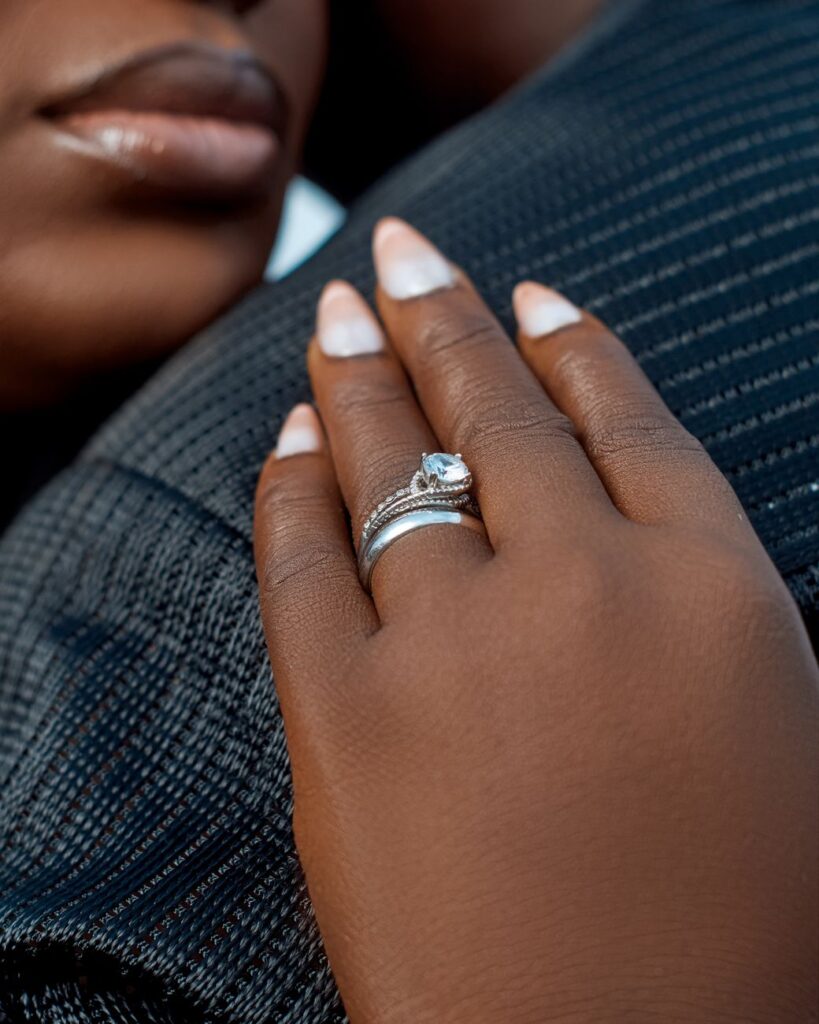
This is especially important when comparing stones of the same carat weight. One diamond may spread farther across the finger, while another may sit deeper and appear narrower. For many buyers, the difference is visible enough to matter, particularly in round and fancy shapes where proportions have a strong effect on appearance.
A deep diamond does not automatically mean a bad diamond. Some deep stones still have strong brilliance or an appealing shape. But if your goal is maximum visible size and balanced light performance, depth is one of the first factors to examine.
What Does “Deep” Mean in a Diamond?
In diamond buying, depth refers to the height of the stone from the table, or top flat surface, down to the culet or bottom point. It is usually expressed as a percentage of the diamond’s average width. A higher depth percentage means a larger share of the diamond’s weight is concentrated vertically rather than spread across the top.
Buyers often hear depth discussed alongside table size, crown angle, pavilion angle, and overall proportions. These measurements work together to influence how the diamond handles light and how large it looks when viewed from above. Depth alone does not tell the entire story, but it is one of the clearest clues to face-up spread.
A diamond can be deep for a few reasons. Sometimes it is due to the original rough crystal shape. Other times it reflects cutting choices made to preserve weight, since higher carat weight often commands a higher price. That means a deeper diamond may keep more weight, but it may not present that weight in the most visually efficient way.
Why Deep Diamonds Can Appear Smaller
The basic reason is simple: carat measures mass, not visible surface area. A deep diamond uses more of its weight in the vertical dimension, so there is less of that weight contributing to diameter or width when you look at the stone from the top.
In practical terms, two diamonds with the same carat weight can have different millimeter measurements. The one with a better spread, meaning more width for the weight, often looks larger on the hand. The deeper stone may still weigh the same, but the top view can appear noticeably tighter.
This is one of the most common surprises for first-time buyers. They focus on carat weight and assume a larger number always means a larger look. In reality, cut proportions determine how efficiently a diamond turns weight into visible size.
Face-Up Spread Versus Carat Weight
Face-up spread is the visual size you see when the diamond is viewed from above. It matters because people usually judge a diamond by how it looks on the hand, not by how much it weighs. A diamond with better spread can look more impressive even if the carat weight is identical.
This is why experienced buyers often compare millimeter measurements, not just carat weight. For round brilliant diamonds, diameter is especially useful. For fancy shapes such as oval, cushion, pear, and emerald, length and width measurements matter even more.
How Much Smaller Can a Deep Diamond Look?
The answer depends on the shape, the depth percentage, and the overall cutting style. In many cases, the difference is subtle rather than dramatic. But in larger diamonds, or in stones with unusually deep proportions, the smaller look can be noticeable.
For example, a diamond that carries extra depth might have a diameter that is several tenths of a millimeter smaller than a more proportionally cut stone of the same weight. That may sound minor, but on the finger it can translate into a visible difference. Over the full surface area of the stone, those small measurement gaps add up.
Not all deep diamonds look the same. A slightly deep stone may still have strong presence. A very deep stone can look noticeably smaller and may also show less brightness from the top, depending on how the angles are arranged.
Understanding Diamond Cut and Light Performance
Cut is not just about shape. In the diamond world, cut refers to how well the stone’s proportions, symmetry, and polish work together to return light to the viewer. This is why cut has such a strong effect on sparkle, brilliance, and visible size.
A diamond that is cut well can look brighter and more lively than a heavier stone with poorer proportions. That is because a well-cut diamond directs more light back out the top rather than allowing it to escape through the sides or bottom. Buyers often notice this immediately, even if they cannot explain the technical reason.
When a diamond is deep, some of that extra depth may reduce efficiency. The stone can still sparkle, but the visual balance may shift. Instead of appearing broad and bright, it may look more compact or darker in certain areas.
Brilliance, Fire, and Scintillation Explained
Brilliance is the white light reflected from a diamond. It is what makes a stone look bright and lively in many lighting conditions.
Fire refers to the flashes of color, often seen when a diamond moves under direct light. A well-cut diamond usually shows more controlled and attractive fire.
Scintillation is the pattern of sparkle and dark-light contrast you see as the diamond moves. It gives a stone life and visual rhythm.
A deep diamond can still show these effects, but if the proportions are off, the pattern may not be as efficient. In everyday viewing, that can make the stone seem less open or less lively than a better-cut diamond of the same weight.
How Depth Affects Different Diamond Shapes
Depth does not influence every diamond shape in exactly the same way. Some shapes are more forgiving, while others show spread differences very clearly. Understanding the shape you are buying helps you judge whether a deep diamond is worth considering.
| Shape | How Depth Can Affect Appearance | What Buyers Usually Notice |
|---|---|---|
| Round brilliant | Depth can reduce diameter and affect brightness if proportions are off | Visible size and sparkle differences are often easy to notice |
| Oval | Extra depth may reduce length-to-width spread | The stone may look shorter or less elongated |
| Cushion | Deeper cushions can look smaller and face up more compactly | Spread differences are common and worth checking |
| Pear | Depth can affect visual length and balance | The stone may look less graceful if too deep |
| Emerald cut | Depth can make the stone seem smaller and heavier in the center | Open step-cut facets make proportion issues easier to see |
Round brilliants are usually evaluated with the most attention to cut quality because the shape is designed for light return. Fancy shapes are more varied, so buyers should compare actual measurements and visual appearance rather than relying only on carat weight or general grade terms.
Why Some Diamonds Are Cut Deep
Not all deep diamonds are accidentally deep. Sometimes a cutter chooses deeper proportions to preserve weight from the rough crystal. This can be economically rational, because diamond value often rises with carat weight.
From a buyer’s perspective, this creates a trade-off. The stone may retain more weight, but that weight may not translate into a larger-looking diamond. In other words, you may be paying for weight you cannot easily see from the top.
There are also cases where depth helps create a more pleasing shape or maintain structural balance. A slightly deeper stone may not be a problem if the rest of the proportions are strong. The issue is not depth itself, but whether the depth is balanced with width, table size, and overall light return.
What Buyers Actually See in Everyday Conditions
Many diamond buyers focus on lighting inside a jewelry store, but real-life viewing matters more. A diamond is worn under office lighting, daylight, restaurant lighting, and at home. That is where depth-related differences become practical.
A deep diamond may appear smaller in everyday viewing because it presents less top surface area. It may also show a darker center or less broad brightness depending on the cut style. If you compare two diamonds side by side, the one with better spread often looks larger and more open, even before you inspect the details.
In casual wear, most people will not measure the diamond. They respond visually. If the stone looks broad, bright, and well balanced, it tends to appear more impressive. If it looks compact or buried in the setting, that impression can reduce the perceived size.
Lighting Makes a Difference
Lighting can hide or reveal depth issues. Strong store lighting can make almost any diamond sparkle. But in softer indoor light, a deep diamond with weaker spread may look less bright or less spacious face-up.
This is why it helps to examine a diamond in several lighting environments if possible. A diamond should still look attractive when the lighting is not perfect. That is often where cut quality proves its value.
How Depth Affects Price and Value
Deep diamonds can sometimes look like a good deal because their price may be lower than a more ideally proportioned diamond of the same carat weight. The lower price usually reflects the market’s view that the stone is less efficient in visible spread or light performance.
For some buyers, that discount is acceptable. If budget is tight and the visual trade-off is modest, a deep diamond may still offer solid value. But if the goal is a diamond that looks as large and lively as possible, paying for excess depth is usually not the best use of money.
Value is not just about getting the largest carat number. It is about what the diamond looks like on the finger, how much sparkle it shows, and how much you enjoy it over time. A well-cut diamond often delivers more visible beauty per dollar than a heavier, deeper stone.
When Paying More for Better Proportions Makes Sense
It often makes sense to pay more for a diamond with better proportions when:
- You want the diamond to look as large as possible from above
- You care about brightness and sparkle in everyday wear
- You are comparing two stones with similar carat weight
- You want more confidence that the diamond will photograph well and look balanced
In these cases, a slightly smaller but better-cut diamond can be the smarter purchase. Buyers often regret choosing a stone that sounds bigger on paper but looks smaller in real life.
When a Deep Diamond Can Still Be a Reasonable Choice
A deep diamond may still be reasonable when the price difference is meaningful and the stone still performs well visually. This can happen if the diamond has strong symmetry, good polish, and attractive light return despite its depth.
Some shoppers also prefer certain shapes or personal style preferences that make depth less of a concern. As long as the buyer knows that some visible size is being traded for weight retention, the decision can still be sensible.
Practical Examples Buyers Can Relate To
Example 1: A Well-Cut 1.5-Carat Diamond Versus a Deep 2-Carat Diamond
This is one of the most important comparisons in diamond buying. A 1.5-carat diamond with strong cut proportions can often face up beautifully and look surprisingly substantial on the hand. A 2-carat diamond with excessive depth may weigh more, but it can look closer in size to a well-cut stone that weighs less.
In everyday viewing, many buyers would choose the 1.5-carat stone if it looks brighter and wider. The 2-carat diamond may still appeal if carat weight is the priority, but the extra mass is less meaningful if it does not create a larger visible presence.
Example 2: Excellent Cut Versus Very Good Cut
With round diamonds especially, the difference between Excellent and Very Good cut can range from subtle to noticeable. A top-tier cut usually offers stronger brightness, cleaner sparkle patterns, and better visual balance. A very good cut may still look attractive, but the light return can be a bit less crisp.
Most buyers can notice a difference when the stones are compared side by side. In isolated viewing, the gap may be harder to identify. That is why a well-cut Very Good diamond can still be a practical choice if it has stronger spread or better value, but an Excellent cut is often the safer bet if visual performance is the priority.
Example 3: Higher Clarity With Poor Cut Versus Lower Clarity With Excellent Cut
Many buyers overfocus on clarity when cut has a bigger effect on what the diamond actually looks like. A high-clarity diamond with poor proportions can appear less lively and less impressive than a lower-clarity diamond with excellent cut.
In most cases, visual performance matters more than a microscopic clarity advantage. If the diamond is eye-clean, meaning inclusions are not visible without magnification, a stronger cut usually offers better real-world beauty. This is especially true for lab grown diamonds, where higher clarity grades are common and buyers can often prioritize cut more confidently.
How to Judge Whether a Deep Diamond Is Too Deep
There is no single depth percentage that automatically makes a diamond too deep in every case. The acceptable range depends on the shape, facet arrangement, and the diamond’s overall appearance. Still, depth is one of the first numbers worth reviewing.
For round diamonds, buyers often look at depth percentage, table percentage, and measurements together. For fancy shapes, proportions vary more widely, so the actual face-up look matters even more. A diamond can technically fall within a broad range but still look overly deep if the spread is weak.
As a buyer, your practical question is not “Is the depth number good?” but rather “Does the diamond look bright and proportional when I see it?” That is the standard that matters in real life.
What to Look for on a Grading Report
When reviewing a report from a reputable lab, look at:
- Carat weight, because it tells you how much the diamond weighs
- Measurements, because they show the actual visible size potential
- Depth percentage, because it helps estimate how efficiently the diamond uses its weight
- Table percentage, because it influences light behavior and face-up look
- Cut grade, when available, because it summarizes overall performance
For buyers comparing lab grown diamonds, certification is especially important because cut quality and proportions can vary just as much as in natural stones. A report helps you avoid relying on carat weight alone.
How Lab Grown Diamonds Fit Into the Conversation
Lab grown diamonds can be an excellent category for buyers who want more carat weight for the budget, but the same cut principles still apply. A deep lab grown diamond can look smaller than a better-proportioned lab grown diamond of the same weight. The technology behind the diamond does not change the physics of light or face-up spread.
Because lab grown diamonds are often priced more accessibly, some buyers may be tempted to maximize carat size. That can be a smart approach if cut quality is still protected. But if the stone is too deep, the visible size advantage can disappear faster than expected.
In many cases, buyers are better off comparing millimeter measurements and cut performance instead of chasing the highest carat number. That approach usually leads to a more visually satisfying diamond, whether lab grown or natural.
Advantages of a Deep Diamond
A deep diamond is not automatically a poor choice. There are real advantages in some situations, especially when the buyer understands the trade-offs.
- Weight retention: The diamond may keep more carat weight, which can support pricing in some cases
- Potential discounts: Deep stones may cost less than better-proportioned stones of the same weight
- Shape preference: Some buyers like the look of a deeper stone if the overall proportions still feel balanced
- Occasional strong performance: Some deeper stones still show appealing sparkle if other proportions are well managed
These benefits matter most when the buyer is getting a favorable price and does not mind a little less spread. A deep diamond can still be attractive if the overall appearance is strong.
Disadvantages of a Deep Diamond
The main drawback is reduced visual efficiency. You may be paying for weight that does not translate into a larger top view. For many shoppers, that is the most important issue.
- Smaller face-up size: The diamond may appear smaller than expected for its carat weight
- Possible light loss: Excess depth can sometimes reduce brightness or create less optimal light return
- Less value efficiency: More of your budget may go toward hidden weight instead of visible size
- Harder to maximize finger coverage: If size appearance matters, depth can work against you
These disadvantages are not equally important to every buyer. Still, if visible size and sparkle are top priorities, depth should be taken seriously.
Buying Considerations: What Matters Most
When deciding whether a deep diamond is worth buying, consider the full picture rather than one metric. Carat weight alone is not enough. Cut quality, measurements, and overall visual balance matter just as much, and often more.
Budget
If budget is limited, a slightly deep diamond may be worth considering only if it delivers a noticeable price advantage. But be careful not to save money at the cost of a diamond that looks smaller than you hoped. In many cases, a smaller well-cut diamond is a better value than a heavier deep stone.
Visual Performance
Ask yourself whether you want maximum spread, maximum weight, or a balance of both. If the goal is to make the diamond look as large as possible, a deeper stone is usually not the first choice. If you care more about the carat number than the top view, depth may matter less.
Certification
Always rely on a reputable grading report when available. Certification provides the measurements and quality details needed to judge whether the diamond is deep for its shape. For lab grown diamonds, the report can also help confirm cut-related information that is easy to overlook in a showroom.
Long-Term Satisfaction
Think about how you will feel after the purchase. Buyers often become more sensitive to size and sparkle once the initial excitement fades. Choosing a diamond that looks balanced and bright in everyday wear usually leads to greater long-term satisfaction than simply buying the heaviest stone you can afford.
Common Buyer Mistakes
Many diamond shoppers make the same cut-related mistakes, especially when shopping online or comparing lab grown diamonds for the first time. Avoiding these errors can save money and disappointment.
- Prioritizing carat over cut: A heavier diamond can look smaller if the proportions are poor
- Ignoring millimeter measurements: Size on paper is not the same as size you can see
- Assuming all diamonds sparkle the same: Light performance varies widely
- Overpaying for clarity instead of cut: A cleaner diamond does not always look better if the cut is weak
- Trusting carat weight alone in lab grown diamonds: The same principles apply, and spread still matters
- Not comparing side by side: Differences in face-up size are often easiest to see when stones are viewed together
One of the most common mistakes is assuming a diamond will look large simply because the carat number is high. That assumption is especially risky when depth is excessive. The better habit is to compare measurements, proportions, and actual appearance.
How to Compare Diamonds in Person or Online
Whether you are shopping in a store or online, the same basic principles apply. Look beyond the weight number and focus on how the diamond presents itself face-up. The goal is not to memorize every proportion ideal, but to identify diamonds that look bright, balanced, and appropriately sized for their weight.
If you are shopping online, use the grading report and actual millimeter dimensions. Compare diamonds of the same shape, since shape differences make size comparisons misleading. A well-cut oval and a well-cut round of the same carat weight can still look very different because their spread patterns are not the same.
If you are shopping in person, hold the stones at a normal viewing distance and compare them under different lights. A diamond that looks broader and brighter in regular light is often the better visual performer, even if another stone carries more weight.
Frequently Asked Questions
Is a deep diamond bad?
Not necessarily. A diamond can be deep and still look attractive, especially if the rest of the proportions are balanced. The concern is that extra depth can reduce visible size and sometimes affect light performance.
Does a deep diamond always sparkle less?
No. Some deep diamonds still sparkle well. However, if the proportions are not well balanced, the diamond may show less brightness or a less efficient light return than a better-cut stone.
Can a deep diamond look bigger from the side?
It can appear taller from the side, but most people judge a diamond by its top view. Since diamonds are usually seen face-up in a ring, the top spread matters more than side height.
Should I avoid deep diamonds when buying lab grown diamonds?
Not automatically, but you should compare millimeter measurements and cut quality carefully. Lab grown diamonds often offer strong value, so it can be worthwhile to choose a stone with better spread instead of simply chasing a higher carat weight.
What is more important, carat or cut?
For visual beauty, cut is often more important than carat. Carat affects size and price, but cut influences how large the stone appears and how well it reflects light.
How do I know if a diamond is too deep?
Review the grading report, compare face-up measurements, and look at the stone in person if possible. If a diamond seems smaller than others of the same weight or looks less open from the top, the depth may be too high for your preference.
Can two diamonds of the same carat weight look different in size?
Yes. This is very common. Differences in depth, shape, and proportions can make one diamond look visibly larger or smaller than another stone with the same weight.
Is a slightly deep diamond worth buying if the price is lower?
Sometimes. If the price savings are meaningful and the diamond still looks balanced and lively, it may be a good value. The key is making sure you understand the trade-off in visible size.
Conclusion
A deep diamond can absolutely look smaller than a better-proportioned diamond of the same carat weight. That is because depth adds hidden weight rather than visible spread, and buyers usually judge diamonds by how they look from the top. In many cases, a well-cut diamond with better proportions will appear larger, brighter, and more appealing in everyday wear.
The most practical way to shop is to compare carat weight, millimeter measurements, depth, and overall cut performance together. This is especially important with lab grown diamonds, where buyers often have more room in the budget to prioritize visual quality over sheer weight. If you focus on how the diamond actually looks rather than just how much it weighs, you are more likely to end up with a stone that feels satisfying long after the purchase.