If you are shopping for a diamond and wondering, do cushion cut diamonds look smaller, the short answer is that they can, but not always. Cushion cuts often have a softer outline and a different way of distributing weight than round brilliants, so two diamonds with the same carat weight may not look the same size face up. In some cases, a cushion cut can appear slightly smaller than a round diamond of the same weight, especially if it has a deep pavilion or a thick girdle.
The more useful question is not just whether cushion cuts look smaller, but why they sometimes do and how to choose one that looks balanced on the hand. Face-up size depends on more than carat weight. It is affected by shape proportions, depth, length-to-width ratio, cut style, and even the setting you choose.
Quick Answer
Cushion cut diamonds can look smaller than some other shapes of the same carat weight because they often carry more of their weight in the depth of the stone rather than across the top. That said, a well-proportioned cushion can look very comparable in surface area to other popular shapes, and it may even appear larger than expected depending on the setting and outline shape.
If your priority is maximizing visual size, cushion cuts require a little more attention to proportions than some other shapes. If your priority is a soft, vintage-inspired look with strong sparkle, a cushion cut can be a very attractive choice. The key is understanding how cut style affects face-up presence.
What Makes a Cushion Cut Look Smaller or Larger?
A diamond’s apparent size is not determined by carat weight alone. Carat measures weight, while what you see from above is the face-up surface area. Two diamonds can weigh the same and still look noticeably different in size if one is deeper or has a smaller top outline.
Cushion cuts are especially sensitive to this because they are not cut to a single standardized outline in the same way some buyers expect. Some cushions are squarer, some are more rectangular, and some are cut deeper to preserve brilliance or produce a particular look. Those differences change how much of the stone is visible when worn.
Carat Weight vs Face-Up Size
Many first-time buyers assume a 2.00-carat diamond will always look the same no matter the shape. In reality, a cushion cut and a round brilliant at 2.00 carats can have different millimeter measurements and different surface area. The diameter or length and width are what matter most for visual size.
For example, one 2.00-carat cushion may have a deeper body and face up more like a smaller diamond, while another 2.00-carat cushion with a shallower profile may cover more surface area. This is why millimeter dimensions are more useful than carat weight alone when comparing shapes.
Depth and Hidden Weight
Depth is the distance from the top of the diamond to the bottom point. A deeper diamond contains more weight lower down, which does not contribute much to face-up appearance. This is often described as hidden weight.
Some cushion cuts have more hidden weight than round brilliants or oval diamonds. That does not make them inferior, but it does mean they may look slightly smaller for their carat weight. Buyers who want a larger-looking diamond often compare depth percentage and millimeter measurements carefully.
Outline Shape Matters
Cushion cuts come in different proportions. A square cushion and an elongated cushion do not present the same visual footprint. Elongated cushions generally look larger on the hand because their length creates a more noticeable spread.
The outline can also affect how the eye perceives size. Softer corners and a rounded profile can make the stone feel less expansive than a shape with sharper edges, even when the actual measurements are similar.
Understanding the Cushion Cut
The cushion cut is a classic diamond shape with rounded corners and soft, pillow-like edges. It combines elements of a square or rectangular outline with a vintage feel. The name comes from its resemblance to a cushion or pillow, which is a useful visual clue for shoppers.
Historically, cushion cuts were among the most common diamond styles before modern cutting styles became dominant. Today, they are popular again because they offer a softer look than princess or emerald cuts and more fire than some step-cut shapes. They are often chosen for engagement rings, but they also appear in pendants, earrings, and fashion jewelry.
Common Cushion Cut Styles
Not all cushion cuts look the same. Understanding the main styles helps explain why some appear larger, brighter, or more vintage in character than others.
| Style | Visual Character | Size Appearance | Buyer Consideration |
|---|---|---|---|
| Square cushion | More balanced and compact, with equal or near-equal sides | Can look slightly smaller than elongated shapes of equal weight | Appeals to buyers who want a classic cushion outline |
| Elongated cushion | Longer shape with a stretched outline | Usually looks larger face up because of increased length | Can flatter the finger and offer a larger visual spread |
| Modified cushion brilliant | More sparkle, more facet activity, often with a modern look | Can mask slight size differences because sparkle draws the eye | Popular with buyers who want brightness and liveliness |
| Crushed ice cushion | Smaller, more irregular facets that create a shimmering effect | May appear less defined in outline, which can affect perceived size | Often chosen for a softer, glittery appearance |
| Antique-style cushion | Larger facets and a more old-world look | Can appear smaller if the center is deep, but may have strong character | Best for buyers drawn to vintage aesthetics |
Why Cushion Cuts Sometimes Appear Smaller Than Other Shapes
When buyers ask whether cushion cut diamonds look smaller, they are usually comparing them to round, oval, or emerald cuts of the same carat weight. In many cases, the answer depends on the specific stone and its proportions.
There are several reasons cushion cuts can appear to have less top-down presence than expected. Some are related to the way the stone is built, while others are related to how the eye interprets shape and sparkle.
1. Deeper Proportions
Cushion cuts can have more depth than buyers expect. If a diamond is cut deep, the extra weight sits lower in the stone rather than across the visible top. That means the stone may have less surface area for its carat weight.
This is one of the most important reasons a cushion can look smaller. A deep cushion may still be beautiful, but it is not always the best choice for buyers focused on maximizing size appearance.
2. Rounded Corners Reduce Visual Spread
Round corners soften the outline of the diamond. While that is part of the appeal, it can also make the stone feel slightly less expansive than a shape with straighter edges. The eye does not read the corners as strongly, so the outline may seem a bit more compact.
This effect is subtle, but it matters when comparing a cushion to a princess cut, radiant cut, or elongated oval. The difference is not usually dramatic, but it can influence how large the ring feels once worn.
3. Cushion Cuts Can Vary Widely in Proportion
Unlike some shapes that buyers associate with a fairly predictable outline, cushion cuts vary a lot. One cushion can be short and square, while another is longer and slimmer. One can have a broad top and another can carry extra depth.
Because of this variation, two cushion cuts with identical carat weight can look meaningfully different. This is why it is better to compare actual measurements and photos than to rely on carat alone.
4. Faceting Style Affects Perceived Size
The way a cushion is faceted changes how light moves across the stone. A brilliant-style cushion with active sparkle can draw attention to the center, while a crisper outline might make the stone’s edges stand out more clearly. In some cases, strong sparkle can make the stone feel larger because the eye is drawn across the full face.
On the other hand, a cushion with less optimal faceting or a strong bow tie-like dark area in the middle may seem less open face up. This can make the diamond look smaller or less bright than its actual measurements suggest.
How Cushion Cuts Compare to Other Popular Shapes
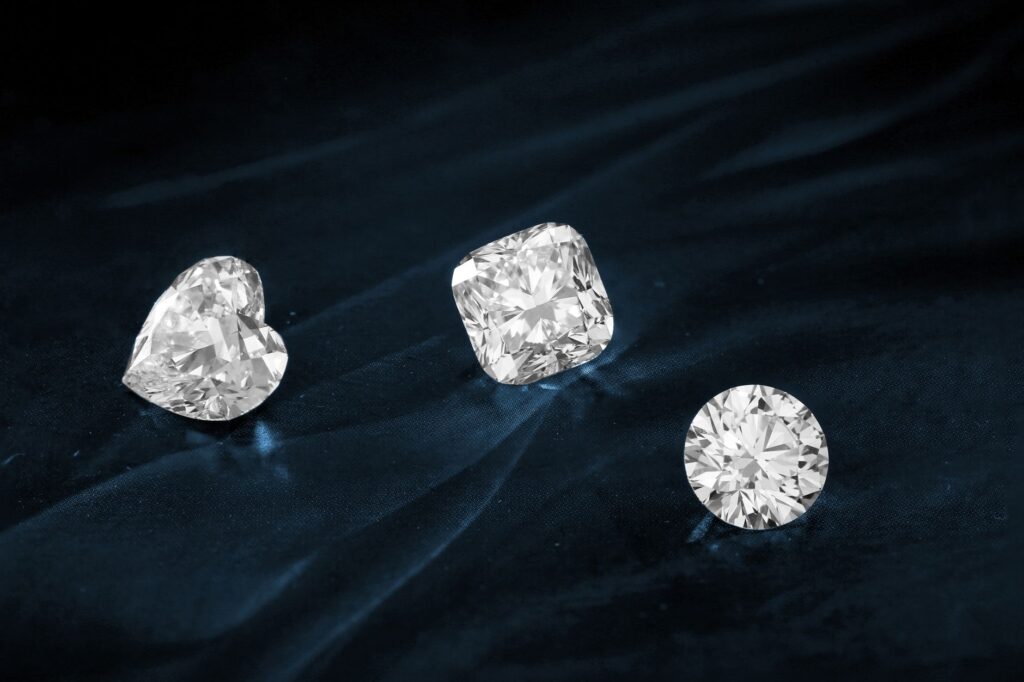
To understand whether cushion cut diamonds look smaller, it helps to compare them to other common diamond shapes. Face-up size is shape-dependent, and the comparison is not always intuitive.
| Shape | Face-Up Size Per Carat | Why It Looks That Way | General Buyer Takeaway |
|---|---|---|---|
| Round brilliant | Often looks smaller than elongated shapes, but very efficient face-up | Standardized cutting and round outline concentrate weight efficiently | Classic sparkle and predictable appearance |
| Cushion cut | Can look slightly smaller than round or oval if deep | Rounded corners and variable depth can reduce visible spread | Beautiful option, but proportions matter more |
| Oval | Often looks larger than cushion at the same carat weight | Elongated shape covers more finger length and surface area | Strong choice for visual size |
| Radiant | Usually comparable to or slightly larger-looking than cushion | Rectangular outline and brilliant faceting often maximize spread | Good for sparkle and size balance |
| Princess | Often looks similar to cushion, sometimes slightly smaller or larger depending on cut | Square shape can be efficient, but corners and depth vary | Sharp modern look with strong brilliance |
| Emerald | Can look larger face up because of broad table and open outline | Step-cut style shows wide surface area, though less sparkle | Size is visible, but the look is very different from cushion |
In practical terms, cushions are not the smallest-looking shape, but they are not usually the most size-efficient either. Oval, marquise, and some radiant cuts often give a larger face-up impression at the same carat weight. Round diamonds, while often efficient in beauty and symmetry, may also present a very balanced size depending on the measurements.
Appearance and Visual Performance
Size is only one part of the buying decision. Many shoppers choose cushion cuts because of how they perform visually, not just because of the outline shape. Cushion cuts can produce attractive brilliance and fire, especially when well cut.
Brilliance
Brilliance refers to white light return, or how much light the diamond reflects back to the eye as bright flashes. Cushion cuts can be very brilliant, especially modern cushion brilliant styles with well-distributed facets.
A bright cushion can actually help the stone feel fuller and more lively, which may offset any slight reduction in apparent size. If the diamond is lively across the whole face, viewers tend to focus less on millimeters and more on sparkle.
Fire
Fire is the colored flash you see when a diamond disperses light into spectral colors. Cushion cuts often show pleasing fire because of their facet structure, particularly antique-style versions and some modern cushions with larger facets.
Fire can create visual interest, but it does not necessarily make a diamond look larger. It does, however, contribute to the overall presence of the stone and can make a cushion feel rich and dimensional.
Scintillation
Scintillation is the pattern of sparkle and movement created when the diamond or light source changes. Cushion cuts can have either large, bold flashes or a more “crushed ice” sparkle pattern depending on how they are cut.
Strong scintillation can make a diamond feel more dynamic and sometimes larger in motion. A stone with uneven or overly busy sparkle, however, can be harder to read visually and may not show its outline as clearly.
Bow Tie Effect
Some elongated cushion cuts show a bow tie effect, which is a dark area across the center of the stone that resembles a bow tie. This is caused by the way light enters and exits the diamond. It is more common in certain elongated shapes, but it can appear in cushions too.
A moderate bow tie does not automatically mean a diamond is poor quality. A heavy bow tie, however, can make the center look darker and may create the impression that the diamond is smaller or less bright. Buyers should always inspect photos or video rather than assuming all cushions perform the same.
Advantages of Cushion Cut Diamonds
Cushion cuts remain popular for good reasons. While size appearance is one consideration, many buyers prefer the overall look and feel of the shape.
- Soft, flattering outline: Rounded corners create a gentle, elegant appearance.
- Strong sparkle potential: Well-cut cushions can be very lively and brilliant.
- Vintage appeal: The shape works well in both antique-inspired and modern settings.
- Flexible style options: Cushion cuts can look classic, romantic, or contemporary depending on the setting.
- Good presence in many ring designs: An elongated cushion can elongate the finger, while a square cushion feels balanced and traditional.
For many buyers, these advantages matter more than whether the diamond looks slightly smaller than another shape. A cushion cut can still have excellent visual impact, especially when the proportions are chosen carefully.
Disadvantages of Cushion Cut Diamonds
Cushion cuts are not the best choice for every buyer. Understanding the limitations helps avoid disappointment and makes it easier to shop intelligently.
- Variable face-up size: Some cushions look smaller than expected because of depth.
- Less standardized appearance: Quality and proportions vary more than in some other shapes.
- Bow tie concerns: Elongated cushions may show dark areas in the center.
- Lower size efficiency in some stones: A portion of weight may be hidden in depth.
- More need for visual review: Photos, measurements, and videos matter a lot.
These drawbacks are not reasons to avoid the shape entirely. They are reasons to shop carefully. A cushion with excellent proportions can look much better than a poorly chosen larger stone.
Who Cushion Cut Diamonds Are Best For
Cushion cuts are a good match for buyers who want a soft outline and are comfortable prioritizing character over maximum size efficiency. They often appeal to people who like a balance between sparkle and vintage style.
This shape may be especially suitable for:
- Buyers who want a romantic or classic look
- People who prefer rounded corners for a softer feel
- Shoppers interested in vintage-inspired engagement rings
- Buyers who want a shape that still looks stylish in modern settings
- Those who are less concerned with getting the largest possible face-up spread
If your main priority is making the diamond look as large as possible for the carat weight, you may want to compare cushion cuts against ovals, elongated radiants, and marquise shapes. Those shapes often provide more visual length or spread across the finger. If you’re considering an oval because of its larger face-up appearance, our guide to the Best Lab Grown Diamond Oval Cut Rings highlights several popular options worth comparing.
How Cushion Cuts Compare on the Hand
Finger appearance matters as much as size on paper. The same diamond can look very different depending on hand shape, ring style, and the way the setting positions the stone.
Square Cushion on the Hand
A square cushion tends to look compact and balanced. It can create a centered, symmetrical appearance and may feel a little smaller than a longer shape of the same weight. On shorter fingers, this can look proportional and elegant.
Elongated Cushion on the Hand
An elongated cushion often looks larger because the eye follows the longer outline. This can be especially flattering on many hands because it creates more vertical visual length. If size perception is important, elongated cushions are often worth considering.
Setting Choice Matters
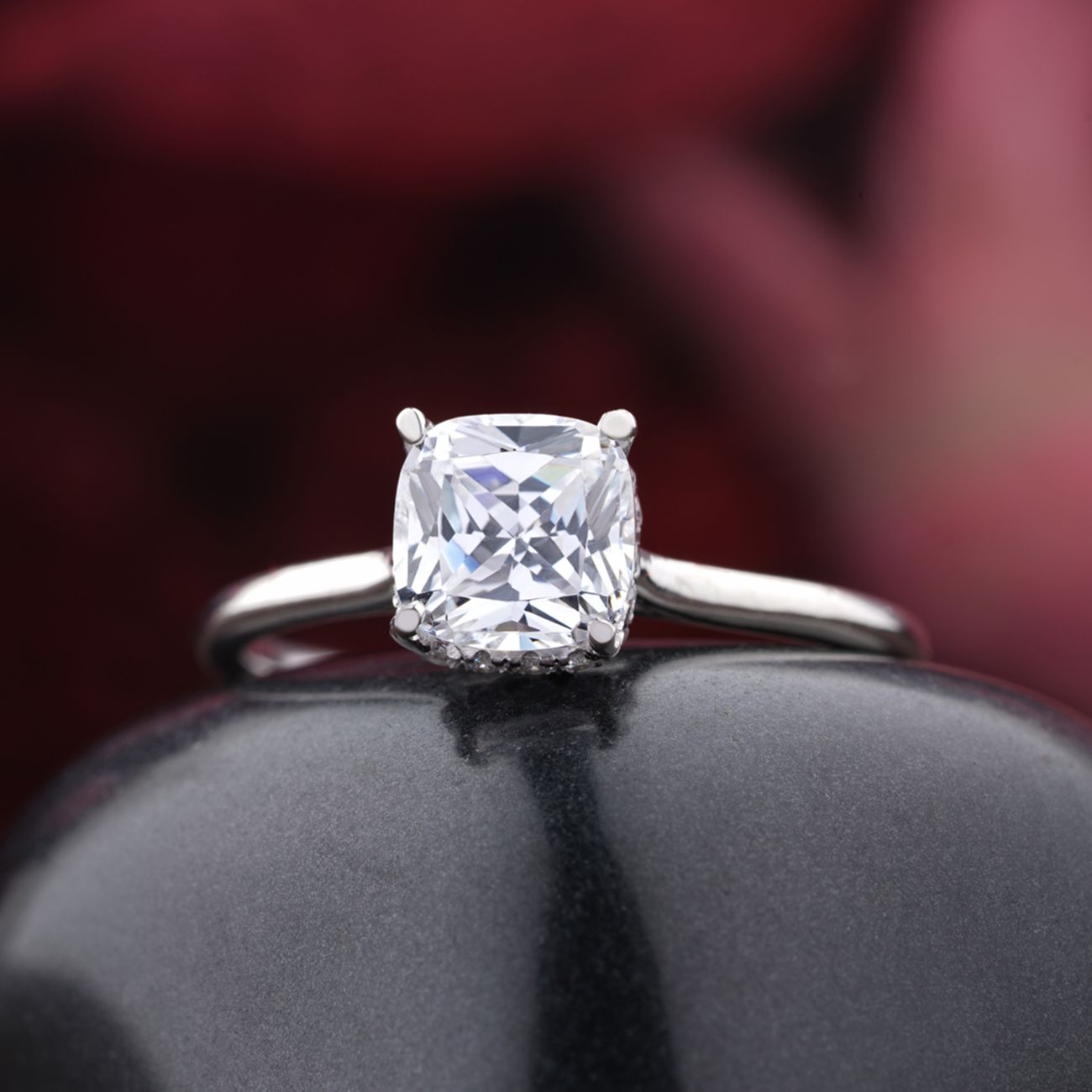
The setting can either enhance or reduce the apparent size of a cushion cut. A slim solitaire setting usually allows more of the diamond to show, while a thick halo or heavy bezel can influence the visual spread in different ways.
A halo can make the center stone appear larger, but it also changes the overall look and may not suit buyers who want a clean, understated style. A delicate cathedral or prong setting can keep the focus on the stone itself and often helps a diamond look more open face up.
Important Buying Considerations
If you are shopping cushion cuts and wondering whether they look smaller, the practical answer is to compare more than carat weight. Several measurements and quality factors can help you choose a diamond that looks its best.
1. Check Millimeter Measurements
Millimeter measurements tell you the stone’s actual outline size. For cushions, both length and width matter, especially if you are comparing square and elongated shapes. A stone with slightly larger millimeter dimensions may look more substantial even if the carat weight is the same.
2. Review Depth Percentage
Depth percentage gives a rough sense of how much weight is hidden below the surface. A very deep cushion may be less face-up efficient. That does not mean the diamond is poor quality, but it may not be ideal if maximum spread is your goal.
3. Look at Length-to-Width Ratio
The length-to-width ratio describes how long or square the stone appears. A ratio near 1.00 usually reads as square, while a higher ratio creates a more elongated shape. Many buyers find that an elongated cushion looks larger on the hand because of this longer profile.
4. Consider Color Visibility
Cushion cuts can show color a bit differently depending on the faceting style and depth. In some cases, a deep or antique-style cushion may retain more color in the body of the stone, which can make lower color grades more noticeable. In other cases, the sparkle helps mask slight color warmth.
For many buyers, choosing a near-colorless range offers a good balance. If the stone will be set in yellow gold or rose gold, a slightly warmer grade may still look attractive.
5. Consider Clarity Visibility
Clarity matters in any diamond shape, but the visibility of inclusions can differ in a cushion. Brilliant-style cushions may hide small inclusions well because the sparkle is active, while larger open facets can reveal imperfections more easily.
This is one reason buyers often use clarity grades as a guide rather than a strict rule. A cushion diamond with eye-clean clarity can be an excellent practical choice without paying for a grade that exceeds visual needs.
6. Ask for Videos or Images in Motion
Still photos can be misleading. Videos show how the stone handles light and whether it has a bow tie, dark center, or uneven distribution of sparkle. For cushion cuts especially, visual review is one of the most important parts of the buying process.
7. Compare Shape Style, Not Just Carat
A 2-carat square cushion, a 2-carat elongated cushion, and a 2-carat round brilliant may all look different on the hand. If size appearance matters, compare each stone’s measurements, not only the carat number listed on the certificate.
Lab Grown Cushion Diamonds and Size Perception
Lab grown diamonds are especially relevant in this discussion because many buyers choose them to access larger visual size for the budget. If you are asking whether cushion cut diamonds look smaller, lab grown options may give you more room to prioritize face-up dimensions while still keeping quality requirements in a comfortable range.
That does not mean a lab grown cushion will automatically look larger than a natural one of the same cut. The same shape and proportion issues still apply. But lab grown diamonds often allow buyers to choose a larger carat weight or a better-cut stone within the same budget range, which can make visual size trade-offs easier to manage.
As with natural diamonds, you still need to review depth, proportions, and measurements. The advantage is more about budget flexibility than a change in the physics of the shape itself.
Common Mistakes Buyers Make
Many shoppers focus on the wrong details when evaluating cushion cuts. Avoiding a few common mistakes can make the difference between a diamond that looks impressive and one that feels smaller than expected.
Buying by Carat Alone
Carat weight is easy to compare, but it does not tell you how large the diamond will look. Two stones with the same weight can differ in face-up size if their proportions are different. This is especially important for cushion cuts because the shape can vary so much.
Ignoring Depth
A deep cushion may not look as large as a shallower one. Buyers sometimes overlook this because the carat weight seems attractive. Looking only at the number on the certificate can lead to a diamond that is heavier than it appears.
Not Comparing Photos
Online shoppers often skip videos or side-by-side images. That can be a mistake with cushion cuts because the visual differences are not always obvious from basic grading information. A diamond that appears smaller in a photo may still be a good choice, but you need enough visual information to evaluate it properly.
Expecting All Cushions to Look the Same
There is a wide range within the cushion category. Some are brilliant and lively, some are soft and antique-looking, and some are more rectangular. Buyers who expect a single standard look are often surprised by how much variation exists.
Overlooking the Setting
The wrong setting can make a cushion look smaller or heavier than intended. A bulky design can visually crowd the stone, while a more open setting can help it look larger and brighter. The ring design should support the diamond’s proportions, not hide them.
How to Make a Cushion Cut Look Larger
If you like the look of a cushion but want more visual size, there are several ways to improve the appearance without changing the shape entirely. These are practical design choices, not tricks, and they can make a real difference.
- Choose an elongated cushion: Longer outlines often look larger on the hand.
- Prioritize better spread: Review millimeter measurements and avoid overly deep stones.
- Use a slim setting: Thin prongs and narrow bands help the diamond stand out.
- Consider a halo carefully: A halo can increase perceived size, though it changes the style.
- Select a setting that exposes more of the stone: Open baskets and lighter profiles often help.
If you want more detail on this topic, comparing cushion cuts with resources on diamond cut and diamond shapes can be helpful. Those topics explain how shape and cutting style influence both beauty and apparent size.
Do Cushion Cut Diamonds Look Smaller in Real Life?
In everyday wear, the answer depends on the stone. A well-proportioned cushion cut does not necessarily look small, but it can look a little less size-efficient than some other shapes. Whether that matters to you depends on how closely you compare measurements and how much you value outline style.
Many people notice that a cushion cut feels more refined or soft-edged rather than dramatically large. That can actually be part of its appeal. The shape is less about creating the illusion of maximum size and more about offering a balanced, elegant look with distinctive sparkle.
Frequently Asked Questions
Do cushion cut diamonds look smaller than round diamonds?
Sometimes, yes. A cushion cut can look slightly smaller than a round diamond of the same carat weight if it has more depth or a less efficient spread. However, a well-cut cushion can look very comparable in size, especially if it is elongated or has favorable millimeter measurements.
Which cushion cut looks the biggest?
Elongated cushion cuts often look the biggest because they cover more visual length on the finger. Stones with good spread and moderate depth also tend to appear larger face up. The best size appearance usually comes from a combination of shape, proportions, and setting.
Why do some cushion cuts seem to have hidden weight?
Some cushion cuts are deeper than others, which means more of the diamond’s weight is below the surface rather than visible from the top. This hidden weight can make the diamond look smaller for its carat weight. It is one reason millimeter measurements are so important.
Is a cushion cut a good choice if I want the best value?
It can be, depending on your priorities. Cushion cuts may offer strong sparkle and a distinctive look at a price that can be more approachable than some highly standardized premium shapes. If you are also considering lab grown diamonds, your budget may allow you to choose better proportions or a larger visual size.
Do all cushion cuts have a bow tie effect?
No. Bow tie is more common in certain elongated shapes or specific facet patterns, but not every cushion shows a noticeable one. The only reliable way to assess it is through images or video under different lighting conditions.
Are cushion cuts good for everyday wear?
Yes, they can be. The rounded corners of a cushion cut are practical because they are less likely to snag than sharper corners on some other shapes. As with any engagement ring, the setting and prong design also affect long-term durability.
Should I prioritize color or size in a cushion cut?
That depends on your budget and how sensitive you are to color. If you want a larger-looking cushion, you may accept a slightly lower color grade if the stone still appears attractive in its setting. If you are buying a white metal ring, you may prefer a higher color grade for a cleaner overall look.
Conclusion
Cushion cut diamonds can look smaller than some other shapes of the same carat weight, but the answer is not absolute. Their appearance depends on depth, proportion, length-to-width ratio, and the specific faceting style. A well-chosen cushion can look balanced, lively, and substantial, while a deep one may show more hidden weight and less face-up spread.
If size is your main concern, compare millimeter measurements, review images or videos, and pay attention to how the setting supports the stone. If you value softness, sparkle, and vintage character, cushion cuts can be a strong choice even if they are not always the most size-efficient shape. For buyers comparing shapes, the most useful approach is to evaluate how each diamond looks on the hand, not just how it reads on paper.
In practical terms, the cushion cut is best for shoppers who want character and brilliance with a classic outline, and who are willing to look closely at proportions before buying. That approach usually leads to a diamond that feels right in real life, which matters more than any single number on a grading report.