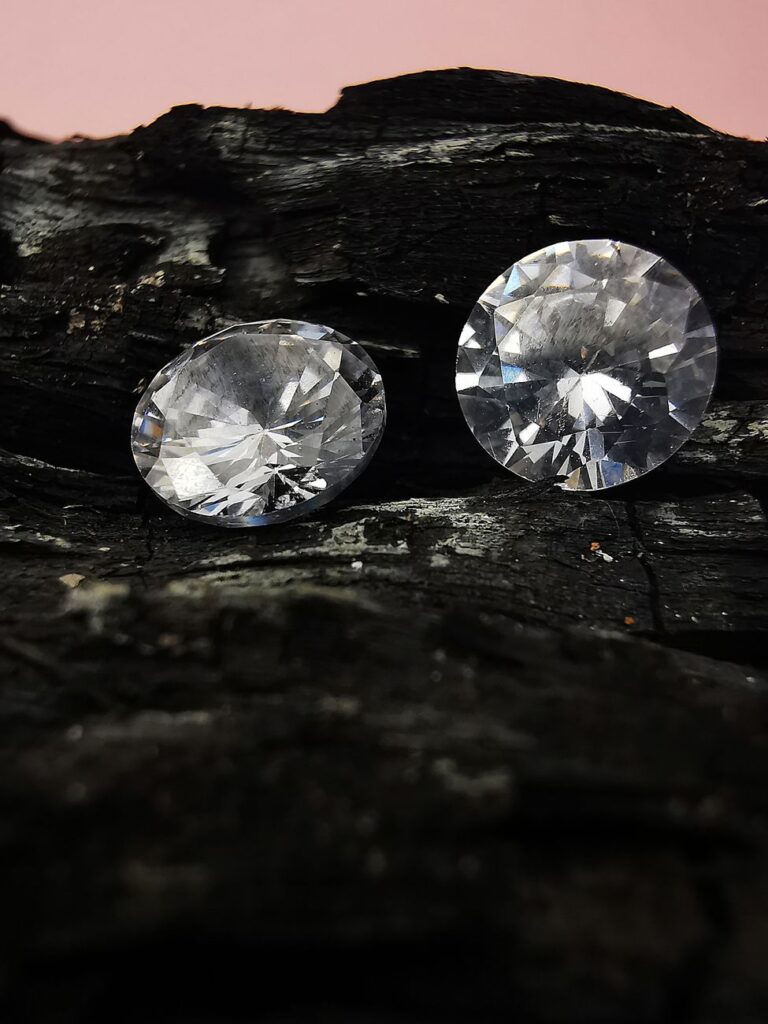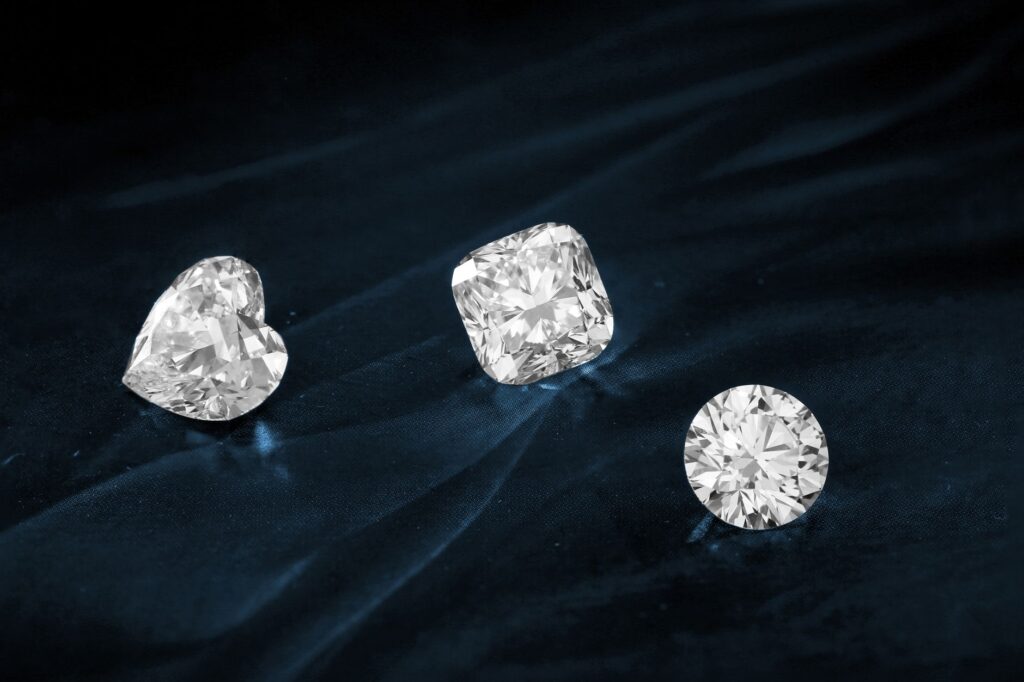
Light leakage is one of the main reasons two diamonds with similar size, color, and clarity can look very different once they are worn. When a diamond leaks light, some of the light entering the stone escapes through the bottom or sides instead of returning to the eye. The result is usually less brightness, weaker sparkle, and a diamond that can look flatter than it should for its carat weight.
For buyers comparing lab grown diamonds or natural diamonds, understanding how light leakage affects diamond appearance helps explain why cut quality matters so much. A well-cut diamond does more than meet a grading standard. It manages light efficiently, which is what gives a diamond its lively, bright appearance in everyday lighting.
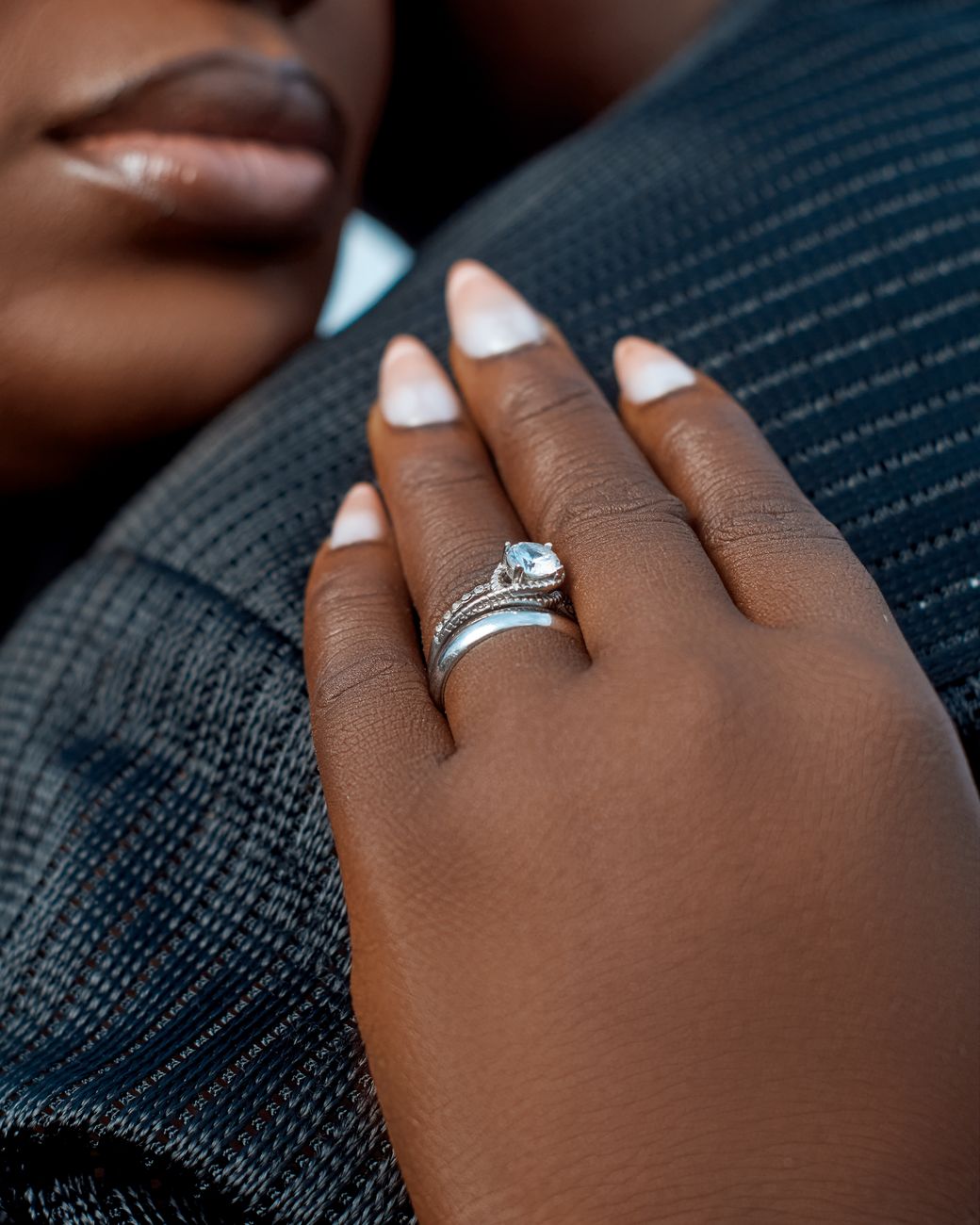
This matters because many first-time buyers focus on carat weight first. In practice, a diamond with better cut proportions and less light leakage often looks more attractive than a larger diamond that is leaking light. That difference may be subtle in a lab report, but it can be very noticeable when the stone is worn on the hand.
Quick Answer
Light leakage happens when a diamond lets light pass through areas that should be reflecting it back to the eye. Instead of seeing strong brightness and sparkle, you may notice dull patches, a dark center, or parts of the diamond that seem less lively.
The effect is not always dramatic, but it is often visible to the naked eye, especially in larger stones, step cuts, or diamonds with weaker proportions. In many cases, a diamond with less light leakage will look brighter and more balanced than a larger diamond that leaks light.
For most buyers, the practical takeaway is simple. If two diamonds are close in price, cut quality and light performance usually matter more to appearance than a small increase in carat weight or a higher clarity grade that is not visible to the eye.
What Light Leakage Means in a Diamond
Diamonds sparkle because they are designed to gather light, bend it, and return it to the viewer. When that light returns efficiently, the diamond looks bright and lively. When it escapes, the stone loses some of that visual energy.
Light leakage is not a separate flaw like a chip or an inclusion. It is a performance issue. It usually comes from proportion problems, such as a pavilion that is too shallow or too deep, or from facet relationships that do not direct light back efficiently.
How light moves through a diamond
Light enters the top of the diamond, interacts with the internal facets, and ideally reflects back through the crown. If the angles are not balanced well, some light exits through the bottom instead. That escaped light is the leakage.
Buyers do not need to memorize gemological formulas to understand this. The practical point is that a diamond is not just a transparent crystal. It is an optical tool, and its proportions determine how well it works.
Why the term can be confusing
Some shoppers assume leakage means the diamond is “bad” or visibly broken. That is not always true. A diamond can still be attractive, and some leakage may be minor or only noticeable under certain lighting conditions.
What matters is whether the leakage affects the diamond’s overall face-up appearance. If it causes obvious dullness or reduces brightness in normal viewing, then it becomes a meaningful buying concern.
Why Light Leakage Matters to Buyers
Most consumers judge diamonds by how they look in real life, not by how they perform on paper. Light leakage directly affects the qualities people notice most: sparkle, brightness, and visual life.
A diamond with strong light return usually looks cleaner and more vibrant. A diamond with significant leakage may appear sleepy, glassy, or uneven, even if it has a high clarity grade or a larger carat weight.
Appearance
The biggest reason light leakage matters is appearance. A diamond that leaks light often loses contrast and brightness, especially in the center or around the edges. That can make it seem less crisp and less eye-catching.
This is one reason why two diamonds with the same grading report can still have very different beauty. Lab reports measure many important traits, but the actual visual experience depends on how those traits work together.
Value
Light leakage also affects value. Buyers usually pay for the way a diamond looks, not just its measurements. If a stone is leaking light, you may be paying for carat weight that is not translating into visible size or beauty.
In contrast, a well-cut diamond may look more impressive than a larger one with weak light performance. That is why experienced buyers often prioritize cut before size.
Long-term satisfaction
Many buyers do not think about cut performance until after purchase, when they compare their diamond to others and realize it does not sparkle as expected. Since the diamond is meant to be seen every day, a performance issue can affect satisfaction for years.
Choosing a diamond with good light performance is one of the best ways to reduce that risk.
How Light Leakage Affects Diamond Appearance
Light leakage influences several visual characteristics at once. The exact effect depends on shape, proportions, facet design, and viewing conditions. In most cases, the result is less impressive face-up appearance.
Sparkle
Sparkle is the flashes of light you see as the diamond moves. A diamond with strong light return usually produces more noticeable flashes because more light is entering and exiting the stone in an organized way.
When leakage is present, sparkle can look weak or uneven. The diamond may not seem to come alive in the same way as a better-cut stone.
Brilliance
Brilliance is the overall brightness of the diamond when viewed face up. It is one of the easiest ways to spot a light-performance difference without special tools.
A leaking diamond may look darker in some areas, even if the lighting is good. The stone can seem to have less white light bouncing back to the eye.
Fire
Fire refers to the colored flashes of light that come from a diamond dispersing white light into rainbow colors. Light leakage can reduce fire because less light is being effectively handled inside the stone.
This is not always the first thing a buyer notices, but it contributes to the overall liveliness of the diamond.
Scintillation
Scintillation is the pattern of light and dark areas that appear as the diamond moves. Good scintillation creates a lively, crisp look. Poor light control can make those patterns look muddled or unattractive.
Too much leakage may cause large dull zones, while uneven leakage can create an inconsistent appearance from one angle to another.
Face-up size perception
Buyers often focus on carat weight, but the way a diamond handles light affects how large it appears. A diamond with weak light return may look smaller or less present than a well-cut diamond of the same weight.
This is one reason why cut quality is often more important than raw size when the goal is attractive appearance.
What Causes Light Leakage
Light leakage is usually the result of proportions that are not well balanced. This is especially true in round brilliant diamonds, where small changes in angle can significantly affect performance.
It can also happen in fancy shapes, though the visual signs may differ. Elongated shapes like oval, pear, and marquise can show leakage in ways that are less symmetrical and more shape-specific.
Shallow proportions
A diamond that is too shallow may let light escape through the bottom because the internal angles do not direct it back upward efficiently. These stones can sometimes look larger for their weight, but they may appear watery or washed out.
Buyers sometimes like shallow stones because they spread well on the finger. However, if the proportions are too shallow, the visual trade-off can be reduced brightness.
Deep proportions
A diamond that is too deep can trap light in ways that darken the face-up view or reduce apparent size. Deep stones can also leak light depending on how the facets are arranged.
These diamonds may carry more weight in the pavilion and less in the area people actually see. That can reduce value from a buyer’s perspective.
Poor facet alignment
Even if a diamond’s overall proportions look acceptable, poor symmetry can affect how light moves through it. Facets that are not aligned properly may create irregular leakage or uneven brightness.
This is where symmetry and polish become relevant, although they are not the same thing as light performance. They can still influence how cleanly a diamond returns light.
Shape-specific challenges
Some diamond shapes naturally show more variation in light behavior than others. Fancy shapes often have areas where leakage is more common, especially near the bow tie region in oval, pear, and marquise diamonds.
That does not mean these shapes are undesirable. It means buyers should look more carefully at actual visual performance rather than relying only on measurements or grading reports.
How to Recognize Light Leakage in Real Life
For most buyers, the goal is not to become a gemologist. It is to learn what light leakage looks like in a store, on a video, or in photos so that a poor-performing stone is easier to avoid.
The challenge is that lighting can influence how obvious leakage appears. A diamond may look better under intense spotlighting than it does in softer daylight or indoor settings.
Common visual signs
Some of the more common signs of leakage include:
- Dull or grayish areas in the center of the stone
- Patches that do not brighten when the diamond moves
- A glassy look instead of a lively sparkle
- Uneven brightness from one side of the diamond to the other
- Large dark zones that persist in normal viewing
These signs do not automatically mean a diamond is poorly made. Some contrast is normal and even desirable. The question is whether the dark areas are part of a good light pattern or a symptom of poor return.
Lighting conditions matter
Under jewelry store spotlights, many diamonds look more brilliant than they do in everyday life. That can make leakage harder to detect. Diffused daylight, office lighting, and indoor home lighting often reveal a more realistic picture.
When possible, buyers should look at a diamond in several lighting conditions. A stone that performs well across different environments is usually a safer choice.
Video and image limitations
Photos can be misleading because camera exposure, filters, and angle can hide or exaggerate leakage. Even videos may not show a diamond’s full behavior if the lighting is controlled to flatter the stone.
This is why dependable videos from reputable sellers can help, but they should not replace in-person viewing or a careful review of proportions and cut performance.
Light Leakage in Round Brilliant vs Fancy Shapes
Round brilliant diamonds are generally designed to return light efficiently when cut well. As a result, light leakage in rounds often shows up as less brightness or a dark area in the face-up view.
Fancy shapes can be more visually complex. Their leakage may be more shape-specific and sometimes less obvious to a new buyer, which makes evaluation even more important.
| Shape | How leakage may appear | What buyers usually notice |
|---|---|---|
| Round brilliant | Dull center, weak brightness, reduced sparkle | Loss of overall liveliness |
| Oval | Bow tie effect, dark center or ends | Uneven brightness across the stone |
| Pear | Dark areas near the center or shoulders | Uneven light pattern, especially in motion |
| Princess | Extinction or dead zones between facet patterns | Flatness or missing sparkle in certain angles |
| Emerald cut | Large windows or weak reflection zones | Less brightness, more transparency than expected |
This table is a simplification, but it highlights an important point. Light leakage is not one universal look. It depends on the shape and the cutting style.
How Light Leakage Relates to Cut Quality
Cut quality is the broad term that describes how well a diamond has been fashioned. It includes proportions, symmetry, polish, and how efficiently the stone handles light. Light leakage is one of the most important outcomes of cut quality.
For buyers, this means the cut grade is not just a technical label. It is a useful clue about how the diamond may look when worn.
Cut grade
In many grading systems, especially for round diamonds, the cut grade summarizes the diamond’s overall craftsmanship and light performance potential. A higher cut grade usually suggests better brightness and more efficient light return.
Still, the grade is not the whole story. Two diamonds with the same grade can look slightly different because of variation in facet pattern, symmetry, and proportion ranges.
Symmetry
Symmetry describes how accurately the facets are arranged relative to one another. Good symmetry helps light behave more predictably inside the diamond.
For buyers, symmetry is not usually the first thing they see. But poor symmetry can contribute to irregular light return and a less balanced appearance.
Polish
Polish refers to the smoothness of the facet surfaces. Well-polished facets reflect light more cleanly and support crisp sparkle.
Polish alone does not prevent light leakage, but poor polish can make an already weak performer look less attractive.
Proportions
Proportions are the relative measurements of the diamond, including table size, depth percentage, crown angle, and pavilion angle. These measurements affect how light enters, moves, and exits the stone.
If proportions are off, leakage becomes more likely. This is why proportion analysis is so important when comparing diamonds, especially if you are trying to balance beauty and price.
What Buyers Actually See
Many shoppers ask whether light leakage is something they will really notice. The answer is yes, but not always immediately. In some diamonds, the effect is subtle. In others, it is obvious once you know what to look for.
The easiest way to think about it is this. A good diamond appears bright, lively, and balanced. A diamond with meaningful leakage may look quieter, flatter, or less dimensional.
Everyday viewing conditions
Most people see diamonds in indoor lighting, at restaurants, in offices, and in natural light near windows. In these conditions, leakage can reduce how lively a diamond feels as the hand moves.
A diamond that looked excellent under a jeweler’s spotlight may appear much less impressive in ordinary settings if it is leaking light.
Movement matters
Diamonds are rarely viewed as still objects. They are seen when a hand moves, turns, or gestures. That movement is when sparkle and scintillation matter most.
If a diamond is leaking light, those moments may show fewer flashes and less contrast, which makes the stone feel less dynamic.
The role of contrast
Good diamonds usually have a balanced mix of bright and dark areas. That contrast helps create crisp sparkle. Leakage is a problem when the dark areas are not part of a deliberate and attractive pattern, but instead represent lost brightness.
This is why some dark zones can be acceptable while others are not. The visual context matters.
How Light Leakage Affects Value
Value is not just about the grading report. It is about how much visible beauty a diamond offers for the price. Light leakage can reduce value because it lowers visual performance without necessarily lowering carat weight.
In other words, you may be paying for size that is not fully delivering in appearance.
When paying more makes sense
Paying more for better cut quality often makes sense when the goal is visual beauty. A diamond with strong light return usually looks better every day, which is exactly what most engagement ring buyers want.
This is especially true for smaller to medium-size diamonds, where cut quality can have an outsized effect on perceived brilliance.
When the premium may be worth it
A premium for better light performance is often justified when:
- The diamond will be viewed frequently in normal lighting
- You want the best appearance within a set budget
- You are comparing two stones of similar size and color
- The lower-priced diamond shows obvious leakage or dullness
In these cases, the better-performing stone is usually the smarter purchase even if it costs more.
When diminishing returns appear
There is a point where additional spending yields only a small visual improvement. For example, moving from a very good cut to an excellent cut may be worthwhile, but moving from excellent to a specialized premium category may provide a difference that is hard to see without side-by-side comparison.
For many buyers, the best value lies in the range where the diamond already performs well and any additional premium becomes less noticeable to the naked eye.
Practical Examples Buyers Can Relate To
Real buying decisions usually involve trade-offs. The best way to understand light leakage is to compare stones the way a shopper actually would.
A well-cut 1.5-carat diamond versus a poorly cut 2-carat diamond
This is one of the most common comparisons. The 2-carat diamond may sound more impressive on paper, but if it leaks light badly, it can look dull or uneven. The 1.5-carat stone with better cut may appear brighter, sharper, and more attractive overall.
Many experienced shoppers end up preferring the smaller stone because it looks more lively in daily wear. That does not mean size is unimportant. It means visible performance often matters more than weight alone.
Excellent cut versus Very Good cut in everyday lighting
In some cases, the difference between Excellent and Very Good can be subtle. In others, it is clearly visible. The real distinction depends on how the diamond was cut and how the proportions interact.
A strong Very Good diamond may still perform beautifully. But a weaker one in that category may show more leakage, less brilliance, and a flatter appearance. This is why it is important to look beyond the label when possible.
Higher clarity with poor cut versus lower clarity with excellent cut
This comparison is especially useful for first-time buyers. A diamond with higher clarity may sound better, but if the cut is poor, the stone can look less beautiful than a lower-clarity diamond with excellent light performance.
For most buyers, an eye-clean diamond with strong cut quality is a better use of budget than paying extra for clarity that is not visible.
Advantages of Better Light Performance
Diamonds with minimal light leakage offer several practical benefits. These are the reasons many buyers and jewelers place cut near the top of the priority list.
- More brightness: The diamond returns more light to the eye.
- Better sparkle: Movement creates stronger flashes and livelier visual contrast.
- More face-up beauty: The stone appears more vibrant from the top view.
- Better value perception: The diamond often looks more impressive for its size.
- Greater everyday satisfaction: The diamond is more pleasant to wear and view regularly.
These benefits are especially meaningful for engagement rings and daily-wear jewelry, where the diamond is seen in many different environments.
Disadvantages and Trade-Offs
There are also trade-offs to understand. A diamond with excellent light performance is not always the largest or least expensive option. Buyers need to balance cut against budget, size, and style preferences.
- Higher price: Better-cut diamonds often cost more per carat.
- Smaller look relative to weight in some cases: Very deep or very shallow stones may trade size spread for other qualities, while well-proportioned stones may not maximize apparent diameter as aggressively.
- Not every small amount of leakage is visible: Some differences are minor and may not matter to every buyer.
- Fancy shapes vary: Light behavior can be more subjective and harder to compare than round brilliants.
The key is not to chase perfection at any cost. It is to know which trade-offs are worth accepting and which are likely to reduce beauty too much.
Buying Considerations for Lab Grown Diamonds
Light leakage matters just as much in lab grown diamonds as it does in natural diamonds. Lab grown stones are real diamonds with the same crystal structure, so their sparkle depends on the same optical principles.
Because lab grown diamonds often offer lower prices for comparable size, buyers may be tempted to prioritize carat weight. That can be a mistake if the cut quality is weaker.
Why cut still comes first
Lab grown diamonds make it easier to fit a larger size into a budget. That is helpful, but it should not come at the expense of light return. A larger lab grown diamond with poor proportions may still look less attractive than a smaller one with excellent performance.
This is especially important because many buyers choose lab grown diamonds for visual impact at a better price. The best way to preserve that value is to select strong cut quality.
Certification still matters
Lab grown diamonds should be evaluated with reliable grading reports from recognized laboratories. A report can help confirm measurements, cut grade, color, clarity, and other important details.
However, a certificate alone cannot fully tell you how much light leakage you will see. It is best used alongside images, videos, and proportion analysis.
Price advantage does not remove the need for quality review
Because lab grown diamonds can be more affordable, some buyers assume they can safely ignore cut details. In reality, the lower price only makes it easier to choose quality. It does not make poor light performance less visible.
In many cases, the savings from choosing lab grown can be used to prioritize a better cut without increasing the overall budget.
How to Evaluate Light Leakage Before Buying
If you are shopping online or in person, there are several practical ways to reduce the risk of buying a diamond with poor light performance.
1. Review the cut grade and measurements
For round diamonds, start with the cut grade, then look at the proportions. Measurements such as table size, depth percentage, and facet angles can help identify stones more likely to leak light.
These numbers are not perfect on their own, but they are useful screening tools.
2. Look for actual images or videos
High-quality videos can reveal dark zones, dead areas, or inconsistent sparkle. Compare the stone as it turns, not just when it is held still.
If the diamond looks lively from multiple angles, that is a good sign. If it goes dark in large areas, take a closer look.
3. Compare stones side by side when possible
Side-by-side comparison often makes leakage much easier to spot. A diamond that seems fine by itself can look noticeably weaker next to a better performer.
This is one reason jewelers often recommend viewing several stones in the same size and price range.
4. Pay attention to different lighting environments
Ask to view the diamond under bright spotlights, softer indoor light, and, if possible, daylight. A stone that remains bright and balanced in multiple settings is usually the safer choice.
5. Ask about return policies
When buying online, a strong return policy can reduce risk. Even with good videos and reports, real-world viewing is still the final test.
This is especially helpful for fancy shapes, where light behavior can be more subjective.
Common Buyer Mistakes
Light leakage is often misunderstood because buyers focus on the wrong signals. These are some of the most common mistakes.
Prioritizing carat over cut
Many shoppers think a bigger diamond automatically looks better. In reality, a larger stone with poor cut can look less attractive than a smaller, better-cut diamond.
If appearance matters, cut should be one of the first filters, not the last.
Assuming all diamonds sparkle the same
Not all diamonds handle light equally. Even stones with similar clarity and color can look very different because of cut quality and leakage.
This is one of the biggest surprises for first-time buyers.
Overpaying for clarity that is not visible
Higher clarity does not fix weak light performance. If a diamond leaks light, extra clarity will not make it look more brilliant.
For many buyers, a lower clarity grade that is eye-clean is a better trade-off than paying for imperceptible purity.
Relying only on paper grades
Reports are useful, but they do not always tell the whole story. Two diamonds with similar grades can perform differently because of subtle proportion differences.
Whenever possible, use reports together with visual inspection.
Ignoring shape-specific performance
Fancy shapes deserve special attention because leakage can show up differently from one shape to another. A buyer who understands round diamonds well may still need extra caution with ovals, pears, and emerald cuts.
Frequently Asked Questions
Is some light leakage normal?
Yes, minor leakage can occur in many diamonds. The important question is whether it is enough to affect the diamond’s face-up brightness and sparkle. Small amounts may be hard to notice, while larger areas can reduce visual appeal.
Can a diamond still look good if it has some leakage?
Yes. Not every diamond with leakage looks unattractive. Some stones still offer pleasing sparkle and balanced appearance, especially if the leakage is subtle or limited to less noticeable areas.
Is light leakage more common in lab grown diamonds?
No. Light leakage is not caused by the diamond being lab grown. It is caused by how the stone was cut. Both lab grown and natural diamonds can have excellent or poor light performance.
What is the easiest way to spot leakage?
Look for dull, gray, or dark areas that do not seem to brighten as the diamond moves. Comparing the diamond with another stone under the same lighting can make the difference easier to see.
Does a higher cut grade always mean no leakage?
No. A higher cut grade usually suggests better performance, but it is not a guarantee that every diamond will look perfect in every viewing situation. Visual inspection still matters.
Should I avoid diamonds with slightly shallow or deep proportions?
Not automatically. Some stones with slightly unusual proportions can still look attractive. The question is whether the light performance is strong enough for your standards and budget.
Does leakage matter more in larger diamonds?
It can be easier to notice in larger diamonds because there is more surface area to observe. That said, leakage can affect diamonds of any size. The visual impact depends on the cut quality and shape.
Can jewelers fix light leakage after the diamond is cut?
Not in a practical sense for consumers. Light performance is built into the diamond’s cut. Once the stone is finished, the proportions are fixed. That is why choosing well at the start is so important.
Conclusion
Light leakage affects diamond appearance by reducing the amount of light that returns to the eye. In practical terms, this can make a diamond look less bright, less sparkly, and less lively than it should for its size.
For buyers, the most important lesson is that cut quality has a direct impact on what you actually see. A well-cut diamond often looks better than a larger diamond with poor light performance, and that difference can be especially noticeable in everyday lighting.
If you are comparing diamonds, focus on the balance of cut, proportions, symmetry, and real-world visual performance. That approach usually leads to better value and greater long-term satisfaction, whether you are buying a lab grown diamond or a natural one.