When a round diamond looks bright, lively, and balanced, the reason is usually not one single feature. It is the result of how well the stone is cut. That is why how GIA grades diamond cut matters so much to buyers who want to understand why one diamond seems to sparkle more than another, even when the carat weight and color grade look similar on paper.
GIA cut grading is designed to estimate how efficiently a round brilliant diamond returns light to the eye. In practical terms, it helps answer a question buyers care about immediately: will this diamond look beautiful in everyday lighting, or will it appear dull, dark, or uneven?
For consumers shopping for engagement rings, fashion jewelry, or lab grown diamonds, cut is one of the most important quality factors to understand. It affects brightness, sparkle, apparent size, and overall visual balance. It also influences value, since a strong cut can make a diamond look more impressive without increasing carat weight.
Quick Answer: How GIA Grades Diamond Cut
GIA grades the cut of round brilliant diamonds by evaluating how the diamond’s proportions, symmetry, polish, and facet relationships affect light performance. The cut grade is not based on one number alone. Instead, GIA studies a combination of measurements and appearance-based factors to estimate how the diamond will look in real life.
The cut grade is usually one of five categories: Excellent, Very Good, Good, Fair, or Poor. For round brilliants, GIA considers measurements such as table size, depth, crown angle, pavilion angle, girdle thickness, symmetry, and polish, then translates those details into an overall cut assessment.
In simple terms, GIA cut grading asks: How well is this diamond designed to handle light? A higher cut grade generally increases the likelihood of strong brightness and sparkle, but it does not mean every diamond in the same grade looks identical. For most buyers, cut is one of the most visible quality factors and usually worth close attention.
What Diamond Cut Actually Means
Diamond cut is often confused with diamond shape, but they are not the same. Shape refers to the outline of the stone, such as round, oval, cushion, or emerald. Cut refers to how the facets are arranged, proportioned, and finished, and how well they work together to interact with light.
When shoppers say a diamond has a “good cut,” they are usually talking about what they see rather than what a report says. A well-cut diamond tends to look bright, crisp, and lively. A poorly cut diamond can look flat, dark, or sleepy, even if it has a high clarity grade or a desirable color grade.
GIA’s cut grade system is primarily used for round brilliant diamonds. That is because round brilliants have a standardized facet pattern and are the most studied shape for optical performance. Fancy shapes such as oval, pear, marquise, emerald, and cushion are not graded with the same GIA cut structure, so buyers of those shapes often need to rely more on proportions, images, and expert review.
Why GIA Cut Grading Matters to Buyers
Cut affects how a diamond handles light, and light is what gives a diamond much of its beauty. If a diamond does not return light effectively, it may look less bright even if its other grades are strong.
That is why cut often has more everyday visual impact than small changes in clarity or color. A diamond with excellent cut can look more attractive than a larger diamond with poor proportions because the well-cut stone appears more lively and balanced.
For buyers, this matters for both emotional and financial reasons. You are not just paying for a grading report. You are paying for how the diamond actually looks when worn in daylight, indoors, in stores, and in motion.
Appearance
Cut strongly influences how large, bright, and balanced the diamond appears from the top, which is the face-up view. A diamond that returns light efficiently can look more appealing and even appear slightly larger because it has more visible presence.
A weakly cut diamond may face up smaller than expected for its carat weight. It can also look dark in some areas or less crisp overall. That is why cut is often one of the first things experienced buyers focus on when comparing round diamonds.
Sparkle
Sparkle is the general word buyers use for the flashes of light they see when a diamond moves. Technically, sparkle includes brightness, fire, and scintillation, all of which are influenced by cut.
When the cut is strong, sparkle usually looks balanced and active. When the cut is weak, sparkle may become dull, patchy, or uneven. Some parts of the diamond may look bright while other areas look lifeless.
Value
Cut often provides the most noticeable return on visual quality. Spending more on better cut quality can be worthwhile because the difference is usually visible without specialized tools. By contrast, paying for very high clarity when cut is weak may not improve the diamond’s appearance much.
For many buyers, the smartest strategy is to prioritize cut first, then balance color, clarity, and carat weight around it.
What Factors GIA Uses to Grade Cut
GIA does not assign a cut grade based on one measurement such as table size or depth alone. It uses a broader system that considers how several features work together to affect the diamond’s appearance. The goal is to evaluate the total visual result, not just a mathematical ideal.
1. Proportions
Proportions describe the relative measurements of the diamond, such as table percentage, depth percentage, crown angle, and pavilion angle. These details influence how light enters the diamond, reflects inside it, and returns to the viewer.
Why it matters: proportions help determine whether a diamond looks bright, whether it leaks light, and whether it appears too deep or too shallow for its weight.
What buyers see: proportion issues can show up as a dark center, reduced brightness, uneven contrast, or a stone that looks smaller than expected when viewed from above.
2. Symmetry
Symmetry refers to how precisely the facets align and match one another. In a round brilliant, symmetry helps the diamond produce a balanced optical pattern.
Why it matters: good symmetry supports even light distribution and a clean facet pattern. Poor symmetry can interrupt the visual rhythm of the stone.
What buyers see: symmetry problems may make a diamond look slightly irregular or less crisp. The difference can be subtle in some stones, but it is more noticeable when comparing diamonds side by side.
3. Polish
Polish describes the smoothness of the facet surfaces. Even if the proportions are strong, a rough or poorly finished surface can interfere with how cleanly light reflects across the diamond.
Why it matters: better polish contributes to a sharper, cleaner appearance and supports good light return.
What buyers see: most people will not inspect polish under magnification, but a well-polished diamond usually looks more refined. Lower polish can slightly reduce visual sharpness.
4. Light Performance
Light performance is the practical result of the diamond’s proportions, symmetry, and finish. It describes how effectively the diamond returns light and how attractive that return appears to the eye.
Why it matters: this is the core of what buyers usually mean when they say a diamond “sparkles” or “looks lively.”
What buyers see: brightness, contrast, flashes of color, and a dynamic pattern that changes as the diamond moves.
5. Overall Craftsmanship
GIA also evaluates whether the diamond is well balanced as a complete object. A diamond can have measurements that seem acceptable on their own and still perform poorly if the combination is not harmonious.
Why it matters: cut is a system. The table, crown, pavilion, and depth all affect one another, so the best results come from a well-coordinated design.
What buyers see: one stone may appear bright and well proportioned, while another with similar measurements looks flat or less energetic.
How GIA Grades Round Brilliant Diamond Cut
GIA’s round brilliant cut system combines measurement data with appearance-based evaluation. That is important because real diamonds do not behave according to one simple formula. Two diamonds with similar numbers can look quite different if their proportions interact differently.
The grading system considers factors such as:
- Table size, which is the width of the top facet compared with the stone’s overall width
- Depth percentage, which is the total height of the diamond compared with its width
- Crown angle, which influences fire and the way light enters the stone
- Pavilion angle, which has a major effect on light return
- Girdle thickness, which can affect durability and how efficiently the diamond uses weight
- Symmetry, which influences pattern precision and balance
- Polish, which affects facet finish and surface smoothness
These features are not judged separately in a vacuum. A slightly larger table is not automatically a problem if the rest of the proportions support strong light return. Likewise, a diamond with appealing measurements on paper can still underperform if the angle relationships are not right.
That is why cut grading is more useful as an overall predictor than as a single-number shortcut.
The GIA Cut Grades Explained
GIA uses five cut grades for round brilliant diamonds. The practical meaning of each grade is more important to buyers than the label itself.
| GIA Cut Grade | General Meaning | What Buyers Usually Notice |
|---|---|---|
| Excellent | Strong light return, balanced proportions, and high overall performance | Bright, lively, and usually the most attractive appearance |
| Very Good | High-quality cut with minor trade-offs that may be difficult to notice | Still sparkly and appealing, often a strong value choice |
| Good | Decent appearance, but with more visible performance compromises | May look less bright or less balanced than higher grades |
| Fair | Noticeable limitations in proportions or light performance | Reduced sparkle and a less appealing face-up look |
| Poor | Cut quality is significantly compromised | Often dull, dark, or unattractive in normal viewing |
For most buyers, the main decision is between Excellent and Very Good. In everyday viewing, that difference can be subtle, especially if you are not comparing stones side by side. Good, Fair, and Poor are more likely to show obvious visual compromises.
Still, not every Excellent diamond looks identical, and not every Very Good diamond looks weak. Cut grades are useful filters, but they do not replace actual visual inspection.
What Diamond Buyers Actually See
The most useful way to understand cut is to translate grading language into visual outcomes. Most people are not studying facet charts. They are asking whether the diamond looks bright, clean, lively, and attractive in real life.
Brighter or darker appearance
A strong cut usually produces a brighter face-up look. The diamond reflects more light back to the eye, so it appears more luminous. A weaker cut can look darker, especially in the center or under mixed lighting.
More even sparkle
Well-cut diamonds tend to show sparkle across the stone rather than only in isolated spots. That creates a more balanced look. Poorly cut stones may show bright and dull areas that feel uneven or “patchy.”
Better apparent size
Cut influences how large a diamond looks from above. A diamond with efficient proportions can maximize its face-up spread. A stone with excess depth may carry more weight below the surface and look smaller than expected for its carat weight.
Cleaner contrast
Good cut creates a pleasing contrast pattern, which gives the diamond visual structure. This contrast helps the stone look lively rather than flat. If the contrast is poorly distributed, the diamond can lose sparkle or appear less defined.
How Cut Affects Sparkle, Brilliance, Fire, and Scintillation
These terms are related, but they do not mean the same thing. Buyers often use them loosely, yet each describes a different part of the diamond’s visual performance.
Brilliance
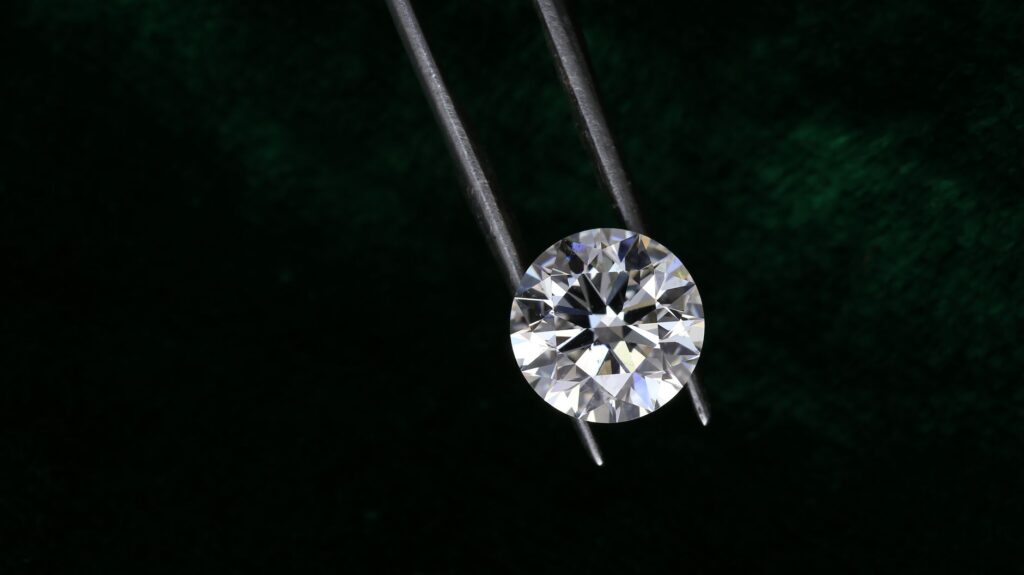
Brilliance is the white light returned by the diamond. A diamond with strong brilliance looks bright and luminous, especially in neutral or diffuse lighting.
What buyers notice: a brilliant diamond appears full of light rather than flat or gray.
Fire
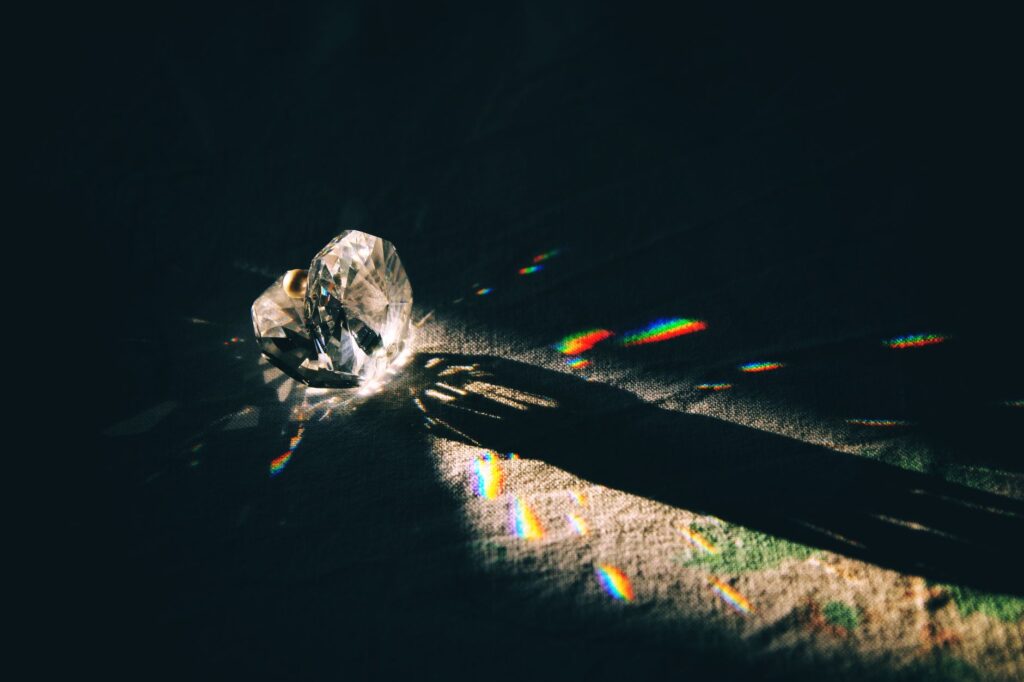
Fire is the colored flash you see when white light breaks into spectral colors. It is often easiest to notice when the diamond moves under direct light.
What buyers notice: tiny flashes of red, blue, and other colors. Some buyers prefer a lot of fire, while others focus more on brightness and contrast.
Scintillation
Scintillation is the sparkle pattern created by alternating flashes of light and dark as the diamond moves. It is the “twinkle” effect many people associate with a lively diamond.
What buyers notice: crisp, balanced sparkle in motion. Weak scintillation can look dull or uneven.
Light Return
Light return is the diamond’s ability to send light back to the eye rather than losing it through the sides or bottom. It is one of the biggest reasons cut matters.
What buyers notice: stronger light return usually means a brighter, more vibrant diamond.
What Is Light Leakage?
Light leakage happens when light escapes through the diamond instead of reflecting back to the observer. It usually results from proportion combinations that do not support efficient light behavior.
Why it matters: light leakage can reduce brightness and make parts of the diamond look see-through, washed out, or dark in an unattractive way.
What buyers see: a diamond with light leakage may look weak in the center or have areas that do not sparkle as expected. It can also appear smaller or less energetic than a better-cut stone of the same weight.
Is it easy to notice? Often yes, especially when a well-cut diamond is placed next to a diamond with leakage. The difference can be obvious to the eye.
What Table and Depth Percentages Really Tell You
Table percentage and depth percentage are two of the most commonly discussed measurements on a diamond report, but they are often misunderstood. They matter, but they do not tell the whole story on their own.
Table Percentage
The table is the large flat top facet of the diamond. Table percentage compares that facet’s width to the diamond’s overall width.
Why it matters: table size influences how light enters and exits the stone, which affects brightness and fire.
What buyers see: a larger table can create a more open look, while a smaller table may sometimes contribute to more fire. Neither is automatically better by itself.
Depth Percentage
Depth percentage measures the total height of the diamond relative to its width.
Why it matters: if a diamond is too shallow or too deep, it may lose light or face up smaller than expected.
What buyers see: a shallow diamond may spread out visually but can leak light, while a deep diamond may hide more of its weight below the top view.
The key point is that table and depth are useful clues, not final answers. A diamond should always be judged as a complete system.
What Is Symmetry and Does It Matter?
Symmetry refers to how accurately the facets line up with one another. In a round brilliant diamond, the facet pattern is supposed to be highly organized, and symmetry helps maintain that pattern.
Why it matters: good symmetry supports a balanced optical appearance and helps the diamond’s sparkle look more orderly and attractive.
What buyers see: tiny symmetry differences are often hard to notice without magnification, but obvious issues can make a diamond look less crisp or less refined.
Is top symmetry worth paying for? Often yes, if the price difference is modest. But there is a point of diminishing returns. For many buyers, Very Good or Excellent symmetry is enough if the diamond performs well overall.
What Is Polish and Why Does It Matter?
Polish is the surface quality of the diamond’s facets. It shows how smoothly the stone was finished after cutting.
Why it matters: smoother facet surfaces help light move more cleanly across the diamond and contribute to a sharper appearance.
What buyers see: most people will not be able to identify polish issues without magnification, but polish still contributes to the overall quality impression.
For round brilliant diamonds, polish is usually less visually important than the broader proportion relationships that drive light return. Even so, it remains part of the overall cut picture and should not be ignored.
How Cut Grades Relate to Real-World Viewing
One common mistake is assuming a cut grade tells you exactly how a diamond will look under every light source. It does not. It is a strong predictor, but not a guarantee.
Diamonds are viewed in many different environments: bright store lights, daylight, office lighting, soft indoor light, and even candle-like settings. A well-cut diamond tends to perform well across more of those conditions, which is why cut matters so much for everyday wear.
In practice, many experienced jewelers notice that well-cut diamonds retain a cleaner, more dynamic look from more angles. They also tend to hide small differences in color or clarity better than weaker stones because the eye is drawn first to the light performance.
How GIA Cut Grading Compares With Visual Preference
GIA grading is useful because it gives buyers a consistent standard. But visual preference still matters. Some buyers prefer more fire, while others prefer a sharper, brighter look with stronger contrast.
That means two diamonds with the same cut grade can still feel different in person. One may look more open and bright. Another may look a little more fiery or slightly more contrasty. Both can be attractive, but they may suit different tastes.
This is one reason it helps to use the report as a filter, not the final word. The report tells you which diamonds are more likely to perform well. Your eyes tell you which one you prefer.
How Cut Affects Value
Cut often has a strong influence on value because it changes how much beauty you get from the diamond. The question is not simply whether a higher cut grade costs more. It is whether that extra cost creates a visible improvement.
When Paying More Makes Sense
Paying more for a better cut often makes sense when you want the strongest brightness and sparkle, especially for a ring worn daily. It also makes sense if you want a diamond that looks attractive in a wide range of lighting conditions.
In these situations, the visual difference can justify the premium because cut affects what you see every day.
When Diminishing Returns Begin
Once a diamond reaches a strong cut level, improvements can become more subtle. The step from Poor to Good or Good to Very Good can be visually meaningful. The step from Very Good to Excellent may be more subtle, depending on the specific stones and your eye.
That is why some buyers choose Very Good to stay within budget, while others prefer Excellent because they want the highest confidence in optical performance. Either approach can be reasonable.
Which Factor Has the Biggest Visual Impact?
For most buyers, cut has the strongest effect on sparkle and overall attractiveness. Color and clarity matter, but small differences in those grades are often less obvious than cut quality in normal viewing.
That is why many diamond professionals recommend using cut as the first filter when comparing round brilliant diamonds.
Practical Examples of Cut Quality Differences
Real-world comparisons make cut much easier to understand. These examples are simplified, but they reflect what buyers often notice in person.
A Well-Cut 1.5-Carat Diamond Versus a Poorly Cut 2-Carat Diamond
At first glance, many buyers assume the larger diamond is the better choice. But if the 2-carat stone has weak proportions, it may look dull or uneven in brightness. Some of its weight may also be hidden below the surface rather than visible face-up.
The 1.5-carat well-cut diamond may actually look more impressive because it returns light better and makes more efficient use of its weight. In everyday viewing, many people would prefer the brighter, more lively diamond even though it is smaller on paper.
Excellent Cut Versus Very Good Cut in Everyday Lighting
In a side-by-side comparison, an Excellent cut diamond may look a little brighter or show a cleaner pattern. A Very Good diamond may still look beautiful and can be difficult to distinguish unless the stones are carefully compared.
For many buyers, the price difference matters more than the visual change. For others, especially those who care deeply about sparkle, the premium for Excellent feels justified.
Higher Clarity With Poor Cut Versus Lower Clarity With Excellent Cut
This is a common comparison, and it often surprises first-time buyers. A very clean diamond with weak cut can still look less appealing than a slightly lower clarity stone with excellent light performance.
Why? Because cut influences the way the entire diamond presents itself. A well-cut diamond with a modest clarity grade often looks brighter and more alive than a high-clarity stone that does not handle light well.
How Cut Considerations Change for Lab Grown Diamonds
Cut matters just as much in lab grown diamonds as it does in mined diamonds. In some ways, it may matter even more from a buying strategy perspective because lab grown diamonds often give buyers more size for the budget.
That extra size can tempt shoppers to focus on carat weight alone. But a larger lab grown diamond with poor cut quality can still look less attractive than a smaller one with excellent cut. Since lab grown diamonds are often priced more accessibly, many buyers have room to prioritize cut without giving up all of their size goals.
Lab grown diamonds also often come with high color and clarity grades, which can make cut even more important. A D color, VVS clarity stone will not look impressive if it does not return light well.
When evaluating lab grown diamonds, buyers should still look for the same signs of strong cut performance:
- balanced brightness
- clear contrast patterning
- strong sparkle in motion
- minimal obvious light leakage
- good face-up size for the weight
The diamond’s origin does not change the basics of cut. Light performance is still what the eye sees.
What GIA Cut Grading Does Well, and What It Does Not Do
GIA’s cut grading system is one of the most respected standards in the industry, but it is still a grading system. It is useful, not magical. Knowing what it does well helps buyers use it correctly.
What It Does Well
- It gives buyers a dependable screening tool for round brilliant diamonds.
- It helps predict which stones are more likely to perform well.
- It provides a consistent framework for comparison.
- It reduces the chance of buying a diamond with hidden optical problems.
What It Does Not Do
- It does not mean every Excellent diamond looks the same.
- It does not grade fancy shapes the same way.
- It does not replace in-person viewing, images, or videos.
- It does not account for every personal preference.
That last point is worth emphasizing. Some buyers want maximum brightness. Others prefer more fire. GIA helps narrow the field, but your taste still matters.
How to Read a GIA Diamond Report for Cut
If you are looking at a GIA report, cut is one of the first things to review for a round brilliant diamond. Start with the overall cut grade, then look at the measurements that help explain it.
Useful details include table percentage, depth percentage, crown angle, pavilion angle, symmetry, and polish. These numbers can help you understand why the stone received its grade and whether the diamond’s proportions look balanced.
Still, a report is not the whole story. Two diamonds with similar numbers can look different because the proportions interact differently. If possible, use images, videos, or an expert assessment alongside the report data.
For most buyers, that is the most practical method: use GIA cut as the first filter, then compare how the diamonds actually look.
Common Buyer Mistakes
Cut is one of the easiest areas to misunderstand when shopping for a diamond. These are some of the most common mistakes buyers make.
Prioritizing Carat Over Cut
Size is easy to understand, but it does not guarantee beauty. A larger diamond with weak cut can look less appealing than a smaller diamond with strong light performance.
Overpaying for Clarity
Some buyers focus too much on clarity grades because they sound important. But many inclusions are not visible without magnification, especially in better-cut stones where sparkle draws the eye away from tiny imperfections.
Ignoring Light Performance
Light performance is the heart of a diamond’s appearance. If a stone looks dim or uneven, the other grades often matter less than buyers expect.
Assuming All Diamonds Sparkle the Same Way
They do not. Some diamonds flash brightly and evenly, while others look patchy or subdued. Cut quality is one of the main reasons for that difference.
Relying Only on Numbers
Measurements matter, but they do not replace visual judgment. A report tells you a lot, but photos and videos often show how the diamond behaves in actual light.
How Experienced Buyers Evaluate Cut in Practice
Shoppers who have compared many diamonds often develop a practical eye for what good cut looks like. They do not just ask whether the report says Excellent. They ask how the diamond feels visually.
Common questions include:
- Does the diamond look bright from center to edge?
- Are the flashes crisp or blurred?
- Does the stone look lively when it moves?
- Does it hold its appearance under different lighting?
- Does it face up as large as expected for its weight?
These questions are useful because they connect the grading report to what the eye sees. A diamond can meet a strong grade and still fail to impress if it does not look balanced in real life.
Buying Considerations: What Matters Most
If you are trying to make a smart diamond purchase, it helps to think in priorities rather than chasing the highest grade in every category.
Budget
Set your budget first, then decide where cut fits within it. In many cases, it is smarter to protect cut quality and make small adjustments to carat weight than to do the reverse.
Visual Performance
If sparkle and brightness matter most to you, cut should be near the top of your list. A strong cut often gives the biggest visible improvement for the money.
Certification
For round brilliant diamonds, a GIA report is valuable because it gives you a widely trusted cut grading standard. Certification does not replace visual judgment, but it gives you a reliable starting point.
Lab Grown Diamond Considerations
Lab grown diamonds can offer strong value, but buyers should still evaluate cut carefully. A lab grown diamond with excellent proportions and strong light return is usually more satisfying than one chosen only for size, color, or clarity.
Long-Term Satisfaction
Diamonds are often bought for important milestones and worn for years. Most buyers are happier over time when the diamond looks consistently attractive in normal life, not just in the store.
How to Compare Diamonds More Effectively
When comparing diamonds, do not stop at the cut grade label. Look at the full picture, including the supporting measurements and the stone’s actual appearance.
| Comparison Point | What to Look For | Why It Matters |
|---|---|---|
| Cut grade | Excellent or Very Good for round brilliants | Strong predictor of visual performance |
| Table and depth | Balanced proportions rather than extremes | Helps avoid light leakage and poor spread |
| Symmetry | Clean alignment and even patterning | Supports attractive optical balance |
| Polish | Smooth facet finish | Contributes to crisp appearance |
| Images or video | Brightness, contrast, and movement | Shows real-world performance beyond the report |
This approach is especially useful when shopping for lab grown diamonds online, where visual media can reveal differences that a report alone does not fully capture.
Frequently Asked Questions
Is GIA Excellent cut always the best choice?
Not always, but it is often the safest choice if you want strong confidence in light performance. Very Good can also be attractive and may offer better value depending on the price difference. The right choice depends on your budget and how closely you compare stones.
Can I see the difference between Excellent and Very Good cut?
Sometimes yes, sometimes no. In side-by-side viewing, an Excellent diamond may look a little brighter or more balanced. In normal wear, the difference can be subtle if the Very Good diamond is still well made.
Does cut matter more than color and clarity?
For many buyers, yes. Cut has a stronger effect on sparkle and overall visual appeal than small differences in color or clarity. That is why it is usually wise to prioritize cut first when shopping for a round brilliant diamond.
Does GIA grade cut for all diamond shapes?
No. GIA’s full cut grading system is primarily used for round brilliant diamonds. Fancy shapes such as oval, cushion, pear, and emerald need a different evaluation approach, often based on proportions and visual inspection.
Can a diamond with lower color or clarity still look better if the cut is excellent?
Yes. In many cases, a well-cut diamond with slightly lower color or clarity will look more beautiful than a higher-graded stone with weaker cut. Since cut strongly affects brightness and sparkle, it often has the biggest impact on what people notice first.
Why do two diamonds with the same cut grade look different?
Because a cut grade covers a range of proportions and performance outcomes. Two diamonds can both be Excellent, but one may have a more attractive angle combination or a cleaner visual balance. That is why buyers should still compare the actual stones.
Is cut especially important in lab grown diamonds?
Yes. Lab grown diamonds often allow buyers to choose larger sizes for the budget, which can make cut even more important. A larger diamond is not automatically more attractive if the cut does not support strong light return.
Should I only buy GIA Excellent cut diamonds?
Not necessarily. GIA Excellent is a strong benchmark, but a carefully selected Very Good diamond can be a smart value choice. The best approach is to compare cut grade alongside measurements, images, and overall appearance.
Conclusion
GIA grades diamond cut by evaluating how a round brilliant diamond’s proportions, symmetry, polish, and overall craftsmanship affect light performance. The practical purpose of the system is straightforward: it helps buyers identify diamonds that are more likely to look bright, lively, and visually balanced.
For most shoppers, the most important takeaway is that cut has a direct effect on what the eye sees. It influences sparkle, brilliance, fire, scintillation, and how large or lively the diamond appears from above. That is why a well-cut diamond can often outperform a larger or higher-clarity stone with weaker proportions.
If you are comparing diamonds, use the GIA cut grade as an important starting point, then review the measurements and visual images to see how the stone actually performs. That approach gives you a much clearer sense of what you are buying and helps you choose a diamond with confidence.