A 3 carat diamond is large by everyday jewelry standards. On the hand, it usually looks unmistakably substantial, not subtle. Even so, the way a 3 carat diamond actually appears can surprise buyers because carat weight does not translate directly into visible size, and a 3 carat round can look very different from a 3 carat oval, emerald, or pear.
That matters because shoppers often picture a dramatic jump in appearance based on the carat number alone. In reality, what your eye notices first is the diamond’s face-up size, meaning the visible width and length you see from the top, along with how much of the finger it covers. A 3 carat diamond can look huge on one hand, balanced on another, and occasionally smaller than expected if the cut is deep or the shape carries more weight below the surface.
This guide explains how big does a 3 carat diamond look in practical terms. It also covers measurements, finger coverage, shape differences, settings, value considerations, and the common mistakes that lead to unrealistic size expectations.
Quick Answer
A 3 carat diamond typically looks large and prominent. In a well-cut round diamond, the average face-up diameter is about 9.2 to 9.4 mm. That is big enough to stand out clearly on most ring sizes and to look significantly larger than a 2 carat diamond.
However, the visual result depends on several factors:
- Shape: Elongated shapes like oval, pear, and marquise often look larger than round diamonds of the same weight.
- Cut proportions: A deep stone may hide weight in the bottom and face up smaller.
- Finger size: The same diamond looks bigger on a size 4 finger than on a size 8 finger.
- Setting design: Halo, thin bands, and minimal prongs can make a diamond appear larger.
In simple terms, a 3 carat diamond usually looks obviously large, but not every 3 carat diamond delivers the same visual spread.
Understanding the Carat Concept
What diamond carat actually means
Carat is a measure of weight, not diameter or width. One carat equals 0.2 grams. So a 3 carat diamond weighs 0.6 grams.
This distinction is important because two diamonds can both weigh 3 carats but still appear different in size from the top. One may carry more of its weight in depth, which makes it look smaller face-up. Another may spread its weight across a larger surface area, making it appear bigger.
What face-up size means
Face-up size is the visible size of the diamond when you look at it from above. For ring buyers, this is often more important than carat weight because it is what people actually see.
For a round diamond, face-up size is usually expressed as diameter in millimeters. For fancy shapes such as oval or pear, it is expressed as length by width. A 3 carat diamond that has strong face-up spread can look meaningfully larger than another 3 carat diamond with less spread, even though the scale says they weigh the same.
Why millimeter measurements matter
Shoppers often compare diamonds by carat number alone, but millimeter measurements tell you much more about visual size. For example, a well-cut 3 carat round diamond may measure around 9.3 mm, while another 3 carat round with heavier depth might measure closer to 9.0 mm. That may sound minor, but visible size differences become easier to notice as diamonds get larger.
In practical buying terms, measurements help answer the real question: How big will it actually look?
What Buyers Usually Expect From a 3 Carat Diamond
Expecting carat weight to equal visible size
A common assumption is that if a diamond is 50 percent heavier than a 2 carat diamond, it will also look 50 percent larger. That is not how visual size works. Carat weight increases by volume, not by face-up diameter alone.
As diamonds get heavier, the visible size increases more slowly than the price. That is one reason larger diamonds can feel impressive in person but sometimes less dramatically larger than buyers imagined from the numbers.
Expecting every 3 carat diamond to look huge
A 3 carat diamond is large, but “huge” depends on context. On a small finger, a 3 carat round can dominate the hand. On a larger finger, it still looks substantial, but it may appear more balanced than oversized. Shape also changes the effect. A 3 carat oval may look longer and larger than a 3 carat cushion, even if both weigh the same.
Focusing on the number instead of the proportions
Some shoppers target a 3.00 carat mark because it feels significant. The issue is that a 2.80 or 2.90 carat diamond with better spread may look nearly identical in size while costing less. The visual outcome can be better even if the carat number is slightly lower.
What a 3 Carat Diamond Actually Looks Like
Typical measurements by shape
The following table shows approximate face-up measurements for well-cut 3 carat diamonds. These are averages, not strict rules.
| Shape | Approximate Face-Up Size | How It Usually Looks |
|---|---|---|
| Round | 9.2 to 9.4 mm diameter | Large, balanced, classic outline |
| Oval | 11.5 x 8.0 mm to 12.0 x 8.5 mm | Large with elongated finger coverage |
| Cushion | 8.8 to 9.3 mm | Large but often slightly smaller-looking than round or oval |
| Emerald | 10.0 x 7.5 mm to 10.5 x 8.0 mm | Broad, elegant, clean lines |
| Pear | 12.0 x 8.0 mm to 12.5 x 8.5 mm | Long appearance, strong finger coverage |
| Marquise | 14.0 x 7.0 mm to 15.0 x 7.5 mm | Very elongated, often looks especially large |
| Princess | 8.2 to 8.8 mm | Large but often less spread than round |
| Radiant | 9.0 x 7.0 mm to 9.8 x 7.8 mm | Bright, rectangular or square, moderate spread |
These differences matter because “how big does a 3 carat diamond look” depends just as much on shape as it does on weight. A marquise or oval can look noticeably larger than a round to the casual eye.
How much finger coverage to expect
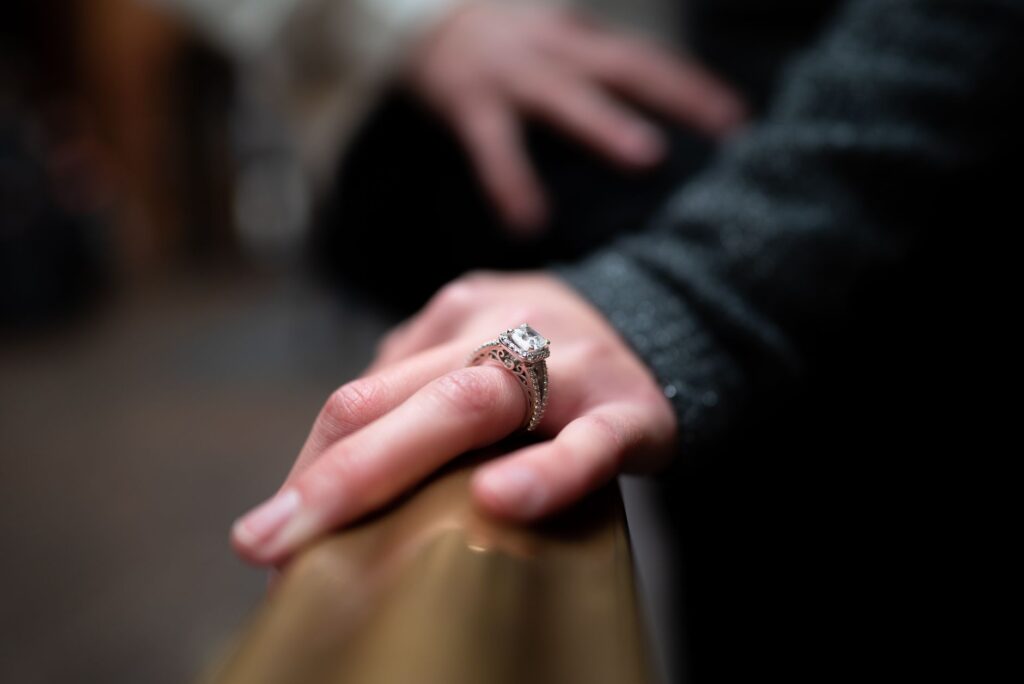
Finger coverage is one of the clearest ways to think about apparent size. A 3 carat round around 9.3 mm wide covers a substantial portion of the finger on most ring sizes. On a smaller finger, it can stretch close to edge-to-edge visually, especially with a thin band. On a larger finger, it still looks large, but with more visible space around it.
Elongated shapes can create even more coverage because their length draws the eye and makes the diamond seem larger. That is one reason buyers who want maximum visible presence often compare oval, pear, and marquise shapes with round diamonds.
How it tends to be perceived in person
In real life, a 3 carat diamond usually reads as a large center stone. Most observers will recognize that it is well above average in size, even if they cannot identify the exact carat weight.
That said, visual size is influenced by the entire ring. A 3 carat diamond in a heavy, wide setting may look more integrated and slightly less dramatic. The same stone on a delicate solitaire can appear much larger.
Factors That Change How Large a 3 Carat Diamond Appears
Shape
Shape is one of the biggest size influencers. Round diamonds are the standard comparison point, but they do not always offer the largest face-up spread for the weight.
- Round: Bright, symmetrical, classic. Usually not the largest-looking shape for the weight.
- Oval: Often looks larger because of its elongated outline and larger surface spread.
- Pear: Can look long and elegant, with strong finger coverage.
- Marquise: Often appears the largest because of its long shape and pointed ends.
- Emerald: Can appear large due to its open table and long lines, though sparkle style differs from brilliant cuts.
- Cushion and princess: Frequently face up slightly smaller because more weight can sit in the depth.
Cut quality and proportions
Cut is not just about sparkle. It also affects visible size. A well-proportioned diamond balances brightness, fire, scintillation, and spread. A poorly proportioned diamond may carry too much weight in the pavilion, which is the lower part of the diamond, causing it to look smaller from above.
For rounds, deep stones often face up smaller than ideal-cut stones of the same weight. For fancy shapes, proportion standards are less rigid, so reviewing the actual measurements becomes even more important.
Depth
Depth percentage describes how tall the diamond is relative to its width. When depth is excessive, more carat weight is hidden where you cannot see it once the stone is mounted.
That means two 3 carat diamonds can have the same weight but different spread. The one with less hidden depth may look larger.
Length-to-width ratio
This matters most in fancy shapes like oval, emerald, radiant, pear, and marquise. A more elongated ratio creates a longer look across the finger. Some buyers love that effect because it increases finger coverage. Others prefer a shorter, broader outline.
Neither is automatically better. It depends on whether you prioritize a larger appearance, a specific style, or a balanced shape profile.
Setting design
Settings can change perceived size dramatically.
- Thin bands: Make the center diamond look larger by contrast.
- Halo settings: Surround the center stone with small diamonds, increasing total visual footprint.
- Bezel settings: Can either emphasize or slightly contain the outline, depending on thickness.
- Wide bands: Can make the center stone look relatively smaller.
- Minimal prongs: Allow more of the stone’s edge to show, which can maximize apparent size.
Finger size
The same 3 carat diamond can look very different on different hands. On a size 4.5 finger, a 9.3 mm round may appear extremely large. On a size 8 finger, it still looks large, but the finger provides more surface area, which changes the impression.
This is why online images can sometimes mislead. Without finger-size context, the apparent scale is hard to judge accurately.
Color and clarity style
These do not change the actual dimensions, but they can affect how bold the diamond appears. A bright, lively, eye-clean diamond tends to look more impressive than one with visible inclusions or a tint that is easier to notice in a large size.
At 3 carats, color and clarity become more noticeable than they often are in smaller diamonds. This is especially true in elongated shapes and step cuts like emerald cuts, where transparency and body color are easier to see.
Real-World Size Examples
3 carat round on a size 4 finger
On a small finger, a 3 carat round can look strikingly large. At roughly 9.3 mm across, it may occupy much of the finger’s visible width. In a solitaire with a thin band, the stone often becomes the clear focal point from a distance.
For buyers who want a bold look, this combination delivers it. For those who prefer a more understated style, it may feel larger than expected.
3 carat round on a size 7 finger
On a size 7 finger, the same diamond still looks substantial, but more balanced. It has strong presence without always looking overwhelming, especially in a classic six-prong solitaire or cathedral setting.
This is one reason ring size should be part of every size decision. A diamond that feels oversized on one hand may feel proportionate on another.
3 carat oval vs 3 carat round
A 3 carat oval often looks larger than a 3 carat round because it is longer and usually has more face-up surface area. It also tends to cover more of the finger vertically, which creates a larger visual footprint.
However, ovals can show a bow-tie effect, which is a darker area across the center in some stones. This does not always make the diamond look smaller, but it can affect how lively it appears. Round diamonds usually offer more consistent light return and a different sparkle pattern.
2.5 carat round vs 3 carat round
The visual difference between 2.5 and 3 carats is noticeable, especially side by side, but it is not as dramatic as the price difference often is. A typical 2.5 carat round might measure around 8.7 to 8.9 mm, while a 3 carat round might measure about 9.2 to 9.4 mm.
That means the increase is visible, but it is measured in fractions of a millimeter. On the hand, it looks bigger, just not proportionally bigger to the weight increase.
2 carat round vs 3 carat round
This jump is easier to notice. A well-cut 2 carat round is often around 8.1 mm, while a well-cut 3 carat round is around 9.3 mm. That difference creates significantly more finger coverage and a stronger visual presence.
For a buyer choosing between these sizes, the 3 carat diamond usually reads as clearly larger in everyday wear, not just in side-by-side comparison.
3 Carat Diamond Size Comparison Table
| Carat Weight | Typical Round Diameter | Visual Impression | Difference vs 3 Carat |
|---|---|---|---|
| 1.0 ct | 6.4 to 6.5 mm | Classic, moderate size | Much smaller |
| 1.5 ct | 7.3 to 7.4 mm | Noticeably larger than 1 ct | Clearly smaller |
| 2.0 ct | 8.0 to 8.2 mm | Large and prominent | Smaller, but still substantial |
| 2.5 ct | 8.7 to 8.9 mm | Very large | Slightly smaller face-up |
| 3.0 ct | 9.2 to 9.4 mm | Large, high presence | Baseline |
| 3.5 ct | 9.7 to 9.9 mm | Very bold appearance | Moderately larger |
Price vs Visual Benefit
Why the price jumps so much
Diamond pricing does not increase in a straight line. Larger diamonds are rarer, especially in natural diamonds, and certain carat thresholds carry premium pricing. A 3 carat diamond can cost much more than a 2.5 carat diamond even if the visible size increase is modest.
This is particularly important for natural diamonds. Lab grown diamonds have made 3 carat sizes more accessible, but pricing still rises with carat weight, and quality factors like cut, color, and clarity still matter.
How much bigger does the upgrade look?
From 2.5 to 3 carats, the increase is visible but not transformational. From 2 to 3 carats, it is much more obvious. This is where buyers should separate emotional milestone goals from visual priorities.
If the goal is simply to reach a 3 carat label, the premium may not always produce the best value. If the goal is a clearly larger look than 2 carats, then 3 carats may make sense because the visual difference is meaningful.
Diminishing returns at higher carat weights
As carat weight rises, each additional fraction of a carat tends to produce a smaller visible increase relative to cost. This is the classic diminishing returns issue in diamond buying.
That does not mean larger sizes are a poor choice. It means buyers should understand they are paying not just for visible size, but also for rarity, milestone weight, and category prestige.
Natural vs lab grown 3 carat diamonds
Lab grown diamonds have changed the size conversation considerably. For buyers who care most about visual size on a set budget, a 3 carat lab grown diamond may be achievable where a natural diamond would require major compromises or a much higher price.
From a visual standpoint, a lab grown and natural diamond of the same cut, shape, and quality can look the same. The trade-offs are mostly about price structure, market positioning, and resale expectations rather than appearance.
For some buyers, lab grown makes a 3 carat size practical. For others, the preference for natural rarity remains important. The better choice depends on budget priorities and long-term expectations.
Who Should Size Up to 3 Carats
Buyers who want obvious finger coverage
If the goal is a ring that reads as distinctly large in normal viewing, 3 carats usually achieves that. The difference from 1 to 2 carats is major, and the jump from 2 to 3 also creates a clear visual statement.
Buyers with larger finger sizes
On larger fingers, a 3 carat diamond can provide the proportion some buyers want. A smaller stone may still be beautiful, but if balanced hand coverage matters, moving up can make sense.
Buyers choosing elongated shapes for maximum spread
A 3 carat oval, pear, or marquise can create very strong visual size. Buyers who want the largest-looking diamond for the weight often gravitate toward these shapes.
Buyers using lab grown diamonds to prioritize size
For those who want a large face-up look while staying within a defined budget, lab grown options often open the door to 3 carats without forcing significant compromises in cut or overall appearance.
Who Can Save Money Without Losing Much Visual Impact
Buyers open to slightly under 3 carats
A 2.80 or 2.90 carat diamond may look very similar to a 3.00 carat diamond, especially once set. If the measurements are strong and the cut is attractive, this can be a sensible way to reduce cost.
Buyers willing to choose a spread-friendly shape
An oval or marquise under 3 carats can sometimes deliver a visual size comparable to a 3 carat round. This does not mean one is better than the other. It means shape can be used strategically when visible size is the top priority.
Buyers prioritizing overall balance
Some rings look best when the center stone, band width, and hand proportions feel cohesive. In those cases, a slightly smaller diamond may produce the best real-world result, especially if it allows better cut quality or fewer visible compromises in color and clarity.
Buyers who care more about sparkle than size label
A well-cut 2.5 carat diamond with excellent brightness can be more visually satisfying than a poorly cut 3 carat diamond that faces up small or lacks life. Chasing the number alone can backfire.
Common Buyer Mistakes
Chasing the 3.00 carat mark without checking measurements
Two diamonds with the same weight can look different. Always review the millimeter size, not just the carat number.
Ignoring cut quality
A deep or poorly proportioned stone may hide weight where you cannot see it. A slightly smaller but better-cut diamond can have stronger face-up presence.
Overlooking shape differences
Shape has a major impact on apparent size. Buyers comparing only carat weights can easily end up with a diamond that looks smaller than expected.
Not considering finger size
A 3 carat diamond on a size 4 finger gives a very different effect than it does on a size 8 finger. Size expectations should always include hand proportions.
Using online photos without scale context
Images can distort perception because zoom level, camera angle, and hand size vary. Measurements are a more dependable way to compare actual visible size.
Paying a premium for a magic size without asking if it is worth it
Round-number carat weights often come with price premiums. A slightly under-threshold diamond may offer nearly the same visual impact for better value.
Ignoring color and clarity at larger sizes
At 3 carats, body color and inclusions can become easier to notice. Prioritizing size while dropping too low in visible quality may produce a result that looks less impressive overall.
How to Evaluate a 3 Carat Diamond More Effectively
Start with measurements
For round diamonds, check the diameter. For fancy shapes, check the length and width. This gives you a direct sense of visual size.
Review the cut, not just the certificate basics
For round diamonds, top cut grades are often a good starting point. For fancy shapes, look more carefully at proportion balance, outline, and face-up appearance because cut grading is less standardized.
Think about your ring style
A 3 carat diamond in a halo can look extremely large. A 3 carat in a heavy bezel may feel more controlled. The setting affects the final impression as much as the stone itself.
Consider the viewing distance of everyday life
Most people will see a ring at conversational distance, not under magnification. In everyday wear, overall brightness, shape, and finger coverage usually matter more than tiny grading distinctions that are difficult to notice without close inspection.
Frequently Asked Questions
Is a 3 carat diamond considered big?
Yes. In the context of engagement rings and fine jewelry, a 3 carat diamond is generally considered large. It has strong presence on most hands and is noticeably above average in face-up size.
How many millimeters is a 3 carat diamond?
A well-cut round 3 carat diamond is typically about 9.2 to 9.4 mm in diameter. Fancy shapes vary by cut and ratio, so they are usually described by length and width rather than one number.
Does a 3 carat diamond look twice as big as a 1.5 carat diamond?
No. It weighs twice as much, but it does not look twice as wide. Visible size increases more slowly than carat weight because carat measures volume, not face-up diameter alone.
Will a 3 carat diamond look too big for everyday wear?
That depends on personal style, finger size, and setting design. For some people, a 3 carat diamond feels bold but wearable. For others, especially on smaller hands, it may feel more dramatic than practical.
Which 3 carat diamond shape looks the largest?
Marquise, oval, and pear shapes often look larger than round diamonds of the same weight because they have elongated outlines and strong finger coverage. Round diamonds usually offer a different balance of brilliance and shape consistency.
Can a 2.9 carat diamond look the same as a 3 carat diamond?
Often, yes. If the measurements and cut are strong, the visible difference may be minimal once the diamond is set. This is why slightly below major carat thresholds can offer strong value.
Do lab grown 3 carat diamonds look different from natural ones?
Not in normal visual appearance when cut and graded similarly. A lab grown 3 carat diamond can look the same as a natural 3 carat diamond to the eye. The main differences relate to origin, price, and market behavior rather than visible size.
Should I prioritize 3 carats or better cut quality?
In most cases, cut quality should come first. A well-cut diamond usually looks brighter, more lively, and sometimes even larger face-up than a poorly cut diamond with a higher carat weight.
Conclusion
A 3 carat diamond usually looks large, noticeable, and substantial on the hand. In a round shape, expect about 9.2 to 9.4 mm of visible diameter. In elongated shapes like oval, pear, and marquise, the diamond can look even larger because of added finger coverage and length.
The most important point is that carat weight alone does not tell the full story. Shape, cut proportions, depth, finger size, and setting design all influence how big a 3 carat diamond actually appears. That is why measurements and face-up spread matter just as much as the number on the grading report.
For some buyers, 3 carats is worth it because the size increase from smaller weights is easy to see and creates the presence they want. For others, a slightly smaller diamond with better spread, stronger cut quality, or a more size-efficient shape may offer the better balance of appearance and value. The best decision comes from judging how the diamond will look in real life, not just how much it weighs on paper.