When shoppers compare IF vs VVS1 Diamonds, the real question is usually not which grade sounds better, but which one actually looks better in everyday life and whether the extra cost makes sense. Both grades sit near the top of the clarity scale, and both can look extremely clean to the naked eye. For most buyers, the difference is more about microscopic features, price, and peace of mind than a dramatic visual change.
This matters because clarity is one of the diamond quality factors that can be easy to overpay for without gaining a noticeable benefit. In lab grown diamonds, where high clarity is common, the choice between IF and VVS1 can have an even smaller impact on appearance than many first-time buyers expect. Understanding what these grades mean, what you can actually see, and where the price premium goes helps you make a smarter buying decision.
Quick Answer
IF means Internally Flawless, which means the diamond has no internal inclusions visible under 10x magnification. VVS1 means Very Very Slightly Included, with tiny inclusions that are extremely difficult to see even under magnification. In practical terms, both grades usually look eye-clean and excellent in normal viewing conditions.
For most buyers, the visual difference between IF and VVS1 is negligible. The main difference is the certificate label and the price. If your goal is the best balance of beauty and value, many shoppers find that a top-quality VVS1, VVS2, or even an eye-clean VS stone offers more practical value than paying extra for IF.
That said, some buyers prefer IF because they want the cleanest grading report possible or simply enjoy knowing their diamond ranks at the very top of clarity. If that peace of mind is important to you, IF can be worth it. If you care more about visible appearance than microscopic perfection, VVS1 often represents a more efficient use of budget.
What Do IF and VVS1 Mean?
Internally Flawless, or IF
IF stands for Internally Flawless. It means there are no internal inclusions that a grader can see under 10x magnification. A diamond graded IF may still have tiny surface blemishes, such as minute polishing marks, but those are not the same as internal inclusions.
In simple terms, IF is a very high clarity grade. It is one step below Flawless, which means no internal or external imperfections are visible under magnification. In everyday use, IF diamonds are usually indistinguishable from the highest grades when viewed face-up without magnification.
Very Very Slightly Included 1, or VVS1
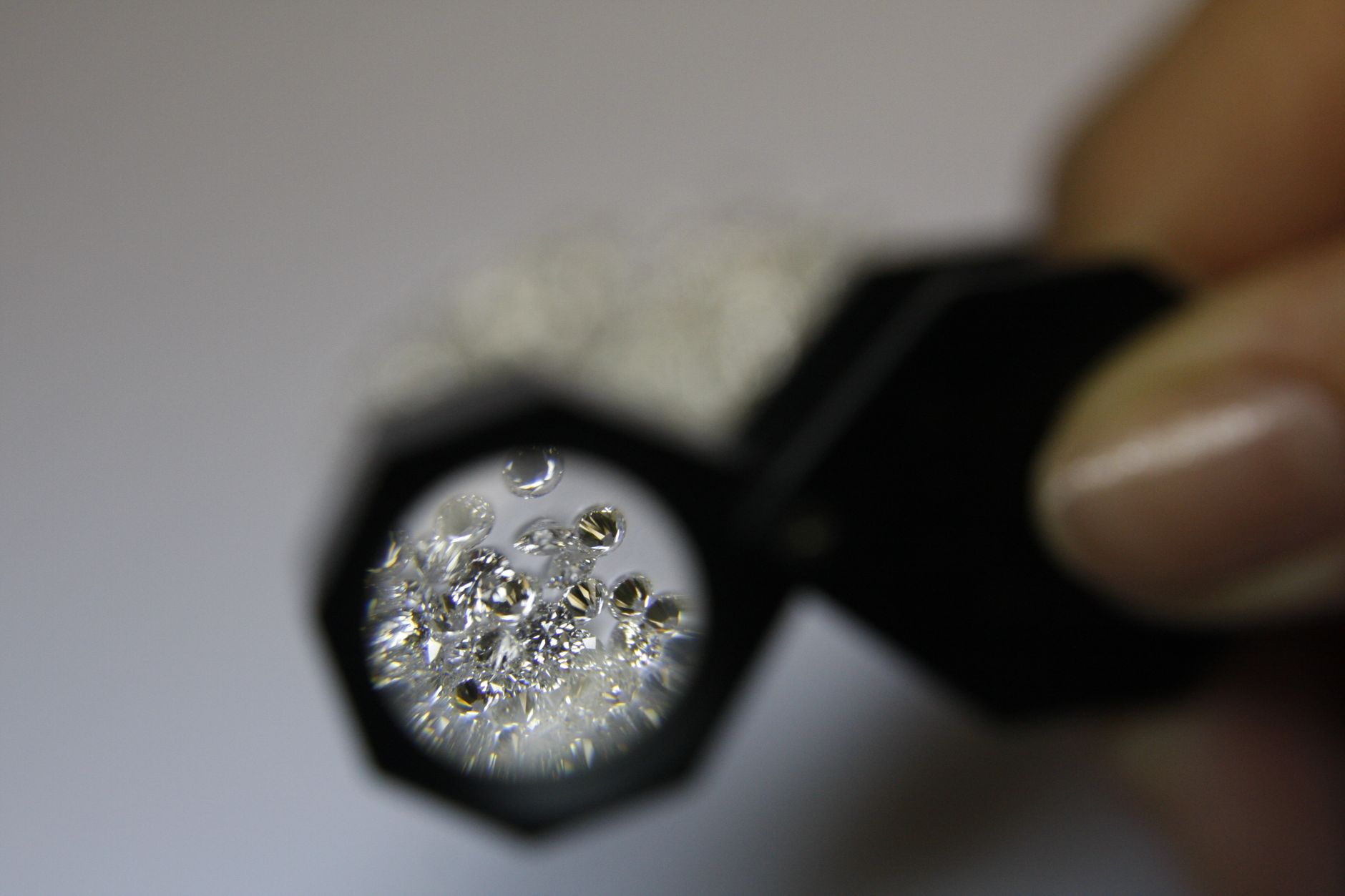
VVS1 stands for Very Very Slightly Included 1. This grade means the diamond contains minute inclusions that are extremely hard for a trained grader to see under 10x magnification. These inclusions are not obvious to the naked eye and usually require professional tools and experience to identify.
VVS1 is still considered a premium clarity grade. For many shoppers, it is already beyond what they can visually detect in a real-world setting. The difference from IF is mostly technical rather than practical.
How These Grades Fit Into the Clarity Scale
Diamond clarity grades generally run from Flawless down to Included. IF and VVS1 are both near the top of that range. That is why the comparison often matters more to buyers who want a top-tier report than to buyers trying to maximize visible beauty per dollar.
| Clarity Grade | What It Means | Typical Real-World Appearance |
|---|---|---|
| FL | No internal or external imperfections visible under 10x magnification | Exceptionally clean, rare, mostly a report distinction |
| IF | No internal inclusions visible under 10x magnification | Looks immaculate to the naked eye in most cases |
| VVS1 | Minute inclusions that are extremely difficult to see under magnification | Usually eye-clean and visually very close to IF |
| VVS2 | Slightly more noticeable under magnification than VVS1 | Often still eye-clean in normal viewing |
| VS1 | Minor inclusions visible under magnification | Often eye-clean, depending on shape and inclusion type |
Why Clarity Matters to Buyers
Clarity matters because it influences how clean a diamond looks, how much you pay, and how confident you feel about the stone. For some buyers, a diamond with a top clarity grade offers reassurance. For others, clarity is only important if an inclusion is visible or if the inclusion affects durability.
In the context of lab grown diamonds, clarity often has a slightly different buying dynamic than in natural diamonds. Lab grown stones frequently come with higher clarity grades more often than mined diamonds, so buyers can sometimes choose an excellent-looking stone without paying a dramatic premium for the top label. That makes understanding where the visual cutoff really is especially important.
Appearance
The most obvious reason to care about clarity is appearance. A diamond with obvious inclusions can look less crisp, especially in larger stones or certain lighting conditions. But once you move into IF, VVS1, and often VVS2, the visible difference becomes much smaller.
For many buyers, the question is not whether IF is better on paper. It is whether IF looks better enough to justify paying more than VVS1. In most cases, that answer depends on the size of the diamond, the shape, the inclusion type, and the buyer’s budget.
Value
Clarity grades affect price, but the price increase is not always matched by a visible improvement. This is where many shoppers run into diminishing returns. Paying more for a grade that does not change the way the diamond looks can reduce overall value.
That does not mean IF is a bad choice. It means the value proposition should be evaluated honestly. If the goal is visible beauty, many buyers can reach that goal without choosing the top clarity grade.
Confidence and Peace of Mind
Some buyers simply feel more comfortable buying a stone with a top-tier clarity report. If you know you will always wonder whether a lower grade would have been “good enough,” paying for IF may remove that doubt. That is a legitimate preference, even if the visual difference is minimal.
In other cases, shoppers gain more confidence by learning that an eye-clean VVS1 or VS2 is completely normal and appropriate. That understanding can free up budget for better cut quality, a larger carat weight, or a more appealing setting.
How IF vs VVS1 Looks in Real Life
Under everyday viewing conditions, most people will not see a meaningful difference between IF and VVS1. If both stones are well cut and face-up clean, they will generally appear equally clear to the naked eye at normal viewing distance. That is especially true once the diamond is mounted in a ring.
Professional graders and experienced jewelers can distinguish the grades under magnification because they are trained to do so. But that is not the same as a buyer noticing the difference in a store, in daylight, or while wearing the ring. This is a key distinction that shoppers often miss.
What Most Buyers Actually Notice
- Whether the diamond looks clean from arm’s length
- Whether any dark marks are visible face-up
- Whether the diamond seems bright, crisp, and transparent
- Whether the stone looks better or worse than neighboring stones
Most buyers do not notice the microscopic characteristics that separate IF from VVS1. Instead, they notice the overall visual impression. If the cut is strong, the diamond is well proportioned, and the inclusions are tiny, both grades can look nearly identical.
Viewing Distance Matters
A diamond may be technically different under a microscope but visually identical at normal distance. Many jewelers evaluate eye cleanliness from about 6 to 12 inches, since that is a practical distance for inspection. If a diamond looks clean from that range, it is usually more than adequate for everyday wear.
IF and VVS1 almost always meet that standard. The meaningful question is whether you are paying for a label that improves the stone in a way you can actually appreciate.
Shape Can Affect Visibility
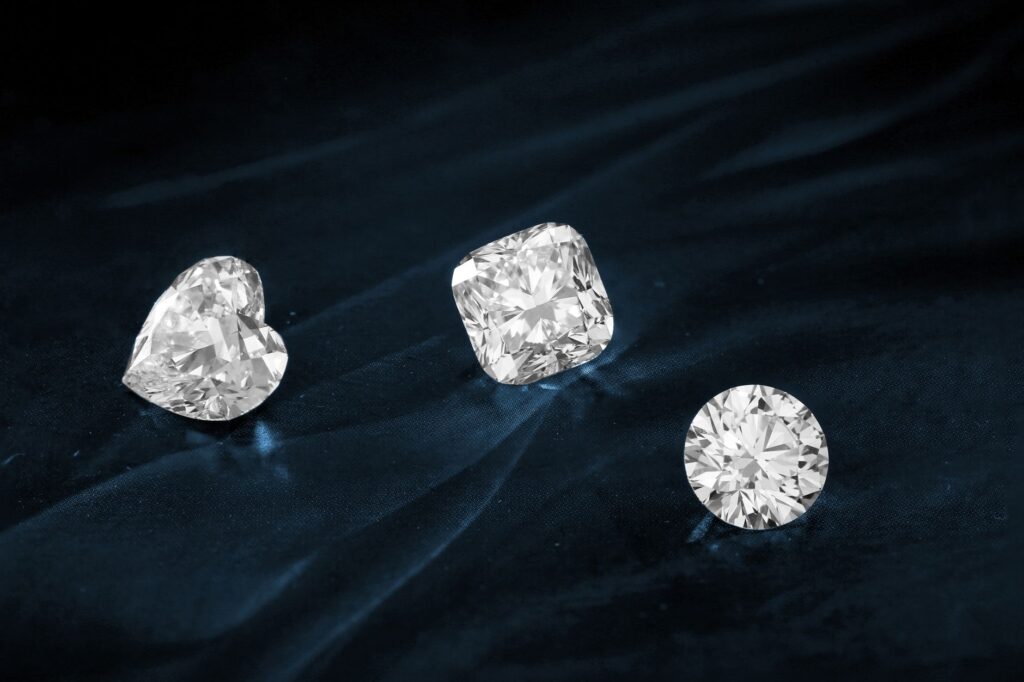
Some diamond shapes reveal inclusions more easily than others. Round brilliant diamonds often hide small inclusions well because of their facet pattern and sparkle. Elongated shapes such as oval, emerald, and pear can sometimes make certain inclusions more noticeable because of their larger open areas or “windows.”
That means an IF versus VVS1 comparison can matter slightly more in some shapes than others, but the difference is still usually subtle. In most cases, inclusion type and placement matter more than the grade label alone.
What an Inclusion Is and Why It Matters
An inclusion is a natural internal characteristic or growth feature inside a diamond. Think of it as a tiny internal mark. It can be very small and harmless, or it can be positioned in a way that affects appearance or, less commonly, durability.
Clarity grades are based on how visible and numerous these features are under magnification. The key practical issue for buyers is not whether an inclusion exists, but whether it can be seen, whether it distracts from the diamond, and whether it creates any structural concern.
Common Inclusion Types
Most shoppers do not need to memorize inclusion terminology, but it helps to know the basics when reading a grading report or asking questions from a jeweler.
- Crystal: A tiny mineral crystal trapped inside the diamond. Usually visible only under magnification unless large or dark.
- Feather: A small fracture or fracture-like feature. Often harmless, but if large or near the surface it may warrant closer inspection.
- Cloud: A cluster of tiny internal features. Usually not visible individually, but a dense cloud can slightly affect transparency in rare cases.
- Needle: A long, thin crystal inclusion. Typically microscopic in higher clarity grades.
- Pinpoint: A tiny dot-like inclusion. Very common and usually not visible to the naked eye in higher grades.
- Twinning wisp: A ribbon-like internal feature often found in lab grown diamonds. Frequently harmless and often not visible.
- Knot: A crystal that reaches the surface. More relevant to durability or finish than to simple visibility.
- Cavity: A small opening in the diamond surface. More of a surface issue than an internal one.
- Chip: A small missing piece at or near the surface. This can affect durability and should be reviewed carefully.
For IF and VVS1 diamonds, the inclusions are usually tiny and not visually disruptive. Still, inclusion type matters because a small dark crystal in a favorable position can be less important than a larger but more transparent feature hidden near the edge.
How Clarity Affects Price
Clarity can move price significantly, but the jump from VVS1 to IF often buys a very small visual improvement. That is the core value question. If the only difference is a microscopic inclusion that no one will see, the premium is being paid mainly for the label and rarity.
In general, diamonds become more expensive as clarity increases, especially near the top of the scale. However, price differences are not always linear. The premium from VVS1 to IF can be noticeable, even though the appearance difference is often not.
When Paying More for IF Makes Sense
Paying more for IF can make sense if:
- You want the highest practical clarity label short of Flawless
- You prefer a premium report for personal reasons
- You are buying a smaller stone where budget flexibility is less important
- You simply want the reassurance of top-tier clarity
These are preference-based reasons, not appearance-based reasons. That distinction is important. If the motivation is mainly visual, the extra cost may not deliver enough benefit.
When VVS1 Often Offers Better Value
VVS1 often offers better value if your goal is a diamond that looks extremely clean without paying for the rarest label. Many buyers can redirect the savings toward better cut quality, a slightly larger carat size, or a better setting. Those improvements often have a more obvious impact on the ring’s overall appearance.
This is especially relevant in lab grown diamonds, where buyers are often comparing stones with very high clarity and asking where to draw the line. In many cases, VVS1 is already well beyond what the eye can detect.
Practical Examples Buyers Can Relate To
IF Versus VVS1 in a Round Brilliant
In a round brilliant diamond, the cut pattern usually masks small inclusions well. If the IF and VVS1 diamonds are both well cut, most people will see no difference in everyday wear. The choice may come down to price and whether you care about the report grade more than the look.
Experienced jewelers often note that once you move into top-tier clarity on a round brilliant, the cut quality becomes more important than the clarity label for what the diamond actually looks like.
VVS1 Versus VS1
This comparison often produces a better practical discussion than IF versus VVS1 because VS1 can still be eye-clean in many cases. A well-chosen VS1 may look almost identical to a VVS1 face-up, especially in smaller to mid-sized stones. If the inclusions are white, tiny, and off to the side, the difference may be invisible without magnification.
For buyers focused on value, a clean VS1 can be a very smart option if the report and actual stone confirm it is eye-clean.
Eye-Clean SI1 Versus Non-Eye-Clean SI1
This comparison shows why the grade label alone is not enough. Two SI1 diamonds can look completely different. One may be eye-clean and perform beautifully, while another may have a dark inclusion in the center that is easy to spot.
That is why many experienced shoppers care more about the specific diamond than the category alone. An eye-clean SI1 can represent excellent value, while a problematic SI1 may not be worth considering even though it shares the same grade.
Lab Grown Diamonds and High Clarity
Lab grown diamonds are often available with very high clarity grades, including VVS and IF. Because the growth process is controlled, many stones have minimal visible inclusions. This can make the visual gap between grades even smaller than shoppers expect.
That does not mean every lab grown diamond is flawless to the eye, and it does not mean grading is meaningless. It does mean buyers should be careful not to overpay for a tiny clarity upgrade that will not change the stone’s appearance.
Advantages of IF Diamonds
IF diamonds offer several practical and personal advantages, even if the visual benefit over VVS1 is limited.
- Highest-end clarity positioning: IF sits at the top of the clarity scale below Flawless.
- Excellent visual cleanliness: They are typically extremely clean to the naked eye.
- Peace of mind: Some buyers value knowing the stone has no internal inclusions.
- Strong appeal for report-focused shoppers: A top clarity label can matter to collectors or detail-oriented buyers.
For buyers who care deeply about the grading report itself, IF has real appeal. It is not just a technical status marker. It can also simplify the buying process for people who want the cleanest possible stone without moving into the rarer and more expensive Flawless category.
Disadvantages of IF Diamonds
IF diamonds also have limitations that buyers should understand before paying a premium.
- Higher price for minimal visual difference: The premium often does not translate into a noticeable face-up improvement.
- Diminishing returns: Clarity gains at this level are mostly microscopic.
- Opportunity cost: Money spent on IF may reduce budget for cut, size, or setting quality.
- Not always necessary for everyday wear: Many lower grades already look perfectly clean in real-world use.
The biggest drawback is value. IF can be beautiful and satisfying, but many shoppers are paying for something they will not see once the diamond is mounted. If you are trying to maximize visible beauty, IF is often not the best place to spend extra budget.
Advantages of VVS1 Diamonds
VVS1 diamonds often strike a practical balance between premium quality and sensible value.
- Extremely clean appearance: Most VVS1 diamonds look eye-clean.
- Lower price than IF: You often save money without giving up visible quality.
- Strong report grade: VVS1 still signals excellent clarity.
- Better budget efficiency: Savings can improve cut, size, or setting.
For many buyers, VVS1 is a sweet spot. It gives the reassurance of near-top clarity while avoiding the extra premium for a difference that is usually invisible in normal wear. That is why experienced diamond shoppers often view VVS1 as more efficient than IF.
Disadvantages of VVS1 Diamonds
VVS1 is an excellent clarity grade, but it is not perfect for every buyer.
- Not the top label: Some buyers want IF or Flawless for personal reasons.
- Still pricier than necessary for many shoppers: In some cases, VS1 or VS2 may look just as clean.
- Potential overemphasis on grade: The buyer may still be paying for a label more than visible improvement.
VVS1 is not a bad value. The main question is whether it is the best value compared with slightly lower clarity grades that still appear clean to the eye.
Buying Considerations Beyond the Clarity Grade
When comparing IF vs VVS1 diamonds, the clarity grade should not be the only thing you look at. A diamond is a combination of many factors, and clarity is only one part of the overall picture.
Cut Matters More to Most Buyers
Cut affects sparkle, brightness, and overall visual beauty more than clarity does in many cases. A well-cut diamond often looks more impressive than a higher-clarity diamond with weaker proportions. If you are deciding where to spend extra money, cut is often the first place to prioritize.
This is particularly true for lab grown diamonds, where you may be able to find excellent clarity in multiple price brackets. A top cut grade can make the diamond look more lively and attractive than moving from VVS1 to IF.
Inclusion Location Matters
Where an inclusion sits can matter more than how many there are. A tiny inclusion near the edge may be far less noticeable than a similar inclusion under the center table, the large flat top facet of the diamond.
That is why a grading report alone is not enough. If you are comparing actual stones, look for inclusion placement on the plot diagram and ask whether the diamond is eye-clean face-up.
Stone Size Changes the Equation
As carat size increases, inclusions can become easier to detect because the diamond has more visible surface area. In larger stones, the difference between IF and VVS1 is still small, but it may be worth more attention than in a smaller diamond.
That said, even in larger stones, a well-chosen VVS1 is usually clean enough for most buyers. The important point is to confirm the specific diamond rather than assuming the grade tells the whole story.
Lab Grown Diamond Considerations
Lab grown diamonds often present more high-clarity options at lower prices than comparable natural diamonds. That can be helpful, but it can also tempt buyers to over-optimize the clarity grade. Because VVS1 and IF are both common at the higher end of the lab grown market, it is worth asking whether the premium adds anything visible.
Many informed buyers of lab grown diamonds place more emphasis on cut, color, and overall visual performance than on moving from VVS1 to IF.
Certification Still Matters
Always rely on a reputable grading report from a recognized laboratory. The report should confirm the clarity grade, but also provide important details about the diamond’s proportions, measurements, and plotted characteristics. That information helps you evaluate whether the stone is truly eye-clean and well balanced.
If you are comparing diamonds online, certification is especially useful because it gives you an objective framework. It does not replace viewing the diamond, but it does make comparisons more reliable.
Common Buyer Mistakes
Clarity can be easy to misunderstand, especially when buyers focus only on the grade label. Here are some common mistakes to avoid.
Overpaying for Invisible Improvements
One of the most common mistakes is paying a large premium for IF when the visual difference from VVS1 is effectively zero. If you cannot see the difference, the premium may not be the best use of your budget.
Assuming All Diamonds With the Same Grade Look the Same
Two VVS1 diamonds can still look different depending on shape, cut, and inclusion type. The grade provides a range, not a guarantee that every stone will appear identical. Always evaluate the actual diamond, not just the label.
Ignoring Inclusion Type and Placement
Even in top clarity grades, a specific inclusion may matter if it is positioned in a noticeable area or if it affects transparency. Buyers who ignore the report diagram may miss useful clues about how the diamond will actually look.
Choosing Clarity Instead of Cut
Many shoppers would get a better-looking diamond by choosing slightly lower clarity and better cut. Clarity can be important, but cut drives sparkle and overall beauty in a way most people notice immediately.
Buying Without Considering the Setting
A halo, bezel, or prong style can change how visible the center stone appears. Some settings hide small edge inclusions, while others leave the diamond more exposed. The setting can influence how much clarity really matters in the finished piece.
How to Decide Between IF and VVS1
The best choice depends on your priorities, not just the grading scale. If you want the highest possible report grade below Flawless and price is less of a concern, IF offers a premium clarity designation. If you want outstanding appearance with better budget efficiency, VVS1 is often the more practical choice.
Choose IF if:
- You care about having one of the top possible clarity grades
- You value the label itself and the reassurance it provides
- Your budget comfortably allows the upgrade
- You are less concerned about maximizing value per dollar
Choose VVS1 if:
- You want a diamond that looks extremely clean in real life
- You prefer better value over the highest label
- You would rather spend more on cut, size, or setting quality
- You want a premium stone without paying for invisible differences
For most buyers, the decision comes down to whether the emotional value of the IF label is worth the price increase. If not, VVS1 usually delivers nearly the same visual result.
Frequently Asked Questions
Is IF better than VVS1?
On paper, yes. IF is a higher clarity grade because it has no internal inclusions visible under magnification, while VVS1 has tiny inclusions that are extremely difficult to see. In everyday viewing, however, the difference is usually minimal and often impossible to notice.
Can most people see the difference between IF and VVS1?
No. Most people cannot see a meaningful difference with the naked eye, especially once the diamond is mounted. The distinction is mainly visible under magnification and on the grading report.
Is IF worth the extra money?
Sometimes, but not for visual reasons alone. IF can be worth it if you want the prestige of a top clarity grade or personal peace of mind. If your goal is simply to get a beautiful-looking diamond, VVS1 often offers better value.
Is VVS1 eye-clean?
Almost always, yes. VVS1 diamonds are generally eye-clean in normal viewing conditions. Still, it is wise to confirm the actual stone, because inclusion type, size, and position can matter.
Should I choose IF for a lab grown diamond?
Not automatically. Lab grown diamonds often have very high clarity to begin with, so the improvement from VVS1 to IF is usually small from a visual standpoint. Many buyers of lab grown diamonds prioritize cut and overall appearance instead.
Does clarity affect durability?
Usually not in IF or VVS1 diamonds. At these grades, inclusions are generally tiny and do not affect durability in normal use. Durability concerns are more relevant when inclusions are larger, surface-reaching, or located in vulnerable areas.
What is more important than IF vs VVS1?
For most buyers, cut is more important because it influences sparkle and beauty more directly. After cut, color, shape, and setting style often have a more noticeable impact than moving from VVS1 to IF.
Would an experienced buyer choose IF or VVS1?
It depends on the goal. An experienced buyer focused on value often chooses VVS1 if the diamond is eye-clean and well cut. An experienced buyer focused on top-end grading may choose IF, but usually with the understanding that the premium is mostly about the label rather than visible improvement.
Conclusion
The difference between IF and VVS1 diamonds is real on a grading report, but often very small in everyday appearance. Both grades are excellent, and both usually look clean and attractive to the naked eye. For many buyers, the question is less about which stone is prettier and more about whether the IF premium is worth paying for a difference most people will never see.
If you want the most practical buying outcome, focus on the specific diamond, not just the clarity label. Check whether it is eye-clean, review the inclusion type and placement, and consider how much cut quality, carat size, and color matter to you. In many cases, a well-chosen VVS1 offers nearly the same visual result as IF at a more sensible price.
For buyers researching lab grown diamonds or comparing clarity grades for an engagement ring, the most useful mindset is simple: choose the cleanest diamond you can see, not the highest grade you can name. That approach usually leads to better value and greater long-term satisfaction.