Diamond clarity is one of the most misunderstood parts of buying a diamond. Many shoppers assume that a higher clarity grade automatically means a better-looking stone, but that is not always true in everyday viewing. In many cases, the real question is much simpler: can you actually see anything without magnification?
That is why people searching for How to Tell If a Diamond Is Eye Clean are often trying to separate lab report language from real-world appearance. A diamond can have inclusions on paper and still look clean to the naked eye. On the other hand, a stone with a modest clarity grade may show something noticeable if the inclusion is in the wrong place or if the cut and shape make it easier to see.
For buyers, eye-clean clarity is less about memorizing grades and more about understanding what will be visible in normal use. The goal is not to buy the highest clarity possible. The goal is to choose a diamond that looks clean to you, offers good value, and fits the way the diamond will actually be worn.
Quick Answer
A diamond is eye clean if you cannot see its inclusions with your naked eye under normal viewing conditions. That usually means looking at the diamond from a typical social distance, not holding it very close under bright inspection lighting.
In practical terms, many diamonds in the VS2 and SI1 range can be eye clean, especially when the inclusion is small, off to the side, or hidden by the setting. Some SI2 diamonds may also appear eye clean, while some SI1 stones are clearly visible if the inclusion is central, dark, or clustered. Clarity grade alone does not guarantee eye-clean appearance.
The best way to tell if a diamond is eye clean is to review its plot, examine magnified images or videos when available, and confirm how the stone looks from face-up at a normal viewing distance. If possible, compare it in person or ask the seller exactly what “eye clean” means in their lighting and distance standard.
For shoppers prioritizing sparkle and precision, 8 Best High Clarity Lab Diamonds highlights options that can make comparison easier.
What Eye Clean Actually Means
Eye clean is not a formal grading term from the major grading laboratories. Instead, it is a practical buying description used to explain whether a diamond’s inclusions are visible without magnification.
That distinction matters because clarity grades are assigned under 10x magnification, while most buyers will never examine a diamond that closely during daily wear. A diamond can have inclusions that are easy for a grader to see at 10x and still appear completely clean to the naked eye.
In simple terms, eye clean means the diamond looks free of obvious flaws when viewed normally. The stone may still contain inclusions, but they are not distracting in the way most shoppers care about.
What Counts as Normal Viewing Conditions?
There is no universal rule, which is one reason eye-clean claims can vary between sellers. In general, normal viewing conditions usually mean:
- Face-up view, not studied from the side
- Arm’s-length or social distance, often about 8 to 12 inches or more
- Typical indoor lighting, not a jeweler’s microscope or intense spotlight testing
- No repeated close inspection by someone searching for imperfections
Some jewelers use a stricter definition than others. One store may call a diamond eye clean if no inclusions are visible at 6 inches, while another may require invisibility at 10 inches or more. This is why asking for the seller’s standard is important.
Why Eye Clean Is Different From Flawless
A flawless diamond has no internal or external imperfections visible under 10x magnification. That is a laboratory grade and is extremely rare. Eye clean is a consumer-facing description and usually applies to stones that are not flawless but still look clean in everyday wear.
For most buyers, eye clean is the more relevant goal. Flawless and internally flawless diamonds can command significant premiums without producing a noticeable visual benefit in normal use.
Understanding Diamond Clarity
Diamond clarity refers to the presence of internal characteristics called inclusions and external characteristics called blemishes. Inclusions form inside the diamond during growth, while blemishes are surface features such as small chips, scratches, or naturals left from cutting.
Most grading systems evaluate clarity under 10x magnification. The fewer and smaller the inclusions, the higher the clarity grade. The standard clarity scale used by major labs generally includes:
- Flawless (FL)
- Internally Flawless (IF)
- Very, Very Slightly Included (VVS1, VVS2)
- Very Slightly Included (VS1, VS2)
- Slightly Included (SI1, SI2)
- Included (I1, I2, I3)
Those labels are useful, but they do not tell the full story. Two diamonds with the same clarity grade can look very different depending on the type, size, location, and number of inclusions.
Why the Plot Matters
A clarity plot on a grading report shows where the grader saw inclusions and roughly what type they were. This can help you predict whether a flaw may be visible from the top of the diamond.
The plot is not a complete picture, though. A small inclusion in the center may be more noticeable than a larger one near the edge, especially once the stone is mounted in a ring. That is why buyers should consider both the report and actual images or video.
What Makes a Diamond Eye Clean?
Several factors influence whether a diamond looks eye clean. Clarity grade is only one of them. In real-world buying, the following factors often matter more than the grade label alone.
1. Inclusion Size
Smaller inclusions are less likely to be visible. A tiny crystal or pinpoint may be easy to see under magnification but invisible to the naked eye.
2. Inclusion Location
Inclusions near the center of the diamond are more likely to be noticed than inclusions near the edge. A center inclusion can interrupt the face-up look, while an edge inclusion may be hidden by the setting or less visible from normal angles.
3. Inclusion Contrast
Dark inclusions are easier to see than light ones. A black crystal, for example, may stand out more than a white or transparent inclusion of the same size.
4. Inclusion Type
Some inclusion types blend in better than others. A small feather may be less visible than a dark crystal, while a cloud may reduce transparency if it is dense enough.
5. Diamond Shape
Different shapes hide or reveal inclusions differently. Round brilliant diamonds often hide inclusions well because their faceting creates strong sparkle. Step-cut shapes, such as emerald cuts and Asscher cuts, are more transparent in appearance, so inclusions can be easier to spot.
6. Cut Quality
Better cut can help mask minor inclusions because more sparkle draws the eye. Poorly cut stones can make inclusions easier to notice, even when the clarity grade is relatively high. This is one reason clarity should always be considered alongside cut, not in isolation.
7. Setting Style
Once a diamond is mounted, prongs, bezels, and halo designs can cover parts of the stone. A well-chosen setting can reduce visibility of edge inclusions, though it cannot hide a serious flaw in the center.
How to Read Common Clarity Grades in Practical Terms
Shoppers often ask which clarity grades are eye clean. The answer depends on the individual diamond, but there are common patterns that help with buying decisions.
| Clarity Grade | What It Means | What Most Buyers See | Typical Value Takeaway |
|---|---|---|---|
| FL / IF | No inclusions visible under 10x magnification, or internally flawless | Usually looks spotless to the eye | High premium, often more than most buyers need |
| VVS1 / VVS2 | Very tiny inclusions that are hard for a grader to find | Almost always eye clean | Excellent clarity, but premiums may not change appearance much |
| VS1 / VS2 | Minor inclusions visible under magnification | Often eye clean, especially face-up | Common sweet spot for value |
| SI1 | Noticeable inclusions under magnification | Can be eye clean or visible, depending on the stone | High variability, can offer strong value if selected carefully |
| SI2 | Inclusions are more obvious under magnification | May be eye visible, but not always | Needs careful screening, especially for center stones |
| I1 and below | Inclusions usually visible without magnification | Often not eye clean | Usually not the best choice for buyers who want a clean look |
This table is a general guide, not a guarantee. An eye-clean SI1 can outperform a poorly chosen VS2 in appearance, while a visible SI1 can disappoint a buyer who assumed the grade alone guaranteed cleanliness.
Why Eye Clean Matters
Eye-clean appearance matters because most people experience a diamond from a normal distance, not under a loupe. If inclusions are not visible in ordinary use, paying extra for a higher clarity grade may not improve the way the diamond looks.
For many buyers, clarity affects three practical areas: appearance, value, and peace of mind. A diamond that looks clean reduces concern about visible flaws, while also helping buyers spend their budget where it matters more, such as cut, size, or color.
Appearance
Most buyers want the diamond to look clear and bright. If an inclusion catches the eye immediately, it can distract from the stone’s sparkle and overall presence. Eye-clean diamonds avoid that problem.
Value
Once a diamond is eye clean, higher clarity often brings diminishing returns. You may be paying for rarity instead of visible improvement. That can make higher clarity a luxury choice rather than a practical one.
Confidence
Many shoppers simply feel more comfortable knowing their diamond looks clean. Even if the difference is subtle, the confidence of owning an eye-clean stone can matter, especially for engagement rings and other frequently worn jewelry.
How to Tell If a Diamond Is Eye Clean in Practice
The most reliable way to judge eye cleanliness is to combine several sources of information. No single clue tells the whole story.
1. Check the Grading Report
Start with the clarity grade and any inclusion notes. Reports from respected labs such as GIA or IGI can help you understand what was found and where it was located.
Look for the plot, comments, and any mention of clouds, feathers, cavities, chips, or other features. The report will not tell you whether the diamond is eye clean, but it gives you a starting point.
2. Study Magnified Images or Video
Videos and high-resolution still images are extremely helpful. They let you see whether the inclusion is concentrated in one area, spread out, dark, or easy to notice from face-up position.
Be careful, though. Magnified media can make nearly every inclusion look more serious than it is. A stone may appear busy under a macro lens but still look clean to the naked eye.
3. Ask About Viewing Distance
When a seller says a diamond is eye clean, ask what that means in their evaluation. Eye clean at 6 inches is not the same as eye clean at arm’s length.
Good sellers can explain their standard clearly. If they cannot, the term may not be very meaningful.
4. Ask About Face-Up Appearance
A diamond should be judged from the top, since that is how it is usually worn. Side inclusions matter less if they are hidden by the setting or not visible in normal use.
Some inclusions are technically present but do not affect the face-up look. That distinction is important for practical buying.
5. Compare Similar Stones Side by Side
If possible, compare two or three diamonds of different clarity grades. You may find that one SI1 looks cleaner than another VS2 because of inclusion type or placement.
Real comparisons often teach more than grade charts. Experienced buyers and jewelers know that the stone matters more than the label.
Common Inclusion Types and What They Mean for Eye Cleanliness
Clarity is not just about how many inclusions exist. The type of inclusion often affects visibility and durability concerns. Here is a practical breakdown of common inclusion types.
Feather
A feather is a small fracture inside the diamond that can resemble a tiny crack or white line. Many feathers are harmless and not visible to the naked eye, especially if they are small and located near the edge.
Buyers should pay attention if a feather is large, reaches the surface, or sits in a vulnerable area. In those cases, it can sometimes affect durability, particularly if the diamond is set where it may receive impact.
Crystal
A crystal is a mineral trapped inside the diamond during formation. Crystals may be white, transparent, or dark. Dark crystals are more likely to be visible because they create stronger contrast.
Small crystals are very common and often harmless from a durability standpoint. Their visibility depends mostly on size, color, and location.
Cloud
A cloud is a group of tiny pinpoints that together create a hazy area. Light clouds are usually not visible, but dense clouds can reduce transparency and make a diamond look less crisp.
Clouds deserve attention when they are large enough to affect the overall appearance. A diamond may have a decent clarity grade but still look slightly hazy if the cloud is concentrated in the center.
Needle
A needle is a thin, elongated inclusion. Needles are often difficult to see unless several are grouped together or positioned where they are easy to notice face-up.
They are usually more of a visibility concern than a durability concern, unless they are associated with other structural issues.
Pinpoint
A pinpoint is a tiny dot-like inclusion. Most pinpoints are too small to see without magnification and are unlikely to affect eye-clean appearance on their own.
However, clusters of pinpoints may form clouds, which can become more noticeable.
Twinning Wisp
A twinning wisp is a ribbon-like line of inclusions caused by growth patterns in the diamond. It is especially common in some lab grown and natural stones alike, depending on growth and cutting conditions.
These features can be invisible or visible depending on how dense they are. They often show up as wispy, internal texture rather than a single obvious flaw.
Knot
A knot is an inclusion that reaches the surface because a crystal was not fully removed during cutting. Knots can sometimes be visible and may slightly affect the surface look.
They are more concerning when they are prominent or located where the setting cannot hide them well.
Cavity
A cavity is a small opening or indentation in the diamond’s surface. It is generally more concerning than an internal inclusion because it is already a surface feature.
Cavities can sometimes collect dirt and may be visible. They are worth closer inspection, especially in stones with lower clarity grades.
Chip
A chip is a small break on the surface edge or facet junction. Chips can affect appearance and may also raise durability concerns if the stone is worn regularly.
Even a tiny chip can matter if it is in a highly visible or exposed place. Buyers should always ask whether a chip is present and whether it has been accounted for in the grading report or seller disclosure.
How Eye Cleanness Differs by Shape
Diamond shape has a big influence on how easy it is to see inclusions. The same clarity grade can look very different depending on the shape of the stone.
| Shape | General Inclusion Visibility | Practical Note |
|---|---|---|
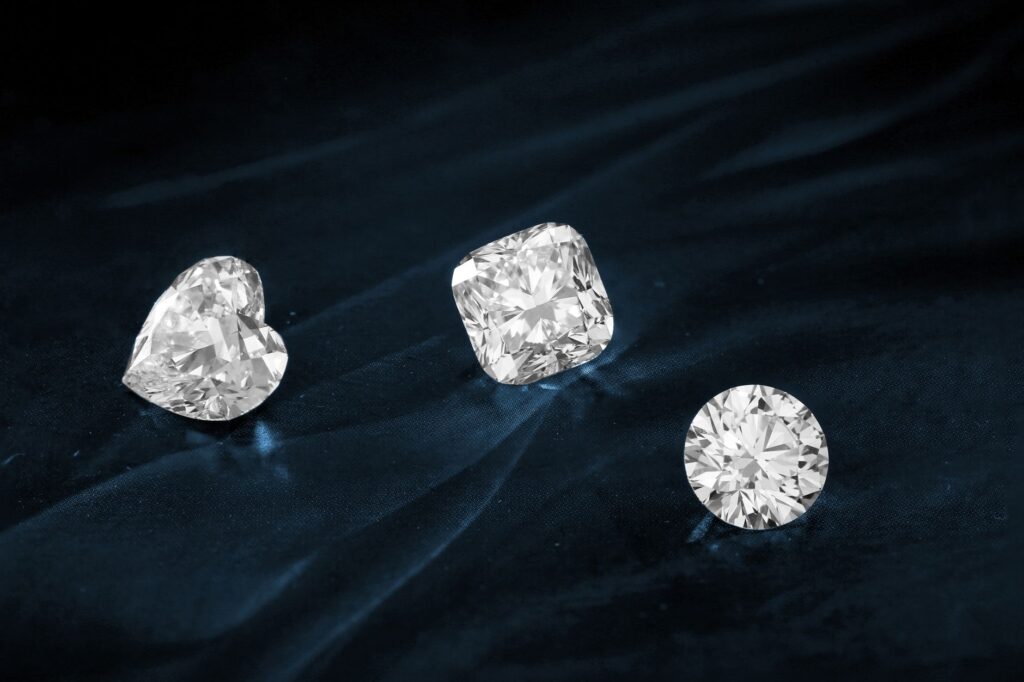
| Round brilliant | Usually good at hiding minor inclusions | Sparkle can mask small flaws well |
| Princess | Moderate visibility | Center inclusions can stand out more than in rounds |
| Cushion | Varies widely | Facet pattern can either hide or reveal inclusions |
| Oval | Moderate to high variability | Bow-tie area and elongated shape can influence visibility |
| Emerald | Often more revealing | Step cuts are transparent and show inclusions more easily |
| Asscher | Often more revealing | Like emerald cuts, it shows the interior more clearly |
| Radiant | Often good at masking inclusions | Brilliant faceting helps conceal minor flaws |
| Pear, marquise, heart | Variable | Shape, length, and tip areas can affect visibility |
Brilliant cuts usually hide inclusions better because their sparkle draws the eye away from the interior. Step cuts, by contrast, act more like windows into the diamond. That is why buyers often need higher clarity in emerald and Asscher cuts than in round brilliants if they want an eye-clean appearance.
How Lab Grown Diamonds Affect Clarity Decisions
Lab grown diamonds are a useful case study because clarity expectations often differ from those for natural diamonds. Many lab grown diamonds are available in high clarity grades at more accessible price points than comparable natural stones.
That means buyers sometimes feel pressure to choose very high clarity simply because it looks affordable. But the same eye-clean principle still applies. You do not need a diamond to be VVS or IF if a VS or SI stone already looks clean to the naked eye.
Why Lab Grown Clarity Can Be Different
Lab grown diamonds may contain different inclusion types than natural diamonds, including growth-related features like clouds, pinpoint patterns, or twinning wisps. These are not necessarily bad, but they can influence transparency and visual texture.
Because lab grown prices can make higher clarity grades feel more attainable, some buyers overpay for a grade they cannot actually see. A well-chosen VS2 or SI1 lab grown diamond may offer better value than stepping up to VVS1 simply for the label.
What Buyers Should Watch For
With lab grown diamonds, it is especially important to check whether a stone is truly eye clean and not just high on paper. Some lab grown diamonds with excellent grades can still have inclusion patterns or clarity growth features that affect the look.
The practical question remains the same: does it look clean in normal viewing conditions? If yes, the extra clarity premium may not add much visual value.
How Eye Clean Affects Value
Clarity premiums increase as the grade rises, but the visual benefit does not always increase at the same pace. That is why many shoppers consider VS2 or carefully selected SI1 stones the best value range.
Once a diamond is eye clean, paying more for a higher clarity grade may mainly buy rarity, not a visible improvement. For many buyers, that money is better allocated toward cut quality, a preferred shape, or a slightly larger carat weight.
When Paying More Can Make Sense
Higher clarity can make sense if:
- The diamond has a transparent, step-cut style that shows inclusions more easily
- You want a very clean report with minimal concern about visibility
- The stone is large enough that even minor inclusions become easier to detect
- You prefer the peace of mind of a higher grade
When the Upgrade May Not Be Worth It
Spending significantly more on VVS or IF may not be worthwhile if you cannot see a difference without magnification. In those cases, the premium often does not improve the wearing experience.
That does not mean high clarity is a poor choice. It simply means it is a preference-driven choice rather than a necessity for most buyers.
Practical Examples Buyers Can Relate To
VS2 Versus SI1 in Normal Viewing
A VS2 diamond often has minor inclusions that are easy to find under magnification but may be invisible face-up. An SI1 can also be eye clean, but it depends much more on the individual stone.
In practice, a well-chosen SI1 can sometimes look nearly identical to a VS2 in everyday wear. The difference may exist on paper, but not in the way the diamond presents on a hand.
Eye-Clean SI1 Versus Non-Eye-Clean SI1
Two SI1 diamonds can look completely different. One may have a small inclusion near the edge that is easy to hide, while another may have a dark crystal near the center that stands out immediately.
This is why experienced shoppers do not buy clarity grade alone. They look at the actual stone.
VVS Versus VS for Everyday Wear
Most buyers will not see a meaningful difference between a VVS and a VS diamond in normal use. Both are typically very clean to the eye.
If the price jump is large, the extra clarity often provides little practical benefit unless the buyer specifically values rarity or wants a higher-grade report for personal reasons.
Step-Cut Diamonds Versus Brilliant-Cut Diamonds
An emerald cut in VS2 may show an inclusion more readily than a round brilliant in SI1. The difference comes from the cut style, not just the grade.
This is one reason there is no universal clarity rule that works for every shape. Shape changes how the diamond reveals its interior.
Advantages of Choosing an Eye-Clean Diamond
- The diamond looks clean in everyday wear
- You may not need to pay for the highest clarity grades
- It can improve value by avoiding unnecessary premiums
- It gives buyers confidence when inspecting the stone casually
- It usually leaves more budget for cut, size, or setting quality
For many shoppers, eye clean is the right balance between appearance and budget. It often delivers the visual result people actually care about without overinvesting in microscopic perfection.
Disadvantages and Trade-Offs
- Eye-clean standards can be subjective if the seller does not define them clearly
- Some SI diamonds look great, while others are visibly included
- Clarity alone cannot predict the full visual experience
- Some inclusion types may carry durability concerns, especially if near the surface
- Higher clarity can offer peace of mind for buyers who dislike uncertainty
The main trade-off is that lower clarity can save money, but it requires more careful screening. Buyers who want simplicity may prefer a higher grade, even if the visual difference is small.
Buying Considerations That Matter Most
Budget
Clarify whether your budget is better spent on a higher clarity grade or on better cut quality. In many cases, cut has a stronger impact on visible beauty than clarity does once the diamond is eye clean.
Eye-Clean Priorities
Decide how strict you want to be. Some buyers are comfortable with a stone that looks clean at normal distance, even if a tiny inclusion can be found when searching closely. Others want a diamond that appears spotless even under closer inspection.
Inclusion Placement
Ask where the inclusions are located. A small edge inclusion may be less important than a similar inclusion at the center of the table, which is the flat top area most visible to the eye.
Lab Grown Diamond Considerations
Lab grown diamonds often allow buyers to be selective. Still, do not assume a high grade automatically means the diamond is the best choice. Focus on whether the diamond is eye clean and whether its clarity characteristics affect the appearance.
Long-Term Satisfaction
Think about how you will feel after the purchase. Some buyers are happiest with the smartest value choice, while others want to know they chose a higher clarity grade for personal comfort. Both approaches can be reasonable if the decision is intentional.
Common Buyer Mistakes
Overpaying for Invisible Improvements
One of the most common mistakes is paying significantly more for a clarity upgrade that does not change how the diamond looks without magnification. If the difference is not visible in real life, it may not be the best use of budget.
Ignoring Inclusion Location
Buyers sometimes focus only on the grade and ignore where the inclusion is located. A central inclusion can be much more noticeable than one hidden near the edge.
Assuming All SI Diamonds Are the Same
SI1 and SI2 diamonds can vary dramatically. Some are eye clean, some are borderline, and some are obviously included. The grade alone does not tell you which type you are getting.
Relying on Magnified Video Alone
Magnified video is useful, but it can make small flaws look worse than they are. A stone that looks busy at 30x may still look clean in normal wear.
Forgetting About Shape
Some buyers select clarity without considering that an emerald cut or Asscher cut may reveal more than a round brilliant. Shape should always be part of the clarity decision.
Assuming “Eye Clean” Means the Same Thing Everywhere
Sellers do not always use the same viewing distance or lighting standard. One retailer’s eye clean may not match another’s. Always ask for clarification.
How Experienced Buyers and Jewelers Usually Approach Eye Cleanliness
Experienced buyers often treat clarity as a filter, not a finish line. They look for a grade range that is likely to be clean, then inspect the actual diamond to confirm whether the inclusions are visible.
Jewelers commonly recommend that buyers focus on the face-up view first. If the diamond looks clean from the top and the inclusion is not structurally concerning, the stone may be a very practical choice even if it is not high on the clarity scale.
In many cases, a well-chosen VS2 or SI1 provides the best blend of appearance and value. That is especially true for round brilliants and many lab grown diamonds where clarity can be carefully screened before purchase.
Frequently Asked Questions
Is eye clean the same as flawless?
No. Flawless is a grading term that means no inclusions or blemishes visible under 10x magnification. Eye clean is a consumer description that means no inclusions are visible without magnification in normal viewing conditions.
Can an SI1 diamond be eye clean?
Yes. Many SI1 diamonds are eye clean, especially when the inclusions are small, light-colored, or near the edge. Other SI1 stones may show a visible flaw, so each diamond needs individual review.
Is VS2 usually eye clean?
Often, yes. VS2 diamonds are commonly eye clean, but not always. A poor inclusion position or a dark crystal can still be visible in certain stones.
Should I avoid SI clarity completely?
Not necessarily. SI diamonds can offer excellent value if carefully selected. The key is checking the actual stone, not assuming every SI diamond will look the same.
Does clarity affect durability?
Sometimes. Most inclusions do not affect durability, but certain features such as large feathers, cavities, chips, or surface-reaching inclusions can be more concerning. Durability depends on the inclusion type, size, and location.
Is a higher clarity grade always better?
Not from a practical appearance standpoint. Higher clarity usually means rarer and more expensive, but once a diamond is eye clean, the visible difference may be minimal or nonexistent.
What clarity grade is best for value?
There is no universal best grade, but VS2 and carefully chosen SI1 diamonds often provide strong value. They can look clean to the eye without carrying the premium of higher clarity grades.
How do I know if a seller’s eye-clean claim is trustworthy?
Ask for the seller’s definition of eye clean, including viewing distance and lighting. Request images or video of the exact diamond, and ask whether the stone has been inspected face-up at normal distance.
Conclusion
Knowing How to Tell If a Diamond Is Eye Clean helps you shop with more confidence and less confusion. The key idea is simple: clarity grades are useful, but the real question is whether the diamond looks clean without magnification in everyday wear.
In most cases, the best buying decisions come from balancing clarity with cut, shape, size, and budget. A VS2 or carefully chosen SI1 may look just as appealing to the eye as a much higher clarity stone, especially when the inclusion is small and well placed.
If you remember one thing, make it this: do not buy clarity on the label alone. Look at the actual diamond, consider the shape and inclusion type, and focus on how the stone will appear in real life. That approach usually leads to better value and greater long-term satisfaction.