A 2 carat diamond often looks smaller in real life than people expect from the number alone, yet it is still a clearly substantial stone on most hands. That gap between expectation and reality matters. Carat weight sounds like a direct measurement of size, but what you actually see is the diamond’s face-up size, shape, cut quality, and how it sits on the finger.
Understanding what a 2 carat diamond looks like is important because this weight sits in a price range where small visual differences can cost a lot of money. In both natural and lab grown diamonds, buyers can spend significantly more for a milestone weight without getting an equally dramatic increase in visible size. A practical size assessment helps you decide whether 2 carats is the right target, or whether a slightly smaller or differently shaped diamond would offer better value.
Quick Answer
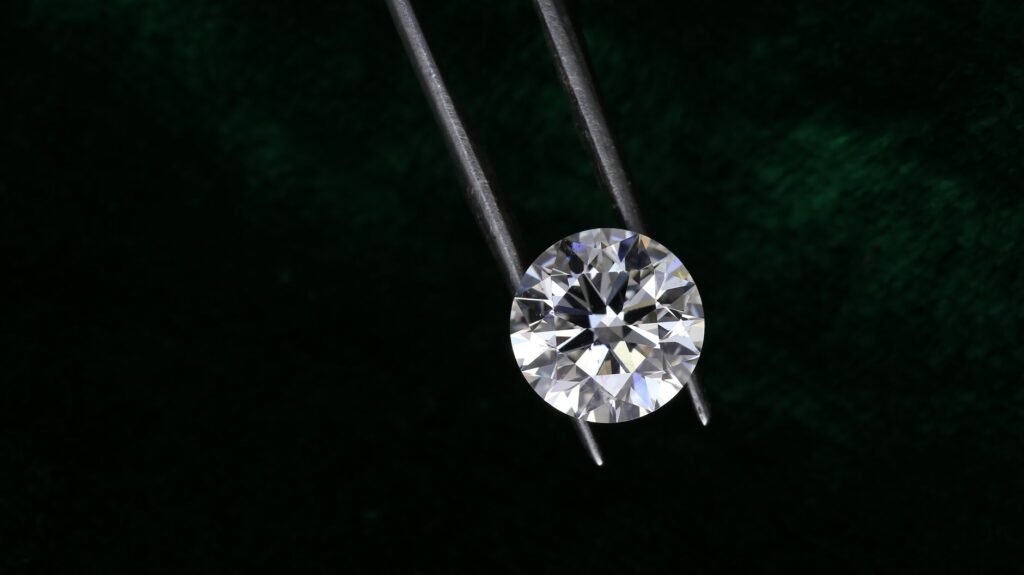
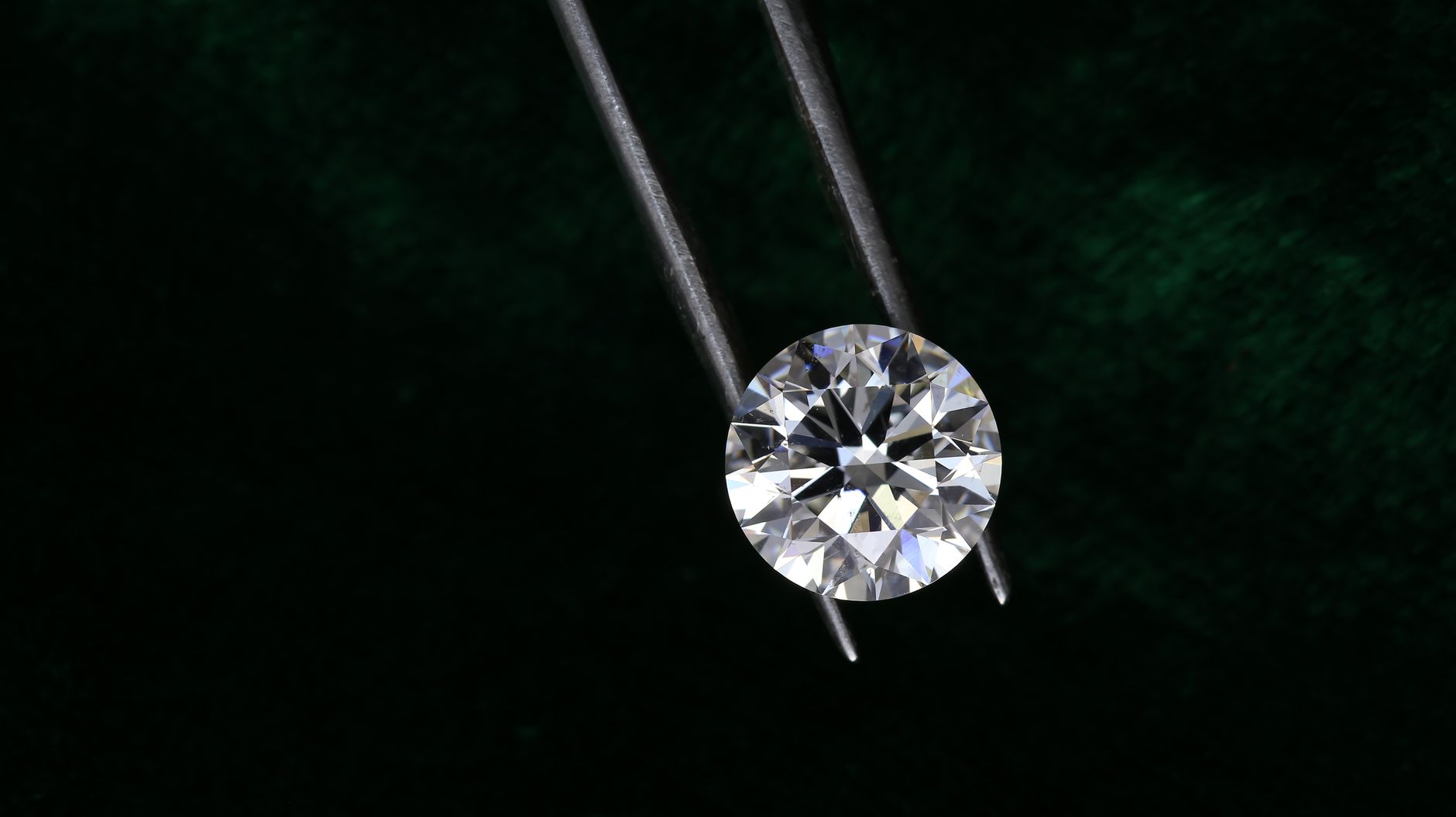
What does a 2 carat diamond look like? In simple terms, a well-cut 2 carat round diamond usually measures about 8.0 to 8.2 mm across and has a noticeably large, prominent appearance on the hand. On an average ring size finger, it looks substantial and is easily larger than what most people think of as a standard engagement ring diamond.
That said, a 2 carat diamond does not look twice as wide as a 1 carat diamond. Because diamond size is three-dimensional, the visible diameter increases more gradually than the carat number. A 1 carat round is usually about 6.4 to 6.5 mm, while a 2 carat round is about 8.1 mm. Visually, that is a meaningful increase, but not a doubling in width.
Shape, depth, cut quality, and finger size all affect the final look. A 2 carat oval, pear, or marquise may appear larger face-up than a 2 carat round. A deeply cut 2 carat diamond may look smaller than expected because more of its weight is hidden in the lower portion of the stone instead of spread across the top.
Understanding the Carat Concept
What diamond carat actually means
Carat is a measurement of weight, not visible size. One carat equals 200 milligrams. So a 2 carat diamond weighs 400 milligrams.
This is one of the biggest sources of confusion in diamond buying. Buyers often assume that carat works like clothing sizes or screen sizes, where the number directly describes what they will see. It does not. Two diamonds with the same carat weight can look slightly different in size depending on their proportions and shape.
What face-up size means
Face-up size refers to how large a diamond looks when viewed from the top, which is the angle people see most of the time. This is the practical form of size that matters for appearance on a ring.
For a round diamond, face-up size is usually expressed by diameter in millimeters. For fancy shapes such as oval, cushion, emerald, pear, or radiant, size is usually described by length and width.
A 2 carat diamond can carry weight in ways that are not fully visible from above. If a diamond is cut too deep, more of that weight sits below the girdle, which can reduce its apparent spread. In plain English, you may pay for 2 carats but see something that looks closer to a smaller diamond.
Why millimeter measurements matter as much as carat
Millimeter dimensions are often more useful than carat weight when you want to know what a diamond will actually look like. A buyer comparing two 2 carat diamonds should always check measurements, not just the weight listed on the grading report.
For example, two round diamonds may both weigh 2.00 carats, but one may measure 8.25 mm while another measures 7.95 mm. That difference may sound small on paper, yet it can be visible in person, especially once mounted in a simple setting.
What a “magic size” means
A magic size is a popular milestone weight such as 1.00, 1.50, 2.00, or 3.00 carats. These numbers carry psychological appeal, so they often command higher prices. A diamond weighing 2.00 carats may cost notably more than one weighing 1.90 or 1.95 carats, even if the visible size difference is modest.
This matters because a buyer focused only on hitting the 2 carat mark may overpay for a number rather than a meaningful visual gain. In some cases, a well-cut 1.90 or 1.95 carat diamond can look extremely similar to a 2.00 carat diamond once set.
What Buyers Usually Expect
Expectation: 2 carats should look twice as big as 1 carat
This is probably the most common misconception. A 2 carat diamond is not twice as wide as a 1 carat diamond. Since carat measures weight, the increase in visible diameter is much smaller than the increase in carat number.
With round diamonds, the jump from about 6.5 mm to about 8.1 mm is very noticeable, but it is not a doubling. The surface area increase is more meaningful than the width increase, which is why a 2 carat diamond does look substantially larger. Still, buyers expecting an enormous jump can be surprised.
Expectation: all 2 carat diamonds look equally large
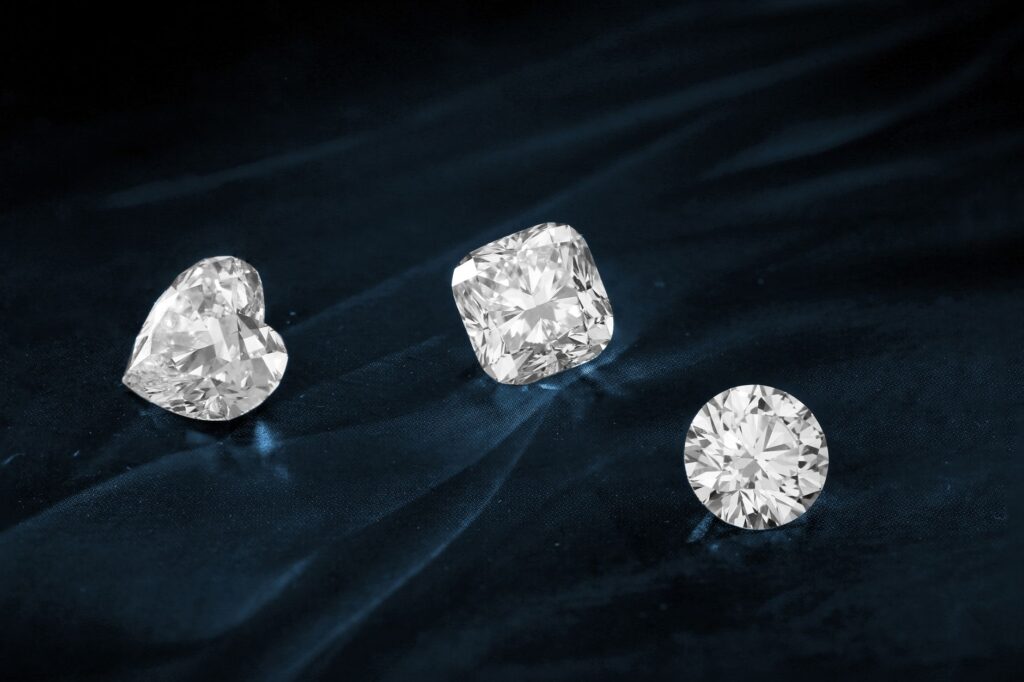
They do not. A 2 carat oval can look longer and more finger-covering than a 2 carat round. A 2 carat marquise can appear even larger across the finger because of its elongated shape and pointed ends.
At the same time, a 2 carat cushion or Asscher may appear smaller face-up because these shapes often carry more depth and have a more compact outline. The number on the certificate tells you the weight. The shape strongly influences what your eye reads as size.
Expectation: once a diamond reaches 2 carats, cut matters less
Cut still matters a great deal. In fact, it matters more than some buyers realize. A poorly proportioned 2 carat diamond can face up smaller, appear darker, or show less sparkle than a well-cut stone of similar weight.
Size and brilliance work together. A diamond that is technically 2 carats but looks sleepy or overly deep may not deliver the visual impact most buyers want from that weight.
Expectation: finger size does not change how large it looks
Finger size changes visual perception significantly. On a size 4 finger, a 2 carat diamond can look very bold and occupy a lot of visible space. On a size 8 finger, that same diamond still looks large, but more balanced and less dominant.
This is why online images without finger context can be misleading. The same stone can look dramatically different depending on the hand wearing it.
What It Actually Looks Like
Typical size of a 2 carat round diamond
A well-cut 2 carat round diamond usually measures around 8.0 to 8.2 mm in diameter. That size creates a clearly noticeable center stone with strong presence in most ring settings.
On the hand, this usually reads as a large engagement ring diamond, especially in a solitaire or thin-band design where the center stone is the visual focus. It looks more substantial than the classic 1 carat look, but it still remains wearable for everyday use in most settings.
How prominent it appears on the hand
A 2 carat diamond is often the point where a ring starts to look distinctly “large” rather than simply elegant or moderate. It tends to attract attention more easily, not necessarily because people know the exact carat weight, but because the stone has enough spread to stand out from ordinary jewelry.
That said, the look can vary from refined to dramatic depending on shape and setting. A 2 carat emerald cut in a simple platinum solitaire can look sleek and understated in style despite its large size. A 2 carat halo ring can look significantly bigger and bolder because the design adds extra visual width.
Finger coverage
Finger coverage refers to how much of the finger’s visible width the diamond occupies when viewed from above. This has a major effect on how large the ring looks.
On smaller fingers, a 2 carat round may cover a large percentage of the finger width, creating a statement look. On larger fingers, it may still look impressive but less oversized. Elongated shapes often create even more coverage because they extend along the finger and can make the stone appear larger than its weight suggests.
How it compares with common reference points
Most people have seen diamonds around the half-carat to 1 carat range in everyday life. Compared with those sizes, a 2 carat diamond looks significantly more substantial. It is not subtle. Even people who know little about diamonds usually recognize it as a larger center stone.
However, real-world perspective matters. Social media, celebrity jewelry, and close-up photography often distort expectations. In professional photos, diamonds are enlarged, tightly framed, and shown under ideal lighting. In person, a 2 carat diamond is beautiful and substantial, but not the oversized object some edited images make it seem to be.
Typical 2 Carat Diamond Measurements by Shape
The following measurements are approximate. Actual spread varies based on cut style and proportions.
| Shape | Approximate Measurements at 2 Carats | How It Usually Looks Face-Up |
|---|---|---|
| Round | 8.0 to 8.2 mm diameter | Balanced, classic, bright, substantial |
| Oval | 9.5 x 7.0 mm to 10.0 x 7.5 mm | Often appears larger and longer than round |
| Cushion | 7.5 x 7.0 mm to 8.0 x 7.5 mm | Softer outline, often smaller-looking than round |
| Emerald | 8.5 x 6.5 mm to 9.0 x 7.0 mm | Elegant, spread depends heavily on length-to-width ratio |
| Radiant | 8.0 x 6.5 mm to 8.5 x 7.0 mm | Bright, can look slightly compact or broad depending on ratio |
| Pear | 10.0 x 6.5 mm to 10.5 x 7.0 mm | Elongated, often appears larger than round |
| Marquise | 11.5 x 6.5 mm to 12.0 x 7.0 mm | Very elongated, high finger coverage |
| Princess | 7.0 x 7.0 mm to 7.5 x 7.5 mm | Square, often looks slightly smaller than round |
| Asscher | 7.0 x 7.0 mm to 7.5 x 7.5 mm | Deep and compact, often smaller-looking face-up |
Factors That Change Apparent Size
Shape
Shape is one of the biggest drivers of visual size. Elongated shapes such as oval, pear, and marquise usually appear larger than round diamonds of the same carat weight because they stretch over more of the finger.
Square and deeper shapes such as cushion, princess, and Asscher may appear smaller because more weight is concentrated inward or downward rather than spread outward. This does not mean they are worse choices. It means buyers should judge them on their own visual style, not just carat comparisons.
Cut quality
Cut quality affects both brilliance and apparent size. A diamond with strong proportions tends to return light better and often has a more pleasing spread for its weight. A poorly cut diamond may leak light, look duller, or carry excess weight where you cannot see it.
For round diamonds especially, a well-cut 2 carat stone can appear more lively and impressive than a slightly heavier stone with weaker cut quality. Buyers often focus on color or clarity first, but cut has a stronger effect on overall visual performance.
Depth
Depth refers to how tall the diamond is from top to bottom. If a diamond is too deep, it may hide weight in the pavilion, which is the lower part of the stone. This can make a 2 carat diamond look smaller than another 2 carat diamond with better spread.
This is why dimensions matter. Two stones can share the same weight while one visibly faces up larger because its proportions are more efficient.
Table and overall proportions
The table is the large flat facet on top of the diamond. Table size, crown angle, pavilion angle, and overall proportions all influence how a diamond balances brightness, fire, scintillation, and spread.
From a buyer’s perspective, the practical takeaway is simple. Do not judge size by carat alone. A proportionally attractive diamond often gives a better mix of visible size and sparkle than one chosen solely for hitting 2.00 carats.
Setting design
The setting can make a 2 carat diamond look larger or smaller. A thin band tends to emphasize the center stone. A halo setting adds visible width and can make the ring appear larger overall. A bezel setting may reduce some edge definition, which can slightly change how large the diamond appears.
Side stones also affect perception. A solitaire makes the center diamond the sole focal point. A three-stone ring can make the overall ring look larger, but it may also make the center stone feel less isolated and therefore slightly less dominant.
Finger size and hand proportions
Finger width changes size perception immediately. A 2 carat diamond on a smaller finger often looks bold and expansive. On a broader finger, the same stone can look elegant and balanced rather than oversized.
Hand proportions matter too. Long, slender fingers can make elongated shapes look especially graceful. Shorter fingers may benefit from ovals, pears, or marquise shapes if the goal is a more lengthening visual effect.
Real-World Size Examples
2 carat round on a size 4 finger
On a size 4 finger, a well-cut 2 carat round usually looks quite large. The 8.1 mm diameter can take up a significant portion of the finger’s visible width, giving the ring strong presence even in a minimal solitaire.
This is the kind of size that often reads as a statement ring rather than a modest one. Buyers with very small fingers should consider not just whether they like the size in photos, but whether they want that level of prominence for daily wear.
2 carat round on a size 6 finger
On a size 6 finger, a 2 carat round typically looks substantial but balanced. This is a useful middle-ground reference because it reflects an average hand size for many buyers.
It will clearly look larger than a 1 carat diamond and usually deliver the “larger center stone” effect that many people have in mind. For buyers who want a visible upgrade without moving into very oversized territory, this can be a sweet spot.
2 carat round on a size 8 finger
On a size 8 finger, a 2 carat round still looks large, but it may not appear as dramatic as it would on a smaller hand. Some buyers with larger fingers choose elongated shapes or slightly higher carat weights if they want more finger coverage.
This does not mean 2 carats is too small. It means the visual effect shifts from bold statement to substantial classic size, depending on the overall hand proportions and setting style.
2 carat oval vs 2 carat round
A 2 carat oval often appears larger than a 2 carat round because of its elongated outline and larger face-up footprint. It can cover more finger length and sometimes more total visible area depending on the cut.
For buyers who want a bigger-looking diamond without moving to a higher carat weight, oval is one of the most common alternatives. However, buyers should also evaluate bow-tie visibility, which is the darker area that can appear across the center of some elongated cuts.
1.90 carat vs 2.00 carat round
The visible difference between a well-cut 1.90 carat round and a 2.00 carat round is often very small. In many cases, the diameter difference may be only a few tenths of a millimeter or less.
This is one of the best examples of why magic sizes can be expensive. Buyers who are flexible about the number may save meaningful money with little visible sacrifice.
2 carat cushion vs 2 carat round
A 2 carat cushion often looks smaller face-up than a 2 carat round, especially if it has a deeper build. Buyers who love cushion shape should not judge it by round-diamond expectations.
Cushions offer a different visual personality. They emphasize softer corners and a pillowy outline. If spread is your top priority, round or elongated shapes may feel larger for the same weight. If style matters more than maximum face-up size, cushion may still be the right choice.
2 Carat Diamond Compared With Other Popular Sizes
| Carat Weight | Approximate Round Diameter | Visual Difference Compared With 2 Carats | Typical Buying Note |
|---|---|---|---|
| 1.00 ct | 6.4 to 6.5 mm | Noticeably smaller | Classic size, usually much lower cost |
| 1.50 ct | 7.3 to 7.4 mm | Clearly smaller, but still substantial | Often a strong value point |
| 1.75 ct | 7.7 to 7.8 mm | Moderately smaller | Can offer savings with limited visual loss |
| 1.90 ct | 7.9 to 8.0 mm | Very close in appearance | Often better value than 2.00 ct |
| 2.00 ct | 8.0 to 8.2 mm | Reference point | Popular milestone size |
| 2.50 ct | 8.7 to 8.9 mm | Clearly larger | Price often rises sharply |
| 3.00 ct | 9.2 to 9.4 mm | Significantly larger | Major visual jump, major cost jump |
Price vs Visual Benefit
Why the cost rises faster than the visible size
Diamond prices do not increase in a straight line. As carat weight rises, price often climbs much faster than visible size. This is especially true at milestone weights like 2.00 carats.
Part of the reason is rarity in natural diamonds. Larger rough crystals that can yield well-cut stones become less common. In addition, market demand strongly favors whole-number sizes, which adds a premium to 2 carat diamonds.
The visual increase from 1.5 to 2 carats
The jump from a 1.5 carat round to a 2 carat round is noticeable. A 1.5 carat round usually measures around 7.3 to 7.4 mm, while a 2 carat round is around 8.1 mm. That difference matters visually, especially on the hand.
Still, the cost increase is often much greater than the size increase. Buyers should decide whether the extra spread and prestige of the 2 carat mark are worth the higher budget, or whether a 1.7 to 1.9 carat stone delivers a more efficient trade-off.
Diminishing returns
Diminishing returns means each additional increase in carat weight tends to cost more money for a smaller percentage gain in visible size. This does not mean larger diamonds are poor choices. It means the decision becomes more about priorities than simple value.
If your goal is the largest possible look for the money, chasing exact milestone weights is often not the most efficient path. If your goal is specifically owning a 2 carat diamond, then the premium may feel justified to you even if the visual gain is not proportional to the price jump.
Lab grown context
Lab grown diamonds change this conversation substantially. Because lab grown prices are typically much lower than natural diamond prices for comparable visual size and quality, a 2 carat diamond may become realistic for buyers who would otherwise be considering 1 carat or 1.5 carats.
From a visual standpoint, a lab grown 2 carat diamond looks like a natural 2 carat diamond if cut and graded similarly. The main difference is not appearance but pricing structure, origin, and resale dynamics. Buyers comparing natural and lab grown options should weigh size goals alongside long-term budget priorities and personal preferences.
Who Should Size Up to 2 Carats or More
Buyers who prioritize visible finger coverage
If visual presence is one of your top goals, 2 carats is often a meaningful threshold. It gives a distinctly substantial look, especially in round, oval, pear, and marquise shapes.
This can be particularly appealing for buyers who feel that 1 carat to 1.5 carats looks too modest for their taste or hand size.
Buyers with larger finger sizes
On larger fingers, a 2 carat diamond may provide the balance some buyers want. A smaller stone can sometimes feel visually lost depending on the setting and shape.
Elongated 2 carat shapes may be especially useful if the goal is more length and coverage without jumping to even higher weights.
Buyers using lab grown diamonds to maximize size
Lab grown diamonds may make a 2 carat size target more practical without requiring major compromises in color or clarity. For buyers who care strongly about visible size but want to stay within a set budget, this can be one of the clearest advantages of the lab grown category.
The key is to keep the same quality discipline. A lower price should not mean ignoring cut quality, measurements, or certification.
Buyers who care about the milestone itself
Some buyers simply want to own a 2 carat diamond. There is nothing wrong with that. Jewelry decisions are partly practical and partly personal.
If the number matters to you and fits your budget comfortably, the premium may be worthwhile on an emotional level even if a slightly smaller diamond offers better value mathematically.
Who Can Save Money Without Losing Much Visual Impact
Buyers open to 1.80 to 1.95 carats
This is one of the smartest areas to consider for value. A well-cut diamond just under 2 carats can look extremely close in size while avoiding part of the premium attached to the exact milestone weight.
For buyers who want the look of 2 carats more than the number itself, this range is often worth serious attention.
Buyers willing to choose elongated shapes
A 1.70 to 1.90 carat oval, pear, or marquise may look as large as, or in some cases larger than, a 2 carat round because of greater finger coverage. Shape can create the impression of size more efficiently than carat alone.
This approach works best for buyers who genuinely like those shapes. Choosing an elongated diamond only for size makes sense only if you also enjoy its style on the hand.
Buyers who prefer a simple setting and thinner band
Design can help a diamond look larger. A thin band, delicate prongs, or subtle halo can all increase visual emphasis on the center stone. In some cases, a slightly smaller diamond in a well-chosen setting can deliver the look a buyer wants without reaching 2 full carats.
This is often a more efficient upgrade than increasing weight while overlooking design.
Buyers prioritizing cut quality over carat milestones
A beautifully cut 1.8 or 1.9 carat diamond often makes a stronger impression than a duller, deeper 2.0 carat stone. If your budget forces a trade-off, many experienced buyers would prefer the better-cut diamond even at slightly lower weight.
Common Buyer Mistakes
Chasing the number instead of the look
Focusing too heavily on “2 carat” can cause buyers to miss better options nearby. A slightly smaller diamond may look almost identical and cost less, or it may allow room in the budget for better cut, color, or setting quality.
Ignoring millimeter measurements
Measurements tell you what the eye is likely to see. Carat tells you what the stone weighs. Both matter, but visible dimensions are essential when evaluating size.
Overlooking shape differences
Comparing a 2 carat cushion to a 2 carat oval as if they should look the same is a mistake. They distribute weight differently and create different visual impressions.
Forgetting finger size
A diamond that looks huge on one person may look moderate on another. Always judge size in the context of the wearer’s hand, not in isolated close-up images.
Paying a large premium for tiny visual gain
Moving from 1.90 to 2.00 carats can involve a meaningful price jump for a small visible difference. Buyers should know when they are paying for appearance and when they are paying mostly for category pricing.
Assuming bigger automatically looks better
A larger diamond is not always the better choice. Comfort, lifestyle, setting security, personal style, and overall proportion all matter. Some buyers prefer a 1.5 to 1.8 carat range because it feels elegant, wearable, and balanced.
Neglecting certification and quality consistency
Especially in higher carat weights, independent grading becomes important. Whether natural or lab grown, buyers should look for a reputable grading report and review cut quality, measurements, color, and clarity together rather than relying only on carat size.
Frequently Asked Questions
Is a 2 carat diamond considered big?
Yes. In most markets and on most hands, a 2 carat diamond is considered large. It is noticeably bigger than the classic 1 carat benchmark and usually has clear presence in an engagement ring.
Does a 2 carat diamond look much bigger than a 1.5 carat diamond?
It does look bigger, and most people can see the difference side by side. However, the jump is not as dramatic as the price increase often suggests. Whether it feels “much bigger” depends on shape, cut, and finger size.
What shape makes a 2 carat diamond look largest?
Marquise, pear, and oval shapes often appear largest for their weight because they are elongated and cover more finger area. Round diamonds offer a classic balanced look, but they usually do not appear as large as elongated shapes of the same carat weight.
Can a 2 carat diamond look small?
Yes, in certain cases. A very deep cut, compact shape, wide band, or larger finger size can make a 2 carat diamond look smaller than expected. It will still generally be substantial, but these factors can reduce visual impact.
Is a 1.9 carat diamond basically the same as 2 carats?
Visually, it can be very close, especially if both diamonds are well cut. Financially, the difference may be more noticeable than the appearance difference. This is why just-under-2-carat diamonds are often considered good value.
How big is a 2 carat round diamond in millimeters?
A well-cut 2 carat round diamond is usually around 8.0 to 8.2 mm in diameter. Exact size depends on proportions. A stone at the lower end of that range may face up a bit smaller than one with stronger spread.
Do lab grown 2 carat diamonds look different from natural ones?
Not in normal visual appearance if they are similarly cut and graded. A lab grown 2 carat diamond has the same basic physical and optical characteristics as a natural diamond. The main differences relate to origin, market pricing, and resale expectations.
Should I buy 2 carats or go slightly under?
That depends on your priorities. If the exact milestone matters to you, 2 carats may be worth it. If your main goal is the look, a well-cut diamond in the 1.8 to 1.95 carat range may offer very similar visual impact with better budget efficiency.
Conclusion
A 2 carat diamond looks substantial, clearly noticeable, and large on most hands, but it will not look twice as wide as a 1 carat diamond. The most useful way to think about it is not just as a weight category, but as a combination of visible spread, shape, cut, and finger coverage.
For a round diamond, expect roughly 8.0 to 8.2 mm of diameter and a prominent look, especially in a simple setting. Elongated shapes can appear even larger, while deeper or more compact shapes may face up smaller. Finger size and setting design also change the final impression more than many buyers expect.
From a buying perspective, the smartest approach is to evaluate more than the carat number. Check the millimeter measurements. Compare shapes. Decide whether the exact 2 carat milestone matters to you or whether a slightly smaller diamond would give similar visual impact for less money. For buyers considering lab grown diamonds, 2 carats may be a more accessible size target, but the same rules about cut, spread, and design still apply.
In practical terms, a 2 carat diamond is large enough to feel special, but not so large that every version looks dramatic in the same way. The best choice is the one that matches your hand, your style, and your budget while delivering the face-up look you actually want to wear.