Diamond leakage is one of those terms that can sound highly technical, but the idea behind it is fairly simple. It refers to areas of a diamond where light escapes out of the bottom or sides instead of returning to your eye. When too much light leaks, the diamond can look less bright, less lively, and sometimes a little see-through in certain areas.
For buyers, this matters because a diamond’s appearance is not only about carat weight or color grade. A diamond with strong light return can look more impressive than a larger diamond that leaks light. This is especially important in lab grown diamonds, where shoppers often compare several options with similar price points and want the best visual performance for their budget.
Understanding diamond leakage can help you judge whether a stone is likely to look vibrant in everyday lighting. It can also help you avoid paying for carat weight that does not translate into beauty. In practical terms, leakage affects how much of a diamond’s potential beauty you actually see once it is set and worn.
Quick Answer: What Is Diamond Leakage?
What is diamond leakage? Diamond leakage is light that passes through a diamond instead of reflecting back to the viewer. In a well-cut diamond, light enters the stone, bounces around inside it, and returns to the eye as brightness, sparkle, and contrast. When leakage occurs, some of that light exits through the wrong areas, reducing the diamond’s visual performance.
Most buyers notice leakage as a diamond that looks duller, flatter, or less “alive” than expected. The effect can be subtle in some stones and very obvious in others. It is not always something you can judge from carat weight or a grading report alone, which is why cut quality is so important.
Leakage is closely tied to proportions, cut precision, and overall light performance. It can happen in natural diamonds and lab grown diamonds alike, because it is a result of how the diamond is cut, not how it formed.
Understanding Diamond Leakage in Simple Terms
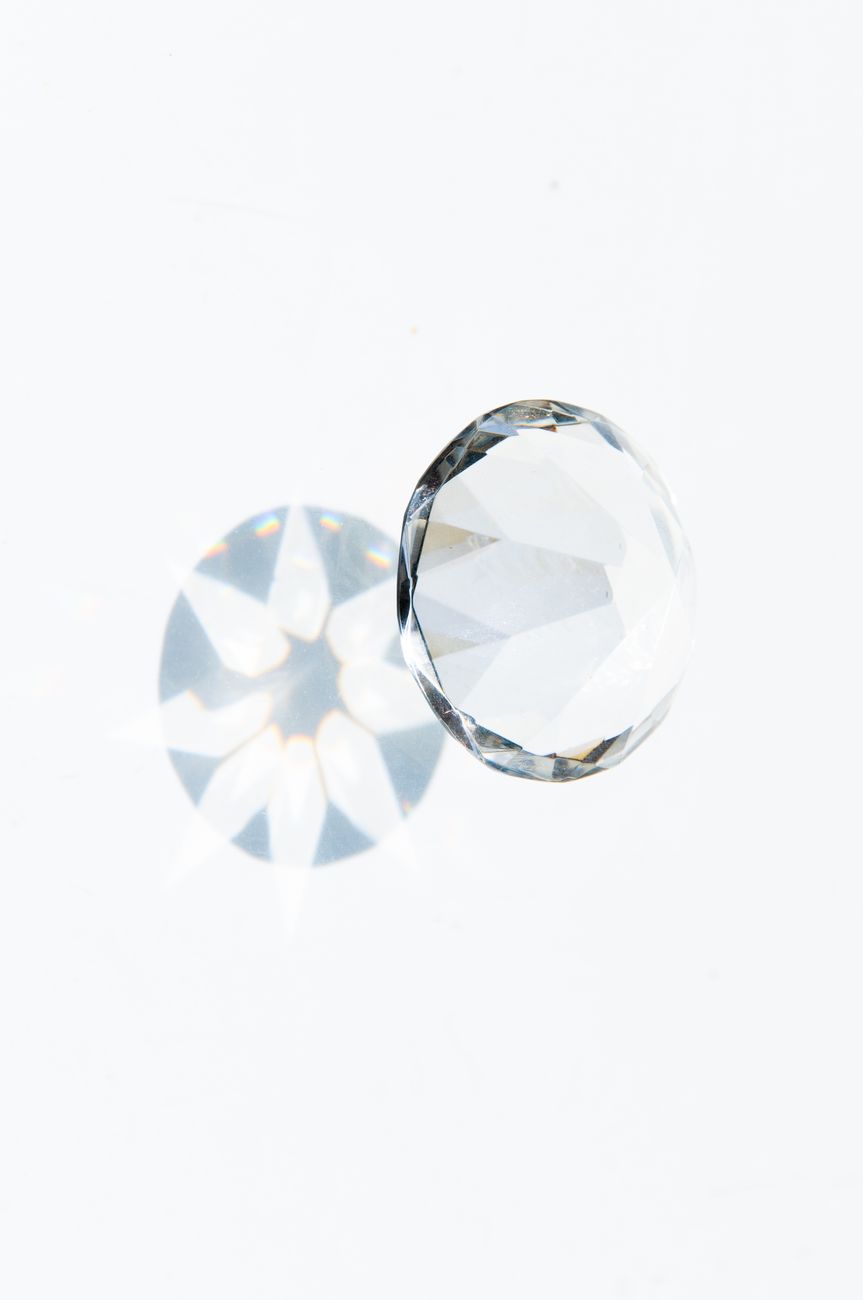
Think of a diamond as a tiny light-handling system. Light enters from the top, reflects off internal facets, and ideally comes back out through the top where your eye can see it. If the angles are off, some light slips out through the pavilion, which is the bottom part of the diamond, or through the sides.
That escaped light is what gemologists call leakage. It means the diamond is not making the most of the light it receives. The result is often a weaker appearance, especially in lighting where a well-cut diamond would normally look bright and lively.
Leakage is not always easy to see in a simple photograph, and it may not show up clearly in a grading report unless the report includes detailed optical analysis. This is why buyers often need to learn how cut influences appearance beyond the basic four Cs, especially when comparing engagement rings or loose diamonds online.
What Causes Diamond Leakage?
Diamond leakage usually comes from proportions and facet angles that do not work together well. If the crown, pavilion, table, and depth are not balanced, light may miss the internal reflection path needed to return to the eye. Even a diamond with decent color and clarity can look disappointing if its proportions are not performing well.
Some common causes include:
- Improper pavilion angles
- Shallow or overly deep cut proportions
- Inconsistent facet alignment
- Poor optical symmetry
- Large areas where the diamond does not reflect light efficiently
Not every imperfect proportion causes obvious leakage, and not every small deviation ruins a diamond’s look. But once leakage becomes significant, the diamond can lose the crisp brightness buyers usually expect from a well-cut stone.
How Leakage Differs From Other Cut Terms
Buyers often hear terms like brilliance, fire, scintillation, and light performance. These are related, but not identical. Leakage is one specific problem within the broader category of light performance.
- Brilliance is the white light reflected back to your eye.
- Fire is the colored flashes created when light splits into spectral colors.
- Scintillation is the sparkle and pattern of light and dark areas as the diamond moves.
- Leakage is light lost through the wrong parts of the diamond.
A diamond with little leakage usually has a better chance of showing strong brilliance and sparkle. But other factors, including facet arrangement and viewing conditions, also matter.
Why Diamond Leakage Matters to Buyers
Most buyers are not shopping for a technical diagram. They are shopping for a diamond that looks beautiful on the hand. Leakage matters because it can directly reduce the visual impact of a diamond, even if the stone looks acceptable in a still image or in a showroom under selective lighting.
For first-time buyers, this can be frustrating. A diamond may have a great-looking certificate and still not appear as lively as a different diamond with fewer carats or a lower color grade. This is one reason experienced shoppers pay close attention to cut quality and light return, not just size.
Leakage also matters because it affects value. If two diamonds cost roughly the same, the one with better light return may be the better purchase from a visual standpoint. You are generally better off paying for better cut performance than for extra weight that does not show up as beauty.
Appearance
Leakage can make a diamond look weaker in brightness. In some cases, areas of the diamond may appear washed out or less defined. A well-cut diamond usually looks more crisp and balanced, especially face-up in normal indoor lighting.
This is particularly noticeable in round brilliant diamonds, where cut precision strongly influences sparkle. In fancy shapes such as ovals, pears, and cushions, leakage can also affect how evenly light spreads across the stone. Some shapes naturally show more variation, so cut quality becomes even more important.
Sparkle and Visual Life
A diamond with strong light return tends to have a lively, active look. As the stone moves, you see flashes of brightness and contrast. When leakage is present, those flashes can become less distinct because more light is being lost instead of reflected.
Buyers often describe this difference as one diamond “popping” more than another. That is not a technical term, but it is a useful consumer description of what better light performance looks like in real life.
Value
Diamond leakage affects value because it can reduce what you get for your money. Two diamonds may be close in price, but if one leaks light and the other returns light well, the better-performing diamond usually offers more visual beauty per dollar.
This does not mean every diamond with some leakage is a poor choice. Some buyers prioritize shape, size, or budget above all else. But if beauty is a priority, leakage should be part of the evaluation.
How Diamond Leakage Affects Appearance in Real Life
The most important question for buyers is not what leakage means in theory. It is what you will actually see. In real life, leakage can affect brightness, contrast, and the overall sense that a diamond is alive under light.
Lighting makes a big difference. A diamond with leakage may still look acceptable in a jewelry store with strong overhead lights. But under softer indoor lighting, daylight, or everyday office conditions, the loss of light return can become more obvious.
Brightness
Brightness is the white light a diamond reflects. A stone with minimal leakage usually looks brighter across more of its surface. A diamond with leakage can look patchier, with some areas appearing darker than they should or lighter in a washed-out way.
This is one reason cut quality can be more important than slightly higher color or clarity. A bright, well-cut diamond often looks more appealing than a technically “better” diamond that does not handle light as well.
Fire
Fire refers to the flashes of color you see when a diamond moves. Leakage can reduce the intensity of these flashes because less light is staying inside the stone long enough to split into colors. The effect is not always dramatic, but it can make the diamond seem less lively.
Buyers sometimes focus on fire because it looks beautiful in short videos or under spotlighting. In everyday settings, however, balanced brightness and contrast are usually more important than a dramatic color flash effect. A diamond with poor light return may look less impressive even if it has acceptable fire in ideal conditions.
Scintillation
Scintillation is the pattern of sparkle created by the movement of light and dark areas across the diamond. Good scintillation gives a diamond lively contrast and visual interest. Too much leakage can weaken that pattern, making the diamond appear flatter or less dynamic.
This matters most when the diamond is worn on the hand. As your hand moves, a well-cut diamond should keep changing and flashing. If leakage is present, the stone may not create the same level of visual activity.
Face-Up Appearance
“Face-up” means how the diamond looks from the top view, which is how most people see it in a ring. Leakage can make parts of the face-up view look less reflective or less evenly lit. In some cases, this creates a windowing effect, where you can see through the stone rather than seeing strong reflection.
Face-up appearance is one of the most practical reasons to care about leakage. A diamond might still look fine from the side or in a controlled photo, but what matters most is how it looks in the ring during normal wear.
Diamond Leakage and Cut Quality
Leakage is closely related to cut quality, but it is not the same thing as a cut grade on a grading report. Cut quality includes a broader set of factors such as proportions, symmetry, polish, and how the facets work together to return light.
In round brilliant diamonds, cut grades often give buyers a useful starting point. A diamond with an Excellent cut grade is generally more likely to minimize leakage than one with a lower grade. However, not every stone with the same grade performs identically, which is why some buyers also look at actual light performance images or videos.
In fancy shapes, cut grades may be less standardized, and leakage can vary more from stone to stone. This makes careful evaluation even more important when buying oval, pear, emerald, marquise, or cushion diamonds.
What Cut Proportions Influence Leakage?
Several proportion factors can contribute to leakage. The most common are table size, depth percentage, crown height, pavilion depth, and facet angles. These measurements influence how light travels through the diamond.
Here is the practical takeaway: when these proportions work well together, the diamond is more likely to return light effectively. When they are mismatched, light can escape where it should not.
| Cut Factor | What It Means | Why It Matters for Leakage | What Buyers May Notice |
|---|---|---|---|
| Table Percentage | The size of the top flat facet relative to the diamond | Influences how light enters and reflects inside the stone | Too large can sometimes reduce contrast and fire |
| Depth Percentage | How tall the diamond is relative to its width | Can affect whether light returns efficiently or escapes | A stone may look too shallow, too deep, or less lively |
| Pavilion Angle | The angle of the lower half of the diamond | One of the main factors in light return | Poor angles can create obvious leakage or darkness |
| Symmetry | How well facets align with one another | Impacts how evenly light is distributed | Uneven sparkle or irregular bright and dark zones |
| Polish | The smoothness of facet surfaces | Does not usually cause leakage directly, but affects overall light performance | Less sharp reflections if polish is poor |
These measurements are useful, but they do not tell the entire story. Diamonds are optical systems, so the way all parts interact matters more than any one number alone.
How Buyers Can Recognize Diamond Leakage
Recognizing leakage can be tricky because it is not always obvious in a still image. Photos can be edited, lighting can hide problems, and reflections can be misleading. Still, there are a few practical signs to watch for.
Visual Clues
- Areas that look dull or gray compared with the rest of the stone
- Patchy brightness that does not look balanced across the face-up view
- Windowing, where you can see through the center of the diamond
- Weak contrast, making the stone look flat
- Less sparkle than expected for the size and shape
These signs do not guarantee leakage, but they are worth investigating. If a diamond looks unusually lifeless for its grading and price, the cut may be the reason.
Using Videos and Images Wisely
Online diamond shopping often relies on videos, ASET images, Ideal-Scope images, and other optical tools. These can be helpful because they reveal how a diamond handles light more clearly than a standard photo.
ASET images show areas of light return, light leakage, and contrast. Ideal-Scope images help buyers see where light is returning versus escaping. These tools are especially useful for buyers comparing lab grown diamonds online, where there may be many similar-looking options.
Even so, images should be interpreted carefully. Lighting, camera angle, and image quality all matter. A trained eye can often spot issues, but buyers should avoid making decisions based on glamour shots alone.
Certificates and Reports
Most diamond certificates do not directly label “leakage” in a simple consumer-friendly way. A grading report may list the cut grade, proportions, symmetry, and polish, which together provide clues. However, light leakage itself is often best evaluated through optical images or in-person inspection.
This is especially true when buying lab grown diamonds from an online inventory. Since lab grown stones often offer strong value and more accessible pricing, buyers may compare several options within a narrow budget. In those cases, cut performance can be one of the main differences separating a good purchase from an average one.
What Is the Difference Between Leakage and Windowing?
Buyers often confuse leakage with windowing because both involve light passing through the diamond. The difference is that leakage is the broader term, while windowing is a visible effect where the center or another part of the diamond appears transparent or see-through.
Windowing is especially common in some fancy shapes with shallow proportions, such as certain oval, pear, or emerald cuts. It can be quite noticeable because instead of seeing bright reflection, you may see the background or your skin through part of the diamond.
Not all leakage creates an obvious window. Some leakage is more subtle and simply lowers brightness or contrast. That is why a diamond can still look acceptable at first glance while not performing as well as it should.
Practical Examples for Buyers
Real-world comparisons are often the best way to understand diamond leakage. Below are a few common scenarios that show how cut quality affects appearance more than many buyers expect.
A Well-Cut 1.5-Carat Diamond Versus a Poorly Cut 2-Carat Diamond
On paper, the 2-carat diamond sounds more impressive. In person, however, the well-cut 1.5-carat diamond may look brighter, more balanced, and more beautiful. If the 2-carat stone has significant leakage, its extra weight may not translate into more visual appeal.
Many experienced jewelers see this often. Buyers are drawn to larger stones, but once the diamonds are compared side by side, the better-cut stone often wins visually. This is one of the clearest examples of why cut can outweigh size.
Excellent Cut Versus Very Good Cut in Everyday Lighting
The difference between Excellent and Very Good can range from subtle to noticeable depending on the individual diamond. In some cases, both will look strong. In other cases, the Excellent cut stone may show better brightness and more consistent light return.
Most buyers will not notice a dramatic difference every time, but they may notice that the Excellent cut diamond looks more lively in mixed lighting conditions. If the price difference is small, many buyers prefer the extra confidence of stronger performance.
Higher Clarity With Poor Cut Versus Lower Clarity With Excellent Cut
A diamond with a higher clarity grade may have fewer visible inclusions, but that does not guarantee better beauty. If the cut is weak and leakage reduces brightness, the diamond may still look less attractive than a lower-clarity stone with exceptional light return.
From a practical standpoint, many inclusions are hard to see once a diamond is well-cut and faces up bright. This is why buyers often benefit from balancing clarity with cut rather than chasing the highest clarity grade available.
Advantages of Better Light Return
When a diamond has low leakage and strong light return, the benefits are easy to understand from a buyer’s point of view. The stone generally looks more vibrant, more balanced, and more impressive in common viewing conditions.
- Brighter face-up appearance
- Better sparkle and contrast
- More noticeable presence on the hand
- Stronger visual value for the price
- Greater likelihood of looking good in different lighting environments
These advantages are especially meaningful for engagement rings and everyday jewelry, where the diamond is seen in changing light throughout the day. A stone that performs well in many conditions often provides more long-term satisfaction.
Disadvantages and Trade-Offs
It is also important to be realistic. Avoiding leakage can sometimes mean paying more for better cut precision, or choosing a slightly smaller diamond that performs better visually. Not every buyer will want to make that trade-off.
Another limitation is that cut quality is not always easy to compare from a grading report alone. Two diamonds with similar measurements can still perform differently. That means shopping for ideal proportions is useful, but it is not the same as seeing the diamond or reviewing optical images.
Finally, some fancy shapes naturally show more variation in light behavior. Buyers should not expect every shape to perform exactly like a round brilliant. Instead, they should look for the best performance within the shape they prefer.
Lab Grown Diamond Considerations
Diamond leakage matters just as much in lab grown diamonds as it does in natural diamonds. Since lab grown diamonds are often chosen for their attractive pricing and strong size-to-budget value, buyers may be tempted to focus on carat weight first. That makes cut quality even more important.
In many cases, lab grown diamonds offer the opportunity to choose a larger stone without increasing budget as much as a natural diamond would. But if the larger diamond has poor cut and noticeable leakage, the size advantage may not be as visually satisfying as expected.
For buyers comparing lab grown diamonds, it can be smart to use more than one filter. Look at cut grade, proportions, symmetry, polish, and, when available, light performance images. This approach often gives a better picture of the stone’s real-world beauty.
Do Lab Grown Diamonds Have More Leakage?
No. Lab grown diamonds do not inherently have more leakage than natural diamonds. Leakage is determined by how the diamond is cut. A well-cut lab grown diamond can have excellent light return, while a poorly cut natural diamond can leak light.
The important distinction is not origin. It is craftsmanship and optical performance.
Why Leakage Can Be More Noticeable in Larger Lab Grown Diamonds
Because lab grown diamonds are often sold in larger sizes at accessible prices, buyers may notice proportions and light behavior more easily. A large stone with leakage can appear flatter or less brilliant because there is more surface area for those issues to show up.
This does not mean larger lab grown diamonds are a problem. It just means that larger size does not automatically guarantee stronger beauty. Cut still does the heavy lifting.
How Diamond Leakage Relates to Other Buying Factors
When shopping for a diamond, buyers usually balance multiple characteristics. Leakage should be viewed alongside cut, color, clarity, carat, shape, and certification, not in isolation.
Cut
Cut is the most directly relevant factor because it determines how effectively the diamond handles light. If you are trying to reduce leakage, cut quality is the place to start. For round brilliants, an Excellent cut is usually a strong starting point, though not every Excellent-cut stone performs equally.
Color
Color can affect the overall look of a diamond, but it is different from leakage. A well-cut diamond with a lower color grade may still look brighter and more beautiful than a high-color stone with weak light return. In many cases, brightness makes color look less noticeable.
Clarity
Clarity refers to internal characteristics and surface blemishes. It matters, but it is often over-prioritized by first-time buyers. A diamond with excellent light performance can hide minor inclusions better than a diamond that leaks light and appears less lively.
Carat
Carat weight affects size, not optical performance. This is one of the most common misunderstandings among buyers. A larger diamond with heavy leakage can look less appealing than a smaller diamond with strong return of light.
Certification
A trusted certificate from a reputable lab helps you understand the diamond’s measurements and grades. But certification alone does not tell the full story of leakage. Use the report as a foundation, then look at actual light performance if possible.
Common Buyer Mistakes
Leakage is often overlooked because buyers get distracted by size, price, or clarity grades. Avoiding a few common mistakes can make a major difference in your final choice.
- Prioritizing carat over cut. Bigger does not always mean better-looking.
- Assuming all diamonds sparkle the same. Cut quality changes the way a diamond performs.
- Buying from photos alone. Still images can hide leakage or distort proportions.
- Overpaying for clarity. A cleaner diamond is not necessarily a prettier diamond.
- Ignoring light performance tools. ASET and Ideal-Scope images can reveal valuable information.
- Confusing a large table with a good cut. Proportion numbers should be evaluated together, not separately.
One of the biggest mistakes is assuming a diamond that looks bright in a showroom must perform well everywhere. Strong overhead lighting can flatter many stones. A better test is how the diamond looks across different light sources and from normal viewing distance.
Buying Considerations: How to Evaluate Leakage Before You Buy
If you are trying to choose a diamond intelligently, there are several practical steps you can take. You do not need to become a gemologist, but you do need to focus on the factors that affect appearance most directly.
Start With Cut Quality
For round diamonds, begin with a strong cut grade, then review the actual proportions and performance images if available. For fancy shapes, ask for light performance visuals or a trusted expert evaluation. This gives you a better chance of spotting leakage before purchase.
Use Certification as a Starting Point, Not the Final Answer
A grading report helps you narrow down choices, but it does not replace visual assessment. Think of it as a map, not the destination. It tells you important technical details, but not everything about the diamond’s beauty.
Compare Diamonds Side by Side
If possible, compare diamonds in the same shape, size range, and price range. Side-by-side comparison makes differences in brightness and leakage much easier to see. Even small differences can become obvious when two stones are viewed together.
Pay Attention to Everyday Lighting
Ask yourself how the diamond looks in normal environments, not only under jewelry store lights. Good diamonds should still look attractive in office lighting, at home, and in daylight. If a diamond only looks good in one very specific setting, that is worth noting.
Balance Budget and Performance
Not every buyer needs the highest possible performance grade. The goal is to find the best balance of beauty, size, and cost. Sometimes a Very Good cut diamond offers excellent value. Other times, the difference to Excellent is small enough that the higher grade is worth it.
Frequently Asked Questions About Diamond Leakage
Is diamond leakage always bad?
Not always. Small amounts of light leakage may be present even in attractive diamonds, and not every imperfection is noticeable to the average buyer. The issue becomes more important when leakage is strong enough to reduce brightness, contrast, or sparkle in a visible way.
Can you see diamond leakage with the naked eye?
Sometimes, yes. If leakage is significant, the diamond may look dull, flat, or transparent in certain areas. In more subtle cases, it can be hard to notice without comparison, optical images, or expert help.
Does leakage affect durability?
No, not directly. Leakage is an appearance issue, not a structural one. A diamond with leakage can still be durable, and a well-cut diamond can still have inclusions or other quality concerns. These are separate factors.
Is leakage more common in lab grown diamonds?
No. Leakage is not determined by whether a diamond is lab grown or natural. It depends on the cut. Both types can show excellent light performance or noticeable leakage depending on how they were fashioned.
Which diamond shapes are most sensitive to leakage?
Round brilliants are the most studied and standardized, so their performance is easier to compare. Fancy shapes such as ovals, pears, marquise, cushions, and emeralds can show more variation, which means leakage may be easier to spot in some stones than others.
Should I avoid any diamond with some leakage?
Not necessarily. The real question is whether the leakage is visible enough to affect the stone’s appearance in a way you care about. Some buyers are satisfied with slight trade-offs, especially if the diamond otherwise fits their budget and style. Others prefer to pay more for stronger light return.
What is the best way to check for leakage online?
Look for detailed images, videos, and light performance tools such as ASET or Ideal-Scope views when available. Review the diamond’s proportions and cut grade, then compare several stones if possible. If you are unsure, use a reputable seller or consultant who can explain the visuals clearly.
Is a bigger diamond with leakage still a good choice?
It can be, depending on your priorities. If size matters most to you, a larger diamond with some leakage may still be acceptable. But if you want the best visual performance, a slightly smaller diamond with better cut is often the stronger choice.
Conclusion
Diamond leakage is light that escapes the diamond instead of returning to your eye. For buyers, that means less brightness, less sparkle, and sometimes a flatter appearance. It is one of the clearest examples of why cut quality matters so much in real-world diamond shopping.
The most practical takeaway is simple. If you want a diamond that looks lively and attractive in everyday wear, pay close attention to cut, proportions, and light performance. Do not focus only on carat weight or clarity, because those factors do not guarantee beauty.
Whether you are buying a natural diamond or a lab grown diamond, the same principle applies. A well-cut stone with strong light return will usually offer a better visual experience than a larger or higher-graded diamond that leaks light. Understanding this helps you shop with more confidence and choose a diamond that looks as good in daily life as it does on paper.