A diamond can be technically “near-colorless” and still look completely white in real life, which is why color grades are often easier to misunderstand than cut or clarity. The reason some diamonds look more white is usually a mix of the grading color, the diamond’s cut, the setting metal, and the lighting around it. In other words, the letter on the report matters, but it does not tell the whole story.
For buyers, this is important because color differences are not always obvious once a diamond is mounted in a ring. Some diamonds appear icy and bright, while others show a faint warmth that is only noticeable under certain conditions. Understanding why that happens can help you decide whether paying more for a higher color grade is actually worth it.
Quick Answer: Why Some Diamonds Look More White
Some diamonds look more white because they contain less noticeable body color, are cut in a way that returns more light, or are viewed in a setting and lighting environment that hides tint. A higher color grade usually means a diamond has less yellow or brown tint, but the cut can make a bigger visual difference than the color grade itself.
For most buyers, the key question is not whether a diamond is the highest color grade possible. It is whether the diamond looks white enough in the size, shape, metal, and lighting you plan to wear it in. In many cases, a well-cut near-colorless diamond looks white to the eye and offers better value than a more expensive colorless grade.
What Diamond Color Really Means
Diamond color is a grading measure of how much visible tint a diamond has, usually judged on a scale from D to Z. D is the highest and most colorless grade, while the letters move toward increasing warmth or yellowish tint as the scale goes down. The grading is based on comparison under controlled lighting, not on how the diamond looks in every day life.
This matters because a diamond can receive a lower color grade and still look beautiful to most people. The grading system is designed to help compare diamonds consistently, but it is not the same as asking, “Will this diamond look white on a hand?” That practical question depends on more than the letter grade alone.
Colorless, Near-Colorless, and Noticeable Color
Diamond color is often grouped into three practical categories:
- Colorless: D, E, and F grades. These are the most color-neutral on the grading scale.
- Near-colorless: G, H, I, and sometimes J grades. These usually look white face-up, especially when well cut.
- Noticeable tint: K and below, where warmth becomes easier to detect in many settings.
Those categories are useful, but they are not rigid rules. A well-cut G color diamond can appear whiter than a poorly cut E color diamond. That is why color should always be considered together with cut quality, shape, and setting style.
What Makes a Diamond Look More White?
Several factors influence whether a diamond looks white, icy, or slightly warm. The grade on the report is only one part of the picture. For buyers, these are the main reasons one diamond may appear whiter than another.
1. The Actual Color Grade
Higher grades generally mean less body color. D, E, and F diamonds are graded as colorless, so they have very little visible tint under normal conditions. G through J diamonds can still appear white, but subtle warmth may be visible in certain comparisons or settings.
This is the most obvious reason some diamonds look more white, but the effect is often subtle once the diamond is mounted. In real-world viewing, the difference between adjacent grades can be hard to spot unless the diamonds are compared side by side.
2. The Cut Quality
Cut has a major effect on how white a diamond appears because a well-cut diamond returns more bright white light to the eye. That reflected light can reduce the appearance of body color. A diamond with excellent proportions often looks livelier and whiter than a stone with a weaker cut, even if the weaker stone has a better color grade.
This is one reason color and cut should never be judged separately. If a buyer is choosing between paying more for color or paying more for cut, cut is often the more visible upgrade.
3. The Shape of the Diamond
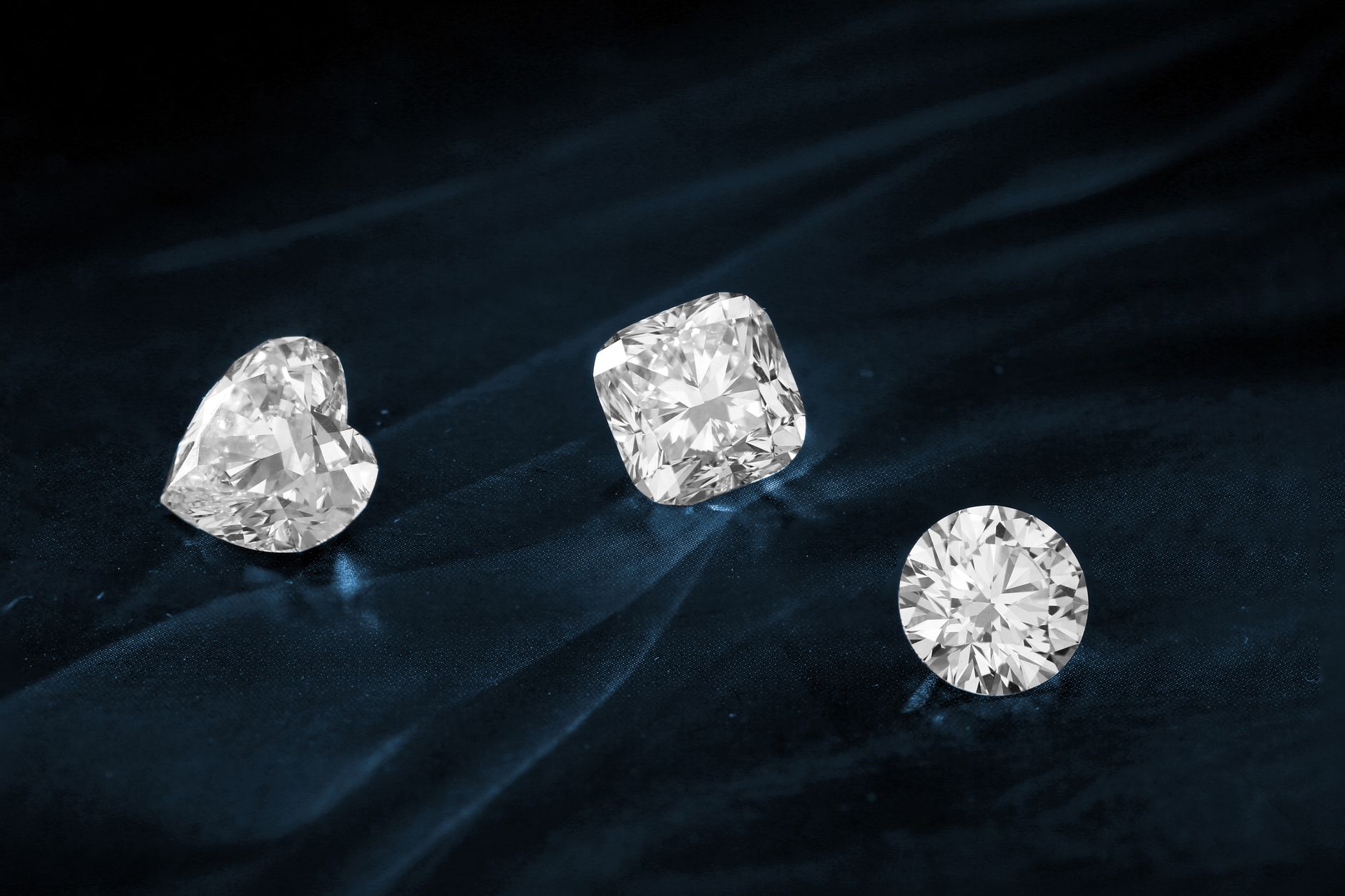
Round brilliant diamonds tend to hide color better than many fancy shapes because of how they are faceted. Oval, pear, marquise, and emerald cuts can show body color more easily, especially near the pointed ends or in larger stones. That does not mean these shapes look yellow, but they can reveal tint sooner than a round diamond.
Shape matters even more as carat size increases. A larger diamond has more area for color to be visible, so a diamond that looks white at 1 carat may show more warmth at 3 carats or above.
4. The Metal Color of the Setting
The color of the ring metal changes how white a diamond appears. A diamond set in platinum or white gold often looks whiter because the background is bright and cool-toned. The same diamond in yellow gold or rose gold may appear slightly warmer by contrast, even if the diamond itself has not changed.
That contrast effect is especially important for buyers comparing near-colorless diamonds. A G or H color diamond can look very white in yellow gold, while a lower color grade may blend better and still look appealing. The best choice depends on the overall design.
5. The Lighting Environment
Lighting can either hide or reveal diamond color. Cool daylight and bright neutral lighting often make a diamond look whiter. Warm indoor lighting can make even a high-color diamond appear slightly creamier.
Jewelry store lighting can be misleading because it is often designed to maximize sparkle and brightness. That lighting can make many diamonds look better than they will in ordinary settings such as homes, restaurants, or offices.
What This Color Actually Looks Like
When buyers ask why some diamonds look more white, they are usually asking about appearance, not grading theory. The visual answer is that a whiter-looking diamond usually has less visible tint and more bright light return from the cut. The result is a cleaner, crisper look face-up.
That said, the word “white” is not quite perfect in diamond buying. Diamonds are transparent, not opaque white like paper or enamel. What people really mean is that the diamond appears neutral, bright, and free from obvious warmth when viewed from the top.
How Color Appears Face-Up
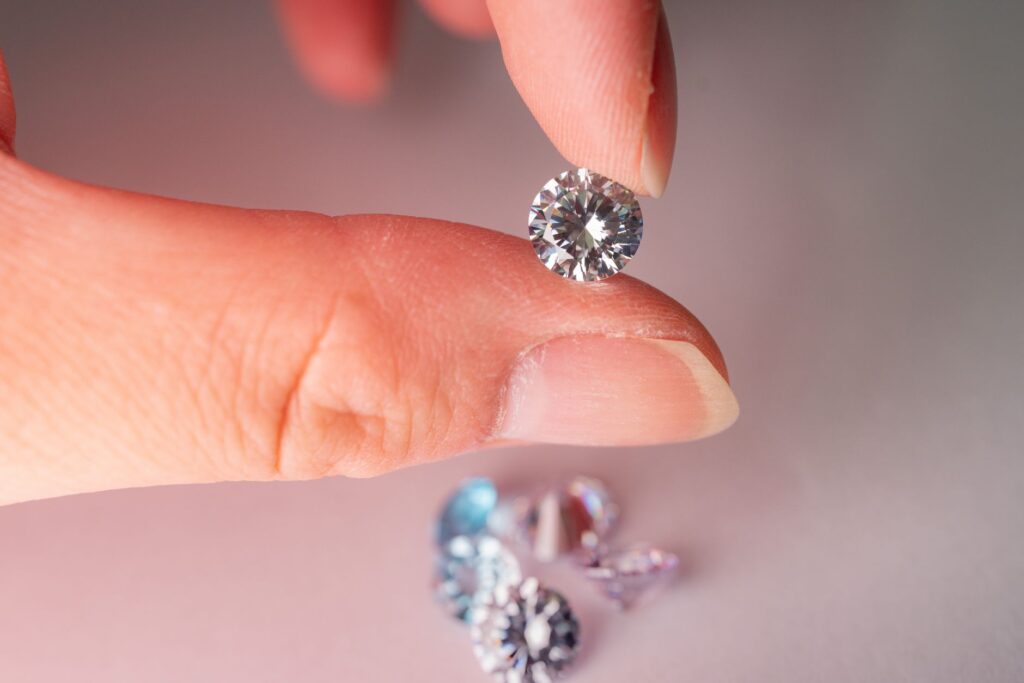
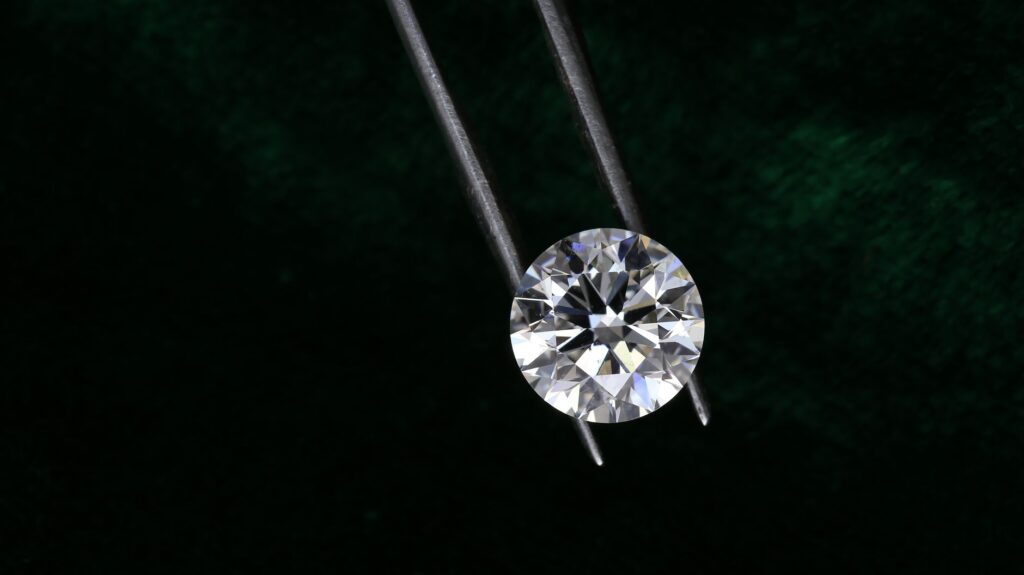
Most buyers evaluate diamonds face-up, which means looking at the top of the stone the way it will be worn. In that view, many diamonds in the near-colorless range still look white to the average person. The body color, if present, is often subtle and easier to detect from the side than from the top.
This is why a lower color grade does not automatically mean the diamond will look tinted in a ring. A well-cut H or I diamond can still appear bright and clean in normal viewing conditions.
How Color Appears from the Side
Side views are where tint is usually easier to spot. The pavilion, which is the lower part of the diamond, can show warmth more clearly because there is less direct light return to mask it. A buyer might notice a hint of color when viewing the diamond loose or from an angle, even if the stone looks white face-up.
For most rings, this is not the primary viewing angle. Still, it helps explain why two diamonds with similar grades can seem different when examined closely.
Can Most People See the Difference?
In everyday wear, most people cannot easily tell the difference between adjacent color grades unless the diamonds are compared side by side under controlled lighting. The jump from D to E is subtle, and the jump from E to F is often even harder to notice once the diamond is mounted. Differences become more visible as you move farther down the scale or compare larger stones and certain fancy shapes.
What matters more is whether the diamond looks white enough to you in the ring you want. That judgment should be based on real-world viewing, not just the grading report.
Side-by-Side Visibility
Side-by-side comparisons make color differences easier to see because the eye has a direct reference. A buyer comparing D, F, and H diamonds together may notice that one looks slightly cooler or brighter than another. But once the diamonds are viewed separately, those differences can become much less obvious.
This is a common reason shoppers overvalue top color grades. The human eye is very good at detecting differences when they are placed next to each other, but far less sensitive when viewing a single mounted stone on its own.
Everyday Visibility
In daily wear, the question is usually whether a diamond looks attractive and neutral at arm’s length. For many well-cut diamonds in the G to I range, the answer is yes. Most observers will see sparkle, brightness, and size before they notice faint body color.
That is especially true for smaller diamonds. As carat size increases, color becomes more noticeable, but it still may not be obvious unless the diamond is inspected carefully.
Professional vs Consumer Perception
Trained graders, jewelers, and experienced buyers are better at spotting subtle color differences than the average consumer. They examine diamonds in a controlled environment and often compare many stones at once. A first-time buyer, by contrast, usually focuses on overall appearance rather than tiny shifts in tint.
That difference in perception matters when deciding how much to pay for color. A diamond expert may notice a difference that most wearers would never pick up in normal use.
How Diamond Color Looks in Different Metals
The ring metal can change how white a diamond looks more than many buyers expect. This is because the eye responds to contrast. A bright metal backdrop can make the stone appear whiter, while a warm metal can make the same diamond look softer or slightly warmer.
Because of that, there is no single best color grade for every setting. The right choice depends on the design style and the visual effect you want.
White Gold and Platinum
White gold and platinum are popular because they tend to complement higher color grades. They also support a bright, modern look that pairs well with colorless and near-colorless diamonds. In these settings, small differences in color can be easier to notice, especially in larger stones.
If you want a very crisp appearance in a white metal ring, you may prefer a higher color grade. That said, many buyers still find G or H color diamonds look white enough in white gold or platinum, especially when the cut is excellent.
Yellow Gold
Yellow gold naturally introduces warmth, so it can make a diamond appear whiter by contrast or make a lower color grade blend in more comfortably. A diamond that might show a slight tint in white gold can look perfectly balanced in yellow gold. This is one reason many buyers can save money on color when choosing yellow gold.
For some styles, a faintly warm diamond is not a drawback at all. It can actually look harmonious with the setting.
Rose Gold
Rose gold has a warm pink tone that often pairs well with near-colorless diamonds. It can make small amounts of warmth less noticeable. Like yellow gold, it gives buyers more flexibility on color grade without the ring looking dull or off-color.
Rose gold is especially useful when the goal is a softer overall look rather than a sharply icy one.
How Diamond Color Looks in Different Lighting
Lighting changes everything. A diamond does not have one fixed appearance in all conditions, which is why shoppers sometimes feel confused after seeing the same stone in different places. The goal is to understand how color behaves across common environments.
Daylight
Daylight often shows the most honest version of a diamond’s color. In natural light, subtle warmth can become easier to spot, especially in larger diamonds or stones with lower color grades. At the same time, daylight also reveals sparkle and contrast very well, which can make a diamond appear bright overall.
If you want to judge color realistically, daylight is one of the best viewing conditions. It is more revealing than jewelry store lighting and more useful than warm indoor light for most buyers.
Indoor Lighting
Standard indoor lighting can make many diamonds look whiter than they appear in natural daylight. That is because indoor lights often reflect strong white flashes that help mask body color. The effect varies depending on the bulb type and the brightness of the room.
A diamond that looks perfectly colorless indoors may show a bit more warmth near a window or under cooler daylight. That is normal and does not mean anything is wrong with the stone.
Jewelry Store Lighting
Jewelry store lighting is often designed to maximize brilliance and fire, the colorful flashes seen in a diamond. Those lights can make a diamond appear exceptionally bright and clean. However, they may not accurately represent how the stone will look every day.
Buyers should be cautious about making a color decision based only on a store display. A diamond should be considered in more than one lighting condition whenever possible.
Warm Lighting and Cool Lighting
Warm lighting, such as soft household bulbs, can make almost any diamond look a little warmer. Cool lighting, such as daylight-balanced LED or natural daylight, tends to emphasize a whiter appearance. This is why a diamond can seem to change color from one room to another.
For practical buying, the most useful test is whether the diamond still looks white enough in the lighting you use most often.
Price Premium vs Visual Benefit
Higher color grades usually cost more, but the visual gain is not always dramatic. This is where many buyers face the real trade-off. The question is whether the extra money produces a difference you can actually appreciate in daily wear.
On paper, moving from a near-colorless grade to a colorless grade sounds significant. In reality, the visible upgrade can be small, especially in smaller diamonds or well-cut stones set in yellow or rose gold.
Where the Premium Tends to Be Worth It
Paying more for color may make sense when:
- The diamond is large enough for color to be more noticeable.
- The shape tends to show color more easily, such as oval, pear, or emerald.
- The setting is platinum or white gold and you want a very crisp look.
- You are extremely sensitive to subtle warmth.
- You are comparing diamonds at the very top of the quality range and want a fully colorless appearance.
In these cases, the visual benefit may justify the higher price. The key is that the benefit should be visible to you, not just listed on the report.
Where the Premium Often Shrinks
The value of a higher color grade often shrinks when the diamond is small, well cut, or set in a warm metal. In those situations, the eye is more likely to notice brightness and sparkle than a minor color difference. A buyer may pay a substantial premium for a change that is difficult to detect once the ring is worn.
This is one reason experienced buyers often focus on the middle of the color range for best overall value. They prioritize appearance over chasing the top letter on the scale.
Lab Grown Diamonds and Color
Lab grown diamonds follow the same color grading standards as natural diamonds, but they often appear in higher color grades more commonly because of how they are produced. That means buyers browsing lab grown diamonds may see a larger share of D, E, F, and G grades than they would in some natural diamond inventories. This can create the impression that higher color is always the norm.
It is still important to evaluate color the same way you would with any diamond. A lab grown diamond can be very white, but cut, shape, and setting still determine what you actually see once the stone is mounted.
Do Lab Grown Diamonds Look Different in Color?
In practical terms, lab grown diamonds do not behave differently in how color is perceived once they are cut and polished. The visual question is still whether the diamond looks white or tinted. The manufacturing origin does not make color more or less visible to the eye.
What does differ is availability. Because higher-color lab grown diamonds are often more common, buyers sometimes have more room to choose based on appearance and price rather than supply constraints.
Should You Pay Extra for High Color in Lab Grown Diamonds?
Sometimes yes, but not automatically. Lab grown diamonds already offer strong value in many size and quality combinations, so the incremental cost of higher color may be less painful than in natural diamonds. Even so, a buyer should still ask whether the upgrade produces a visible result.
In many cases, a G or H lab grown diamond can look plenty white, especially when the cut is strong. The money saved by not insisting on the highest color grade may be better spent on cut quality or a larger size, depending on the goal.
Common Buyer Mistakes When Judging Whiteness
Color is easy to overthink and easy to misread. Buyers often make the same mistakes when trying to determine why one diamond looks more white than another. Understanding these errors can save both money and frustration.
Paying for Invisible Upgrades
One of the most common mistakes is paying a premium for a tiny color improvement that is nearly impossible to see once the diamond is set. This happens most often when buyers focus on the grading report instead of the actual viewing experience. A diamond may be technically better on paper without being meaningfully better in the ring.
That does not mean top color grades are unnecessary. It means the decision should be based on visible benefit, not just prestige.
Ignoring the Metal Color
Another mistake is choosing a color grade without considering the setting metal. A near-colorless diamond may look excellent in yellow gold but slightly less white in platinum. If the setting is ignored, the buyer may either overpay or choose a grade that does not align with the design.
Metal choice should be part of the color decision from the start, not an afterthought.
Assuming All Color Differences Are Obvious
Not every color difference is easy to see. Adjacent grades can be very subtle, especially in smaller diamonds. Buyers sometimes expect a dramatic difference between, for example, F and G or H and I, when the real-world variation may be slight.
This is why color should be treated as a range of visual effect, not as a strict on-off distinction.
Buying Only from the Grading Report
A grading report is useful, but it does not tell you how the diamond will look in your ring. Two diamonds with the same color grade can appear different because of cut, shape, fluorescence, or proportions. Focusing only on the report can lead to a poor value decision.
For best results, the report should be used as a starting point, not the final answer.
How to Judge Whether a Diamond Looks White Enough
When buyers ask why some diamonds look more white, what they really need is a practical way to judge the stone. The best approach is to combine grading information with real visual observation. That means looking at the diamond in several conditions and considering the full ring design.
Look at the Diamond Face-Up and From the Side
Start by viewing the diamond from the top, because that is how it will usually be seen in a ring. Then view it from the side to see whether any warmth is easier to detect. This gives a more balanced picture of appearance.
If the diamond looks clean and bright from the top, that is usually the most important result for a ring buyer.
Check More Than One Lighting Condition
Look at the diamond in daylight and in indoor lighting if possible. A stone that stays bright and attractive in both is usually a safe choice. If it only looks white under one type of light, it may not be the best fit for your preferences.
This is especially helpful for lower color grades and larger stones.
Consider the Ring Design
A solitaire ring in platinum draws more attention to the diamond itself, which can make color more important. A more detailed setting, halo, or warm metal can make small color differences less noticeable. The ring design can either amplify or soften the visibility of tint.
That is why color should always be considered in context, not in isolation.
Who Should Upgrade Color?
Some buyers will genuinely benefit from paying more for a higher color grade. The question is not whether higher color is better in theory, but whether it is the right use of budget for a specific person and ring style.
Upgrading color may be justified if you are highly sensitive to subtle warmth, want a very bright modern look, or are buying a larger diamond where color is easier to notice. It can also make sense in a simple white metal setting where the diamond is the focal point and every detail is more visible.
For buyers who care most about a crisp, icy appearance, spending more on color can be reasonable. It should still be weighed against cut and size, which often have a stronger impact on overall beauty.
Who Can Save Money?
Many buyers can save money by choosing a lower color grade without giving up visible beauty. This is especially true when the diamond is well cut, the shape hides color well, or the ring will be set in yellow or rose gold. In those cases, the savings can be significant with little or no obvious trade-off.
Buyers who prioritize size, cut, or budget flexibility often do well in the G to I range for many ring styles. For lab grown diamonds in particular, this can be a practical way to get a larger or better-cut stone while keeping the diamond looking white face-up.
Color Comparison Table
| Color Range | Typical Appearance | White Metal Look | Yellow or Rose Gold Look | Visibility of Tint | General Value |
|---|---|---|---|---|---|
| D to F | Colorless, very neutral | Excellent, very crisp | Still bright, may be more than needed | Usually minimal | High quality, higher cost |
| G to H | Near-colorless, often face-up white | Very good, often looks white | Often a strong fit | Subtle in normal wear | Often strong value |
| I to J | Near-colorless with some warmth | Can still look white if well cut | Usually blends well | More noticeable in larger stones | Good value if appearance is acceptable |
| K and below | Noticeable warmth | Warmth more visible | Can work well stylistically | Often visible | Budget-friendly, but appearance depends on preference |
Frequently Asked Questions
Why do some diamonds look whiter than others even with the same color grade?
Cut quality, shape, metal color, and lighting can all change how white a diamond looks. Two diamonds with the same grade can appear different because one returns more light or hides color better than the other.
Is a colorless diamond always worth the extra money?
Not always. Colorless grades are excellent, but the visible improvement over near-colorless grades can be small in everyday wear. The value depends on diamond size, shape, setting metal, and your personal sensitivity to tint.
Can a well-cut lower color diamond look whiter than a poorly cut higher color diamond?
Yes. Cut can strongly influence perceived whiteness because it affects how much white light the diamond reflects back to the eye. A strong cut can make a lower color diamond look very bright and appealing.
Which diamond shapes show color the most?
Shapes such as oval, pear, marquise, and emerald cuts often reveal color more easily than round brilliants. That does not mean they look unattractive, only that color choice may matter more in those shapes.
Do lab grown diamonds need higher color grades to look white?
No. Lab grown diamonds do not require higher grades to look white, but many buyers can access higher color more easily because those grades are common in lab grown inventory. A near-colorless lab grown diamond can still look very white if it is well cut.
Does a diamond look whiter in white gold or platinum?
Usually yes. White metals create a cooler background that can make the diamond appear brighter and whiter. The effect is strongest with higher color grades and more noticeable in larger stones.
Will I notice the difference between G and H color?
Often not in everyday wear, especially if the diamond is well cut and mounted. Side-by-side comparisons may show a difference, but many buyers cannot reliably tell the grades apart once the diamond is on the hand.
What color grade is best for value?
There is no single answer for every buyer, but G to H often offers a strong balance of whiteness and price. For many ring styles, those grades look white enough while leaving more budget for cut, carat, or setting quality.
Conclusion: Why Some Diamonds Look More White
Some diamonds look more white because they have less visible body color, reflect light more effectively, or are shown in settings and lighting that enhance whiteness. The grading letter matters, but it is only one part of the visual result. Cut, shape, metal choice, and lighting can all change how white a diamond appears.
For most buyers, the most useful takeaway is that top color grades are not always necessary to get a white-looking diamond. Many near-colorless diamonds look bright and clean in real life, especially when the cut is strong and the setting is chosen thoughtfully. The best value usually comes from choosing a color grade that looks white enough to your eye without paying for a difference you are unlikely to notice.
If you are comparing diamonds, focus on how they look in the ring style you plan to wear, not just on the report. That approach leads to better decisions, fewer regrets, and a more realistic understanding of what diamond color actually means.