Celebrities often influence jewelry trends, but the reasons behind those choices are usually more practical than people assume. Oval diamonds have become especially visible in red carpet rings, engagement rings, and high-profile jewelry because they balance a flattering shape, strong sparkle, and a look that often appears larger than a round diamond of the same carat weight.
For many buyers, the appeal goes beyond celebrity status. Oval diamonds can create an elegant finger shape, work well in many ring styles, and offer good visual size for the price. In the lab grown diamond market, that combination is even more relevant because buyers can often choose a larger oval or a higher quality stone within the same budget.
Quick Answer
Celebrities choose oval diamonds because they tend to look graceful, bright, and relatively large on the hand while still feeling classic enough for long-term wear. The shape can make fingers look longer, and it usually offers better face-up spread than a round diamond at the same carat weight.
There is also a style advantage. Oval diamonds look modern without being too unusual, so they fit well with both simple and highly designed engagement rings. That makes them attractive to celebrities who want a ring that photographs well and stands out without looking overly trendy.
Why Celebrities Choose Oval Diamonds
The phrase Why Celebrities Choose Oval Diamonds can be answered by looking at a mix of optics, fashion, and practicality. Celebrity jewelry is often chosen for visual impact first, but the oval shape happens to deliver several benefits that are valuable for everyday buyers too.
1. Oval diamonds flatter the hand
An oval diamond has an elongated outline, which can create the appearance of a slimmer and longer finger. This effect is one reason the shape is so popular in engagement rings. On camera and in person, the shape tends to look elegant and balanced rather than bulky.
That visual effect matters in celebrity styling. High-profile rings are photographed constantly, so shapes that look refined from multiple angles often get more attention. Oval diamonds usually work well in that setting because they draw the eye without needing a large setting or extra embellishment.
2. They often look larger than round diamonds of the same weight
One of the biggest reasons buyers, including celebrities, choose oval diamonds is face-up size. Face-up size refers to how large a diamond looks when viewed from above. Because ovals are elongated, they often spread out more across the finger than a round brilliant of the same carat weight.
This can make the stone appear more substantial, especially in the 1.5 to 3 carat range that is common in modern engagement ring styling. For shoppers comparing natural and lab grown diamonds, this advantage can be especially noticeable because a lab grown oval may allow a larger visual footprint for the same budget.
3. They offer strong sparkle with a softer outline
Oval diamonds are cut in a brilliant style, which means they are designed to maximize brightness and sparkle. The rounded edges soften the shape, while the facet arrangement helps the stone reflect light in a lively way.
Many celebrities choose oval diamonds because the shape photographs well under bright lights. In images and video, the stone often shows a bright center, lively flashes, and a flattering elongated outline. That combination tends to read as both glamorous and wearable.
4. They feel contemporary, but not too experimental
Oval diamonds sit in a useful middle ground. They are more distinctive than a round diamond, but generally less polarizing than shapes such as pear or marquise. That gives celebrities a way to stand out while keeping the ring broadly appealing to the public.
For many buyers, that is an important consideration. An engagement ring is often worn every day, so a shape that feels stylish now but still likely to age well has lasting value from a design perspective, even if it does not guarantee strong resale value.
Understanding the Oval Diamond Shape
Oval diamonds are essentially elongated round brilliant diamonds. They share much of the same cutting philosophy as round brilliants, which is why they usually produce strong brightness and sparkle. The main difference is the outline, which stretches the stone lengthwise.
The elongated form changes how the diamond looks on the hand and how it interacts with light. It also introduces shape-specific features that buyers should understand, especially the bow tie effect, length-to-width ratio, and how proportions influence appearance.
What the bow tie effect means
The bow tie effect is a dark area that can appear across the center of an oval diamond, often shaped somewhat like a bow tie. It happens because of how light moves through the stone. Some ovals show only a faint bow tie, while others show a more noticeable one.
A mild bow tie is common and not necessarily a problem. In fact, most oval diamonds have some degree of it. The key is balance. A bow tie that is too dark or too obvious can distract from the stone’s overall sparkle, while a subtle one may not be noticeable in everyday wear.
Why length-to-width ratio matters
The length-to-width ratio describes how elongated an oval appears. A lower ratio looks wider and rounder, while a higher ratio looks narrower and more stretched. This ratio affects the style of the stone as well as how it looks on the finger.
Many buyers prefer a ratio somewhere around 1.30 to 1.45 for a balanced oval look, but personal preference matters. A wider oval can feel softer and more classic, while a longer oval can create a more dramatic, elegant line. Neither is automatically better.
| Length-to-Width Ratio | General Look | Common Buyer Preference |
|---|---|---|
| 1.20 to 1.29 | Wider, closer to round | Subtle elongation, classic feel |
| 1.30 to 1.45 | Balanced oval shape | Most popular overall |
| 1.46 to 1.60+ | Longer and narrower | More dramatic, fashion-forward look |
How oval diamonds are cut
Most oval diamonds are brilliant cuts, which means they are faceted to maximize light return. This is why they tend to look lively rather than flat. However, because the shape is not perfectly symmetrical like a round diamond, cutting quality can vary more from one stone to another.
Two ovals with the same carat weight can look noticeably different if one has better symmetry, better proportions, or a less visible bow tie. That is why shape-specific evaluation is important when comparing diamond cut quality in ovals.
Appearance and Visual Performance
Oval diamonds have a few visual strengths that help explain their popularity among celebrities and everyday buyers alike. These strengths are not just about beauty in the abstract. They affect how the diamond looks on the hand, in photos, and in different lighting conditions.
Brightness and sparkle
Because oval diamonds are brilliant cuts, they can produce strong brightness and scintillation. Brilliance refers to overall white light return, while scintillation refers to the sparkle pattern created when the diamond moves. In practical terms, this means ovals often look lively in motion and bright under direct light.
Compared with step-cut shapes such as emerald cut diamonds, ovals usually appear more sparkly and less mirror-like. That is one reason they are so common in engagement rings for buyers who want a diamond that feels lively rather than understated.
Face-up size
Oval diamonds often look larger than a round diamond of the same carat weight because their shape distributes weight differently. Carat weight measures mass, not visible size, so two stones with the same weight can have different face-up dimensions.
This is especially important for buyers comparing shapes in the lab grown market. If the goal is to maximize visible size without moving into a much higher price bracket, an oval may be a more efficient use of budget than some other shapes.
Finger coverage and style effect
Ovals extend along the finger, which can make the ring feel elegant and balanced. This shape can also help larger diamonds feel less dominant, since the elongated outline spreads the visual presence more evenly.
That is part of the reason celebrities often select oval diamonds for statement rings. The shape can be impressive without looking overly heavy or rigid, especially in solitaire or halo settings.
Color visibility
Oval diamonds can show body color more clearly than round diamonds in some cases, especially in larger sizes or lower color grades. This does not mean an oval will always look tinted. It does mean buyers should pay attention to color choice, especially if the setting is white metal and the stone is larger.
For many buyers, a near-colorless grade offers a practical balance. If you are exploring diamond color grades, it helps to remember that shape, size, and setting can all affect how color appears in the finished ring.
Clarity visibility
Oval diamonds can hide small inclusions reasonably well because of their brilliant facet pattern. That said, clarity is still important, especially in larger stones where imperfections may be easier to see.
For buyers researching diamond clarity grades, a slightly lower clarity grade may be acceptable if the stone is eye-clean, meaning no inclusions are visible without magnification. This is often a practical approach in both natural and lab grown ovals.
Advantages of Oval Diamonds
Oval diamonds offer a useful mix of beauty, versatility, and visual size. These advantages explain why the shape appears so frequently in celebrity jewelry, but they are also relevant for everyday shoppers trying to make a smart buying decision.
- They look larger face-up than many other shapes at the same carat weight.
- They flatter the finger with an elongated outline.
- They offer strong sparkle because they are brilliant cut.
- They work in many settings, from solitaire to halo to three-stone designs.
- They feel current without being overly unconventional.
- They can be budget efficient, especially in lab grown diamonds where size and quality can often be optimized together.
These benefits explain a lot of the shape’s popularity. For many buyers, the oval offers a good compromise between classic round brilliance and a more distinctive look.
Disadvantages and Trade-Offs
No diamond shape is perfect, and oval diamonds have a few considerations buyers should understand before making a purchase. Knowing the trade-offs helps you choose a stone that looks good in real life, not just in photos.
Bow tie visibility can vary
The biggest shape-specific concern with oval diamonds is the bow tie effect. Some stones have a subtle dark band that is barely noticeable, while others have a stronger one that reduces visual appeal. This is why seeing the diamond, or reviewing high-quality imagery and video, matters more with ovals than with some other shapes.
Shape consistency is less predictable than round diamonds
Round diamonds are cut to a more standardized ideal, which makes quality more predictable. Ovals can vary more in outline, symmetry, and light performance. Two diamonds with the same lab report can still look different in person.
This is one reason buyers often compare oval diamonds alongside expert guidance and trusted certification. A grading report is helpful, but it does not fully describe how the stone looks to the eye.
They may show color more easily
As noted earlier, oval diamonds can make warmth more visible than round diamonds in some cases. This is more noticeable in larger stones, lower color grades, and very bright white metal settings.
If you want a crisp white look, especially in a lab grown diamond with a larger size, it can be worth focusing on color grades that are less likely to show tint in everyday lighting.
They can be imitated by trend cycles
Celebrity interest can accelerate shape trends. That can be a positive if you enjoy a fashionable look, but it can also mean a shape feels especially popular for a period of time. Some buyers want a ring that feels more individual, while others are comfortable choosing a shape that is currently visible everywhere.
Popular does not mean inferior, but it is worth asking whether you like the shape itself or simply the attention it receives in media coverage.
Who Oval Diamonds Are Best For
Oval diamonds suit a wide range of buyers, but they are especially practical for people who want elegance, visible size, and a softer outline than a round diamond. They are also appealing to buyers who want a shape that feels fashion-aware without being hard to wear every day.
Oval diamonds may be a good fit if you want:
- A diamond that looks elongated and flattering on the finger
- Strong sparkle with a bright, lively appearance
- A shape that often appears larger than its carat weight suggests
- A modern but still familiar engagement ring style
- Flexibility in ring design, from classic to contemporary
Oval diamonds may be less ideal if you prefer:
- Perfectly symmetrical geometry, as in a round brilliant
- Very minimal sparkle and more understated optics, as in an emerald cut
- Strictly traditional styling with the most standardized appearance possible
- A shape with less concern about bow tie variation
For some buyers, these trade-offs are not limitations. They are simply style preferences. The right diamond shape is the one that matches how you want the ring to look and feel over time.
How Oval Diamonds Compare to Other Popular Diamond Shapes
Understanding why celebrities choose oval diamonds becomes easier when you compare them with other shapes commonly seen in engagement rings and fine jewelry. Each shape has different strengths in terms of sparkle, size perception, and style.
| Shape | Sparkle | Face-Up Size | Finger Effect | Key Trade-Off |
|---|---|---|---|---|
| Oval | High | Often looks large | Elongating, flattering | Bow tie effect, variable shape quality |
| Round | Very high | Efficient but less spread | Classic, balanced | Usually costs more per carat |
| Pear | High | Strong visual length | Very elongating | Pointed tip can be more vulnerable |
| Emerald | Lower, more subtle | Can look large | Elegant, structured | Shows clarity more easily |
| Marquise | High | Looks very long | Most elongating | Style can feel more dramatic and less universal |
Oval vs round diamond
Round diamonds are still the benchmark for light performance and symmetry. They usually offer the most predictable sparkle and are easier to compare across stones because the cut standard is more established.
Oval diamonds, however, often give more visible size for the weight and create a softer, more elongated look. Buyers who want a classic yet slightly more distinctive appearance often choose oval over round for that reason.
Oval vs pear diamond
Pear-shaped diamonds are also elongated and can be visually striking, but they have a pointed end that many buyers feel requires more careful styling. Pears can also show asymmetry more visibly than ovals.
Oval diamonds are often preferred when a buyer wants a similar elongating effect but with a more balanced outline and fewer concerns about tip protection.
Oval vs emerald cut
Emerald cuts are step-cut stones with broad, mirror-like flashes rather than intense sparkle. They feel sophisticated and architectural, but they show inclusions and color more readily because of their large open facets.
Oval diamonds are a better fit for buyers who want more sparkle and a softer, more romantic line. Emerald cuts are better for those who prefer structure and quiet elegance.
Oval vs cushion cut
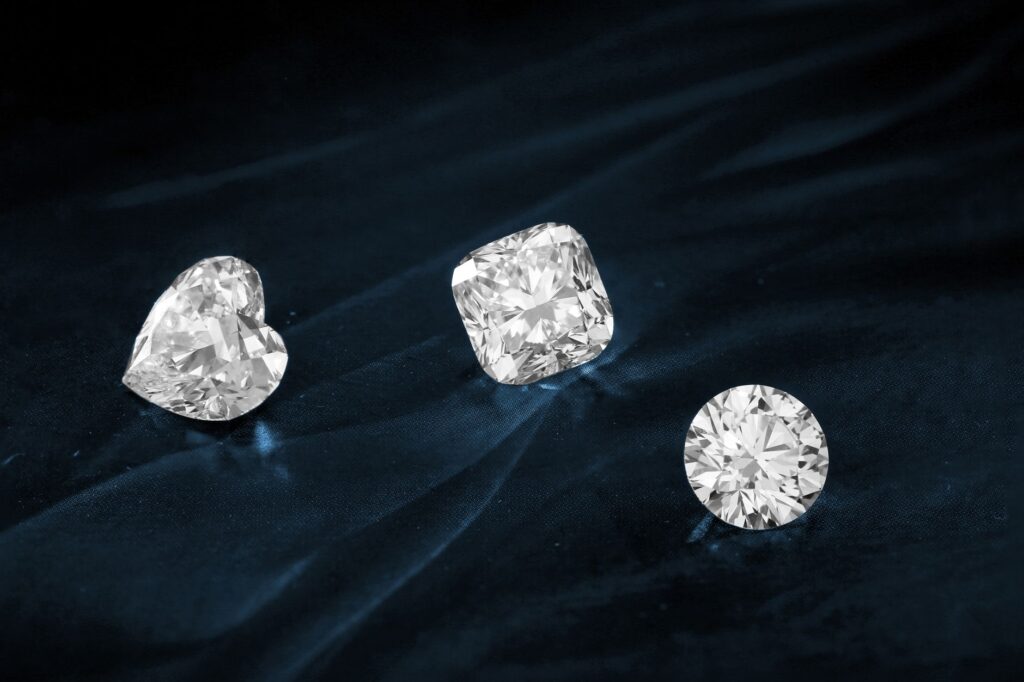
Cushion cuts combine a square or rectangular outline with rounded corners. They often have a softer, vintage-inspired look, but their face-up shape is less elongated than an oval.
Ovals usually look larger across the finger and are more streamlined. Cushions may appeal more to buyers who want a fuller, softer outline rather than length.
Why Celebrities Often Pair Ovals With Certain Settings
The shape of the diamond is only part of the final look. Celebrities often choose settings that enhance the oval’s length, brightness, and overall presence.
Solitaire settings
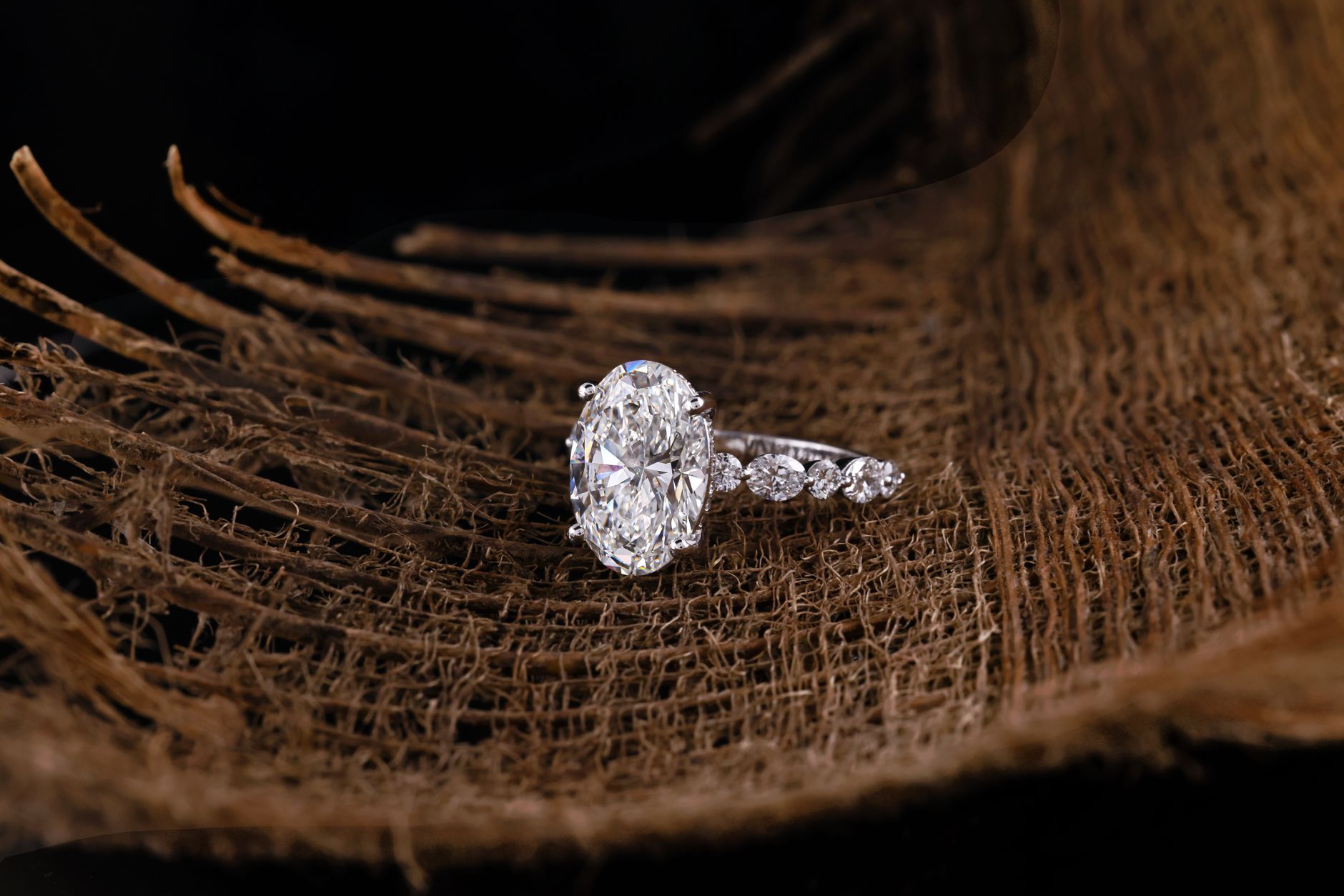
A solitaire places the focus entirely on the diamond. Ovals work well here because the shape itself creates enough visual interest without needing additional decoration. The result is often clean, elegant, and easy to photograph from many angles.
Hidden halos and pavé bands
Some celebrities choose small accent diamonds around or beneath the center stone. These details can make the ring appear brighter and more substantial without distracting from the oval shape itself.
For everyday buyers, this can be a useful reminder that a setting can influence how large and sparkly a stone appears. The diamond is not the only factor in the final look.
Three-stone settings
An oval center stone with side stones can create a balanced, upscale appearance. Side stones may add width or brightness depending on the design, while the center oval continues to draw the eye lengthwise.
This style works especially well for buyers who want a ring that feels more substantial without choosing a larger center stone alone.
Important Buying Considerations for Oval Diamonds
If you are shopping for an oval diamond, whether natural or lab grown, a few shape-specific factors matter more than they would for a round diamond. Paying attention to these details can help you choose a stone that looks appealing in everyday wear.
1. Evaluate the bow tie carefully
Because the bow tie effect varies from stone to stone, it is worth reviewing the diamond in multiple lighting conditions if possible. Videos and images can help, but they should be clear and accurate. A stone with a mild bow tie may still be beautiful, while a severe one can reduce the diamond’s overall brightness.
2. Look at the outline, not just the grading report
Oval diamonds can vary in outline shape. Some are more symmetrical and balanced, while others may look uneven or too narrow. A grading report can confirm measurements and basic quality factors, but it does not always tell you how pleasing the outline will look to the eye.
When comparing options, it helps to think about how the stone sits in the setting and whether the ends look graceful or pinched.
3. Choose color with the setting in mind
White gold and platinum settings can make any warmth in the diamond easier to notice. Yellow or rose gold can disguise slight warmth, which may allow more flexibility in color grade depending on your preferences.
If you are trying to balance appearance and budget, this is one of the areas where a lab grown diamond can be especially helpful. A buyer may be able to choose a higher color grade or larger size while staying within a practical budget.
4. Match clarity to the stone’s visual behavior
Because ovals have brilliant faceting, they can hide some inclusions well. Still, inclusions near the center or in lighter areas of the stone may be visible depending on size and location.
It is often more useful to focus on whether the stone is eye-clean than on aiming for the highest clarity grade available. That is especially true if the diamond comes with a strong certification from a recognized lab, such as those covered in a broader guide to diamond certifications.
5. Pay attention to proportions and dimensions
Two oval diamonds with the same carat weight can have different lengths, widths, and depths. Those differences affect how large the diamond looks and how much sparkle it delivers. A stone that is too deep may hide weight below the surface, while a shallow one may look large but perform less well if proportions are not balanced.
This is another reason why buyers should compare measurements, not carat weight alone. Carat tells you how heavy the diamond is, but not how efficiently that weight is used visually.
6. Review symmetry and edge quality
Oval diamonds should have a graceful outline with even curves on both ends. Uneven shoulders, lopsided ends, or awkward tapering can make the shape look less refined. Small differences may not show in a report, but they can be noticeable once the diamond is set.
In larger ovals, symmetry matters even more because imperfections in the outline are easier to see. That is one reason experienced shoppers often compare several stones before deciding.
7. Consider the setting width and ring profile
The ring setting can change how an oval diamond appears on the hand. A thin band can make the center stone look larger and more delicate, while a wider band can create a stronger, more substantial presence. The height of the setting also affects comfort and daily wear.
If you want the ring to sit low and feel practical, talk through setting design as part of the buying process. Shape and setting work together, especially for oval engagement rings.
Lab Grown Oval Diamonds and Why They Matter Here
Oval diamonds are especially relevant in the lab grown market because the shape’s face-up efficiency can help buyers maximize visible size and quality. Lab grown diamonds are real diamonds with the same physical and optical properties as mined diamonds, but they are created in controlled environments rather than extracted from the earth.
For shoppers comparing options, oval shapes can be a practical choice if the goal is to prioritize size, brightness, and a flattering outline. In many cases, buyers can afford a larger oval or a higher color and clarity combination than they might with a natural diamond at the same budget.
That said, the same shape considerations still apply. A lab grown oval can still have a bow tie, still need good proportions, and still vary in appearance from stone to stone. The fact that it is lab grown does not remove the need to evaluate cut quality carefully.
It is also worth noting that lab grown diamonds typically have different pricing and resale dynamics than natural diamonds. Many buyers choose them for the ability to get more size or higher color and clarity for the money, but resale value is generally not their strongest feature. For that reason, the best purchase is usually the one that fits your style and budget rather than one made on the assumption of future trade-in value.
Common Mistakes Buyers Make With Oval Diamonds
Oval diamonds are popular, but the shape can also lead to a few common buying errors. Avoiding these mistakes can help you choose a ring that looks good in real life, not just on paper.
Focusing only on carat weight
Carat weight does not guarantee a good-looking oval. Some stones are cut in a way that makes them look smaller or less lively than expected. It is better to compare measurements, shape, and light performance together.
Ignoring the bow tie effect
Many buyers see an oval and assume all ovals sparkle the same way. In reality, bow tie visibility can change the stone’s appearance significantly. A well-cut oval should have a balanced look with a bow tie that does not dominate the center.
Choosing a shape ratio without looking at the stone
Length-to-width ratio is useful, but it should not be the only factor. Some buyers prefer a wider oval with a softer look, while others want a more elongated one. The right ratio depends on personal style and hand proportions.
Overlooking color and clarity interactions
Because ovals can sometimes show warmth or inclusions differently than round diamonds, the same grade may not look identical across shapes. This is why a diamond that looks good in a grading report may still need visual evaluation before purchase.
Assuming celebrity style always translates directly to everyday wear
Celebrity rings are often styled for cameras, lighting, and public attention. A ring that looks stunning on a red carpet may not be the most practical or comfortable for daily wear. It is useful to borrow the shape idea, but adapt the setting and proportions to your own lifestyle.
Buying without checking the view from above
Some oval diamonds look attractive in profile but less refined from the top view because of uneven bow tie visibility or awkward outline proportions. Since the top view is how the ring will be seen most often, it deserves extra attention.
When possible, review videos, still images, and measurement details together rather than relying on a single photo.
Current Trend Context: Why Ovals Keep Showing Up
Oval diamonds have remained popular for several years, but their appeal is not only driven by celebrity visibility. The shape works well with current preferences for larger-looking center stones, elongated silhouettes, and rings that feel polished without being overly traditional.
Social media and online shopping have also changed how people compare diamonds. Shapes that photograph well tend to rise in visibility, and oval diamonds are strong in that setting because they create a long, balanced line and often appear bright from a distance.
That does not mean the trend will last forever in exactly the same way, but oval diamonds have enough practical advantages to remain relevant even if fashion shifts. They are not just a momentary style. They are a shape with broad and enduring appeal.
Frequently Asked Questions
Why do oval diamonds look bigger than round diamonds?
Oval diamonds spread their weight across a longer surface area, so they often appear larger face-up than round diamonds of the same carat weight. This does not mean they are heavier, only that the visible outline can cover more of the finger.
Do all oval diamonds have a bow tie?
Most oval diamonds have some degree of bow tie effect, but the visibility varies widely. A small, faint bow tie is common and may not be distracting. The concern is when the center dark area becomes strong enough to reduce sparkle or make the stone look uneven.
Are oval diamonds more affordable than round diamonds?
They are often less expensive per carat than round diamonds, though pricing depends on many factors including color, clarity, cut quality, and certification. In practical terms, many buyers can get a larger-looking oval for less money than a comparable round diamond.
Are oval diamonds a good choice for everyday wear?
Yes, oval diamonds are generally suitable for everyday wear when the setting is secure. Their rounded outline avoids sharp corners, which can make them practical. As with any engagement ring, the setting design and metal choice also affect durability.
Do oval diamonds hide imperfections well?
They can hide some inclusions reasonably well because of their brilliant faceting, but not all imperfections disappear. Inclusions near the center or in lighter areas may still be visible depending on the stone. Eye-clean appearance matters more than chasing the highest clarity grade.
What is the best length-to-width ratio for an oval diamond?
There is no universal best ratio. Many buyers like a balanced look around 1.30 to 1.45, but some prefer a wider or longer outline. The right choice depends on your style preference and how the diamond looks on your hand.
Are oval lab grown diamonds a smart option?
They can be, especially for buyers who want strong visual size and a higher quality combination within a set budget. Lab grown ovals still require the same careful attention to cut quality, proportions, and certification as mined stones.
How can I tell if an oval diamond has good proportions?
Start with the measurements and length-to-width ratio, then look at the stone itself. A well-proportioned oval usually has even curves, a balanced outline, and a bow tie that does not overpower the center. Visual review is just as important as the report.
Is an oval diamond too trendy for an engagement ring?
Not necessarily. While oval diamonds are popular, they also have a classic enough outline to work beyond short-term trends. Whether it feels trendy or timeless depends more on the setting, proportions, and your personal taste than the shape alone.
Conclusion
Oval diamonds are popular among celebrities because they combine elegance, sparkle, and a flattering elongated shape that often looks larger than its carat weight suggests. They photograph well, work with many ring styles, and feel current without being overly unusual.
For buyers, the main takeaway is that oval diamonds offer a strong balance of style and practicality, but they require more careful evaluation than round diamonds. Bow tie visibility, proportions, color appearance, and overall symmetry all matter when deciding whether a stone is a good choice.
If you are comparing shapes, think about what matters most to you: size appearance, sparkle, classic styling, or finger coverage. An oval diamond is often a strong choice for shoppers who want a graceful, modern look with good visual efficiency, especially when considering the added flexibility of lab grown diamonds and a thoughtful approach to cut, color, and clarity.