When shoppers ask which diamond shape shows clarity the most, they are usually trying to answer a practical question: Which shape will make inclusions easiest to see? That matters because clarity affects both appearance and value, especially if you are comparing diamonds in person or online. The short answer is that step-cut shapes, especially emerald cut, usually show clarity more than brilliant-cut shapes because their large, open facets act almost like windows into the stone.
But the full answer depends on more than shape alone. Cut style, facet pattern, diamond size, color, and where an inclusion sits all influence how noticeable clarity characteristics will be. A well-cut round brilliant can hide small inclusions far better than an emerald cut, while a poorly cut diamond of any shape may make imperfections more obvious.
Quick Answer: Which Diamond Shape Shows Clarity the Most
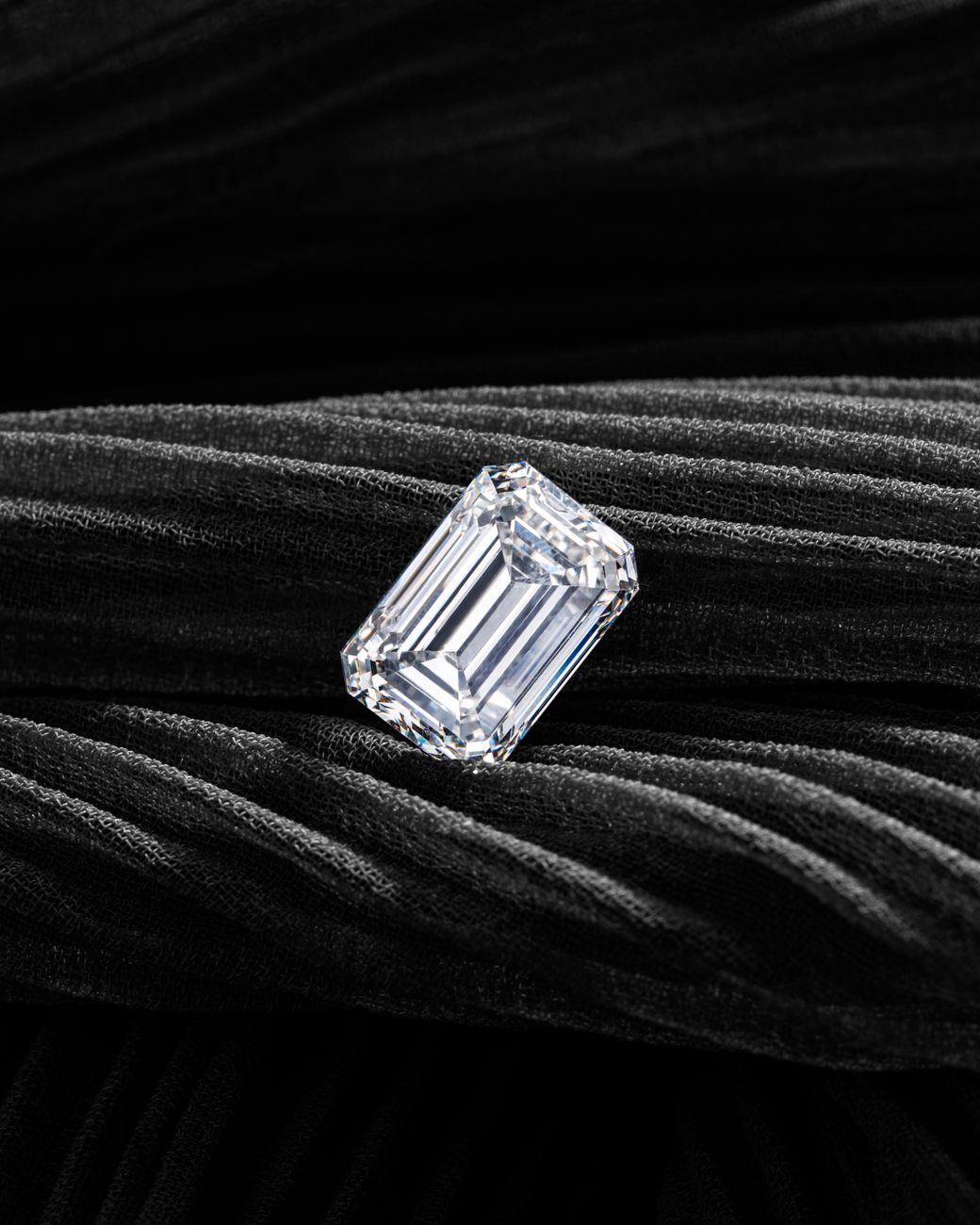
Emerald cut diamonds typically show clarity the most. Their step-cut facet structure creates broad, open flashes of light, which means there is less visual disruption to mask internal characteristics. As a result, inclusions that might be invisible in a round brilliant can be easier to spot in an emerald cut.
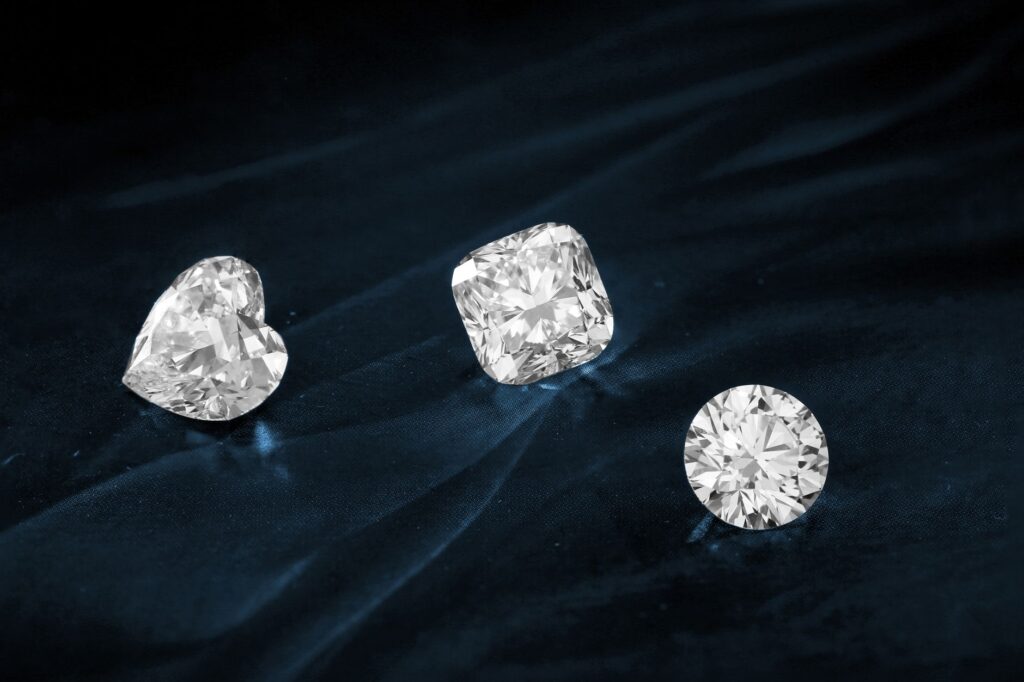
Other step-cut shapes, such as Asscher cut, also tend to reveal clarity more than brilliant-cut shapes. In contrast, shapes like round brilliant, cushion brilliant, oval, pear, and marquise generally hide inclusions better because their facet patterns create more sparkle and movement across the stone.
If you are choosing a diamond for an engagement ring or another piece of everyday jewelry, this difference can have a real effect on what clarity grade makes sense for your budget. It is one reason why clarity guidance often differs by shape in a diamond buying guide.
Why Some Diamond Shapes Hide Clarity Better Than Others
To understand why one shape shows clarity more than another, it helps to know how facets work. Facets are the flat polished surfaces on a diamond. They control how light moves through the stone and how much sparkle you see.
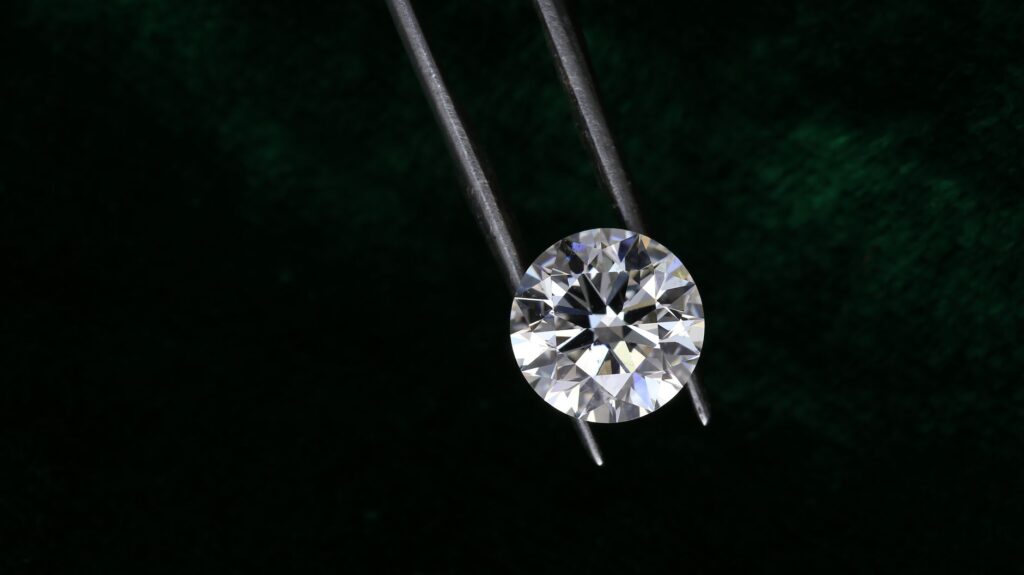
Some shapes use many smaller facets arranged to maximize brilliance. These are called brilliant cuts. Others use long, open facets arranged in rows. These are called step cuts. Step cuts tend to have a mirror-like look, while brilliant cuts produce more sparkle and visual activity.
That difference matters for clarity visibility. When a diamond has lots of sparkle and contrast, your eye is naturally drawn to the movement of light rather than to small internal features. When the facet pattern is more open, inclusions can stand out more easily.
Step Cuts vs Brilliant Cuts
Step cuts generally show clarity more because they provide less visual camouflage. Their large facets can reflect inclusions in a way that makes them easier to detect. This does not mean step cuts are low quality. It simply means they are less forgiving when clarity is lower.
Brilliant cuts tend to be more forgiving because their facet arrangement scatters light more actively. The sparkle creates visual distraction, which helps mask tiny feathers, crystals, or clouds inside the diamond. This is why many buyers can choose a lower clarity grade in a round brilliant without seeing any issues face up.
| Shape Type | Clarity Visibility | Why |
|---|---|---|
| Emerald cut | High | Large open facets create a clear, window-like look |
| Asscher cut | High | Step-cut facets make inclusions easier to notice |
| Round brilliant | Low to moderate | Strong sparkle helps mask small inclusions |
| Oval | Low to moderate | Brilliant faceting hides many inclusions well |
| Cushion brilliant | Low to moderate | Facet pattern creates light movement and visual coverage |
| Pear / marquise | Moderate | Brilliant style helps, but pointed ends can draw attention to certain areas |
What Clarity Really Means in a Diamond
Clarity refers to the presence of internal characteristics called inclusions and external characteristics called blemishes. Most diamonds have some small natural features, and clarity grading measures how noticeable those features are under magnification and, more importantly, to the naked eye.
For buyers, the main question is not whether a diamond is perfectly clean. It is whether anything visible affects the look of the diamond. A stone can have an inclusion grade on paper and still look excellent in real life if the shape and location of the inclusion are forgiving.
This is why shape matters so much. The same clarity grade can look very different in a round brilliant compared with an emerald cut. A clarity grade alone does not tell the whole story.
How Different Shapes Show Clarity
Emerald Cut
Emerald cut diamonds show clarity the most because of their broad, step-cut facets and open center. These stones do not rely on rapid sparkle to hide imperfections. Instead, they emphasize clean lines and transparency.
If an emerald cut has an inclusion near the middle, it may be visible even at grades that would appear spotless in other shapes. Many buyers therefore prioritize higher clarity in emerald cuts than they would in brilliant shapes. This is especially true for larger stones, where the open facet pattern gives the eye more room to inspect the interior.
Asscher Cut
Asscher cuts are also step cuts, but they have a more square shape and a concentric, hall-of-mirrors effect. Like emerald cuts, they tend to show clarity more readily than brilliant cuts. Their structured facet pattern can make inclusions easier to notice when you look straight down into the diamond.
Because Asscher cuts are not as forgiving as rounds or ovals, buyers often look for cleaner clarity grades here. The stone’s beauty depends heavily on precision and symmetry, so visible inclusions can have a larger impact on the overall appearance.
Round Brilliant
Round brilliant diamonds are among the best shapes at hiding inclusions. Their facet arrangement creates intense sparkle, which breaks up reflections and draws the eye away from small internal marks. This does not mean clarity never matters in rounds, but it does mean many inclusions are much less noticeable.
For most buyers, round brilliants offer the most flexibility if the goal is to balance appearance, budget, and clarity. You may be able to choose a lower clarity grade and still get a diamond that looks clean face up.
Oval
Ovals are brilliant-cut shapes, so they generally hide clarity well. However, their elongated shape can sometimes make inclusions easier to spot if they fall in the center line or near the ends. Ovals also vary more in appearance than rounds because proportions and facet patterns differ widely among stones.
Still, oval diamonds often perform well in the clarity department. Many buyers can prioritize size or color first, then select a clarity grade that remains eye-clean.
Cushion Cut
Cushion cuts can be either brilliant style or a more mixed facet style. In many cases, they hide clarity reasonably well because the facet pattern creates a softer, more diffused sparkle. But the exact result depends on the specific cut style.
Some cushion cuts appear busy and sparkly, which helps mask inclusions. Others have larger facets or a more open look, which may make clarity more noticeable. This is one reason cushion cuts should always be evaluated stone by stone rather than by shape name alone.
Pear, Marquise, and Radiant
Pear and marquise cuts are brilliant-style shapes, so they often hide clarity better than step cuts. However, their elongated outlines can make certain inclusions more noticeable if those inclusions sit in the center of the stone or near a pointed tip.
Radiant cuts are also good at masking clarity in many cases because they combine a rectangular or square outline with a brilliant-style facet pattern. They can be a strong choice for buyers who want a more rectangular shape without the clarity sensitivity of an emerald cut.
Appearance and Visual Performance: Why Clarity Looks Different by Shape
Clarity is not visible in a vacuum. The way a diamond handles light affects how much attention goes to inclusions. This is why shape, cut style, and proportions matter so much.
A diamond with lots of brilliance and scintillation, meaning sparkle and flashing movement, creates visual noise that can hide small imperfections. A diamond with calm, open facets gives the eye more time to study the interior. That is why the same inclusion can be practically invisible in one shape and noticeable in another.
Brilliance, Fire, and Scintillation
Brilliance refers to white light return. Fire refers to the colored flashes you see when a diamond breaks light into spectral colors. Scintillation is the sparkle you notice as the diamond moves.
Brilliant-cut shapes usually create more scintillation, which helps disguise clarity features. Step cuts create less of that busy sparkle, so clarity is easier to examine. If you are comparing a round brilliant with an emerald cut, the round will often look more lively and forgiving, while the emerald will look cleaner and more transparent, but also less forgiving of imperfections.
Face-Up View Matters Most
When buyers talk about whether a diamond is “eye clean,” they mean whether inclusions are visible to the naked eye from the top view. This is the view that matters most in jewelry. A stone can have internal characteristics visible under magnification and still look clean in normal wear.
With clarity-sensitive shapes like emerald cut, the face-up view becomes especially important. A diamond may look fine from one angle but reveal inclusions when viewed straight on. That is why photos, videos, and in-person inspection are so valuable.
Advantages of Shapes That Show Clarity More
It is easy to assume that a shape that shows clarity more is always worse, but that is not the case. Shapes like emerald cut and Asscher cut have very desirable visual qualities that many buyers specifically want.
Pros of Step-Cut Shapes
- Elegant, refined look: Step cuts have a clean and architectural appearance.
- Large facet pattern: This creates mirror-like flashes that many people find sophisticated.
- Emphasizes transparency: A high-quality step cut can look very crisp and premium.
- Distinctive style: These shapes stand out from more common brilliant cuts.
For some buyers, the clarity sensitivity is part of the appeal. A high-clarity emerald cut can look extremely polished and open, with a depth that many people find attractive. This is why step cuts often appear in more design-focused engagement rings.
Disadvantages of Shapes That Show Clarity More
The main drawback is budget efficiency. If a shape shows clarity more, you may need to pay for a higher clarity grade to achieve the same clean appearance you could get more easily in another shape.
Cons of Step-Cut Shapes
- More visible inclusions: Internal features are easier to spot.
- Less forgiveness: Small imperfections can stand out more.
- Higher clarity may be needed: To achieve an eye-clean look, you may need to move up in grade.
- Cut quality matters more: Poor proportions can make clarity issues more obvious.
This is especially important for larger diamonds. As carat size increases, inclusions can become easier to see because there is more surface area and more room for the eye to inspect the stone. A one-carat emerald cut may be somewhat forgiving, while a three-carat emerald cut can make clarity choices much more visible.
Who Each Type of Diamond Shape Is Best For
There is no universal best shape. The right choice depends on your style, budget, and how much clarity visibility matters to you.
Best For Buyers Who Want Maximum Clarity Visibility
If you want a diamond that shows its interior clearly and has a refined, elegant look, emerald cut is often the best answer. Asscher cut is another strong option if you like a square shape with a vintage feel.
These shapes are best for buyers who appreciate precision, symmetry, and a more understated sparkle profile. They are also better suited to shoppers who are comfortable prioritizing clarity a bit more heavily than they would with a brilliant cut.
Best For Buyers Who Want a More Forgiving Shape
If your goal is to get the largest or most visually impressive diamond for the budget, round brilliant, oval, radiant, and many cushion cuts are often more forgiving. These shapes make it easier to choose a lower clarity grade without obvious visible impact.
For many engagement ring shoppers, this is a practical advantage. You may be able to put more of the budget toward carat size, color, or cut quality while still getting a diamond that looks clean.
How This Matters in the Lab Grown Diamond Market
In the lab grown diamond market, clarity and shape remain important, but buyers often have more flexibility because lab grown diamonds are usually priced lower than natural diamonds of similar size and quality. That can make it easier to choose a clarity-friendly shape at a higher grade without stretching the budget as much.
This is particularly relevant for step-cut shapes. If you love emerald cut or Asscher cut, a lab grown diamond may make it more realistic to select the higher clarity grade these shapes often benefit from. At the same time, it is still smart to evaluate the individual stone, since cut quality and clarity placement matter just as much as the grading report.
For shoppers comparing lab grown diamonds and natural stones, the shape question is the same. The diamond’s origin does not change how much clarity is visible. The facet pattern and proportions drive the visual effect.
Important Buying Considerations When Clarity Visibility Matters
1. Look at the Diamond Face Up
The most useful view is from the top, not the side. A clarity characteristic that sits near the edge may be hidden by prongs once the diamond is set, while a center inclusion can remain visible. Always ask whether the stone is eye clean face up.
2. Pay Attention to Inclusion Type and Location
Not all inclusions affect appearance equally. A tiny crystal near the edge may be less noticeable than a cloud or feather in the center. Location matters as much as the clarity grade itself.
For clarity-sensitive shapes, a well-placed inclusion can make a lower grade perfectly acceptable. On the other hand, a technically higher grade may still show something noticeable if the inclusion is positioned in a visible area.
3. Consider Size and Shape Together
Larger diamonds often reveal clarity more easily. Elongated shapes such as oval, pear, and marquise can distribute visual attention differently, but they can still show inclusions depending on where those inclusions sit.
If you are comparing shapes, do not look at clarity grade alone. Compare how the inclusion pattern actually appears in the shape you want.
4. Use Certification as a Starting Point, Not the Whole Decision
Diamond reports from respected laboratories help you understand clarity grade, but they do not replace direct visual evaluation. A grading report tells you what is present, not how noticeable it will be in real life.
This is where tools like high-resolution images, videos, and expert review become useful. If you are studying diamond certifications, remember that the shape still changes how those grades look to the eye.
5. Match Clarity to the Shape’s Behavior
For emerald cut and Asscher cut, many buyers focus on higher clarity because the open facet pattern reveals more. For round brilliant, oval, radiant, and many cushion cuts, there is often more room to optimize value by choosing a slightly lower clarity grade that still appears clean.
| Shape | Typical Clarity Strategy | Reason |
|---|---|---|
| Emerald cut | Prioritize higher clarity | Open facets reveal more of the interior |
| Asscher cut | Prioritize higher clarity | Step-cut pattern shows inclusions more clearly |
| Round brilliant | Can often go lower if eye clean | Sparkle masks many small inclusions |
| Oval | Can often go lower if inclusion placement is favorable | Brilliant faceting provides good camouflage |
| Radiant | Often flexible on clarity | Facet pattern is busy and forgiving |
Common Mistakes Buyers Make When Choosing a Shape for Clarity
Focusing Only on the Clarity Grade
One of the most common mistakes is assuming that a higher clarity grade always looks better. That is not always true. A lower-grade diamond can appear just as clean if the inclusion is tiny and well placed, especially in a forgiving shape.
Ignoring the Shape’s Facet Style
Many buyers compare shapes by outline only, such as round, oval, or square, without considering whether the cut is brilliant or step cut. That distinction matters a lot for clarity visibility. Two square diamonds can have very different clarity behavior if one is Asscher and the other is princess or radiant.
Not Checking for Eye-Clean Appearance
Eye-clean is often the most useful standard for everyday buyers. If a diamond looks clean without magnification, that may matter more than the technical grade on paper. This is especially true if you are balancing clarity against carat size or budget.
Forgetting That Settings Can Help
A setting can hide or expose certain areas of the diamond. Prongs may cover edge inclusions, while open basket settings can leave more of the stone visible. Ring design should be considered along with shape and clarity.
How Clarity Visibility Affects Value
Shapes that show clarity more can require a higher clarity grade to look their best, which may increase cost. That does not mean they are poor value. It simply means buyers need to allocate their budget differently.
If you love emerald cut, paying a bit more for clarity may be worthwhile because the shape’s beauty depends on a clean, open appearance. If you prefer maximum size or sparkle for the money, a more forgiving shape may provide better value by allowing a lower clarity grade without visible compromise.
This is one reason why diamond value cannot be judged by a single factor. Diamond pricing depends on shape, carat weight, color, clarity, cut quality, and market demand. Shape affects all of those trade-offs in a practical way.
Frequently Asked Questions
Which diamond shape hides inclusions the best?
Round brilliant is usually one of the best at hiding inclusions because its sparkle creates strong visual movement. Oval, cushion brilliant, radiant, and many pear cuts also tend to be forgiving. These shapes are often better if you want a clean look without paying for the highest clarity grades.
Does emerald cut always need a higher clarity grade?
Not always, but emerald cut usually benefits more from higher clarity than brilliant-cut shapes. Because the facets are open and mirror-like, inclusions are easier to spot. Many buyers choose a higher clarity grade for emerald cuts to maintain a clean face-up appearance.
Is clarity more important in larger diamonds?
Yes, clarity often becomes more noticeable as carat size increases. Larger stones give the eye more area to inspect, and inclusions can appear easier to see. This is especially true in step-cut shapes.
Can a lower clarity diamond still look eye clean?
Yes. Many diamonds with lower clarity grades still look eye clean, especially in forgiving shapes. The key is inclusion type, size, and placement, not just the grade itself. Always evaluate the stone visually when possible.
Do lab grown diamonds show clarity differently than natural diamonds?
No, the shape and facet pattern affect clarity visibility the same way in both lab grown and natural diamonds. What changes is price, which can make it easier to choose a higher clarity grade in lab grown stones. For more context, compare lab grown diamonds with natural diamonds based on your budget and priorities.
Is step-cut or brilliant-cut better for clarity?
Brilliant-cut shapes are generally better if your goal is to hide inclusions and get more visual flexibility. Step-cut shapes are better if you like a clean, elegant look and are willing to pay more attention to clarity. Neither is universally better. It depends on the style you want.
Should I choose shape or clarity first?
For most buyers, shape should come first because it determines the overall look of the ring. After that, clarity should be chosen based on how the shape handles inclusions and how much of your budget you want to allocate to size, color, and cut. A good diamond buying guide will usually recommend balancing all four of the major quality factors.
Conclusion
If you are asking which diamond shape shows clarity the most, the clearest answer is emerald cut, followed by other step-cut shapes like Asscher cut. These shapes have broad, open facets that make internal characteristics easier to see. By contrast, brilliant-cut shapes such as round, oval, radiant, and many cushion cuts tend to hide clarity better because their sparkle creates more visual distraction.
The most practical takeaway is that clarity should be judged in context. Shape, facet style, inclusion type, inclusion location, size, and setting all affect how visible a diamond’s clarity characteristics will be. A diamond with a lower clarity grade can still look excellent if the shape is forgiving, while a higher-graded diamond can still show visible features in a more open cut.
For buyers, the best approach is to choose the shape you like first, then use clarity strategically. If you prefer step cuts, consider giving clarity more weight. If you prefer brilliant cuts, you may have more flexibility to prioritize size or budget while still getting an eye-clean diamond. That balance is especially useful when comparing natural and lab grown diamonds, since lab grown options can make higher clarity grades more accessible without changing the shape’s visual behavior.