Carat weight is one of the first numbers buyers notice, but it is not the same thing as visible size. A diamond can have a higher carat weight and still look only slightly larger than another stone if the shape, cut, or depth is different. That is why Why Diamond Carat Matters is really a question about appearance, price, and value, not just weight.
For shoppers comparing engagement rings or loose diamonds, the practical question is simple: how large will the diamond actually look once it is set on a hand? The answer depends on more than a single number. Understanding carat weight helps you judge whether you are paying for meaningful visual size or mainly for a heavier stone on paper.
Quick Answer
Diamond carat matters because it affects both how large a diamond can look and how much it costs. As carat weight increases, the diamond usually appears larger, but not always in a perfectly proportional way. Two diamonds with the same carat weight can look different in size depending on their shape, proportions, and setting.
For buyers, the main takeaway is this: carat is important, but it should be evaluated alongside face-up measurements, cut quality, finger size, and price. In many cases, a well-cut diamond with slightly less carat weight can look nearly as large as a heavier diamond and offer better value.
Understanding the Carat Concept
What Is Diamond Carat?
Carat is the unit used to measure a diamond’s weight. One carat equals 200 milligrams, or 0.2 grams. It does not directly measure size, although weight often influences how large the diamond appears.
If you’re new to diamond terminology, our guide explaining how diamond carat is measured covers the official weight standard and why carat should not be confused with visible size.
This is where confusion starts for many buyers. A diamond’s weight tells you how much material it has, but not how that weight is distributed. Two diamonds can both weigh 1.00 carat and still have different dimensions, face-up spread, and visual impact.
Why Weight Is Not the Same as Visible Size
Visible size depends on how much of the diamond’s mass is concentrated in its depth versus its top view. A stone with extra depth may weigh more without looking significantly larger from above. A shallower diamond may appear larger face-up even if it weighs a little less.
This is especially important when comparing diamonds online or in a showcase. A carat number alone can be misleading if the measurements are not considered. For buyers focused on appearance, the face-up view is often more relevant than weight alone.
Face-Up Size Explained
Face-up size refers to how large a diamond looks when viewed from the top, which is how most people see it once it is mounted in a ring. It is usually expressed in millimeters, not carats. For example, a round 1 carat diamond might measure around 6.4 to 6.5 mm across, but the exact size depends on cut proportions.
Face-up size matters because that is what creates visual presence on the hand. A buyer may care less about the stone’s hidden weight and more about whether it fills the finger in a pleasing way.
What Buyers Usually Expect
Carat weight often creates expectations that do not always match reality. A lot of shoppers assume that doubling carat weight will double visible size, but that is not how diamond appearance works. Size increases are real, just not linear in the way people often imagine.
Another common assumption is that all 1 carat diamonds look the same. In practice, one 1 carat stone may look wider and more spread out, while another may appear slightly smaller because of deeper proportions. The difference can be noticeable when the diamonds are placed side by side.
Some buyers also focus on the round number itself. A 1.00 carat diamond can seem more desirable than a 0.90 carat stone even when the visual difference is minimal. This is one reason understanding diamond carat matters before comparing prices.
What It Actually Looks Like
Carat Affects Visual Presence
As carat weight goes up, the diamond usually looks more substantial on the hand. More weight generally means more material and often more surface area, especially in shapes that spread well. That said, the relationship is not perfect because the cut can change how much of the stone is visible from above.
What buyers usually notice is finger coverage. A diamond that covers more of the finger feels larger, even if the carat increase is modest. This is why a diamond’s millimeter measurements can be just as important as its weight.
Same Carat, Different Look
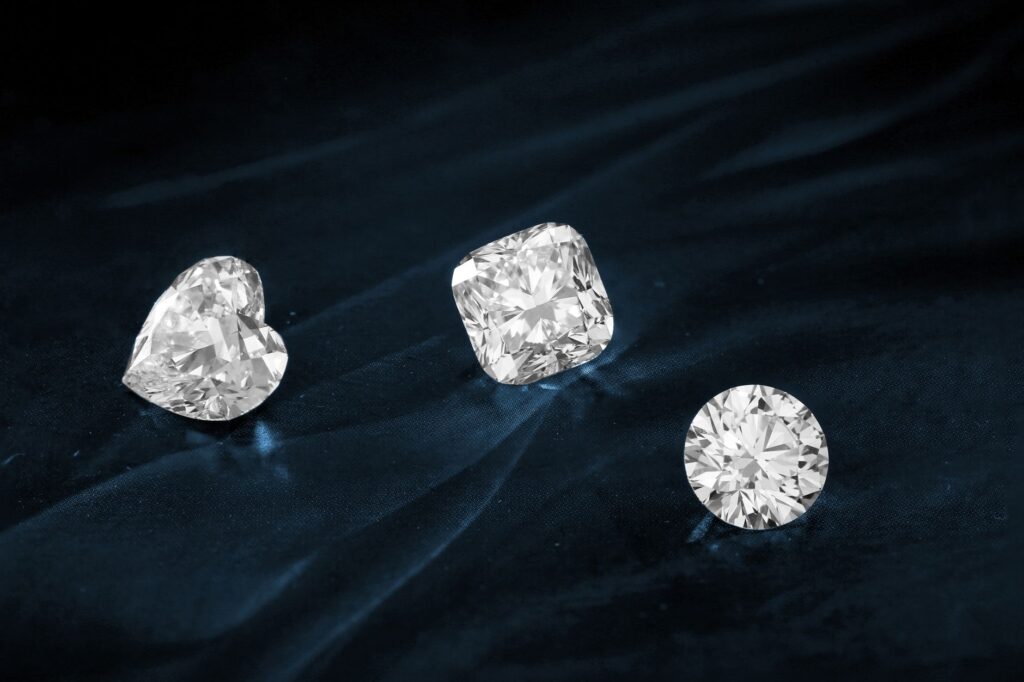
Two diamonds with the same carat weight can look different in size because different shapes hold weight differently. A round brilliant often uses weight efficiently for sparkle, while some deeper shapes may hide more of their mass. An oval, pear, or marquise can appear larger than a round diamond of the same weight because these shapes distribute weight along a longer outline.
The setting also affects how large the diamond seems. Thin prongs, a halo, or a low-profile mount can make the center stone appear larger or smaller depending on the design. Buyers who focus only on carat may miss these visual details.
Why the Top View Matters Most
For everyday wear, the top view is usually what counts most. The diamond’s depth is important for durability and light performance, but it does not create the same visual impact as width and length. A well-proportioned diamond with strong face-up spread often looks more impressive than a heavier stone that carries extra weight below the girdle.
This is one reason experienced buyers compare measurements, not just carat weight. The visible outline on the finger is the real-world result people see.
Factors That Change Apparent Size
Shape
Shape has a major effect on how large a diamond looks. Round diamonds tend to appear balanced and symmetrical, while elongated shapes can look bigger for the same weight because they cover more finger length. The shape you choose can change the way carat weight translates into visible size.
| Shape | How It Usually Looks Face-Up | Size Per Carat Perception |
|---|---|---|
| Round | Classic, compact, balanced | Moderate |
| Oval | Elongated, often looks larger | High |
| Pear | Tapered, visually long | High |
| Marquise | Very elongated, dramatic spread | Very high |
| Princess | Square outline, strong presence | Moderate |
| Emerald | Open, rectangular, less brilliant spread | Moderate to high depending on proportions |
These are general tendencies, not fixed rules. Individual stones still vary, so measurements remain important.
Cut and Proportions
Cut quality affects both sparkle and face-up size. A diamond cut too deeply can carry hidden weight, making it look smaller than expected. A stone cut with efficient spread may look larger because more of its weight is visible from above.
For buyers, this means a well-cut diamond can sometimes provide a better visual result than a heavier but poorly proportioned diamond. This is especially true when the goal is to maximize apparent size without overspending.
Depth
Depth is the distance from the table, or top flat surface, to the bottom point of the diamond. Deeper diamonds weigh more relative to their width, which can reduce visible size. Shallower stones may appear larger from the top, although they still need proper proportions to perform well.
Depth is one of the reasons carat and size are not interchangeable terms. Two stones can weigh the same, but one can face up significantly larger if it is less deep.
Setting Design
The ring setting can change how large the diamond appears. A slim solitaire may emphasize the center stone, while a halo can add extra visual width around it. A thick bezel or wide band can make a diamond feel smaller by comparison.
Settings do not change the diamond itself, but they strongly influence perceived size. Buyers comparing rings should think about the whole design, not only the center stone’s carat weight.
Finger Size
Finger size changes the way a diamond looks in proportion to the hand. A 1 carat diamond will generally appear larger on a size 4 finger than on a size 7 finger because it covers more of the visible surface area. The stone itself has not changed, but the surrounding canvas has.
This is one reason universal size charts can be misleading. A carat weight that looks substantial on one hand may feel modest on another.
Real-World Size Examples
1 Carat on a Size 4 Finger
On a smaller finger, a 1 carat diamond usually has noticeable presence. It tends to look proportionate without appearing oversized for most ring styles. In round brilliant form, the stone often gives a balanced, classic appearance.
For buyers with smaller hands, a 1 carat diamond may deliver strong visual impact without needing a much larger weight. The same stone can feel more prominent because it covers more of the finger.
1 Carat on a Size 7 Finger
On a larger finger, a 1 carat diamond can look more modest. It still appears attractive and clearly visible, but it may not create the same dramatic coverage seen on smaller hands. Some buyers prefer this restrained look, while others may want a larger face-up spread.
This is a good example of why carat should be considered in context. A diamond that seems substantial to one buyer can feel relatively subtle to another.
2 Carat Oval vs 2 Carat Round
A 2 carat oval often looks larger than a 2 carat round because the elongated shape spreads across more of the finger. The round may appear more compact, while the oval creates a longer visible outline. Both weigh the same, but the visual impression is different.
This does not mean an oval is automatically better. Some buyers prefer the symmetry and sparkle pattern of a round diamond. The key point is that shape can change the size perception significantly.
0.90 Carat vs 1 Carat
The difference between 0.90 and 1.00 carat is often smaller than buyers expect. In many cases, the visual difference is difficult to notice without close comparison, especially if the diamonds are cut similarly. The price difference, however, can be meaningful because 1.00 carat is a psychological and market threshold.
For value-focused buyers, this is one of the most important comparisons in diamond shopping. Choosing a stone just under a benchmark weight can sometimes provide nearly the same look for less money.
1.50 Carat vs 2 Carat
This comparison is more visible than 0.90 versus 1.00 carat. A 2 carat diamond usually has a more obvious presence on the hand and can look substantially larger. That said, whether the difference feels worth the price jump depends on the buyer’s budget and priorities.
Some shoppers are satisfied with the visual step-up, while others decide the extra cost is not justified. This is where carat value becomes a personal decision as much as a technical one.
Price vs Visual Benefit
Carat Price Does Not Rise Evenly
Diamond pricing usually increases more quickly as carat weight goes up. A 2 carat diamond is not simply twice the price of a 1 carat diamond. Depending on quality, it may cost much more because larger diamonds are rarer and more desirable in the market.
This creates diminishing returns. Each additional increment of weight often costs more than the last while adding only a modest increase in visible size.
Why The Step-Up Feels Expensive
Carat thresholds affect pricing. Round numbers such as 1.00, 1.50, and 2.00 carats often carry a premium compared with slightly smaller weights. Buyers can sometimes save money by choosing a diamond just below one of these thresholds if the visual difference is minimal.
This does not mean larger diamonds are a bad value. It means buyers should judge whether the extra size is worth the extra cost in their specific situation.
Visual Gains vs Budget Efficiency
The most expensive part of diamond shopping is often the last bit of size. Going from 0.90 to 1.00 carat may not change the appearance dramatically, but it can affect the price noticeably. Going from 1.50 to 2.00 carats can create a clearer visual difference, yet the cost jump may be substantial.
In practical terms, the best value often comes from selecting a carat weight that balances appearance and price. That balance depends on the buyer’s goals, the ring design, and how large the diamond needs to look in everyday wear.
Who Should Size Up
Some buyers benefit from choosing a larger carat weight. If visible presence is the top priority, a bigger stone may be worth the added cost. This is especially true for people who want the diamond to be clearly noticeable from a distance or to create a more prominent center focus in the ring.
Buyers with larger hands may also prefer sizing up because smaller stones can look proportionally modest. In that case, the extra carat weight can improve balance on the hand and make the ring feel more proportionate.
Lab grown diamond shoppers may have even more flexibility here. Because lab grown diamonds are often priced lower than natural diamonds of similar appearance and quality, some buyers can choose a larger face-up size while staying within budget. That does not make larger automatically better, but it can make size upgrades more accessible.
Who Can Save Money
Buyers who value overall appearance over a specific number can often save money by choosing a slightly smaller carat weight. A diamond just below a major threshold may look nearly identical in daily wear. The money saved can sometimes be used for better cut quality, a more durable setting, or stronger color and clarity grades.
This approach works especially well when the buyer is focused on sparkle and balance rather than maximum size. A well-proportioned diamond often appears more attractive than a heavier one with weaker cut quality.
Smaller hands can also support this strategy. A stone that seems modest on paper may look perfectly substantial on the finger once it is set.
Common Buyer Mistakes
Chasing Carat Numbers Only
One of the most common mistakes is treating carat as the sole measure of diamond quality. It is only one part of the picture. Cut, color, clarity, shape, and setting all influence how the diamond looks and whether it feels worth the price.
Two diamonds with different carat weights can have very different visual outcomes. Focusing only on weight can lead buyers to overspend on hidden mass rather than visible beauty.
Ignoring Measurements
Millimeter dimensions are critical when judging face-up size. A diamond listing should ideally include measurements, not just carat weight. Without those numbers, it is hard to know how large the stone will actually appear.
This matters most when comparing stones of different shapes or proportions. A 1 carat diamond with strong spread may look larger than a 1.10 carat stone with deeper proportions.
Ignoring Shape Effects
Shape changes size perception more than many buyers realize. An elongated shape often creates a bigger-looking diamond, while a round shape may appear more compact for the same weight. Choosing a shape without understanding this trade-off can lead to surprise later.
It helps to ask not only how much the diamond weighs, but also how it will look on the hand. That perspective often leads to better satisfaction.
Ignoring Finger Size
Finger size has a direct effect on how large the diamond appears. A carat weight that looks bold on one hand may look restrained on another. Buying without considering finger size can make expectations unrealistic.
This is one reason trial fittings and visual comparisons are useful. They help translate carat weight into personal appearance.
Overpaying for Magic Sizes
Many markets place extra value on round-number carat weights. Sometimes the difference between 0.95 and 1.00 carat is visually negligible, but the price jump is not. Buyers who understand this can make more efficient choices.
That said, some people prefer the psychological comfort of a full carat weight. The decision is not wrong, but it should be made with awareness of the trade-off.
How Lab Grown Diamonds Change the Size Conversation
Lab grown diamonds often shift the size conversation because they can offer more carat weight for the budget. For buyers who care strongly about visible size, this can be a practical advantage. A shopper may be able to choose a larger center stone without moving into a much higher price bracket.
Still, the same sizing principles apply. Carat is still weight, not guaranteed visual size. A poorly proportioned lab grown diamond can still look smaller than expected, and the same evaluation of measurements and cut quality remains important.
Another point worth noting is that larger lab grown diamonds may be easier to obtain within budget, but buyers should not assume size is the only consideration. Certification, cut quality, and setting design still affect the final appearance and value.
If you’re comparing different sizes and shapes, our guide to the best lab grown diamonds explains what to look for when balancing carat weight, cut quality, and overall value.
How to Judge Diamond Size More Accurately
If your goal is to understand how large a diamond will actually look, use a few practical checks rather than relying on carat alone.
- Look at millimeter measurements to understand face-up spread.
- Compare shape because oval, pear, and marquise shapes often look larger than rounds of the same weight.
- Check cut quality to avoid hidden weight that does not contribute to visible size.
- Think about finger size since the same stone looks different on different hands.
- Consider the setting because the ring design affects perceived size.
These steps give a more realistic picture than carat weight alone. They also help you compare stones in a more balanced way.
Frequently Asked Questions
Does a higher carat diamond always look bigger?
Usually, yes, but not always in proportion to the weight increase. A deeper diamond can weigh more without looking much larger. Shape and cut can also change how big the stone appears from above.
Is carat the same as size?
No. Carat measures weight, while size is about visible dimensions. The two are related, but they are not identical.
Which diamond shapes look largest per carat?
Elongated shapes such as oval, marquise, and pear often look larger per carat than round diamonds because they spread across more visible surface area. However, personal preference and style matter just as much as size perception.
Why does a 1 carat diamond look different from another 1 carat diamond?
Because carat only tells you weight. Differences in depth, shape, and cut proportions can make one 1 carat diamond look wider or more compact than another.
Is it worth paying more for a full carat?
It depends on your priorities. A full carat may be worth it if the exact milestone matters to you. If value is the priority, a slightly smaller stone can sometimes look nearly the same and cost less.
Do lab grown diamonds make it easier to buy larger sizes?
Often, yes. Lab grown diamonds typically allow buyers to choose more carat weight for the budget than many natural diamonds. That can make visible size more accessible, though cut quality and proportions still matter.
How much bigger does a 2 carat diamond look than a 1 carat diamond?
It usually looks clearly larger, but not twice as large in diameter or face-up area. The increase is visible, yet the relationship is not linear. The exact difference depends on the shape and measurements of each stone.
Should I prioritize carat or cut?
For most buyers, cut should be a higher priority if sparkle and overall appearance matter. A well-cut diamond often looks more attractive and sometimes even larger than a heavier stone with poorer proportions.
Conclusion
Carat matters because it influences both the visible size of a diamond and the price you pay for it. But carat alone does not determine how large a diamond will actually look. Shape, cut, depth, finger size, and setting design all affect face-up appearance and finger coverage.
The most useful way to think about diamond size is to compare carat weight with millimeter measurements and real-world visual impact. In many cases, slightly smaller stones can offer strong size appearance and better value, while larger stones may be worth the premium for buyers who want more presence on the hand.
For informed shopping, the goal is not simply to choose the biggest number. It is to choose the diamond that looks right, fits the budget, and offers the best balance of appearance and value for the person wearing it.