When shoppers ask How Diamond Cut Affects Sparkle, they are usually trying to understand one simple thing: why do some diamonds look bright, lively, and full of flashes, while others look flat or dull even when the carat weight is higher? The answer is that cut is one of the most important factors in how a diamond handles light.
Cut affects much more than shape. It influences how much light enters the diamond, how it bounces around inside, and how it returns to your eye. A well-cut diamond can look more brilliant and attractive than a larger stone with weaker proportions, which is why cut often has a bigger visual impact than buyers expect.
This matters whether you are shopping for a natural diamond or a lab grown diamond. Since lab grown diamonds often give buyers more size for the budget, understanding cut helps you choose a stone that actually looks beautiful in everyday wear, not just on a grading report.
Quick Answer
Diamond cut affects sparkle by controlling how efficiently the stone reflects light back to your eye. A diamond with strong cut quality usually looks brighter, more lively, and more dynamic because it returns more light and creates a balanced mix of brilliance, fire, and scintillation.
By contrast, a poorly cut diamond can leak light, appear darker in the center or around the edges, and lose the crisp flashes that make a diamond look vibrant. Even if the diamond is larger, its sparkle may appear weaker than a smaller diamond with better cut quality.
For most buyers, cut is one of the best places to focus budget. It has a direct effect on what you can actually see, especially in face-up appearance under normal lighting.
What Diamond Cut Really Means
Many people hear the word “cut” and think it only refers to shape, such as round, oval, or pear. In diamond grading, cut is more specific. It refers to how well a diamond’s facets are arranged and finished, which affects light performance.
In simple terms, a diamond’s cut is about precision. The angles, proportions, symmetry, and polish all work together to influence sparkle. Two diamonds with the same shape and carat weight can look very different if one is cut more effectively than the other.
Cut Is Not the Same as Shape
Shape describes the outline of the diamond, such as round, princess, cushion, emerald, or oval. Cut quality describes how well that diamond has been made. A round diamond can have excellent cut, very good cut, or poor cut. The same is true for many other shapes, although grading systems are usually most standardized for round brilliant diamonds.
This distinction matters because many buyers assume a bigger or more expensive diamond will automatically sparkle more. In reality, shape and size alone do not determine brilliance. Cut quality has a major influence on how the diamond performs in real life.
What Light Performance Means
Light performance is a practical way of describing how a diamond handles light. A diamond with strong light performance reflects white light well, shows colorful flashes under the right lighting, and produces lively contrast as it moves.
When experts talk about light performance, they are usually discussing three visible effects:
- Brilliance, which is the return of white light
- Fire, which is the flash of rainbow colors
- Scintillation, which is the pattern of sparkle and contrast when the diamond moves
These terms sound technical, but the practical idea is simple. Better cut usually means a diamond looks more alive.
Why Cut Matters More Than Many Buyers Realize
For first-time buyers, cut is often the easiest quality factor to underestimate. Carat weight is easy to understand, and color or clarity can sound more obvious on paper. But cut is what often determines whether a diamond looks impressive once it is actually worn.
That is especially important for engagement rings and everyday jewelry. Most people do not view a diamond under laboratory conditions. They see it in daylight, office lighting, restaurant lighting, and at home. A well-cut diamond is more likely to look attractive across those environments.
Cut Affects Appearance More Than Many Grading Terms
Some diamond characteristics can be hard to spot without magnification. Cut is not one of them. While the exact reason for the difference may be technical, the visual effect is easy to notice when diamonds are compared side by side.
A good cut can improve brightness, symmetry of sparkle, and overall visual appeal. A weaker cut may make a diamond seem sleepy or glassy, even if the clarity grade is high.
Cut Can Help a Diamond Look Larger or Smaller
Cut also influences face-up size, which is how large the diamond appears when viewed from above. A diamond that is too deep can hide weight in the bottom and appear smaller than expected. A diamond with a better balance of proportions can often look more open and spacious.
This is one reason some buyers are pleasantly surprised by a well-cut 1.5-carat diamond compared with a poorly cut 2-carat diamond. The smaller stone may have stronger brightness and better spread, so it appears more attractive overall.
The Main Parts of Cut Quality
Cut quality is made up of several features that work together. Some are easier to see than others, and some are more important in round diamonds than in fancy shapes. Understanding the basics can help you make a better buying decision without getting lost in grading jargon.
Proportions
Proportions are the diamond’s basic measurements, including table size, depth percentage, crown angle, and pavilion angle. These numbers affect how light moves through the stone.
If proportions are too far off, the diamond may leak light or lose sparkle. If they are well balanced, the diamond is more likely to reflect light efficiently. Most buyers do not need to memorize ideal numbers, but it helps to know that proportions are a major part of why one diamond performs better than another.
Symmetry
Symmetry refers to how precisely the facets are aligned with one another. In a symmetrical diamond, the facet arrangement is more orderly, which can improve visual balance and optical performance.
What buyers actually see is a cleaner, more even look. In some diamonds, especially round brilliants, better symmetry can support a stronger pattern of light and dark contrast. That can make the diamond appear crisper and more defined.
Polish
Polish describes how smooth and well-finished the surface of the facets is. A highly polished diamond reflects light more cleanly because the facet surfaces are less likely to scatter light in unwanted ways.
For most buyers, polish is not something they will inspect closely without magnification. Still, it matters because surface finish contributes to overall sharpness and visual quality. When polish is poor, it can interfere with the diamond’s crispness and sparkle.
Hearts and Arrows
Hearts and Arrows is an optical pattern seen in some finely crafted round brilliant diamonds. Under special viewing conditions, the stone shows symmetrical heart shapes from one angle and arrow shapes from another.
This pattern is often associated with precise cutting and strong optical symmetry. It does not automatically mean every diamond with this pattern is perfect in every way, but it is often a sign of careful craftsmanship. For buyers, the practical value is that these diamonds can display very refined, balanced sparkle.
How Diamond Cut Creates Sparkle
Sparkle is not one single effect. It is the combined result of brightness, colored flashes, and contrast patterns. A diamond can have one type of sparkle without having all three in equal measure, which is why some stones look lively in one light and less impressive in another.
Brilliance: The White Light Return
Brilliance is the white light reflected back to your eye. This is the brightest part of a diamond’s sparkle, and it is often what people notice first.
A well-cut diamond tends to look brighter because more incoming light is returned to the viewer instead of escaping through the bottom or sides. In practical terms, this means the diamond often looks fuller and more vibrant in normal lighting.
Fire: The Colored Flashes
Fire is the rainbow effect you may see when a diamond moves under light. It happens when white light is split into spectral colors as it passes through the diamond.
Cut affects fire because the facet angles influence how the light disperses. Some diamonds show more obvious fire than others, but strong cutting helps create a pleasing balance between white brightness and colored flashes.
Scintillation: The On-Off Sparkle Pattern
Scintillation is the sparkle pattern you notice when the diamond moves. It includes the flash of light and dark areas across the stone, which gives the diamond visual life.
This is one of the most important things buyers notice in person. A diamond with good scintillation does not look static. It changes as it turns, which creates the sense of movement people often describe as “sparkle.”
Light Return and Light Leakage
Light return means how much light comes back out of the top of the diamond. Light leakage means light escapes through areas where it does not contribute to sparkle.
A diamond with significant light leakage may appear watery, dull, or dark in certain areas. This is especially noticeable in the center or around the edges, depending on where the leakage occurs. Buyers do not usually need to measure leakage themselves, but they should understand that it directly affects appearance.
How Cut Grades Help Buyers
For round brilliant diamonds, grading systems usually assign cut grades based on how the diamond is proportioned and finished. Common grade levels include Excellent, Very Good, Good, Fair, and Poor, although exact grading standards vary by laboratory.
The useful part for shoppers is not just the label. It is understanding that higher cut grades generally indicate better predicted sparkle and light return, though not every diamond with the same grade looks identical.
Excellent Cut
An Excellent cut diamond is usually designed for strong brightness, balanced fire, and lively scintillation. Many buyers find this grade gives the most satisfying visual performance.
That said, “Excellent” is still a range, not a guarantee of perfection. Two Excellent cut diamonds can perform differently if their proportions, symmetry, and polish vary within the grade boundaries.
Very Good Cut
Very Good cut diamonds can still look attractive and often provide strong sparkle. In many cases, the difference from Excellent may be subtle, especially once the diamond is mounted in jewelry and viewed casually.
For buyers working within a tighter budget, Very Good can be a practical option. The main trade-off is that some Very Good diamonds may not have the same intensity of light return or crispness as the best Excellent cut stones.
Good or Lower
Good and lower cut grades can sometimes represent noticeable compromises in sparkle. The diamond may still look acceptable, but it is more likely to lose brightness, show uneven contrast, or appear less lively face-up.
For most buyers, lower cut grades only make sense if there is a specific budget reason and the diamond has been carefully evaluated in person. Even then, it is worth comparing it directly against better-cut stones.
What Buyers Actually See in Everyday Lighting
Technical grading is helpful, but the real question is what you can see. Most buyers are not judging diamonds in a controlled lab setting. They are comparing stones under store lights, daylight, indoor lighting, and movement.
The visual impact of cut is often most obvious in how the diamond responds when it is worn. A well-cut stone tends to show more consistent sparkle across different lighting environments, while a weakly cut stone may only look good in very specific lighting.
In Daylight
Daylight is one of the most revealing environments because it shows brightness and contrast clearly. A well-cut diamond usually looks crisp and clean in daylight, not flat or washed out.
If light leakage is present, daylight often makes it easier to notice. This is why many experienced shoppers ask to view diamonds near a window or in natural light before deciding.
Under Indoor Lighting
Indoor lighting can emphasize sparkle, especially under spotlights or brighter retail lights. However, these conditions can sometimes make weaker diamonds look better than they do at home.
A strong cut should still perform well in ordinary indoor settings, not only in jewelry store lighting. This is important for engagement rings, because those are typically worn in a variety of less dramatic environments.
In Real Life Movement
Movement often reveals the difference between a good diamond and a truly well-cut one. As the diamond turns, a well-proportioned stone shows crisp flashes rather than dull patches.
Many jewelers and experienced buyers pay attention to this because it shows how the diamond behaves when worn on the hand, not just how it looks while sitting still.
How Cut Affects Different Diamond Shapes
Cut quality matters in all diamond shapes, but it does not affect every shape in exactly the same way. Round brilliant diamonds have the most standardized cut grading, so the differences are usually easier to predict. Fancy shapes can be more variable.
Round Brilliant
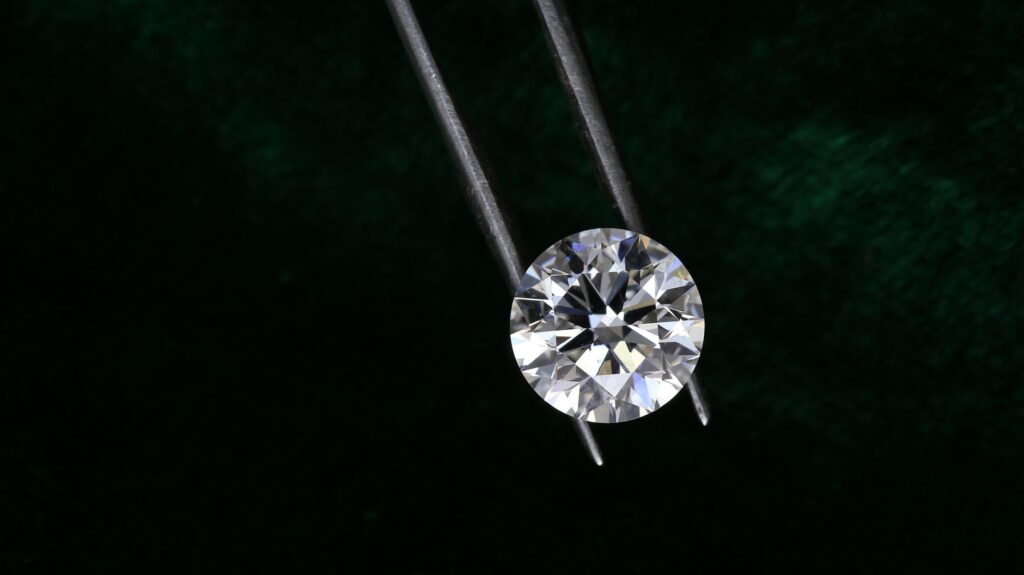
Round diamonds are designed to maximize brilliance and sparkle. This shape has the clearest relationship between cut quality and light performance, which is why round brilliants are often the easiest for shoppers to evaluate by cut grade.
If sparkle is the top priority, round diamonds with strong cut quality are often the most predictable choice.
Oval, Cushion, Pear, and Radiant
Fancy shapes can be beautiful, but their cut quality is often assessed more visually than by standardized grading alone. Two oval diamonds with the same carat and color can have very different appearance depending on bow-tie effect, proportions, and facet arrangement.
In these shapes, buyers should pay close attention to actual photos, videos, and light performance rather than relying on a single grading term. The cut still matters, but the evaluation is less straightforward than it is for round diamonds.
Emerald and Asscher
Step-cut shapes like emerald and Asscher do not sparkle in the same way as brilliant cuts. Instead of many small flashes, they show larger, mirror-like reflections and a cleaner hall-of-mirrors effect.
For these shapes, cut still strongly affects beauty, but sparkle is more subtle and architectural. Buyers looking at these shapes should focus on symmetry, clarity visibility, and how the step pattern looks in person.
Practical Comparison: Better Cut vs Bigger Size
One of the most useful ways to understand cut is to compare it with carat weight. A larger diamond is not automatically more attractive if the cut quality is weak. In many cases, a smaller well-cut diamond will look better to the eye.
| Feature | Well-Cut Smaller Diamond | Poorly Cut Larger Diamond |
|---|---|---|
| Brightness | Usually stronger and more even | May look dull or uneven |
| Sparkle | Balanced flashes and movement | Can appear sleepy or glassy |
| Face-up appearance | Often looks lively and well-proportioned | May appear smaller than expected if too deep |
| Daily wear impression | Consistently attractive in many lighting conditions | May only look good in certain lighting |
| Buyer satisfaction | Often higher if sparkle matters most | Can disappoint if size was the only priority |
This does not mean size is unimportant. It means buyers should balance size with optical performance. In real-world shopping, the best value often comes from a diamond that looks lively rather than simply large on paper.
How Cut Interacts with Color and Clarity
Cut does not exist in isolation. It changes how color and clarity are perceived, which is another reason it is so important. A diamond with excellent cut can sometimes make color less noticeable and help the stone appear cleaner to the eye.
Cut and Color
Better light return can make a diamond look whiter because more brightness is reflected back. This can be helpful if you are trying to balance budget between color and cut.
That said, cut does not change the actual color grade. It simply affects how visible the color appears in normal viewing. In some cases, a poor cut can make a diamond’s body color seem more obvious.
Cut and Clarity
High clarity does not guarantee a beautiful appearance if the cut is weak. A diamond with excellent clarity but poor light performance may still look less appealing than a lower clarity diamond with superior cut.
Good cutting can also influence how inclusions are seen. Strong sparkle may help disguise minor inclusions, though it does not erase them. This is why many experienced buyers prioritize cut first, then evaluate color and clarity based on what they can actually see.
Lab Grown Diamonds and Cut Quality
Cut is just as important in lab grown diamonds as it is in natural diamonds. In some cases, it may be even more important for buyers because lab grown diamonds often offer larger sizes at lower prices, which can tempt shoppers to chase carat weight at the expense of cut quality.
That is a common mistake. A larger lab grown diamond with weak cut proportions may not look nearly as impressive as a slightly smaller stone with excellent cut and better light performance.
Why Cut Still Matters Even When Lab Grown Diamonds Are More Affordable
Because lab grown diamonds often cost less than natural diamonds of similar size and quality, buyers sometimes have more room in the budget. That flexibility is useful, but it should not lead to ignoring cut.
The goal is not simply to maximize size. It is to choose a diamond that looks beautiful in everyday wear. Cut is one of the best ways to protect that visual outcome.
Certification Still Matters
When shopping for lab grown diamonds, certification provides important information about cut, color, clarity, and carat weight. It also helps buyers compare stones more fairly across sellers.
For round diamonds, a grading report that includes a recognized cut grade is especially helpful. For fancy shapes, buyers should still review the report, but they should also study images, proportions, and optical performance carefully.
When Paying More for Better Cut Makes Sense
There are many situations where paying a premium for better cut quality is justified. If sparkle and overall beauty are important to you, cut is usually one of the smartest places to spend a bit more.
It often makes sense to prioritize better cut when the diamond will be worn regularly, when the ring design is simple and the diamond is the focus, or when the buyer wants the best possible visual impact in a given budget range.
Situations Where Better Cut Is Worth the Premium
- You want the diamond to look bright in many lighting conditions
- You care more about beauty than maximizing carat weight
- You are buying an engagement ring that will be seen often
- You want a round diamond with predictable sparkle performance
- You are trying to get the best possible appearance for your budget
When the Premium May Be Less Important
There are also cases where moving from a very good stone to an excellent one may not be the most efficient use of money. If the price difference is large and the visual difference is small, some buyers may prefer to allocate budget toward size, setting quality, or another factor they value more.
This is especially true when the diamond will be viewed from a normal distance and the buyer is not highly focused on subtle differences in light performance. The right decision depends on priorities.
Common Buyer Mistakes
Many diamond shoppers make similar mistakes when learning about cut. These mistakes are understandable because cut is more complex than carat weight or shape, but they can affect both appearance and value.
Prioritizing Carat Over Cut
This is probably the most common mistake. Buyers often focus on the biggest stone within budget, then later realize it does not sparkle as well as expected.
A better approach is to narrow down diamonds with strong cut quality first, then decide how much size fits comfortably within the budget.
Assuming All Diamonds Sparkle Equally
Not all diamonds handle light in the same way. Two diamonds can have the same shape, color, and clarity yet still look very different because of cut.
Once shoppers compare stones side by side, this difference often becomes obvious. The well-cut diamond usually has more life and contrast.
Overpaying for Clarity When Cut Is Weak
Clarity can be important, but many buyers pay for a higher clarity grade that they will never notice once the diamond is set. If the cut is weak, the diamond still may not have the sparkle they expected.
In practical terms, a diamond should usually look bright and attractive first. Then clarity can be chosen based on visible cleanliness and budget.
Ignoring Light Performance Images or Videos
For fancy shapes in particular, photos and videos can reveal things a grading report does not. Bow ties, dark zones, and uneven brightness are often easier to see visually than on paper.
When shopping online, it is a mistake to rely only on the report. Visual evidence is especially important when the cut grade is not as standardized.
Assuming Better Grade Labels Always Mean Better Appearance
A grading label is useful, but it is not the whole story. Cut grades describe a range, and two diamonds with the same grade can still perform differently.
That is why experienced buyers and jewelers often compare actual images or inspect the diamond directly before deciding.
Buying Considerations for Sparkle-Focused Shoppers
If sparkle is your main priority, there are a few practical steps that can make the buying process easier. These are not technical tricks. They are simply ways to reduce the chance of choosing a diamond that looks less lively than expected.
Start with Cut First
For round diamonds, begin by focusing on Excellent or very strong Very Good cut grades. This helps narrow the field to stones with better predicted light performance.
For fancy shapes, use images, proportions, and trusted grading information together. There is no substitute for seeing how the diamond actually performs visually.
Look Beyond the Report
Reports are useful, but they do not fully capture beauty. Look for clear photos, video, and, when possible, side-by-side comparisons. These show how the diamond performs in real conditions better than numbers alone.
If you are buying in person, view the diamond in different lighting and from different angles. That gives you a more realistic sense of sparkle and brightness.
Balance Cut with the Rest of the Budget
Once you have a strong cut choice, decide how to balance the remaining budget between color, clarity, carat, and setting. There is rarely a single perfect formula.
For many buyers, a well-cut slightly smaller diamond will be more satisfying than a larger stone that sacrifices sparkle. The best balance depends on personal preference and how the diamond will be worn.
What Experienced Shoppers and Jewelers Often Notice
People who compare diamonds regularly tend to notice patterns that new buyers may miss. One common observation is that a smaller well-cut diamond can appear more lively than a larger stone with poor optics. Another is that sparkle is not just about intensity, but also about how evenly the flashes are distributed.
Experienced viewers also pay attention to how the diamond looks when it moves. A stone with strong cut quality often produces crisp, balanced flashes instead of large dull areas. That difference can be subtle in a display case but more obvious once the diamond is worn.
Jewelers often comment that customers are more satisfied long term when they prioritize appearance over paper size. That does not mean every buyer needs the highest cut grade available. It does mean cut is one of the most practical quality factors to understand before making a purchase.
Advantages of Strong Cut Quality
There are clear benefits to choosing a diamond with strong cut performance. These advantages are visible, practical, and relevant to everyday wear.
- Better brightness and light return
- More lively sparkle in different lighting conditions
- Improved face-up appearance
- Can make a diamond look more attractive than a larger poorly cut stone
- Often helps maximize overall beauty within a budget
Limitations and Trade-Offs
Even though cut is very important, it is not the only factor that matters. Strong cut quality does not automatically solve issues with color, clarity, or budget. It also does not mean every highly graded diamond will look identical.
- Better cut can cost more
- Top cut grades may require trade-offs in carat weight
- Fancy shapes are harder to judge by grade alone
- Cut does not completely override visible color or inclusions
- Personal preference still matters, especially for sparkle style and shape
These trade-offs are normal. The key is to understand them so you can choose the diamond that best fits your priorities.
Frequently Asked Questions
Does a better cut always mean more sparkle?
Usually, but not always in a simple one-to-one way. Better cut generally improves brightness, fire, and scintillation, which increases sparkle. However, the exact appearance still depends on shape, lighting, and the diamond’s overall proportions.
Can a smaller diamond with excellent cut look better than a larger diamond?
Yes. In many cases, a smaller diamond with excellent cut will look brighter and more attractive than a larger stone with weak cut quality. This is one of the most important things buyers learn once they compare diamonds side by side.
Is Excellent cut worth paying for?
For many buyers, yes, especially for round brilliant diamonds. The visual improvement is often noticeable, and the extra cost can be worthwhile if sparkle and overall beauty are priorities. That said, the price jump between grades is not always equally justified, so it helps to compare actual diamonds.
Is Very Good cut bad?
No. Very Good cut diamonds can still look beautiful and offer strong sparkle. The difference from Excellent is often subtle, especially to casual viewers. The main question is whether the price savings are worth the small visual trade-off.
Does cut matter more than clarity?
For most buyers, cut has a larger impact on what the diamond looks like at a glance. Clarity matters, but many inclusions are hard to see without magnification. A diamond with excellent cut usually looks more impressive than a higher-clarity diamond with poor light performance.
Why do some diamonds look dark in the center?
That usually happens because of proportions, light leakage, or the way the diamond handles contrast. In some shapes it can also be related to a bow-tie effect. When the cut is not well balanced, the center may not return light as effectively as it should.
Do lab grown diamonds sparkle differently from natural diamonds?
Not because of origin alone. Sparkle depends on cut quality, not whether the diamond is lab grown or natural. A well-cut lab grown diamond can be just as lively as a well-cut natural diamond of comparable proportions.
Should I choose cut over carat?
In most cases, yes, if sparkle and overall appearance are important to you. It is often better to choose a slightly smaller diamond with stronger cut quality than a larger diamond that looks less lively. The best balance depends on budget and personal preference, but cut should usually be high on the list.
Conclusion
Diamond cut has one of the biggest effects on sparkle because it controls how light moves through the stone and returns to your eye. A well-cut diamond usually looks brighter, more balanced, and more lively, while a poorly cut diamond can appear dull even if it is larger or higher in other grades.
For buyers, the practical takeaway is straightforward. If you want a diamond that looks beautiful in real life, cut deserves serious attention. It often has a bigger impact on daily appearance than carat weight, and in many cases it is one of the smartest quality factors to prioritize when comparing diamonds, including lab grown diamonds.
The best next step is to compare diamonds visually whenever possible and use the grading report as one part of the decision, not the whole decision. When cut quality is strong, the diamond has a much better chance of delivering the brightness, fire, and sparkle most buyers are looking for.