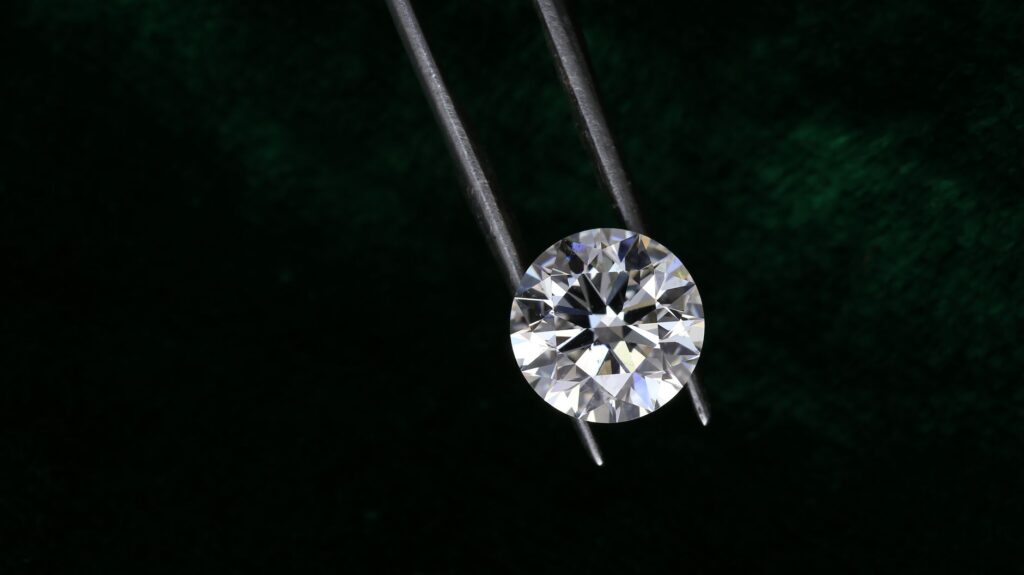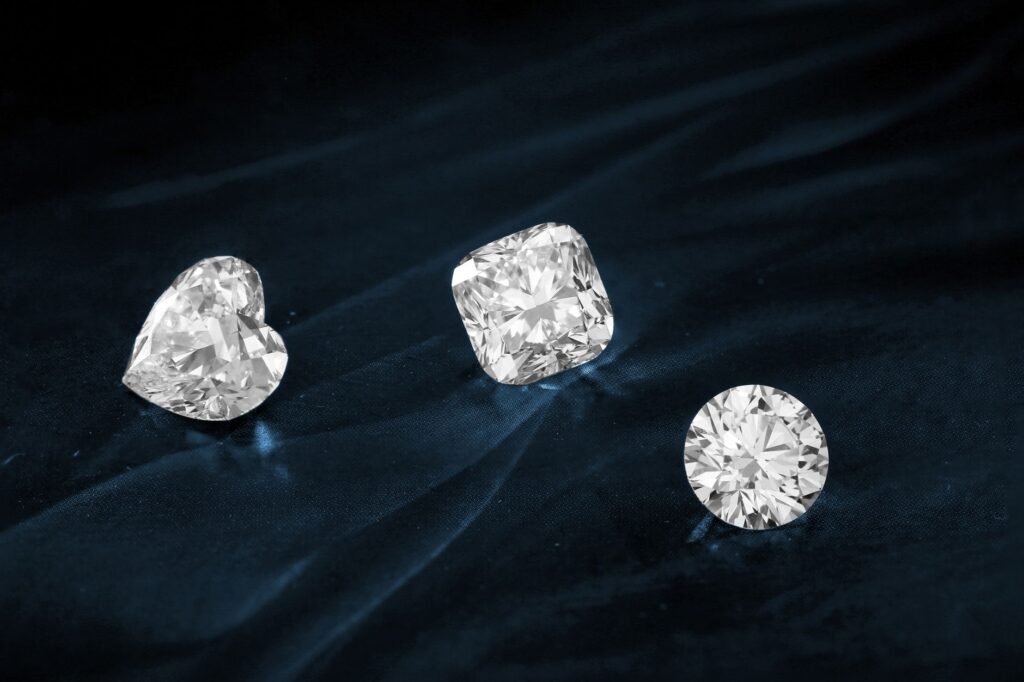
Depth percentage is one of the most overlooked diamond measurements, yet it can have a noticeable effect on how a diamond looks once it is set and worn. Buyers often focus on carat weight, color, or clarity, but a diamond’s proportions help determine how much light enters the stone, how it reflects internally, and how much comes back to the eye. That is why How Depth Percentage Affects Sparkle matters for anyone comparing diamonds, especially lab grown diamonds, where size and value can make the numbers look more appealing than the actual visual performance.
In simple terms, depth percentage describes how tall a diamond is compared with its width. When the depth is too shallow or too deep for a given shape, the stone may lose brightness, face up smaller than expected, or show weaker sparkle. The effect is not always dramatic on a grading report, but it can be very noticeable in real-world viewing conditions.
For buyers, the key question is not whether a diamond has a “good” or “bad” depth percentage in isolation. The real issue is whether the proportions support strong light return and a pleasing face-up appearance. That is why depth percentage should always be considered alongside cut quality, table size, symmetry, polish, and the diamond’s shape.
Quick Answer
Depth percentage affects sparkle because it influences how light travels through a diamond and returns to the viewer’s eye. A diamond with a well-balanced depth percentage is more likely to look bright, lively, and visually balanced from the top. If the depth is too shallow or too deep, the diamond may leak light, appear smaller, or lose some of its visual impact.
For most buyers, depth percentage matters because it affects what you actually see, not just what appears on paper. A diamond can have a large carat weight but still look less attractive if the proportions are off. In many cases, a slightly smaller diamond with better depth and better cut can appear more brilliant than a larger diamond with poor proportions.
The important takeaway is that depth percentage is not a stand-alone score. It is one part of the broader cut story, and it should be judged together with the diamond’s overall cut grade, shape, and light performance.
What Depth Percentage Means
Simple definition
Depth percentage is the diamond’s height compared with its width, expressed as a percentage. If a diamond is 4.0 mm wide and 2.4 mm deep, the depth percentage is 60%. This measurement helps describe the stone’s proportions, which influence how light behaves inside it.
Buyers usually see depth percentage listed on a grading report, especially from major labs such as GIA or IGI. It is most useful when interpreted as part of the overall proportion set rather than as a standalone number.
Why depth is different from carat weight
Carat weight measures how much a diamond weighs, not how large it appears. Two diamonds with the same carat weight can have very different face-up sizes if one is deeper than the other. A deeper diamond can hide weight in the lower portion, which may make it look smaller from the top.
This is one reason shoppers comparing diamond carat should also look at millimeter dimensions. A well-proportioned diamond often delivers a better visual presence than a heavier stone with less efficient proportions.
How depth relates to a diamond’s shape
Depth percentage should always be interpreted in the context of shape. A round brilliant, oval, cushion, emerald, pear, and radiant each have different ideal proportion ranges. A depth percentage that looks excellent in one shape may be less effective in another.
That is why shoppers researching diamond shapes should not assume one proportion rule applies universally. Shape changes the way light travels, the way the stone faces up, and the way sparkle is distributed across the surface.
Why Depth Percentage Matters
It affects light return
Light return is the amount of light that enters a diamond and comes back out toward the viewer. The stronger the light return, the brighter and more lively the diamond usually appears. Depth percentage plays a role because it helps determine whether the diamond is angled in a way that efficiently reflects light.
If a diamond is too shallow, light can escape through the bottom or sides. If it is too deep, some light may also be lost or redirected in ways that reduce face-up brightness. In both cases, the sparkle may still exist, but it often looks less balanced.
It affects face-up size
Two diamonds with the same carat weight can look different in size. A diamond with excess depth may carry more of its weight below the girdle, which means less of that weight contributes to visible surface area. Buyers often notice this when comparing stones side by side, especially in larger engagement rings.
For shoppers who care about visual spread, this can matter as much as sparkle. A diamond that faces up too small can feel underwhelming even if the carat number sounds impressive.
It affects how sparkle is distributed
Sparkle is not just about how much a diamond flashes. It is also about where the flashes appear, how evenly they spread across the stone, and whether the stone produces a lively pattern of light and dark areas. Good proportions help create balanced scintillation, which is the pattern of sparkle you see as the diamond moves.
When depth is off, the sparkle pattern can become less even. The diamond may show dark areas, windowing, or a dull center depending on the shape and the degree of proportion imbalance.
How Depth Percentage Affects Sparkle in Real Life
Brightness
Brightness is the overall amount of light a diamond returns to the eye. A well-proportioned diamond tends to look bright in mixed lighting such as office lighting, daylight, and indoor home lighting. That brightness is one of the first things most buyers notice, even if they cannot explain why the stone looks better.
When depth percentage is too far outside the optimal range for that shape, brightness can drop. The stone may still be beautiful, but it may not have the same lively, reflective appearance as a better-proportioned diamond.
Fire
Fire refers to the colored flashes of light a diamond produces. It is easiest to see in bright lighting and when the stone moves. Depth influences fire indirectly because the angles inside the diamond help split white light into spectral colors.
If the proportions are balanced, a diamond can show attractive fire without appearing overly dark. If the proportions are poor, fire may be less noticeable or less evenly distributed across the stone.
Scintillation
Scintillation is the flicker effect, the pattern of light and dark flashes that makes a diamond appear lively as it moves. Buyers often describe this as sparkle, although sparkle is really a combination of brightness, fire, and scintillation.
Depth percentage matters here because it affects the way light returns from different parts of the stone. When the depth is well balanced, the flashes tend to look crisp and lively. When the depth is off, the pattern can become less organized or less intense.
Face-up appearance
The face-up view is what most buyers see when they look at a diamond set in a ring. This is where depth percentage has its most practical effect. A diamond can look impressive on paper but underperform visually if its proportions are not working well together.
Many buyers are surprised to learn that two diamonds with similar grading report numbers can look meaningfully different in person. That is why jewelers often evaluate the stone under several lighting conditions, not just by reading a report.
What Happens When Depth Is Too Shallow or Too Deep
Too shallow
A shallow diamond has less depth than expected for its width. In some shapes, this can make the diamond spread wider on the finger, which may sound appealing at first. However, shallow stones can lose light through the bottom, creating a washed-out or glassy appearance.
In certain cuts, a shallow diamond may also show a “window,” which is a see-through area where light passes through instead of reflecting back. Buyers often notice this as a lack of brightness in the center of the stone.
Too deep
A deep diamond has more vertical height than expected. This can make the stone appear smaller from the top because more of its weight is hidden in the lower portion. Deep diamonds may also trap light in ways that reduce brightness or make the center look dark.
Some deep stones still look attractive, especially if other factors are strong, but they often provide less visual spread for the carat weight. For many buyers, that is an important trade-off to understand before comparing prices.
The middle is not automatically perfect
It is tempting to think that any diamond with a depth percentage in the middle of a suggested range is ideal. In practice, that is not always true. The relationship between depth, table size, crown angle, pavilion angle, and symmetry matters more than depth alone.
This is why experienced buyers and jewelers rely on the entire proportion set, not one number by itself. A diamond can have an acceptable depth percentage and still perform poorly if the rest of the proportions are not well aligned.
Depth Percentage and Other Cut Factors
Table percentage
Table percentage measures the size of the top facet relative to the stone’s width. It affects how much light enters and how the diamond balances brightness and fire. Depth and table work together, so a diamond with a reasonable depth can still underperform if the table is unusually large or small for the shape.
Buyers comparing cut quality should understand that diamond cut is broader than just depth percentage. A well-balanced table and depth combination usually matters more than either number alone.
Symmetry
Symmetry refers to how accurately the diamond’s facets are aligned. Good symmetry helps create even light distribution and a pleasing visual pattern. Poor symmetry can make the stone look less organized, even if the proportions are acceptable.
Depth percentage may be fine on paper, but weak symmetry can still hurt the diamond’s overall appearance. That is especially relevant in round brilliant diamonds and precision-cut lab grown stones.
Polish
Polish describes how smooth and well-finished the facet surfaces are. Better polish allows light to travel through the stone more cleanly. Poor polish usually has a smaller visual impact than poor proportions, but it still affects the final appearance.
In practical terms, polish is one of several finishing details that support sparkle. It rarely saves a poorly proportioned diamond, but it can help a well-cut stone reach its full visual potential.
Light performance
Light performance is a broader way of describing how well a diamond handles light overall. It includes brightness, fire, contrast, and the balance of reflections and leakage. Depth percentage is one contributor to light performance, but not the only one.
Some modern grading tools and advanced imaging systems try to evaluate light performance more directly. These can be useful, but buyers should still understand the basics of proportions because no image replaces seeing how a diamond behaves in person.
How Depth Percentage Affects Different Diamond Shapes
| Shape | Why Depth Matters | What Buyers Often Notice |
|---|---|---|
| Round brilliant | Depth strongly affects brightness, spread, and overall cut performance. | Very noticeable changes in sparkle and face-up size when proportions are off. |
| Oval | Depth affects bow-tie appearance, spread, and edge brightness. | Buyers may notice a darker center or less flattering face-up length if depth is poor. |
| Cushion | Depth can change how much chunky sparkle versus softer flash the diamond shows. | Visible differences in presence and light return, but some variation is shape-specific. |
| Emerald | Depth influences step-cut transparency and the visibility of windows or dark zones. | Changes are often easy to see because emerald cuts have larger open facets. |
| Pear | Depth affects balance between the rounded end and point, as well as spread. | Can influence how well the diamond avoids dark areas and how evenly it sparkles. |
| Radiant | Depth influences brightness and how much weight is hidden below the top surface. | Good depth supports strong sparkle, while excessive depth can reduce visible size. |
Different shapes have different visual priorities, so depth percentage cannot be judged in a vacuum. A shape that is cut for better spread may sacrifice some fire, while another may favor a slightly deeper build to improve balance and edge performance. Buyers comparing diamond color or diamond clarity should also remember that cut can influence how visible those qualities appear.
Depth Percentage and Lab Grown Diamonds
Lab grown diamonds follow the same optical principles as mined diamonds, so depth percentage matters just as much. In some cases, buyers shopping for lab grown stones may encounter a wide range of proportions because the market offers many sizes and cuts at competitive prices. That can make it tempting to focus on carat weight alone.
This is where proportion awareness becomes especially important. A larger lab grown diamond with weak proportions may look less attractive than a smaller stone with better cut quality. Since lab grown diamonds often allow buyers to prioritize size more easily, it is smart to make sure the stone still performs well visually.
Certification also matters. For lab grown diamonds, buyers often see reports from IGI or GIA, and the report can provide key proportion details. However, the grading report does not always tell the whole visual story, so it is worth considering light return images, proportions, and videos when available.
How Much Depth Percentage Really Matters to the Average Buyer
When the difference is obvious
The difference is often obvious when comparing a very shallow or very deep stone with a well-proportioned one side by side. Buyers may notice reduced brightness, a smaller face-up look, or weaker sparkle. In shapes like emerald or oval, these issues can be visible even without specialized tools.
Jewelers often see this immediately in person because the eye is very sensitive to contrast and brightness changes. What a report labels as a “minor” proportion issue can still look disappointing once the diamond is set in a ring.
When the difference is subtle
If two diamonds both fall within a generally acceptable range, the visual difference may be subtle. In that case, factors like cutting precision, symmetry, and overall light performance may matter more than a small difference in depth percentage. This is especially true for buyers who are not comparing stones side by side.
Many consumers will not detect a slight difference in depth if the diamond is otherwise well cut. That is one reason proportion analysis should be practical, not obsessive.
Lighting matters
Diamonds do not look the same under every light source. A stone that seems bright in a jewelry store may look different in daylight, office light, or dim evening conditions. Good proportions usually help a diamond perform well across a range of environments.
This is especially helpful for buyers who want consistent beauty in everyday wear. Rings are viewed under many lighting conditions, so real-world performance matters more than a single idealized photograph.
Practical Examples Buyers Can Relate To
A well-cut 1.5-carat diamond versus a poorly cut 2-carat diamond
This is one of the most useful comparisons in diamond buying. A 2-carat diamond with overly deep proportions may not look much larger than a well-cut 1.5-carat stone, and it may even appear less lively. In some cases, the smaller diamond can look more impressive because its light performance is stronger and its face-up spread is better.
Buyers often expect the larger stone to win automatically, but cut can change the result. If sparkle and brightness matter more than carat number alone, the well-cut diamond is often the better visual choice.
Excellent cut versus Very Good cut
On paper, the difference between Excellent and Very Good may look small. In practice, it depends on the actual proportions and the shape of the diamond. Some Very Good stones are visually close to Excellent, while others show a more noticeable drop in brightness or contrast.
For many buyers, the decision comes down to whether the price difference is justified by the visible improvement. In round brilliant diamonds, a top-performing Excellent cut can have a clearer, more balanced sparkle pattern. In other cases, the difference may be hard to spot without close comparison.
Higher clarity with poor cut versus lower clarity with excellent cut
This is a common budget trade-off. A diamond with higher clarity but mediocre proportions may not look as beautiful as a lower-clarity stone with strong cut quality. That is because cut influences sparkle, which often has a bigger impact on beauty than minor clarity improvements that are invisible without magnification.
For many buyers, especially in engagement rings, a well-cut diamond with eye-clean clarity offers better real-world satisfaction than a technically cleaner stone that does not perform as well in light.
Advantages of Paying Attention to Depth Percentage
- Helps you identify diamonds with better brightness and sparkle potential.
- Can improve face-up size, so the diamond looks larger for its carat weight.
- Supports better light return, which often makes the stone more lively in everyday settings.
- Helps buyers avoid stones that hide weight in the wrong places.
- Can improve overall value by prioritizing visible beauty over paper weight alone.
Limitations and Trade-Offs
- Depth percentage alone does not tell you how well a diamond will perform.
- A diamond can have a favorable depth and still have other cut issues.
- Some shapes intentionally use different proportion ranges for stylistic reasons.
- Small differences may not be noticeable unless you compare stones side by side.
- More “ideal” proportions do not always justify a large price premium if the visual difference is minor.
How Depth Percentage Influences Value
When paying more makes sense
Paying more for better proportions can make sense when the improvement is visible. If the stone looks brighter, larger from the top, and more balanced in everyday light, the premium may be justified. This is especially true when the diamond will be worn daily and viewed frequently.
Buyers who are choosing an engagement ring often place a high value on consistent beauty. In that case, investing in strong cut quality, including balanced depth, can be money well spent.
When the premium may not be worth it
If the difference in depth is small and the visual improvement is hard to see, a large price jump may not be worthwhile. Some diamonds with slightly less-than-perfect proportions still look excellent to the naked eye. In those cases, buyers may get better value by focusing on a favorable balance of cut, carat, color, and clarity.
This is where experience matters. A price premium should usually be tied to a real visual advantage, not just a nicer number on a certificate.
Where value is often strongest
Value is often strongest when a diamond has proportions that support good light performance without pushing the price into a steep premium bracket. Many shoppers are best served by seeking a stone that is visually strong first, then adjusting other factors like color grade or carat size to match budget. Depth percentage is one of the clues that helps reveal whether a diamond is efficient in the way it uses its weight.
What Experienced Jewelers Often Look For
Experienced jewelers do not usually judge a diamond by depth percentage alone. They look at the whole stone and ask how it behaves under real lighting. They also compare the diamond to others of similar size and shape to see whether it looks bright, balanced, and proportional.
In practical terms, many jewelers pay attention to:
- face-up spread
- brightness and contrast pattern
- any signs of windowing or leakage
- the balance between depth and table
- how the diamond looks once mounted in a ring
This approach is more useful than fixating on one number. A diamond that looks excellent in person is usually the better choice, even if one dimension is slightly outside a textbook range.
Common Buyer Mistakes
Prioritizing carat over cut
Many first-time buyers choose the biggest diamond they can afford and assume size will guarantee beauty. But if the cut is poor, the diamond may not sparkle the way they expect. In some cases, a smaller well-cut diamond looks more impressive than a larger poorly cut one.
Ignoring light performance
Some shoppers compare diamonds only by report numbers and miss the way the stone actually handles light. Depth percentage can be an important clue, but buyers should also look for videos, images, or in-person observation when possible. A stone that looks good on paper is not always the one that looks best in a ring.
Assuming all diamonds sparkle equally
Not all diamonds return light in the same way. Sparkle depends on cut quality, not just whether the stone is real or whether it is natural or lab grown. Buyers who assume all diamonds perform the same may end up overpaying for weight instead of visible beauty.
Misreading a “good” depth number
A depth percentage in an acceptable range does not automatically make a diamond attractive. It still needs to work with the shape, table, crown, pavilion, and symmetry. Buyers sometimes see a number that appears safe and stop evaluating the stone too early.
Choosing size over spread
Some diamonds carry hidden weight in depth, which reduces the surface area seen from above. That can make the stone look smaller than its carat weight suggests. Buyers who care about visual presence should always compare millimeter dimensions, not just carat weight.
How to Shop Smarter Using Depth Percentage
Start with the shape
Before comparing numbers, decide which shape appeals to you. Shape determines the style of sparkle and how proportions are interpreted. Once the shape is chosen, depth percentage becomes a more meaningful filter.
Check millimeter measurements
Carat weight alone does not tell you how large a diamond will look. Millimeter dimensions show the actual size of the stone from the top. This is especially useful when comparing two diamonds with similar carat weight but different depths.
Look at the full grading report
Depth percentage should be considered together with table size, cut grade, symmetry, polish, and proportions. For buyers reviewing diamond certifications, the report is the starting point, not the final answer. It helps identify likely performers, but visual confirmation is still important.
Use images and videos when possible
Videos and light performance images can reveal issues that numbers cannot. They help you see brightness, pattern, and whether the diamond has uneven leakage or dull zones. When shopping online, these visuals are often more helpful than a proportion chart alone.
Keep budget in perspective
Depth percentage should guide value, not create obsession. Most buyers benefit from choosing a diamond that looks beautiful in real life rather than chasing theoretical perfection. If the stone is bright, balanced, and appealing to your eye, it is often a strong choice even if the numbers are not exact textbook ideals.
Frequently Asked Questions
Does a higher depth percentage always mean less sparkle?
Not always. Depth percentage by itself does not determine sparkle. A deeper diamond can still perform well if the other proportions are well balanced, but excessive depth often increases the risk of reduced brightness or a smaller face-up appearance.
Is there one ideal depth percentage for all diamonds?
No. Ideal depth depends on the shape and the diamond’s overall proportion set. Round brilliants, ovals, emeralds, and cushions can all use different depth ranges effectively. It is better to evaluate depth in context than to apply one universal rule.
Can a diamond with a shallow depth still look good?
Yes, some shallow diamonds can still look attractive, especially if the proportions are otherwise well managed. However, very shallow stones can lose light and appear watery or glassy. The question is not whether shallow is always bad, but whether the stone performs well in real lighting.
Why do some diamonds look smaller than their carat weight?
They may have excessive depth or other proportion issues that hide weight below the surface. This means less of the carat weight contributes to visible spread. Buyers comparing size should always look at millimeter dimensions, not just carat.
Is depth percentage more important in round diamonds than in fancy shapes?
It is often easier to judge in round diamonds because round brilliants have the most standardized cut expectations. In fancy shapes, depth still matters, but it interacts with each shape’s individual design and visual goals. The impact may be just as important, even if the ideal numbers differ.
Should I choose the diamond with the best depth percentage if the price is higher?
Only if the improvement is visually meaningful and fits your budget. A higher price is justified when the diamond looks brighter, larger, or more balanced in person. If the difference is small and hard to see, the premium may not be worth it.
Does depth percentage matter for lab grown diamonds too?
Yes, absolutely. Lab grown diamonds obey the same optical rules as natural diamonds. A well-proportioned lab grown diamond can look significantly better than a poorly proportioned one, even when both are the same size and color grade.
Can a grading report tell me everything I need to know about sparkle?
No. A grading report is helpful, but it does not fully capture visual performance. Depth percentage, table size, symmetry, and polish provide important clues, yet real sparkle is best judged by the diamond’s actual appearance under different lighting conditions.
Conclusion
Depth percentage affects sparkle because it influences how a diamond handles light, how large it appears, and how evenly its brilliance is distributed. A balanced depth can help a diamond look bright, lively, and proportionate, while excessive shallow or deep proportions can reduce beauty in ways buyers often notice quickly once the stone is viewed in person.
For most shoppers, the smartest approach is to treat depth percentage as one piece of the cut puzzle. Look at the full set of proportions, the diamond’s shape, its millimeter dimensions, and its visible performance. That is especially important when comparing lab grown diamonds, where similar carat weights can produce very different results depending on how the stone is cut.
If you remember only one thing, let it be this: the best diamond is not the one with the biggest number, but the one that looks most attractive when light hits it in the real world.