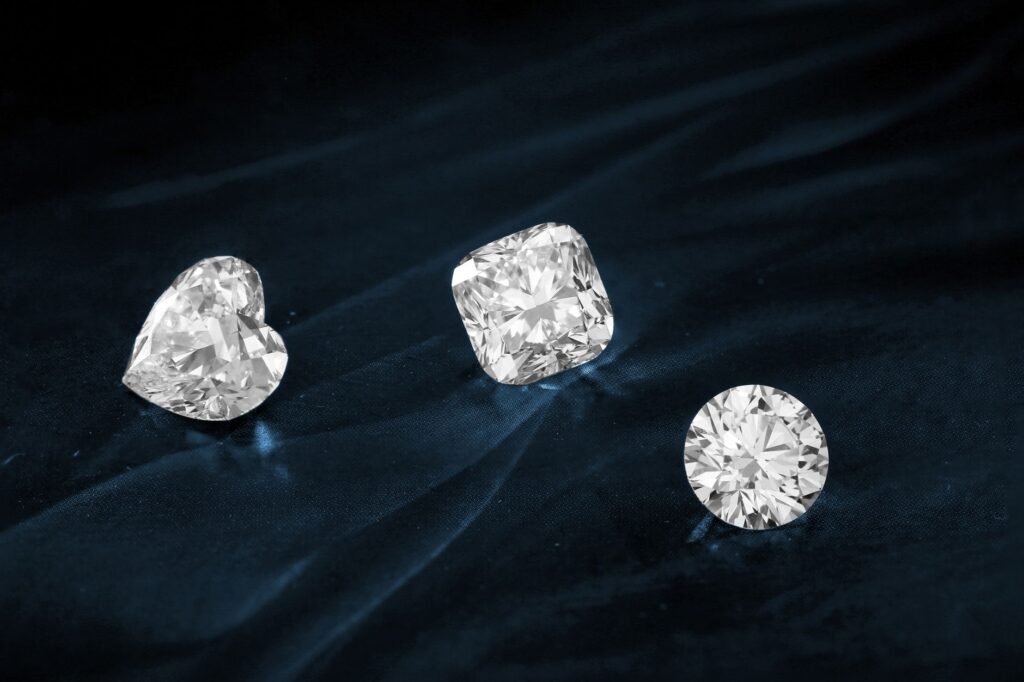
A diamond can weigh more yet still look smaller from the top. That surprises buyers who expect carat weight to match visible size. In practice, the diamond shape has a major effect on how much surface area you actually see, and some shapes carry their weight in a way that makes them look compact.
For anyone researching which diamond shape looks smallest, the short answer is usually the round brilliant when compared with other popular shapes of the same carat weight. Square shapes such as princess and cushion can also face up smaller than elongated cuts, but round diamonds are the most common example because they hide more of their weight in a compact outline instead of stretching lengthwise across the finger.
This matters because buyers often compare diamonds by carat first, then feel confused when one 1 carat diamond seems noticeably larger than another. The visible size you notice in real life depends on shape, measurements, cut proportions, depth, and even the ring setting. Understanding those factors helps you avoid paying for weight that does not translate into the look you want.
Quick Answer
If your question is simply which shape tends to look the smallest for its carat weight, round diamonds are usually the smallest-looking common shape when viewed face up. They are followed closely by some square or deep-cut shapes, including certain princess and cushion diamonds, depending on proportions.
By contrast, elongated shapes such as oval, marquise, and pear often look larger than round diamonds of the same weight because their longer outlines spread that weight over more visible surface area.
That does not mean round is a bad choice. Round diamonds are popular for good reason. They typically offer excellent sparkle, broad appeal, and a classic look. It simply means that if your top priority is visual size, round is usually not the shape that gives the largest appearance per carat.
Understanding the Carat Concept
Carat Is Weight, Not Visible Size
Carat measures a diamond’s weight, not how big it looks from above. One carat equals 0.2 grams. That number tells you how much the diamond weighs, but it does not tell you exactly how wide it will appear on the finger.
Two diamonds can both weigh 1.00 carat and still look noticeably different in size. One may appear broader and longer, while the other may look tighter and smaller. That is because the weight can be distributed differently depending on the shape and cut proportions.
What Face-Up Size Means
Face-up size refers to the visible size of the diamond when you look at it from the top, which is how diamonds are usually seen once they are set in a ring. This is the part buyers actually notice most.
For a round diamond, face-up size is usually discussed in millimeters across the diameter. For elongated shapes, it is described using length and width measurements. A shape with more surface spread often looks larger even if it weighs the same as a more compact stone.
Why Measurements Matter More Than Most Buyers Expect
Millimeter measurements are often more helpful than carat weight when comparing visible size. A 1 carat round diamond might measure around 6.4 to 6.5 mm in diameter if well cut. A 1 carat oval may measure roughly 7.7 by 5.7 mm, depending on proportions. Even if the carat weight is identical, the oval usually covers more finger space visually.
This is one reason experienced buyers do not rely on carat alone. They check dimensions, shape, and proportions before deciding whether a diamond will actually look large enough.
What Buyers Usually Expect
Assuming Carat Tells the Whole Story
A very common assumption is that a higher carat number automatically means a bigger-looking diamond. That is partly true, but not as straightforward as it sounds. Carat does increase weight, yet the visible increase can be modest if the shape or cut keeps much of that weight below the surface.
That misunderstanding leads buyers to focus on milestone weights such as 1.00, 1.50, or 2.00 carats without checking whether the diamond actually looks larger than a slightly smaller alternative.
Expecting All 1 Carat Diamonds to Look Similar
Buyers often expect all diamonds of the same weight to have nearly the same visual size. In reality, a 1 carat round, 1 carat cushion, and 1 carat marquise can create very different impressions on the hand.
The marquise may look long and finger-covering. The cushion may look softer and compact. The round may look balanced and brilliant but not especially large for the weight. This difference is normal, not a sign that one diamond is mislabeled.
Overvaluing the Carat Milestone
Another expectation is that crossing a carat threshold always gives a dramatic visual upgrade. Often it does not. A 0.90 carat diamond may look very close in size to a 1.00 carat diamond, especially once set, but can cost meaningfully less.
This matters even more if the 1.00 carat stone is a shape that looks smaller, such as round, while the 0.90 carat alternative has a shape or spread that gives a similar visible presence.
What It Actually Looks Like
Compact Shapes Look Tighter on the Finger
Shapes that look smallest usually have compact outlines and less length relative to their weight. They may appear concentrated, balanced, and bright, but they do not stretch across the finger as much as elongated cuts do.
A round diamond is the clearest example. Its circular shape is symmetrical and classic, but because it has no pointed ends or lengthened outline, it tends to show less finger coverage than oval, pear, or marquise shapes at the same carat weight.
Square Shapes Can Also Look Smaller
Princess and cushion diamonds can also appear smaller than buyers expect. They often face up more compactly than elongated shapes, and some are cut deeper, which places more weight below the visible top.
A cushion diamond in particular can vary widely. Some cushions look fairly broad, while others are deep with rounded corners that make them seem visually smaller than their carat weight suggests.
Elongated Shapes Usually Create More Presence
Oval, pear, and marquise diamonds usually look larger than round diamonds of equal weight because the eye reads their length as added size. They often cover more of the finger from top to bottom and may appear more substantial from a normal viewing distance.
This is why two diamonds with the same lab report carat weight can create very different first impressions. One looks neat and compact. The other looks stretched and larger, even though the scale says they weigh the same.
Finger Coverage Changes Perception
Visible size is not just about measurements. It is also about how much of the finger the diamond covers. A 1 carat round may look nicely proportioned on a size 4 finger but somewhat modest on a size 8 finger. A 1 carat oval or marquise may look larger in the same setting because it spans more length.
That is why a shape that looks smallest on paper may feel especially small on a wider finger, while an elongated shape may create a more noticeable presence without requiring a major jump in carat weight.
Which Diamond Shapes Usually Look Smallest to Largest
There is no perfect universal ranking because cut proportions vary, but the table below reflects how common shapes tend to appear face up at the same carat weight.
| Shape | Typical Visual Size for Same Carat | Why It Looks That Way |
|---|---|---|
| Round | Usually among the smallest | Compact circular outline, no elongated spread |
| Cushion | Often small to moderate | Rounded square outline, can carry weight deep |
| Princess | Often small to moderate | Square shape, depth can reduce face-up spread |
| Asscher | Often small-looking | Step cut shape with deep pavilion and clipped corners |
| Emerald | Moderate to large-looking | Rectangular shape gives more visible length |
| Radiant | Moderate | Can vary, but rectangular versions often look larger than square cuts |
| Oval | Large-looking | Elongated outline gives strong finger coverage |
| Pear | Large-looking | Tapered elongated shape increases perceived spread |
| Marquise | Usually among the largest | Long pointed shape maximizes length and visible presence |
In short, if your goal is maximum visual size, round is usually not the most size-efficient shape. If your goal is sparkle and classic style, round may still be the right choice.
Factors That Change Apparent Size
Shape
Shape is the biggest reason one diamond looks smaller or larger than another at the same weight. Compact shapes look contained. Elongated shapes look spread out. This is why a 1 carat marquise can seem larger than a 1 carat round even without any actual difference in weight.
Shape also influences how the eye tracks the outline. Long lines make a stone look bigger. Rounded or square outlines often look more concentrated.
Cut Proportions
Cut is not just about sparkle. It also affects size appearance. A diamond that is cut too deep can hide more weight below the top, reducing the visible face-up measurements. A shallower diamond can sometimes look larger because more of its weight is spread across the surface.
However, bigger-looking does not always mean better. A diamond that is too shallow may lose light performance, while a diamond that is too deep may look smaller and darker. The goal is balance.
Depth
Depth refers to how tall the diamond is from top to bottom. A deep stone can weigh the same as a wider stone but face up smaller because more material is concentrated underneath. This issue is especially relevant in shapes like cushion, princess, and Asscher.
For buyers trying to avoid a small-looking diamond, checking millimeter measurements against typical ranges for the shape can be very useful.
Length-to-Width Ratio
For elongated shapes, the length-to-width ratio affects how stretched the diamond looks. A longer oval or marquise often appears larger than a shorter, squatter version of the same carat weight.
This is partly a style preference. Some buyers want a fuller look, while others prefer a slimmer shape for more finger coverage. Either way, ratio affects size perception.
Setting Design
The ring setting can make a diamond look larger or smaller. A thin band tends to emphasize the center stone, making it appear bigger. A thick band can make the same diamond seem smaller by comparison.
Halo settings, which surround the center stone with small diamonds, can also create a larger overall look. Bezels, which encircle the stone with metal, may make a diamond feel slightly more compact, although the exact effect depends on design.
Prongs and Visual Framing
Subtle design details matter. Delicate prongs can expose more of the diamond’s outline. Heavy prongs can cover corners or edges and reduce visual spread. This is particularly relevant with princess, cushion, and marquise shapes.
In real life, buyers are reacting to the finished ring, not just the loose diamond. That means setting style should always be part of the size discussion.
Real-World Size Examples
1 Carat Round on a Size 4 Finger
On a smaller finger, a 1 carat round diamond often looks balanced and substantial. It may not look huge, but it usually has strong presence. The same stone can feel larger than expected because it covers a greater percentage of the finger width.
This is one reason finger size matters so much. A compact shape does not always feel too small when the hand itself is petite.
1 Carat Round on a Size 7 Finger
On a size 7 finger, that same 1 carat round may look more modest. It still appears elegant and classic, but the visual spread may not satisfy someone expecting a larger look from the 1 carat label.
In this situation, buyers focused on size often consider an oval or elongated radiant instead of simply increasing carat in round.
1 Carat Cushion vs 1 Carat Oval
A 1 carat cushion often looks soft and compact, while a 1 carat oval usually looks longer and larger. The oval tends to cover more finger length and can create a more noticeable center-stone appearance from a distance.
The cushion may still appeal to buyers who prefer a pillowy shape and a chunkier outline, but it is not usually chosen for maximum size effect.
2 Carat Round vs 2 Carat Oval
At 2 carats, the difference becomes easier to see. A 2 carat round has strong presence, but a 2 carat oval often looks larger because its elongated profile spreads the weight more visibly across the finger.
The round may deliver a more classic pattern of brilliance, while the oval may look more size-efficient. Neither is automatically better. The better choice depends on whether the priority is shape preference, sparkle style, or face-up size.
0.90 Carat Round vs 1.00 Carat Round
This comparison is useful because it shows how pricing and perception diverge. The visual difference between a 0.90 and 1.00 carat round is often small. Once mounted, many people would struggle to identify the heavier stone without side-by-side comparison.
If the 1.00 carat stone is more expensive because it crosses a magic size threshold, the buyer may be paying for the number rather than a meaningful visible increase.
1 Carat Marquise vs 1 Carat Round
A 1 carat marquise often looks significantly larger than a 1 carat round because of its long pointed shape. It covers more finger length and tends to create stronger visual presence.
That said, marquise also has a very distinct style. Buyers should not choose it only for spread if they do not actually like the shape itself.
Price vs Visual Benefit
Some Shapes Give More Visible Size Per Dollar
When buyers ask which diamond shape looks smallest, they are often really asking a value question. They want to know whether they are paying for visible size or for something else.
Round diamonds typically cost more per carat than many fancy shapes because demand is high and cutting rough into rounds often wastes more material. At the same time, round usually looks smaller than elongated shapes of equal weight. That means round can be less efficient if your top goal is size per dollar.
The Upgrade Is Not Always Visually Dramatic
Moving from one carat milestone to the next can be expensive, but the visible increase may be modest. For example, upgrading from a 1.00 round to a 1.10 round usually does not create a dramatic visual change. Upgrading from a round to an oval at the same weight may create a more noticeable size effect.
This is why buyers should think in terms of visual outcome, not just weight category.
Diminishing Returns Are Real
As carat weight rises, prices often increase faster than visible size. A 2 carat diamond does look larger than a 1 carat diamond, but it does not look twice as large in face-up area to the casual eye. The price difference, however, can be much more dramatic.
That price dynamic becomes especially important in natural diamonds. In lab grown diamonds, the cost jump for moving up in size may be less severe, which changes the decision for some buyers.
Lab Grown Diamonds Change the Size Conversation
Lab grown diamonds allow many buyers to choose larger carat weights within the same budget. That means someone who loves the look of a round diamond but worries it appears small may be able to solve the issue by increasing carat size more affordably than with a natural diamond.
Still, shape efficiency remains relevant. A lab grown round may be larger than a natural round within the same budget, but an oval or marquise lab grown diamond may still provide even more face-up presence for that money.
Buyers should also remember that lab grown and natural diamonds differ in price structure and resale expectations, but their face-up appearance is determined by the same physical factors: shape, measurements, and cut.
Who Should Size Up
Buyers Choosing Compact Shapes for Style Reasons
If you strongly prefer a round, cushion, princess, or Asscher diamond, you may need a higher carat weight to achieve the same visual presence that an elongated shape would deliver at a lower weight. This does not mean you are making a poor choice. It just means style and size efficiency are not always aligned.
Someone who loves round brilliance may reasonably decide that paying more for a slightly larger round is worth it.
Buyers With Larger Finger Sizes
Finger size influences how substantial a diamond appears. On larger fingers, compact shapes can look smaller relative to the hand. Buyers in this situation may want to size up in carat weight or choose a shape with more spread.
Looking at millimeter dimensions and coverage is especially helpful here.
Buyers Who Want Strong Center-Stone Presence
If your goal is a ring where the center stone clearly stands out from across the room or in everyday wear, a compact shape at a conservative weight may feel underwhelming. Sizing up can make sense if visual presence is a top priority and the ring design is intentionally center-focused.
Who Can Save Money
Buyers Open to Elongated Shapes
People who are flexible on shape can often save money while keeping a large appearance. Ovals, pears, and marquises frequently look bigger than rounds at the same carat weight, so they can provide more visible spread without requiring a costly weight increase.
Buyers Willing to Skip Magic Sizes
Choosing just under a major carat threshold can be a smart value move. A 0.90, 1.40, or 1.90 carat diamond may look very close to the next benchmark up, especially once set, while costing less.
This strategy is particularly useful if the diamond has strong dimensions for its weight.
Buyers Using Setting Design Strategically
A thinner band, well-proportioned prongs, or a halo setting can help a diamond look larger overall. That can let a buyer stay at a lower carat weight without feeling like the ring lacks presence.
This should be approached thoughtfully. A setting should match your style, not just serve as a visual trick. But from a practical standpoint, design choices do affect apparent size.
Buyers Considering Lab Grown Diamonds
For shoppers comfortable with lab grown diamonds, budget flexibility may make it easier to choose the shape they truly want instead of compromising solely for face-up size. A person who loves round but worries it looks smallest may find that lab grown pricing makes a larger round attainable.
That can be a sensible choice if the buyer values shape preference as much as size efficiency.
Common Buyer Mistakes
Chasing Carat Numbers Instead of Measurements
The most common mistake is shopping by carat alone. Buyers see 1.00 carat and assume they know how large the diamond will look. Without checking millimeter measurements, that assumption can be misleading.
Ignoring Shape Effects
Shape has a major effect on visible size. Comparing a round directly to an oval by carat weight without recognizing their different spread leads to unrealistic expectations.
Not Accounting for Depth
A diamond can be deep and still weigh what the report says. That does not mean it faces up efficiently. Buyers should pay attention to whether the stone looks small for its weight within its shape category.
Overpaying for Magic Sizes
Crossing from 0.99 to 1.00 carat or from 1.49 to 1.50 carats may come with a price jump that is larger than the visible difference. Buyers who focus too heavily on the milestone can end up paying more without gaining much visual impact.
Forgetting About Finger Size
A diamond never exists in isolation. It is worn on a hand. The same carat weight can look generous on one person and modest on another. Buyers who ignore finger size often misjudge how much spread they actually need.
Using Shape Only as a Size Hack
Choosing marquise, pear, or oval solely because they look larger can backfire if you do not genuinely like the shape. A diamond should suit your taste as well as your size goals. Visual efficiency matters, but long-term satisfaction matters too.
Practical Buying Guidelines
If You Want Maximum Apparent Size
- Prioritize elongated shapes such as oval, pear, or marquise.
- Check millimeter dimensions, not just carat weight.
- Avoid overly deep stones that hide weight below the surface.
- Consider a thinner band or supportive setting design.
- Look just below major carat thresholds for better value.
If You Want Round But Worry It Looks Small
- Accept that round typically looks smaller than elongated shapes of equal weight.
- Focus on a well-cut stone with strong diameter for the weight.
- Compare 0.90, 1.00, and 1.10 carat options by millimeters and price.
- Consider lab grown diamonds if budget is limiting your preferred size.
- Use setting choices to improve presence without sacrificing style.
If You Prefer Square or Vintage-Looking Shapes
- Review measurements carefully because cushions and Asschers can face up small.
- Do not assume all square shapes provide the same spread.
- Balance visible size with the charm of the shape itself.
Frequently Asked Questions
Is round the diamond shape that looks smallest?
Among the most popular shapes, round diamonds usually look smaller than elongated shapes of the same carat weight. Some deep-cut cushions, princess cuts, and Asschers can also look small, but round is the most commonly cited example because it is both popular and compact in outline.
Why does a round diamond look smaller than an oval?
A round diamond concentrates its weight in a circular shape, while an oval spreads that weight over a longer outline. The added length gives the oval more finger coverage and often makes it appear larger face up.
Do smaller-looking shapes sparkle more?
Not necessarily, but round brilliant diamonds are known for strong light performance and balanced sparkle. That is one reason they remain so popular despite looking smaller per carat than some fancy shapes. Size and sparkle are related to different aspects of the cut.
Does a cushion diamond always look small for its carat weight?
No. Cushion diamonds vary a lot. Some have good spread, while others are cut deeper and appear compact. Measurements and proportions matter more than the shape name alone.
Which shape looks the largest for the same carat weight?
Marquise often looks the largest, followed by shapes like oval and pear. Their elongated outlines create more visible spread and stronger finger coverage than round or square shapes of equal weight.
Should I avoid round diamonds if I want value?
Not automatically. Round diamonds can be a good choice if you value classic style, broad appeal, and strong brilliance. But if maximum visual size per dollar is your top priority, other shapes often provide better spread.
Can lab grown diamonds solve the small-looking round problem?
They can help by making higher carat weights more affordable. If you love round diamonds but feel a certain size looks too modest in natural, lab grown may allow you to reach a larger visible size within budget. The shape itself still faces up more compactly than elongated cuts.
What should I check besides carat weight?
Check millimeter measurements, shape, cut proportions, depth, length-to-width ratio for fancy shapes, and how the diamond will look in its intended setting. Those details are essential for understanding actual appearance.
Conclusion
The answer to which diamond shape looks smallest is usually round, with some square and deeper-cut shapes also tending to face up smaller than elongated alternatives. The key reason is simple. Carat measures weight, not visible spread, and some shapes use that weight in a more compact way.
That does not make smaller-looking shapes inferior. Round diamonds remain a favorite because of their classic appearance and strong sparkle. Cushions, princess cuts, and Asschers also have design appeal that goes well beyond face-up size. The right choice depends on what matters most to you.
For a buyer focused on visible size, the most practical approach is to compare shapes by measurements, not just carat. Consider finger size, cut proportions, and setting style. Think about whether you want a compact, balanced look or an elongated shape that covers more of the finger.
A well-informed decision usually comes down to this: choose the shape you genuinely like, then make sure its measurements, proportions, and price align with your size expectations. That is how you avoid paying for weight that does not deliver the look you want.