Colorless lab grown diamonds can look impressively white, but the real question is not whether they are technically superior. It is whether the extra money for the highest color grades actually changes what you will see in everyday wear. For most buyers, that answer depends on the diamond’s size, shape, metal color, and how closely they plan to compare it with other stones.
The short version is this: Are Colorless Lab Grown Diamonds Worth It only if you care about getting the whitest possible look, want the psychological appeal of a top color grade, or are buying a larger stone where color becomes easier to notice. If your goal is beauty and value, near-colorless grades often offer a better balance because the visible difference is usually small while the price difference can be meaningful.
What “Colorless” Means in Lab Grown Diamonds
Diamond color grading measures how much body color a diamond shows when viewed face-up, usually on a scale from D to Z. The top of the scale, D, E, and F, is considered colorless. These diamonds are supposed to appear icy white with no noticeable tint under standard grading conditions.
Lab grown diamonds are graded using the same color scale as natural diamonds. That means a lab grown diamond rated D is not “better” because it is lab grown. It simply means the diamond has been judged to show extremely little body color. The grading system is the same, but buyers often approach lab grown color differently because lab grown diamonds usually offer higher color grades at lower prices than natural diamonds.
Why Color Matters at All
Color matters because most people want a diamond to look bright, clean, and white. Even subtle warmth can change the way a diamond looks, especially in larger stones or when the stone is set in a white metal. A diamond with more visible body color can still be beautiful, but some buyers prefer the crisper look of a higher color grade.
That said, color is only one part of appearance. Cut has a major effect on brightness and sparkle, and clarity affects whether inclusions are visible. A well-cut near-colorless diamond often looks more impressive than a poorly cut colorless diamond. This is one reason buyers should understand color in context, not in isolation.
Quick Answer: Are Colorless Lab Grown Diamonds Worth It?
For most buyers, colorless lab grown diamonds are worth it only when the visual difference matters to them personally. In many everyday viewing situations, the difference between a colorless diamond and a high-quality near-colorless diamond is subtle or difficult to see, especially once the diamond is set in jewelry.
If you want the whitest possible appearance, plan to buy a larger center stone, or simply feel more comfortable paying for the top color range, colorless may be worth the premium. If you want the best value, however, many shoppers can choose a near-colorless grade and still get a diamond that looks white and attractive in normal wear.
The Color Grades That Matter Most
To make sense of the question, it helps to understand where colorless grades sit on the scale. The most relevant grades for buyers considering lab grown diamonds are D, E, F, G, H, and sometimes I. The first three are colorless, while G through I are usually considered near-colorless.
| Grade | Common Trade Category | General Look | Typical Buyer Impression |
|---|---|---|---|
| D | Colorless | Extremely white, no visible body color to most observers | Top-tier, premium, often chosen for peace of mind |
| E | Colorless | Very white, slightly below D on paper but usually similar face-up | High-end look without the absolute top grade |
| F | Colorless | Still colorless, sometimes tiny warmth detectable only in side comparison | Excellent balance for buyers who want top quality |
| G | Near-colorless | Usually looks white face-up, especially in smaller stones | Popular value choice |
| H | Near-colorless | Can show a little warmth in certain settings or larger sizes | Often a strong budget-conscious option |
| I | Near-colorless | More likely to show warmth, especially in larger diamonds or white metals | Best when value is the priority and color sensitivity is low |
In lab grown diamonds, buyers often see D through F offered more frequently than in natural diamonds, and those grades can be more affordable than many people expect. That does not mean every buyer should choose them. It simply means the market makes top color grades more accessible, which changes the value conversation.
What Colorless Lab Grown Diamonds Actually Look Like
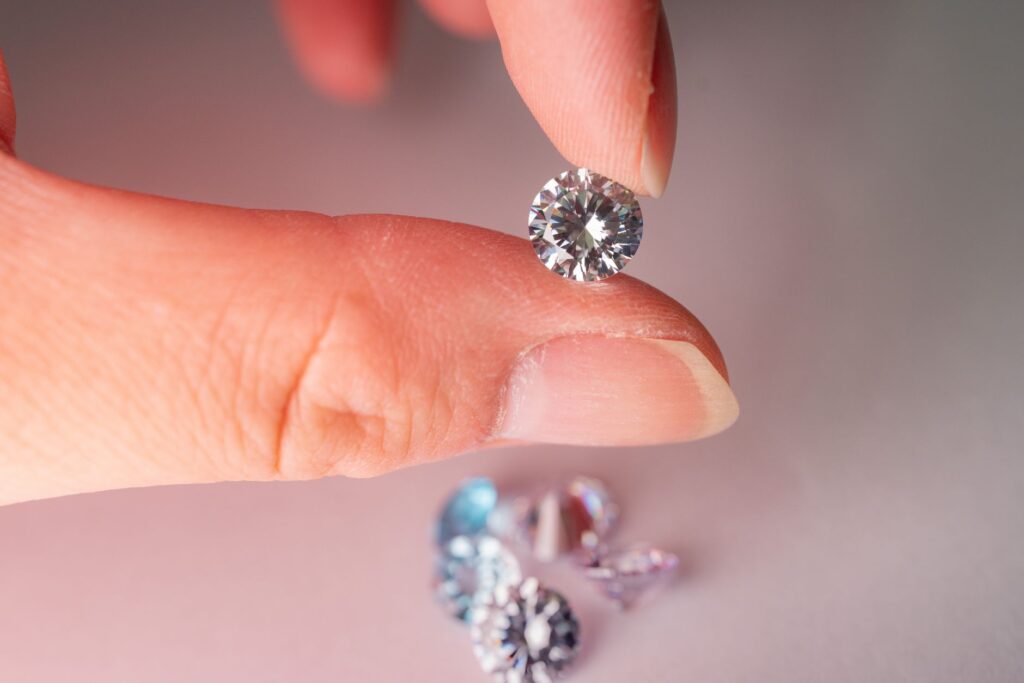
On paper, colorless means no detectable tint. In real life, what most people notice is a bright white appearance with little to no warm cast. A well-cut D, E, or F lab grown diamond should look crisp and clean in face-up view, especially under neutral lighting.
However, the appearance is not identical in every situation. A diamond may look bright and colorless in one environment and slightly softer in another. That is normal. Diamonds interact with light, and surrounding metal, background colors, and lighting temperature all influence what the eye perceives.
Face-Up Appearance vs Side View
Buyers should understand that grading focuses on face-down comparison under controlled lighting, while shoppers usually view diamonds face-up in jewelry settings. This means a diamond may receive a certain color grade even though its everyday appearance seems different from what the grading report implies.
Face-up, a colorless lab grown diamond will usually look very white. From the side, especially if the pavilion or edges are visible, some stones can reveal slight body color even if the face-up view looks nearly identical to a lower grade. This is one reason color is often easier to judge in loose stones than in finished rings.
Can Most People See the Difference?
In many cases, the answer is no, not without careful comparison. The difference between D, E, and F is often subtle enough that most shoppers would not notice it in normal wear. Even the gap between colorless and near-colorless grades can be hard to spot once the diamond is mounted in a ring and viewed at normal distance.
The human eye is much better at noticing obvious differences than tiny ones. Unless two diamonds are placed side by side under controlled lighting, a lot of buyers will not be able to reliably identify which one has the higher color grade. That is why color upgrades can become expensive for gains that may be difficult to see.
Side-by-Side Comparison Matters
Color differences become more obvious when diamonds are compared directly against each other. A D color diamond next to an H or I may look whiter, especially in a loose stone comparison. But once those diamonds are separated and set individually, the difference can fade quickly.
This matters because many buyers shop by grading report instead of visual impression. If a diamond looks beautiful on its own, a higher grade may not deliver a meaningful practical benefit. For buyers focused on real-world appearance, the question is not whether a grade is better. It is whether the upgrade changes what you will actually see.
Everyday Visibility Is Usually Limited
Most diamonds are viewed in ordinary conditions, not in a grading lab. That means indoor lighting, daylight, office lighting, restaurant lighting, and jewelry store displays all play a role. In these settings, many near-colorless lab grown diamonds still appear white enough for most people.
Buyers who are not especially color-sensitive may never notice a difference between a colorless diamond and a high near-colorless diamond. Someone with a more trained eye, or someone who is very particular about whiteness, may notice. This is why personal sensitivity matters just as much as the grading scale.
How Colorless Lab Grown Diamonds Look in Different Metals
Metal choice affects how white a diamond appears. This is one of the biggest factors buyers overlook. A diamond that looks almost perfectly white in platinum may show a little more warmth in yellow gold, not because the diamond changed, but because the metal changes the way your eye perceives it.
White Gold and Platinum
White metals usually make color easier to evaluate because they do not add warm reflection around the stone. In these settings, colorless lab grown diamonds can look especially clean and bright. This is one reason D, E, and F grades are often marketed for white metal engagement rings.
Near-colorless diamonds can also look excellent in white gold or platinum, particularly when the cut is strong and the stone is not oversized. But if you are very sensitive to warmth, white metals may make lower color grades easier to notice. That is not necessarily a problem, just something to factor into the decision.
Yellow Gold
Yellow gold can disguise subtle color because the metal itself adds warmth to the overall look. A diamond that might appear slightly creamy in a white metal setting may look perfectly acceptable in yellow gold. This is why many buyers choose lower color grades confidently when pairing them with yellow gold.
In fact, paying for a top color grade in yellow gold can be less impactful visually than it is in platinum or white gold. Some buyers still prefer D through F for consistency or personal preference, but from a value standpoint, the visual payoff is often smaller in yellow gold settings.
Rose Gold
Rose gold sits between white and yellow gold in terms of warmth, but it still tends to reduce the visibility of slight body color. Many diamonds that would show tiny hints of warmth in a white metal can look flattering in rose gold. This makes rose gold a practical setting for buyers who want to maximize value without a visibly warm diamond.
Because the metal has its own color, rose gold also shifts the aesthetic goal. The diamond does not need to look icy white to look harmonious. For that reason, a top color grade is often less essential in rose gold than in platinum or white gold.
How Lighting Changes the Appearance
Diamond color is not fixed in the way paint color is fixed. The way light enters and exits the stone can make it look brighter, whiter, warmer, or slightly more tinted depending on the environment. This is especially important for lab grown diamonds because many buyers compare them in store lighting and then later view them in normal daily conditions.
Daylight
Natural daylight tends to show diamonds clearly and honestly. A well-cut colorless lab grown diamond should look bright and white in daylight. Near-colorless stones may still look white, but some warmth can become more noticeable depending on the exact grade and size.
Daylight is often where color-sensitive buyers feel most confident evaluating a diamond. If a stone still looks white outdoors or near a window, it usually performs well in day-to-day use. Still, daylight is only one environment, so it should not be the only basis for a buying decision.
Indoor Lighting
Most people see their diamond mostly under indoor light. In general home or office lighting, many D, E, F, and G color diamonds appear very similar face-up. The stronger the cut quality, the more the diamond’s brightness can mask slight color differences.
Under warm indoor bulbs, a diamond can sometimes look a little softer or more yellow than it does in neutral light. This does not necessarily mean the stone has a lower grade. It simply means the environment is influencing perception.
Jewelry Store Lighting
Jewelry store lighting is designed to make diamonds sparkle. It often includes bright spotlights and carefully chosen conditions that can make almost any well-cut diamond look exceptional. Because of that, store lighting can make subtle color differences harder to see than they would be in normal wear.
Buyers should be cautious about making a color decision based only on a brightly lit showroom. A diamond that looks extremely white there may still reveal a little warmth in other settings. That is another reason to think about practical daily appearance, not just display-room brilliance.
Warm vs Cool Light
Cooler light usually makes diamonds look whiter and crisper. Warmer light can make them look softer or slightly more yellow. This effect is especially noticeable when comparing diamonds with different color grades, because the environment can either reduce or highlight subtle tint.
If you are shopping online, remember that photos and videos may be edited or taken under lighting that flatters the stone. Colorless lab grown diamonds often photograph beautifully, but the real question is how they will look across a range of ordinary settings after purchase.
Price Premium vs Visual Benefit
One of the key reasons buyers ask whether colorless lab grown diamonds are worth it is price. Lab grown diamonds usually make top color grades more accessible than natural diamonds, but they still cost more as color grade improves. The challenge is that the visible difference often shrinks faster than the price difference grows.
That is the classic diminishing returns problem. Going from a noticeable warm stone to a white-looking stone can create a major visual upgrade. Going from a very white stone to an even more colorless stone may create only a small change that many people cannot easily see.
Where the Extra Money Goes
Higher color grades often carry a premium because they are rarer within the grading system and because buyers perceive them as higher quality. In lab grown diamonds, that premium is usually smaller than in natural diamonds, but it still exists. The exact difference depends on size, shape, and overall quality.
For some buyers, paying more is worth it for peace of mind. They want the strongest possible grading report, even if the visual difference is minimal. Others prefer to put the budget toward a better cut, larger size, or better setting, since those choices may have a more obvious effect on appearance.
Visual Benefit Often Levels Off
Color improvement is not linear in the way people sometimes expect. A diamond does not become dramatically more beautiful every time the color grade improves. Instead, there is often a point where the stone already looks white enough for most observers, and further upgrades deliver only subtle benefits.
For lab grown diamonds, that leveling-off point often happens around the high near-colorless range for many buyers, though not all. If your eye is not especially sensitive to warmth, the visual benefit of moving from F to D may be very small. If you are highly color-conscious, the benefit may feel more meaningful.
Who Should Upgrade to Colorless?
There are situations where paying more for colorless lab grown diamonds makes sense. The first is when the buyer has a clear preference for the whitest possible look. Some people simply prefer the cleaner, colder appearance of top color grades, and that preference is valid even if the difference is subtle.
Another case is larger diamonds. As carat weight increases, color can become easier to notice, especially in shapes with larger open faces or in settings that expose more of the stone. In those cases, D through F may be more useful than they are in smaller stones.
Good Reasons to Choose Colorless
- You want the highest color grade available for personal confidence.
- Your diamond will be relatively large, making color easier to spot.
- You are setting the stone in platinum or white gold and want a very crisp look.
- You are especially sensitive to small warmth differences.
- You prefer to optimize for grading report quality as well as appearance.
In these situations, the premium may feel justified because it aligns with your priorities. The key is that the value is personal, not universal. A colorless grade can be a good purchase without being the best purchase for everyone.
Who Can Save Money With Near-Colorless Grades?
Many buyers can save money by choosing a near-colorless diamond without sacrificing visual beauty. This is especially true if the diamond is well cut, not unusually large, and set in a metal that does not emphasize tiny color differences. In everyday wear, such a stone often still appears bright and white.
Near-colorless grades are often the smart value choice for buyers who care more about overall appearance than about reaching the top of the grading scale. If the goal is to maximize visible quality per dollar, this is where many shoppers should focus.
Good Reasons to Choose Near-Colorless
- You want the best value and are comfortable with a diamond that still faces up white.
- You are buying a ring in yellow gold or rose gold.
- You would rather spend more on cut, size, or setting design.
- You do not compare diamonds side by side very often.
- You are shopping for a ring that will be seen at normal distance, not inspected closely.
For these buyers, the extra cost of colorless grades may not produce an equally noticeable visual gain. Near-colorless diamonds can be an especially practical choice in lab grown jewelry because the money saved can often be redirected to factors that affect beauty more directly.
Common Buyer Mistakes When Evaluating Color
Color is easy to overthink and easy to misunderstand. Buyers often make the same few mistakes, especially when they are comparing lab grown diamonds online. Avoiding these errors can save money and lead to a better-looking ring.
Overpaying for Invisible Upgrades
One common mistake is paying a lot more for a color upgrade that will not be visible in normal wear. This happens when buyers focus on the report instead of how the diamond actually looks. A D grade may sound impressive, but if a G looks equally white in the chosen setting, the extra expense may not change the experience.
Ignoring Metal Color
Another mistake is forgetting that the ring’s metal affects how the stone appears. A buyer may choose a colorless diamond for yellow gold when a near-colorless stone would have looked just as good. The reverse can also happen. Someone may choose a lower grade for platinum and later notice warmth they did not expect.
Assuming All Color Differences Are Obvious
Some buyers assume that grade differences are easy to see because they are important on paper. In reality, many distinctions are subtle. D versus E or F versus G is often difficult to spot without comparison, and even then the difference may be small in a finished ring.
Shopping Only by Grading Report
A grading report is valuable, but it is not the whole story. A diamond with an excellent color grade but poor cut may look less appealing than a slightly lower color diamond with better proportions and more sparkle. Color should be evaluated alongside cut, clarity, and carat weight, not separately.
How Lab Grown Diamonds Change the Color Conversation
Lab grown diamonds often give buyers access to higher color grades at lower prices than comparable natural diamonds. That changes how people think about the value of colorless stones. In some cases, a buyer can afford D, E, or F in lab grown when the same budget in natural diamonds would require a lower color grade.
Still, the basic visual rules remain the same. Colorless is still colorless, near-colorless is still near-colorless, and the visible difference is still affected by size, shape, metal, and lighting. Lab grown status does not make color behave differently. It mainly changes the price relationship between grades.
Why Lab Grown Diamonds Often Reach Higher Color Grades
Because lab grown diamonds are created in controlled environments, manufacturers can often produce a large number of stones with very high color grades. That does not mean every lab grown diamond is colorless. It means colorless options are more common and often more affordable than many buyers expect.
This availability can make it tempting to choose the top grade automatically. But availability and necessity are not the same thing. Just because a D color lab grown diamond is accessible does not mean it is the most efficient use of your budget.
Best Value Scenarios by Buyer Type
The right color grade depends on how the diamond will be used and what matters most to the buyer. There is no single best grade for everyone, but there are patterns that help guide the decision.
| Buyer Priorities | Likely Best Fit | Why |
|---|---|---|
| Maximum whiteness | D to F | Most likely to show the crispest face-up appearance |
| Best value with strong visual quality | G or H | Often appears white in normal wear while costing less |
| Yellow gold setting | G to I, depending on size and preference | Metal warmth can make lower grades look perfectly harmonious |
| Platinum or white gold setting | F to H, depending on sensitivity | White metals make tint easier to notice, especially in larger stones |
| Larger center stone | F to G, sometimes higher | Color becomes easier to see as carat weight increases |
| Budget-first shopping | H to I | Can still look attractive when cut and setting are well chosen |
These are general guidelines, not strict rules. A round brilliant with excellent cut may hide color better than a step-cut shape, and a smaller diamond may appear whiter than a larger one of the same grade. Practical appearance matters more than grade alone.
Frequently Asked Questions
Do colorless lab grown diamonds look better than near-colorless ones?
Sometimes, but not always in a way that most people can easily see. Colorless stones are the whitest on paper, but a high near-colorless diamond may look nearly identical once it is set in jewelry and viewed normally. The difference becomes more noticeable in larger stones and white metal settings.
Is D color worth it in a lab grown diamond?
It can be worth it for buyers who want the highest grade and like the reassurance of a top color rating. For many others, the improvement over E, F, or even G is too subtle to justify the extra cost. Whether it is worth it depends on your eye, your setting, and your budget.
Will an F color lab grown diamond look white?
Yes, in most cases it will look white face-up. F is still a colorless grade, so it should appear very bright and clean under normal viewing conditions. Most shoppers would consider it a strong choice if they want a high-quality look without always paying for D.
Can I see the difference between D, E, and F?
Usually not easily, especially once the diamond is mounted. The difference may be visible in side-by-side loose stone comparisons, but in a finished ring the distinctions are often subtle. Most consumers would need a trained eye and controlled lighting to tell them apart confidently.
Do lab grown diamonds have more color than natural diamonds?
Not necessarily. Lab grown diamonds can be produced in very high color grades and are often available across a wide range. The important point is that grading standards are the same, so a lab grown diamond does not behave differently just because it is lab created.
Should I choose colorless or better cut?
For most buyers, cut is more important than chasing the very highest color grade. Cut influences brightness, sparkle, and overall liveliness, which are often more noticeable than tiny color differences. A slightly lower color diamond with superior cut can look more impressive than a colorless stone with weaker proportions.
Does diamond shape affect how color shows?
Yes. Some shapes hide color better than others. Round brilliant diamonds tend to mask tint well because of their sparkle, while step cuts such as emerald cuts can show color more easily because they have larger open facets and less brilliance to disguise warmth.
What color grade is the best value in lab grown diamonds?
For many buyers, G or H is the best value range because these grades often still face up white while costing less than colorless stones. The exact best value depends on the setting, shape, and size of the diamond. In some cases, F may also be a very balanced choice if the price difference is small.
The Bottom Line on Colorless Lab Grown Diamonds
Colorless lab grown diamonds are attractive because they offer the highest color grades in a category that is already more affordable than natural diamonds. They can look exceptionally white, especially in larger sizes or white metal settings. For buyers who care about the top of the scale, they deliver exactly what the grading report promises.
But for many shoppers, the practical benefit is smaller than the price difference suggests. Near-colorless lab grown diamonds often look just as white in everyday wear, particularly when cut well and paired with the right metal. That is why the best choice is not always the highest grade. It is the grade that matches how the diamond will actually look on the hand, in the setting, and in normal light.
If the goal is absolute whiteness and peace of mind, colorless may be worth it. If the goal is smart spending with a beautiful result, near-colorless grades are often the more efficient choice. The most informed buyers compare color alongside cut, size, and setting, then choose the option that offers the best real-world appearance for their budget.