A 3 carat diamond is not just “big enough” for most buyers. It is objectively large by engagement ring standards. The more useful question is whether it is too large, appropriately sized, or worth the extra cost for your hand, style, budget, and priorities.
That distinction matters because carat weight sounds straightforward, but visual size is not as simple as the number on a grading report. A 3 carat diamond can look impressively large, but its actual face-up appearance depends on shape, cut quality, depth, finger size, and setting design. A well-cut 3 carat oval can look dramatically different from a deep-cut 3 carat round, even though the weight is the same.
For buyers trying to decide whether 3 carats is the right target, the key is to separate size perception from marketing and from assumptions. A 3 carat diamond usually offers substantial finger coverage and strong visual presence. At the same time, it may not be the best value choice for every buyer, especially if the budget trade-off means sacrificing cut quality, color, clarity, or overall practicality.
Quick Answer
Yes, a 3 carat diamond is big enough. In fact, it is considered a large diamond in most markets and will usually appear noticeably bigger than the average engagement ring diamond.
For many buyers, 3 carats is more than enough to create a bold look. Whether it is the right size depends on several factors:
- Finger size, because the same diamond looks larger on a smaller finger
- Shape, because elongated shapes often look bigger than round diamonds of the same weight
- Cut and proportions, because poorly cut diamonds can hide weight where you cannot see it
- Setting style, because halos and thin bands can make the center stone look larger
- Budget priorities, because the jump to 3 carats can be expensive, especially in natural diamonds
If your goal is a diamond with strong visual impact, a 3 carat stone easily achieves that. If your goal is the best balance of size, value, and daily wear practicality, it is worth comparing 3 carats to slightly smaller options such as 2.5 carats, 2.7 carats, or a well-proportioned elongated shape.
Understanding the Carat Concept
What diamond carat actually means
Carat is a unit of weight, not a direct measurement of visible size. One carat equals 0.2 grams. So a 3 carat diamond weighs 0.6 grams.
That sounds simple, but buyers often treat carat as if it automatically tells them how wide the diamond will look from the top. It does not. Two diamonds with the same carat weight can have different diameters or lengths if their proportions are different.
Why face-up size matters more than carat alone
Face-up size refers to how large the diamond appears when viewed from the top, which is how rings are normally seen. This is the visual size most people care about.
A diamond can carry a lot of its weight in depth, which means more weight underneath the stone and less visible spread across the top. That is why a 3 carat diamond with poor proportions may not look as large as expected, while a well-cut stone with good spread can look more impressive.
Why measurements matter
For round diamonds, buyers should pay attention to millimeter diameter. For ovals, emerald cuts, radiant cuts, and pears, length and width measurements matter. These measurements often tell you more about apparent size than carat weight alone.
As a rough reference, a well-cut 3 carat round diamond often measures around 9.2 to 9.4 mm in diameter. A 3 carat oval may measure roughly 11 x 8 mm or more, depending on its proportions. Those are only general examples, but they show why shape changes visual size so much.
What “magic sizes” are
In the diamond market, whole-number carat weights such as 1.00, 2.00, and 3.00 are often called magic sizes. These sizes can carry price premiums because buyers specifically search for them.
That matters at 3 carats because a 2.90 or 2.95 carat diamond may look nearly identical to a 3.00 carat diamond once set, but can sometimes cost meaningfully less. This is especially important for buyers focused on value rather than the round number itself.
What Buyers Usually Expect From a 3 Carat Diamond
Expectation: 3 carats will look enormous in every case
A 3 carat diamond is large, but “enormous” is subjective. On a size 4 finger, it can dominate the hand. On a size 8.5 finger, it will still look substantial, but it may not seem as oversized as some buyers imagine from online photos.
Photos can distort expectations because they are often taken very close up, with flattering angles and thin bands. In normal daily viewing distance, a 3 carat diamond still stands out, but it may not look as exaggerated as social media imagery suggests.
Expectation: all 3 carat diamonds look about the same size
They do not. Shape and cut can create a meaningful difference. A 3 carat oval or marquise usually looks larger face-up than a 3 carat round. A deep-cut diamond may also look smaller than a well-proportioned one because more of its weight is hidden in the pavilion, which is the lower part of the stone.
Expectation: if you can afford 3 carats, bigger is automatically better
Not necessarily. The value of going to 3 carats depends on what you give up to get there. If the budget stretch means choosing a weaker cut, more visible inclusions, or a less practical setting, the result may be less satisfying than a slightly smaller but better-balanced diamond.
Expectation: people will always know it is 3 carats
Most people cannot estimate carat weight accurately just by looking. They notice visual impact, not exact weight. A well-cut 2.7 or 2.8 carat diamond can look extremely similar to a 3 carat diamond to the average observer, especially once set.
What a 3 Carat Diamond Actually Looks Like
Typical face-up appearance
A 3 carat diamond usually has a strong visual presence. In a round brilliant, it often looks wide enough to cover a substantial part of the finger without overwhelming it on medium hand sizes. In elongated shapes, it can create a longer, more spread-out look that appears even larger.
Compared with a 1 carat diamond, a 3 carat stone does not look merely three times heavier. It looks dramatically larger in area. That is because diameter and visible surface area increase as carat increases, though not in a simple one-to-one way.
Finger coverage
Finger coverage is one of the best ways to judge whether a 3 carat diamond is “big enough.” On smaller fingers, a 3 carat stone may span much of the width of the finger. On larger fingers, it still provides significant coverage, but with a slightly more balanced look.
This is why two people can have very different reactions to the same diamond. A stone that looks bold and luxurious on one hand may look elegant and proportionate on another.
How it compares with average engagement ring sizes
In most markets, a 3 carat diamond is well above average for an engagement ring center stone. Average center sizes vary by region, budget, and whether the diamond is natural or lab grown, but 3 carats is generally considered a large and noticeable size.
That does not mean it is excessive. It means it is a deliberate size choice. Buyers choosing 3 carats are usually prioritizing visual impact.
What most people notice first
People usually notice the overall look before they notice technical quality details. With a 3 carat diamond, the first thing they tend to see is size and presence. After that, they may notice shape, sparkle, and how the ring is styled.
This is one reason cut quality remains crucial. A large diamond that looks flat, dark, or glassy can feel less impressive than a smaller diamond with strong sparkle and life.
Factors That Change Apparent Size
Shape
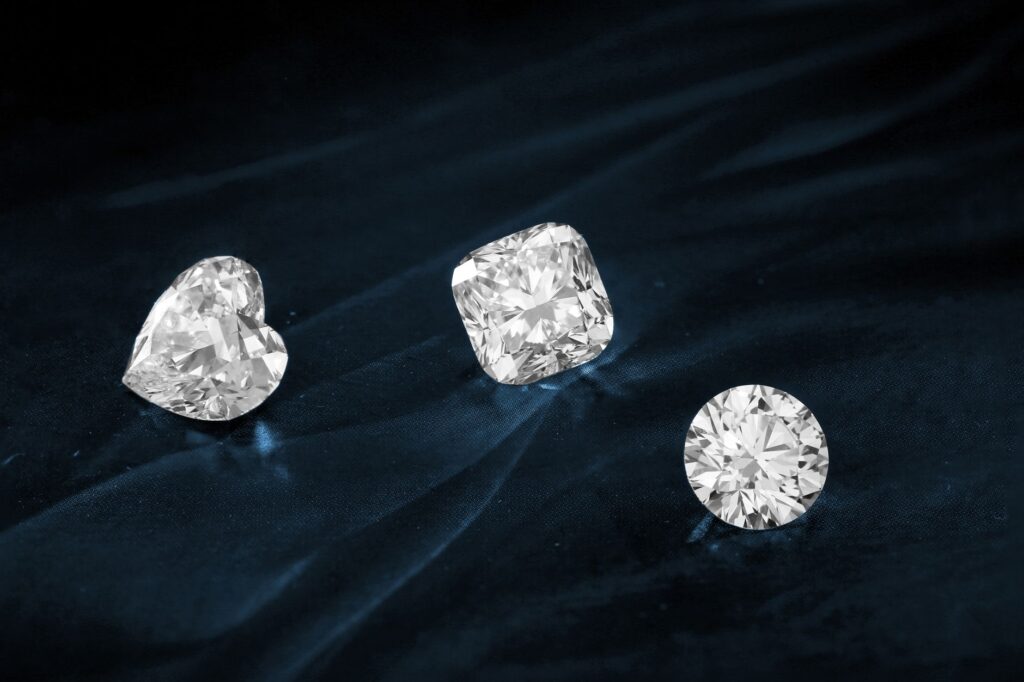
Shape has one of the biggest effects on apparent size. Elongated shapes often look larger than rounds of equal carat weight because they spread their weight over more visible length and surface area.
| Shape | Typical Visual Effect at 3 Carats | General Size Impression |
|---|---|---|
| Round Brilliant | Balanced, classic, concentrated sparkle | Large, but usually smaller-looking than elongated shapes |
| Oval | Elongated outline, good finger coverage | Often looks larger than round |
| Cushion | Softer outline, can face up smaller if deep | May look slightly smaller than expected |
| Emerald | Long, elegant shape with open facets | Can look large, especially in length |
| Radiant | Rectangular or square with bright sparkle | Varies by proportions |
| Pear | Tapered elongated look | Often appears larger than round |
| Marquise | Maximum length and spread | Often appears very large |
Cut quality
Cut quality affects both sparkle and spread. In round diamonds especially, cut has a major influence on beauty. A poorly cut 3 carat diamond may look smaller, less lively, and less brilliant than a well-cut stone.
Buyers sometimes assume a large diamond can “carry itself” visually even if cut is less important. In practice, large diamonds make cut problems easier to notice. Windowing, dark areas, weak light return, or excessive depth can become more obvious at larger sizes.
Depth and proportions
If a diamond is too deep, more weight sits below the top surface. That can reduce the visible millimeter spread. This means two diamonds with the same 3 carat weight may not look equally large face-up.
For buyers comparing stones online or in person, it is smart to compare measurements, not just carat. A 3 carat diamond with a smaller-than-expected spread may not deliver the visual benefit you are paying for.
Setting design
The setting can make a center diamond look larger or smaller. A thin band can make a 3 carat diamond appear more prominent. A thick band can make it look slightly more integrated and less oversized.
Halo settings, hidden halos, prong styles, and the amount of open space around the stone all influence perception. A solitaire often emphasizes the center stone most directly. A halo can increase the apparent overall top view size, though not the actual size of the diamond itself.
Finger size
A 3 carat diamond looks larger on a size 4.5 finger than on a size 8 finger. This is one of the most overlooked parts of diamond shopping.
There is no universal answer to “big enough” without considering the hand it will be worn on. Buyers who focus only on carat numbers often miss the fact that proportion to the finger changes the entire visual result.
Band width and ring style
A 2 mm band creates a different impression than a 4 mm band. Narrow bands visually emphasize the center stone, while wider bands create more visual balance and can make the center diamond seem slightly less dominant.
Vintage settings, three-stone designs, bezels, cathedral settings, and split shanks also change how large a 3 carat diamond appears. The center stone does not exist visually in isolation.
Real-World Size Examples
3 carat round on a size 4 finger
On a small finger, a 3 carat round usually looks very prominent. It can cover a substantial portion of the finger width and create a distinctly bold appearance. Some buyers love this high-impact look, while others may feel it is more ring than they want for daily wear.
3 carat round on a size 6.5 finger
On a medium finger size, a 3 carat round often looks luxurious but balanced. It still reads as a large center stone, yet it may feel more wearable and proportionate than it does on a smaller hand.
3 carat round on a size 8 finger
On a larger finger, a 3 carat round remains substantial, but it may look less oversized than expected. Buyers with larger ring sizes often find they need a bigger carat weight to achieve the same visual effect seen on smaller fingers.
3 carat oval vs 3 carat round
A 3 carat oval usually appears larger than a 3 carat round because of its elongated shape and larger visible footprint. It can also make the finger appear longer and slimmer. This makes oval a popular choice for buyers who want maximum visual size.
That said, ovals can show issues such as a bow-tie effect, which is a darker area across the center. The presence and severity of this effect vary. So the larger-looking outline should be balanced against cut appearance and overall beauty.
2.5 carat vs 3 carat round
The jump from 2.5 to 3 carats is visible, but it is not always dramatic enough to justify a major price increase for every buyer. In natural diamonds especially, that half-carat increase can cost a lot more than the visual difference suggests.
For value-focused buyers, a well-cut 2.5 to 2.8 carat diamond can be an excellent compromise. It delivers a clearly large appearance while avoiding some of the premium attached to the 3 carat threshold.
2.9 carat vs 3.0 carat diamond
This is one of the most practical comparisons in the market. A 2.9 carat diamond often looks almost identical to a 3.0 carat diamond once set, especially if measurements are similar and the stone is well cut.
In many cases, the buyer is paying extra for the exact number rather than a noticeable visual increase. That does not make 3.0 carats wrong. It simply means the premium should be intentional.
Price vs Visual Benefit
Why price rises faster than visible size
Diamond prices do not increase in a straight line with carat weight. As diamonds get larger, they become rarer in the natural market. That means the price jump from 2 carats to 3 carats is often much steeper than the visual jump.
Even though a 3 carat diamond looks larger than a 2 carat, the difference in cost can be disproportionately high. This is especially true when color, clarity, cut quality, and certification are also strong.
Diminishing visual returns
At larger sizes, each additional increase in carat tends to cost more, while delivering a smaller percentage increase in perceived size. In practical terms, moving from 1 carat to 2 carats usually feels like a major size jump. Moving from 2.8 to 3.0 carats may feel much less dramatic.
This is where buyers should ask a value question, not just a size question. Is the extra spend buying a clearly different look, or mostly buying a milestone number?
Natural vs lab grown price considerations
This is one of the biggest reasons the 3 carat conversation has changed in recent years. In natural diamonds, 3 carats often represents a very large budget commitment. In lab grown diamonds, 3 carats may be accessible to buyers who would otherwise be considering 1.5 to 2 carats.
That does not mean lab grown is automatically the better choice. It means it changes the size decision. Buyers can often prioritize a larger face-up size while still maintaining strong cut, color, and clarity grades within budget.
Is the upgrade worth it?
The answer depends on what you are upgrading from and what you are sacrificing. Moving from 2 carats to 3 carats can be visually meaningful, especially in rounds. Moving from 2.8 to 3.0 carats may not be worth a substantial premium unless the exact number matters to you personally.
An experienced buyer often looks for the point where the diamond delivers the desired visual impact without paying heavily for an invisible threshold. That point is not always exactly 3.00 carats.
Who Should Size Up to 3 Carats
Buyers who want strong visual presence
If the goal is a ring that clearly reads as large and noticeable, 3 carats is a reasonable target. This is particularly true for buyers who have tried on smaller diamonds and found them visually underwhelming.
Buyers with larger finger sizes
People with larger ring sizes often need more carat weight to achieve the same look that a smaller stone would create on a smaller hand. For these buyers, 3 carats may feel proportionate rather than excessive.
Buyers choosing simple solitaire settings
In a solitaire, the center stone carries most of the visual impact. If you want a minimalist ring with a strong focal point, 3 carats can make sense because there are fewer design elements contributing to perceived size.
Lab grown buyers focused on size efficiency
For buyers open to lab grown diamonds, 3 carats can offer a compelling balance of visible impact and budget efficiency. In many cases, it allows a larger diamond without the trade-offs that a natural 3 carat might require.
Buyers who prioritize milestone size categories
Some buyers simply care about reaching 3 carats as a personal goal. That is valid, provided they understand the premium attached to that threshold and still choose a well-cut, well-balanced stone.
Who Can Save Money Without Sacrificing Much Visual Impact
Buyers willing to choose just under 3 carats
A 2.8 or 2.9 carat diamond can often look nearly the same as a 3.0 carat diamond, especially after setting. This is one of the clearest opportunities to save money while preserving appearance.
Buyers open to elongated shapes
If you want a large look, an oval, pear, or marquise may create more apparent size than a round at the same weight. That can mean either stronger face-up presence at 3 carats, or a similar visual effect at a lower carat weight.
Buyers prioritizing cut over weight
A beautifully cut 2.7 carat diamond can be more attractive than a poorly cut 3 carat stone. If the budget is tight, reducing weight slightly to preserve cut quality is often the smarter move.
Buyers who prefer balanced daily wear
Not everyone wants a highly prominent ring for everyday use. Those who use their hands frequently, prefer lower-profile settings, or want a more understated look may find that 2 to 2.7 carats feels more practical while still looking large.
Buyers who want better overall quality
Stepping slightly below 3 carats can free up budget for better color, better clarity, or a stronger setting. That trade-off often improves long-term satisfaction more than the exact carat number does.
Common Buyer Mistakes
Chasing the carat number instead of the measurements
The grading report tells you weight, but the dimensions tell you how large the diamond will look. A buyer who ignores millimeter spread can overpay for a deep stone that faces up smaller than expected.
Ignoring shape effects
A 3 carat round does not look like a 3 carat oval, marquise, or emerald cut. Shape can change finger coverage dramatically. Comparing carat weights across shapes without comparing dimensions creates unrealistic expectations.
Paying too much for a magic size
The difference between 2.90 and 3.00 carats is often far more meaningful on paper than to the eye. Buyers who care primarily about appearance should compare near-threshold stones carefully before paying a premium.
Overlooking finger size
Online inspiration photos can be misleading because the same diamond looks different on different hands. A 3 carat diamond that seems “perfect” in one photo may look much larger or smaller on your hand than expected.
Choosing size at the expense of cut
This is one of the most expensive mistakes. A large diamond with mediocre cut may look dull, dark, or lifeless. In terms of real-world beauty, cut quality usually matters more than a small increase in carat weight.
Assuming larger automatically means better value
Value is not about getting the biggest stone possible. It is about getting the best overall combination of appearance, quality, durability, and budget fit. Sometimes that means stopping short of 3 carats.
Forgetting about setting practicality
A 3 carat diamond usually needs a well-designed setting for security and wearability. Buyers sometimes focus entirely on the center stone and underestimate how much the setting affects comfort, height, snagging, and long-term durability.
3 Carat Diamond Size Comparison Table
| Comparison Point | 3 Carat Round Diamond | What It Means for Buyers |
|---|---|---|
| Overall impression | Large and highly noticeable | Usually more than enough for a bold engagement ring look |
| Typical diameter | About 9.2 to 9.4 mm if well cut | Measurements matter more than weight alone |
| Finger coverage | Substantial on most hands | Looks especially large on smaller fingers |
| Comparison to average ring size | Well above average | Creates a distinctly large center-stone appearance |
| Price efficiency in natural diamonds | Often expensive relative to visible size gain | Consider just-under sizes for better value |
| Price efficiency in lab grown diamonds | Often more accessible | Can make 3 carats realistic without major quality compromises |
| Cut sensitivity | High | Poor cut becomes easier to notice at this size |
Lab Grown Context: Does 3 Carats Make More Sense in Lab Grown Diamonds?
For many modern buyers, this is where the discussion becomes practical rather than theoretical. A 3 carat lab grown diamond often costs far less than a natural 3 carat diamond of similar visible quality. That changes the decision from “Can I reach 3 carats at all?” to “Do I actually want 3 carats?”
This distinction is important. Lab grown diamonds can make large sizes accessible, but the same visual rules still apply. Shape, cut, depth, finger size, and setting still affect appearance. A lab grown 3 carat diamond is not visually different from a natural 3 carat diamond simply because of origin.
Where buyers should remain balanced is long-term value expectations. Lab grown diamonds can offer impressive size for the budget, but they do not follow the same resale expectations some buyers associate with natural diamonds. That does not make them a poor choice. It means the buying rationale should focus on appearance, wear, and upfront value rather than assumptions about future resale performance.
For a buyer whose top priority is getting a large, attractive, well-cut diamond within a defined budget, lab grown can make 3 carats a much more comfortable choice. For a buyer who strongly prefers natural origin, 3 carats may require more compromise or a significantly larger budget.
Frequently Asked Questions
Is a 3 carat diamond too big for an engagement ring?
Not inherently. A 3 carat diamond is large, but whether it feels too big depends on finger size, personal style, profession, daily wear habits, and setting design. On some hands it looks bold but balanced. On others it may feel oversized.
Will a 3 carat diamond look much bigger than a 2 carat?
Yes, the difference is usually noticeable. A 3 carat diamond has substantially more face-up presence than a 2 carat diamond, especially in well-cut rounds and elongated shapes. The cost increase, however, is often much greater than the visual increase.
Does a 3 carat oval look bigger than a 3 carat round?
Usually yes. Ovals generally have a larger-looking footprint than round diamonds of the same weight. They also create a longer outline on the finger, which adds to the impression of size.
Can a 2.9 carat diamond look the same as a 3 carat diamond?
Often yes. If the dimensions and proportions are close, most people will not see a meaningful difference once the stone is mounted. This is why just-under magic sizes can offer strong value.
Is 3 carats practical for everyday wear?
It can be, especially in a secure and well-designed setting. Practicality depends on ring height, lifestyle, hand use, and personal comfort. Some buyers wear 3 carat diamonds daily without issue, while others prefer smaller stones for easier wear.
Does finger size really affect how big a 3 carat diamond looks?
Yes, significantly. The same diamond looks larger on a smaller finger because it covers more of the finger width. This is one of the biggest reasons online photos can create misleading expectations.
Should I choose a smaller diamond with better cut instead of a 3 carat with average cut?
In many cases, yes. A slightly smaller diamond with stronger cut quality often looks brighter, livelier, and more attractive than a larger but less well-cut stone. Beauty is not determined by carat weight alone.
Is a 3 carat lab grown diamond a good option?
It can be an excellent option for buyers who want large visual size while staying within budget. The key is to evaluate it by the same quality standards used for any diamond, including cut, measurements, color, clarity, and certification.
Conclusion
A 3 carat diamond is absolutely big enough. For most buyers, it is a large and visually significant size that delivers strong finger coverage and a clear sense of presence. In practical terms, the real question is not whether 3 carats is large enough, but whether it is the best balance of size, appearance, budget, and wearability for your specific situation.
The most important takeaway is that carat weight alone does not tell you how a diamond will actually look. Shape, cut quality, depth, measurements, setting style, and finger size all influence apparent size. A well-cut 2.8 or 2.9 carat diamond may provide nearly the same visual effect as a 3.0 carat stone, while an elongated shape may look larger still.
For buyers considering natural diamonds, the jump to 3 carats often involves a major price increase, so it is worth checking whether the visual gain justifies the cost. For buyers open to lab grown diamonds, 3 carats may be much more achievable without sacrificing overall quality. In either case, the smartest approach is to focus on how the diamond actually faces up, not just the number on the report.
Viewed through that lens, a 3 carat diamond is more than enough for a bold and impressive look. Whether it is the right choice depends on how thoughtfully the size fits the hand, the design, and the budget.