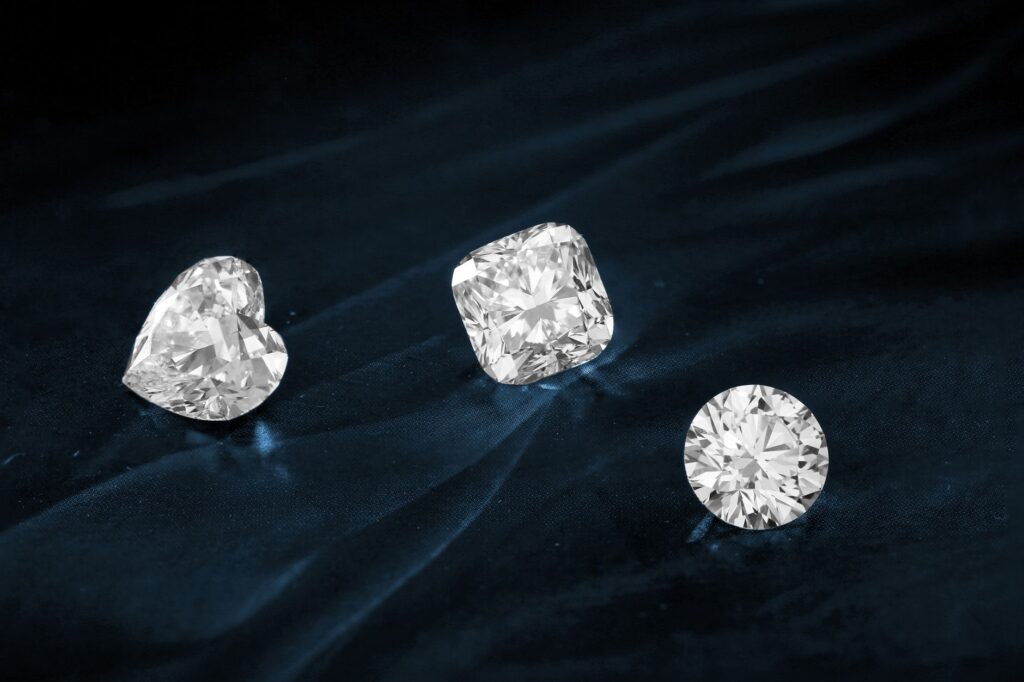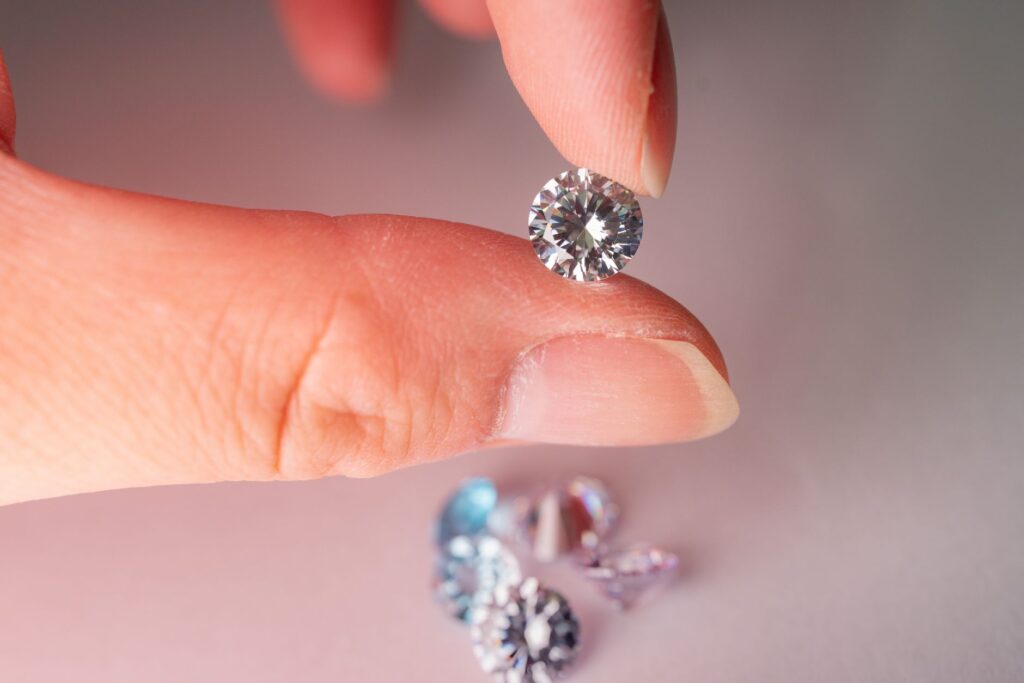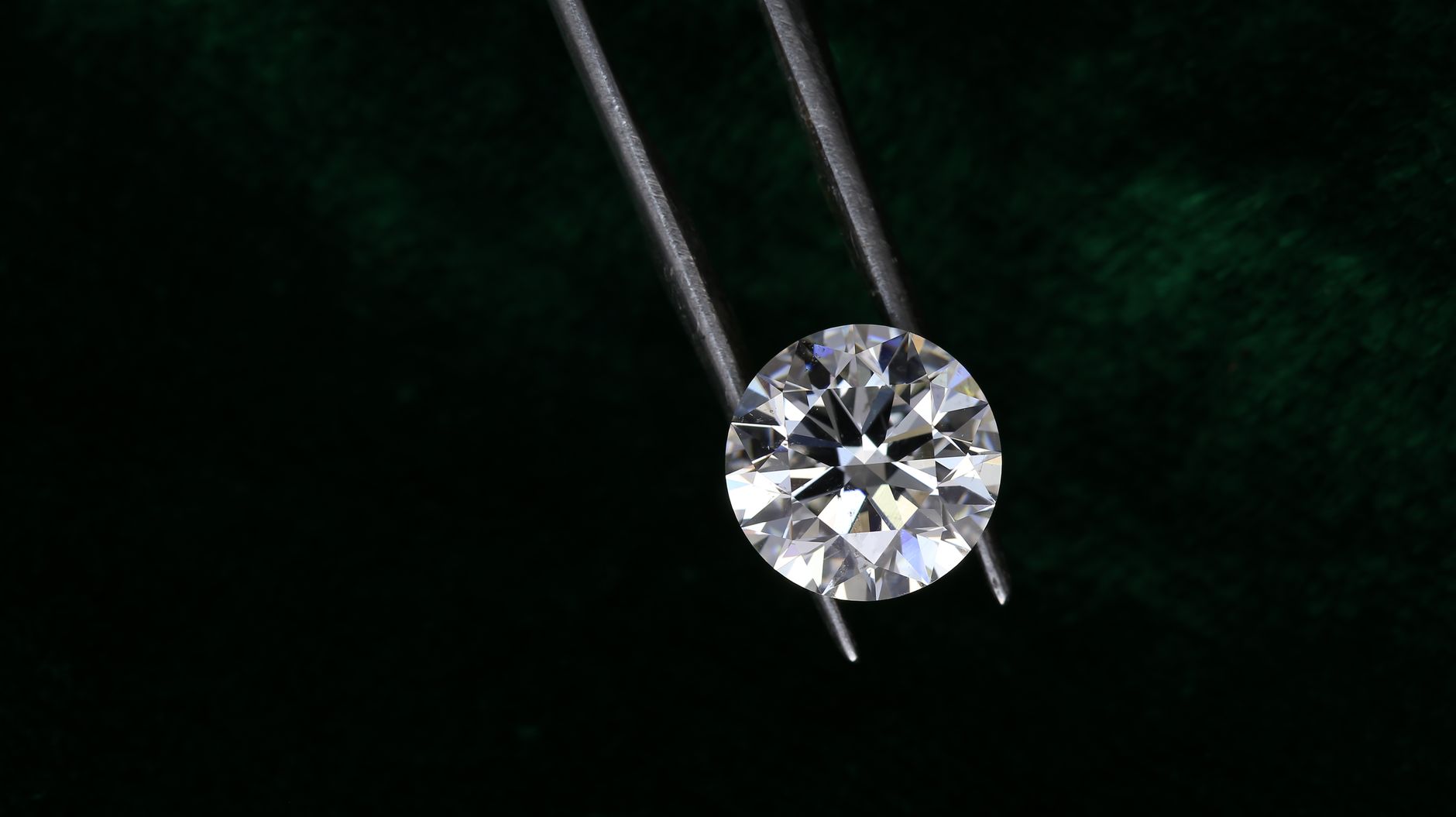
A diamond can weigh more without looking dramatically larger. That is the central issue behind Carat Weight vs Face-Up Size, and it explains why two diamonds with similar carat numbers can look noticeably different once they are set in a ring. Buyers often focus on the carat label because it is easy to compare, but what the eye actually sees from the top is the diamond’s spread, outline, and finger coverage.
This matters because size expectations drive a large part of diamond satisfaction. A buyer may pay a premium to reach a round number such as 1.00 or 2.00 carats, only to discover that the visible difference compared with a slightly smaller stone is modest. In other cases, a well-cut diamond with smart proportions can look larger than a heavier diamond that carries too much weight in its depth.
Understanding the difference between weight and visible size helps you buy more confidently. It also helps you compare natural and lab grown diamonds more intelligently, especially in larger sizes where budget differences can be substantial.
Quick Answer
Carat weight tells you how much a diamond weighs. Face-up size tells you how large it looks from the top when viewed in a ring or loose.
These are related, but they are not the same thing. A diamond with higher carat weight does not always look proportionally larger because visible size depends on:
- shape
- cut quality
- depth and overall proportions
- length-to-width ratio in fancy shapes
- setting design
- finger size
From a buying perspective, the most useful approach is to compare millimeter measurements, not just carat numbers. The dimensions listed on a grading report often tell you more about how big a diamond will actually look than the carat weight alone.
Understanding the Carat Concept
What Is Diamond Carat?
A carat is a unit of weight. One carat equals 0.2 grams. That means a 1.00 carat diamond weighs one-fifth of a gram.
This is important because carat is not a measurement of width, diameter, or visible surface area. It simply tells you mass. Two diamonds can both weigh 1.00 carat and still face up differently if one is cut deeper or has a different shape.
What Is Face-Up Size?
Face-up size refers to how large the diamond appears when viewed from above. This is the angle people usually see when the diamond is mounted in a ring.
For a round diamond, face-up size is usually described by diameter in millimeters. For example, a round 1 carat diamond might measure about 6.4 to 6.5 mm across if it is proportioned well. For shapes such as oval, emerald, cushion, or pear, face-up size is described by length x width.
When buyers say a diamond “looks big,” they are usually responding to face-up dimensions, not weight.
Why Weight and Size Are Not Perfectly Aligned
Diamonds are three-dimensional objects. Some of their weight is visible across the top, and some is hidden in depth. If a stone is cut too deep, more of its weight sits below the surface where it does not add much to face-up appearance.
That means a 1.00 carat diamond with overly deep proportions may look smaller than a 0.95 carat diamond with better spread. The heavier diamond still weighs more, but the viewer may not perceive it as larger.
What Is a Magic Size Diamond?
A “magic size” is an especially popular carat weight threshold such as 0.50, 0.75, 1.00, 1.50, 2.00, or 3.00 carats. Prices often jump at these milestones because they are easy to market and easy for buyers to remember.
The visual difference between a 0.90 carat and 1.00 carat diamond, or between a 1.90 carat and 2.00 carat diamond, may be smaller than buyers expect. In many cases, the premium is driven more by pricing psychology and rarity than by a dramatic increase in apparent size.
What Buyers Usually Expect
Assuming Carat Directly Equals Visible Size
A common expectation is that a higher carat number will always produce a clearly larger-looking diamond. In reality, visible size increases more gradually than many first-time buyers assume.
For example, going from 1 to 2 carats does create a noticeable difference, but it does not make the diamond look “twice as wide.” Weight doubles, but diameter does not. Since surface area and visual size are not perceived in a simple linear way, buyers often overestimate how dramatic the change will be.
Expecting Round Number Upgrades to Be Obvious
Another frequent assumption is that crossing a popular threshold will be easy to see. A buyer may believe that 1.00 carat looks substantially bigger than 0.92 or 0.95 carat. In most side-by-side comparisons, the difference is subtle.
Without direct comparison, most people would not identify that increase by eye alone. This is why measurements can be more useful than the label.
Comparing Different Shapes by Carat Only
A 2 carat oval and a 2 carat round do not have the same outline or face-up spread. Ovals, pears, marquises, and some elongated radiant cuts often appear larger than rounds of equal weight because they distribute more visual area across the finger.
Buyers who compare carat numbers without considering shape can end up confused about why one diamond looks bigger even though the grading report shows the same weight.
Ignoring Finger Size and Ring Design
A diamond does not look the same on every hand. A 1 carat round on a size 4 finger can have strong finger coverage and appear prominent. The same diamond on a size 8 finger may look more modest.
Settings also influence perception. Thin bands, halos, delicate prongs, and elongated orientations can make a center stone appear larger. Thick bands and heavy design elements can make it seem smaller by comparison.
What It Actually Looks Like
Why Millimeter Measurements Matter More Than Most Buyers Realize
The most practical way to judge face-up size is to look at millimeter dimensions. Carat tells you weight. Millimeters tell you what your eye is more likely to notice.
For round diamonds, a small increase in diameter can still matter visually, but the change may be less dramatic than the jump in price suggests. For fancy shapes, both length and width matter because a diamond can appear long and slender or broader and fuller depending on its proportions.
Typical Round Diamond Face-Up Sizes
The following are approximate face-up diameters for well-proportioned round diamonds. Actual measurements vary depending on cut and depth.
| Carat Weight | Approximate Diameter | Visual Impression |
|---|---|---|
| 0.50 ct | 5.0 to 5.2 mm | Small but refined, often ideal for minimal styles |
| 0.75 ct | 5.7 to 5.9 mm | Noticeably larger than half carat, balanced appearance |
| 0.90 ct | 6.1 to 6.3 mm | Near 1 carat look for many buyers |
| 1.00 ct | 6.4 to 6.5 mm | Classic benchmark size |
| 1.50 ct | 7.3 to 7.4 mm | Clearly larger presence on the finger |
| 2.00 ct | 8.0 to 8.2 mm | Strong visual impact, especially in solitaire styles |
| 3.00 ct | 9.1 to 9.3 mm | Very prominent face-up appearance |
These numbers help explain why a carat increase may feel smaller than expected. Going from 1.00 to 2.00 carats does not mean going from 6.5 mm to 13 mm. The diameter increase is meaningful, but much more restrained than the weight increase.
Surface Area Changes More Than Diameter
One reason buyers become confused is that diamonds grow in three dimensions, while most visual comparisons are made from the top. If you only look at width, size increases seem modest. If you compare total top-down area, the change is larger, but still not always dramatic enough to justify every price jump.
This is why a 2 carat round looks clearly bigger than a 1 carat round, but not like a simple doubling to the eye. The visual gain is real, yet it follows geometry rather than intuition.
Finger Coverage Is Part of the Perception
A diamond’s apparent size also depends on how much space it covers on the finger. A 7 mm stone can look substantial on a smaller hand and more moderate on a larger hand. This is one reason online size charts can only provide rough guidance.
Finger shape, ring size, band width, and even nail length can affect how the diamond is perceived in daily wear.
Factors That Change Apparent Size
Shape
Shape is one of the biggest influences on face-up appearance. Round diamonds are popular because of their balanced brilliance, but they often face up smaller than elongated shapes of the same weight.
Shapes that often appear larger for their carat weight include:
- oval
- pear
- marquise
- emerald
- elongated radiant
These shapes can create more finger coverage, especially along the length of the ring. By contrast, some cushion cuts and princess cuts can carry weight more compactly and may look smaller face-up than buyers expect.
Cut Quality
Cut quality affects both beauty and apparent size. A well-cut diamond is proportioned to return light effectively while maintaining an appropriate spread. A poorly cut diamond may hide excess weight where it does little for visible size.
For round diamonds, cut is especially important because ideal or excellent proportions help balance brilliance, fire, and spread. A stone that is too deep can look smaller than its carat weight suggests. A stone that is too shallow may face up larger but can lose sparkle or show other performance issues.
The goal is not the largest possible spread at any cost. It is strong overall value, meaning attractive visual size without sacrificing too much light performance.
Depth Percentage
Depth percentage compares the diamond’s height to its width. In plain language, it tells you whether the stone is relatively shallow, balanced, or deep.
If two diamonds weigh the same but one has a deeper cut, that deeper stone may have a smaller face-up diameter. Its weight is concentrated downward instead of outward. Buyers who ignore depth can unintentionally pay for weight they cannot easily see.
Table and Overall Proportions
The table is the large flat facet on top of the diamond. Together with crown angle, pavilion angle, and depth, it influences both appearance and spread. A diamond with balanced proportions usually looks more harmonious and performs better in light.
Chasing only a large table or only a shallow depth to maximize spread can backfire. A diamond may appear broad but look less lively. Face-up size should be judged together with cut quality, not in isolation.
Length-to-Width Ratio in Fancy Shapes
Fancy shapes such as oval, radiant, pear, and emerald have varying length-to-width ratios. This ratio affects whether the diamond appears more elongated or more rounded.
An elongated oval may appear larger on the finger because it stretches visually along the hand. However, if it becomes too narrow, it may not have the fuller look some buyers want. Apparent size is not just about dimensions. It is also about shape preference and how the outline reads on the finger.
Setting Style
Settings can meaningfully change perceived size. A halo adds a border around the center stone, increasing total visual presence. A thin band can make the center diamond look larger by contrast. White metal prongs can blend into a colorless or near-colorless diamond, helping the outline feel less interrupted.
Here are a few common effects:
- Halo settings: increase overall look and finger coverage
- Thin bands: emphasize the center stone
- Thick bands: can make the center appear smaller
- Bezel settings: offer protection, but may slightly alter the visual outline depending on design
- Elongated north-south settings: often create a larger visual impression
Color and Clarity Visibility
Color and clarity do not directly change face-up dimensions, but they can affect perception. A diamond with visible inclusions or warmth may not look as crisp and bright, which can subtly influence how impressive it appears from a normal viewing distance.
That said, buyers should not overpay for high clarity grades if the difference is not visible. In many cases, choosing an eye-clean clarity and a well-selected color grade allows more budget to go toward size or cut.
Real-World Size Examples
1 Carat Round on a Size 4 Finger
On a size 4 finger, a well-cut 1 carat round can look prominent and balanced. Its roughly 6.4 to 6.5 mm diameter covers a meaningful portion of the finger width, especially in a solitaire with a slim band.
For buyers with smaller hands, this size often feels substantial rather than modest. It is a good example of why carat weight cannot be judged independently from the wearer.
1 Carat Round on a Size 7 Finger
On a size 7 finger, the same 1 carat round generally looks classic and versatile, but less dominant. It is still clearly visible and attractive, yet it may not create the same finger coverage seen on smaller hands.
This does not make it too small. It simply means the visual effect is different. Buyers choosing for larger ring sizes sometimes prefer elongated shapes or slightly larger dimensions if finger coverage is a top priority.
2 Carat Oval vs 2 Carat Round
A 2 carat oval often appears larger than a 2 carat round because of its elongated outline and broader finger coverage. The round may deliver stronger balanced brilliance, but the oval usually creates a larger visual footprint.
| Feature | 2 Carat Round | 2 Carat Oval |
|---|---|---|
| Typical measurements | About 8.0 to 8.2 mm diameter | Often around 9 x 7 mm, varies by ratio |
| Face-up impression | Compact, symmetrical, bright | Longer, spread-out, larger-looking |
| Finger coverage | Strong, especially in solitaire | Often greater length coverage |
| Common buyer reaction | Classic and substantial | Larger appearance for same carat |
Neither is universally better. The round suits buyers who prioritize symmetry and traditional sparkle. The oval suits buyers who want more apparent size per carat.
0.90 Carat vs 1.00 Carat Round
This is one of the most practical comparisons in diamond buying. A well-cut 0.90 carat round may measure around 6.2 mm, while a well-cut 1.00 carat round may measure around 6.4 to 6.5 mm.
That difference is visible side by side, but modest in everyday wear. The price difference can be far more significant than the visual difference, especially if the 1.00 carat stone sits at a pricing threshold.
| Feature | 0.90 Carat Round | 1.00 Carat Round |
|---|---|---|
| Approximate diameter | 6.1 to 6.3 mm | 6.4 to 6.5 mm |
| Visual difference | Near-1-carat look | Slightly larger |
| Typical value profile | Often more efficient | Often carries threshold premium |
| Best for | Value-focused buyers | Buyers who specifically want the 1.00 ct mark |
1.90 Carat vs 2.00 Carat Round
This comparison follows the same pattern. The 2.00 carat mark has strong psychological and market appeal, but the visible difference from a well-cut 1.90 carat diamond is often limited.
For buyers trying to maximize visible size while controlling price, just-below-threshold weights can be sensible choices.
Lab Grown Diamond Size Scenarios
Lab grown diamonds have changed how buyers approach size decisions. Because lab grown pricing is usually lower than natural pricing at the same carat weight and quality range, some buyers can choose larger face-up sizes without entering the same budget tier.
For example, a buyer considering a natural diamond around 1.00 carat may find that a lab grown option allows movement to 1.50 or 2.00 carats within budget. The visual impact can be substantial. However, the same face-up size principles still apply. A poorly proportioned lab grown diamond will not become a smart value simply because its carat weight is higher.
Lab grown buyers should still compare:
- millimeter measurements
- shape
- cut quality
- depth and spread
- overall visual balance
Price vs Visual Benefit
Why Price Climbs Faster Than Visible Size
Diamond pricing does not rise in a simple straight line. As carat weight increases, price per carat usually rises too, especially near and above major thresholds. This means you may pay disproportionately more for a stone that looks only moderately larger.
The effect is often strongest at popular benchmark sizes. A small visual gain can trigger a larger market premium.
Diminishing Returns in Apparent Size
The larger the diamond gets, the more expensive each additional visible increase tends to become. That does not mean larger diamonds are poor choices. It means the buyer should be realistic about how much visible benefit each budget jump provides.
In practical terms:
- Going from 0.50 to 1.00 carat is usually very noticeable
- Going from 1.00 to 1.25 carat is noticeable but less dramatic
- Going from 1.90 to 2.00 carat may be subtle despite a meaningful premium
When the Upgrade Is Worth It
An upgrade may be worth paying for when the buyer values stronger finger coverage, prefers a certain look on their hand, or is moving into a size range that genuinely changes presence. For example, shifting from 1.00 to 1.50 carats can create a clearly different visual effect.
It may also be worthwhile when the buyer has already optimized cut, color, and clarity and wants the next meaningful improvement to be size.
When the Upgrade Is Mostly a Number
Sometimes the upgrade is driven more by the carat label than by a visible difference. This often happens at magic sizes. A buyer may pay extra to say the diamond is 1.00 or 2.00 carats even though a slightly smaller stone would look extremely similar.
That choice is not wrong if the milestone matters personally. It is simply important to recognize that the premium may be emotional or symbolic rather than visually efficient.
Who Should Size Up
Buyers Prioritizing Finger Coverage
If your main goal is a larger look on the hand, sizing up can make sense. This is especially true for larger ring sizes, minimalist solitaire designs, or buyers who know they prefer a more prominent center stone.
Buyers Using Lab Grown Diamonds to Reach a Different Visual Category
Lab grown diamonds can make size upgrades more accessible. In some budgets, moving from 1 carat to 1.5 or 2 carats is not a minor adjustment. It is a real shift in visual presence.
For buyers who want a larger appearance and are comfortable with the characteristics and resale limitations of lab grown diamonds, this can be a practical route to more finger coverage.
Buyers Who Have Seen Stones in Person and Know Their Preference
Some people simply know that smaller stones will not satisfy their visual expectations. If you have compared diamonds in person and found a clear preference for a larger range, paying more for size may be reasonable.
What matters is that the decision is based on actual appearance, not assumption.
Who Can Save Money
Buyers Open to Just-Below Threshold Weights
Choosing 0.90 instead of 1.00 carat, or 1.90 instead of 2.00 carats, can be one of the smartest value decisions in diamond buying. The face-up difference is often modest, while the pricing difference may be meaningful.
Buyers Willing to Prioritize Shape Over Carat Number
An oval, marquise, or pear can provide more visible spread than a round at the same weight. Buyers who want a larger look rather than a specific shape may be able to maintain carat weight while gaining apparent size.
Buyers Choosing Better Cut Instead of More Weight
A well-cut diamond with strong spread often delivers a more satisfying overall appearance than a heavier stone with compromised proportions. The better-looking diamond is not always the one with the bigger carat number.
For many experienced buyers, the preferred balance is strong cut quality, eye-clean clarity, sensible color, and a carat weight just below major pricing jumps.
Buyers Using Design to Enhance Appearance
A thin band, subtle halo, or elongated center shape can increase apparent size without requiring a large increase in carat weight. This can be a smart approach for buyers who want visual impact while staying disciplined on budget.
Common Buyer Mistakes
Chasing Carat Numbers Instead of Measurements
This is the most common mistake. A buyer sees 1.00 carat and assumes it must look larger than a 0.92 or 0.95 carat diamond in a meaningful way. In many cases, the dimensions tell a more accurate story.
Ignoring Spread and Depth
A diamond that carries too much of its weight in depth may face up small for its carat weight. Failing to check millimeter measurements can lead to overpaying for hidden weight.
Comparing Different Shapes as If They Behave the Same
A 1.5 carat oval, cushion, and round will not look equally large. Shape changes how weight is distributed and how the diamond covers the finger.
Assuming the Largest Face-Up Stone Is Automatically Best
Some buyers become so focused on spread that they choose stones with weak cut quality or less attractive proportions. A larger-looking diamond that appears dull or poorly balanced may not be satisfying in daily wear.
Forgetting the Role of Finger Size
A diamond’s appearance is always relative. Photos online can be misleading because they may show a stone on a hand very different from your own.
Overpaying for a Magic Size Without a Clear Reason
There is nothing wrong with wanting a 1.00 or 2.00 carat diamond. The mistake is paying the premium without understanding that the visual benefit may be small. If the milestone matters to you, make that choice deliberately.
Frequently Asked Questions
Does a higher carat diamond always look bigger?
No. It usually looks bigger if all else is equal, but not always by as much as buyers expect. Shape, cut quality, and depth can make a lower-carat diamond appear similar in size to a heavier stone.
What is more important, carat weight or millimeter size?
For visible appearance, millimeter size is often more informative. Carat weight still matters for pricing and rarity, but millimeter measurements tell you more directly how large the diamond will look face-up.
Why does my 1 carat diamond look smaller than expected?
Several factors may be involved. The diamond may be cut deep, your finger size may be larger than the examples you have seen, the band may be thick, or your expectations may have been shaped by enlarged photos and close-up marketing images.
Do oval diamonds look bigger than round diamonds?
Often, yes. Ovals usually have a more elongated outline and greater finger coverage for the same carat weight. They can appear larger face-up than rounds, though rounds may offer a different style of sparkle and symmetry.
Is it worth paying more for exactly 1.00 carat instead of 0.90 carat?
That depends on your priorities. Visually, the difference is usually modest. Financially, the premium can be noticeable. Buyers who care about value often prefer the slightly smaller option, while buyers who want the exact milestone may still find the premium worthwhile.
Do lab grown diamonds change the carat weight vs face-up size equation?
They change the budget equation more than the physical one. A 1.5 carat lab grown diamond and a 1.5 carat natural diamond of similar shape and proportions will have similar face-up size. The main difference is usually price, not appearance.
Can a shallow diamond be better because it looks larger?
Not necessarily. A shallow diamond may face up larger, but if the cut is too shallow it can lose brightness, contrast, or overall performance. Apparent size should be balanced with cut quality.
What is the best value approach for size-conscious buyers?
In many cases, the best value comes from choosing strong cut quality, checking millimeter spread carefully, considering shapes that face up larger, and staying just below major carat thresholds where pricing often jumps.
Conclusion
The difference between Carat Weight vs Face-Up Size is one of the most useful concepts a diamond buyer can understand. Carat weight measures how much a diamond weighs. Face-up size reflects how large it actually looks from the top, which is what most people notice in real life.
A bigger carat number does not automatically guarantee a much bigger-looking diamond. Shape, cut, depth, proportions, setting style, and finger size all influence visual impact. That is why millimeter measurements are so important, especially when comparing diamonds near popular thresholds such as 1.00 or 2.00 carats.
For some buyers, paying more for a larger carat weight is justified because the added presence matters to them. For others, a slightly smaller diamond with better spread, stronger cut, or a more size-efficient shape will offer better overall value. The most informed decision comes from comparing what the diamond weighs with what it actually looks like, not assuming those are the same thing.
Once you evaluate both weight and face-up size together, it becomes much easier to choose a diamond that matches your budget, your style, and your expectations on the hand.