An emerald cut and a round diamond can weigh exactly the same, yet the emerald cut often looks larger once it is set and viewed from the top. That surprises buyers who assume carat weight tells them how big a diamond will appear. In practice, what your eye notices first is not the weight. It is the diamond’s face-up dimensions, shape outline, and how much of the finger it seems to cover.
This matters because shape choice affects more than style. It changes visual size, sparkle pattern, clarity visibility, and value. A buyer comparing a 1 carat emerald cut with a 1 carat round may see a meaningful difference in apparent spread, even though both stones weigh the same.
Understanding why this happens can help you avoid overpaying for a number on paper while missing the look you actually want. It also helps when comparing natural and lab grown diamonds, where budget flexibility may make shape decisions even more important.
Quick Answer
Yes, emerald cuts often look bigger than round diamonds of the same carat weight. In many cases, an emerald cut has a larger face-up surface area because its elongated rectangular shape spreads the weight across more visible length and width instead of concentrating more of it into depth.
That said, this is not true in every case. A very deep emerald cut can look smaller than a well-proportioned one, and a round diamond with excellent proportions can still appear substantial and bright. The visual difference also depends on finger size, setting design, and the exact measurements of each stone.
If your priority is getting the largest-looking diamond for the carat weight, emerald cuts usually outperform rounds. If your priority is maximum brilliance and sparkle, rounds usually lead.
Understanding the Carat Concept
Carat is weight, not visible size
Diamond carat refers to weight. One carat equals 0.2 grams. Carat does not directly tell you how large a diamond will look from the top.
Two diamonds with the same carat weight can appear noticeably different in size because their weight may be distributed differently. One may carry more of its mass in the depth, while another spreads more of it across the top surface.
What face-up size means
Face-up size is the size a diamond appears when you look down at it in a ring. This is the practical size most buyers care about because it is what friends, family, and the wearer actually see.
For a round diamond, face-up size is commonly described by its diameter in millimeters. For an emerald cut, face-up size is described by its length and width in millimeters.
When people ask, “Do emerald cuts look bigger than round diamonds,” they are really asking about face-up size, not actual weight.
Why shape changes size perception
Shape affects how the eye reads dimensions. A round diamond is symmetrical and compact. An emerald cut is longer and more open in outline, so it often creates the impression of greater size.
The elongated form can also make the finger look more covered from top to bottom. That visual stretch contributes to the impression that the stone is larger, even before anyone compares exact measurements.
What Buyers Usually Expect
The common assumption that 1 carat always looks the same
A frequent mistake is assuming that all 1 carat diamonds should appear equal in size. Buyers often compare only the carat listing and ignore measurements. This can lead to disappointment when one shape looks smaller than expected and another looks larger.
A 1 carat round and a 1 carat emerald cut are not visual twins. The round usually appears more compact because its shape contains the spread within a circular outline. The emerald cut stretches that same weight across a rectangular profile.
Confusing sparkle with size
Round diamonds are known for strong brilliance, which is the return of white light. That brightness can make the stone feel lively and eye-catching, but it does not necessarily make it look physically larger.
Emerald cuts have a different light pattern. Instead of the pinfire sparkle often seen in rounds, they show broader flashes of light, sometimes called a hall-of-mirrors effect. Because the surface is more open and less visually broken up, buyers may perceive the shape itself more clearly, which can enhance the sense of size.
Expecting the shape with more sparkle to also look bigger
It is easy to assume that the more brilliant diamond will also look larger, but those are separate issues. A round often looks brighter. An emerald cut often looks larger. Some buyers care more about spread. Others care more about sparkle intensity.
What It Actually Looks Like
How a round diamond appears face-up
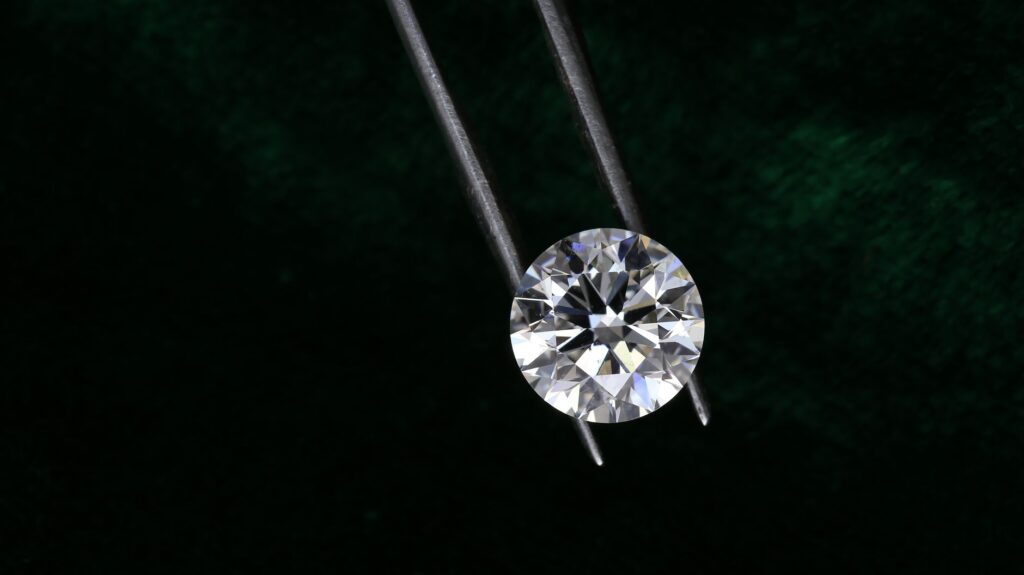
A round diamond looks balanced, classic, and concentrated. Its circular outline gives it a compact visual footprint. At equal carat weight, much of its appeal comes from its brightness and strong light performance rather than from appearing especially large.
This compactness is part of why round diamonds are so popular. They look lively and symmetrical, and they work well in many settings. But they are not usually the shape that gives the biggest visual spread for the weight.
How an emerald cut appears face-up
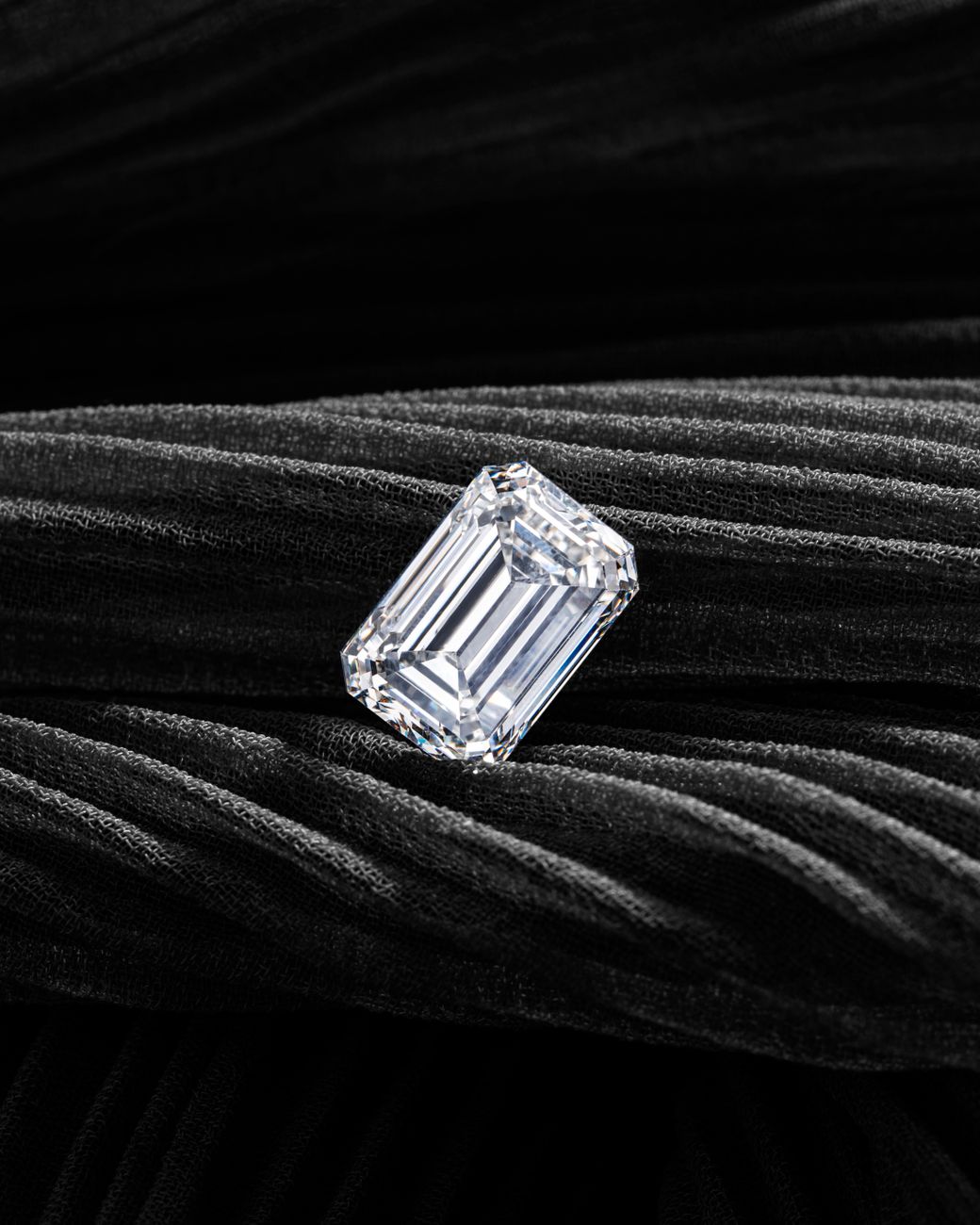
An emerald cut typically looks larger in outline because of its length and broad table, which is the large flat top facet. The corners are cropped, but the rectangular shape still offers a more expansive look than a round of the same weight.
Its long, open facets create a sleek and elegant appearance. The shape often covers more finger length, and that extra coverage can make the diamond feel more substantial even without increasing carat weight.
Finger coverage matters more than buyers expect
From normal viewing distance, people rarely estimate a diamond’s weight accurately. They mostly react to how much space the diamond occupies on the hand. This is why finger coverage is such an important part of apparent size.
An emerald cut usually has an advantage here. Its length can make the stone appear to span more of the finger, especially in north-south settings where the rectangle runs along the finger’s length.
Open shape versus compact shape
The emerald cut’s outline reads clearly because it is less visually concentrated. A round gathers the eye inward. An emerald cut draws the eye outward along its edges and corners. This often makes the emerald cut seem larger at a glance.
However, a larger-looking outline does not mean more sparkle or necessarily more visual presence in all lighting. Some buyers see a round’s brightness and prefer that impact, even if it does not appear as large in millimeter spread.
Emerald Cut vs Round Diamond Size Comparison
The exact measurements vary by proportions, but the table below shows common face-up ranges for well-cut diamonds.
| Carat Weight | Typical Round Diameter | Typical Emerald Cut Dimensions | Which Often Looks Bigger |
|---|---|---|---|
| 0.50 ct | About 5.0 to 5.2 mm | About 5.8 x 4.0 mm to 6.0 x 4.2 mm | Emerald cut |
| 0.75 ct | About 5.7 to 5.9 mm | About 6.5 x 4.7 mm to 6.8 x 4.9 mm | Emerald cut |
| 1.00 ct | About 6.3 to 6.5 mm | About 7.0 x 5.0 mm to 7.4 x 5.3 mm | Emerald cut |
| 1.50 ct | About 7.3 to 7.5 mm | About 8.0 x 5.8 mm to 8.5 x 6.2 mm | Emerald cut |
| 2.00 ct | About 8.0 to 8.2 mm | About 8.8 x 6.5 mm to 9.2 x 6.8 mm | Emerald cut |
This table does not mean every emerald cut is visually larger than every round. It shows the common pattern. Emerald cuts often have a larger length and a broad visible surface, which increases perceived size.
Why Emerald Cuts Often Look Bigger Than Round Diamonds
Weight distribution
The main reason is how the diamond carries its weight. Round diamonds, especially well-cut ones, need certain depth and proportions to produce strong brilliance. That often means more of the carat weight is held in a way that supports light performance rather than maximum spread.
Emerald cuts can distribute more of their weight across visible length and width. This gives them a larger face-up footprint relative to the same carat weight.
Elongated shape creates a size illusion
Human eyes often interpret elongated objects as larger. This is true in clothing, furniture, and gemstones. A rectangular diamond appears to stretch farther, which helps it look bigger than a circular one of equal weight.
This does not mean the emerald cut has dramatically more area in every case. It means its shape amplifies the impression of size.
Larger table and open facets
Emerald cuts usually have a large table. Because the top of the stone is visually open, the eye can read more of the diamond’s shape at once. Rounds break light into many smaller reflections, which can draw attention to sparkle over outline.
As a result, the emerald cut’s dimensions may feel more obvious and more substantial when viewed face-up.
Factors That Change Apparent Size
Cut proportions
Cut proportions matter in both shapes. A deep diamond hides weight in the body of the stone instead of showing it across the top. A shallow diamond may look larger, but if it is too shallow it can lose light performance.
For rounds, excellent cut quality is critical because it affects brilliance, fire, and apparent life. For emerald cuts, proportions still matter, but buyers often focus closely on length-to-width ratio, table, depth, and whether the stone looks lively without appearing too deep or too flat.
Length-to-width ratio in emerald cuts
The length-to-width ratio describes how long the emerald cut is relative to its width. A ratio around 1.30 to 1.50 is common, though personal preference varies.
A more elongated emerald cut may look larger because it stretches farther along the finger. But if it becomes too narrow for the carat weight, it may not provide as much overall finger coverage as expected. A balanced ratio often gives the best mix of size impression and attractive shape.
Depth percentage
Depth percentage compares the diamond’s depth to its width. A very deep emerald cut can face up smaller because weight is hidden below. A round that is too deep can also look smaller than its carat weight suggests.
This is one reason measurements matter so much. Two 1 carat emerald cuts can look noticeably different if one is cut deep and the other has a broader spread.
Setting style
The ring setting can make a diamond appear larger or smaller. A thin band often makes the center stone stand out more. A halo setting, which surrounds the center diamond with small accent stones, increases visual size significantly.
Prong style, bezel settings, and side stones also influence the way the eye reads the center stone. A bezel can slightly reduce visible edge area, while delicate prongs usually preserve more of the diamond’s outline.
Finger size
A diamond looks larger on a size 4 finger than on a size 8 finger. This is true for emerald cuts and rounds alike. Finger width changes the context in which the stone is seen.
Because emerald cuts tend to provide more lengthwise coverage, they can be especially effective for buyers who want a more elongated look on the hand. But a round can still look substantial on smaller fingers, even at modest carat weights.
Color and clarity characteristics
Color and clarity do not directly change millimeter size, but they affect how clean and crisp a diamond appears. Emerald cuts show inclusions more easily than rounds because of their large open facets. They also tend to reveal body color more readily.
This means a buyer pursuing the biggest-looking emerald cut may need to be more careful with clarity and color selection than with a round. A round’s brilliance can mask inclusions and slight color more effectively.
Real-World Size Examples
1 carat emerald cut vs 1 carat round
A well-cut 1 carat round commonly measures around 6.4 mm in diameter. A well-proportioned 1 carat emerald cut may measure around 7.2 x 5.2 mm. The exact dimensions vary, but the emerald cut often looks longer and covers more finger length.
Viewed from above, the emerald cut usually appears larger. Viewed from across a room, the round may catch more attention through sparkle. This is why the “better” choice depends on whether you prioritize spread or brilliance.
1.5 carat emerald cut vs 1.5 carat round
At 1.5 carats, the visual gap often becomes more obvious. A round may appear bold and bright, but the emerald cut can start to look notably more finger-covering because the elongated outline becomes easier to appreciate at larger sizes.
This is also a point where the emerald cut’s clarity transparency becomes more important. Buyers may need to avoid visible inclusions that would be less noticeable in a round.
2 carat emerald cut vs 2 carat round
At 2 carats, both shapes look substantial. The round offers a classic larger-diamond presence with strong brilliance. The emerald cut often looks larger in surface area and length, particularly in a simple solitaire setting.
For buyers focused on visual size alone, a 2 carat emerald cut usually delivers more spread. For buyers focused on maximum sparkle and broad popularity, the 2 carat round often remains the benchmark.
On a size 4 finger
On a smaller finger, both shapes can look larger than expected. A 1 carat round may already appear impressive. A 1 carat emerald cut can look especially elongated and elegant, with a lot of visible finger coverage.
In this case, shape preference may matter more than size optimization because even moderate carat weights can look generous.
On a size 7 finger
On a size 7 finger, the compact nature of a round becomes more noticeable. It can still look beautiful, but some buyers may wish for more spread. An emerald cut can help create that larger visual effect without jumping to the next carat category.
This is one reason elongated shapes are popular with buyers who want presence while controlling budget.
Price vs Visual Benefit
Round diamonds usually cost more per carat
Round brilliant diamonds often carry a higher price per carat than emerald cuts of comparable quality. This is driven by strong demand, cutting economics, and the market preference for round brilliants.
That means buyers are often paying more for rounds while getting a shape that may face up smaller than an emerald cut of the same weight.
Emerald cuts can offer better size value
If your goal is a larger-looking diamond for the money, emerald cuts can be efficient. They often combine lower price per carat with a larger face-up appearance. That can make them appealing for value-focused buyers.
However, this value advantage comes with trade-offs. Emerald cuts generally show inclusions and color more readily, so you may need to spend more selectively on clarity and color to maintain a crisp look.
The visual return on a carat upgrade
Not every increase in carat weight produces a dramatic visible difference. Going from 1.00 to 1.10 carats may add cost without making the diamond look much larger. Shape can sometimes deliver a more noticeable visual change than a small carat increase.
For example, a buyer deciding between a 1 carat round and a slightly smaller emerald cut may still feel that the emerald cut looks larger. In some cases, changing shape is a more effective way to gain visual spread than paying more for a small increase in weight.
Magic sizes and pricing jumps
Magic sizes are popular benchmark weights such as 0.50, 1.00, 1.50, and 2.00 carats. Prices often jump at these thresholds because demand is strong.
Since emerald cuts often look larger than round diamonds, they can help buyers avoid paying a premium just to hit a benchmark number. A well-cut 0.90 or 0.95 carat emerald cut may look satisfyingly large, especially compared with a round at the same weight.
Lab Grown Diamond Considerations
Lab grown diamonds can change the size conversation
Lab grown diamonds often cost less than natural diamonds of similar size and quality. This gives buyers more flexibility in shape and carat decisions. Someone choosing between a round and an emerald cut may be able to afford a larger size in either shape if selecting lab grown.
That said, the same visual principles still apply. At equal carat weight, an emerald cut lab grown diamond will usually look larger than a round lab grown diamond.
Should you still choose emerald cut for size if buying lab grown?
Sometimes yes, but not always. Because lab grown pricing can make larger rounds more accessible, a buyer who truly prefers round sparkle may no longer need to compromise on shape for budget reasons.
On the other hand, a buyer who wants the largest-looking diamond possible may find that a lab grown emerald cut offers exceptional visual spread at a manageable cost. This can be especially attractive in larger sizes where price differences become more meaningful.
Watch quality carefully in larger lab grown emerald cuts
As emerald cuts increase in size, their open facets make inclusions and color more visible. This applies to natural and lab grown diamonds alike. In larger lab grown emerald cuts, buyers should pay close attention to the overall transparency and appearance rather than focusing only on the carat number.
A large emerald cut that looks glassy, included, or tinted may not provide the elegant oversized appearance the buyer expects.
Who Should Size Up
Buyers who want noticeable finger coverage
If you want your diamond to read as substantial from a normal viewing distance, sizing up can make sense. This is especially true on larger finger sizes, where smaller carat weights may feel more modest than expected.
In round diamonds, the compact outline may lead some buyers to prefer a larger carat category. With emerald cuts, you may achieve the same visual goal with less additional weight.
Buyers choosing simple solitaire settings
A solitaire does not rely on halo accents or side stones to boost apparent size. If your setting is very minimal, the center stone carries the full visual impact. In that case, size choices become more noticeable.
Emerald cuts often perform well in this context because their outline is easy to appreciate. Rounds still look beautiful, but some buyers choose to size up in rounds to get the same level of finger coverage.
Buyers who strongly prioritize visual presence over sparkle style
If your main goal is a diamond that looks large and elegant, an emerald cut may already satisfy that priority at a lower carat weight than a round. If you still prefer a round’s look, then a size increase may be justified to achieve more visual presence.
Who Can Save Money
Buyers open to elongated shapes
If you are flexible on shape and want maximum apparent size, an emerald cut can be a smart way to save money while still getting a larger-looking diamond. This is one of the clearest cases where shape choice can improve visual value.
Buyers willing to stay below magic sizes
A 0.90 to 0.95 carat diamond can offer better value than a full 1.00 carat stone, especially if the measurements are strong. This is true for rounds and emerald cuts, but the savings can feel especially worthwhile with emerald cuts because they often look larger face-up.
Buyers with smaller fingers
On a smaller finger, even modest diamonds can look larger than expected. A buyer with a ring size 4 or 4.5 may not need to chase a big carat milestone to get a strong visual effect. An emerald cut can further enhance coverage without a large spending jump.
Buyers using halo or multi-stone settings
If the setting already adds visual spread, there may be less reason to pay for a larger center stone. A halo around an emerald cut or round can significantly increase the ring’s overall presence.
In these cases, staying slightly under a magic size or choosing a shape with better spread can be an efficient strategy.
Common Buyer Mistakes
Focusing only on carat weight
Carat is important, but it is incomplete. Two diamonds with the same carat can look different in size because of shape and cut proportions. Always check millimeter measurements.
Ignoring actual dimensions
For rounds, look at diameter. For emerald cuts, look at length and width. A deep stone may hide weight and look small for its carat. This is one of the most avoidable mistakes in diamond shopping.
Assuming larger-looking means better
Bigger appearance is not automatically better. A round may face up smaller but offer more brilliance and a different kind of visual appeal. The better choice depends on what you value most.
Overlooking clarity in emerald cuts
Emerald cuts do not hide inclusions as effectively as rounds. A buyer who chooses an emerald cut only for size may be disappointed if visible inclusions distract from the look. Clarity should be evaluated carefully.
Overlooking color in emerald cuts
Because emerald cuts have broader facets and a more transparent look, body color can be easier to see. A color grade that looks acceptable in a round may appear warmer in an emerald cut.
Paying a premium for a magic size without checking spread
It is common to overpay for a 1.00 or 2.00 carat diamond that does not have strong face-up size. A well-measuring stone just below the threshold can offer nearly the same appearance for less money.
Not considering finger size and setting together
The same diamond can look very different depending on the wearer’s finger size and ring design. A shape that looks ideal in a loose comparison may feel different once set and worn.
Practical Buying Advice
Choose based on your main priority
If your priority is maximum sparkle, round is often the stronger choice. If your priority is maximum apparent size for the weight, emerald cut often wins.
Neither is universally better. They serve different visual preferences.
Compare measurements, not just certificates
Always compare the actual dimensions in millimeters. This helps you judge whether a diamond is carrying its weight well or hiding too much of it in depth.
Use your setting strategically
A slim band, delicate prongs, and elongated orientation can all help an emerald cut look even larger. A halo can increase apparent size in either shape. A thick band can make the center stone seem smaller by comparison.
Do not sacrifice too much quality for spread
A diamond that looks slightly larger is not always the better purchase if it appears dull, heavily included, or poorly proportioned. The best value is usually a balance of size, beauty, and quality.
Frequently Asked Questions
Are emerald cuts cheaper than round diamonds?
Often, yes. Emerald cuts are usually less expensive per carat than round brilliant diamonds of comparable quality. This can make them attractive for buyers who want a larger-looking diamond for the budget.
Do emerald cuts look bigger than round diamonds at every carat weight?
Usually, but not always. The general pattern holds across many sizes, yet exact proportions matter. A deep or poorly proportioned emerald cut may not look as large as expected.
Why do round diamonds still cost more if they can look smaller?
Round diamonds remain the most popular shape, and they require cutting that prioritizes light performance. Market demand, cutting yield, and tradition all support higher pricing. Buyers often pay for sparkle performance and popularity, not just spread.
Will most people notice that an emerald cut looks bigger?
Most people will not identify the exact reason, but they may perceive more finger coverage or a longer outline. The difference is often more noticeable side by side than in isolation.
Do emerald cuts sparkle less than round diamonds?
Yes, in most cases they have a different and generally less intense sparkle pattern. Round diamonds produce more brilliance and fire. Emerald cuts show broader flashes and a cleaner, more architectural look.
Is an emerald cut a good choice for a lab grown diamond?
It can be an excellent choice for buyers seeking visual size and elegant shape. Just pay close attention to clarity, color, and overall transparency, since emerald cuts reveal these features more easily.
Can a smaller emerald cut look as large as a heavier round?
In some cases, yes. A well-proportioned emerald cut can appear similar in finger coverage to a slightly heavier round, especially when the emerald cut is elongated and the round is compact.
What matters more, carat or millimeter measurements?
For visible size, millimeter measurements matter more. Carat tells you weight. Measurements tell you what your eye is likely to see.
Conclusion
Emerald cuts often do look bigger than round diamonds of the same carat weight. The main reasons are their elongated rectangular outline, broader face-up spread, and the way they distribute weight across visible dimensions instead of concentrating it more compactly.
That does not make emerald cut the automatic best choice. Round diamonds usually deliver more brilliance and can be more forgiving in clarity and color. Emerald cuts often offer better visual size value, but they require more careful attention to proportions, clarity, and color because their open facet structure reveals more.
The most practical way to compare these shapes is to look beyond the carat number. Check millimeter measurements, consider finger size, think about the setting, and decide whether you care more about sparkle or spread. Buyers who want the biggest-looking diamond for the weight often prefer emerald cuts. Buyers who want the brightest, most classic light performance often prefer rounds.
In other words, the answer to “Do emerald cuts look bigger than round diamonds” is usually yes. The better question is whether that larger-looking outline matches your personal priorities, style, and budget. Once you judge the diamond by what it actually looks like on the hand, rather than by carat alone, the right choice becomes much clearer.