Evaluating the cut of an emerald cut diamond is one of the most important parts of buying this shape well. Unlike round diamonds, which are often judged by how intensely they sparkle, emerald cuts are valued for their clean lines, broad flashes of light, and elegant step-cut appearance. That means the usual “best cut” conversation looks a little different here, especially for buyers comparing lab grown diamonds or shopping online.
If you are trying to understand How to Evaluate Emerald Cut Diamond Cut, the short answer is this: look beyond the basic cut grade and focus on proportions, symmetry, polish, light performance, and how the diamond actually looks face-up. Emerald cuts do not always receive a universal cut grade from grading labs, so buyers often need to rely on more visual information than they would for a round brilliant. In practice, the best emerald cuts are the ones that look bright, balanced, and crisp, with pleasing flashes of light and minimal distracting windowing or dead areas.
That does not mean you need to become a gemologist. It means you should know which visible features matter most, which lab report details are useful, and which differences are subtle enough that they may not justify a higher price. A well-chosen emerald cut can look refined and elegant in a way no other shape quite matches, but a poorly cut one can appear dull, watery, or oddly proportioned even if it has excellent color and clarity.
Quick Answer: How to Evaluate Emerald Cut Diamond Cut
To evaluate emerald cut diamond cut, start with the diamond’s overall visual performance rather than a single grade on paper. Look for a bright center, even light return, crisp step facets, balanced length-to-width ratio, and clean symmetry from one end of the stone to the other. Emerald cuts often need to be inspected with videos or in person because their beauty depends on how light moves across the table and steps, not just on the numbers in a report.
The most useful signs of a strong emerald cut are a lively face-up appearance, controlled dark and light contrast, and minimal light leakage. A diamond can have excellent color and clarity and still look disappointing if the cut is too deep, too shallow, or poorly proportioned. For most buyers, the best value usually comes from choosing a cut that looks well balanced and bright before paying extra for small theoretical improvements.
In other words, the goal is not to find the “perfect” emerald cut by formula alone. The goal is to find a diamond that looks elegant, symmetrical, and visually lively in real life, especially under the lighting conditions where it will actually be worn.
What Makes Emerald Cut Diamond Cut Different
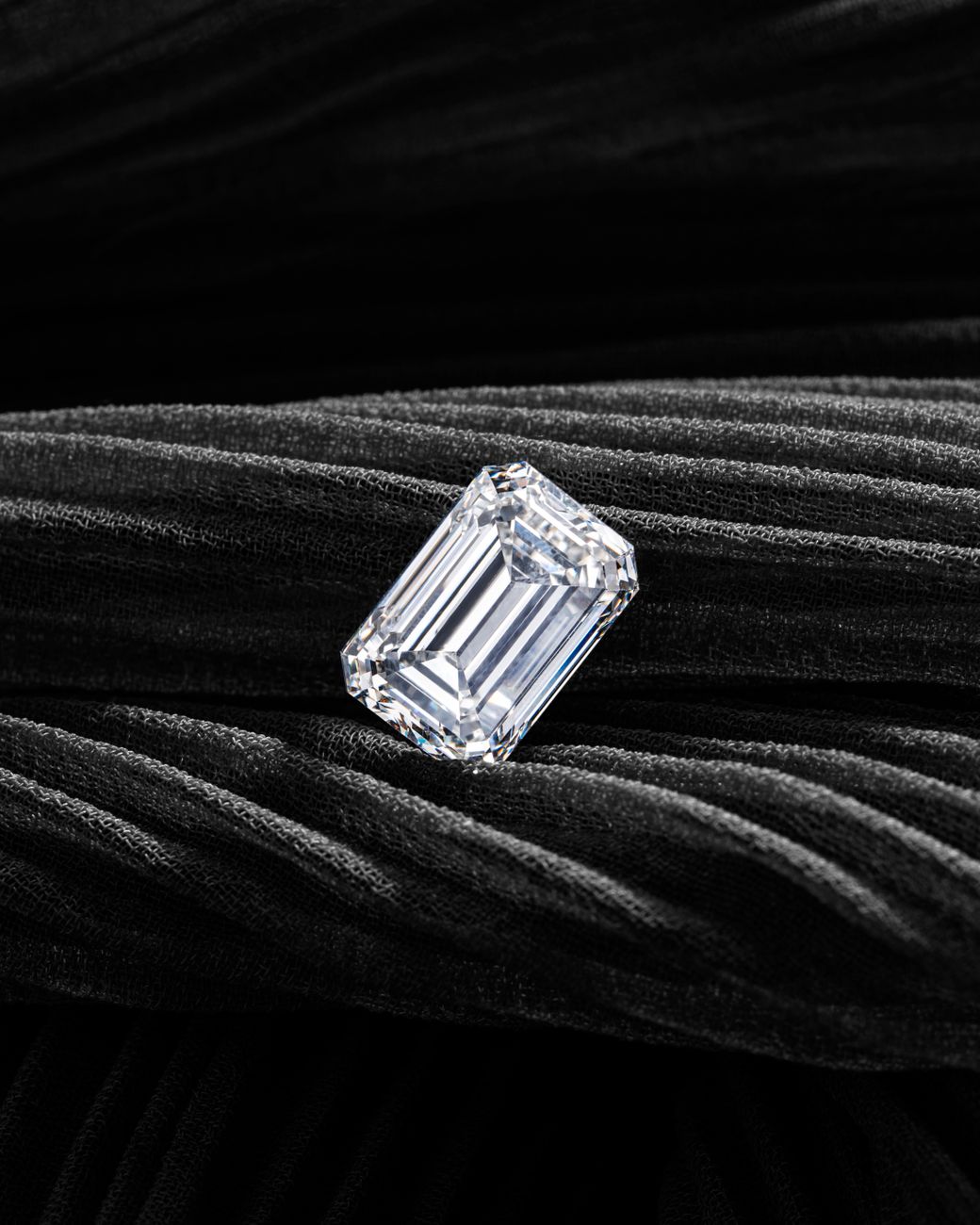
Emerald cuts are step-cut diamonds. Instead of the many small triangular and kite-shaped facets seen in a brilliant cut, emerald cuts use long, rectangular facets arranged in steps. This creates a cleaner, mirror-like effect with broad flashes of light rather than the intense sparkle pattern people often associate with round diamonds.
Because of this facet structure, emerald cuts show the diamond’s body more openly. That means color, clarity, symmetry, and proportions can be easier to notice. It also means cut quality has a big impact on whether the diamond looks graceful and bright or flat and lifeless.
Many buyers are drawn to emerald cuts for their sophisticated look. But that elegance only works when the cut is well executed. A strong emerald cut should look balanced and refined from normal viewing distance, not just under magnification.
Why Emerald Cuts Are More Sensitive to Cut Quality
Emerald cuts do not hide mistakes as easily as some other shapes. If the stone is too deep, too shallow, or unevenly proportioned, those issues may show up as dark zones, a smaller-than-expected face-up size, or a window where you can see through the stone too easily. This can make the diamond appear less lively even if the grading report looks impressive.
On the other hand, a well-cut emerald can look larger than its carat weight suggests because its elongated shape and broad table create a strong visual presence. That is one reason some buyers prefer a slightly smaller emerald cut with excellent proportions over a larger diamond that looks less balanced.
Understanding the Main Cut Factors
When people ask how to evaluate emerald cut diamond cut, they often expect one simple cut grade to do the job. For emerald cuts, the reality is more nuanced. Several factors work together to determine whether the diamond looks attractive in everyday life.
1. Proportions
Proportions describe the diamond’s measurements and relationships between its parts, such as table percentage, depth percentage, length, and width. These numbers influence how the stone handles light and how it appears face-up. A diamond with good proportions usually looks more balanced and appealing, while unusual proportions can cause it to appear too narrow, too deep, or too open.
What buyers actually see: A proportionally balanced emerald cut tends to look bright and elegant, with a pleasing outline and good spread. Poor proportions can make the diamond look smaller, darker, or less lively.
2. Symmetry
Symmetry refers to how accurately the facets, corners, and sides line up with each other. In emerald cuts, symmetry helps create the orderly step pattern that gives the shape its refined appearance. Good symmetry is especially important because the shape is so geometric and structured.
What buyers actually see: Better symmetry usually means cleaner lines, more even light reflection, and a more polished overall look. Poor symmetry can make the diamond appear uneven or visually messy.
3. Polish
Polish describes how smooth and well-finished the facet surfaces are. A well-polished diamond reflects light more cleanly because the facets act more like precise mirrors. This is especially noticeable in emerald cuts, where large facets make surface finish more visible than in many brilliant cuts.
What buyers actually see: Better polish contributes to crisp reflections and a more refined appearance. Surface abrasions or poor polish can slightly soften the diamond’s visual sharpness.
4. Light Performance
Light performance is how well the diamond reflects and returns light to the viewer. In plain English, it is about whether the diamond looks bright, lively, and well-lit from different angles. This matters a great deal for emerald cuts because their beauty depends heavily on contrast and broad reflections.
What buyers actually see: A diamond with strong light performance looks more vibrant and dimensional. A diamond with weak light performance may look glassy, dark, or washed out in some areas.
5. Face-up Shape and Outline
The outline is the overall shape you see when looking down at the diamond. For emerald cuts, many buyers prefer a rectangle with elegant symmetry and a pleasant length-to-width ratio. The outline should look intentional and balanced rather than awkwardly squashed or overly stretched.
What buyers actually see: The right outline can make the diamond look elegant and flattering on the hand. The wrong outline can make the stone feel too boxy or too narrow.
How to Read an Emerald Cut Diamond Report
Most buyers begin with the grading report, but for emerald cuts, the report should be treated as a starting point rather than the final answer. The report tells you important facts, but it does not fully reveal how the diamond will look in motion or under real lighting.
When reviewing an emerald cut diamond report, pay attention to the measurements, table percentage, depth percentage, polish, symmetry, and any notes about clarity characteristics. If the diamond is a lab grown stone, the report may also include information about growth method and trace elements, but those details matter less visually than the cut-related data.
Table Percentage
The table is the large flat top facet on the diamond. Table percentage compares that facet’s width to the diamond’s overall width. In emerald cuts, a very large table can give the diamond a more open look, but if it becomes too large, the stone may lose some brightness and contrast.
What buyers actually see: A table that is too large may make the diamond look flatter or more glass-like. A more balanced table often supports a richer, more dimensional appearance.
Depth Percentage
Depth percentage tells you how deep the diamond is relative to its width. If an emerald cut is too deep, more of the weight is hidden below the surface, which can make the diamond face up smaller. If it is too shallow, it may window or reflect light poorly.
What buyers actually see: Good depth usually supports both attractive spread and decent light return. Poor depth can hurt visual size, brightness, or both.
Length-to-Width Ratio
This ratio describes how elongated the diamond looks. A lower ratio creates a squarer rectangle, while a higher ratio creates a longer, narrower rectangle. There is no single correct answer, because preference is partly personal.
What buyers actually see: Many shoppers find a ratio in the moderate range visually balanced, but the best choice depends on finger shape, ring style, and personal taste. A ratio that seems too short or too long can affect overall elegance.
What Buyers Should Look for Visually
With emerald cuts, the eye is one of the best tools you have. A report can narrow the field, but a good image or video often tells you much more about the actual cut quality. This is especially true when comparing lab grown diamonds, where similar pricing can make subtle visual differences more noticeable in the final choice.
A Bright and Even Face-Up Appearance
The diamond should not have a dull center or large dead patches. Emerald cuts are known for their hall-of-mirrors effect, but they should still show a healthy amount of brightness across the face of the stone. Uneven darkness can be a sign of poor proportions or light leakage.
Clean, Distinct Step Reflections
When you move an emerald cut diamond, the light should shift in clear, deliberate flashes. These reflections should look orderly rather than blurry. That structured flash pattern is one of the shape’s signature features.
Balanced Contrast
Good emerald cuts often show a pleasing mix of light and dark areas. This contrast gives the stone depth and personality. Too much darkness may make the diamond look lifeless, while too much uniform brightness can make it look flat or glassy.
No Obvious Windowing
Windowing happens when you can see through the stone or into the setting too easily because of the way the facets are arranged. Some slight transparency can be normal in step cuts, but obvious windowing is usually a warning sign. It can reduce the diamond’s sense of depth and sparkle.
How Emerald Cut Cut Affects Appearance
Cut has a direct impact on how an emerald cut diamond looks in everyday conditions. Since emerald cuts are not built around intense pinfire sparkle like round brilliants, the differences in light behavior often show up as brightness, crispness, and visual balance rather than sheer sparkle quantity.
Sparkle
Sparkle in an emerald cut is usually broader and more measured. Instead of many tiny bright flashes, you will see wider flashes of light as the diamond moves. A good cut helps those flashes look clean and attractive.
What buyers notice: A well-cut emerald cut looks lively without appearing busy. A poorly cut one may seem muted or static.
Brilliance
Brilliance refers to the white light returned by the diamond. In practical terms, it is the overall brightness you notice when looking at the stone face-up. Good brilliance helps an emerald cut look fresh and lively, even in moderate lighting.
What buyers notice: Better brilliance usually means the diamond looks more open and attractive from a normal viewing distance.
Fire
Fire is the rainbow-colored flashes of light seen when the diamond moves. Emerald cuts generally show less fire than many brilliant cuts because of their facet structure, but they can still display attractive colored flashes under the right lighting.
What buyers notice: Fire is usually a supporting feature in emerald cuts, not the main attraction. Buyers who want dramatic rainbow sparkle often prefer a different shape.
Scintillation
Scintillation describes the pattern of light and dark flashes as the diamond moves. In emerald cuts, scintillation is part of what gives the stone its visual rhythm. The best stones have a pleasing, orderly play of reflections rather than random or muddy changes in brightness.
What buyers notice: Good scintillation creates elegance and depth. Weak scintillation can make the diamond feel flat.
Light Return
Light return is how much light enters the diamond and comes back to your eye. In simple terms, it is one of the main reasons one diamond looks alive while another looks dull. For emerald cuts, light return is especially important because the shape’s wide facets reveal performance differences more openly.
What buyers notice: Strong light return makes the diamond feel brighter and more substantial. Poor light return can make even a high-carat diamond seem underwhelming.
Why Cut Matters So Much in Emerald Cut Diamonds
Many buyers focus on carat, color, and clarity first, but cut is often what determines whether those qualities are actually visible in a pleasing way. In emerald cuts, this matters even more because the shape is less forgiving than some brilliant cuts.
A well-cut emerald cut can make a diamond look elegant, crisp, and expensive in the best sense of the word, meaning visually refined and thoughtfully proportioned. A poorly cut emerald cut may leave a buyer wondering why the diamond looks smaller or less lively than expected, even if the specifications seem strong on paper.
This is one reason experienced jewelers often say cut is the foundation of beauty. If the cut is weak, the diamond cannot fully show off its other qualities. If the cut is strong, even a more modest diamond can look impressive in normal wear.
How to Compare Cut Quality Across Emerald Cuts
Since emerald cuts often do not have the same straightforward cut grading system as round brilliants, comparison usually involves a mix of measurements, images, and observation. The goal is not to memorize ideal ranges. It is to recognize patterns that usually produce better visual results.
| Feature | What It Means | What Buyers Often Notice | Practical Takeaway |
|---|---|---|---|
| Table percentage | Size of the top facet relative to the diamond | Open or flat appearance | A balanced table often helps brightness and structure |
| Depth percentage | How deep the stone is relative to width | Face-up size and light behavior | Too deep can hide weight, too shallow can hurt light return |
| Symmetry | How well the facets align | Crispness and orderliness | Important for the elegant look of emerald cuts |
| Polish | Smoothness of facet surfaces | Clarity of reflections | Better polish supports a sharper, cleaner appearance |
| Light performance | How the diamond returns light | Brightness, contrast, liveliness | One of the most important visual factors |
| Length-to-width ratio | How elongated the outline is | Overall shape preference | Choose based on visual balance and personal taste |
How Emerald Cut Cut Affects Value
Cut quality influences value because it affects what the diamond looks like in real life, not just how it is described on paper. With emerald cuts, a better-looking diamond often commands a higher price because buyers can see the difference more easily than they might with some other shapes.
That said, there are limits. Paying more for a tiny improvement in symmetry or a slightly more desirable ratio may not be worthwhile if the visual difference is minimal. On the other hand, paying more for a diamond with clearly superior light performance can make sense because the improvement is easy to notice every time you wear it.
When Paying More Makes Sense
A premium is more defensible when it results in visibly better brightness, cleaner reflections, and a more balanced outline. If a diamond has noticeably better presence and visual appeal, many buyers feel the extra cost is justified.
This is especially true for engagement rings, where the diamond will be viewed often and under varied lighting. Everyday satisfaction matters more than technical perfection that only shows up in lab conditions.
When Premiums Start to Diminish
Once an emerald cut already looks excellent to the eye, smaller upgrades may become harder to justify. For example, moving from a very good-looking diamond to an even more precisely matched one may not produce a noticeable enough difference for most buyers.
That is why it helps to compare diamonds side by side whenever possible. A charted ideal means less if the actual face-up appearance is weaker than a less expensive alternative.
Practical Buyer Scenarios
Real-world examples often make cut quality easier to understand than theory alone. Emerald cuts are a good case study because their appearance is so dependent on cut behavior.
A Well-Cut 1.5-Carat Diamond Versus a Poorly Cut 2-Carat Diamond
Many first-time buyers assume the larger diamond will automatically look better. With emerald cuts, that is not always true. A 1.5-carat emerald with good proportions and strong light return may appear brighter, cleaner, and more elegant than a 2-carat stone with weak light performance.
The larger diamond may still look bigger in an absolute sense, but if it has poor cut quality, much of that size advantage is visually wasted. Buyers usually notice the better-cut stone first, especially in normal indoor lighting.
Excellent Cut Versus Very Good Cut in Everyday Lighting
In many cases, the difference between excellent and very good is subtle rather than dramatic. If both diamonds are well chosen, they may look similar in bright store lighting or in photos. In softer or uneven lighting, however, the better cut may hold brightness more consistently and look more balanced.
For some buyers, that subtle advantage is worth paying for. For others, it is smarter to save money and focus on the overall appearance rather than chasing a label.
Higher Clarity With Poor Cut Versus Lower Clarity With Excellent Cut
This is a common trade-off. A higher-clarity emerald cut with weak performance may look cleaner under magnification but less appealing to the eye. A lower-clarity diamond with an excellent cut may look more lively and attractive in real-world viewing.
Because emerald cuts have large open facets, clarity does matter. But an eye-clean diamond with better cut often delivers the more satisfying visual result. This is where learning about diamond clarity and diamond cut together becomes especially useful.
What to Look for in Lab Grown Emerald Cut Diamonds
Lab grown diamonds can be an excellent way to access larger sizes or higher color and clarity grades at a lower price than many natural diamonds. But the same cut principles still apply. A lab grown emerald cut still needs good proportions, symmetry, and light performance to look its best.
In fact, some buyers are more likely to prioritize size when shopping for lab grown diamonds because the price advantage can make larger stones seem attainable. That makes cut evaluation even more important. A bigger lab grown emerald cut with poor light performance can be far less satisfying than a smaller, well-proportioned one.
Certification Still Matters
Whether the diamond is natural or lab grown, a reputable grading report helps you compare stones consistently. For emerald cuts, the report is useful, but it should be paired with photos, videos, and if possible, in-person viewing. This gives you a better picture of how the diamond behaves in real light.
Don’t Assume All Lab Grown Diamonds Look the Same
Lab grown does not mean identical in appearance. Two emerald cut lab grown diamonds with similar carat weight can look very different because of cut quality. One may look crisp and elegant, while another appears dull or overly transparent.
That is why cut evaluation remains a major part of buying lab grown diamonds wisely.
Common Mistakes Buyers Make
Emerald cut buyers often make a few predictable mistakes, especially when shopping online. Avoiding these can improve both satisfaction and value.
- Prioritizing carat over cut: A larger emerald cut with poor light return often looks less impressive than a slightly smaller, well-cut one.
- Ignoring visual evidence: Relying only on the report without examining photos or video can lead to disappointment.
- Overlooking windowing: A diamond that appears overly transparent or glassy may not have enough presence.
- Focusing too much on clarity grade: High clarity is helpful, but it does not fix poor proportions or weak brightness.
- Assuming symmetry and polish are minor details: In step cuts, these can noticeably affect the diamond’s overall crispness.
- Choosing an awkward ratio: An overly square or overly long emerald cut may not look as balanced as expected on the hand.
How to Evaluate Emerald Cut Diamond Cut Online
Most buyers shop online at some point, and emerald cuts can be purchased successfully that way if you know what to look for. The key is to combine technical information with visual review.
Ask for Video in Multiple Lighting Conditions
Video helps show how the diamond moves and how the facets reflect light. Try to see the stone under both bright and softer lighting if possible. This is where issues like windowing, darkness, or uneven reflections become easier to spot.
Study the Diamond Face-Up
Some diamonds look good from the side but less appealing from above, which is how they are worn. The face-up view is the most important one for buyers. Pay special attention to brightness across the center and corners.
Compare Similar Stones Side by Side
Comparison is one of the best ways to judge cut. Two stones with the same carat and similar grades can look different enough to influence your decision. Side-by-side review makes it easier to notice which one has better balance, spread, and light return.
Use the Report as a Filter, Not a Decision
The grading report helps eliminate obvious problems, but it cannot tell you everything. Emerald cuts need visual confirmation because the eye can pick up what a report cannot fully capture. Think of the report as the first step, not the final answer.
What Experienced Jewelers Often Notice First
Jewelers and diamond professionals often look for visual harmony before anything else. They notice whether the step facets feel orderly, whether the outline looks intentional, and whether the diamond has a good balance of brightness and contrast.
They also pay attention to how the diamond sits in a setting. A well-cut emerald cut often looks more elegant in a simple setting because the stone itself already has strong visual structure. A weaker cut may need the setting to do more of the aesthetic work, which is not ideal.
Another practical observation is that emerald cuts can be more revealing under office lighting, daylight, and other everyday environments where sparkle is less dramatic than in a jewelry store. That is why cut quality matters not only at first glance but also over time.
Advantages of a Well-Cut Emerald Cut Diamond
When the cut is strong, an emerald cut diamond offers a distinct set of benefits. These are the reasons many buyers become loyal to the shape.
- Elegant, refined appearance
- Broad flashes of light with a clean step-cut look
- Strong visual presence, especially in elongated shapes
- Clear, structured facet pattern that many buyers find timeless
- Good potential for a sophisticated engagement ring style
- Can make thoughtful use of carat weight when proportions are balanced
Limitations and Trade-Offs
Even a very good emerald cut has trade-offs that buyers should understand. Knowing the limitations helps set realistic expectations and prevents disappointment.
- Less sparkle than brilliant cuts in many lighting environments
- More visible clarity characteristics because of open facets
- Greater sensitivity to proportion issues and windowing
- Visual differences can be subtle unless compared carefully
- Not the best choice for buyers who want maximum fire or glittery sparkle
These are not drawbacks for every buyer. They are simply part of the emerald cut identity. For many shoppers, that restrained and sophisticated appearance is exactly the appeal.
Buying Considerations Checklist
If you are evaluating emerald cut diamond cut, use a practical checklist rather than relying on one number or label.
- Does the diamond look bright face-up?
- Are the reflections crisp and orderly?
- Does the stone avoid obvious windowing or dark dead spots?
- Does the outline look balanced and proportional?
- Do polish and symmetry support a clean visual finish?
- Is the diamond pleasing in the lighting conditions where it will be worn?
- Does the cut quality justify the asking price compared with similar stones?
If the answer is yes to most of these questions, you are probably looking at a strong candidate. If the diamond only looks good on paper, keep comparing.
Frequently Asked Questions
Is there a universal cut grade for emerald cut diamonds?
Usually, no. Unlike round brilliant diamonds, emerald cuts often do not have a universal cut grade that fully captures visual performance. That is why buyers need to evaluate proportions, symmetry, polish, and actual appearance more carefully.
What is the most important factor in emerald cut diamond cut?
Light performance is one of the most important factors because it determines how bright and lively the diamond looks. However, it works together with symmetry, polish, and proportions. No single factor tells the full story.
Do emerald cuts sparkle less than round diamonds?
Yes, generally they do. Emerald cuts produce broader flashes of light and a more structured look rather than the intense sparkle of a round brilliant. Many buyers prefer this style because it feels elegant and understated.
How can I tell if an emerald cut has poor light performance?
Look for dark areas that stay visible from most angles, a dull or watery center, or obvious transparency through the stone. If the diamond looks lifeless in multiple lighting conditions, that is a warning sign.
Should I prioritize cut over carat size?
In most cases, yes. A well-cut emerald cut often looks more attractive than a larger diamond with poor proportions. Since cut strongly affects visible beauty, it usually deserves priority over extra carat weight.
Does cut matter as much in lab grown emerald cuts?
Yes. Lab grown diamonds follow the same visual rules as natural diamonds. The growth method changes origin, not the importance of cut quality in how the diamond appears.
Are symmetry and polish very noticeable to buyers?
Often, yes, especially in emerald cuts. Because the shape is so geometric, uneven lines or a less refined finish can show up more easily than in some brilliant cuts. Better symmetry and polish generally support a cleaner, more elegant appearance.
What is the best length-to-width ratio for an emerald cut?
There is no single best ratio. Some buyers prefer a more square look, while others like a longer rectangle. The best ratio is the one that looks balanced to you and works well with the ring design.
Conclusion
Learning how to evaluate emerald cut diamond cut is really about learning how to judge visual performance in a shape that values elegance over intense sparkle. The most important things to look for are brightness, clean step reflections, balanced proportions, good symmetry, and a face-up appearance that feels refined rather than flat or windowed.
For buyers, the key takeaway is simple. Do not rely on carat weight alone, and do not assume a grading report tells the full story. Compare emerald cuts by how they actually look, especially under normal viewing conditions. When cut quality is strong, an emerald cut diamond can appear graceful, polished, and visually substantial in a way that stands out for the right reasons.
If you are shopping now, the most practical next step is to compare several emerald cuts side by side, using both the report and real images or videos. That approach gives you the best chance of choosing a diamond that looks as good in daily wear as it does on paper.