Diamond cut is one of the most important quality factors to understand before buying a diamond, yet it is also one of the easiest to misunderstand. Many shoppers assume cut means the shape of a diamond, such as round or oval, but in diamond grading, cut refers to how well a stone’s facets are arranged and finished to interact with light.
That difference matters because cut has a direct effect on sparkle, brightness, fire, and overall beauty. A diamond with excellent cut can look more lively and attractive than a larger diamond with weak proportions or poor light return. This is especially important for lab grown diamonds, where buyers often focus on getting the best visual performance for their budget.
If you are trying to answer What Is Diamond Cut, the short version is this: cut describes how well a diamond is shaped, proportioned, polished, and aligned to reflect light. It is not about the outline of the stone alone. It is about how the diamond looks when light moves through it in real life.
For buyers, cut is often the quality factor that most affects everyday appearance. Color and clarity matter too, but cut is the feature most likely to determine whether a diamond looks bright, sparkly, and crisp, or dull and less lively. That is why cut deserves close attention when comparing diamond quality, especially for engagement rings and other pieces meant to be seen often.
Quick Answer: What Is Diamond Cut?
Diamond cut is the quality of a diamond’s faceting, proportions, symmetry, and polish. In simple terms, it describes how well the diamond has been shaped to handle light.
A well-cut diamond returns more light to the viewer, which makes it appear brighter and more sparkling. A poorly cut diamond may leak light, look dark in places, or fail to show the lively sparkle most buyers expect.
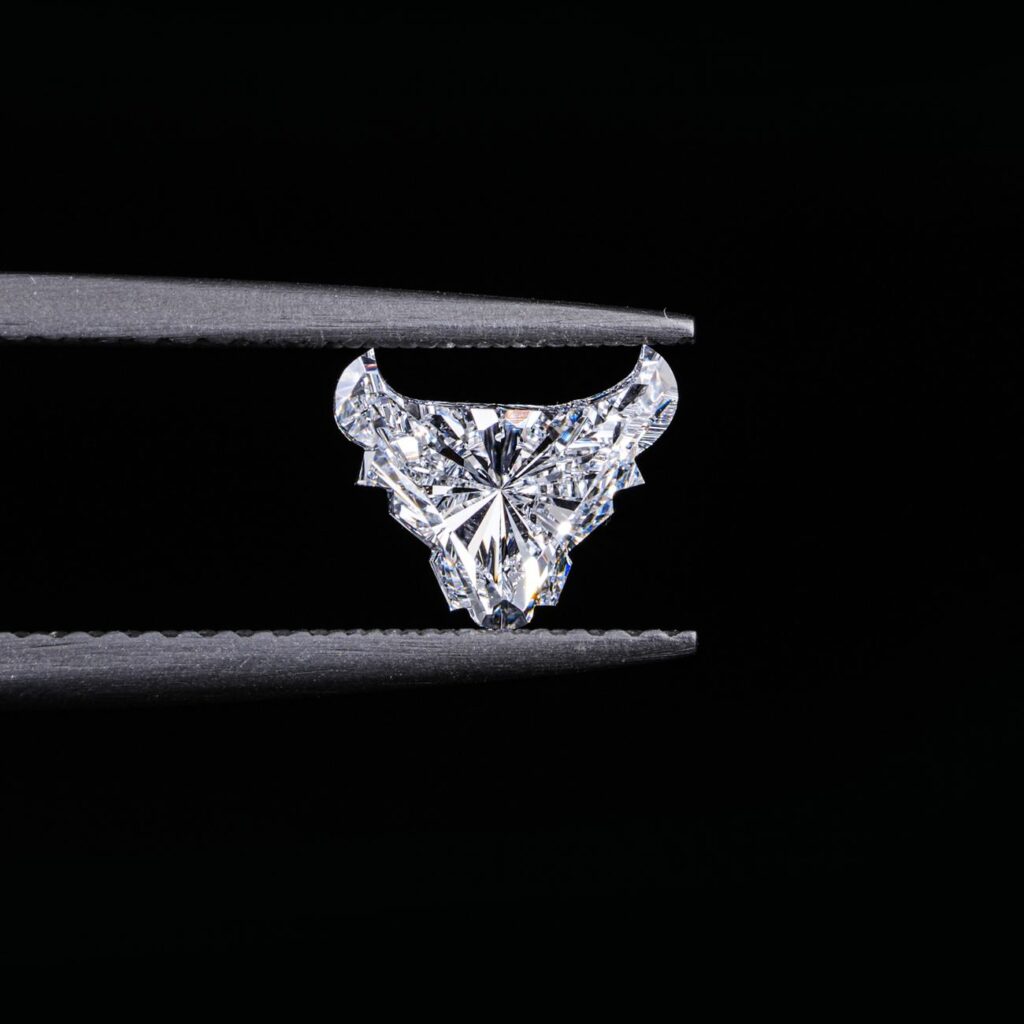
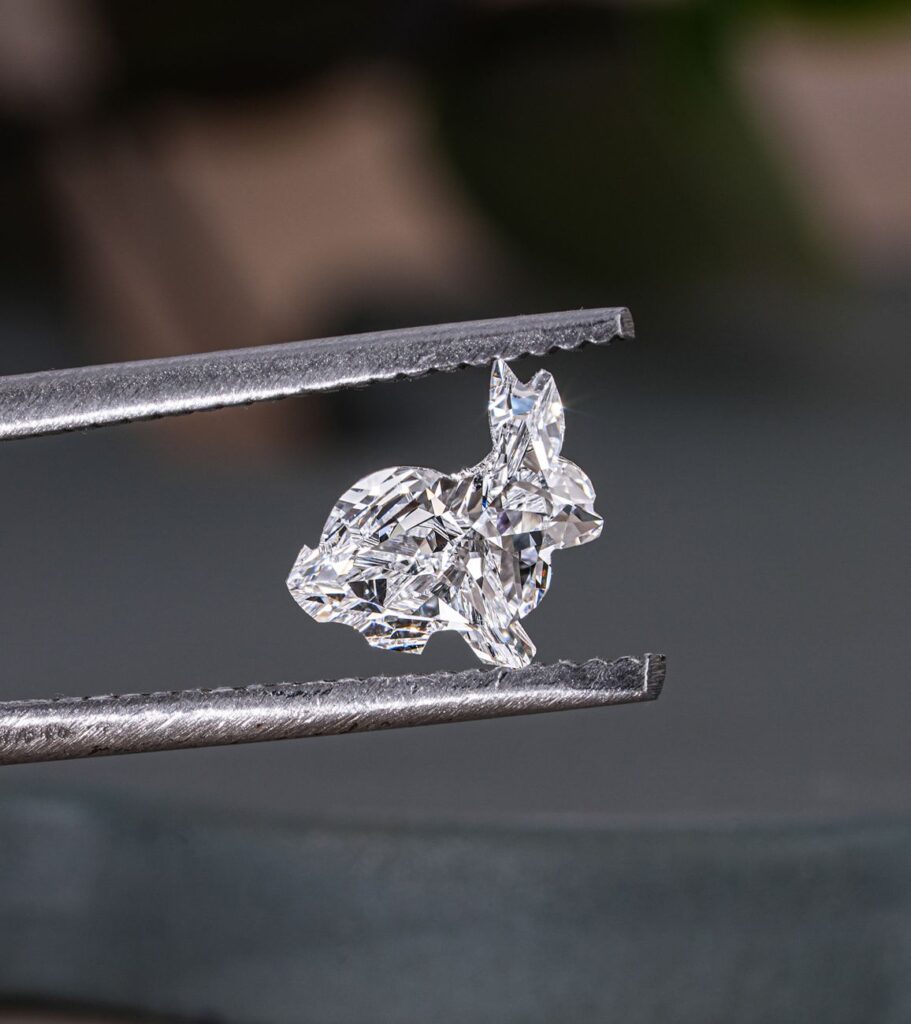
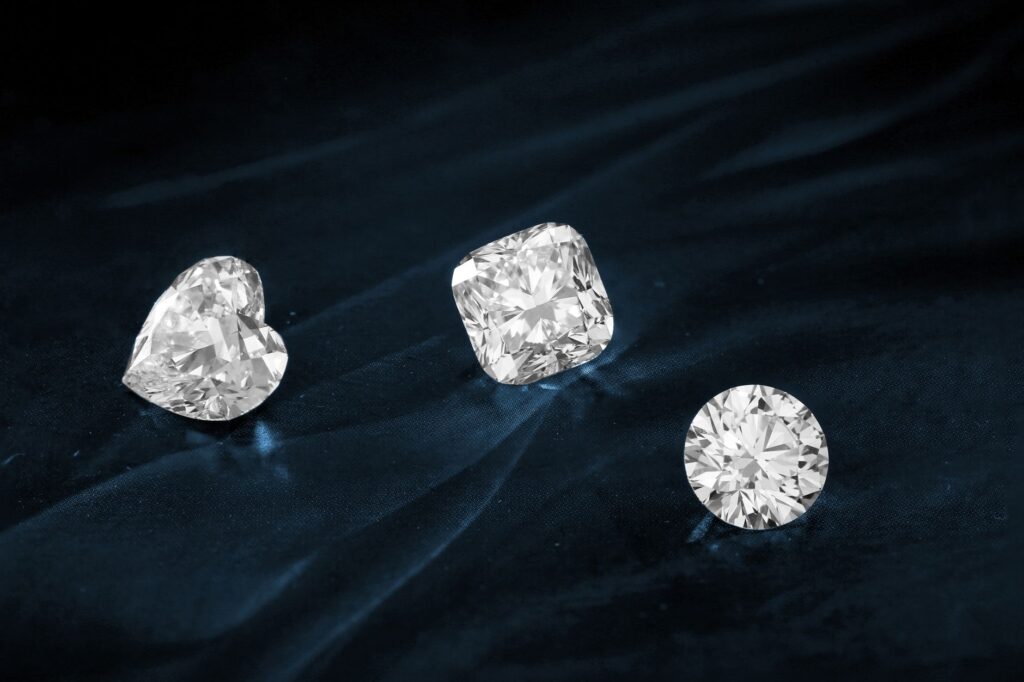
Cut is different from shape. Shape is the outline, such as round, princess, cushion, oval, or emerald. Cut is how well that shape is executed. For example, two round diamonds can have very different cut quality and therefore look quite different in real life.
What Diamond Cut Really Means
Cut is about light, not just appearance on paper
When people ask what is diamond cut, they often expect a simple answer about the diamond’s shape. In reality, cut is a performance factor. It measures how a diamond’s angles, facet arrangement, and finishing affect the way light behaves inside the stone.
Light enters a diamond, reflects internally, and exits back to your eye. When that process works well, the diamond looks bright, colorful, and lively. When it does not, the stone may appear flat, washed out, or dark in the center.
Cut includes several parts
Diamond cut quality is usually discussed in terms of a few related features:
- Proportions, meaning the relationship between the diamond’s table, depth, crown, pavilion, and other measurements.
- Symmetry, meaning how precisely the facets line up with each other.
- Polish, meaning how smooth and clean the facet surfaces are after finishing.
- Light performance, meaning how effectively the diamond returns light to the eye.
These elements work together. A diamond can have attractive color and clarity but still look underwhelming if the cut is weak. On the other hand, a well-cut diamond can make modest color or clarity grades look more impressive in everyday viewing.
Cut is not the same as shape
This is one of the most common points of confusion for first-time buyers. A pear-shaped diamond, for instance, is a shape. Its cut quality describes whether that pear shape has good proportions, balance, and light return.
The same is true for all diamond shapes, including round, oval, cushion, radiant, princess, emerald, and marquise. Each shape has its own cut considerations. Some, like round brilliant diamonds, have formal cut grading systems. Others, like ovals and cushions, rely more on a careful visual assessment of proportions and light performance.
Why Diamond Cut Matters
It has the biggest visible impact on sparkle
Among the 4Cs, cut often has the strongest effect on what buyers actually notice with the naked eye. A diamond with excellent cut can appear brighter and more eye-catching even if it is not the largest stone in the room.
That is because sparkle is not caused by size alone. It depends heavily on how efficiently the diamond handles light. If the cut is poor, some of the stone’s potential beauty is lost.
It influences value more than many shoppers realize
Buyers sometimes spend extra money on carat weight, color, or clarity while overlooking cut. This can lead to disappointment because a larger diamond with poor cut may look less attractive than a smaller diamond with excellent cut.
For many shoppers, especially those buying an engagement ring, cut is the quality factor most worth protecting. It usually offers the best visual return on investment.
It affects how a diamond performs in real life
Diamonds are worn in different lighting conditions, not only under jewelry store spotlights. A stone that looks good under intense lighting may still appear lifeless in office light, at home, or outdoors if its cut is weak.
That is why buyers should think beyond laboratory grades and ask how the diamond actually looks in normal conditions. Good cut quality helps a diamond stay attractive across a wider range of lighting environments.
How Diamond Cut Affects Appearance
Sparkle
Sparkle is the overall sense of liveliness when a diamond catches and returns light. It is the first thing many people notice. In a well-cut diamond, sparkle is crisp, bright, and balanced.
In a poorly cut diamond, sparkle can look uneven or muted. Some areas may flash while others seem dark or sleepy. This does not always mean the diamond is unattractive, but it usually means less visual impact for the money.
Brilliance
Brilliance refers to the white light a diamond reflects back to the eye. A diamond with strong brilliance can look bright even from a distance or in softer lighting.
Cut quality plays a major role here. If the proportions are off, light may escape through the bottom or sides instead of returning upward. That leakage reduces brightness.
Fire
Fire is the colored flashes of light, usually seen as rainbow-like bursts when the diamond moves. Many buyers love fire because it adds personality and visual interest.
Cut helps control how much fire a diamond shows. The balance between brightness and fire depends on the stone’s proportions and facet arrangement. Too much emphasis on one can reduce the other, which is why balanced cut quality matters.
Scintillation
Scintillation is the pattern of sparkle and contrast you see when the diamond moves, or when the light source changes. It is what makes a diamond seem lively rather than static.
Good cut creates pleasing contrast, with bright areas alternating against darker areas in a way that looks crisp and intentional. Poor cut can produce irregular contrast, large dark zones, or a flat look that feels less dynamic.
Brightness and light return
Light return means how much light enters the diamond and comes back to the eye. This is one of the most practical ways to think about cut. A diamond with good light return often appears more brilliant and can even look slightly larger because it has more visual presence.
Low light return is one reason some diamonds look smaller or less attractive than their actual carat weight suggests. This is especially noticeable when comparing stones side by side.
Face-up appearance
Face-up appearance means how the diamond looks from the top, as it would in a ring or pendant. This is the view most buyers care about, and it is where cut quality becomes most obvious.
A diamond with strong cut may have a lively, even face-up pattern. A diamond with weak cut may show a dark center, a dull outer edge, or a “window” effect where you can see through the stone too easily in some shapes like ovals and cushions.
What Buyers Actually See in Everyday Lighting
Many diamond grading conversations sound technical, but the real question is simple: what will the buyer notice in normal life?
In everyday indoor lighting, a well-cut diamond usually looks brighter and more consistent from different angles. In natural daylight, it may show stronger sparkle and more balanced contrast. Under store lighting, it often looks especially lively, which is why the stone should also be viewed in less dramatic conditions.
Here is what most buyers commonly notice when cut quality changes:
- More or less brightness in the center of the diamond
- Sharper or softer sparkle as the stone moves
- Visible dark areas, sometimes called extinction, in poorly cut stones
- Better or worse contrast between light and dark facets
- Greater or lesser “life” in the diamond across different lighting conditions
Most people do not analyze proportions with a ruler. They respond to how the diamond looks. That is why cut is so important. It translates technical measurements into visible beauty.
Cut Grades Explained
The most common grade system for round diamonds
For round brilliant diamonds, grading labs such as the GIA assign cut grades like Excellent, Very Good, Good, Fair, and Poor. These grades are based on a combination of proportions, symmetry, polish, and observed light performance.
This grading system is helpful because it gives shoppers a shorthand for quality. Still, it is not the whole story. Two diamonds with the same grade can look a little different, and different grading labs may use different systems or standards.
What Excellent Cut usually means
An Excellent cut round diamond is generally designed to produce strong light return, balanced brightness, and attractive sparkle. For many buyers, this is the safest choice if the goal is maximum visual performance.
That said, an Excellent grade does not guarantee that every stone will look identical. Small proportion differences can still affect how the diamond appears. It is wise to review actual images, videos, or performance data when available.
Very Good Cut versus Excellent Cut
Many shoppers wonder whether a Very Good cut diamond is a smart value choice. In some cases, yes. A Very Good cut stone may look nearly as attractive as an Excellent cut diamond, especially to an untrained eye in everyday lighting.
The difference is often subtle rather than dramatic. However, Excellent cut stones tend to offer more consistent performance and better odds of strong sparkle. If the budget allows, that premium can be worthwhile. If not, a carefully selected Very Good cut diamond can still be a strong option.
Good and lower cut grades
Good, Fair, and Poor cut grades are more likely to show noticeable compromises in brightness or light return. That does not mean they are unusable, but buyers should expect less visual performance.
For a piece where beauty matters most, such as an engagement ring, many consumers prefer to avoid lower cut grades unless there is a specific reason, such as price constraints or a desire for a particular antique style.
Table: How Cut Grades Usually Compare
| Cut Grade | Typical Visual Impact | What Buyers Often Notice | General Buyer Consideration |
|---|---|---|---|
| Excellent | Strong brightness and sparkle | Bright center, lively movement, good balance | Often the best choice for visible beauty |
| Very Good | High performance with possible minor trade-offs | May look very close to Excellent in casual viewing | Can be a strong value if the stone looks good in person |
| Good | Acceptable but less refined performance | Reduced sparkle or brightness in some lighting | Worth careful inspection before buying |
| Fair | Noticeable loss of light performance | Duller appearance, possible dark areas | Usually less desirable for buyers focused on beauty |
| Poor | Weak performance | Flat, dark, or lifeless appearance | Typically avoided unless there is a specific reason |
Symmetry and Polish: Why Finishing Details Matter
What symmetry means
Symmetry refers to how accurately the facets are aligned and matched. Good symmetry helps the diamond’s facet pattern look clean and organized. In a round brilliant, symmetry contributes to the overall balance of the stone.
When symmetry is weak, the diamond may not reflect light as evenly. In some cases, this can affect both appearance and optical performance. In others, the issue may be minor and hard to notice without magnification.
What polish means
Polish describes the smoothness of the facet surfaces. Good polish allows light to move across the diamond more cleanly. Poor polish may leave tiny marks or surface issues that interfere slightly with how the stone handles light.
To most buyers, polish is less noticeable than major cut proportions, but it still matters. In a well-made diamond, symmetry and polish support the overall impression of quality.
How visible are these differences?
For most consumers, slight differences in symmetry or polish are not obvious without magnification. The visual impact is usually more subtle than the impact of broad cut quality or poor proportions.
Still, these details matter because they can indicate the level of craftsmanship behind the stone. They also help explain why two diamonds with similar carat weight and color can feel different in person.
What Is Light Performance?
Light performance is the way a diamond interacts with light, including brightness, contrast, fire, and scintillation. It is one of the best practical ways to think about diamond cut because it focuses on what the eye can actually see.
Some shoppers choose to study light performance images, such as ASET or Ideal-Scope images, when available. These tools can help reveal where a diamond returns light well and where it may leak light. They are especially useful for more advanced buyers or for shoppers comparing diamonds online.
Why light leakage matters
Light leakage happens when light enters a diamond but escapes through the bottom or sides instead of returning to the eye. This can create dull areas, reduce brightness, and make the diamond appear less lively.
Not all light leakage is catastrophic, and some shapes are more prone to it than others. But in general, less leakage means better visual performance. Buyers often notice the effect as a diamond that simply looks more “alive.”
Why some diamonds look brighter than others
Two diamonds with similar carat weight can look very different because one may return light efficiently while the other does not. This is why cut often matters more than the size difference alone.
In practical terms, a well-cut diamond can sometimes appear more impressive than a larger one with weak light performance. That is one of the key ideas buyers should understand when evaluating diamond cut.
Hearts and Arrows and Optical Symmetry
What Hearts and Arrows means
Hearts and Arrows is a pattern seen in some finely cut round brilliant diamonds when viewed under special conditions. It is often associated with precise optical symmetry.
The “hearts” and “arrows” pattern itself is not the same thing as an official cut grade, but it can be a useful sign of careful craftsmanship. Not every diamond with excellent performance shows a perfect pattern, and not every diamond that shows a pattern is automatically top-performing.
Why it matters to buyers
For buyers, Hearts and Arrows can suggest that the diamond was cut with a high level of precision. That precision may help support consistent sparkle and balanced light return.
However, it is still important to evaluate the diamond as a whole. Pattern beauty alone does not replace a proper assessment of proportions, brightness, and real-world appearance.
Is it easy to notice?
Most buyers will not naturally see Hearts and Arrows patterns with the naked eye in normal wear. It is more of a specialty observation than an everyday visual feature.
The practical value is indirect. It can be a sign that the diamond was crafted carefully, but the visible payoff is mainly in the stone’s overall optical behavior.
How Cut Affects Value
When paying more for cut makes sense
Paying more for better cut quality usually makes sense when visual beauty is a top priority. This is especially true for engagement rings, where the diamond is worn frequently and viewed often.
Better cut can also make the rest of the diamond’s qualities more effective. A well-cut stone may allow you to be slightly more flexible with color or clarity because the diamond’s overall presence is stronger.
When the premium may have diminishing returns
There is a point where paying more for a tiny cut improvement may not produce a noticeable difference to most buyers. This is where personal priorities matter.
For example, moving from a very strong cut to an extremely precise specialty cut may produce a difference that is more measurable than obvious in daily life. Some buyers will appreciate that nuance, while others may prefer to direct the budget toward size or setting design.
What factors most affect visual value
From a practical buyer perspective, cut is one of the best places to spend money because it influences the diamond’s appearance every time it is worn. Carat weight can increase presence, but without strong cut, the diamond may not look as beautiful as it could.
That is why many experienced jewelers encourage shoppers to think in terms of appearance per dollar, not just the numbers on a grading report.
Practical Examples Buyers Can Relate To
A well-cut 1.5-carat diamond versus a poorly cut 2-carat diamond
This is a classic comparison. A 2-carat diamond may sound more impressive on paper, but if the cut is poor, it can lose brightness and look less attractive than the smaller stone.
The well-cut 1.5-carat diamond may appear brighter, livelier, and even more elegant because it returns light properly. In real-world viewing, many buyers would prefer the smaller but better-cut stone once they see them side by side.
Excellent Cut versus Very Good Cut in everyday lighting
In everyday use, the difference between Excellent and Very Good is often modest. Some Very Good cut diamonds can look nearly identical to Excellent stones to casual observers.
Still, Excellent cut usually gives a better chance of top-tier performance across changing lighting conditions. For buyers who want the safest visual choice, Excellent is usually easier to justify. For those balancing budget carefully, a Very Good stone with strong overall appearance can be a reasonable compromise.
Higher clarity with poor cut versus lower clarity with excellent cut
This comparison highlights an important truth: a diamond with very high clarity but weak cut may still look less beautiful than a lower-clarity stone with excellent cut. Most inclusions are hard to see without magnification, while cut quality affects the whole face-up appearance.
If the lower-clarity stone is eye-clean, the better cut can often produce a more pleasing everyday look. This is one reason experienced buyers often prioritize cut before chasing very high clarity grades.
Lab grown diamond example
With lab grown diamonds, cut still matters just as much as it does with natural diamonds. The fact that the diamond was grown in a controlled environment does not change how light behaves once the stone is cut and polished.
Some shoppers assume lab grown diamonds are automatically a better value in every category. While they often offer lower prices for a given size and quality, cut quality still determines how well that value shows up visually.
Cut in Lab Grown Diamonds
Why cut is especially important for lab grown diamonds
Lab grown diamonds are often chosen by buyers who want a larger or higher-quality-looking stone within a more moderate budget. That makes cut especially important because a strong cut helps the diamond deliver the best possible visual impact for the money.
If you are comparing lab grown options, strong cut can make the difference between a stone that simply has size and a stone that truly looks impressive in person. This is why many buyers reviewing lab grown diamonds also pay attention to cut grade, proportions, and light performance.
Can lab grown diamonds be cut just as well as natural diamonds?
Yes. Once the rough diamond has been produced, whether by natural formation or laboratory growth, it still needs to be cut by a human craftsman or automated system. The quality of the finished diamond depends on the cutting process, not the origin alone.
That said, not all lab grown diamonds are cut to the same standard. As with natural diamonds, shoppers should not assume every stone is equally well made.
What to look for when buying lab grown diamonds
If you are researching lab grown diamonds, it is worth paying attention to more than size and price. Look at the cut grade where available, and review measurements or performance images when possible.
A well-cut lab grown diamond can offer excellent value because you may get a visually strong stone at a lower price than a comparable natural diamond. But the value only becomes meaningful if the cut supports the diamond’s appearance.
How Cut Interacts With Color, Clarity, and Carat
Cut versus color
Color refers to how colorless or tinted a diamond appears. Cut can affect how visible color seems because a bright, well-cut diamond often draws the eye to sparkle and brilliance instead of tint.
In some cases, a strong cut helps a diamond appear more lively and visually appealing even if its color grade is not the highest. This does not mean color is unimportant, but it shows how cut can shape overall impression.
Cut versus clarity
Clarity measures internal inclusions and surface blemishes. A well-cut diamond may sometimes make small inclusions less noticeable because the stone has stronger brilliance and movement.
However, cut does not erase major clarity issues. It simply changes how visible they are and how much attention the diamond draws overall.
Cut versus carat
Carat is weight, not size alone, and not beauty by itself. Two diamonds with the same carat weight can face up differently depending on how well they are cut.
This is why buyers should be careful not to chase carat at the expense of cut. A diamond that is slightly smaller but significantly better cut can often look more attractive and satisfying to wear.
Common Buyer Mistakes
Prioritizing carat over cut
One of the biggest mistakes is choosing the biggest diamond within budget without checking whether the cut is strong. This often leads to a stone that sounds impressive but does not look as good in person.
Since cut affects sparkle and brightness so strongly, it should usually be one of the first quality factors considered.
Overpaying for clarity that is hard to see
Buyers sometimes pay for higher clarity grades when the difference is not visible without magnification. That money may be better spent on stronger cut quality or a better setting.
In many cases, an eye-clean diamond with excellent cut is a more satisfying purchase than a technically cleaner diamond with weaker optical performance.
Ignoring light performance images or videos
When buying online, relying only on a grading report can be risky. Reports are valuable, but they do not fully show how a diamond looks in motion or under different lighting.
Video, ASET images, Ideal-Scope images, or high-quality in-person viewing can reveal whether the diamond is lively or compromised by light leakage.
Assuming all diamonds of the same grade look identical
Cut grades are useful, but they are still broad categories. Two diamonds with the same grade may not perform exactly the same way.
Experienced shoppers often compare stones visually rather than assuming the grade alone tells the whole story.
Not considering the shape
Different shapes show cut-related issues in different ways. Round brilliants have the most standardized cut grading, while fancy shapes such as oval or emerald require more visual judgment.
Buying a shape without understanding its cut characteristics can lead to disappointment, especially if the diamond has windowing, bow-tie effects, or uneven brightness.
How to Evaluate Diamond Cut as a Buyer
Start with the grading report, but do not stop there
The grading report provides a useful baseline. For round diamonds, it can tell you if the stone is Excellent, Very Good, Good, or lower. For lab grown diamonds, reports may also include measurements and inclusion details that help with comparison.
Still, grading alone does not replace visual inspection. If possible, compare actual images or videos to see how the stone performs.
Look for brightness, balance, and life
When viewing a diamond, ask simple questions: Does it look bright across the face? Does it sparkle evenly when moved? Does it have dark areas that seem distracting?
These are practical signs of cut quality that ordinary buyers can recognize without gemological training.
Pay attention to the shape’s known issues
Some shapes are more prone to specific cut-related effects. Ovals may show a bow-tie effect, emerald cuts emphasize clarity and step-cut appearance, and cushions can vary widely in brilliance and pattern.
Understanding these shape-specific traits can help you judge whether the diamond’s appearance is a cut feature or simply part of the shape’s natural character.
Consider the setting too
The ring setting can influence how much of the diamond is visible and how the stone is perceived. A setting that lifts the diamond higher may allow more light to enter from the sides, while a bezel setting can create a different look and feel.
The setting does not change the diamond’s cut, but it can affect how the cut appears in daily wear.
Advantages of Prioritizing Good Cut
- Improves sparkle and brightness in everyday lighting
- Can make a diamond look more beautiful without increasing carat weight
- Often provides the best visual return for the budget
- Can help a diamond look more impressive even if color or clarity are modest
- Usually leads to better long-term satisfaction for engagement ring buyers
Limitations and Trade-Offs
- Top cut grades may cost more, especially in highly sought-after shapes
- Some visual differences are subtle and may not be obvious to every buyer
- Cut grading can vary by lab, especially for fancy shapes
- Perfect cut does not eliminate the importance of color, clarity, or shape preference
- Online shoppers may need tools like videos or light-performance images to judge quality accurately
Common Questions About Diamond Cut
Is diamond cut more important than clarity?
For many buyers, yes. Cut usually has a more immediate effect on what the diamond looks like in normal viewing conditions. Clarity matters, but many inclusions are not visible without magnification.
Is diamond cut more important than carat?
Often, yes, from a visual standpoint. Carat affects size, but cut affects how well the diamond displays that size. A well-cut smaller diamond may look more attractive than a larger poorly cut one.
Do lab grown diamonds need the same cut standards as natural diamonds?
Yes. Light behavior does not change based on origin. A lab grown diamond still needs strong cut quality to look bright and lively.
Can two diamonds with the same cut grade look different?
Yes. Cut grades are broad categories, and subtle proportion differences can affect appearance. That is why actual images or videos are valuable when comparing diamonds.
Does a higher cut grade always mean a better diamond?
Not always in every context, but it usually improves the odds of strong beauty. The best diamond for a buyer depends on budget, shape, personal taste, and how the stone actually looks.
What does poor cut look like?
Poor cut often looks like dullness, darkness, uneven sparkle, or areas that seem to leak light. The stone may still be fine structurally, but it generally lacks the lively appearance most buyers want.
Should I buy the highest cut grade I can afford?
That is often a sensible strategy, especially for round diamonds. But if moving to the absolute highest grade forces major compromises in size, color, or budget comfort, a slightly lower grade that still looks excellent may be the better overall decision.
How do I know if a diamond is well cut when shopping online?
Look for a grading report, actual photos or videos, and if possible, light-performance images. Compare the diamond’s brightness, symmetry of sparkle, and any signs of light leakage. Online buying can work well when you have enough visual information.
Conclusion
Diamond cut is the quality factor that most directly affects how a diamond looks in real life. It is about more than shape. It is the way the diamond is proportioned, polished, and aligned so that it can reflect light beautifully.
For most buyers, especially those researching engagement rings or lab grown diamonds, cut should be treated as a top priority. A well-cut diamond often looks brighter, sparkles more attractively, and delivers better overall value than a larger or higher-clarity diamond with weaker performance.
When comparing diamonds, focus on what you can actually see. Ask whether the stone is bright, lively, balanced, and pleasing from different angles. That practical approach will help you choose a diamond that looks good not just on paper, but every time you wear it.