A diamond can look noticeably larger or smaller than its carat weight suggests. A well-cut 1.00 carat diamond in a smart setting may appear more impressive than a heavier stone with poor proportions, a thick metal border, or a shape that hides weight in depth instead of showing it across the top.
That is why learning how to make a diamond look bigger is not just about chasing a larger carat number. It is about understanding visible size, finger coverage, shape, cut quality, and setting design so you can get the most visual impact from your budget without sacrificing beauty or durability.
Quick Answer
The best ways to make a diamond look bigger are to prioritize face-up size, choose a shape that looks larger for its weight, select excellent cut proportions, use a setting that exposes more of the diamond, keep the stone clean, and consider slightly lower carat “sweet spots” like 0.90 instead of 1.00 carat if the measurements are strong.
In practical terms, the most effective strategies are usually:
- Choose an elongated shape such as oval, pear, marquise, or emerald if you want more finger coverage.
- Focus on millimeter measurements, not carat weight alone.
- Select a diamond with strong cut quality so light return and spread look balanced.
- Use settings like solitaire, thin bands, halos, or hidden halos that visually expand the center stone.
- Avoid overly deep diamonds that carry weight where you cannot see it.
- Consider lab grown diamonds if your main goal is a larger visible size within a fixed budget.
None of these tricks changes the actual weight of the diamond. What they do change is how large the diamond appears when viewed face-up on the hand.
Understanding the Carat Concept
Carat measures weight, not visible size
Carat is a unit of weight. One carat equals 0.2 grams. That number tells you how much the diamond weighs, but it does not tell you exactly how large it will look from the top.
This is one of the most common causes of disappointment in diamond buying. Two diamonds can both weigh 1.00 carat, but one can look slightly larger because more of its weight is spread across the top surface.
What face-up size means
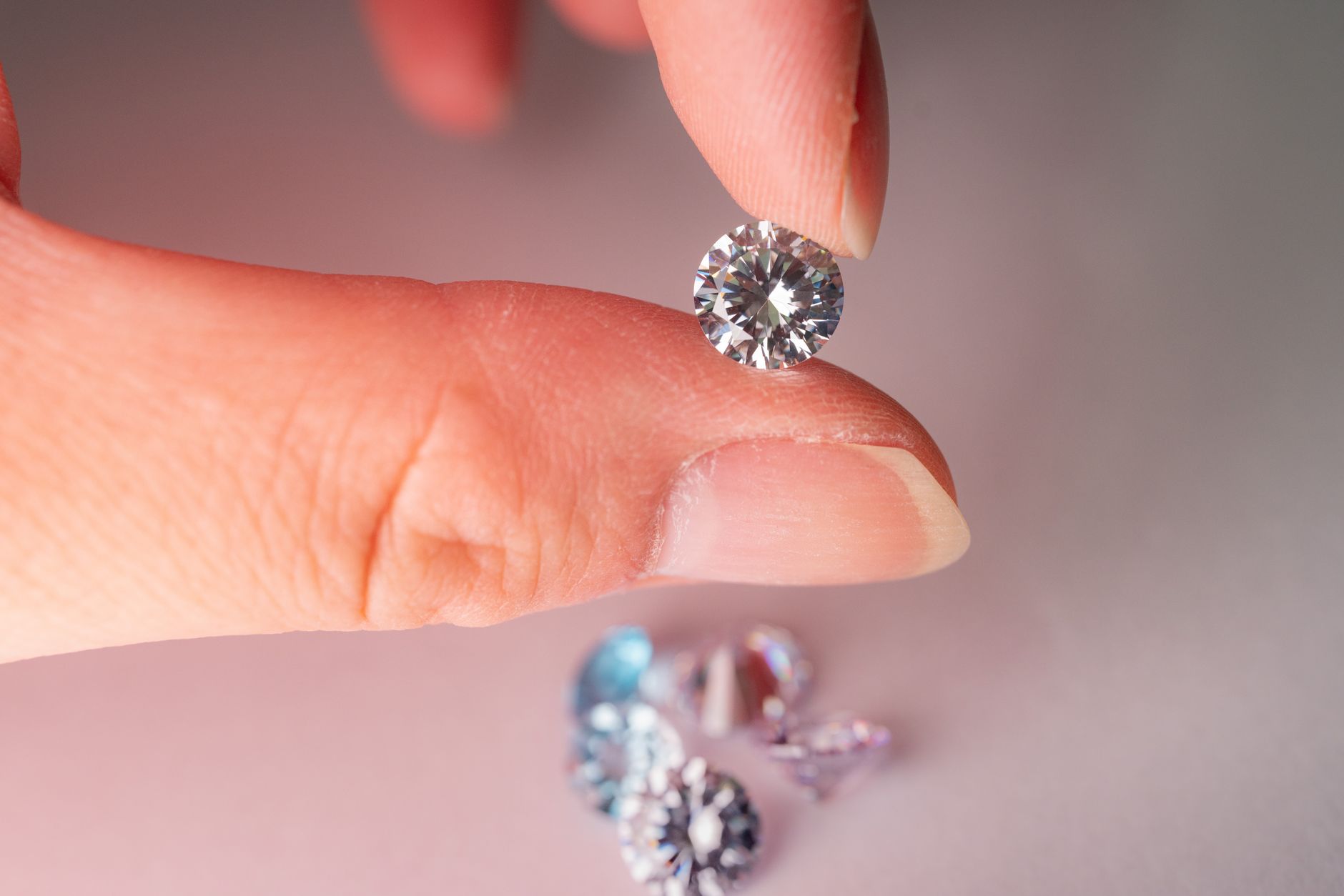
Face-up size refers to the visible dimensions of the diamond when you look down at it. For a round diamond, this is usually described by its diameter in millimeters. For fancy shapes such as oval or cushion, it is typically the length and width.
Face-up size matters because it is what the eye sees first. Buyers do not experience a diamond as a weight measurement. They experience it as visual size, sparkle, and finger coverage.
Why millimeter measurements matter so much
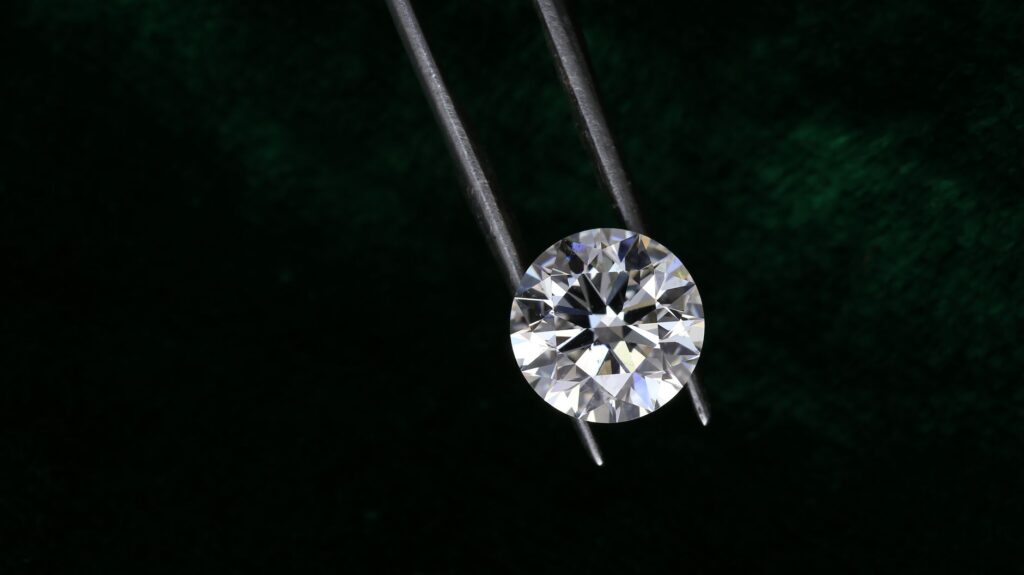
A diamond listing might say 1.00 carat, but the measurements might reveal whether it faces up generously or not. For example, a well-cut round 1.00 carat diamond often measures roughly around 6.4 to 6.5 mm in diameter. If a 1.00 carat round measures meaningfully smaller than expected, more weight may be hidden in depth.
This does not automatically make the diamond bad. Some proportion variations can improve other qualities. But if your main goal is visible size, measurements are essential.
What “spread” means in diamond buying
Spread is an informal term used to describe how large a diamond looks for its weight. A diamond with good spread has a relatively generous face-up size. A diamond with poor spread looks smaller than expected because too much weight is concentrated below the surface.
Good spread can help a diamond look bigger. Poor spread can make a diamond look compact or heavy without delivering the visual size buyers expect.
What Buyers Usually Expect
Assuming carat numbers translate directly to visible size
It is natural to think a 1.00 carat diamond will always look larger than a 0.90 carat diamond. In reality, the visual difference can be very small, especially once the diamonds are set. The price difference, however, can be much larger.
This is especially true near “magic sizes” such as 0.50, 1.00, 1.50, and 2.00 carats. These benchmark numbers often command pricing premiums because buyers search for them specifically.
Expecting all shapes to look the same at the same weight
A 2.00 carat round, oval, and cushion do not usually look identical in size. Some shapes carry weight differently. Elongated shapes often cover more finger length, which can make them appear larger. Rounded or deeper shapes may appear more compact.
This does not mean one shape is objectively better. It means the visible result changes with shape.
Overlooking the effect of finger size
A diamond does not float in isolation. It is viewed on a hand. A 1.00 carat diamond on a size 4 finger usually looks more substantial than the same diamond on a size 8 finger because it covers a larger proportion of the finger width.
Finger size does not change the diamond itself, but it absolutely changes the visual impression.
Believing a larger setting always helps
Some settings make a diamond look bigger. Others do the opposite. Heavy metal, thick prongs, thick bezels, and wide bands can visually reduce the center stone. By contrast, a delicate band or well-designed halo can enhance apparent size.
What It Actually Looks Like
Visible size is about top-down impression
When someone notices a ring, they usually see the outline, light return, and how much of the finger the stone covers. They do not estimate carat weight with precision. They notice whether the center stone looks balanced, lively, and appropriately sized for the hand.
That means a diamond can “read larger” if it has bright sparkle, a clean outline, and a setting that gives it visual presence.
Finger coverage matters more than many buyers realize
Finger coverage describes how much horizontal or lengthwise space the diamond occupies when worn. Shapes that extend across the finger, such as oval, marquise, and pear, often look larger than their carat weight suggests because they create more surface presence.
A compact but deep shape can still be beautiful, but it may not deliver the same visual scale.
Sparkle can influence perceived size
Brightness and sparkle affect apparent size because lively diamonds attract the eye and create visual spread. A dull diamond may technically measure the same as a brighter one, but it can seem smaller because it lacks visual energy.
This is why diamond cut matters so much. Cut is not just about sparkle in isolation. It also affects how confidently and openly the diamond presents itself.
Outline shape changes the visual message
Shape influences the eye in different ways:
- Round looks classic and balanced, but not always the largest for its weight.
- Oval often looks larger because of its elongated outline.
- Marquise can look especially large because the pointed ends create length.
- Pear combines length and taper, often helping with finger coverage.
- Emerald can look large face-up because of its broad table, though sparkle style differs from brilliant cuts.
- Cushion may look softer and sometimes smaller face-up depending on cut style.
- Princess can look slightly smaller than rounds of the same weight because more weight may sit in depth and corners.
Factors That Change Apparent Size
Shape
Shape is one of the biggest visual size levers available. Elongated shapes often appear larger than rounds of the same weight because they stretch farther across the finger. This is especially helpful for buyers who want presence without moving up dramatically in carat weight.
There is a trade-off. Some elongated shapes show color more easily, and some are more vulnerable at pointed tips unless protected by the setting. Shape should be chosen for both appearance and practicality.
Cut quality
Cut quality affects how efficiently a diamond handles light. In simple terms, it helps determine whether the diamond looks bright and lively or dark and underwhelming.
Cut also influences visible size. A poorly proportioned stone may be too deep, placing hidden weight below the girdle instead of giving you more top surface. A diamond with better proportions may look more open and larger face-up.
Depth percentage and hidden weight
Depth percentage compares the diamond’s depth to its width. If the stone is too deep, much of the carat weight is hidden where you cannot appreciate it in normal viewing. That means you pay for weight without gaining much visible size.
This matters across shapes, although ideal ranges differ by shape. A round diamond with excessive depth can look smaller than a well-cut round of the same weight.
Table size and overall proportions
The table is the large flat facet on the top of the diamond. Table size interacts with depth and crown angle to influence both brightness and spread. There is no single “largest-looking” proportion that works for every shape. The goal is balance, not simply maximizing width at any cost.
A diamond can be cut too shallow as well. Very shallow stones may look wider, but they can lose brilliance and look glassy. The best visual result usually comes from a balanced cut that maintains sparkle while offering solid face-up size.
Setting style
The setting can dramatically affect whether a diamond looks larger or smaller. Design choices change the amount of visible diamond, contrast around the stone, and visual scale on the finger.
Settings that often make a diamond look bigger
- Halo settings, because the surrounding small diamonds expand the overall outline.
- Thin bands, because they make the center stone look more prominent by comparison.
- Solitaire settings with minimal metal, because they expose more of the diamond.
- Hidden halos, which can add subtle visual lift from certain angles.
- Three-stone settings, which increase total visual presence on the hand.
Settings that can make a diamond look smaller
- Thick bezels, if too much metal surrounds the diamond.
- Very wide bands, especially on smaller center stones.
- Heavy prongs, which can visually block the outline.
- Chunky vintage-inspired mountings, if the metal work dominates the center.
Band width
Band width is often underestimated. A 2 mm band usually makes a diamond look larger than a 4 mm band because the center stone occupies more of the visible top view. This is a simple but powerful design effect.
That said, very thin bands must still be structurally appropriate. Durability matters, especially for everyday wear.
Color and clarity decisions
Color and clarity do not directly change measurements, but they can influence overall appearance and budget allocation. Choosing a sensible balance in diamond color and diamond clarity can free up budget for stronger visual size.
For example, a buyer might prefer a slightly lower color grade that still faces up white in the chosen setting, allowing more money to go toward size or cut. The right trade-off depends on the shape, metal color, and personal priorities.
Cleanliness and maintenance
A dirty diamond can look smaller because buildup reduces brightness and edge definition. Lotion, soap residue, and everyday oils make a stone appear dull, which weakens visual impact.
Regular cleaning is one of the simplest ways to keep a diamond looking as large and lively as possible. This is especially true for rings worn daily.
Real-World Size Examples
0.90 carat vs 1.00 carat round
This is one of the most useful comparisons for value-focused buyers. A well-cut 0.90 carat round may measure only a few tenths of a millimeter less than a well-cut 1.00 carat round. On the hand, that difference is often subtle.
The price difference can be much more noticeable than the visual difference, especially in natural diamonds. Buyers who care about appearance more than milestone numbers often find this range attractive.
| Comparison | 0.90 ct Round | 1.00 ct Round |
|---|---|---|
| Typical diameter | About 6.1 to 6.3 mm | About 6.4 to 6.5 mm |
| Visual difference | Slightly smaller | Slightly larger |
| Price premium | Usually lower | Often noticeably higher |
| Value focus | Strong | Depends on budget and milestone preference |
1.00 carat on a size 4 finger vs size 7 finger
On a size 4 finger, a 1.00 carat round often looks prominent and well-sized because it covers a meaningful share of finger width. On a size 7 finger, the same diamond may look more moderate and less dominant.
This does not mean one person should always size up. It means visual expectations should be adjusted to the hand the ring will be worn on.
2.00 carat oval vs 2.00 carat round
A 2.00 carat oval often appears larger than a 2.00 carat round because the elongated shape provides more length and finger coverage. The eye tends to read that extra spread as larger size.
However, oval cuts can vary significantly in proportions. Some have strong spread and pleasing symmetry. Others may show a noticeable bow-tie effect, which is a dark area across the center. The best-looking oval is not always the widest one.
Halo setting vs solitaire
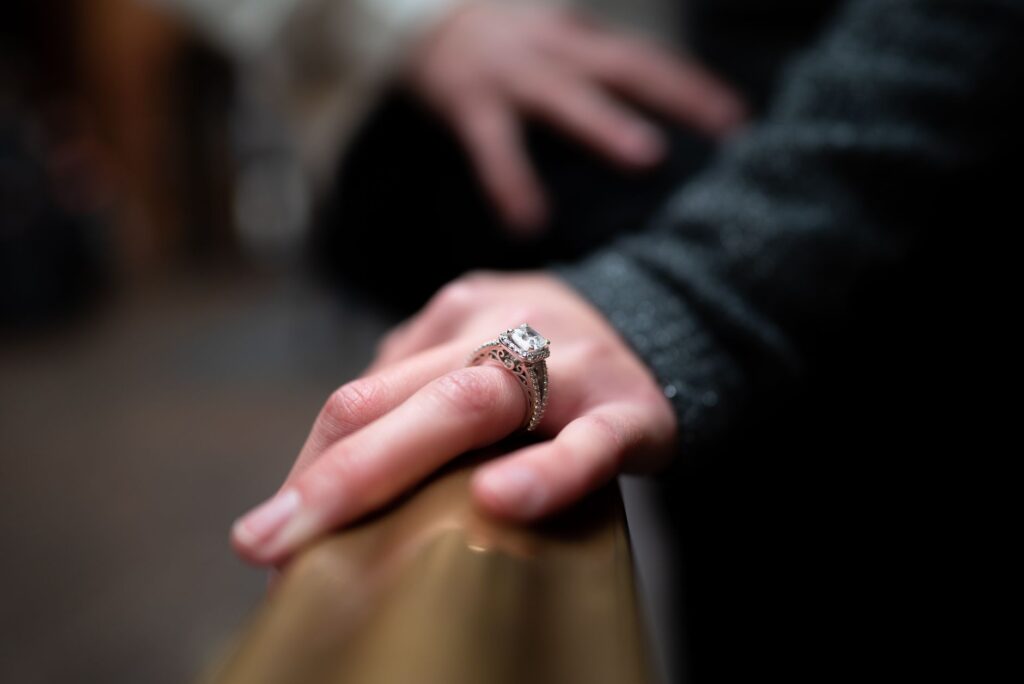
A halo setting can make a center diamond look substantially larger because the surrounding accent diamonds enlarge the visible outline. A 1.00 carat center in a halo may have the hand presence of a noticeably larger solitaire, depending on the design.
A solitaire, on the other hand, showcases the center stone itself more honestly. It does not create the same enlarged outline, but it can still look refined and substantial if the proportions and band are well chosen.
Round vs marquise in the same budget
Within the same budget, a marquise often creates more visible size than a round. It uses its length to cover more finger area. This can be a practical way to make a diamond look bigger without paying for a heavier round stone.
The trade-off is style preference. Marquise has a more distinctive look and its pointed tips need protection in the setting.
Price vs Visual Benefit
Bigger diamonds cost disproportionately more
Diamond prices do not rise in a straight line with size. As carat weight increases, the price often rises much faster than the visible size increase. This is especially true at benchmark weights such as 1.00, 1.50, and 2.00 carats.
That means paying 20 percent to 40 percent more does not necessarily make the diamond look 20 percent to 40 percent bigger. In face-up measurements, the increase may be modest.
Diminishing returns are real
Visible size grows by surface area and dimensions, not by weight alone. This can make larger jumps in price feel underwhelming if your only goal is visual impact.
For some buyers, crossing a milestone carat size is personally meaningful. There is nothing wrong with that. But if the goal is maximizing what the eye sees, the best value often sits just below those benchmark weights.
Where visual value is often strongest
Strong visual value often comes from:
- Buying just under a magic size, such as 0.90 instead of 1.00 carat.
- Choosing shapes that face up larger for their weight.
- Prioritizing cut and measurements over the carat label alone.
- Using a setting that adds presence without requiring a larger center stone.
Lab grown diamonds can change the size equation
Lab grown diamonds often allow buyers to choose a larger size within the same budget compared with natural diamonds. From a visual standpoint, this can be the most direct way to get a bigger-looking diamond without relying only on setting tricks or shape choices.
Lab grown and natural diamonds can look the same to the naked eye when quality is comparable. The main differences usually relate to origin, pricing, and long-term resale expectations. Buyers focused on maximizing size per dollar often find lab grown options especially useful.
This does not make lab grown automatically the right answer for everyone. Some buyers place high value on natural origin or think differently about long-term market behavior. But for visible size alone, lab grown diamonds can offer strong budget efficiency.
Who Should Size Up
Buyers who strongly prefer a certain visual presence
Some people simply know they want a ring with unmistakable hand presence. If visual scale is the top priority and budget allows it comfortably, sizing up may make sense.
This is especially true if the wearer has larger fingers, prefers a wide band, or wants a more dramatic center stone without relying on halos or other design enhancements.
Buyers choosing compact-looking shapes
Certain shapes may face up smaller for their weight, depending on the cut. If you prefer a shape such as cushion or princess but still want a larger look, moving up modestly in carat weight may help achieve that balance.
Buyers avoiding halo settings
If you want the center stone alone to carry the look, without a halo or side stones, then choosing a slightly larger diamond can be justified. A solitaire reveals the actual center stone more clearly, so the stone itself must deliver the desired presence.
Buyers using heavier setting styles
A diamond can look smaller in a thick bezel or wide-band design. If that style is important, increasing center stone size may be the most straightforward way to maintain balance.
Who Can Save Money Without Sacrificing Visual Impact
Buyers open to under-benchmark weights
Choosing 0.90 instead of 1.00 carat, or 1.80 instead of 2.00 carats, can often reduce cost while preserving much of the visible impact. This is one of the most practical size strategies available.
Buyers open to elongated shapes
Oval, marquise, and pear diamonds often deliver more finger coverage for the same weight. A buyer who cares more about appearance than tradition may get better visual value from these shapes than from a round diamond.
Buyers willing to balance color and clarity sensibly
Not every buyer needs very high color and clarity grades. In many cases, a diamond that looks clean to the eye and appears white in its setting can free up room in the budget for better size or cut.
This approach requires judgment. Going too low can affect appearance. But thoughtful trade-offs often produce a better overall result than overspending on invisible quality upgrades.
Buyers considering lab grown diamonds
For buyers whose main question is how to make a diamond look bigger within a set budget, lab grown diamonds are highly relevant. They can provide significantly more size for the money, often without requiring sacrifices in cut, color, or clarity.
The key is to evaluate them with the same care you would use for natural diamonds. Cut quality, measurements, and certification still matter.
Common Buyer Mistakes
Chasing carat weight instead of measurements
A buyer may focus on hitting 1.00 or 2.00 carats while ignoring the actual millimeter spread. This can lead to paying a premium for a number rather than a visible benefit.
Ignoring cut in pursuit of size
Trying to maximize width without regard for cut quality can backfire. A diamond that is too shallow may look larger but lose sparkle. A diamond that is too deep may have sparkle but look smaller than expected. Balance matters.
Assuming all ovals or all cushions look alike
Fancy shapes can vary more than rounds. Two oval diamonds of the same weight may differ noticeably in length, width, bow-tie visibility, and overall presence. Shape category alone does not guarantee a certain look.
Choosing a band that overwhelms the center stone
A very wide or heavy ring can reduce the visual impact of the diamond. This is not always bad. Some buyers prefer a more substantial metal look. But it should be a deliberate style choice rather than an accident.
Overpaying for magic sizes
Benchmark carat weights have market appeal, but the visual gain can be modest. Buyers who care primarily about what the diamond looks like, rather than the stated number, often do better just under those thresholds.
Neglecting maintenance
Even a well-chosen diamond will not look its best when coated in residue. Routine cleaning and proper jewelry care preserve brightness and help maintain a larger-looking appearance.
Practical Ways to Make a Diamond Look Bigger
1. Start with measurements, not just carat weight
Review millimeter dimensions first. Compare them with typical measurements for that shape and weight range. This helps you identify diamonds with good face-up spread.
2. Prioritize excellent or very strong cut quality
Especially for round diamonds, cut quality should be near the top of your list. A bright, lively diamond generally looks more impressive than a dull one with slightly more weight.
3. Consider elongated shapes for more finger coverage
If shape flexibility exists, elongated diamonds often create a larger visual effect. Oval and marquise are common choices for buyers who want size emphasis.
4. Use a thinner band
A narrower band can make the center stone stand out more clearly. This is one of the simplest design adjustments for improving apparent size.
5. Consider a halo if you want maximum visual size
A halo is one of the most effective setting strategies for making a center diamond look bigger. It changes the overall outline and can create a much larger visual footprint.
6. Keep metal around the center minimal
Fine prongs and open gallery designs often reveal more of the stone. Less visual interruption around the perimeter usually helps the center appear larger.
7. Stay just below major carat thresholds
Near-magic sizes often provide strong value. A slightly lower carat weight with excellent measurements can be a smarter visual choice than paying a premium for a benchmark number.
8. Use your budget strategically across the 4Cs
The best-looking diamond is rarely the one that maxes out a single category. Smart trade-offs among diamond carat, color, clarity, and cut often produce a larger-looking and more attractive result overall.
Comparison Table: What Usually Helps a Diamond Look Bigger
| Choice | Effect on Apparent Size | Main Benefit | Possible Trade-Off |
|---|---|---|---|
| Elongated shape | Usually increases visible size | More finger coverage | May show bow-tie or color more readily in some shapes |
| Excellent cut | Often improves visual presence | More brightness and balanced spread | May cost more than lower cut grades |
| Thin band | Makes center look larger by contrast | Simple visual enhancement | Must still be durable enough for wear |
| Halo setting | Strong increase in overall look | Larger visual outline | Changes style and does not increase center stone size itself |
| Under-benchmark carat weight | Maintains much of the look | Better value | No exact milestone number |
| Lab grown diamond | Allows larger actual size in budget | More carat weight for the money | Different resale dynamics than natural diamonds |
Frequently Asked Questions
Does a halo make a diamond look bigger?
Yes. A halo usually makes a diamond look bigger because the surrounding smaller diamonds expand the visible outline of the ring. It does not make the center stone itself larger, but it can significantly increase the overall visual size.
What diamond shape looks the biggest?
Marquise, oval, and pear shapes often look larger than round diamonds of the same weight because they provide more length and finger coverage. Emerald cuts can also look relatively large face-up, though their sparkle style is different from brilliant cuts.
Can a 0.90 carat diamond look like a 1 carat diamond?
Sometimes, yes. A well-cut 0.90 carat diamond with strong measurements can look very close in size to a 1.00 carat diamond, especially once mounted. The difference is usually more noticeable on paper than on the hand.
Do thinner bands really make a diamond look larger?
Yes. A thinner band increases contrast between the center stone and the ring shank, which makes the diamond appear more prominent. It is one of the simplest and most effective design choices for apparent size.
Will a bezel setting make my diamond look smaller?
It can, depending on the design. A full bezel adds a border of metal around the diamond, which may reduce the exposed visual edge. Some modern bezels are refined and still attractive, but in general they do not enlarge the stone the way a halo does.
Does diamond cut matter more than carat if I want a bigger look?
Both matter, but cut is often more important than buyers expect. A heavier diamond with poor proportions can look smaller and duller than a slightly lighter diamond with better cut and brighter face-up appearance.
Are lab grown diamonds a good choice for getting a bigger diamond?
They can be. Lab grown diamonds often allow buyers to purchase a larger size within the same budget. Visually, they can look the same as natural diamonds when quality is comparable. The key differences are usually price structure, origin, and resale expectations.
What is the biggest mistake people make when trying to maximize size?
The biggest mistake is focusing only on carat weight. Measurements, shape, cut quality, and setting design all affect how large the diamond actually looks. Paying for a benchmark carat number without checking those factors often leads to weaker value.
Conclusion
Learning how to make a diamond look bigger starts with a simple shift in thinking. Visible size is not determined by carat weight alone. What the eye notices is face-up spread, shape, sparkle, finger coverage, and the way the setting frames the stone.
The most effective strategies are usually practical rather than dramatic. Choose a shape that gives strong coverage, pay close attention to millimeter measurements, prioritize cut quality, consider a thinner band or halo, and avoid paying unnecessary premiums for benchmark carat weights if the visual difference is minimal.
For buyers working within a strict budget, lab grown diamonds can also make a meaningful difference by allowing a larger actual size for the same spend. For buyers who prefer natural diamonds, thoughtful choices in cut, shape, and setting can still improve apparent size without moving much higher in carat weight.
The best result is not always the heaviest diamond. It is the diamond that looks balanced, bright, and appropriately sized for the hand, while still making sense for your budget and priorities.