Understanding a diamond grading report is one of the most important steps in buying a diamond with confidence. The report tells you how a diamond was evaluated for cut, color, clarity, and carat weight, but those details only help if you know how to read them correctly. For many buyers, the report is the difference between choosing a stone that looks excellent in real life and choosing one that looks better on paper than in the hand.
This matters even more with lab grown diamonds, where buyers often compare many similar stones at very different price points. Because lab grown diamonds can offer strong value, the grading report becomes a practical tool for separating diamonds that may look similar at a glance but differ in sparkle, proportions, and overall appearance. If you are comparing engagement rings, loose diamonds, or different certifications, knowing how to read the report helps you focus on what you will actually see.
Quick Answer: How to Read a Diamond Grading Report
To read a diamond grading report, start with the basics: confirm the laboratory, the carat weight, the shape, and the measurements. Then look closely at the grades for cut, color, clarity, and polish, along with any comments, proportions, and plotting diagram. These details help you understand both the diamond’s appearance and whether the stone has any characteristics that may affect beauty, durability, or value.
The most important thing to remember is that a report is not a substitute for seeing how a diamond performs visually. Two diamonds with similar grades can look different in everyday lighting because cut quality, symmetry, and proportions affect sparkle and brightness. A grading report gives you the data, but your goal is to translate that data into real-world appearance.
If you are trying to decide whether a diamond is a strong buy, use the report as a filter, not as the final answer. Focus first on cut and proportions, then color and clarity, then price. In many cases, a well-cut diamond with slightly lower color or clarity will look better than a larger diamond with weaker cut quality.
What a Diamond Grading Report Is
A diamond grading report is an independent document created by a gemological laboratory that describes a diamond’s key characteristics. It is sometimes called a certificate, although technically most reports are not legal certificates. The report does not assign value in the retail sense, but it does provide standardized information that buyers, sellers, and appraisers can use to compare diamonds.
For buyers, this standardization is the main benefit. Instead of relying only on a seller’s description, you can review measurable facts about the stone. That helps especially when comparing natural and lab grown diamonds, because the grading report creates a common language for quality assessment.
Why the laboratory matters
Not all grading laboratories use the same standards. Some are known for stricter grading, while others may be more lenient. That means two diamonds with the same stated grade on different reports may not be equal in real-world quality.
For most buyers, the laboratory name is one of the first things to check. A report from a well-regarded lab usually offers more confidence than a report from a lesser-known source. This is particularly important when reading about cut grades, color grades, and clarity grades, because grade consistency matters when you are comparing options.
Common laboratories buyers encounter
| Laboratory | What buyers usually want to know | Why it matters |
|---|---|---|
| GIA | Widely recognized, known for strict grading | Often considered a reliable benchmark for natural diamonds and many lab grown diamonds |
| IGI | Very common for lab grown diamonds | Frequently used in the lab grown market, especially for engagement rings |
| GCAL | Used by some buyers who value detailed reporting | May include additional light performance information in some reports |
For a buyer, the key question is not which lab is “best” in the abstract, but whether the report is consistent, reputable, and useful for comparison. If you are shopping for lab grown diamonds, it is also worth understanding how different labs describe growth method, post-growth treatment, and grading standards.
How to Read the Main Sections of the Report
Most diamond grading reports follow a similar structure. The layout may vary by laboratory, but the information typically includes the same core categories. If you understand these sections, you can read almost any standard diamond report with confidence.
1. Report number and identification details
The report number is a unique identifier that ties the document to a specific diamond. This is useful for verification, especially if you are shopping online or reviewing a stone through a retailer. Many diamonds are laser inscribed with the report number on the girdle, which is the thin outer edge of the stone.
This identification feature does not affect beauty, but it does help with authenticity and traceability. If the report number on the document does not match the inscription or the seller’s listing, that is a red flag worth investigating.
2. Shape and cutting style
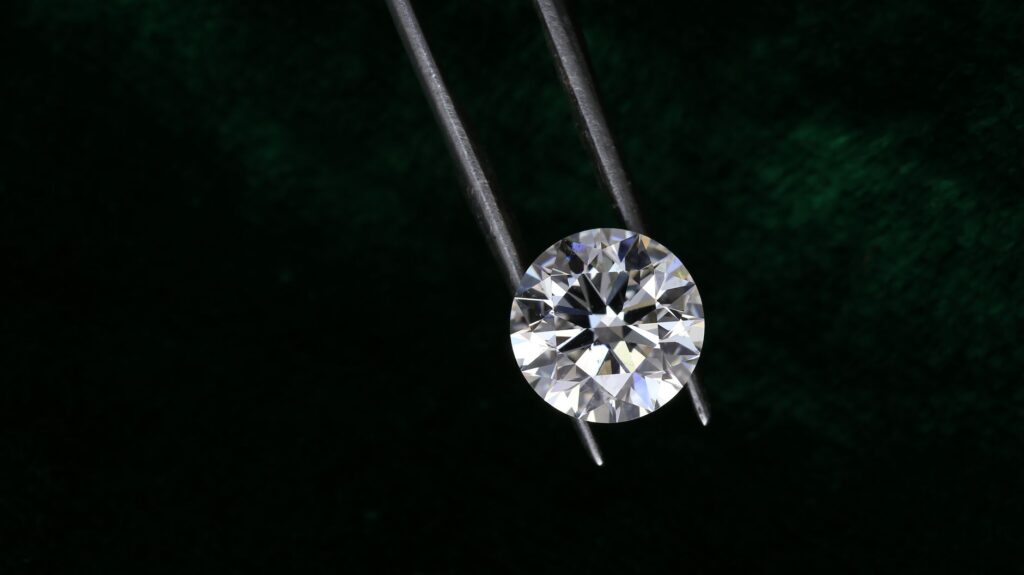
The shape tells you the outline of the diamond, such as round, oval, cushion, princess, emerald, or pear. The cutting style describes how the diamond was faceted. For example, a round brilliant has a very specific faceting pattern designed for maximum brightness and sparkle.
Shape matters because different shapes perform differently and appeal to different buyers. Round brilliants usually show the most predictable light performance, while fancy shapes like oval or pear can vary more in how they handle light. If you are comparing shapes, it helps to understand the basics of diamond shapes before focusing too much on the numbers.
3. Measurements
Measurements are usually given in millimeters, such as 7.40 x 7.45 x 4.55 mm. These numbers tell you the stone’s actual physical dimensions. For round diamonds, the spread should be close to even, while fancy shapes may have different length-to-width ratios.
Measurements matter because they affect how large the diamond looks on the finger. Two diamonds can weigh the same but face up differently. A stone with a more efficient cut may appear larger than another diamond of the same carat weight, which is why carat alone does not tell the full story. If you are comparing size and look, it is also helpful to understand diamond carat in relation to spread.
4. Carat weight
Carat refers to weight, not size. One carat equals 0.2 grams. Buyers often think in terms of size, but the report uses weight because that is the measurable standard.
Carat is important for price, but it should not be treated as the main quality factor. A smaller diamond with excellent cut can look more attractive than a larger stone that leaks light or appears dull. This is especially relevant when comparing lab grown diamonds, where larger options may be more affordable than natural diamonds.
5. Cut grade
Cut grade is one of the most important parts of the report for round brilliant diamonds. It reflects how well the diamond’s proportions, symmetry, polish, and faceting style work together to return light. A strong cut usually means more brightness, better sparkle, and a more lively appearance in everyday lighting.
Cut is often the difference between a diamond that looks crisp and energetic and one that looks flat or watery. For this reason, many experienced buyers prioritize cut over small differences in clarity or color. If you want a deeper breakdown of how light affects appearance, you may also want to read about diamond cut and light performance.
6. Color grade
Color grading measures how much colorless or near-colorless a diamond appears when viewed under controlled conditions. The scale typically runs from D, which is colorless, down through the alphabet as increasingly noticeable color appears. For most buyers, the key question is not the technical grade alone, but whether the color is visible in real life.
In many cases, a well-cut diamond can make color less noticeable because strong brightness draws the eye away from subtle tint. This is one reason buyers often choose slightly lower color grades for better value, especially when the setting and metal color support the diamond’s appearance. If you are comparing options, it helps to understand diamond color in the context of shape and setting.
7. Clarity grade
Clarity describes the presence of internal characteristics called inclusions and external characteristics called blemishes. Most clarity features are microscopic and do not affect beauty. The point of the grade is to indicate how likely the stone is to show visible imperfections or structural issues.
For many buyers, the useful question is whether the inclusions are visible without magnification and whether they affect durability or appearance. A diamond can have a modest clarity grade and still look excellent if the inclusions are small, well-placed, and not easy to see. A clear understanding of diamond clarity helps buyers avoid overpaying for grades they may not visibly benefit from.
8. Polish and symmetry
Polish refers to how smooth and well-finished the diamond’s facet surfaces are. Symmetry refers to how accurately the facets are aligned relative to one another. Both can influence how cleanly a diamond reflects light.
For most buyers, polish and symmetry are secondary to the main cut grade, but they still matter. In a well-cut diamond, poor polish or symmetry can reduce crispness, interfere with light return, or create subtle visual irregularities. These differences are often easier to notice in side-by-side comparisons than on their own.
9. Fluorescence
Fluorescence describes whether a diamond emits a visible glow, usually blue, when exposed to ultraviolet light. On a grading report, it may be listed as none, faint, medium, strong, or very strong. In everyday lighting, fluorescence may have no noticeable effect, or it may slightly alter appearance depending on the stone.
For many buyers, fluorescence is neither automatically good nor automatically bad. It depends on the diamond’s color grade, the strength of the fluorescence, and how the stone looks in person. A strong fluorescence reading should prompt a closer look, but not necessarily concern by itself.
10. Comments, plotting diagram, and proportions
The comments section may note features such as inscriptions, treatments, or structural issues. The plotting diagram is a map of clarity characteristics, showing where inclusions are located. Proportions such as table percentage, depth percentage, crown angle, and pavilion angle may also be included, especially for round diamonds.
These details matter because they can help explain why two diamonds with similar grades may perform differently. Proportions are especially useful when you want to understand whether a diamond has been cut for ideal brightness and sparkle or whether it may sacrifice light performance for weight retention.
Understanding Cut-Related Terms on the Report
When buyers ask how to read a diamond grading report, cut-related terminology is often the most confusing part. That is because cut affects appearance more directly than almost any other factor, yet its details are spread across several parts of the report. Understanding these terms helps you evaluate the diamond beyond the headline grade.
Cut grade versus proportions
For round diamonds, the overall cut grade is usually the most important summary. But the underlying proportions tell you why the diamond received that grade. Table size, depth, crown angle, and pavilion angle all influence how light enters, bounces inside, and exits the stone.
For buyers, the practical takeaway is simple. A high cut grade usually suggests better performance, but proportions can reveal whether a diamond is likely to have exceptional sparkle or merely acceptable performance. If you are serious about appearance, do not stop at the top-line cut grade alone.
Table percentage
The table is the flat top facet of the diamond, and table percentage compares its width to the average diameter of the stone. A larger table can create a different visual balance than a smaller one. Whether that is a problem depends on the rest of the cut.
Buyers often ask if a table number by itself tells them whether the diamond is good. The answer is no. Table percentage matters most when viewed together with depth and angles. A diamond can have a table that looks fine on paper but still perform poorly if the rest of the proportions are off.
Depth percentage
Depth percentage compares the height of the diamond to its width. If the diamond is too deep, it may carry hidden weight that makes it look smaller face up. If it is too shallow, it may leak light and appear glassy or washed out.
Depth is one of the easiest places for buyers to misunderstand size. A diamond with efficient proportions can look larger than its carat weight suggests, while a deep stone can look smaller. This is a practical point, not just a technical one, because many shoppers compare diamonds based on visual size first.
Crown and pavilion angles
The crown is the upper portion of the diamond above the girdle, and the pavilion is the lower portion below it. Their angles strongly influence brightness, fire, and contrast. Even small changes can affect how the diamond handles light.
These numbers can be helpful, but they are not meaningful in isolation. A good buyer should use them as clues rather than guarantees. Some diamonds with similar numbers perform differently because the total cut design is a combination of many factors, not one measurement alone.
Light performance
Light performance refers to how effectively a diamond returns light to the viewer. In practical terms, it influences brightness, sparkle, and liveliness. This is what people are really reacting to when they say a diamond “looks alive.”
Some reports and advanced imaging tools may assess light performance more directly. These tools can be useful, but not every buyer needs a technical analysis to make a good choice. The real question is whether the stone looks bright, balanced, and attractive in real-world viewing conditions.
Hearts and Arrows
Hearts and Arrows is a visual pattern seen in some well-cut round diamonds under specialized viewing conditions. The pattern can indicate high optical symmetry, meaning the facets are aligned very precisely. It is often associated with refined light performance, but it is not a formal universal grade on its own.
For buyers, Hearts and Arrows can be a useful clue, especially if you value precision and want a round diamond with strong visual consistency. Still, it is not something most people notice during normal wear. It is more of a sign of craftsmanship than a feature that jumps out at casual viewing distance.
Why the Diamond Grading Report Matters to Buyers
A grading report matters because it helps you understand what you are paying for. It gives structure to a market where many diamonds can look similar in a seller’s photo but differ in performance once they are seen in person. The report helps you compare quality fairly rather than relying on marketing language.
This is especially useful when shopping for lab grown diamonds. Lab grown options can create more carat weight for the money, so the decision often shifts from “Can I afford a diamond?” to “Which diamond looks best for the budget?” In that situation, reading the report well can help you choose beauty over size inflation.
Appearance is the real outcome
Most buyers care less about the report itself and more about what the report predicts. Does the diamond sparkle well? Does it look bright? Does it face up clean and attractive? Those are the practical questions the report helps answer.
In other words, the report is useful because it translates technical grading into appearance. When you understand that connection, you stop chasing paper grades and start shopping with your eyes and budget in a more informed way.
It helps you avoid misleading comparisons
Two diamonds can both claim to be “excellent” in some sense, yet still differ noticeably. One may have stronger cut performance, while another may be larger but less lively. Without the report, those differences can be hidden behind store lighting or broad sales language.
The report gives you a way to compare more objectively. It does not eliminate the need to view the stone, but it does reduce the risk of making a decision based only on size or a single appealing photo.
How Cut Affects What Buyers Actually See
Cut is the part of diamond quality most closely tied to visible beauty. It affects how much light returns to your eye, how sharply the diamond flashes, and whether the stone looks balanced and lively. A diamond with strong cut can often appear more attractive than a larger diamond that is poorly proportioned.
When buyers hear terms like brilliance, fire, and scintillation, it helps to translate them into ordinary viewing experience. These are not abstract gemology concepts. They are the reasons one diamond looks dynamic and another looks flat.
Brilliance
Brilliance is the brightness of white light reflected back from the diamond. In everyday terms, it is the overall “light up” effect. A diamond with good brilliance tends to look bright even in indirect indoor light.
Buyers notice brilliance first from a short distance. If the stone is too deep or cut poorly, it may look darker in the center or show dead areas. If cut well, the diamond can look lively across a wider range of lighting conditions.
Fire
Fire refers to colored flashes, usually flashes of red, blue, or other spectral colors. It becomes more visible in certain lighting, especially when the diamond moves. Fire is often one of the features buyers love most when they see a diamond in motion.
Not every lighting environment shows fire equally well. In bright outdoor light, you may see lots of sparkle and contrast. In some indoor settings, the diamond may show more subtle flashes. A good cut helps the stone produce balanced fire without sacrificing brightness.
Scintillation
Scintillation is the pattern of sparkle and contrast you see as the diamond moves. It includes the on-and-off flashes of light and the crisp dark-light contrast that creates visual life. This is a big part of what people describe as “sparkle.”
Scintillation is easiest to appreciate when the diamond is being worn or tilted under normal light. A diamond with strong scintillation will look active, not static. Weak scintillation can make even a high-carat stone feel less impressive than expected.
Light leakage
Light leakage happens when light enters the diamond but escapes through the bottom or sides instead of returning to the viewer. On paper, the diamond may still have good measurements, but visually it can look watery, dull, or lifeless. Buyers often see light leakage as a lack of brightness or contrast.
This is one reason cut matters more than many buyers realize. A diamond with better proportions may return more light and appear visibly more beautiful, even if the carat weight is lower. In practical shopping terms, light leakage is a hidden problem that can be expensive if overlooked.
How to Judge the Report in Real-World Terms
Reading a diamond grading report becomes much easier when you translate every number into a practical question. Instead of asking, “Is this grade impressive?” ask, “Will this diamond look bright, clean, and attractive on the hand?” That shift keeps the report tied to actual buying results.
Ask what is visible to the naked eye
Many grading details matter only if they affect what you can see without magnification. That is especially true for clarity, polish, and small symmetry issues. If the feature is invisible in normal wear, it may not deserve much of your budget.
For cut, the opposite is often true. Even subtle cut differences can be visible because they affect brightness and sparkle. That is why cut deserves more attention than many first-time buyers give it.
Compare side by side when possible
Diamond grading reports become much more useful when you compare two stones directly. A report can tell you that both diamonds are “excellent,” but side-by-side viewing may show one has more crisp sparkle, a larger face-up appearance, or a brighter center. Those real-world differences are often what influence satisfaction after purchase.
If you cannot compare in person, ask for videos taken in neutral lighting and request proportion data. This is especially important for lab grown diamonds, where pricing may encourage buyers to focus only on size. In practice, the best-looking stone is not always the largest one.
Do not overread a single number
Many buyers make the mistake of treating one figure as decisive. For example, they may assume that a high color grade guarantees beauty or that a low clarity grade automatically means visible flaws. The report is more nuanced than that.
A diamond is a combination of factors. Cut affects how you perceive color and clarity, which means it can improve the appearance of lower grades or expose weaknesses in higher ones. That is why experienced shoppers read the report as a system, not as isolated bullet points.
How to Read a Diamond Grading Report for Lab Grown Diamonds
Lab grown diamonds follow the same basic grading logic as natural diamonds, but there are a few additional considerations. Since lab grown stones are typically more affordable for their carat size, buyers often have more room to prioritize cut quality, better color, or improved clarity within the same budget. That can make the report especially useful.
At the same time, the lower price of lab grown diamonds can make some buyers less careful. It is easy to think that any larger lab grown diamond is a good deal, but cut quality still determines how appealing the stone looks. Size alone does not guarantee beauty.
Check the growth method and treatment notes
Lab grown diamond reports often include whether the diamond was grown by HPHT or CVD, and whether any post-growth treatment was used. These details matter because they help describe how the diamond was produced and whether any conditions affected the final stone. For most buyers, the main practical concern is transparency and matching the report to the seller’s description.
This information does not automatically make one diamond better than another. But if you are comparing lab grown diamonds, it is helpful to know exactly what you are buying and whether the seller has disclosed the relevant information honestly.
Be aware of grading variation
Lab grown diamonds may be graded by different labs, and grading consistency can vary. That means a color or clarity grade on one report may not be perfectly equivalent to a grade from another lab. For buyers, this means the report should be used alongside images, videos, and the seller’s return policy.
This is another reason to focus on cut quality and visual performance. A well-cut lab grown diamond can often give a more satisfying appearance than a larger stone with a more generous but less reliable grade set.
Practical Examples Buyers Can Relate To
Real buying decisions are easier to understand when you compare actual scenarios. The following examples show how grading report information changes what you would likely see in normal use.
A well-cut 1.5-carat diamond versus a poorly cut 2-carat diamond
On paper, the 2-carat diamond may seem like the better choice because it is larger. But if the larger stone has weak proportions, it may leak light and look less lively. The 1.5-carat diamond with stronger cut can look brighter, sharper, and more balanced.
In everyday viewing, many buyers would prefer the better-cut diamond even if it is smaller. This is one of the clearest examples of how cut can outweigh carat weight in actual beauty.
Excellent Cut versus Very Good Cut in everyday lighting
In controlled side-by-side comparisons, an Excellent Cut round diamond may show slightly stronger brightness, better contrast, and more crisp sparkle than a Very Good Cut stone. The difference is not always dramatic, but it can be noticeable to trained eyes or in direct comparison.
For casual viewing, the choice often comes down to budget and how closely the specific stone performs. Some Very Good Cut diamonds look outstanding, while others show subtle softness. If you are trying to maximize value, it is worth evaluating each stone rather than assuming the grade alone tells the whole story.
Higher clarity with poor cut versus lower clarity with excellent cut
Many first-time buyers assume clarity should be a top priority. In reality, a diamond with better cut and slightly lower clarity often looks more appealing because its sparkle draws the eye away from microscopic inclusions. A poor cut, even with high clarity, can still appear dull or lifeless.
For most buyers, the visual impact of cut is easier to notice than the difference between several clarity grades that are already eye-clean. That is why many experienced shoppers are willing to trade a bit of clarity for better cut quality.
Advantages of Learning to Read the Report Well
Knowing how to read a diamond grading report gives you more control over your purchase. It helps you see beyond sales language and make decisions based on measurable quality factors. That confidence is useful whether you are buying a natural diamond or a lab grown diamond.
- Better value assessment: You can identify stones that look better than their price suggests.
- More informed cut comparison: You can tell when a diamond is likely to perform well in real life.
- Less risk of overpaying: You are less likely to spend extra on size or grades that may not be visible.
- Stronger confidence in online shopping: The report helps you evaluate a diamond you cannot hold in person.
- Better long-term satisfaction: You are more likely to end up with a stone that looks the way you expected.
Limitations and Trade-Offs to Keep in Mind
A grading report is very useful, but it is not perfect. It cannot capture every visual nuance, and it cannot replace direct observation. Two diamonds with similar reports may still look different because of subtle differences in how the facets interact with light.
That is why buyers should treat the report as one part of the decision, not the whole decision. The report tells you a lot about the diamond, but it does not tell you everything about how you will feel when you see it on the hand. It is especially important to remember that different lighting can change how a diamond appears.
Reports do not describe beauty in emotional terms
A report can tell you about measurements and grades, but it cannot tell you whether a diamond will feel lively, elegant, modern, or understated to you personally. Those are visual impressions. You need images, videos, and ideally in-person viewing to judge them.
This does not make the report less important. It just means the report is a tool for narrowing choices, not a substitute for seeing the diamond.
Grading is not identical to value
A higher grade does not always mean a better purchase. In some cases, the price increase is larger than the visible improvement. That is especially true when moving from one high grade to another in areas where differences are subtle.
Smart buyers look for the point where appearance and price meet. The goal is not to maximize every grade, but to buy the best-looking diamond for the budget.
Common Buyer Mistakes When Reading Diamond Grading Reports
Even careful buyers make avoidable mistakes when they are new to diamond shopping. Most of these come from overemphasizing one part of the report while ignoring the rest. Learning these pitfalls can save money and disappointment.
- Prioritizing carat over cut: A larger diamond with poor cut may look less attractive than a smaller diamond with better light return.
- Overpaying for clarity: Many clarity differences are microscopic and not visible in everyday wear.
- Ignoring proportions: Table, depth, and angle data can reveal whether a stone is likely to perform well.
- Assuming all “Excellent” grades look the same: There can still be meaningful variation within the same grade range.
- Relying on photos alone: Lighting, camera settings, and editing can make a stone look better than it will in person.
- Not checking the laboratory: Grading consistency varies, and the lab name affects how much trust you should place in the report.
- Forgetting the setting: The metal color and ring design can affect how colorless or bright a diamond appears.
How to Use a Grading Report When Shopping
If you want a practical method for reading a diamond grading report, start with the following sequence. It keeps the process simple and helps you focus on the details that matter most to visual quality.
- Confirm the laboratory. Make sure the report comes from a reputable source.
- Check the shape and measurements. Look at the actual dimensions, not just the carat weight.
- Review the cut grade first. For round diamonds, this is usually the most important beauty factor.
- Examine the proportions. Table, depth, and angles can help you predict light performance.
- Check color and clarity. Ask whether the grades are likely to be visible in real life.
- Look at polish, symmetry, and fluorescence. These can matter, especially when comparing similar stones.
- Read the comments and inscription details. Make sure nothing important was overlooked.
- Compare the report with images or videos. The visual result should match what the data suggests.
What Experienced Buyers and Jewelers Tend to Notice
People who regularly compare diamonds often notice things that new buyers may miss. They tend to look beyond the headline grades and pay attention to how the stone behaves under different light sources. That practical habit is often more useful than memorizing grading terminology.
For example, experienced observers often check whether the stone has a bright center, balanced contrast, and lively flashes as it moves. They may also look for signs of leakage, such as dull patches or a glassy look. These visual clues can reveal more than a single grade on the report.
Another common observation is that diamonds with strong cut often seem more beautiful from a normal viewing distance, even if another stone has slightly better color or clarity on paper. That is not because paper grades are unimportant. It is because human eyes are drawn to brightness and sparkle first.
Frequently Asked Questions
Is a diamond grading report the same as a certificate?
Not exactly. In everyday language, people often call it a certificate, but most grading documents are technically reports. The distinction matters less to buyers than the fact that the document provides standardized information from a lab.
Which part of the report matters most?
For most round diamonds, cut matters most because it strongly influences how the diamond looks in real life. After that, color, clarity, and carat help refine the decision based on budget and preferences. For fancy shapes, viewing performance and proportions become especially important.
Can two diamonds with the same report grade look different?
Yes. Two diamonds can share the same grade and still differ in sparkle, brightness, and overall appearance. That is why reports should be used alongside images, videos, and comparison shopping.
Should I always choose the highest cut grade?
Not always. A higher cut grade is usually desirable, but value matters too. In some cases, a stone just below the top grade may offer a very good visual result for less money.
Do lab grown diamonds need the same kind of grading report as natural diamonds?
Yes. Lab grown diamonds still benefit from independent grading because the report helps confirm key details such as carat, color, clarity, and cut. Since lab grown diamonds vary widely in quality, the report is especially helpful for comparison.
What is the biggest mistake first-time buyers make when reading reports?
The most common mistake is focusing too much on carat weight and not enough on cut. A bigger diamond is not automatically a better-looking diamond. Cut quality often has a stronger effect on everyday beauty.
Do symmetry and polish matter a lot?
They matter, but usually less than overall cut quality. Good symmetry and polish help the diamond reflect light cleanly and can improve crispness. However, most buyers will notice the overall sparkle pattern more than the separate technical grades.
How do I know if the report matches what I am seeing?
Compare the report with the stone’s images, videos, and measurements. If the diamond looks dull, overly dark, or smaller than expected for its carat weight, the report may help explain why. If something seems inconsistent, ask for more information before buying.
Conclusion
Learning how to read a diamond grading report gives you a major advantage as a buyer. It helps you understand not just what a diamond weighs, but how it is likely to look, sparkle, and perform in real life. Once you know how to interpret cut, proportions, color, clarity, and the laboratory behind the report, the buying process becomes much clearer.
The most practical approach is to use the report as a guide to appearance, not as a substitute for it. Focus first on cut and light performance, then use color, clarity, and carat to fine-tune your choice based on budget and personal preference. Whether you are shopping for a natural diamond or a lab grown diamond, that approach usually leads to a more satisfying result.
If you remember only one thing, make it this: the grading report tells you how the diamond is built, but the goal is to choose the stone that looks best in everyday life. That is the real value of knowing how to read a diamond grading report well.