A fixed budget changes the diamond conversation almost immediately. The question is no longer just, “How much carat weight can I buy?” It becomes, “How large will the diamond actually look, and what am I giving up or gaining if I choose lab grown instead of natural?” That is the real issue behind Lab Grown vs Natural Diamond Size for Budget, because visible size and price do not move in a straight line.
Two diamonds can look nearly identical once set in a ring, yet one may cost far more because it is natural rather than lab grown. At the same time, a bigger stone is not automatically the better choice if cut quality, shape, or proportions make it look smaller than expected. Understanding how size works in real-world terms helps you spend your budget more intentionally.
This guide explains how lab grown and natural diamonds compare when size is the priority, what buyers often misunderstand, and how to judge the visual benefit of going larger without focusing only on the carat number.
Quick Answer
For the same budget, a lab grown diamond will usually allow you to buy significantly more visible size than a natural diamond. In practical terms, that often means you can move up in carat weight, spread, or both while staying within your price range.
However, the better value depends on your priorities:
- Choose lab grown if your goal is to maximize apparent size, get a larger center stone, or reach a carat range that would be difficult or unrealistic in natural.
- Choose natural if origin matters more to you than size, or if you are comfortable accepting a smaller diamond for the sake of buying a mined stone.
Visually, once two diamonds have similar cut quality, shape, and measurements, most people cannot tell whether a diamond is lab grown or natural just by looking at it. What they do notice is size.
Understanding the Carat Concept
What carat actually means
Carat is a weight measurement, not a direct measurement of how wide a diamond looks from the top. One carat equals 0.2 grams. That sounds precise, but it does not tell you everything about visible size.
What buyers usually care about is face-up appearance. That means how large the diamond looks when viewed from above, which is how it is seen once mounted in a ring.
Why carat and visible size are not identical
Two diamonds with the same carat weight can look slightly different in size. This happens because weight can be distributed differently. A deeper diamond may carry more weight in the lower part of the stone, where you cannot easily see it from the top. A shallower stone may spread more of that weight across the visible surface.
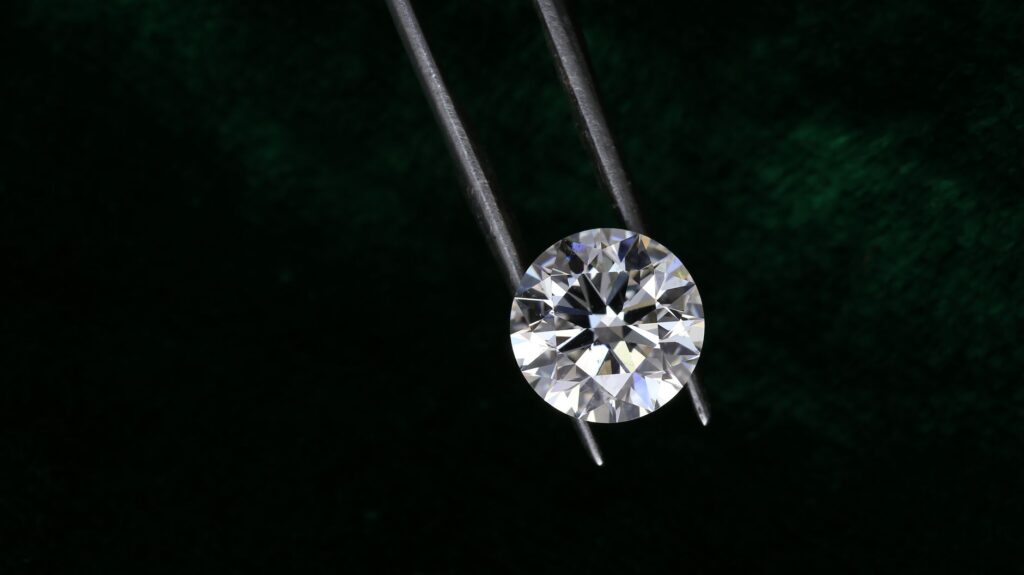
For round diamonds, face-up size is usually discussed in millimeters. A well-cut 1.00 carat round diamond often measures about 6.4 to 6.5 mm in diameter. If another 1.00 carat round measures noticeably smaller, part of its weight may be hidden in depth.
What face-up size means in practice
Face-up size is the practical measurement that helps answer, “How big will it look on the hand?” It matters more than carat weight alone when comparing lab grown and natural options for budget.
For example, a 1.50 carat diamond with a strong spread may appear more visually impressive than a heavier stone with poor proportions. This is why buyers should compare measurements, not just carat labels.
Why budget comparisons often favor lab grown
Lab grown diamonds and natural diamonds are both real diamonds in terms of hardness, optical properties, and basic composition. The major difference for this discussion is price. Lab grown diamonds usually cost much less than natural diamonds of similar quality.
That lower cost often allows buyers to prioritize:
- Higher carat weight
- Larger millimeter spread
- Better color or clarity at a larger size
- A more substantial look within the same total budget
What Buyers Usually Expect
Expecting carat jumps to look dramatic
Carat increases often sound larger on paper than they look in person. A move from 1.00 to 1.20 carats is meaningful, but it is not usually a dramatic visual transformation. Because diamonds are three-dimensional, size increases happen gradually.
This matters when deciding between lab grown and natural. A natural diamond budget may keep you near a lower carat range where upgrades are expensive but visually modest. A lab grown diamond may let you make a bigger jump that is actually easier to notice.
Assuming carat is the same as diameter
Buyers often compare a 1.50 carat diamond with a 2.00 carat diamond and assume the larger one will look one-third larger. That is not how visible size works. The difference in diameter is much smaller than the difference in carat number.
For round diamonds, approximate diameters often look like this:
| Carat Weight | Approximate Round Diameter | Visual Note |
|---|---|---|
| 0.50 ct | 5.1 mm | Delicate look |
| 0.75 ct | 5.8 mm | Noticeably larger, still modest |
| 1.00 ct | 6.4 to 6.5 mm | Classic benchmark size |
| 1.50 ct | 7.3 to 7.4 mm | Clearly larger than 1.00 ct |
| 2.00 ct | 8.0 to 8.2 mm | Strong finger presence |
The jump in visible diameter is real, but not as extreme as the carat numbers may suggest. That is why looking only at weight can create unrealistic size expectations.
Believing size is all that people notice
People do notice size, but they also notice sparkle, shape, and the overall balance of a ring. A poorly cut larger diamond can look dull or smaller than its carat suggests. A well-cut slightly smaller diamond may look brighter and more lively.
This is especially important with lab grown diamonds because the lower price can tempt buyers to increase carat weight too quickly while lowering cut standards. Bigger is not always better if the stone loses visual performance.
Assuming a bigger natural diamond is always the better long-term decision
Some buyers think stretching for the biggest natural diamond possible is the safest move. In reality, that can mean compromising heavily on color, clarity, or cut just to hit a carat milestone. A better-balanced lab grown option may provide a more attractive result on the hand.
What It Actually Looks Like
What people see first
In everyday wear, viewers typically notice the overall outline and presence of the diamond before they think about its exact carat weight. They see whether the stone looks small, balanced, substantial, elongated, or bold. They do not see a grading report from across the room.
This is why the size advantage of lab grown diamonds can be so important. For the same budget, the visual difference may be obvious even though the two diamonds are chemically and optically the same type of gemstone.
Lab grown vs natural in face-up appearance
If a lab grown diamond and a natural diamond have the same:
- Shape
- Measurements
- Cut quality
- Color range
- Clarity range
they should look essentially the same to the eye. The main reason buyers compare them for budget is that the lab grown version usually makes a larger size possible.
For example, a natural diamond budget that comfortably buys a well-cut 1.00 carat round may sometimes allow a buyer to consider a much larger lab grown option, perhaps 1.50 to 2.00 carats or more depending on quality targets and current market pricing. The exact spread varies, but the size gap can be significant.
Finger coverage matters more than some buyers expect
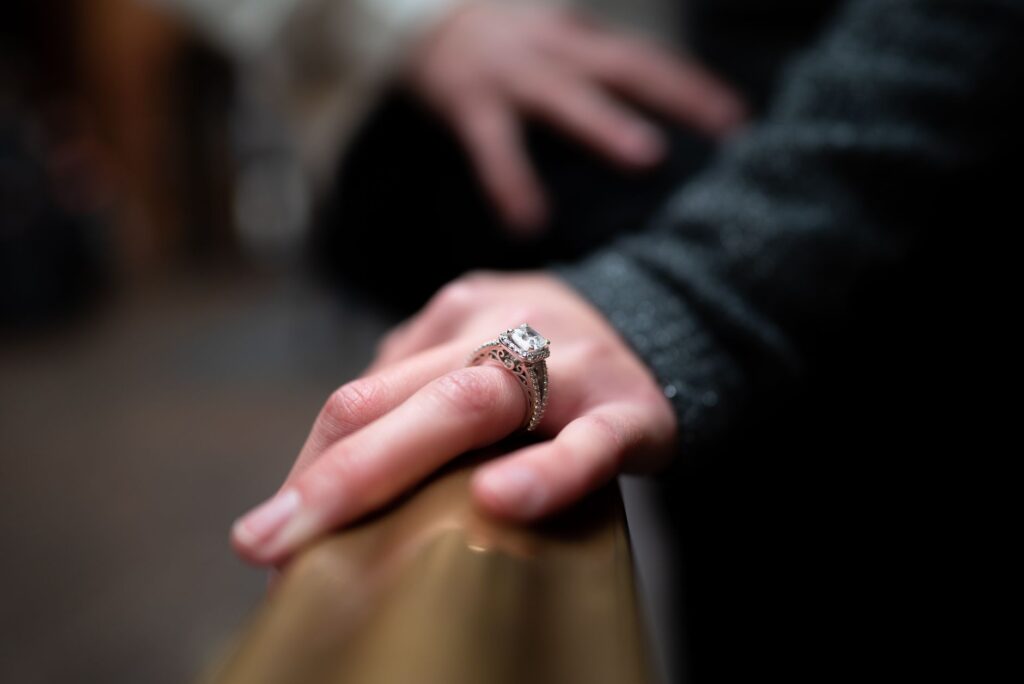
A diamond’s apparent size depends partly on finger size. The same stone looks more prominent on a size 4 finger than on a size 8 finger because it covers more surface area relative to the hand.
This creates an important budget point. A buyer with smaller fingers may not need a major carat increase to achieve a substantial look. In that case, paying for a much larger lab grown diamond may be unnecessary if the goal is simply visual balance. On a larger finger, however, the extra spread from lab grown can make a stronger difference.
Shape changes what “big” looks like
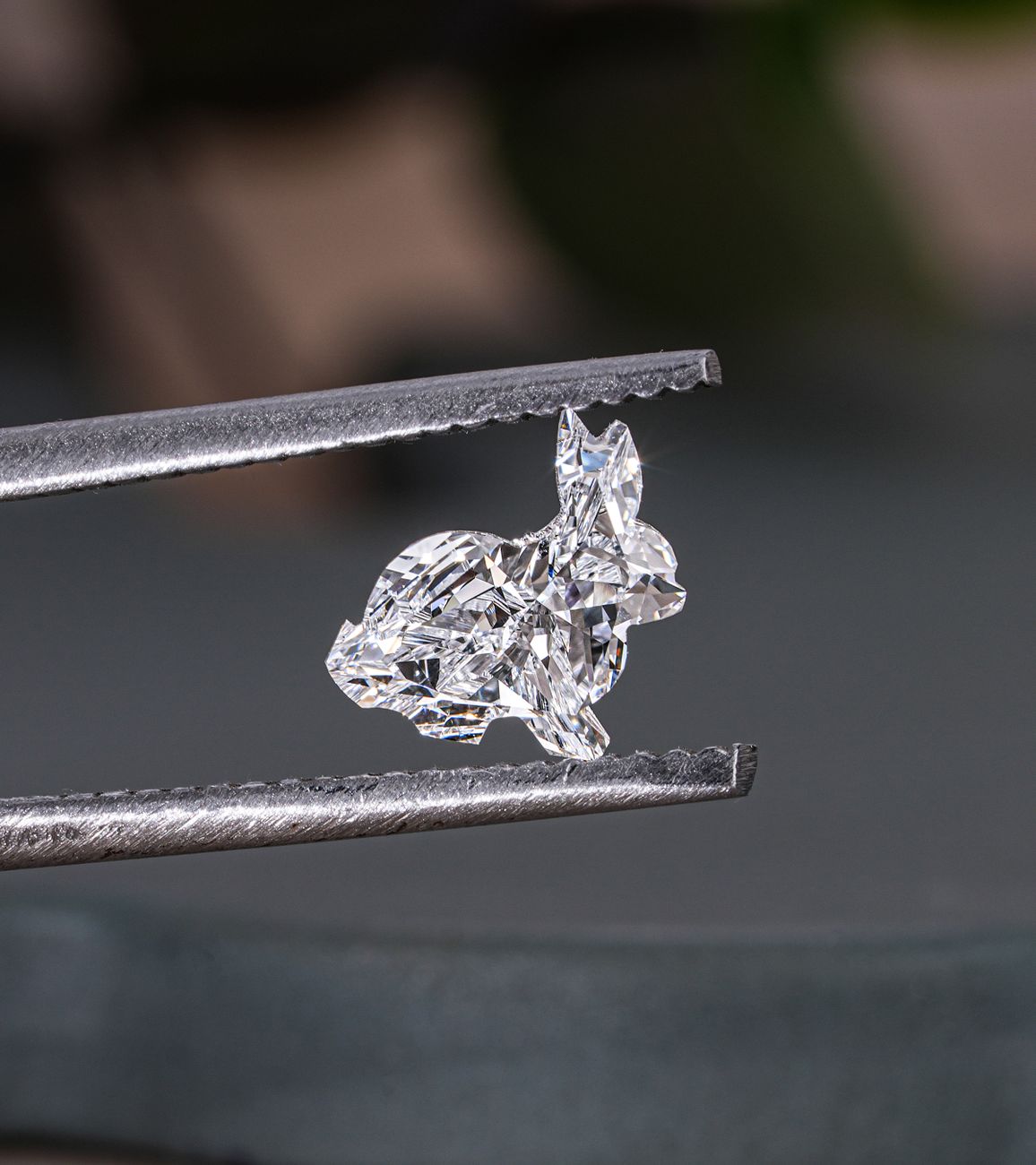
Not all 2.00 carat diamonds look equally large. Oval, pear, marquise, and emerald shapes can create a longer visual footprint than a round diamond of the same weight. Round diamonds tend to hide more weight in depth and have a more compact outline.
That means a buyer trying to maximize visible size on a budget can combine two strategies:
- Choose lab grown instead of natural
- Choose a shape with more face-up spread
That combination often produces a much larger appearance than a round natural diamond purchased at the same total spend.
Factors That Change Apparent Size
Shape
Shape is one of the biggest size influencers. Elongated shapes often appear larger than rounds at the same carat weight because they cover more finger length and can have larger face-up dimensions.
Shapes that often look larger for their weight include:
- Oval
- Pear
- Marquise
- Emerald
- Radiant, depending on proportions
Round diamonds remain popular because of their classic appearance and strong sparkle, but they are usually not the most size-efficient shape.
Cut quality
Cut quality affects brilliance, fire, and the way a diamond handles light. It also affects visual spread. A well-cut diamond often appears more lively and crisp, which can make it look more impressive overall even if it is slightly smaller than another stone.
With rounds, buyers generally benefit from prioritizing strong cut quality over chasing carat weight. A poorly cut 1.20 carat stone may not look better than a beautifully cut 1.00 carat stone.
Depth and hidden weight
Depth refers to how tall the diamond is from top to bottom. A diamond that is too deep may carry weight where it does not contribute much to visible size. This is one reason measurements are so important.
Two stones can both weigh 1.50 carats, but if one has a smaller diameter due to excess depth, it may look less impressive face-up. Buyers comparing lab grown and natural options should avoid assuming the higher carat stone is automatically the larger-looking stone.
Length-to-width ratio
For non-round shapes, length-to-width ratio affects the outline and visual personality of the stone. An oval can look wider and fuller or longer and slimmer depending on its ratio. A marquise can look broad or very elongated.
This affects perceived size because a longer outline may create more finger coverage, especially in north-south settings.
Setting style
The ring setting can make a noticeable difference in perceived size. A thin band often makes the center diamond look larger. A halo, which surrounds the center stone with small diamonds, can create the impression of greater size. A bezel, which encircles the stone with metal, can either enlarge the visual outline or slightly reduce the diamond-only look depending on design.
Helpful setting choices for maximizing appearance include:
- Thin to medium band widths
- Hidden halos or classic halos
- Delicate prongs that expose more of the diamond
- Elongated shapes set lengthwise on the finger
A buyer choosing a natural diamond on a tighter budget may use setting design to improve visual presence without increasing carat weight.
Color and clarity trade-offs
Color and clarity do not directly change millimeter size, but they can affect overall impression. A diamond that looks bright, clean, and lively often feels more visually satisfying than a larger stone with noticeable tint or eye-visible inclusions.
With lab grown diamonds, some buyers can keep a larger size while still staying in attractive color and clarity ranges. With natural diamonds, increasing size may require more compromise.
Real-World Size Examples
Scenario 1: Same budget, round diamond, lab grown vs natural
Suppose a buyer has a budget that comfortably covers a well-cut natural round diamond around 1.00 carat in a pleasing color and clarity range. That same budget may allow a noticeably larger lab grown round, potentially around 1.50 carats or more depending on quality goals and market conditions.
What does that mean visually?
- A 1.00 carat round often looks classic and balanced.
- A 1.50 carat round has stronger presence and more finger coverage.
- The difference is usually noticeable in person, especially from conversational distance.
If size is the top priority, the lab grown option often delivers a more dramatic result for the money.
Scenario 2: 1 carat on a size 4 finger vs size 7 finger
A 1.00 carat round diamond around 6.5 mm can look quite prominent on a size 4 finger. It may appear elegant, substantial, and proportionally large. On a size 7 finger, the same diamond often looks more modest and balanced rather than bold.
This is why there is no universal answer to “Is 1 carat big enough?” Finger size changes the visual experience. A buyer with a larger finger may benefit more from the extra size a lab grown budget makes possible.
Scenario 3: 2 carat oval vs 2 carat round
A 2.00 carat oval typically looks longer than a 2.00 carat round and may appear larger overall because of its surface spread and finger coverage. On the hand, it can create a more elongated, size-forward look.
So if a buyer wants the biggest look possible within a set budget, a lab grown oval can produce a striking face-up presence compared with a smaller natural round.
| Diamond Option | Typical Visual Effect | Budget Efficiency for Size |
|---|---|---|
| Natural round | Classic, compact, brilliant | Lowest for maximizing size |
| Lab grown round | Classic look with larger possible spread | Strong |
| Natural oval | Elongated, larger-looking than round | Better than natural round |
| Lab grown oval | Combines lower cost and elongated spread | Often strongest |
Scenario 4: 0.90 carat vs 1.00 carat natural, or choosing larger lab grown instead
The visual difference between a 0.90 and 1.00 carat round is usually small. In many cases, most observers will not notice it without a side-by-side comparison. Yet the 1.00 carat mark may cost disproportionately more because it is a popular benchmark size.
This creates an interesting budget strategy:
- Choose a slightly under-threshold natural diamond such as 0.90 to 0.95 carat and save money.
- Or shift to lab grown and make a much larger size jump that is easier to notice.
For buyers focused on visible impact, the second strategy often creates the bigger change on the hand.
Scenario 5: Prioritizing quality balance
Consider a buyer who wants a diamond that appears large but still looks bright and clean. In natural, the budget may require choosing between size and quality. In lab grown, that same budget may support a larger size without sacrificing as much in color or clarity.
The result can be a stone that looks both bigger and more attractive overall. This is one of the most practical reasons buyers compare lab grown vs natural diamond size for budget.
Price vs Visual Benefit
Price does not rise in a smooth, proportional way
Diamond pricing tends to jump as carat weight increases, especially around popular milestone sizes such as 0.50, 1.00, 1.50, and 2.00 carats. Natural diamonds are especially affected by these thresholds.
The visual increase from one size step to the next may be moderate, while the cost increase can be substantial. That gap between cost and visible benefit is where lab grown diamonds often look attractive to size-focused buyers.
Diminishing returns are real
The larger a diamond gets, the more expensive each additional size increase can become, particularly in natural. At some point, you pay much more for a size difference that only trained eyes or side-by-side comparisons fully appreciate.
This does not mean larger diamonds are not worth it. It means buyers should ask whether the increase is meaningful enough for their own priorities.
When the upgrade is visually worthwhile
A size upgrade is usually more worthwhile when it creates a clear change in face-up appearance rather than a tiny incremental increase. For example:
- Moving from a natural 0.90 round to a natural 1.00 round may have limited visible benefit relative to price.
- Moving from a natural 1.00 round to a lab grown 1.50 round at a similar budget can produce a much more noticeable visual difference.
That is the central value proposition of lab grown for budget-conscious size buyers. The extra money saved can translate into a size jump that people actually see.
Value depends on what matters to you
There is no universal answer to whether lab grown or natural is “better value.” A natural diamond may feel more meaningful to a buyer who strongly prefers mined origin. A lab grown diamond may be the better value for someone who wants more presence, better size-to-budget efficiency, or a larger center stone without compromising as much elsewhere.
| Priority | Often Better Fit | Why |
|---|---|---|
| Maximum visible size | Lab grown | More carat weight and spread for the same budget |
| Preference for mined origin | Natural | Origin matters more than size efficiency |
| Balanced size and quality | Often lab grown | Easier to maintain color, clarity, and cut at larger sizes |
| Traditional category preference | Natural | Some buyers prioritize that distinction |
Who Should Size Up
Buyers with larger finger sizes
If the ring will be worn on a larger finger, a modest carat weight may look smaller than expected. In that situation, using a lab grown diamond to increase spread can make practical sense.
Buyers who care most about visual presence
Some people simply want a ring with more finger coverage and a stronger center-stone look. If visible impact matters more than origin, lab grown is often the more efficient route.
Buyers wanting elongated shapes in substantial sizes
Elongated shapes can look especially impressive at larger measurements. Reaching those dimensions in natural diamonds can become expensive quickly. Lab grown often makes those designs far more accessible.
Buyers trying to avoid harsh quality compromises
If the natural diamond budget forces you into compromises that make the stone look noticeably tinted, included, or poorly cut, it may be smarter to choose a larger lab grown diamond that still performs well visually.
Who Can Save Money
Buyers with small finger sizes
On smaller fingers, even modest carat weights can look substantial. Spending significantly more for extra size may not create the dramatic change you expect.
Buyers who prefer round diamonds but do not need a milestone carat weight
A well-cut 0.90 to 0.95 carat round can look very similar to a 1.00 carat round while often avoiding the premium attached to the magic size. This can apply in both natural and lab grown, though it is often more noticeable in natural pricing.
Buyers open to shape flexibility
Choosing an oval or pear rather than a round can create a larger-looking appearance without needing as much carat weight. This can help natural buyers stretch a budget and can help lab grown buyers avoid going unnecessarily large.
Buyers focused on overall ring design
A halo setting, slim band, or elongated center shape can create more visual presence without paying for a large jump in carat weight. Sometimes design does more for apparent size than a small weight increase.
Common Buyer Mistakes
Chasing carat numbers instead of measurements
A buyer may feel drawn to 1.00, 1.50, or 2.00 carats because those numbers sound important. But two diamonds with similar millimeter measurements can look almost the same even if one has a more impressive carat label.
Ignoring cut for the sake of size
A larger diamond with weak cut quality may not look as bright or as large as expected. Cut remains one of the most important quality factors for visual beauty.
Overpaying for magic sizes
Popular benchmark weights often command price premiums that are not always matched by visible size differences. Slightly below those thresholds can offer better value.
Forgetting finger size
A diamond does not exist in isolation. It is seen on a hand. Looking at carat charts without considering finger size can create unrealistic expectations.
Assuming all shapes of the same weight look equally large
They do not. A 2.00 carat marquise and a 2.00 carat round can create very different visual impressions.
Choosing the largest possible lab grown diamond without balance
Lab grown pricing can make very large diamonds feel attainable. But it still makes sense to avoid poorly cut stones, awkward proportions, or sizes that do not suit the wearer’s style and hand.
Ignoring certification and basic quality consistency
Whether lab grown or natural, the diamond should still be evaluated by a respected grading approach and checked for cut, measurements, color, clarity, and overall appearance. Lower price should not mean lower scrutiny.
Frequently Asked Questions
Do lab grown diamonds look bigger than natural diamonds?
Not by default. A lab grown diamond and a natural diamond of the same shape, cut, and measurements should look the same size. The reason lab grown often seems bigger is that the lower price allows buyers to afford a larger stone for the same budget.
How much bigger can I go with lab grown instead of natural?
It depends on market pricing, shape, quality targets, and the specific diamond. In many cases, the size increase can be substantial enough to move into a higher carat category or to maintain better quality at a larger size. The important point is that lab grown often provides a noticeably larger visual result for the same spend.
Will people be able to tell that a diamond is lab grown?
Not by sight alone in normal viewing conditions if the diamond is otherwise comparable in quality. What people are more likely to notice is the overall appearance, including size, sparkle, shape, and setting.
Is a smaller natural diamond better than a larger lab grown diamond?
That depends on your priorities. If mined origin matters more to you than visible size, a smaller natural diamond may be the right choice. If your goal is maximizing appearance within budget, a larger lab grown diamond often makes more sense.
Does a bigger diamond always look better?
No. Proportions, cut, shape, color, clarity, and ring design all affect how appealing the diamond looks. A balanced stone often looks better than a larger one chosen with too many compromises.
What shape gives the biggest look for the money?
Elongated shapes such as oval, pear, and marquise often look larger than round diamonds of the same weight. Combined with lab grown pricing, they can offer strong visual size value.
Should I choose just under a milestone carat weight?
Often, yes. A diamond just below a benchmark size can offer nearly the same face-up look at a lower price, especially in natural diamonds. This is a practical strategy for buyers who care more about visible size than the exact carat label.
Is resale value part of the size decision?
It can be. Buyers should understand that natural and lab grown diamonds may perform differently in resale markets, and resale is often less favorable than retail pricing suggests for both categories. If your main goal is size and immediate visual value, lab grown can be very compelling. If long-term market perception is central to your decision, that may influence your choice differently.
Conclusion
The most useful way to think about Lab Grown vs Natural Diamond Size for Budget is this: both can be beautiful, but they deliver very different size outcomes at the same spending level. Lab grown diamonds usually provide more visible size, more carat flexibility, and more room to maintain appealing color, clarity, and cut without overspending.
Natural diamonds may still be the right choice for buyers who place a high value on mined origin or who are comfortable choosing a smaller center stone. But from a purely visual budget perspective, lab grown often makes it easier to reach a size difference that is actually noticeable on the hand.
The smartest comparison is not just carat versus carat. It is budget versus visible result. Check the measurements, evaluate the shape, consider finger size, and think about whether the upgrade creates a real visual improvement or only a more impressive number on paper. That approach leads to better diamond decisions, whether you choose lab grown or natural.