Choosing between round and princess cut diamonds is one of the most common shape decisions buyers make, especially when shopping for an engagement ring. Both are widely available in natural and lab grown diamonds, both can look beautiful, and both can fit a wide range of budgets. The real difference is not just shape, but how each one handles light, shows size, fits certain ring styles, and performs in everyday wear.
If you are comparing Round vs Princess Cut Diamonds, the best choice depends on what you value most. Round diamonds are known for maximum brilliance and a classic look. Princess cuts offer a sharper, more geometric style, often with a lower price per carat and a more contemporary appearance.
This guide explains how the two shapes compare in appearance, sparkle, durability, pricing, and buying considerations so you can make a confident decision based on your priorities rather than trends alone.
Quick Answer
Round diamonds are usually the best choice for buyers who want the brightest, most traditional look and the broadest long-term appeal. Princess cut diamonds are often a strong option for people who prefer a square shape, a modern style, and sometimes better value for the same budget.
In practical terms, round cuts usually sparkle more because they are engineered to return more light to the viewer. Princess cuts can still be very brilliant, but their shape creates a different visual effect, with more geometric flashes than the softer pattern seen in a round diamond. If durability matters, round diamonds also have an edge because they have no sharp corners.
For buyers comparing diamonds in the current market, the decision often comes down to a simple trade-off: maximum sparkle and timelessness with round, or more angular style and often better budget efficiency with princess.
Understanding Round and Princess Cut Diamonds
What is a round diamond?
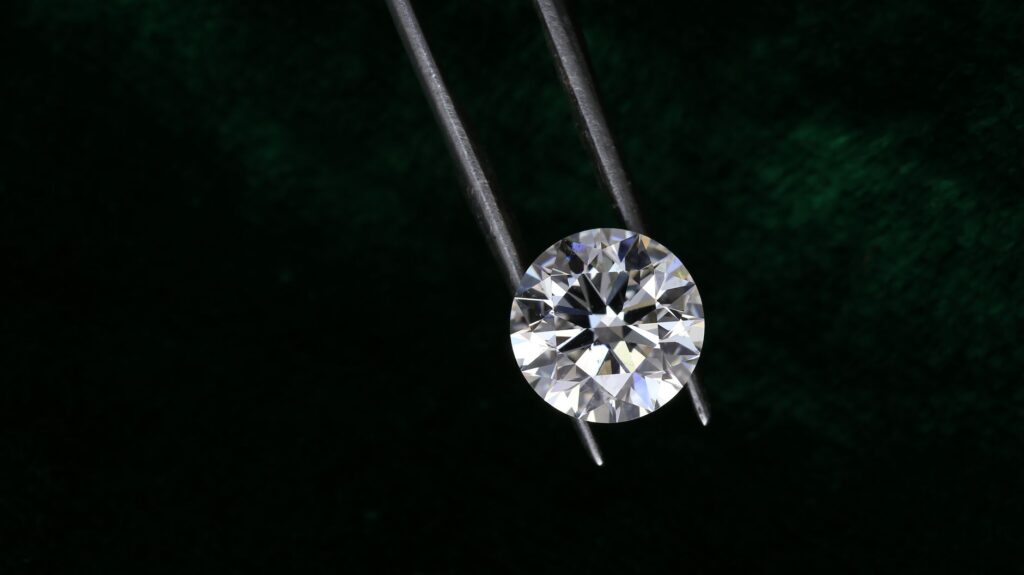
A round diamond, often called a round brilliant, is the most popular diamond shape. It has 57 or 58 facets and is cut to maximize light return, which is why it is often considered the brightest shape. Because the shape is symmetrical and deeply studied, round diamonds are the standard by which many other cuts are judged.
Round diamonds work well in nearly every ring style. They are especially common in solitaire, halo, three-stone, and pavé settings. Their versatility is one reason they continue to be a top choice in both natural and lab grown diamonds.
What is a princess cut diamond?
A princess cut diamond is a square or slightly rectangular modified brilliant cut. It was designed to combine sharp, modern lines with strong sparkle. The shape became popular because it offers a contemporary look that feels different from the traditional round diamond.
Princess cuts are often chosen for engagement rings, stud earrings, and designs where a square shape complements the setting. They typically have pointed corners, which affect both style and durability.
Why these two shapes are compared so often
Round and princess cuts are often compared because they both belong to the brilliant-cut family. That means both are designed to reflect light well, unlike step cuts such as emerald cuts, which create a more mirror-like effect. The comparison usually comes down to aesthetics, price, and everyday practicality rather than any major difference in diamond quality.
They also appeal to similar buyers. Both are common engagement ring choices, both are available in many sizes and qualities, and both can be used in settings that range from classic to modern.
Round vs Princess Cut Diamonds at a Glance
| Feature | Round Cut | Princess Cut |
|---|---|---|
| Overall appearance | Classic, soft, symmetrical | Modern, angular, square or slightly rectangular |
| Sparkle | Usually the strongest brilliance and fire | Very good brilliance, with sharper flashes |
| Face-up shape | Circular | Square or slightly rectangular |
| Durability | No corners, generally more durable | Sharp corners need more protection |
| Price per carat | Usually higher | Often lower |
| Finger appearance | Balanced and traditional | Can look slightly longer or more geometric |
| Clarity visibility | Often forgiving, but depends on size and cut | Can hide some inclusions well, but corners and pattern matter |
| Popularity | Most popular shape | Popular, but less common than round |
| Best for | Buyers seeking maximum sparkle and timeless appeal | Buyers seeking a modern square look and value |
Appearance and Visual Performance
How round diamonds look
Round diamonds have a soft, symmetrical outline that tends to feel classic and balanced. Because the shape has been refined for light return, it often looks lively in many lighting environments. Buyers who want a diamond that appears bright from across the room usually prefer round cuts.
Round diamonds also tend to look familiar and universally appealing. For many people, that matters because the ring needs to feel appropriate in both casual and formal settings. If you want a shape that is unlikely to feel dated over time, round is often the safer choice.
How princess cut diamonds look
Princess cuts have a geometric appearance that feels modern and structured. The square outline can create a strong visual presence, especially when set in a simple ring design. Many buyers like that the shape feels fresh without being unusual.
Princess cuts can look larger or smaller than round diamonds of the same carat weight depending on their proportions. Because the depth can vary, two princess cuts with the same weight may not face up the same size. This is one reason it is important to consider measurements, not just carat weight.
Sparkle, brilliance, fire, and scintillation explained
When buyers talk about sparkle, they are usually describing several different effects. Brilliance is the white light reflected by the diamond. Fire is the colored light you see as the diamond moves. Scintillation is the pattern of light and dark flashes when the stone or viewer moves.
Round diamonds typically lead in overall brilliance because their facet pattern is optimized to return light efficiently. Princess cuts can also be very bright, but their sparkle pattern is more angular and sometimes slightly more intense in flashes than evenly distributed. In a well-cut stone, both can look lively, but the visual character is not the same.
Why round diamonds usually sparkle more
Round diamonds generally perform best in sparkle because the shape was mathematically designed to maximize light return. The round outline allows the facets to work together in a highly efficient pattern. In simple terms, more light enters, bounces, and returns to the eye in a predictable way.
This is why round diamonds are often used as the benchmark for cut quality. If a buyer wants the most consistent brightness across many lighting conditions, round is usually the easiest shape to trust. This is especially true in lower-light environments, where a round diamond often stays lively instead of looking flat.
How princess cuts create their sparkle
Princess cuts use a faceting pattern that creates strong, sharp flashes of light. The effect is different from a round diamond, but it can still be attractive and lively. Some buyers even prefer the sharper, more graphic sparkle because it suits modern jewelry designs.
The challenge with princess cuts is that their sparkle can vary more between stones. Proportions, depth, and corner shape all affect performance. A well-cut princess can be impressive, but a poorly proportioned one may appear darker in the center or less balanced overall.
Light performance in different settings
The setting can influence how each shape looks in real life. A round diamond often performs consistently in solitaires, halos, and pavé settings because the shape is inherently symmetrical. Princess cuts can look especially strong in clean, minimalist designs where the square outline is easy to see.
Heavy settings can also change the visual balance. If a princess cut is surrounded by side stones or a thick halo, the square outline may appear less crisp. For buyers who care about visual performance, it is worth looking at the diamond both loose and in the setting whenever possible.
How They Compare in Value and Pricing
Price is one of the biggest reasons buyers compare these two shapes. In many cases, princess cut diamonds cost less per carat than round diamonds of similar quality. That pricing difference exists because round diamonds are more in demand and because more rough diamond is often lost when cutting a round shape.
Round diamonds require more of the original rough crystal to be removed during cutting. That means less finished weight from the same rough stone, which raises the cost. Princess cuts can often preserve more of the original rough, making them somewhat more efficient to produce.
Why round diamonds cost more
Round diamonds are the most popular shape in the market, and demand usually supports higher pricing. In addition, cutting a round diamond often produces more waste from the rough stone. Both factors contribute to the premium.
For buyers, that means a round diamond may require more budget to reach the same carat weight, color, or clarity level as a princess cut. If your priority is maximizing budget efficiency, princess may offer a practical advantage.
Why princess cuts can offer value
Princess cuts often allow buyers to choose a larger-looking diamond or a higher overall quality level for the same budget. That does not mean they are automatically a better value in every case, but the pricing structure can be favorable. This is especially relevant for shoppers comparing natural and lab grown diamond pricing, where shape still influences the final cost.
If you are trying to balance size and quality, a princess cut can be worth considering. The savings may be enough to move up in color or clarity, or to choose a better setting.
Shape and value in lab grown diamonds
In the lab grown market, price differences between shapes still exist, but they may feel less dramatic than in natural diamonds because the base cost of the diamond is already lower. Even so, round lab grown diamonds usually remain more expensive than princess cuts of comparable quality. Buyers who want the look of a larger diamond on a tighter budget often compare princess cuts closely.
That said, value is not just about the lowest price. It also includes how the diamond looks in real life, how durable it is, and whether it matches your style long term.
Durability and Daily Wear Considerations
Why round diamonds are generally more durable
Round diamonds are usually considered the more durable option because they do not have sharp corners. Corners are vulnerable to chipping if the ring gets knocked against a hard surface. In a round diamond, the continuous curve distributes impact more evenly.
For everyday wear, that matters. Engagement rings are not display pieces, and buyers should think about how the shape will hold up over years of use. If you want the lowest-maintenance shape, round is typically the easier choice.
Princess cut corner protection
Princess cuts have pointed corners, which can be one of their most attractive features visually. Those corners also create a wear consideration. They can be protected with a four-prong or bezel-style setting, but the setting needs to be well made.
If a princess cut is chosen, setting design becomes more important than it is for a round diamond. The prongs should secure the corners properly without making the ring look heavy. Buyers comparing settings may also want to read about engagement rings and how different mounting styles affect protection.
Everyday wear and lifestyle
For someone with an active lifestyle, a round diamond may be the more practical choice simply because there are no corners to worry about. Princess cuts can still be excellent daily-wear stones, but they deserve a little more attention when it comes to setting choice and ring care.
If you work with your hands, wear gloves often, or prefer low-fuss jewelry, that practical detail is worth taking seriously. It is not just about beauty, but about long-term wearability.
Clarity and Color Visibility
Do round diamonds hide inclusions better?
Round diamonds are often forgiving when it comes to clarity because their faceting pattern creates a lot of visual movement. Small inclusions may be less noticeable than in some other shapes, depending on placement and size. That said, this is not a reason to ignore the clarity grade entirely.
For buyers comparing diamond clarity grades, the goal is not perfection but a stone that looks clean to the eye. A round diamond in the VS or SI range may be a sensible balance for many buyers, though the best choice depends on the individual stone.
How princess cuts handle inclusions
Princess cuts can also hide inclusions fairly well, especially when the imperfections are near the corners or edge areas. However, the internal pattern of the stone may make certain inclusions easier to spot if they sit near the center. Because the shape is more angular, some buyers feel princess cuts have a slightly more defined view into the stone.
This is why certification and visual inspection matter. A grading report gives useful information, but it does not replace seeing how the specific stone looks under normal lighting.
Which shape shows color more easily?
Color visibility depends on the size of the diamond, the quality of the cut, and the setting color. In general, both round and princess cuts can show color if the stone is large enough or in the lower color grades. Round diamonds are often a little more forgiving because their light return can help mask subtle tint.
Princess cuts can also mask color well, but the angular structure sometimes makes body color more noticeable in certain lighting. Buyers concerned about color should review diamond color grades and consider the metal color of the setting. A warm-toned yellow gold or rose gold setting can make near-colorless diamonds look whiter, while white metal may highlight color more clearly.
Face-Up Size and Visual Spread
Carat weight does not always tell the full story. Face-up size refers to how large a diamond looks when viewed from above. Two stones with the same carat weight can look noticeably different depending on shape and proportions.
Round diamonds and spread
Round diamonds usually face up in a balanced way, but they can appear smaller than some fancy shapes at the same carat weight because of their outline and depth distribution. The round shape tends to prioritize light performance over maximum spread. That is often a worthwhile trade-off for buyers who value sparkle most.
For example, a round diamond may give up a little apparent size compared with a more spread-out shape, but it often rewards that trade with stronger brilliance and a cleaner overall look. That is why many buyers are comfortable accepting a slightly smaller face-up appearance.
Princess cuts and spread
Princess cuts can offer good face-up size, but depth plays a major role. A shallow princess may look larger for its weight, while a deeper one may appear smaller. This is why two princess cuts with the same carat weight can look quite different in person.
When comparing princess cuts, pay attention to measurements and not just the grading report. A well-proportioned stone is more important than a number on its own.
How carat weight should be interpreted
Buyers often focus on carat because it is easy to understand, but cut quality determines how much of that weight is visible from above. A well-cut 1.00 carat diamond may appear more impressive than a poorly cut 1.10 carat diamond. This is true for both shapes, but it matters especially with princess cuts because depth variation can have a bigger effect on appearance.
If you are learning how to compare size versus quality, a general diamond buying guide can help you understand how carat, cut, color, and clarity work together.
How Each Shape Affects Finger Appearance
Round diamonds on the hand
Round diamonds tend to create a balanced, classic look on the finger. Their circular shape can soften the appearance of the ring and works well with many hand shapes. They are especially versatile if you want a design that feels traditional and polished.
Because the shape is symmetrical, rounds can look harmonious in solitaire settings or with side stones. They usually do not create a dramatic lengthening effect, but they do have broad visual appeal.
Princess cuts on the hand
Princess cuts create a more structured and modern look. The square outline can give the ring a clean, architectural feel. On some hands, the straight edges can make the stone seem larger or more assertive, even when the carat weight is similar to a round diamond.
If you like contemporary styles, princess cuts can feel more distinctive without being too unusual. They also pair well with straight bands and geometric settings.
Length-to-width ratio and visual balance
With princess cuts, length-to-width ratio matters less than it does for elongated shapes like oval or pear diamonds, but it still affects the visual impression. A true square princess usually looks more compact and balanced, while a slightly rectangular one may feel more stretched.
Round diamonds do not have a length-to-width ratio issue because the shape is circular. That simplicity is part of why they are so easy to shop for and so easy to pair with different ring designs.
Popularity and Long-Term Appeal
Why round diamonds remain the most popular
Round diamonds remain the most popular shape because they are versatile, bright, and familiar. Buyers often choose them when they want a shape that feels safe from a style perspective. Round cuts also tend to hold broad consumer appeal over time, which can matter if you prefer timeless design language.
Their popularity also means they are easy to find in a wide range of sizes, qualities, and settings. That makes shopping simpler for first-time buyers.
Why princess cuts continue to be popular
Princess cuts remain a strong choice for buyers who want something more modern than a round diamond but still traditional enough for everyday wear. They have a defined shape that feels elegant without being overly trendy. For some buyers, the square outline is a more personal style statement.
Princess cuts also continue to appeal to shoppers who want a cleaner, more angular look in engagement rings and fashion jewelry. They are less universal than round diamonds, but that can be part of the appeal.
Timeless versus style-driven
Round diamonds are usually the more timeless option because they have the broadest acceptance across generations. Princess cuts are also established and not a passing trend, but they feel more style-specific. The right choice depends on whether you want the safest long-term classic or a shape with a bit more visual edge.
If you are selecting a ring for someone with a strong preference for clean lines and modern design, princess may be the better fit. If you want the least risky option in terms of long-term style, round is usually easier to defend.
Side-by-Side Comparison of Key Buying Factors
| Category | Round Cut | Princess Cut |
|---|---|---|
| Appearance | Soft, balanced, classic | Sharp, modern, geometric |
| Brilliance | Usually strongest overall | Strong, but more angular in pattern |
| Fire | Excellent colored flashes | Good, but often less uniform than round |
| Scintillation | Even, lively sparkle pattern | Sharp flashes, more geometric look |
| Face-up size | Balanced, but not always the largest-looking | Can look large if proportions are good |
| Durability | Excellent, no corners | Good, but corners need protection |
| Clarity visibility | Often forgiving | Also forgiving, but depends on inclusion placement |
| Color visibility | Generally forgiving | Can show tint in some stones |
| Price per carat | Typically higher | Typically lower |
| Style flexibility | Works with almost any setting | Works best with settings that complement the corners |
Important Buying Considerations
Cut quality matters more than shape alone
Shape is only the starting point. A well-cut round diamond can outperform a poorly cut princess diamond in brilliance, and the reverse is also true if the comparison is unfair. The quality of the cut affects how much light is returned, how large the stone appears, and whether imperfections stand out.
For round diamonds, cut grade is often one of the most important filters. For princess cuts, there is usually less standardized light performance grading, so buyers need to look more closely at proportions and visual appearance.
Understand how proportions affect performance
Two diamonds with the same shape and carat weight can look and perform very differently if one is too deep or too shallow. In round diamonds, proportions influence brilliance, fire, and symmetry. In princess cuts, they also influence whether the stone looks square, bright, and well balanced.
This is why it helps to compare measurements rather than focusing only on carat weight. A diamond’s depth can absorb weight without adding visible size, which is especially relevant for princess cuts.
Use certification as a baseline, not the full story
Diamond certificates from respected labs help verify the basics, including carat weight, measurements, color, clarity, and cut grade when applicable. They are important, but they do not replace real-world evaluation. If you are comparing options, understanding diamond certifications is a useful part of the process.
In the lab grown market, certification is still important for confirming the stone’s details and origin. Buyers should look for a reputable grading report, especially when comparing shape, size, and value.
Choose the setting with the shape in mind
The setting can change how each diamond shape performs and how long it lasts. Round diamonds are adaptable and work well in many styles. Princess cuts need more attention around the corners, so the setting should support those points properly.
If you are comparing solitaire, halo, and three-stone designs, think about how the shape interacts with prongs and band width. The setting should protect the stone while still letting the shape look intentional.
Consider metal color and overall style
Metal color affects how the diamond is perceived. White gold and platinum often complement both round and princess cuts by creating a clean, bright look. Yellow gold and rose gold can soften the appearance and may reduce the contrast around the stone.
If the ring style is minimal and modern, a princess cut may feel especially cohesive. If the style is more traditional or romantic, a round diamond usually fits more naturally.
Think about long-term wear and maintenance
A diamond ring is a long-term purchase, not just a style choice for today. Round diamonds are easier to maintain because they have fewer structural concerns. Princess cuts can last just as well with proper care, but the corners should be checked periodically, especially in rings worn every day.
Regular cleaning, routine setting inspections, and careful storage help both shapes stay secure and bright. This is especially relevant for buyers who want their ring to remain in good condition for years without much hassle.
Round vs Princess in Natural and Lab Grown Diamonds
The shape comparison is similar whether the diamond is natural or lab grown. What changes is often the budget and available size range. Because lab grown diamonds are generally more affordable, many buyers use the savings to choose a higher carat weight, a better color grade, or a cleaner clarity grade.
That can make shape choice even more important. If you want the brightest look possible, a lab grown round diamond may allow you to maximize beauty while staying within budget. If you want a larger-looking stone with a more geometric style, a princess cut may stretch the budget further.
One thing to remember is that lab grown diamonds and natural diamonds of the same shape should still be compared on the same basic quality factors. Shape does not override cut, color, clarity, or proportions. The same standards apply to both categories.
Common Mistakes Buyers Make
Choosing carat weight without checking measurements
Some buyers assume two diamonds of the same carat will look identical. That is not true, especially with princess cuts. Always check the diamond’s measurements and face-up dimensions so you understand how large it will look on the hand.
Overlooking corner protection on princess cuts
Princess cuts need more care in the setting design. A beautiful stone can still be vulnerable if the corners are not secured properly. Buyers should not treat the setting as an afterthought.
Ignoring cut quality in round diamonds
Round diamonds have the best potential sparkle, but only if the cut quality is strong. A round diamond with poor proportions may look dull or leaky, even if the other grading factors are high. Cut is especially important when comparing similar stones.
Assuming one shape is always better value
Princess cuts are often less expensive per carat, but value depends on the whole stone. If the princess has weak proportions or a less pleasing shape, the lower price may not be worth it. Similarly, a round diamond may cost more but deliver better visual performance and long-term satisfaction.
Neglecting personal style
Some buyers focus so heavily on numbers that they forget the ring has to feel right on the hand. Round cuts feel classic and familiar. Princess cuts feel more modern and structured. Personal preference matters, because the right diamond shape is the one the wearer will enjoy for years.
Who Round Diamonds Are Best For
Round diamonds are usually best for buyers who want the most classic and versatile choice. They are a strong fit if you prioritize sparkle, timeless appeal, and durability. They are also a practical option for first-time buyers who want a shape with a straightforward shopping process.
Round cuts may be especially appealing if you want the widest range of setting choices or if you prefer a ring that feels balanced and universally flattering. Buyers who care most about brilliance often end up here.
Who Princess Cut Diamonds Are Best For
Princess cuts are a good match for buyers who prefer a square shape and a more modern look. They can be a smart choice for shoppers who want a diamond that feels a little more distinctive while still remaining widely accepted in engagement ring design.
They may also suit buyers who are working within a budget and want to maximize size or quality for the price. If you are comfortable with the need for a well-made setting and want a sharper visual profile, princess can be a very practical option.
Frequently Asked Questions
Are round diamonds better than princess cut diamonds?
Not automatically. Round diamonds are usually better for maximum brilliance and durability, while princess cuts can offer a modern look and lower price per carat. The better choice depends on your style, budget, and how the ring will be worn.
Do princess cut diamonds look bigger than round diamonds?
Sometimes they can, but not always. Princess cuts may face up slightly larger if the proportions are favorable, but a deep stone may look smaller than expected. Round diamonds are often more predictable in appearance, even if they do not always maximize spread.
Which shape sparkles more?
Round diamonds usually sparkle more because their facet arrangement is optimized for light return. Princess cuts still sparkle well, but the flash pattern is more geometric and can vary more from stone to stone.
Are princess cut diamonds more likely to chip?
They can be more vulnerable at the corners because those points are exposed. A proper setting helps reduce that risk, but the shape still requires a bit more care than a round diamond.
Is a round diamond always more expensive?
Usually, yes, when comparing diamonds of similar quality. Round diamonds often cost more per carat because of demand and cutting efficiency. However, total price still depends on size, color, clarity, cut quality, and whether the diamond is natural or lab grown.
Which shape is better for an engagement ring?
Both can work well for engagement rings. Round is better if you want a classic, highly brilliant, and low-maintenance option. Princess is better if you want a square shape with a modern feel and possibly stronger value.
Do lab grown diamonds look different in round vs princess cuts?
The shape itself looks the same regardless of origin. What matters is the cut quality, proportions, and grading. A well-cut lab grown round or princess diamond can look just as polished as a natural diamond of the same shape.
Which shape is more timeless?
Round diamonds are generally considered the most timeless because they have remained the most popular shape for decades. Princess cuts are also established and classic in their own right, but they feel more style-specific and contemporary.
Conclusion
Round and princess cut diamonds each offer a distinct look and set of practical trade-offs. Round diamonds usually deliver the strongest brilliance, the most universal appeal, and the best durability. Princess cuts often provide a modern square shape, strong sparkle, and a more budget-friendly price per carat.
If you want the safest long-term classic, round is usually the stronger choice. If you want a geometric look and better value potential, princess can be a smart option, especially when paired with a secure setting. In both cases, the best decision comes from looking beyond shape alone and considering cut quality, proportions, certification, and how the ring will be worn every day.
For most buyers, the best next step is to compare a few well-matched stones side by side, paying attention to actual appearance rather than just carat weight or price. That approach gives the clearest picture of which shape fits your priorities best.