Pinpoint inclusions are one of those clarity details that sound more serious than they usually are. In many diamonds, they are so tiny that they have little practical effect on appearance, especially once the stone is set and viewed in normal lighting.
Still, pinpoints matter because diamond clarity is one of the first things buyers compare when choosing between stones. In both lab grown diamonds and natural diamonds, the number, size, and position of inclusions can influence the clarity grade, the asking price, and sometimes the way a diamond looks face-up. Knowing what a pinpoint is helps you separate meaningful clarity concerns from details that matter mostly on paper.
This guide explains what pinpoint inclusions are, how they relate to diamond clarity, when they are worth worrying about, and how they compare with other inclusion types. If you are researching diamond clarity or trying to understand whether a stone is eye clean, this is the kind of information that can make the buying process much clearer.
Quick Answer
A pinpoint inclusion is a very tiny dot-like feature inside a diamond. It usually appears only under magnification and is often too small to see with the naked eye.
For most buyers, a few pinpoints are not a problem. They usually do not affect the sparkle, durability, or everyday appearance of the stone. The more important question is whether the diamond has enough pinpoints, or enough other inclusions, to affect transparency or eye-clean appearance.
In other words, pinpoints are usually a low-concern clarity characteristic. They become more relevant only when they are part of a broader inclusion pattern that is visible in normal viewing conditions.
Understanding What a Pinpoint Inclusion Is
Simple definition
A pinpoint is a very small internal mark inside a diamond. Under magnification, it looks like a tiny dot. It may appear white, black, or transparent depending on the way it interacts with light and the surrounding crystal structure.
Gemologists use the term to describe one of the smallest visible clarity features in a diamond. In practical buyer language, it is basically a microscopic speck that usually has little effect on how the diamond looks in everyday wear.
What it looks like
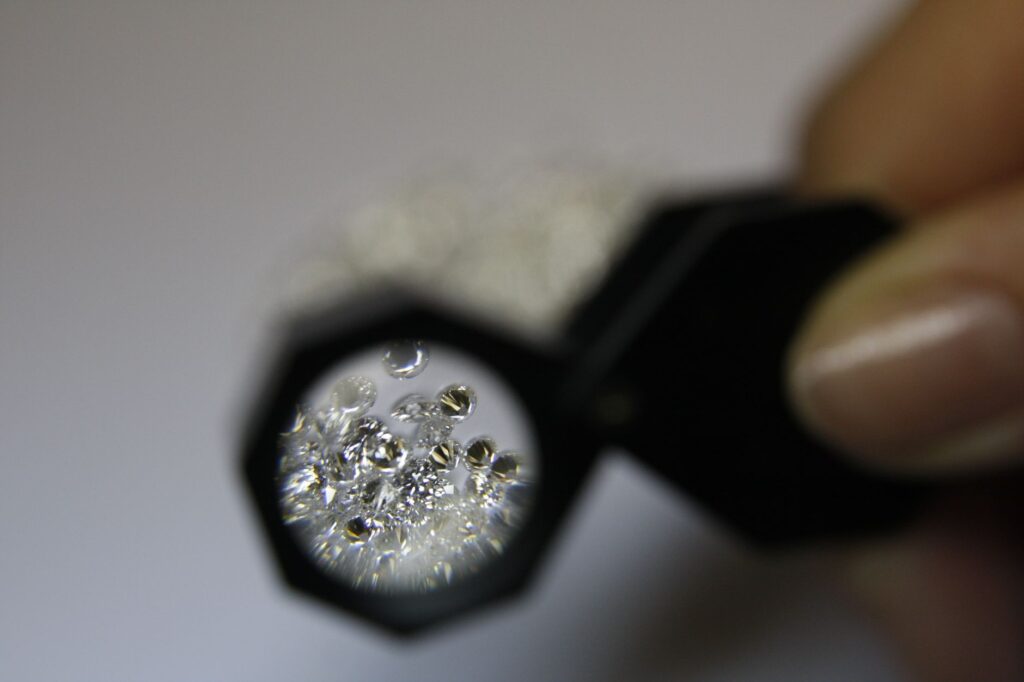
Viewed through a jeweler’s loupe or microscope, a pinpoint can resemble a tiny dust-like dot. In many stones, it is so small that it blends into the surrounding facets unless several are grouped together.
To the naked eye, a single pinpoint typically looks like nothing at all. That is why buyers are usually more concerned with whether the stone is eye clean than whether the report mentions pinpoints.
How pinpoints appear on grading reports
On a diamond grading report, pinpoints may be listed as part of the diamond’s internal characteristics. They are not always singled out as the only inclusion, because reports generally describe the overall clarity picture rather than every microscopic detail.
A report may show pinpoints alone or together with other small features such as clouds, crystals, or needles. The clarity grade reflects the full combination, not just the pinpoints themselves. This is why a diamond can contain pinpoints and still be a good visual candidate for an engagement ring or everyday jewelry.
How Pinpoint Inclusions Fit Into Diamond Clarity
What diamond clarity means
Diamond clarity is the measure of internal inclusions and external blemishes in a diamond, along with how noticeable they are. The clarity scale ranges from flawless or internally flawless stones to diamonds with inclusions that are easier to see.
For buyers, clarity matters because it can influence how clean, transparent, and bright a diamond appears. It can also affect price, especially in higher grades where small differences may create large price jumps. If you want a broader overview, it helps to understand the basics of diamond clarity grades before focusing on one inclusion type.
Why tiny inclusions are graded differently from visible ones
Not all inclusions have the same impact. A pinpoint is usually far less visible than a dark crystal, a large feather, or a chip near the surface. Gemologists consider size, number, position, relief, and whether the inclusion affects transparency when assigning a clarity grade.
That means a diamond may still receive a high clarity grade even if it contains pinpoints, as long as they are sparse and hard to detect. By contrast, a diamond with a small number of more obvious inclusions may receive a lower grade because those characteristics are easier to see.
Why Pinpoint Inclusions Matter to Buyers
Appearance
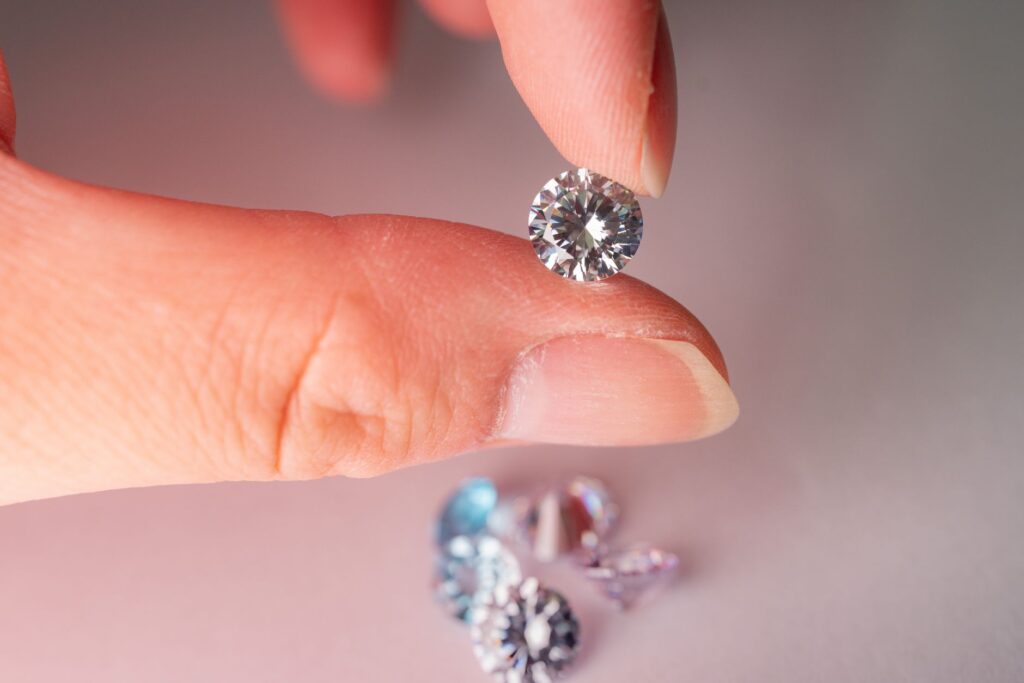
The biggest buyer concern is whether pinpoints can actually be seen. In most stones, the answer is no. A few pinpoints are usually too small to affect the face-up look of the diamond, especially after it is mounted in a ring.
Where pinpoints become more relevant is when they are numerous enough to create a cloudy effect or reduce transparency. That is not common in well-selected higher clarity stones, but it can happen in some lower-clarity diamonds or in stones where tiny inclusions are closely grouped.
Value
Pinpoints often matter more to the grading lab than to the casual viewer. That means they can influence price even when the visual difference is minimal. For shoppers, this is important because it explains why two diamonds can look similar yet cost differently.
In practical terms, many buyers get better value from an eye-clean VS2 or SI1 than from paying a large premium for VVS clarity that looks essentially the same to the naked eye. This is especially true when clarity is being balanced against other factors, such as diamond cut, which has a much bigger effect on sparkle.
Peace of mind
Some buyers simply prefer a higher clarity grade for reassurance. That is a personal preference, not a requirement. The right choice depends on how closely you inspect diamonds, what level of imperfection you are comfortable with, and how much of the budget you want to allocate to clarity rather than other qualities.
How Pinpoint Inclusions Affect Appearance
Are pinpoints visible to the naked eye?
Usually, no. A single pinpoint is generally too small to be seen without magnification. Even a small group of pinpoints may still be invisible in normal viewing conditions, particularly in a well-cut diamond that throws off enough sparkle to distract the eye from tiny internal features.
That said, buyers are not really trying to spot individual pinpoints. They want to know whether the diamond appears clean and attractive overall. If the answer is yes, the presence of a few pinpoints is usually not important.
Can pinpoints affect brilliance?
By themselves, pinpoints rarely change brilliance in a meaningful way. Brilliance depends far more on cut quality, proportions, and facet precision. Tiny inclusions usually do not interrupt light return unless there are enough of them to form a hazy or cloudy area.
If a diamond appears less lively, the more likely explanation is cut quality or transparency rather than a few scattered pinpoints. This is one reason experienced buyers often focus on cut first and clarity second.
When pinpoints become noticeable
Pinpoints matter more when they are grouped closely together, located in a visible part of the stone, or combined with other inclusions. In that case, it is the overall inclusion pattern that affects appearance, not the pinpoint label by itself.
For example, a tiny cluster of pinpoints near the center of the stone may be easier to notice than the same cluster near the edge. Inclusions in the table area, which is the flat top center of the diamond, are generally more noticeable than those nearer the edges or hidden by prongs.
Pinpoints Compared With Other Common Inclusions
Understanding pinpoints is easier when you compare them with other inclusion types. The table below gives a practical buying view of how they generally compare.
| Inclusion Type | What It Is | Typical Visibility | Buyer Concern Level |
|---|---|---|---|
| Pinpoint | Tiny dot-like internal feature | Usually invisible without magnification | Low |
| Crystal | Small mineral-like inclusion | May be visible if larger or darker | Low to moderate |
| Cloud | Group of many tiny inclusions | Can reduce transparency if dense | Moderate |
| Needle | Thin, elongated inclusion | Usually visible only under magnification, sometimes by eye | Low to moderate |
| Feather | Fracture-like internal feature | Varies widely by size and position | Depends on location and size |
| Chip | Small piece missing from the surface | Usually visible if present | High |
Pinpoints versus clouds
Pinpoints are individual microscopic marks. A cloud is a group of many tiny inclusions, often including pinpoints, that can create a hazy appearance if concentrated enough. A pinpoint alone is usually harmless, while a cloud can have a more noticeable effect on transparency.
This is why two diamonds can both mention pinpoints but still look different in real life. One may look crisp and bright, while another appears slightly hazier because the pinpoints are part of a denser inclusion pattern. Buyers should focus on eye-clean appearance rather than the word used on the report.
Pinpoints versus crystals
A crystal is a small mineral-like inclusion trapped inside the diamond. It may be more noticeable than a pinpoint, especially if it is darker or larger. A tiny crystal can still be minor, but it tends to be easier to notice than a pinpoint under the same viewing conditions.
From a buyer’s perspective, visibility matters more than terminology. A pinpoint is usually more benign than a distinct crystal sitting in a prominent location.
Pinpoints versus feathers
Feathers are internal fractures. They may or may not be visible, and their importance depends on size, location, and whether they reach the surface. A pinpoint is generally far less concerning than a significant feather, especially one near an edge or area that could be vulnerable in wear.
That said, not every feather is a problem. Some are stable and harmless. The point is that a pinpoint is usually a very low-risk inclusion, while a feather deserves a little more attention depending on context.
Do Pinpoint Inclusions Affect Durability?
Usually not
Most pinpoints do not affect durability. They are too small to create meaningful structural weakness in the diamond. For that reason, pinpoints are usually treated as a clarity and appearance issue rather than a durability issue.
This is different from surface-reaching features such as chips, cavities, or certain large feathers, which may deserve more caution depending on where they sit in the stone and how the diamond will be worn.
When to be more cautious
Pinpoints themselves are rarely a durability concern, but they can appear alongside other inclusions that matter more. A diamond with a dense cluster of tiny features and a nearby feather should be evaluated more carefully than a diamond with a few isolated pinpoints.
In lab grown diamonds, internal features can vary depending on growth method and crystal structure. That does not mean pinpoints are dangerous, but it does reinforce the importance of looking at the whole clarity picture rather than focusing on one word in the report.
Pinpoints in Lab Grown Diamonds
Are pinpoints common in lab grown diamonds?
Yes. Pinpoints can appear in lab grown diamonds just as they can in natural diamonds. Since lab grown diamonds are also crystalline material, they can contain the same kinds of tiny internal features that affect clarity grading.
Some lab grown diamonds show distinctive patterns of tiny inclusions, including pinpoints, clouds, or wisps. These are normal clarity characteristics, not unusual flaws. The real question is whether they affect transparency or eye-clean appearance.
Should lab grown buyers worry more about pinpoints?
Usually not. In many lab grown diamonds, pinpoints are just part of the standard clarity profile and do not change the way the stone looks. Buyers should pay closer attention when the tiny inclusions are dense enough to create a hazy area or when they are grouped with other characteristics that reduce brightness.
Because lab grown diamonds often offer strong value in high color and clarity grades, some shoppers assume they need to buy the cleanest grade available. In practice, an eye-clean diamond with moderate clarity can still look excellent and may provide better value than paying extra for a grade that offers little visible improvement.
How grading reports help
A reliable grading report helps you understand whether pinpoints are minor or part of a more significant inclusion pattern. Independent reports from respected labs are useful because they present clarity in a standardized way. When possible, review the report alongside magnified images or video of the actual diamond.
If you are shopping for a lab grown diamond, the same practical standard applies as with a natural diamond. The important question is still whether the stone looks attractive and clean in normal viewing conditions.
How Diamond Shape Affects the Visibility of Pinpoints
Shapes with more sparkle can mask tiny inclusions
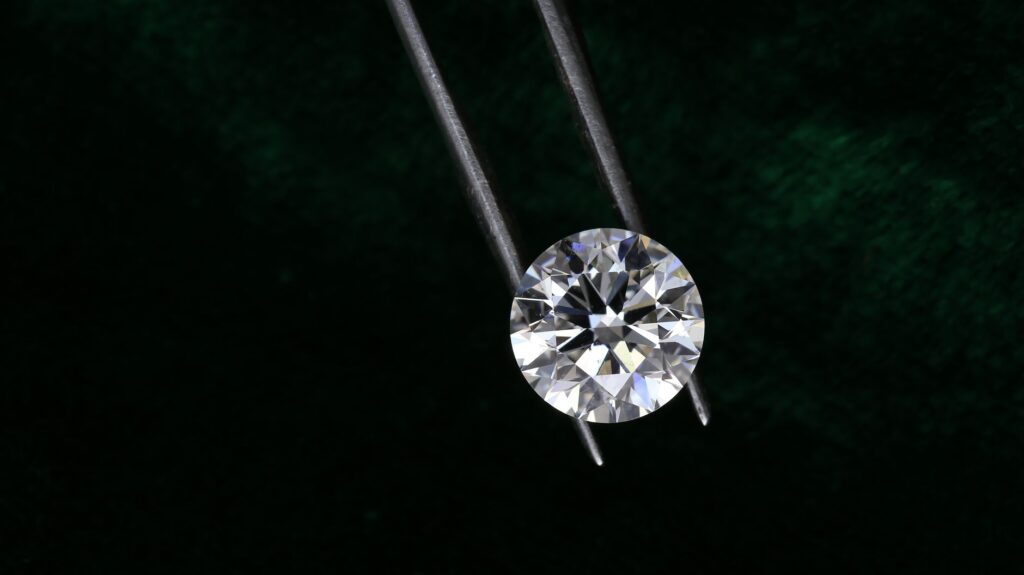
Diamonds with strong sparkle often hide small inclusions better because brightness and scintillation draw the eye away from tiny internal marks. Round brilliant diamonds are especially good at masking pinpoints when they are well cut.
That does not mean pinpoints disappear in every round diamond, but it does mean their practical visibility depends partly on how the stone handles light. A strong cut can make a modest clarity grade look cleaner than expected.
Shapes with larger open facets may show more detail
Diamonds with larger open facets, such as emerald and Asscher cuts, tend to reveal inclusions more easily because they are less forgiving visually. In those shapes, tiny pinpoints are still usually minor, but clusters of tiny inclusions may be easier to notice.
Buyers comparing shapes should keep in mind that clarity requirements can vary. A round brilliant may look eye clean at a lower clarity grade than an emerald cut because the facet pattern hides more detail.
What Clarity Grades Often Contain Pinpoints?
Pinpoints can appear in many grades
Pinpoints are not tied to a single clarity grade. They can appear in very high clarity diamonds as well as lower grades. The overall grade depends on the total combination of inclusions and blemishes, not simply on whether pinpoints exist.
For example, a VS1 or VS2 diamond may contain tiny pinpoints that are only visible under magnification. An SI diamond may also contain pinpoints, but there may be enough of them, or enough other inclusions, to affect the grade more noticeably.
Why the grade label alone is not enough
A clarity grade is helpful, but it does not tell the full story. Two diamonds with the same grade can look very different. One SI1 may be eye clean with a few tiny pinpoints, while another SI1 may have a more noticeable crystal or feather in a prominent position.
That is why experienced buyers do not rely on the grade alone. They also look at inclusion type, position, and whether the stone looks clean from a normal viewing distance.
Real-World Examples of Pinpoint Visibility
Example 1: A few pinpoints in a high-clarity diamond
A VS1 round brilliant may have a few pinpoints near the edge of the stone. In everyday wear, those inclusions are unlikely to be visible. Even a jeweler may need magnification to locate them quickly.
For most buyers, that would be a very safe clarity choice, assuming the cut and other factors are strong. The stone should appear clean and bright in normal use.
Example 2: Many pinpoints in a lower-clarity diamond
An SI2 diamond might contain a number of pinpoints clustered together, creating a small cloudy area. Even though the individual pinpoints are tiny, the group can affect transparency and make the stone appear less crisp.
In that situation, the concern is not the pinpoint itself but the concentration of inclusions as a whole. This is where viewing the diamond in person or reviewing a clear magnified video becomes especially important.
Example 3: Eye-clean SI1 versus non-eye-clean SI1
One SI1 diamond may have a few scattered pinpoints that are invisible to the naked eye. Another SI1 may have similar pinpoints plus a darker crystal in the center. The grades are the same, but the visual result can be very different.
This is a good example of why eye-clean assessment matters more than terminology alone. A well-chosen SI1 can be an excellent value, while a poorly chosen SI1 may be less attractive even if the report looks acceptable at first glance.
Example 4: VVS versus VS for everyday wear
In many cases, the difference between VVS and VS clarity is not visible in normal viewing conditions. A VVS diamond may contain slightly fewer or less noticeable pinpoints, but most buyers will not be able to tell the difference without magnification.
For shoppers focused on value, the premium for VVS clarity is often hard to justify unless they specifically want the higher grade for personal comfort or collection purposes.
Advantages of Pinpoint Inclusions
It may sound odd to talk about the advantages of an inclusion, but from a practical buyer perspective, pinpoints have a few benefits because they are usually so minor.
- They are usually not visible in normal viewing conditions.
- They rarely affect durability on their own.
- They can help create value if the stone still appears eye clean.
- They are common in attractive diamonds, including many lab grown stones.
In many diamonds, pinpoints are simply part of the normal clarity profile. They do not automatically reduce beauty or desirability in any meaningful way.
Disadvantages and Limitations
Although pinpoints are usually minor, there are a few limitations to keep in mind.
- They can contribute to a lower clarity grade if there are enough of them.
- They may form clusters that reduce transparency.
- They can look more important on paper than they appear in real life, or the reverse if grouped with other features.
- They may be more visible in some shapes than in others.
The main limitation is that the word “pinpoint” does not tell you enough by itself. You still need to know how many there are, where they are located, and whether they affect how the stone looks.
Buying Considerations When a Diamond Has Pinpoints
Focus on eye-clean appearance
If you are choosing a diamond for an engagement ring or daily wear, the most practical question is whether the diamond looks clean to your eyes at a normal viewing distance. A few pinpoints are usually fine if they do not affect that experience.
Eye clean does not mean flawless. It means that under ordinary viewing conditions, the inclusions are not distracting or obvious.
Check inclusion location
Location matters as much as inclusion type. Pinpoints near the edge of the diamond are often less noticeable than those under the table, which is the center top area. A placement that looks harmless on a report may still be more visible in person if it sits in an open, bright part of the stone.
This is one reason videos and magnified images are useful. They help you see whether pinpoints blend into the stone or create a visible texture face-up.
Consider cut quality
Cut quality has a strong effect on how visible pinpoints appear. A well-cut diamond often reflects enough light to reduce the appearance of tiny inclusions. A poorly cut stone, by contrast, may make even a modest clarity issue feel more noticeable because it lacks sparkle and brightness.
If you are comparing trade-offs, many experienced buyers would choose a better cut over a higher clarity grade when the clarity difference is not visible. Cut has a much bigger influence on the diamond’s visual performance.
Think about the setting
The setting can also influence visibility. Prongs, bezels, halos, and other design elements may cover or distract from tiny internal features. A solitaire with an open center may show more detail than a more decorated design.
That does not mean the setting should be chosen only to hide inclusions, but it is helpful to know that the mounting style can affect how easily you notice pinpoints and other small features.
Use clarity as one part of the decision
Clarity should be considered alongside color, cut, carat weight, and shape. A diamond with tiny pinpoints may be an excellent choice if it offers strong cut quality and the right size for the budget. On the other hand, paying a large premium for a cleaner clarity grade may not improve the look enough to justify the cost.
If you are comparing options, it can also help to understand the relationship between diamond color, clarity, and cut so you can see where your budget makes the most visual difference.
Common Buyer Mistakes
Overpaying for invisible clarity improvements
One common mistake is paying much more for a higher clarity grade when the visible difference is minimal or nonexistent. Many buyers feel safer choosing VVS or even FL clarity, but in everyday use the upgrade may not change how the diamond looks.
That does not mean high clarity grades are meaningless. It simply means the premium should be judged by whether the improvement can actually be seen and appreciated.
Ignoring inclusion type and location
Another mistake is focusing only on the grade label. An SI1 with harmless pinpoints may be a better choice than another SI1 with a visible crystal in the center. Inclusion type and position matter just as much as the overall grade.
When buyers overlook this, they may reject a good-value diamond or choose one that looks less attractive than expected.
Assuming all pinpoints are the same
Pinpoints can be isolated, scattered, grouped, or part of a cloud. These differences matter. A few isolated pinpoints are usually not a concern, but dense concentrations can reduce transparency.
This is why the word “pinpoint” should not be treated as a complete answer. It is only one piece of the clarity story.
Choosing clarity before cut
Some buyers focus so heavily on clarity that they sacrifice cut quality. That is usually the wrong trade-off. A well-cut diamond with minor pinpoints will often look more beautiful than a poorly cut diamond with a cleaner report.
For most shoppers, cut is the first factor that affects sparkle and overall visual appeal. Clarity matters, but usually not as much as cut in normal viewing conditions.
How to Read Pinpoint Information on a Grading Report
Look at the clarity plot and comments
If your diamond report includes a clarity plot, pinpoints may appear as very small symbols or as part of a grouped inclusion pattern. The plot can help you understand where the characteristics are located, even though it does not always tell the full visual story.
Comments or notes may also mention whether the inclusions are internal, clustered, or affecting transparency. When available, these notes can help distinguish harmless pinpoints from more noticeable inclusion patterns.
Use the report with images or video
A report by itself is not enough to judge visibility. To understand whether pinpoints matter, review magnified images or a high-quality video of the actual diamond. That lets you see how the stone looks face-up instead of relying only on a grading summary.
For shoppers comparing multiple stones, this combination is much more useful than reading the report alone.
Ask the right question
Instead of asking, “Does this diamond have pinpoints?” ask, “Is it eye clean, and are any inclusions visible in normal viewing?” That is the question that matters most for buyers.
A diamond can have pinpoints and still be a smart purchase if the stone looks attractive and fits the budget.
Advantages and Disadvantages at a Glance
| Advantages | Disadvantages |
|---|---|
| Usually invisible without magnification | Can contribute to a lower clarity grade |
| Rarely affect durability on their own | Can become more relevant when clustered |
| Often offer good value in eye-clean diamonds | May be more noticeable in certain shapes or placements |
| Common in attractive natural and lab grown diamonds | Do not tell the whole clarity story by themselves |
Frequently Asked Questions
Are pinpoint inclusions bad?
Usually, no. Pinpoints are among the smallest and least concerning diamond inclusions. They are often invisible without magnification and generally do not affect how a diamond looks in everyday wear.
Can you see pinpoint inclusions without a loupe?
Most of the time, no. A single pinpoint is typically too small to see with the naked eye. You may only notice them if they are numerous, clustered, or part of a hazy area that affects transparency.
Do pinpoint inclusions affect diamond value?
They can, but usually indirectly. Pinpoints may contribute to a lower clarity grade, which can influence price. If the diamond still appears eye clean, though, the value impact may be modest compared with more obvious inclusion types.
Are pinpoints common in lab grown diamonds?
Yes. Lab grown diamonds can contain pinpoints just like natural diamonds. The important question is not whether they exist, but whether they affect clarity, transparency, or eye-clean appearance.
Should I avoid a diamond with pinpoints?
Not necessarily. Many excellent diamonds contain pinpoints and still look very clean. You should pay more attention only if the pinpoints are dense, clustered, or combined with other inclusions that are visible in normal viewing conditions.
Is a diamond with pinpoints considered eye clean?
It can be. Eye clean is a visual description, not a lab grade. If the pinpoints are not visible to the naked eye from a normal viewing distance, the diamond may still be considered eye clean.
What is more important, pinpoints or cut?
For most buyers, cut is more important. Cut has a much bigger influence on sparkle, brightness, and overall beauty. Pinpoints usually matter only if they are visible or numerous enough to affect the diamond’s appearance.
Do pinpoints affect durability?
Usually not. Pinpoints are generally too small to weaken a diamond in any meaningful way. Durability concerns are more often associated with larger surface-reaching inclusions such as feathers, cavities, chips, or fractures.
Conclusion
A pinpoint inclusion is a tiny dot-like feature inside a diamond, usually visible only under magnification. By itself, it is generally a minor clarity characteristic and often has little or no effect on the diamond’s appearance in everyday wear.
For buyers, the practical issue is not whether pinpoints exist, but whether they affect eye-clean appearance, transparency, or value. A diamond with a few pinpoints can still be an excellent choice, especially if the cut is strong and the stone looks clean face-up.
When comparing diamonds, focus on the full picture: clarity grade, inclusion type, location, cut quality, and how the stone looks in real viewing conditions. That approach is far more useful than reacting to one microscopic inclusion on a report.