When a diamond looks bright in one moment and darker in the next, that changing pattern is not a flaw. It is usually the result of how the stone’s facets handle light, and it is one of the reasons diamonds can look so lively when they move. Buyers often notice the effect before they know what to call it.
Diamond contrast pattern refers to the arrangement of light and dark areas visible across a diamond’s face. In the right proportions, that pattern adds definition, sparkle, and visual interest. In the wrong proportions, it can make a stone look uneven, flat, or less brilliant than its size suggests.
This matters because contrast pattern is part of what you actually see in daily wear. A grading report can tell you a lot about a diamond, but it will not fully explain how the stone feels to the eye. If you are comparing round brilliant lab grown diamonds, natural diamonds, or fancy shapes, understanding contrast can help you judge beauty more realistically.
Quick Answer
Diamond contrast pattern is the visible pattern of bright and dark areas created by a diamond’s facets. Those facets reflect light from the environment, your body, and the stone’s own geometry. The pattern changes as the diamond moves, which is why it is closely tied to sparkle and scintillation.
In a well-cut diamond, contrast pattern usually looks balanced and intentional. The dark areas are not necessarily bad. They help create the flash-and-dark rhythm that makes a diamond look animated instead of flat.
Buyers should pay attention to contrast pattern because it affects real-world appearance. A diamond with good contrast can look more lively and crisp than a larger stone with weaker light behavior. This is especially noticeable in well-cut round brilliants and in precision-cut lab grown diamonds.
Understanding Diamond Contrast Pattern
What contrast pattern means in plain English
Think of contrast pattern as the diamond’s visual structure. Some facets are reflecting bright light while others are reflecting darker surroundings or are temporarily not directing light back to your eye. That alternating mix of brightness and shadow is what creates the pattern.
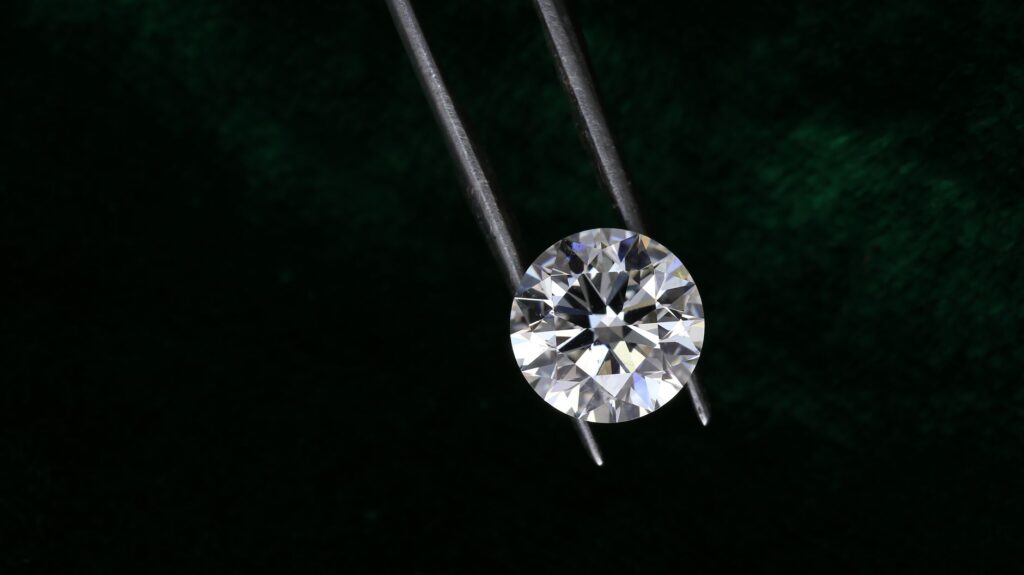
In a round brilliant diamond, the pattern often appears as a structured mix of bright arrows, dark arrows, or alternating segments when viewed face-up. In fancy shapes, the pattern can look very different, but the same principle applies. The facets determine where light is returned and where the eye sees darker areas.
Contrast pattern is not the same as color, clarity, or polish. It is a light-performance effect. That is why two diamonds with similar grading report numbers can still look noticeably different in person.
Why the dark areas are not always a problem
New buyers sometimes assume any dark area means dirt, a flaw, or poor quality. That is not always true. In many diamonds, darker facets are simply part of normal light behavior.
Those darker areas can be reflections of the viewer, the camera, the room, or nearby objects. In other words, a “dark” facet may just be showing you the environment around the stone. This is one reason still photos can be misleading if they are taken in highly controlled or uneven lighting.
How facets create the pattern
Facets are the polished flat surfaces cut into the diamond. Their angles and alignment control how light enters, bounces, and exits the stone. The result is the visual pattern you see when the diamond is viewed face-up.
A diamond with precise facet arrangement tends to show cleaner contrast and more predictable flashes of light. A diamond with less precise proportions may show muddier contrast, darker zones, or weak areas where light escapes instead of returning to the eye. That is one of the main reasons cut quality is so important.
Why Diamond Contrast Pattern Matters
It changes how sparkle is perceived
Sparkle is not just about brightness. It is also about the separation between light and dark. When a diamond has a good contrast pattern, the eye can easily register the change from one facet to another, which makes the flashes feel more noticeable.
This is why a diamond that is bright but lacks contrast can still feel a little flat. The eye needs variation to see movement. In practical terms, contrast helps a diamond look more alive when it is worn on the hand or seen from across a room.
It helps create visual depth
Good contrast pattern gives a diamond a sense of structure. Instead of looking like one continuous shiny surface, the stone appears to have depth and definition. That depth is part of what many buyers find appealing about a well-cut diamond.
When contrast is poorly arranged, the diamond may look washed out or visually messy. The stone can still be bright in spots, but the overall impression is less refined. Buyers often notice this difference when comparing diamonds side by side.
It can hint at cut quality
Contrast pattern often reveals a lot about how well a diamond was cut. In round brilliant diamonds, a well-balanced pattern usually suggests good proportions and strong optical performance. A pattern with random dark patches or weak brightness may point to light leakage or proportion issues.
This does not mean contrast pattern alone tells the whole story. Still, it is a useful clue, especially when shopping online. If the diamond looks chaotic in photos or videos, that is worth investigating further.
Contrast Pattern and Real-World Appearance
What buyers see in everyday indoor lighting
Most diamonds are viewed in mixed lighting, not in a laboratory. That means overhead lights, window light, shadows, and reflections all play a role. In this setting, a good contrast pattern makes the stone look active and responsive as it moves.
In practical terms, a well-cut diamond often shows crisp flashes that draw the eye without looking overly busy. A diamond with weaker contrast may still appear bright, but it can feel less dynamic. The difference is usually easier to see in motion than when the stone is sitting still.
What buyers see outdoors
Natural light often makes contrast easier to judge because it tends to be broader and less harsh than spotlighting. In daylight, a diamond with good contrast may look clean and organized, with bright and dark zones shifting smoothly as the stone turns.
Direct sunlight can create stronger flashes and a more dramatic pattern. That does not automatically make one diamond better than another. It simply means contrast pattern responds to the environment, and a buyer should expect the appearance to change with lighting.
What photos and videos can and cannot tell you
Photos and videos are useful, but they do not always show the whole story. Camera settings can exaggerate dark areas or make a stone look more contrasty than it really is. A phone camera may also flatten the look of sparkle or overemphasize reflections from the environment.
That is why still images should be treated as only one part of the evaluation. A well-made video is more helpful because it shows movement, but even then, lighting matters. The best judgment comes from combining visual media with the grading information and, when possible, in-person viewing.
What magnified images do not reveal well
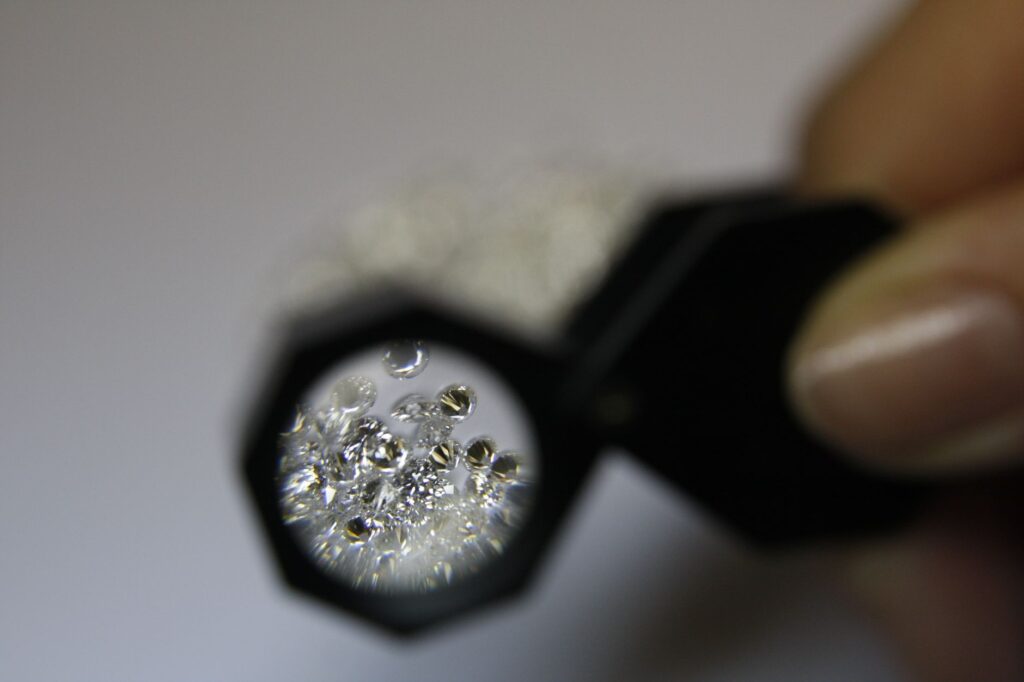
Under magnification, the conversation shifts away from everyday beauty and toward precision details. Microscopes and loupes can show facet alignment, polish marks, and tiny features, but they do not represent how the diamond will look on the hand.
For most buyers, the practical question is not whether the pattern looks perfect under a microscope. It is whether the diamond looks bright, lively, and attractive in normal wear. That is a different standard.
How Contrast Pattern Relates to Sparkle Terms Buyers Hear
Brilliance
Brilliance is the white light returned to the eye. It is one of the main reasons a diamond appears bright. Contrast pattern affects brilliance by helping bright facets stand out more clearly against darker ones.
If the pattern is balanced, the diamond can appear both bright and structured. If it is too dark or too broken up, the stone may lose some of that bright, lively look. A buyer does not need to memorize the term, but it helps to know that brilliance and contrast work together.
Fire
Fire is the colored light you see when a diamond disperses white light into spectral flashes. Contrast pattern does not create fire directly, but it can make fire easier to notice. Darker areas around a colored flash often help the eye pick it up.
This is one reason a well-cut diamond may appear more expressive than a larger diamond with weaker light behavior. The flashes can seem more distinct even if the stone is not the biggest option available.
Scintillation
Scintillation is the pattern of sparkle and flashing that appears as the diamond moves. This is where contrast pattern matters most to many buyers. The alternating light and dark areas are what create the sense of movement.
In a diamond with strong scintillation, the flashes are crisp and easy to follow. In a weaker stone, the movement can look dull, blurred, or overly uniform. That difference is often what shoppers describe when they say one diamond looks “alive” and another does not.
Contrast Pattern, Cut Grade, and Light Performance
What cut grade tells you
Cut grade is a grading category that summarizes how well a diamond has been proportioned and finished for light performance. In round brilliant diamonds, it is one of the most important factors in appearance because it strongly affects brightness, sparkle, and contrast.
An Excellent cut diamond is more likely to show a balanced contrast pattern and strong light return. A Very Good cut may still be attractive and lively, but the pattern can be slightly less refined or less efficient. Lower cut grades are more likely to show obvious light leakage or weaker face-up performance.
What light performance means
Light performance is a broad term for how a diamond handles light. It includes brightness, fire, contrast, and the movement of sparkle. A diamond with strong light performance usually looks crisp and responsive rather than dull or sleepy.
Contrast pattern is one of the easiest visible clues to light performance. When the pattern is organized and balanced, the stone often looks better in daily viewing. When the pattern is patchy or weak, the diamond may lose some visual appeal even if other grading factors look good on paper.
What optical symmetry means
Optical symmetry refers to how precisely the diamond’s reflections line up in real light. It is related to, but not the same as, the symmetry grade on a report. A diamond can have acceptable face-up symmetry grades and still show stronger or weaker optical alignment in person.
Why does this matter? Because optical symmetry often contributes to a cleaner, more orderly contrast pattern. Buyers may not use technical language to describe it, but they often notice when one diamond looks more organized than another.
Hearts and Arrows and contrast
Hearts and Arrows is a pattern seen in some highly precise round brilliant diamonds when viewed with specific tools. It indicates very careful facet alignment and is often associated with a structured, balanced appearance.
For buyers, the important point is that Hearts and Arrows stones often show very crisp optical behavior. That said, the pattern is not the only path to beauty. A diamond does not need a Hearts and Arrows designation to look excellent if its proportions and light return are strong.
How Contrast Pattern Differs by Diamond Shape
Contrast pattern is easiest to discuss in round brilliant diamonds, but every diamond shape has one. The key is that each shape handles light differently, so the pattern should be judged by shape, not by one universal standard.
| Diamond Shape | Typical Contrast Pattern | What Buyers Usually Notice |
|---|---|---|
| Round brilliant | Balanced, repeating bright and dark pattern | Strong sparkle and crisp movement |
| Oval | Longer, softer pattern with mixed bright areas | Shape appeal and possible bow-tie darkness |
| Pear | Often uneven if proportions are less ideal | Tip area, center brightness, and symmetry matter |
| Cushion | Can show chunky flashes or more blended light | Soft sparkle or bold flashes depending on facet style |
| Emerald cut | Large step-like reflections with less scintillation | Elegant flashes and strong clarity visibility |
| Radiant | Highly active, mixed pattern with strong brilliance | Busy sparkle and bright overall appearance |
Round brilliant diamonds
Round brilliants are the most straightforward shape for most buyers to evaluate. Their facet structure was designed to maximize brightness and sparkle, so a good contrast pattern usually looks clean and intentional.
Because round brilliants are so common, many buyers learn about cut quality through this shape first. If you are shopping for a round lab grown diamond, contrast pattern is one of the clearest visual indicators of whether the stone has been cut with care.
Fancy shapes
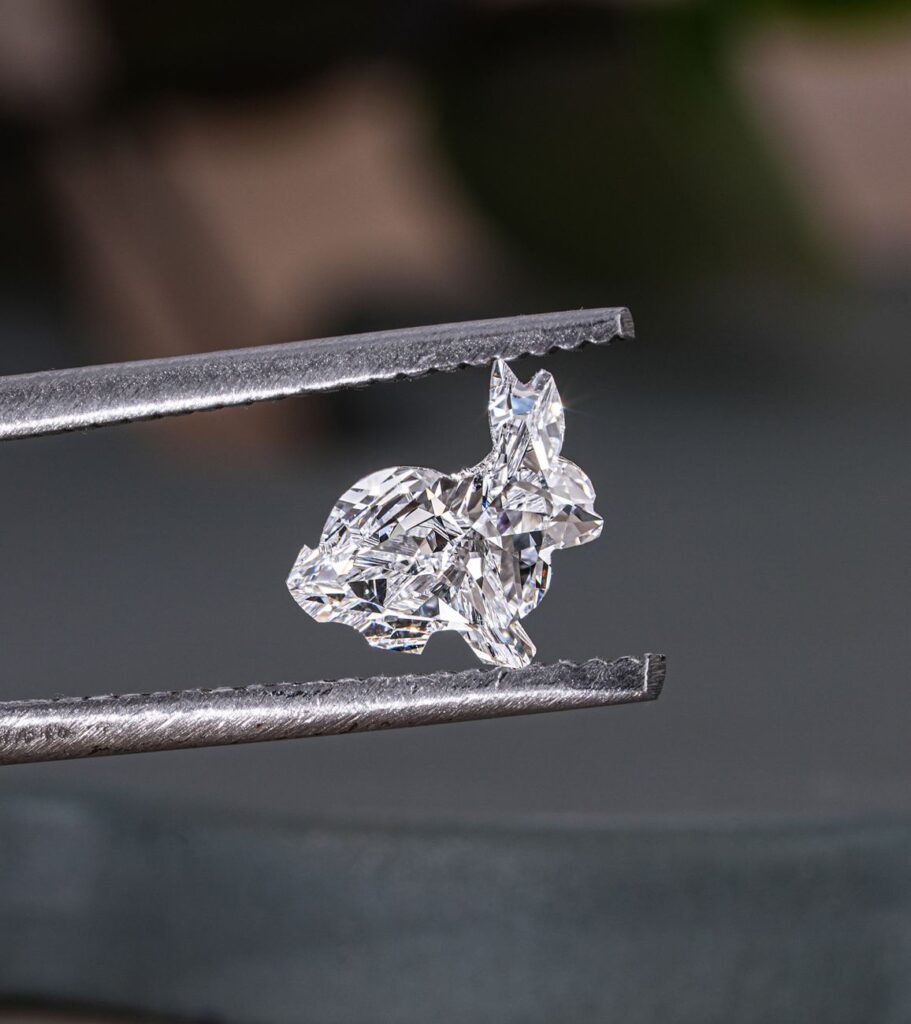
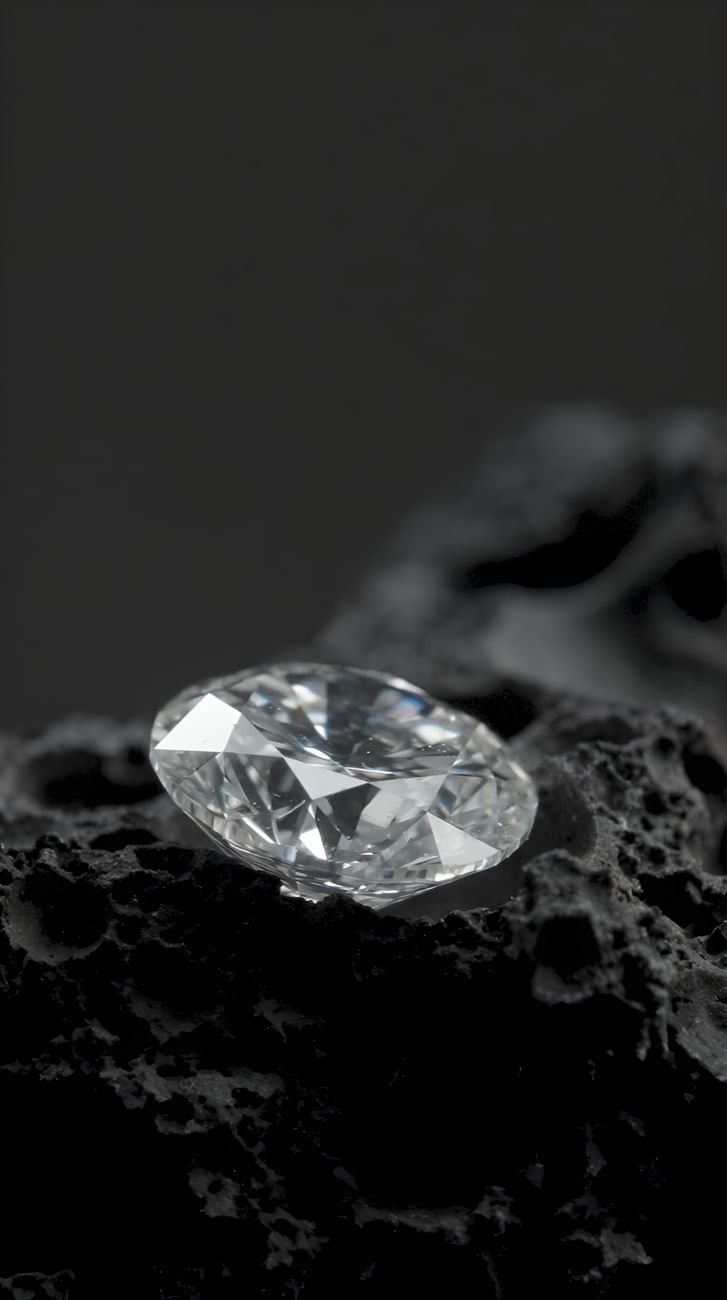
In fancy shapes, contrast pattern is still important, but the interpretation changes. An oval may have an attractive spread and soft sparkle but still show a noticeable bow-tie, which is a darker area across the center. Some buyers tolerate a little bow-tie, while others prefer to avoid it.
Emerald cuts are different again. They are not meant to produce the same kind of splintery sparkle as a round brilliant. Instead, their appeal comes from long flashes and an elegant hall-of-mirrors effect. Their contrast pattern is about broad reflections, not intense scintillation.
When Contrast Pattern Looks Good and When It Does Not
Signs of a pleasing pattern
A pleasing contrast pattern usually looks balanced, crisp, and visually organized. Bright and dark areas should be distributed in a way that feels intentional rather than random. The diamond should appear active when it moves and should not look flat from a normal viewing distance.
In many good diamonds, the contrast pattern creates a sense of depth. The stone feels structured, not just shiny. That is one reason well-cut diamonds often stand out even when several stones have similar grading report grades.
Signs of a weak or distracting pattern
A less attractive pattern may look blotchy, too dark, or uneven across the face of the diamond. Some zones may stay dark even under good lighting, while other areas flash brightly without a smooth transition between them. The result can be a stone that feels less refined.
In round diamonds, a weak pattern can suggest less favorable proportions or light leakage. In fancy shapes, it may point to an uneven design that does not distribute light well. In both cases, the buyer should ask whether the stone looks lively enough in real conditions.
What light leakage looks like
Light leakage happens when light escapes through the bottom or sides of the diamond instead of returning to the eye. Visually, it often looks like dead or transparent areas that do not respond well to lighting.
Not every dark zone is leakage. Healthy contrast is normal and desirable. Leakage, by contrast, looks lifeless. That distinction is important because a diamond can have visible contrast and still perform well, while another diamond may appear dark for the wrong reason.
How Diamond Contrast Pattern Affects Value
When a higher price can be justified
It makes sense to pay more for a diamond with better contrast pattern when the visual improvement matters to you. If you want a stone that looks lively, crisp, and attractive in a wide range of lighting, improved light performance can be worth the premium.
This is especially true for engagement rings and other everyday jewelry. A diamond worn regularly is seen in motion, not in a grading room. If better contrast gives you more beauty every time you look at the ring, that can be a meaningful value difference.
When the premium may be less important
There are situations where contrast pattern matters less. If your main priority is face-up size, or if the diamond will usually be seen from a distance, small differences in pattern may not be obvious. Some buyers also simply prefer a larger stone even if the light performance is not ideal.
Still, cut quality rarely stops mattering altogether. Even size-focused buyers usually notice when a diamond looks dull. The key is deciding where you want to balance size, beauty, and budget.
When differences become subtle
Once a diamond already has strong cut quality, the differences between one good stone and another can become subtle. In that range, paying significantly more for a slightly more refined contrast pattern may not produce a proportionate visual gain.
This is where many lab grown diamond shoppers have an advantage. Because price pressure is often lower than in natural diamond comparisons, buyers can sometimes choose a very well-cut stone without giving up as much size. Even so, it is still worth comparing individual stones rather than assuming every well-priced diamond performs equally.
Practical Examples for Buyers
A well-cut 1.5-carat diamond versus a poorly cut 2-carat diamond
This is one of the most useful comparisons for understanding contrast pattern. On paper, the 2-carat diamond sounds more substantial. In person, however, if the cut is weak, the stone can look less bright and less lively than the smaller diamond.
The 1.5-carat stone may appear sharper because its contrast pattern supports stronger sparkle and better light return. Many experienced jewelers notice this immediately during side-by-side viewing. Size matters, but it does not automatically win if the light performance is poor.
Excellent cut versus Very Good cut in everyday lighting
The difference between Excellent and Very Good cut can be subtle, but it is not meaningless. A Very Good diamond can still look lovely, especially if the specific stone has strong proportions and attractive optical behavior. In some cases, it may appear very close to an Excellent cut diamond in normal wear.
That said, the Excellent cut stone is more likely to show a consistently balanced contrast pattern. The improvement may not always be dramatic, but it can be noticeable. The best approach is to compare the actual diamond, not just the label.
Higher clarity with weaker cut versus lower clarity with stronger cut
Clarity describes internal characteristics, but cut determines how the diamond presents itself visually. A high-clarity stone with weak contrast may still look less impressive than a lower-clarity diamond that returns light well.
In many real buying situations, sparkle and brightness are more visible than small clarity differences. That is why many buyers get better value by prioritizing cut first, then deciding how much clarity they truly need for their budget and viewing distance.
Advantages of Paying Attention to Contrast Pattern
-
It helps you judge sparkle in a more realistic way.
-
It can reveal whether a diamond has strong light performance.
-
It makes side-by-side comparisons more meaningful.
-
It helps reduce the chance of choosing a diamond that looks flat or lifeless.
-
It is especially useful when reviewing online videos and optical images.
Disadvantages and Trade-Offs
-
Contrast pattern changes with lighting, so it can be hard to judge from one image alone.
-
Camera settings can exaggerate dark zones.
-
Some dark areas are normal and should not be mistaken for defects.
-
Fancy shapes do not follow the same pattern rules as round brilliants.
-
Very small differences may not matter much once the diamond is set and worn.
Buying Considerations for Lab Grown Diamonds
Why contrast matters in lab grown stones
Lab grown diamonds can be cut to very high precision, and that makes contrast pattern especially noticeable. Because the material is real diamond, the same light behavior applies as with natural diamonds. What changes is often the consistency of what buyers can get for a given budget.
For shoppers comparing lab grown diamonds, contrast pattern can help distinguish a stone that is simply large and colorless from one that also has excellent optical performance. Since many lab grown buyers prioritize beauty and size together, this can be a very practical part of the selection process.
What to check on a grading report
A grading report does not usually explain contrast pattern directly. Instead, you look at the cut grade, symmetry, polish, and proportions to infer how the diamond may behave. For round brilliant diamonds, those details are especially helpful, but they still do not replace direct visual review.
If you are learning about diamond certifications, it helps to remember that a report is a tool, not a complete picture. A diamond can have strong grades and still benefit from video review if you want to understand its real-world appearance.
How to shop online more effectively
If you are buying online, ask for a high-quality video, face-up photos, and, if available, ASET or Ideal Scope images. These can help you separate healthy contrast from light leakage. No image set is perfect, but these tools are more useful than relying on carat weight or color alone.
It also helps to compare several diamonds with similar specs. Once the basic grades are close, cut quality and contrast pattern become easier to see. That comparison often reveals more than reading a report in isolation.
Common Buyer Mistakes
Prioritizing carat over cut
One of the most common mistakes is choosing the biggest diamond first and worrying about cut later. A poorly cut larger diamond may look less attractive than a slightly smaller stone with much better light performance.
For most buyers, the diamond’s face-up appearance matters more than the number on the scale. Contrast pattern is one of the clearest reminders of that fact.
Assuming all diamonds sparkle the same
Not all diamonds sparkle equally. Two stones can share the same shape, color, and clarity while looking very different because of how they were cut. The difference often becomes obvious only when you see them side by side.
If you assume sparkle is automatic, you may overestimate the beauty of a diamond that is not well proportioned. Sparkle has to be earned through cut quality.
Confusing normal contrast with a defect
Some buyers hear the word “dark” and assume it must mean bad quality. In reality, contrast is a necessary part of sparkle. Without some dark areas, the diamond may look flat and washed out.
The real question is whether the pattern looks intentional and balanced. Normal contrast should enhance the diamond, not distract from it.
Overvaluing clarity when cut is weak
It is easy to focus on clarity because it sounds technical and premium. But if the diamond does not return light well, higher clarity may not make the stone look better in everyday use.
Many inclusions are hard to see without magnification. Cut-related pattern issues, on the other hand, are often visible at normal viewing distance. That is why cut deserves so much attention.
Ignoring shape-specific behavior
Different shapes behave differently. Buyers sometimes apply round-brilliant expectations to ovals, pears, or emerald cuts and become disappointed by what they see. That usually leads to unfair comparisons.
A good evaluation should always take the shape into account. Contrast pattern is useful, but only when you understand what is normal for that cut style.
How to Evaluate Contrast Pattern Before Buying
Watch the diamond in motion
Movement is one of the best ways to judge contrast. As the stone moves, you can see whether the bright and dark areas create a lively, attractive rhythm. This is much more informative than relying on a still image alone.
A diamond worth considering should look good from several angles, not only in one perfect position. If the stone only looks impressive under one very specific light, that is worth a closer look.
Compare diamonds side by side
Contrast pattern is much easier to understand when two diamonds are compared directly. Small differences that are hard to name become obvious when one stone looks more organized, and the other looks flatter or murkier.
This is especially helpful when comparing similar color and clarity grades. Once those variables are close, cut quality and contrast usually explain the visual difference you notice.
Use consistent vendor imaging
Good vendors usually provide videos and images under consistent lighting. That makes it easier to compare diamonds fairly. The most useful images are the ones that show the stone in motion and from multiple angles.
When reviewing those visuals, ask yourself whether the pattern feels balanced. Do not focus only on the presence of dark facets. Ask whether those facets contribute to an attractive pattern or whether they seem to interrupt the stone’s brightness.
Know when the setting matters
The setting can change how a diamond appears. Metal color, prong placement, and the amount of light reaching the stone can all influence contrast. A diamond that looks very open in a loose setting may appear slightly different once mounted.
That does not mean the stone has changed quality. It simply means the setting becomes part of the visual experience. Buyers should keep this in mind when judging a diamond from loose-stone images only.
Frequently Asked Questions
Is diamond contrast pattern the same as sparkle?
Not exactly. Sparkle is the broader visual effect that includes brilliance, fire, and scintillation. Contrast pattern is one of the main ingredients because it helps create the dark-light rhythm that makes sparkle easier to see.
Does a dark contrast pattern mean a diamond is bad?
No. Some dark areas are normal and even necessary. The issue is whether the pattern looks balanced and lively or whether it looks dull, uneven, or like light is escaping instead of returning.
Can I see contrast pattern without magnification?
Yes. In fact, buyers usually notice contrast pattern face-up under everyday lighting more than under magnification. It is one of the most practical things to observe when judging beauty.
Do lab grown diamonds have different contrast patterns than natural diamonds?
The origin of the diamond does not change the physics of light performance. A well-cut lab grown diamond can show excellent contrast pattern, just like a well-cut natural diamond. The key factor is how the stone was cut.
What is the best contrast pattern for a round diamond?
For most buyers, the most appealing pattern is one that looks balanced, crisp, and lively in motion. It should create sparkle without looking overly dark or patchy. There is no single perfect look for every person, but organized contrast is usually a good sign.
Should I choose the diamond with the strongest contrast pattern?
Not necessarily. Strong contrast can be attractive, but if it comes with too much darkness or reduced brightness, the stone may not perform as well overall. The goal is balance, not maximum darkness.
Do grading reports show contrast pattern?
Usually not directly. Reports may show cut grade, symmetry, and polish, which are related, but contrast pattern itself is better evaluated through videos, optical images, and in-person viewing when possible.
Is contrast pattern more important than carat size?
For visual beauty, many buyers would say yes. A well-cut diamond with good contrast often looks more impressive than a larger diamond with weaker light performance. Still, the right balance depends on budget and personal priorities.
Conclusion
Diamond contrast pattern is the arrangement of bright and dark areas created by a diamond’s facets as they reflect light. It is a normal part of how diamonds work, and in a well-cut stone it contributes to sparkle, visual depth, and a lively face-up appearance.
For buyers, the main takeaway is practical. Contrast pattern affects how the diamond looks in real life, not just how it appears on paper. It is one of the clearest ways to judge whether a diamond has strong light performance and a pleasing sense of movement.
If you are comparing diamonds, especially lab grown diamonds, focus on cut quality, proportion, symmetry, and actual viewing conditions. Use the grading report as one part of the evaluation, but do not rely on it alone. A diamond with a balanced contrast pattern often delivers more everyday beauty than a larger stone with weaker optical performance.