When shoppers ask, what is the best color grade for emerald cut diamonds, they are usually trying to balance appearance, value, and realism. Emerald cuts behave differently from brilliant cuts because they use long, open facets that act more like mirrors than sparkle tiles. That means color is often easier to see, especially in larger stones or in settings with a white metal like platinum or white gold.
There is no single color grade that is best for everyone. For many buyers, the sweet spot is usually somewhere between G and H for natural diamonds and often F to H for lab grown diamonds, depending on budget, setting, and personal preference. Buyers who want a very bright, icy look often prefer D to F, while buyers focused on value may find that a well-cut H or I still looks attractive, especially in yellow gold or rose gold.
Quick Answer: What Is the Best Color Grade for Emerald Cut Diamonds
The best color grade for an emerald cut diamond depends on how color-sensitive you are and what metal you plan to use. Because emerald cuts are step-cut diamonds, they show more body color than rounds or cushions with stronger sparkle. In practical terms, that usually means you may want to go one grade higher than you would in a round brilliant if you want a similarly white appearance.
For most buyers, these general guidelines are useful:
- D to F: Best for a bright, colorless appearance, especially in platinum or white gold.
- G to H: Often the best balance of appearance and value for many emerald cut engagement rings.
- I to J: Can still look good, especially in yellow gold or rose gold, but color may be more noticeable.
If you are shopping for a lab grown emerald cut diamond, the same rules apply. Lab grown diamonds are available in a wide range of colors and are often priced more efficiently, which can make it easier to choose a higher color grade without giving up as much size or clarity.
Why Color Shows More Easily in Emerald Cut Diamonds
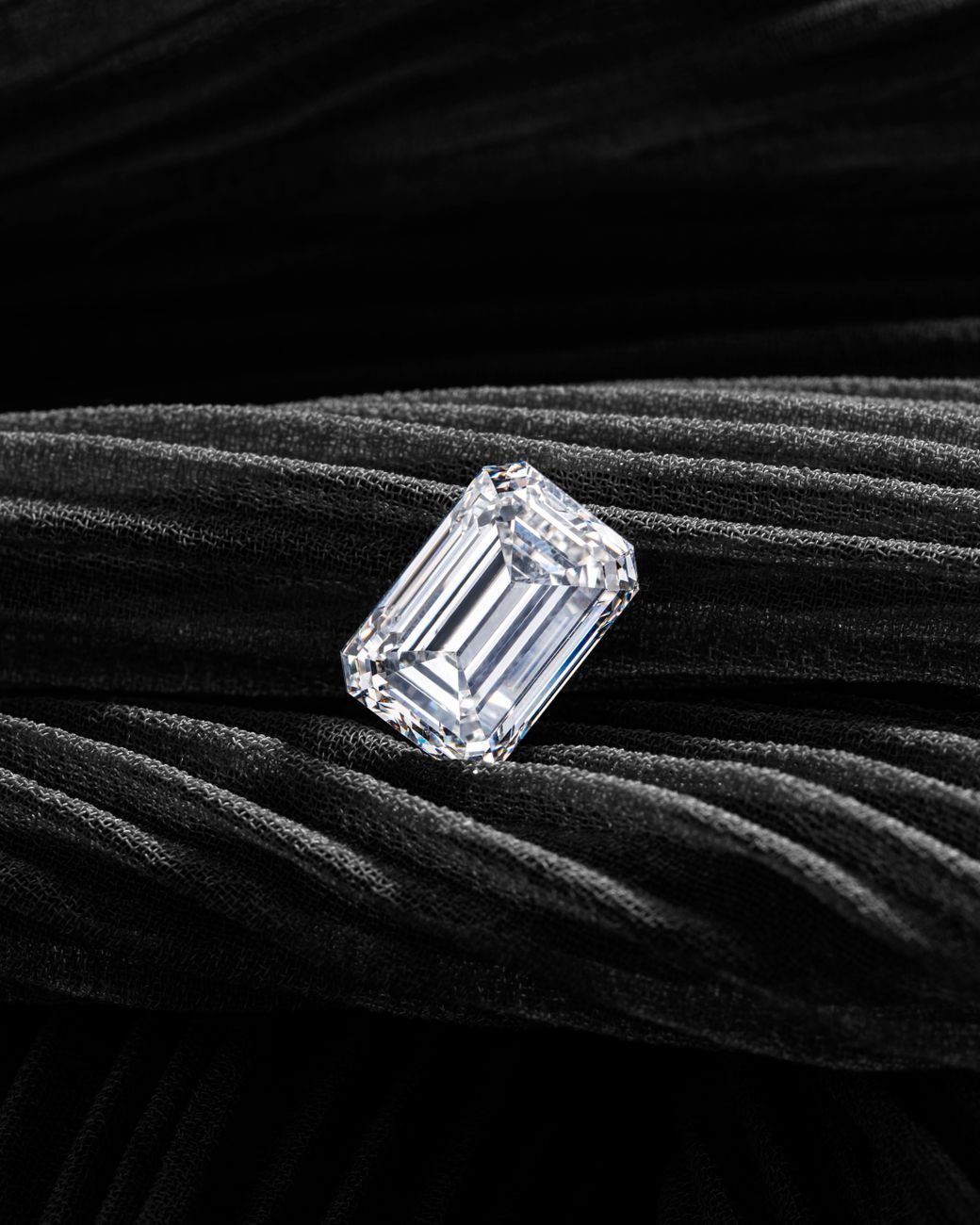
To understand color grading in emerald cuts, it helps to understand how the shape works. Emerald cuts have long, step-style facets arranged in parallel rows. Instead of producing the splintery sparkle of a round brilliant, they create broad flashes of light and dark reflections.
This structure is elegant and sophisticated, but it also means there is less visual “distraction” from color. In a round diamond, intense sparkle can mask slight warmth. In an emerald cut, the open, glassy look can make tint easier to notice, especially when you look through the stone from the top.
That is why shoppers often think about color more carefully for emerald cuts than for many other diamond shapes. A grade that looks perfectly white in a cushion or oval may appear slightly warmer in an emerald cut of the same size and quality.
How Step-Cut Facets Affect Color Perception
Step cuts create long reflections that can reveal the body color of the diamond more clearly. Body color is the natural tint seen in the stone itself, usually in the yellow to brown range for colorless diamond grading. The clearer the window through the stone, the easier it is to notice that tint.
This does not mean emerald cuts are “worse” than other shapes. It simply means their optical style is different. Buyers who love the emerald cut usually appreciate its calm, elegant look, but they should choose color more deliberately than they might for a brilliant cut.
Diamond Color Grades Explained in Plain English
Diamond color grades run from D to Z. The scale measures how much color a diamond shows when compared with a master set under controlled lighting. D is considered colorless, while higher letters indicate more visible warmth.
For emerald cuts, the most relevant part of the scale is usually the colorless to near-colorless range:
- D, E, F: Colorless
- G, H, I, J: Near-colorless
- K and below: More obvious warmth or tint
In real-world buying, the difference between neighboring grades may be subtle, but it can still matter in an emerald cut because the shape does not hide color as effectively. That is one reason why color is often a more noticeable factor here than it is in a round brilliant diamond. You can learn more about how grading works in our guide to diamond color grades.
Best Color Grade by Budget and Style Preference
The “best” grade depends on what you want the diamond to look like and how much of your budget you want to allocate to color versus size, cut, or clarity. Emerald cuts are usually judged first by proportion and clarity, then by color.
If You Want the Whitest Look Possible
If your priority is a crisp, icy appearance, choose D, E, or F. These grades are colorless and will generally look very white in most settings. They are especially appealing in platinum or white gold because the metal does not add warmth to the visual presentation.
This is a good choice for buyers who are very sensitive to color or who want the stone to look especially bright in larger carat sizes. It is also common for those buying an engagement ring with a more premium budget.
If You Want the Best Balance of Beauty and Value
For many buyers, G or H is the practical sweet spot. These grades usually appear white to most people once the diamond is mounted, particularly if the cut is attractive and the setting is not overly exposing the sides of the stone.
G and H often offer meaningful savings compared with D to F grades. That budget flexibility can sometimes be used to increase carat weight, improve clarity, or choose a better overall ring design. For a lot of shoppers, that trade-off makes more sense than paying a premium for the highest color grade.
If You Are Focused on Value and Happy to See Some Warmth
I and J can still work well, especially in yellow gold or rose gold. These metals can complement a slightly warmer diamond and reduce the contrast that makes tint more obvious. In some settings, many buyers find the look perfectly appealing.
That said, I and J grades are more likely to show warmth in an emerald cut than they would in a round diamond. If you are buying one of these grades, it helps to compare stones side by side and view them in the actual setting type you plan to use.
How Setting Metal Changes the Best Color Grade
The setting matters a great deal for emerald cut diamonds. Metal color can either highlight or soften the diamond’s body color, which means the same stone can look different depending on the ring design.
| Setting Metal | Color Appearance Impact | Practical Guidance |
|---|---|---|
| Platinum | Emphasizes a bright, white look | Often pairs best with D to H, depending on desired whiteness |
| White gold | Also creates a white appearance, though rhodium plating can affect maintenance | G to H is a common value range, with F and above for a brighter look |
| Yellow gold | Can make near-colorless stones appear whiter by comparison | I to J may still look attractive, especially for buyers open to warmth |
| Rose gold | Adds a warm tone that can blend well with slightly warmer diamonds | H to J can work well depending on personal preference |
For emerald cuts, many buyers choose white metals when they want a modern, clean look and yellow or rose gold when they want a softer or slightly vintage feel. The metal color is not just a style choice. It can influence how white or warm the diamond appears.
Color Visibility Compared with Other Diamond Shapes
Emerald cuts tend to show color more clearly than many brilliant cuts. This is one of the most important differences to understand before buying. The shape itself affects how the eye sees the stone.
| Diamond Shape | How Easily Color Shows | Why |
|---|---|---|
| Round brilliant | Less easily | Heavy sparkle and faceting help mask body color |
| Oval | Moderately | Brilliant faceting hides some color, though size and shape matter |
| Princess | Moderately | Brilliant pattern can reduce visible tint, though corners and contrast matter |
| Emerald cut | More easily | Step-cut facets create open, mirror-like flashes that reveal body color |
| Asscher | More easily | Similar step-cut behavior with an even more geometric look |
This is why the best color grade for emerald cut diamonds is often higher than what shoppers choose for round or oval shapes. It is not a rule, but it is a useful buying pattern to keep in mind.
Appearance and Visual Performance in Emerald Cuts
Emerald cuts are known for their sleek, elegant look. Rather than a burst of tiny flashes, they produce large, structured reflections. That gives the diamond a refined appearance that many buyers describe as architectural or vintage-inspired.
Color plays into that look in a big way. In a lower color grade, the stone may still be beautiful, but the warmth can become part of the overall impression. Some buyers enjoy that. Others want the cool, icy appearance associated with higher grades.
Why Larger Emerald Cuts Need More Attention to Color
As carat weight increases, color often becomes easier to see. Larger diamonds give the eye more surface area to inspect, and that can make slight warmth more noticeable. This is true across many shapes, but it is especially relevant for emerald cuts because of their open facet structure.
If you are considering a 2 carat, 3 carat, or larger emerald cut diamond, you may want to favor a higher color grade than you would for a smaller stone. For many buyers, G or H is a strong practical starting point in larger sizes, with F or better if the goal is a very bright appearance.
How Clarity and Color Work Together
Emerald cuts are also known for showing inclusions more easily than brilliant cuts. That means color and clarity should be evaluated together, not separately. A diamond with high color but distracting inclusions may not look as good as a slightly lower color stone with excellent clarity and proportion.
This is one reason many shoppers look at the full picture, including diamond clarity, diamond cut, and color grade. Emerald cuts reward careful balance rather than chasing the highest number in only one category.
Advantages of Higher Color Grades in Emerald Cut Diamonds
Choosing a higher color grade in an emerald cut has several advantages. The main one is visual consistency. The stone tends to look clean, white, and refined in a wide range of lighting conditions.
- Cleaner appearance in open facet patterns
- Better performance in white metals, especially platinum and white gold
- Less concern about visible warmth in larger stones
- More flexibility in online shopping when viewing images or videos is limited
Higher color grades can also make the diamond easier to pair with other white stones in a halo or three-stone design. If the surrounding stones are very white, a warmer center stone may appear more noticeable by comparison.
Disadvantages of Choosing a Very High Color Grade
The biggest disadvantage is cost. D, E, and F grades can carry a premium, especially in larger emerald cuts where all the other quality factors are also being pushed higher. That money does not always create a dramatic visible improvement, particularly once the diamond is set.
Another practical issue is opportunity cost. Spending more on color may reduce the budget available for a better cut, better clarity, or larger size. In emerald cuts, those factors can have a strong effect on overall beauty.
- Higher price without always producing a dramatic visual difference
- Less budget flexibility for size or clarity
- Can be unnecessary in yellow or rose gold settings
This is why many experienced buyers do not automatically choose the highest color grade. They choose the grade that makes the stone look right in real life.
Why Some Buyers Choose Slightly Lower Color Grades
Many shoppers are surprised to learn that a slightly lower color grade can still look very attractive in an emerald cut. If the diamond is well-proportioned and the setting is flattering, a near-colorless stone can often appear bright enough for everyday wear.
Choosing a slightly lower color grade can free up budget for a larger or cleaner stone. For example, some buyers would rather have a beautifully cut H-color emerald with excellent clarity than a smaller D-color diamond with less impressive spread. That is a perfectly reasonable trade-off.
This is one of the most practical lessons in diamond buying. The best color grade is not always the highest grade. It is the grade that fits the whole ring.
Important Buying Considerations for Emerald Cut Color
Color is only one part of the decision. To choose well, you should also think about cut quality, clarity, size, and setting style. These factors affect how noticeable color will be.
Cut Quality
Emerald cuts are not graded for cut in the same universal way as rounds, but proportions still matter. A well-balanced emerald cut will look more elegant and can help distribute light more evenly. Poor proportions may make color more obvious or give the diamond a dull appearance.
If you are comparing stones, look carefully at the length-to-width ratio, table size, and depth. These details affect the overall face-up look. You can read more in our guide to diamond cut grades and diamond shapes.
Clarity
Because emerald cuts are transparent and open, clarity matters a lot. Inclusions are often easier to see than in brilliant cuts. If the stone also has a lower color grade, the combined effect can be more noticeable.
For many emerald cuts, buyers often aim for a clarity grade that keeps the center of the stone visually clean, especially if the diamond is larger or the facets are broad. That does not mean flawless is required, only that you should examine the diamond carefully.
Carat Size
As carat size increases, color can become more visible. This means a 1 carat emerald cut and a 3 carat emerald cut may not need the same color strategy. Larger stones often justify a higher grade if you want the diamond to stay bright.
Many shoppers working within a budget explore lab grown diamonds because they can often choose a larger size or higher color grade at a lower price than a comparable natural diamond. That can be especially useful for emerald cuts, where size and clarity are important visual factors.
Metal Choice
As discussed earlier, metal color changes the visual effect. White metals usually favor higher color grades. Warm metals can be more forgiving and may let you choose a slightly lower grade without the stone appearing obviously tinted.
Viewing Environment
Lighting matters. A diamond viewed under store spotlights may appear different from how it looks in daylight or indoors. Emerald cuts in particular can shift in appearance as they move between lighting conditions, so it is smart to review photos or videos from multiple angles whenever possible.
Common Mistakes Buyers Make
One common mistake is assuming the highest color grade is always necessary. For emerald cuts, that can lead to overspending in a category where the visual benefit may be subtle. Another mistake is choosing a lower color without considering how much the shape shows tint.
- Buying by grade alone instead of looking at the whole diamond
- Ignoring the setting metal, which can change how white the stone appears
- Choosing too low a color and then noticing warmth that was not expected
- Overpaying for D-F color when G or H would have looked nearly as white in the setting
- Not comparing stones in similar lighting
One of the best ways to avoid mistakes is to compare a few emerald cuts side by side, if possible, and view them under different lighting. That usually gives a more accurate sense of the differences than a grading report alone.
How Natural and Lab Grown Emerald Cut Diamonds Compare on Color
Color grading standards are the same for natural and lab grown diamonds. A G-color lab grown emerald cut and a G-color natural emerald cut should both fall in the same grade category. The difference is not in the grading scale, but in market pricing and selection.
Lab grown diamonds often make it easier to shop for higher color grades without pushing the budget as far. That can be especially useful if you want a larger emerald cut, since size and color both influence visible appearance. It is still important to review the actual stone, because two diamonds with the same paper grade can look slightly different in person.
For buyers comparing options, lab grown stones can be a practical way to prioritize color and size at once. Natural diamonds may still be preferred by buyers who value rarity or traditional market expectations. Both categories can be beautiful if chosen carefully.
Recommended Color Grade Ranges by Buyer Type
| Buyer Type | Practical Color Range | Why It Works |
|---|---|---|
| Color-sensitive buyer | D to F | Best for a bright, icy appearance in emerald cuts |
| Balanced value shopper | G to H | Often looks white while leaving room in the budget for other priorities |
| Warm metal enthusiast | H to J | Can pair well with yellow or rose gold and offer better pricing |
| Large stone buyer | G to F | Helps maintain a whiter look as face-up size increases |
| Lab grown diamond shopper | F to H | Often allows a good balance of color, size, and price |
Frequently Asked Questions
Is G color good enough for an emerald cut diamond?
Yes, G is often an excellent choice for an emerald cut diamond. In many settings, it appears very white and offers a strong balance between appearance and price. For buyers who want a clean look without paying for top color grades, G is one of the most practical options.
Do emerald cut diamonds need a higher color grade than round diamonds?
Often, yes. Emerald cuts show color more easily because of their step-cut facet pattern and open visual style. A color grade that looks white in a round brilliant may appear slightly warmer in an emerald cut of the same size.
Is H color too low for an emerald cut engagement ring?
Not necessarily. H can look very attractive, especially in white gold or yellow gold and when the diamond is well cut. Whether it is “too low” depends on your eye, the ring design, and the size of the stone.
What color grade should I choose for a lab grown emerald cut diamond?
The same general guidance applies. Many buyers find F to H to be a practical range for lab grown emerald cuts, with higher grades if they want a very white appearance. Because lab grown diamonds often cost less than comparable natural diamonds, some shoppers use the savings to choose a higher color grade.
Does yellow gold make it easier to buy a lower color emerald cut?
Yes, yellow gold can make a slightly warmer diamond look more intentional and less noticeable. It does not hide color completely, but it can reduce contrast. That is why some buyers are comfortable with I or J in yellow gold.
Should I prioritize color or clarity in an emerald cut?
Both matter, but clarity is often especially important in emerald cuts because inclusions are easier to see in the open facet structure. Color still matters, particularly if you want a bright white look. The best choice is usually a balanced diamond that looks clean and white enough for your preferences.
Can I choose a lower color grade if the emerald cut is small?
Yes, smaller emerald cuts can sometimes make lower color grades less noticeable. However, the step-cut style still reveals more color than many other shapes, so it is wise to inspect the stone carefully rather than relying only on size.
Conclusion
The best color grade for emerald cut diamonds is the one that gives you the look you want at a price that makes sense for the rest of the ring. Because emerald cuts are step-cut diamonds with open, mirror-like facets, they show color more clearly than many other shapes. That is why higher grades often look especially appealing in this shape.
For many buyers, G to H is the most practical balance of beauty and value. If you want the whitest possible appearance, D to F is the safest choice, especially in white metals. If you are open to a little warmth, I to J can still be a smart option in yellow or rose gold.
The most useful approach is to think about the full diamond, not just the color grade. Consider the cut, clarity, carat size, setting metal, and whether you are comparing natural or lab grown diamonds. When those elements are balanced well, an emerald cut can look refined, elegant, and visually strong at a range of color grades.