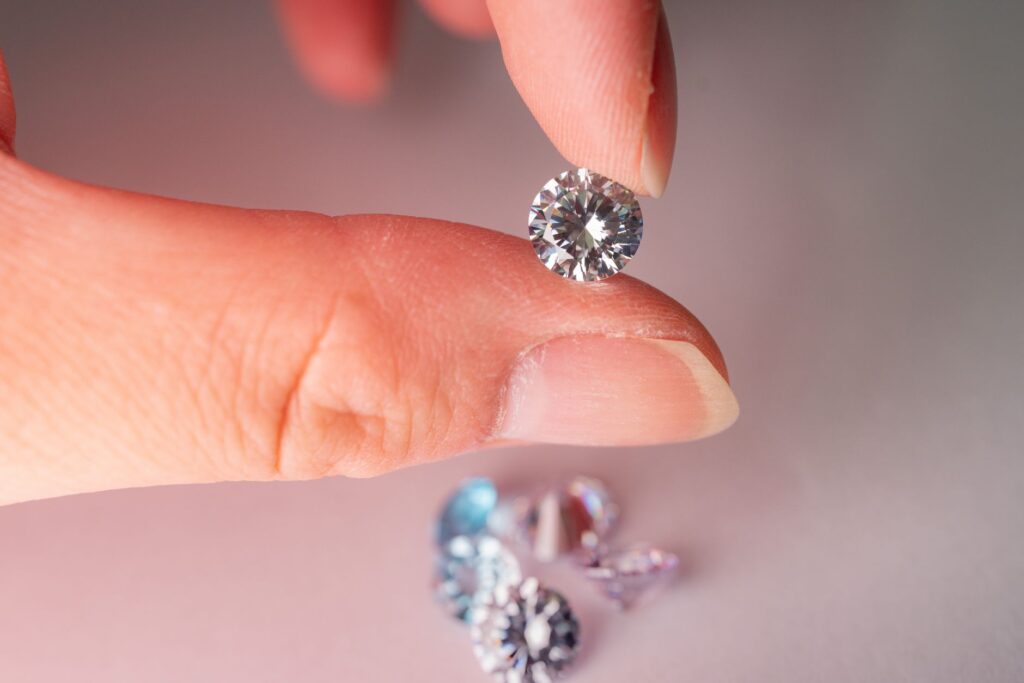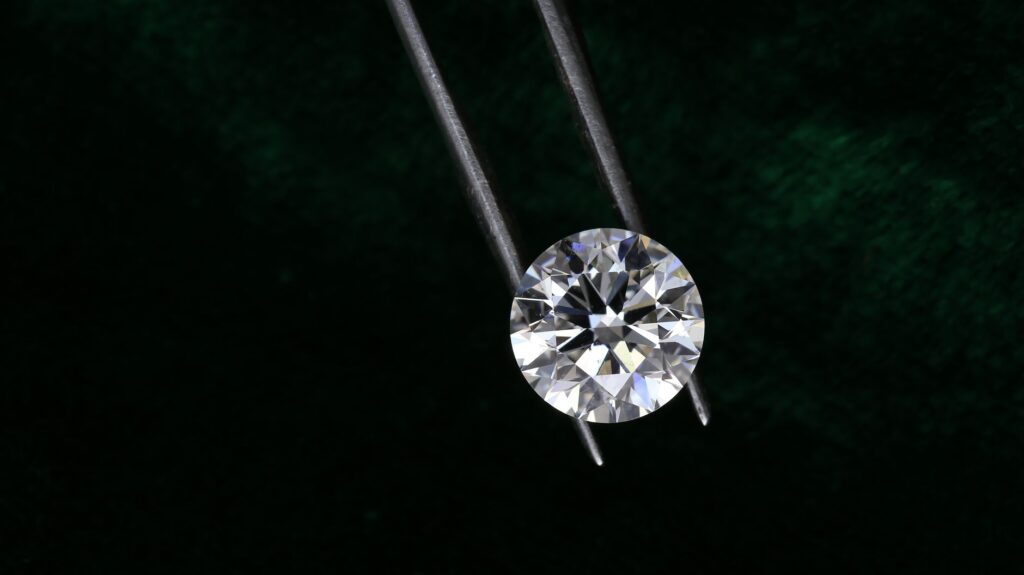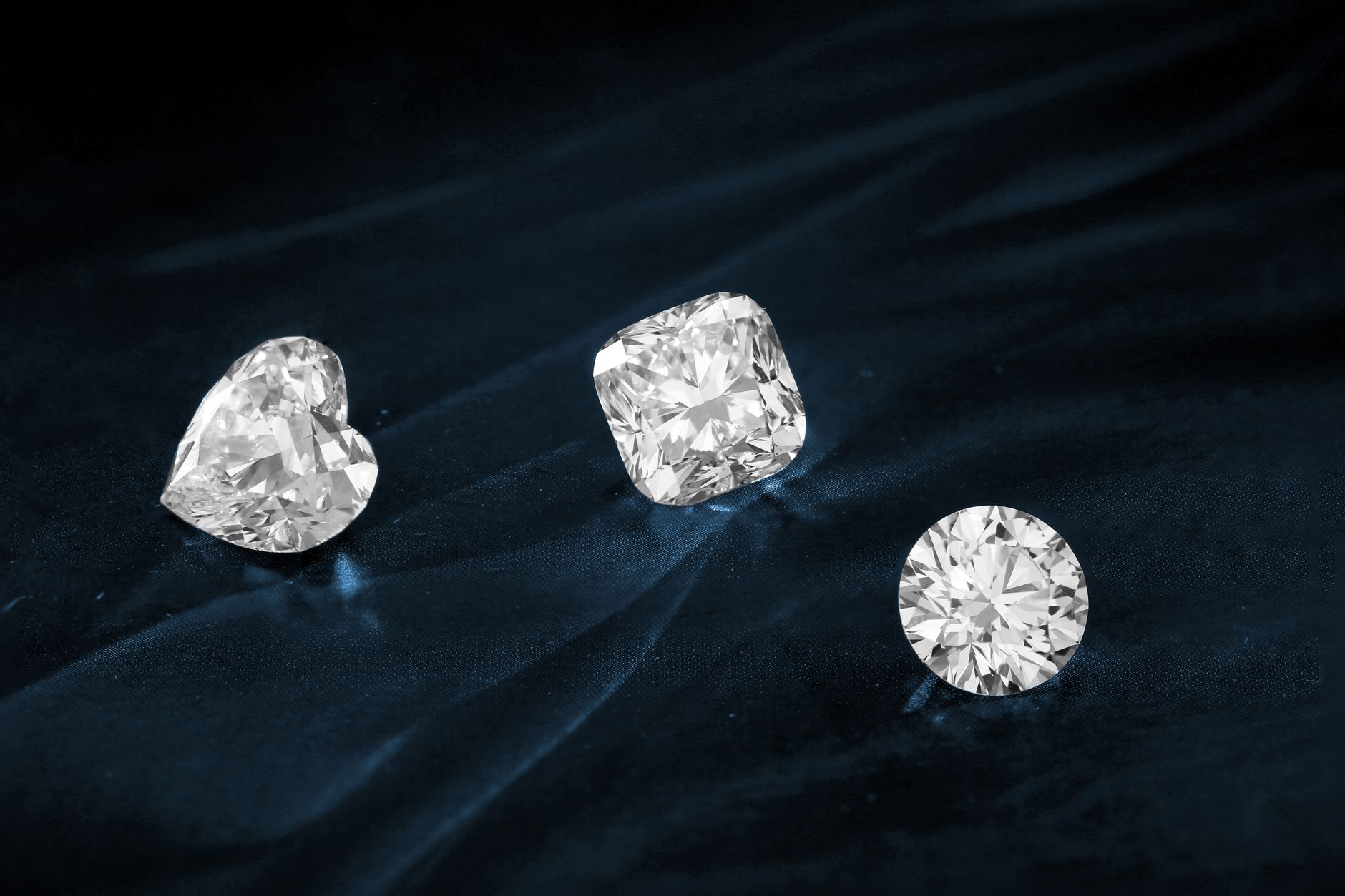
Two diamonds can have the same carat weight and still look noticeably different once they are set in a ring. That is especially true when you compare shapes. A 1 carat round and a 1 carat oval do not spread across the finger the same way, and a 1 carat marquise can look even larger than both. For anyone trying to decide which diamond shape looks biggest, the answer depends on face-up size, not carat weight alone.
Size expectations matter because buyers often pay for weight they cannot easily see. The shape, proportions, and setting all influence how large a diamond appears from the top, which is the view people notice most. Understanding that difference can help you choose a diamond that looks bigger without automatically jumping to a higher carat category.
Quick Answer
In general, elongated diamond shapes tend to look bigger than round diamonds at the same carat weight. Among the most size-prominent shapes are marquise, pear, and oval, followed closely by emerald and radiant cuts depending on their proportions. Round brilliant diamonds usually look smaller face-up than elongated shapes of equal carat weight because more of their weight is distributed in a compact outline.
If your priority is visible size, the shapes that often create the largest appearance for the money are:
- Marquise
- Pear
- Oval
- Emerald in some proportion ranges
- Radiant and elongated cushion in certain cuts
That said, there is no single best shape for everyone. Some shapes look bigger, but they can also show color or clarity more easily, distribute sparkle differently, or suit certain finger shapes better than others.
Understanding What “Looks Biggest” Really Means
Carat Weight Is Not Visible Size
Carat is a weight measurement, not a measurement of how wide or long a diamond looks. One carat equals 0.2 grams. That tells you how much the diamond weighs, but not how much finger coverage it provides.
This is where confusion begins. Buyers often compare diamonds by carat number alone, even though the eye sees surface area and outline, not weight hidden in depth.
Face-Up Size Matters More Than Carat Alone
Face-up size refers to how large a diamond appears when viewed from the top. This is the angle most people see in a ring. Two diamonds with the same weight can have different face-up dimensions because one is cut deeper and the other is cut with more spread.
A diamond with more spread may look larger, while a deep-cut diamond can carry weight where it is less visible. This is one reason shoppers comparing only carat can miss better size value.
Shape Changes Visual Spread
Diamond shape affects visible size because some outlines cover more visual space. Elongated shapes stretch lengthwise across the finger, which creates a larger impression. Rounded or square shapes often concentrate weight in a tighter footprint.
This is why a marquise or oval may look larger than a round of the same carat weight, even if the scale says they weigh exactly the same.
Why Some Diamond Shapes Look Bigger Than Others
Elongation Creates More Finger Coverage
Longer shapes appear bigger because the eye reads length as size. A diamond that extends farther across the finger usually feels more substantial, even when its total carat weight is unchanged.
This effect is especially strong in:
- Marquise
- Oval
- Pear
- Emerald
- Elongated radiant
These shapes can create a larger visual impression because they combine width with extra length.
Compact Shapes Hold Weight More Tightly
Round, princess, asscher, and many cushion cuts often look smaller at equal weight because their outlines are more compact. Some of that weight is concentrated into depth or into corners that do not visually enlarge the stone as much.
That does not make them poor choices. In fact, round brilliants are often chosen for their exceptional sparkle and balanced outline. They simply are not usually the shape that looks biggest for a given carat.
Depth Can Hide Weight
A diamond can be cut too deep, which means more weight sits below the top view. That extra carat weight may raise the price without giving you a larger appearance. This issue can happen in any shape.
For buyers focused on size, measurements in millimeters matter at least as much as carat. A well-proportioned diamond with strong spread often looks more impressive than a heavier diamond cut too deep.
Diamond Shapes Ranked by Apparent Size
The following table gives a practical general ranking of which diamond shape looks biggest when comparing well-cut stones of equal carat weight. This is not a strict rule for every diamond, but it is a useful buying guide.
| Shape | Typical Apparent Size at Equal Carat | Why It Looks That Way | Key Buying Note |
|---|---|---|---|
| Marquise | Very large | Long shape with pointed ends creates strong spread and finger coverage | Can show bow-tie effect and points need protection |
| Pear | Very large | Elongated outline combines width and length | Bow-tie visibility and symmetry are important |
| Oval | Large | Longer face-up shape usually spreads more than round | Watch for bow-tie and overly deep cuts |
| Emerald | Large | Large table and rectangular outline create broad face-up appearance | Clarity is easier to see than in brilliant cuts |
| Radiant | Moderately large | Can have good spread, especially elongated versions | Face-up size varies a lot by cut style |
| Elongated Cushion | Moderately large | Softer rectangle shape can cover more area than square cushion | Some cuts face up smaller than expected |
| Round Brilliant | Moderate | Classic circular shape distributes weight compactly | Usually offers top sparkle, but not the biggest look |
| Princess | Moderate to slightly small | Square shape keeps visual spread tighter | Corner protection matters in settings |
| Cushion | Moderate to small | Rounded corners and depth often reduce face-up spread | Measurements vary significantly between cuts |
| Asscher | Small | Step cut and deep profile usually make it face up smaller | Elegant look, but not ideal for maximum apparent size |
| Heart | Moderate to small | Shape uses weight in curves and cleft rather than broad spread | Needs good symmetry to look attractive |
Which Diamond Shape Looks Biggest in Practice
Marquise Often Looks the Biggest
If the question is strictly which diamond shape looks biggest, marquise is often the top answer. Its long, narrow shape creates strong finger coverage. The pointed ends visually stretch the stone, and the eye tends to register that added length immediately.
A marquise can look larger than a round, cushion, princess, or asscher of the same carat weight. For shoppers trying to maximize visible size, it is one of the strongest options.
The trade-offs are practical. Marquise diamonds can show a dark area across the center called a bow-tie, which is a shadow effect seen in some elongated cuts. Their pointed tips also need protective prongs.
Pear Shapes Also Create a Large Look
Pear diamonds often rank near the top for apparent size. They combine some of the spread of an oval with a pointed end that adds visual length. On the hand, a pear can look both elegant and large for its weight.
The shape works well for buyers who want elongation but prefer something softer than a marquise. As with marquise and oval, cut quality matters. A poorly cut pear can show an obvious bow-tie or uneven shape.
Oval Diamonds Are Popular for Size Value
Oval diamonds are among the most popular choices for buyers who want a diamond to look bigger than a round. They usually have more face-up spread and can make fingers appear longer and slimmer.
Another advantage is versatility. Oval diamonds work well in solitaire rings, halos, three-stone settings, and many engagement ring styles. For buyers who want a shape that looks large without being too unconventional, oval is often a practical middle ground.
Emerald Cuts Can Look Broad and Elegant
Emerald cuts often appear larger than buyers expect because of their open table and long rectangular outline. They do not sparkle like round or oval brilliants, but they can look broad and substantial on the hand.
The main caution is clarity. Because emerald cuts have large open facets, inclusions and color are easier to notice. A shape can look bigger, but buyers may need to be more selective on clarity and color than they would with a brilliant cut.
Round Brilliant Is Not the Biggest Looking Shape
Round brilliant diamonds are the most popular shape for good reasons. They usually deliver the strongest classic sparkle, and their cut standards are better established than for many fancy shapes. But they do not usually look the biggest for the carat.
A round diamond tends to carry its weight in a compact outline. So while it may be the best choice for brightness and fire, it is generally not the answer to which diamond shape looks biggest.
What Buyers Usually Expect
They Assume Higher Carat Automatically Means a Bigger Look
This is one of the most common misunderstandings in diamond shopping. Buyers often expect a 1 carat diamond of any shape to look roughly similar in size to another 1 carat diamond. In reality, shape can change the visible footprint a lot.
A 1 carat oval may look meaningfully larger than a 1 carat round. A 1 carat marquise may look larger still. The carat number alone does not tell the full story.
They Compare Carat Instead of Measurements
Millimeter dimensions are often more useful than weight when comparing visible size. For rounds, diameter tells you a lot about face-up appearance. For elongated shapes, both length and width matter.
Two diamonds with the same carat can have different measurements, and that difference may be obvious once they are worn.
They Underestimate Finger Size
The same diamond can look very different on a size 4 finger than on a size 8 finger. A shape that feels impressively large on a smaller hand may look more modest on a larger one. That does not change the stone itself, but it changes perception.
Elongated shapes often help with this because they provide more visual coverage across the hand.
What It Actually Looks Like on the Hand
Finger Coverage Is What People Notice
Most people do not judge diamond size by weight. They notice how much of the finger the stone covers and how prominent it appears from normal viewing distance. That is why shape matters so much.
Elongated diamonds usually appear more substantial because they cover more length and often more visible surface area. Even if the difference sounds small in millimeters, the eye can pick it up.
Outline Affects Perceived Presence
A marquise or oval often appears larger because the outline draws the eye outward. A round looks balanced and bright, but it stays visually contained. A square shape may look sturdy and symmetrical, yet it often does not create the same spread effect.
Presence is not just raw size. It is how the shape occupies space on the hand.
Sparkle Can Change Size Perception Too
Brilliant cuts such as round, oval, and radiant return more scattered flashes of light than step cuts like emerald and asscher. Strong sparkle can make a diamond feel lively and prominent, even if the spread is not the largest.
That means a round may look slightly smaller in outline than an oval, but some buyers still prefer its visual impact because of its brightness. Bigger-looking and more brilliant are not always the same thing.
Factors That Change Apparent Size
Shape
Shape is the biggest starting point. Marquise, pear, and oval usually look larger than round at equal carat. Square and deep step-cut shapes usually look smaller.
Cut Proportions
A diamond that is cut too deep may face up small because excess weight is hidden below the surface. A diamond that is too shallow can look larger but may lose brilliance or appear watery. Good spread should not come at the cost of poor light performance.
This is why apparent size should be balanced with cut quality. A larger-looking diamond that lacks life can be disappointing in person.
Length-to-Width Ratio
For elongated shapes, the length-to-width ratio describes how long and narrow the shape appears. Higher ratios often create a more stretched look, which can make the diamond appear larger and more slimming on the finger.
For example, some buyers prefer elongated ovals or radiant cuts specifically because that ratio increases visual spread.
Setting Style
The setting can make a diamond look larger or smaller. Thin bands often make the center stone appear more prominent. Halo settings add a border of smaller diamonds around the center, increasing overall visual size. Bezel settings can either frame the stone attractively or make it feel more contained depending on design.
Prong style also matters. Delicate prongs reveal more of the edge, while heavier metal can reduce the apparent spread.
Color and Clarity Visibility
Some larger-looking shapes reveal body color and inclusions more easily. Emerald cuts and asschers are the classic examples, but elongated brilliant cuts can also make certain clarity features easier to notice if they sit near the center.
This matters because a shape may look larger, but the buyer may need to choose carefully to preserve a clean appearance.
Real-World Size Examples by Shape
1 Carat Round vs 1 Carat Oval
A typical well-cut 1 carat round often measures around 6.4 to 6.5 mm in diameter. A 1 carat oval may measure roughly 7.7 x 5.7 mm, though exact dimensions vary.
On the hand, the oval often looks larger because it stretches farther across the finger. The difference is not dramatic from every angle, but it is noticeable to many buyers in side-by-side comparison.
1 Carat Round vs 1 Carat Marquise
A 1 carat marquise may measure around 10 x 5 mm depending on proportions. That longer silhouette usually makes it appear considerably larger than a 1 carat round, especially when viewed on the finger.
This is one reason marquise has long been associated with strong size value. It does not suit every style preference, but visually it often outperforms round for spread.
1 Carat Cushion vs 1 Carat Oval
A 1 carat cushion often faces up smaller than buyers expect because many cushions carry more depth. A 1 carat oval usually appears larger because more of its weight is expressed in visible length and width.
For someone comparing shapes only by carat and budget, the oval often wins on apparent size. The cushion may still be preferred for its softer shape and chunky facet style.
2 Carat Emerald vs 2 Carat Round
A 2 carat emerald cut can look broad and commanding due to its rectangular spread and large open table. A 2 carat round remains visually substantial, but the emerald may seem larger from top view in some proportion ranges.
The difference is not just dimensions. The emerald’s long lines create a larger visual frame.
0.90 Carat Oval vs 1.00 Carat Round
This is a useful value comparison. A well-cut 0.90 carat oval may look similar in spread to, or in some cases larger than, a 1.00 carat round. Price can differ meaningfully because of both shape and the psychological jump at the 1 carat mark.
For a buyer focused on visual size, that can be a smart trade-off.
Typical Face-Up Size Comparison by Shape
The numbers below are approximate and can vary by cut quality and proportions, but they help illustrate why shape matters.
| Shape | Approximate 1 Carat Measurements | General Face-Up Impression |
|---|---|---|
| Round | 6.4 to 6.5 mm diameter | Balanced, bright, moderate spread |
| Oval | 7.7 x 5.7 mm | Larger-looking than round |
| Pear | 8.2 x 5.4 mm | Large-looking with elegant length |
| Marquise | 10 x 5 mm | Very large-looking and elongated |
| Emerald | 7.4 x 5.3 mm | Broad, open, elegant presence |
| Princess | 5.5 x 5.5 mm | Compact and square |
| Cushion | 5.8 to 6.2 mm range | Often smaller-looking than expected |
| Asscher | 5.5 x 5.5 mm | Elegant but visually smaller |
Price vs Visual Benefit
Paying More for Carat Does Not Always Improve the Look Proportionally
Carat pricing tends to rise sharply at popular thresholds such as 1.00, 1.50, 2.00, and 3.00 carats. But the visible increase in size from one threshold to the next is often smaller than buyers expect.
That is especially true if the upgrade keeps the same compact shape. A slightly larger round may cost a lot more without looking dramatically larger once set.
Shape Can Be a More Efficient Way to Increase Apparent Size
For some buyers, switching shape produces a more visible size improvement than increasing carat. Moving from a round to an oval or pear at the same weight often changes the look more than adding a small amount of carat within the same shape.
This is not a universal rule, but it is one of the most practical ways to think about diamond value. Ask whether you are paying for visible spread or for hidden weight.
Magic Sizes Can Be Expensive
Diamonds priced at milestone weights often carry a premium simply because buyers search by those numbers. A 0.90 or 0.95 carat diamond in a larger-looking shape can offer nearly the same visible impact as a 1.00 carat stone while costing less.
This is often relevant in both natural and lab grown diamonds, though lab grown pricing can make larger sizes more accessible overall.
Lab Grown Diamonds and the “Biggest Looking Shape” Question
Larger Carat Sizes May Be More Reachable
Lab grown diamonds have changed how buyers approach size. Because they often cost less than natural diamonds of similar quality, shoppers may be able to choose a larger carat size without exceeding budget.
That can reduce the pressure to maximize spread through shape alone. A buyer who prefers round may be able to stay with round and still reach a size target that would be difficult in a natural diamond.
Shape Still Matters in Lab Grown Diamonds
Even with a lower price point, the visual principles stay the same. An oval lab grown diamond still tends to look larger than a round lab grown diamond of equal carat. A marquise still tends to provide more finger coverage than a cushion.
So the question is not only which option is affordable, but which option gives the best appearance for the buyer’s priorities.
Value Decisions Can Be More Flexible
Because budget may stretch further in lab grown diamonds, some buyers choose a shape for aesthetics rather than size efficiency alone. Others use that flexibility to move into a larger elongated shape for even more visual impact.
Both approaches can make sense. The important point is that lab grown availability expands your choices, but it does not change how shape affects face-up size.
Who Should Consider a Larger-Looking Shape
Buyers Focused on Finger Coverage
If your main goal is to make the center stone look as large as possible, elongated shapes deserve serious attention. Oval, pear, and marquise are especially effective.
Buyers Trying to Maximize Budget
If visible size matters more than having the most popular shape, a larger-looking shape may offer better visual value than paying extra for a round at the same carat.
Buyers With Larger Finger Sizes
On larger fingers, compact shapes can look smaller than expected. Elongated shapes often help create better balance and coverage.
Who Can Save Money Without Sacrificing Much Visual Impact
Buyers Open to Sub-Threshold Carat Weights
Choosing 0.90 instead of 1.00 carat, or 1.80 instead of 2.00 carats, can reduce cost while preserving much of the visual appearance. This strategy becomes even more effective when paired with a shape that faces up large.
Buyers Willing to Compare Measurements Carefully
A slightly lighter diamond with better spread can look as large as a heavier diamond cut too deep. Comparing millimeter dimensions often reveals better value.
Buyers Who Like Oval, Pear, or Marquise
If you already like elongated shapes, you may not need to spend as much to get a larger look. The shape itself helps create the effect.
Common Buyer Mistakes
Chasing Carat Numbers Without Looking at Dimensions
This is the most common size mistake. Carat sounds simple, but visible size is more complicated. Always compare measurements, especially for fancy shapes.
Assuming Round Looks Largest Because It Is Most Popular
Round is the most popular shape, but popularity is not the same as maximum spread. Buyers who want the biggest appearance should not assume round is the best option for that goal.
Ignoring Deep Cuts
A diamond can weigh more without looking bigger if too much of the weight sits in the pavilion, which is the lower part of the diamond. Deep stones often offer poor spread value.
Overlooking the Trade-Offs of Elongated Shapes
Shapes that look larger may also show bow-ties, more noticeable color in some cases, or vulnerability at pointed ends. Bigger-looking is useful, but it should be balanced with cut quality and durability.
Not Considering Setting Design
A thick band can make a center stone look smaller. A delicate setting can make the same diamond stand out more. The ring design is part of the final size impression.
Frequently Asked Questions
Does oval always look bigger than round?
Usually, yes, at the same carat weight. Oval diamonds tend to have more visible length and often greater face-up spread. However, exact appearance depends on proportions, and a poorly cut oval may not deliver the full benefit.
What diamond shape looks the biggest per carat?
Marquise is often considered the shape that looks biggest per carat, followed closely by pear and oval. These elongated shapes create strong visual spread and finger coverage.
Why does my cushion diamond look smaller than I expected?
Many cushion cuts carry more depth, which can reduce face-up size. Their rounded outline also creates a softer footprint than elongated shapes. This does not mean the diamond is poorly chosen, only that cushions often prioritize style over maximum spread.
Do emerald cuts look bigger than round diamonds?
They often can, especially at the same carat weight. The rectangular shape and broad table can make emerald cuts appear larger face-up. The trade-off is that they show clarity and color more easily than round brilliants.
Which shape is best if I want a big look and lots of sparkle?
Oval is often a strong balance. It usually looks larger than round while still offering lively brilliance. Radiant can also be a good option if you want sparkle with a more rectangular outline.
Are bigger-looking shapes more fragile?
Some are. Marquise and pear diamonds have pointed ends that should be protected by prongs. Princess cuts also have vulnerable corners. Round and oval generally avoid the same level of corner risk, though all diamonds benefit from well-designed settings and proper jewelry care.
Should I choose shape first or carat first?
For buyers focused on appearance, shape should come early in the decision. Shape affects visible size, outline, sparkle style, and finger coverage. Once shape is decided, carat and measurements can be evaluated more effectively.
Can a lab grown diamond help me get a bigger look?
Yes, often by making higher carat weights more affordable. But shape still matters. A lab grown oval will usually look larger than a lab grown round of the same weight, just as in natural diamonds.
Conclusion
If your goal is to find which diamond shape looks biggest, the most practical answer is that elongated shapes usually create the largest visual appearance at the same carat weight. Marquise often leads, with pear and oval close behind. Emerald cuts can also appear broad and substantial, while round diamonds tend to look smaller face-up than these shapes despite their popularity.
The most important lesson is that carat alone does not tell you how big a diamond will look. Face-up measurements, cut proportions, shape outline, finger size, and setting design all influence the final appearance. A well-chosen shape can provide more visible size than a heavier diamond with less spread.
For many buyers, the best value comes from balancing shape, cut, and measurements rather than chasing a milestone carat number. Looking bigger is possible, but the smartest choices come from understanding what the eye actually sees.